Hours of operations:
9AM - 5PM / UTC -5 (EST)
Case Study
✓ Delivered on time
Agricultural Equipment

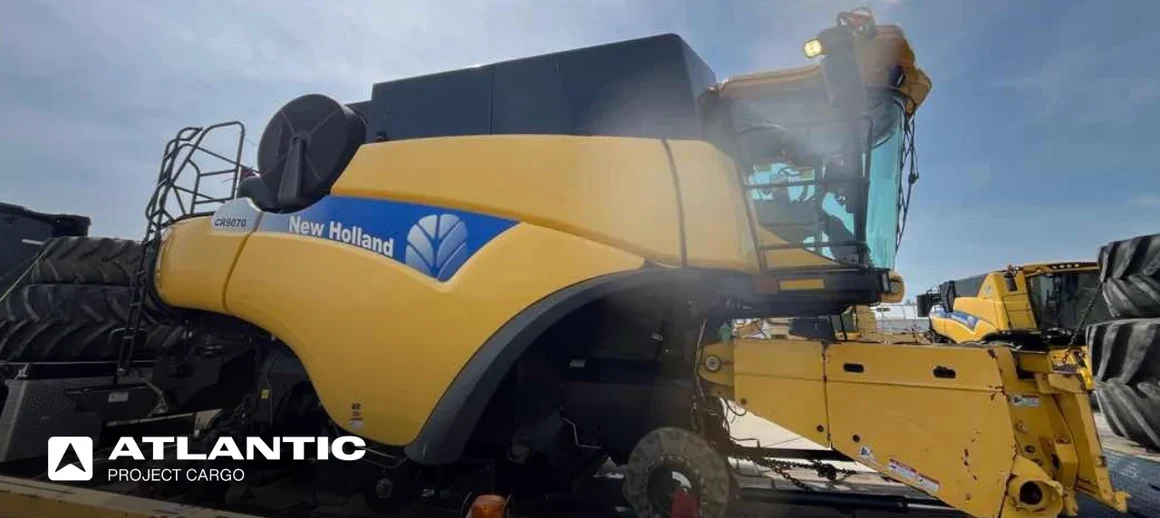
New Holland CR9070 Export
Shipped United States → Argentina

How Atlantic Project Cargo moved a rotary combine harvester from Illinois to Buenos Aires — fully SENASA-compliant, on schedule, with zero unexpected costs or customs holds.

Shipment Route

Illinois
United States
Buenos Aires
Argentina
Equipment New Holland CR9070
Cargo Type Agricultural Machinery
Total Timeline 30–35 days
Method Flat Rack + RGN

Worldwide Shipping
Americas · Europe · Asia Pacific · Africa
100,000+
Shipments Worldwide
20+ Years
In Heavy Cargo Logistics
4.9 Rating
on Google · 50+ reviews
Licensed Freight Forwarding Company
Home Case Study New Holland CR9070 Export Shipped from United States to Argentina

Transporting oversized agricultural machinery internationally requires far more than standard freight coordination. In this project, Atlantic Project Cargo managed the end-to-end shipment of a New Holland CR9070 combine harvester from Illinois, USA to Buenos Aires, Argentina — covering inland heavy haul transport, full equipment preparation, SENASA phytosanitary compliance, and flat rack ocean freight execution.

Shipping Overview

Equipment New Holland CR9070
Origin Illinois, United States
Destination Buenos Aires, Argentina
Shipping Method Flat Rack + RGN

Cargo Type Agricultural Machinery
Transport Mode Inland Heavy Haul + Ocean Freight
Compliance SENASA · Phytosanitary · Fumigation
Total Timeline 30–35 days

This case follows the shipment of a New Holland CR9070 combine harvester from Illinois, USA to Buenos Aires, Argentina — combining inland heavy haul, equipment modification, and strict phytosanitary compliance.

As one of the largest rotary combines in its class, the CR9070 presents logistical challenges due to its size and configuration. Moving this type of equipment is not a standard shipping task — it requires engineering-based planning, regulatory awareness, and controlled execution at every stage.

The objective was clear: deliver the machine on time, fully compliant with Argentine import requirements, and without unexpected costs or delays.

Transporting oversized agricultural machinery across international borders requires precise coordination, regulatory expertise, and specialized handling.

Key Takeaways

Why projects like this succeed — or get stuck at the port.

Most delays and extra costs occur before cargo reaches the port — in prep and compliance.

Improper equipment configuration can make a shipment impossible or far more expensive.

Choosing the wrong transport method increases risk, handling complexity, and damage potential.

SENASA and similar authorities enforce strict biosecurity — cleaning and fumigation are non-negotiable.

Incomplete documentation is one of the top causes of customs delays and cargo holds.

Structured logistics planning eliminates delays and protects the timeline end-to-end.

Four Risks, Four Fixes

This case follows the shipment of a New Holland CR9070 combine harvester from Illinois, USA to Buenos Aires, Argentina — combining inland heavy haul, equipment modification, and strict phytosanitary compliance.

Oversized dimensions

The CR9070 exceeds standard transport limits. Bridge clearances, road restrictions, and weight limits must be mapped before the equipment moves — not reactively.

Full route engineering

Bridge heights, restricted segments, and weight limits analyzed up-front. All permits secured before pickup, so inland transport moved without a single mid-route surprise.

Machine configuration

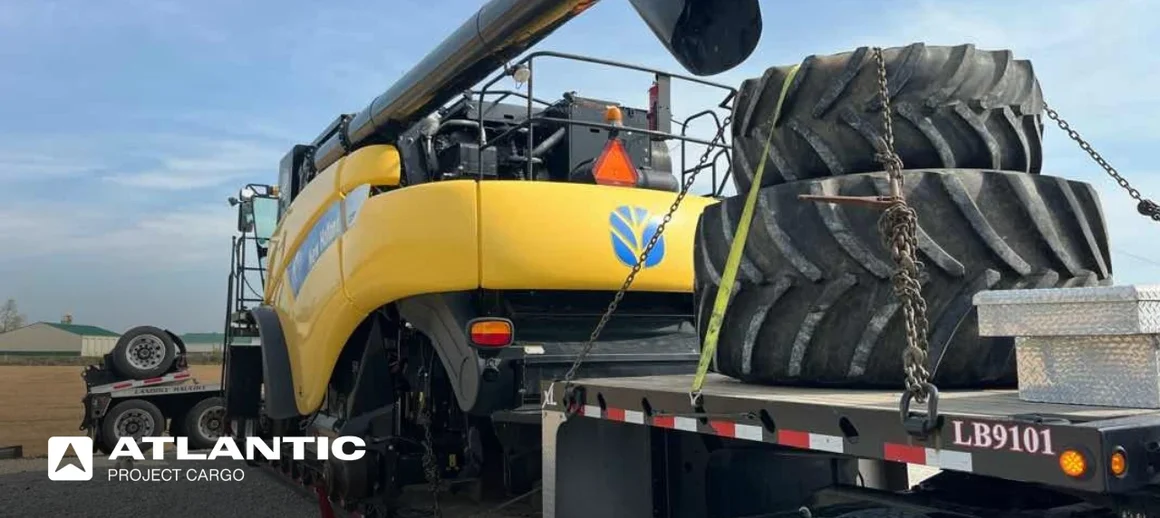
Large agricultural tires push overall height and width past transport and vessel requirements. Without modification, direct transport is impossible.

Controlled disassembly

Large tires removed and transported separately. Main unit stabilized and prepped to meet both road limits and vessel loading profiles.

SENASA biosecurity

Argentina enforces strict phytosanitary inspection. Any trace of soil or plant residue can trigger rejection at the port of entry — plus delay and cost.

Industrial cleaning + fumigation

Full industrial wash removed all soil and organic residue. Professional fumigation completed with SENASA-compliant certification issued before vessel loading.

Documentation risk

Inaccurate export papers or missing certificates are among the top reasons for customs holds. Any discrepancy can block the shipment entirely.

Pre-approved document pack

Inspection certificates, export paperwork, and phytosanitary documents prepared in parallel with cleaning — shipment cleared on the first customs pass.

How the timeline played out

From booking to delivery — the full 30–35 day journey, phase by phase.

Pickup

Combine loaded on RGN trailer at origin site in Illinois.

Day 1

Inland Transport

Heavy-haul move to export port, under secured permits.

Several days

Preparation

Tire removal, dimensional reduction, and securing for ocean.

2–3 days

Compliance

Industrial cleaning, fumigation, SENASA certification, docs.

Parallel

Ocean Transit

Flat rack container, blocked & braced for maritime transit.

~24 days

Delivered

Cleared Argentine customs first pass, handed over to client.

Day 30–35

How Each Phase Was Handled

Nothing improvised. Every step below was pre-planned and validated before execution began.

RGN Trailer Strategy

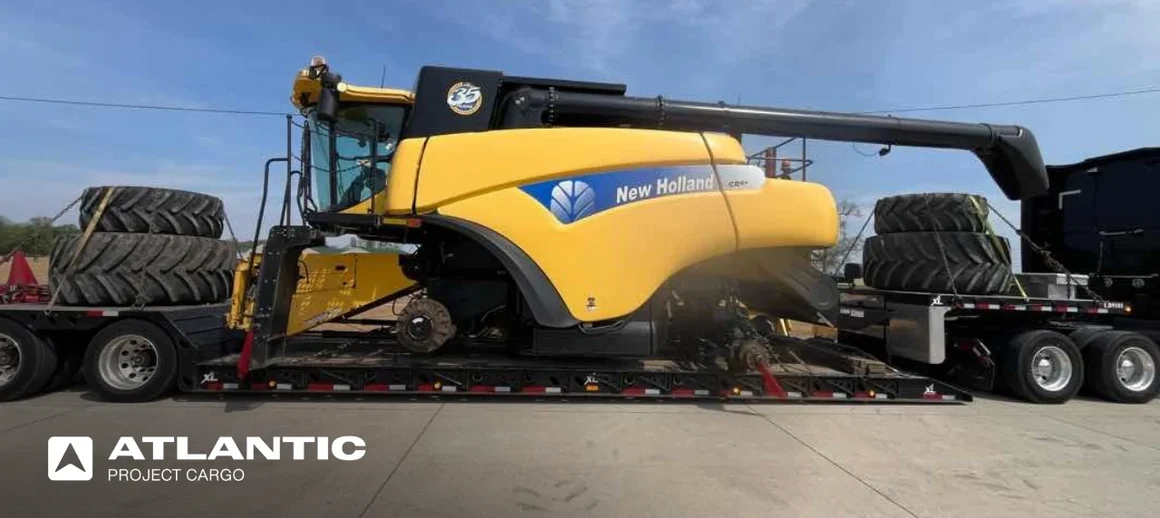
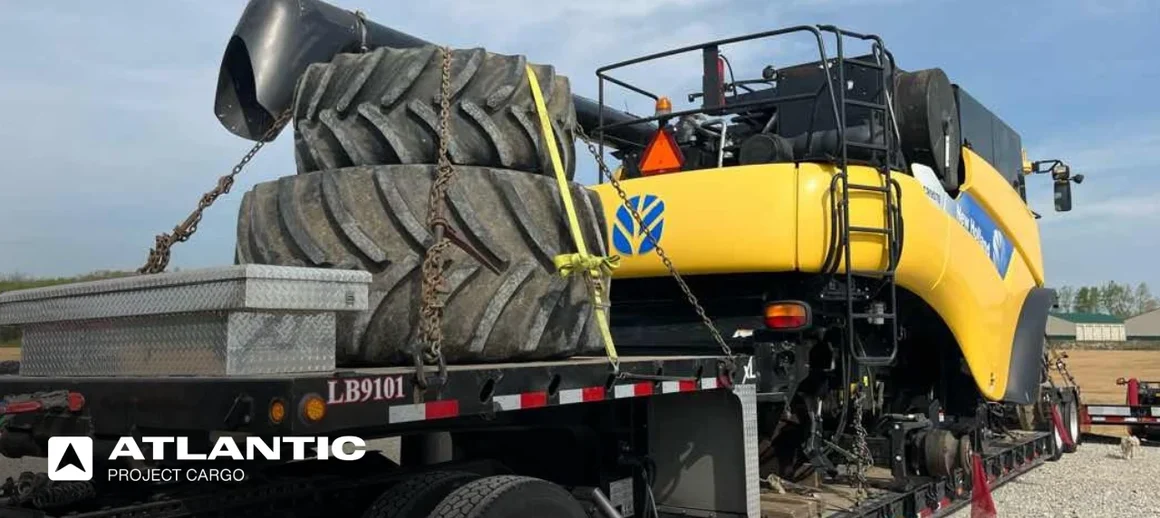
To move the CR9070 from Illinois to the export port, a Removable Gooseneck (RGN) trailer was selected. This configuration lets the load sit lower, improving stability during transport and reducing clearance risks across the route.

The choice wasn’t incidental — RGN simplifies loading and unloading and provides safer handling for high-value agricultural machines. A full route analysis was completed before pickup: bridge heights, restricted segments, weight limits, and permits all resolved up-front.

Why RGN

Lower deck height — clears low bridges oversized machinery can’t cross on a standard flatbed.

Route Pre-Analysis

Every mile mapped for clearances, weight, and restrictions before the truck moved.

Permits Secured

All oversize permits in hand at pickup — zero roadside interruptions.

Risk Management During Inland Phase

Several risks were addressed during inland transport — load instability, route violations, and potential equipment damage. Each was mitigated through proven securing methods, detailed route planning, and controlled handling procedures.

Load instability

Controlled via multi-point securing and balanced weight distribution on the RGN deck.

Risk 01

Route violations

Pre-mapped clearances and pre-secured oversize permits eliminated detour and stop risk.

Risk 02

Equipment damage

Controlled loading, protected surfaces, and continuous in-transit monitoring.

Risk 03

Dimensional Reduction & Stabilization

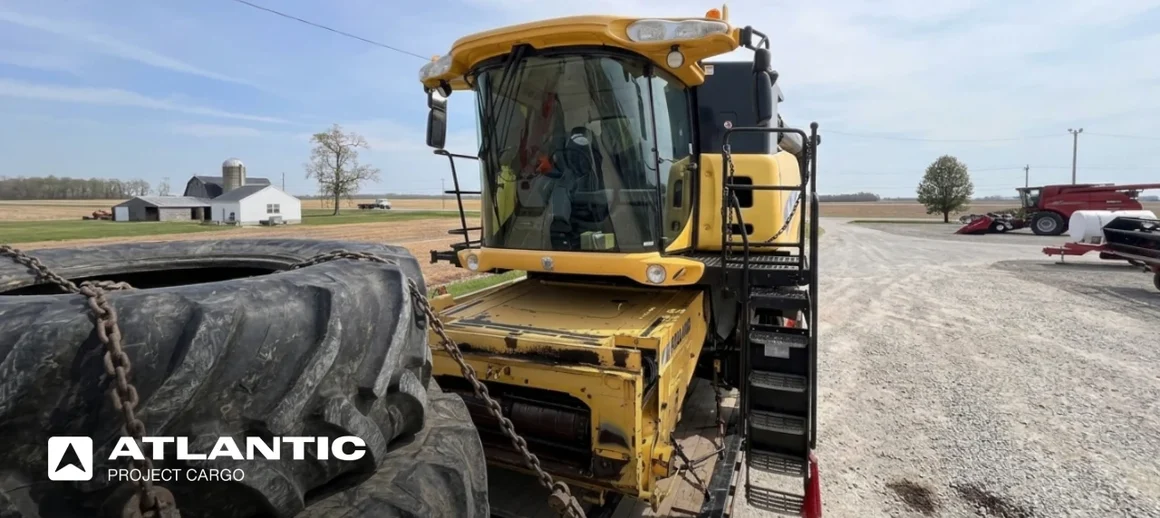
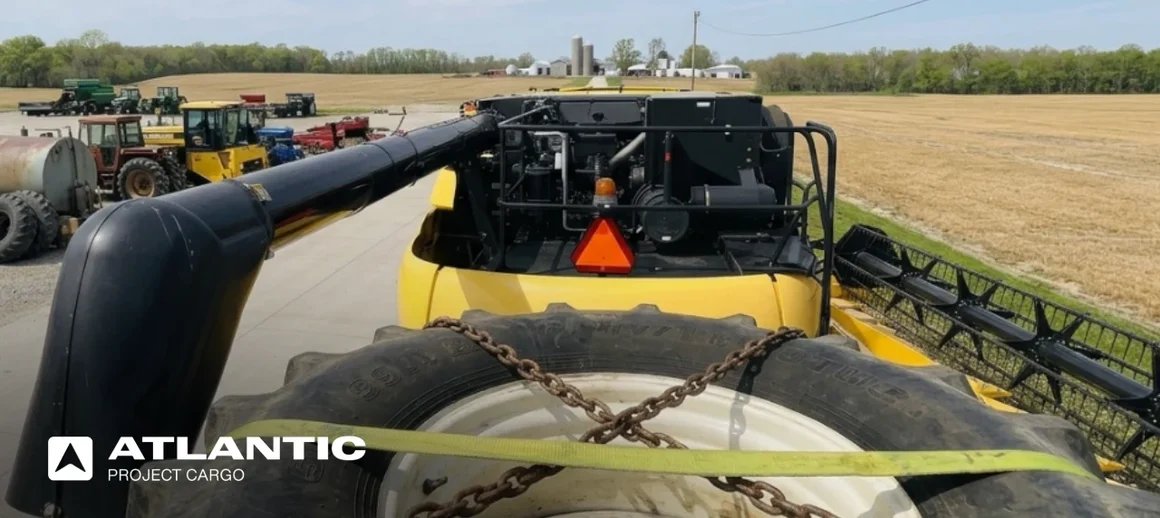
The most important modification was removing the large agricultural tires. This cut overall transport dimensions so the combine met both road and vessel requirements — without it, direct shipment would have been impossible.

Removed components were secured and transported separately to prevent damage. The main unit was stabilized and every exposed element was checked against shift risk during transit. This stage is often underestimated, but it directly determines whether the shipment is viable at all.

Cleaning, Inspection & SENASA

Before export, the combine went through a full industrial cleaning process — all traces of soil, crop residue, and organic material removed. For shipments to Argentina this is not optional: contamination results in immediate rejection at the port of entry.

Cleaning was followed by a pre-export inspection verifying the machine’s identity, condition, and export compliance. A complete documentation package was prepared in parallel, and professional fumigation under SENASA guidelines completed with proper certification before departure..

Industrial Cleaning

All soil, crop residue, and organic material removed to meet Argentine biosecurity standards.

Inspection & Docs

Pre-export inspection verified identity and condition. Full documentation pack prepared in parallel with prep.

SENASA Fumigation

Professional fumigation with valid certification — no quarantine, no rejection risk on arrival.

Transition to the export phase. Once inland transport and preparation were complete, the CR9070 arrived at the port ready for export processing. At this point the focus shifted from transport execution to regulatory compliance and international shipping requirements.

Flat Rack Loading & Stowage

Due to its size, the CR9070 was transported on a flat rack container — the preferred method for oversized cargo that won’t fit a standard container. Flat rack shipping provides the flexibility needed to load and secure large machinery safely.
Once loaded, the combine was secured with blocking, bracing, and heavy-duty lashing systems designed to prevent movement during ocean transit. A stowage inspection before departure verified that all securing methods met maritime safety standards.

Why RGN

Lower deck height — clears low bridges oversized machinery can’t cross on a standard flatbed.

Route Pre-Analysis

Every mile mapped for clearances, weight, and restrictions before the truck moved.

Permits Secured

All oversize permits in hand at pickup — zero roadside interruptions.

We Can Help Buy and Ship any Equipment to Argentina!

Whether you have a small recreational boat or a luxurious yacht, Atlantic Project Cargo will provide you with top-tier shipping services.

  • Full compliance handling — SENASA, phytosanitary, fumigation.
  • Transparent timeline & fixed-scope pricing.
  • Engineering-based route & transport planning.
  • 20+ years moving oversized cargo worldwide.

Full route timeline

Every phase of the shipment, what happened in it, and how long it took — door to door.

Phase What Happened Duration
Booking & planning Scope confirmed, route mapped, permits initiated. Day 1
Inland heavy haul RGN transport from Illinois to the port of loading. Several days
Prep & biosecurity Cleaning, inspection, documentation and SENASA fumigation. 2–3 days
Containerization Flat-rack selection, blocking & bracing, sign-off. Parallel
Loading & departure Stowed, secured and sailed on schedule. 2–3 days
Ocean freight Sailing with coordinated scheduling and tracking. ~24 days
Total Timeline Pickup → Argentine customs clearance → handover ~30–35 days

Delivered on time, cleared on first pass, no extra costs — operation-ready.

The shipment was completed according to plan, with every objective achieved. The combine was delivered on schedule, cleared customs without delays, and required no additional costs beyond the initial scope. All inspections passed. The equipment arrived fully compliant and ready for immediate operation — a direct outcome of structured logistics planning and consistent execution across every stage.

Delivered

On schedule within the committed 30–35 day window

Cleared

First-pass customs clearance at Argentine port of entry

As-quoted

Final invoice matched the original scope and budget

Operational

Combine reassembled and running on arrival — no transit damage

Atlantic Project Cargo handled everything end-to-end — the combine arrived when they said it would, cleared customs without a single hold, and we were able to put it straight to work. No surprise bills, no scrambling at the port.

Benicio Cañete Benicio Cañete Agricultural importer, Buenos Aires