Axopar 37 XC Boat Export from Fort Lauderdale, USA, to Palma de Mallorca, Spain Shipped United States → Spain
Transatlantic export of an 11.5-metre Axopar 37 XC adventure cruiser, from cradle preparation and US export clearance through flat-rack ocean carriage and a Mediterranean transshipment, to a final handover in Mallorca.
Total Timeline
7 weeks door-to-handover (booking through Palma release)
Method
Ocean freight, flat rack
Worldwide Shipping
Americas · Europe · Asia Pacific · Africa
100,000+
Shipments Worldwide
20+ Years
In Heavy Cargo Logistics
4.9 Rating
on Google · 50+ reviews
Licensed Freight Forwarding Company
Home
Projects
Axopar 37 XC Boat Export from Fort Lauderdale, USA, to Palma de Mallorca, Spain Shipped from United States to Spain
An Axopar 37 XC made the crossing from Fort Lauderdale to Palma de Mallorca, moving from one of America’s busiest yachting hubs to the heart of the Balearic boating season. At 11.5 metres long and roughly 3.35 metres on the beam, this is a boat that will not fit inside a standard shipping container, so the crossing was planned around its true dimensions from the first phone call.
Fort Lauderdale to Mallorca is a well-worn yacht relocation route, but for a flat-rack export it isn’t a single sailing. There is no scheduled flat-rack or container liner service running direct between Fort Lauderdale and Palma — that direct port pairing exists only for the specialist charter and float-on/float-off yacht carriers. Moving the Axopar as flat-rack cargo meant routing it across the Atlantic to a Mediterranean hub port first, then on by feeder or short-sea service to Mallorca. Exporting a boat from the United States also means US export filing, a hull secured for weeks of open-ocean movement across two legs rather than one, and a handover in Spain.
Atlantic Project Cargo coordinated the export side of that journey: preparing and cradling the hull, booking suitable ocean space, assembling the export and shipping documents, and arranging the arrival handover in Palma.
Shipping Overview
EquipmentAxopar 37 XC (Cross Cabin)
OriginFort Lauderdale, United States
DestinationPalma de Mallorca, Spain
Shipping MethodOcean freight, flat rack
Cargo TypeOcean Freight
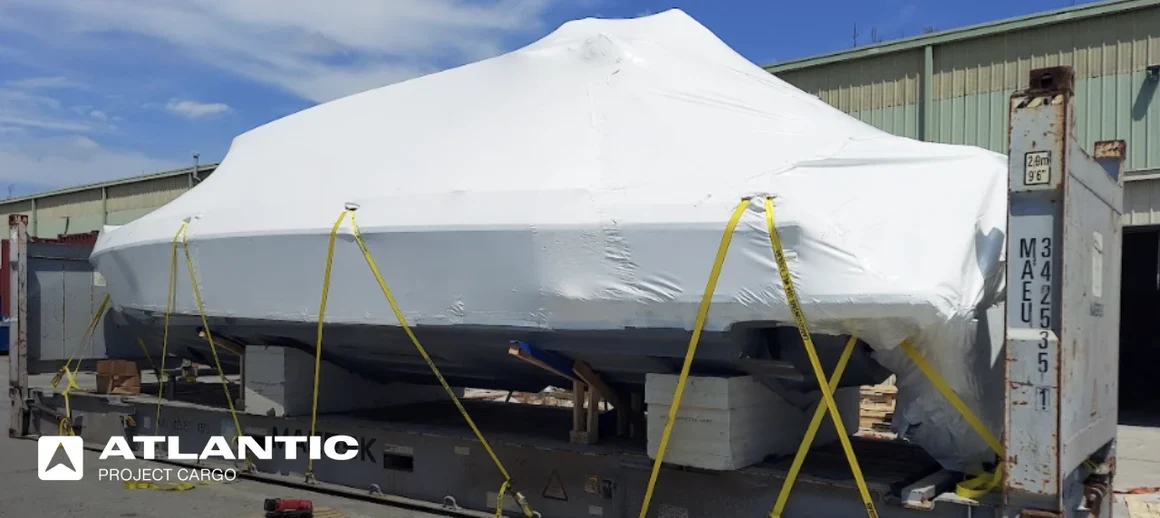
Transport ModeFlat rack: hull craned into a cradle and lashed to a flat-rack platform, carried as breakbulk/project cargo aboard a container vessel
Total Timeline7 weeks door-to-handover (booking through Palma release)
Key Takeaways
The things that shaped this export were mostly settled before the boat ever moved: the hull’s size, how it was cradled and protected, how the US export was cleared, and what waited on the Spanish side.
The boat’s size rules out a container. At 11.5 metres long and about 3.35 metres wide, the Axopar 37 XC is well beyond the internal width of a standard container. That single fact drives the method: the hull travels cradled and secured rather than boxed, which shapes cost, booking, and handling from the outset.
A cradle is engineering, not packaging. A hull is not a crate. It has to be supported along its structural points and braced so it cannot shift, settle, or chafe across an Atlantic crossing. The cradle is built to the boat, and the securing plan assumes weeks of vessel motion.
Export starts with US filing. Moving a boat out of the United States is a formal export. The shipment needs the correct US export declaration and a document set that matches the hull, the buyer or owner, and the declared value. Atlantic Project Cargo prepared and filed the US export declaration (AES/EEI) on the owner’s behalf.
Palma is an import as much as a destination. Arriving in Spain means meeting EU and Spanish import formalities before the boat is free to use. The arrival handover was planned around that reality, not just the berth. The destination scope covered port-to-port release in Palma with import clearance handled by a local Spanish agent.
Weather protection matters on deck cargo. A boat carried on open deck or on a flat rack is exposed to salt, spray, and sun for the whole voyage. Protecting the hull, fittings, and any vulnerable surfaces is part of preparation, not an afterthought at the quay.
Condition is recorded before it leaves. A high-value hull needs a clear pre-shipment condition record and identifying details, so its exact state on departure is documented and there is a factual baseline for the arrival.
There’s no direct sailing to Palma. Palma de Mallorca isn’t served by a scheduled transatlantic flat-rack service – that direct pairing exists only for specialist yacht carriers. This export routed across the Atlantic to a Mediterranean hub port first, then on to the island by feeder/short-sea service.
Four Risks, Four Fixes
Shipping a boat this size across the Atlantic carries four practical dangers: a hull damaged in transit, a US export held up on paperwork, a boat left exposed to the elements, and a costly snag at the Spanish border. Each was planned for.
Hull damage from poor cradling or securing
A boat that is badly supported or loosely secured can crack gelcoat, stress its hull, or shift on the vessel. On a crossing measured in weeks, a small movement repeated thousands of times becomes real damage.
Purpose-built cradle and securing plan
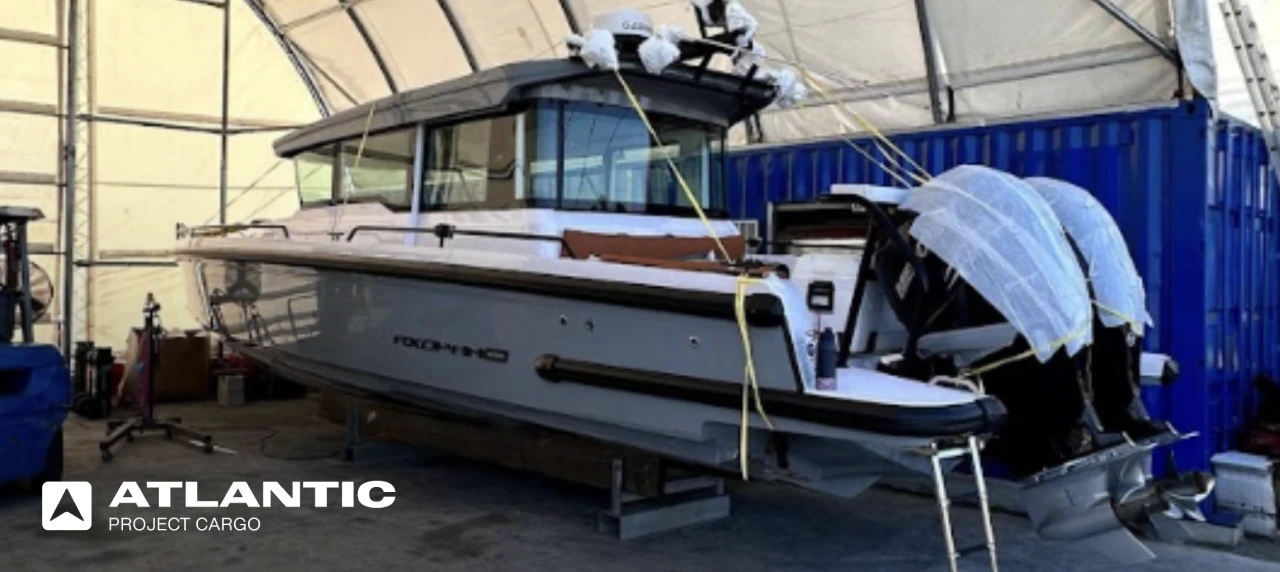
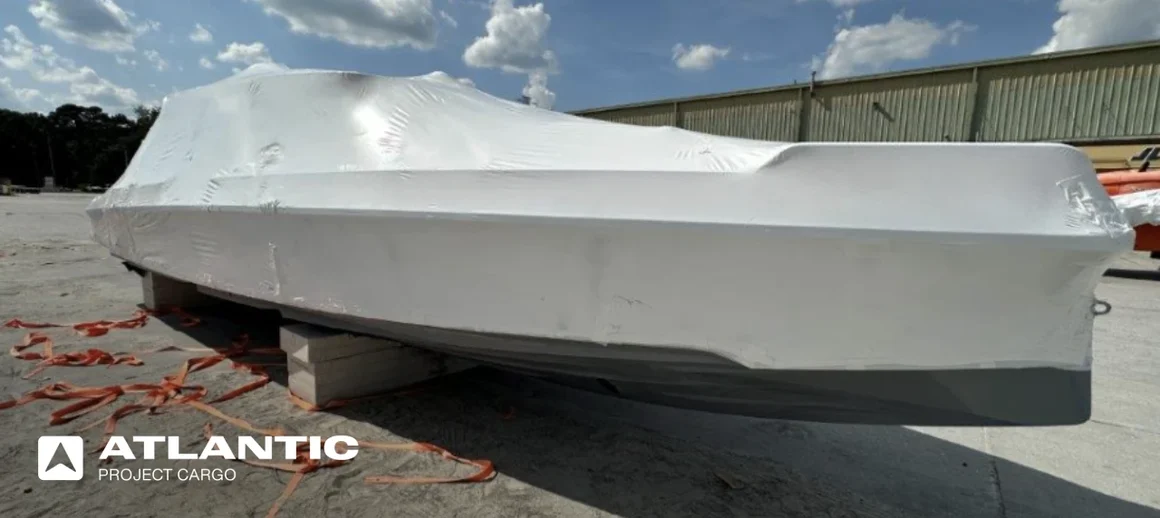
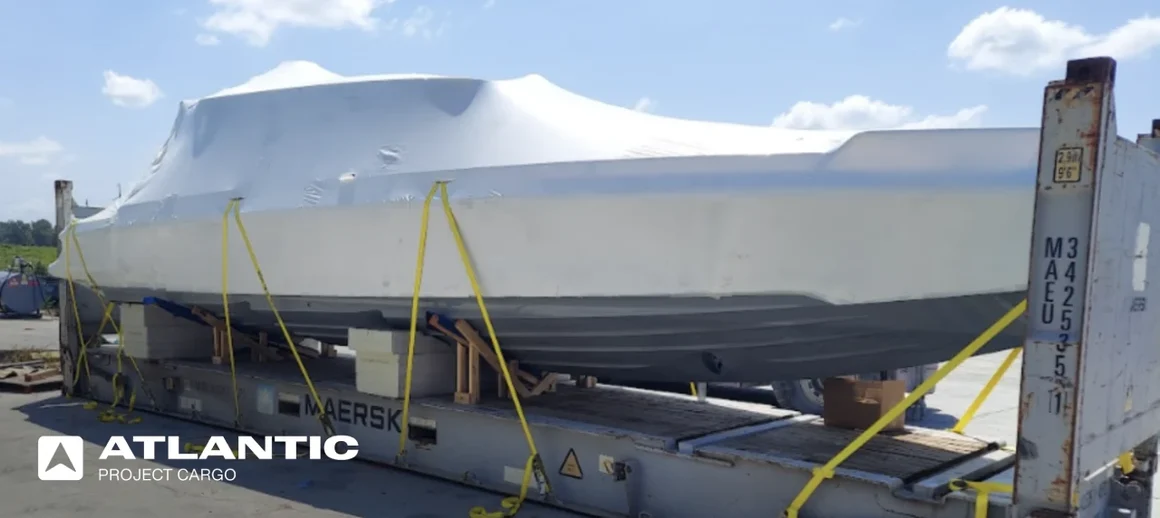
The Axopar was set into a cradle matched to its hull and braced so it could not move during handling or at sea. The cradle was a steel-and-timber frame profiled to the hull’s deadrise, with the vessel chained and lashed to the flat rack at reinforced structural points.
US export delay or documentation error
An incomplete or inconsistent export filing can hold a boat at origin, cause it to miss its vessel, and push the whole timeline back, with storage building up while the paperwork is corrected.
Export filing and document package.
The US export declaration and the supporting documents were prepared to match the hull, ownership, and value before booking cut-off. Atlantic Project Cargo filed the US Electronic Export Information (EEI) through AES and assembled it alongside the commercial invoice, bill of sale, and title/registration documents.
Weather and salt exposure in transit
Carried on deck or on a flat rack, the boat faces salt spray, UV, and moving air for the length of the crossing, which can mark surfaces and corrode fittings if the hull is unprotected.
Protective preparation for the crossing
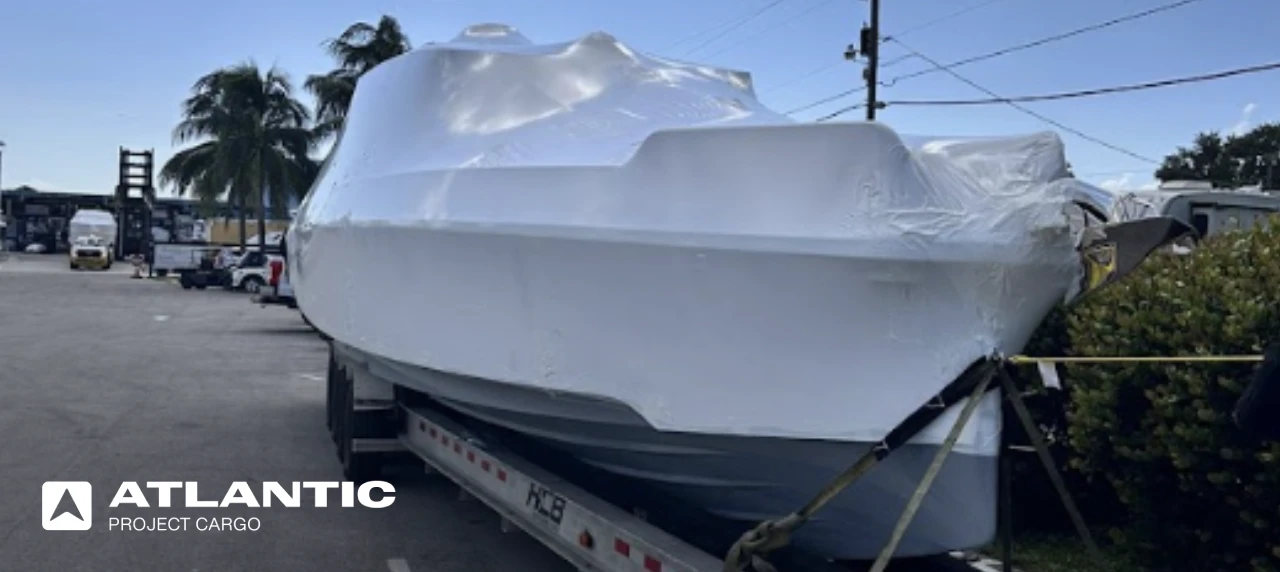
The hull and vulnerable fittings were protected for open-ocean carriage before loading, so the boat was covered against the conditions it would meet. Shrink-wrap over a padded frame protected the hull and superstructure, with deck fittings, electronics, and glass individually wrapped.
Arrival snag at the Spanish border
A boat can reach the Mediterranean and still sit, if the onward connection to Palma or the import formalities are not ready. Missing or mismatched documents at the EU border, or a missed feeder connection, can mean storage, demurrage, and a delayed launch.
Coordinated arrival handover
The export documents and shipping paperwork were assembled so the boat arrived ready for the agreed destination handling, with the onward feeder connection to Palma booked to align with the transatlantic leg’s arrival at the Mediterranean hub port. A Palma-based customs agent handled Spanish import clearance, with launch coordinated locally at the receiving marina.
How the timeline played out
The export ran through eight stages, from the first booking through to the handover in Palma.
Booking & planning
Route, ocean option, and the boat’s dimensions confirmed
1 week
Survey and condition record
Hull condition and identifying details documented
2 days
Cradle and protection
Boat cradled, braced, and protected for the crossing
3 days
US export documentation
Export declaration and shipping documents completed
2 days
Loading and departure
Boat loaded and secured aboard the vessel at Fort Lauderdale
1 day
Ocean crossing
Carried from Fort Lauderdale to Palma de Mallorca
3 weeks
Mediterranean transshipment
Trans-shipped by feeder/short-sea service to Palma de Mallorca.
1 week
Arrival and handover
Released in Palma for destination handling.
4 days
How Each Phase Was Handled
Three phases held the real work of this export: preparing and cradling the hull, clearing it out of the United States, and getting it across and handed over in Palma.
Survey, cradle, and protection
Before the Axopar left the yard, its condition was recorded and its identifying details captured, giving a documented starting point for the crossing. The hull was then set into a cradle matched to its shape and braced so it could not move, with vulnerable surfaces and fittings protected against salt, spray, and sun for the open-ocean leg.
The aim through this phase was to hand the vessel to the carrier already prepared, so nothing about the boat’s readiness was left to the terminal. The cradle was a steel-and-timber frame built to the hull’s lines, with shrink-wrap and padded protection applied by Atlantic Project Cargo’s yard team ahead of loading.
Condition record — Pre-shipment documentation of the hull’s state, supporting the arrival baseline and any insurance need. Hull identification — Boat details captured and checked against the commercial and shipping documents. Cradle and bracing — Set into a hull-matched cradle and braced against movement in transit.
US export clearance and documentation
Exporting the boat out of the United States meant preparing the export filing and a document set consistent with the hull, its ownership, and its declared value. The paperwork was assembled and checked ahead of the vessel’s cut-off, so the shipment was ready to load rather than waiting on corrections.
Atlantic Project Cargo completed the US export declaration.
Export declaration — US export filing prepared to match the hull and value, and filed by Atlantic Project Cargo. Document package — Commercial invoice, ownership documentation, and shipping papers assembled and checked. Booking alignment — Documents readied against the ocean booking and its cut-off.
Ocean crossing, transshipment, and Palma handover
With the boat loaded and secured, the Axopar crossed from Fort Lauderdale to a Mediterranean hub port, where it was transshipped onward by feeder/short-sea service to Palma de Mallorca. On the Spanish side, the boat was handed over for the agreed destination handling, which is where EU and Spanish import formalities apply before an owner can use the vessel.
A Palma-based customs agent handled Spanish import clearance, with launch and final delivery to the owner’s berth coordinated locally.
Ocean carriage — Booked and carried on a service suited to a cradled hull of this size. Shipment tracking — Followed from departure at Fort Lauderdale to arrival in Palma. Destination handover — Released per the agreed scope. A Palma-based customs agent handled Spanish import clearance, with launch and final delivery coordinated at the receiving marina.
Need to Export a Boat or Yacht?
Atlantic Project Cargo coordinates international boat and yacht shipping for owners, dealers, and builders, including hull preparation and cradling, ocean booking, export documentation, and arrival coordination. Marine cargo insurance can be arranged for the crossing.
Every phase of the shipment, what happened in it, and how long it took — door to door.
PhaseWhat HappenedDuration
01Booking & planningRoute, ocean option, and boat dimensions confirmed.1 week
02Survey and condition recordHull condition and identifying details documented.2 days
03Cradle and protectionBoat cradled, braced, and protected for the crossing.3 days
04Export documentationUS export declaration and shipping documents completed.2 days
05Loading & departureBoat loaded and secured aboard the vessel at Fort Lauderdale.1 day
06Ocean crossingCarried from Fort Lauderdale to a Mediterranean hub port.3 weeks
07Mediterranean transshipmentTrans-shipped by feeder/short-sea service to Palma de Mallorca1 week
08Arrival and handoverBoat released in Palma for destination handling.4 days
Total timelineBooking in Fort Lauderdale through Palma handover7 weeks
Result
The Axopar 37 XC was prepared, cradled, and documented for export, loaded at Fort Lauderdale, carried by sea via a Mediterranean hub port, and transshipped to Palma de Mallorca, where it was handed over according to the agreed destination scope.
Prepared
Hull surveyed, cradled, and protected for the Atlantic crossing
Cleared
Prepared for US export with a matching document set (filing responsibility: Atlantic Project Cargo)
Tracked
Followed from departure at Fort Lauderdale, via a Mediterranean hub port, to arrival in Palma
Handed over
Released in Palma per the agreed scope (import clearance: local Spanish customs agent; launch: coordinated with receiving marina)
All success stories
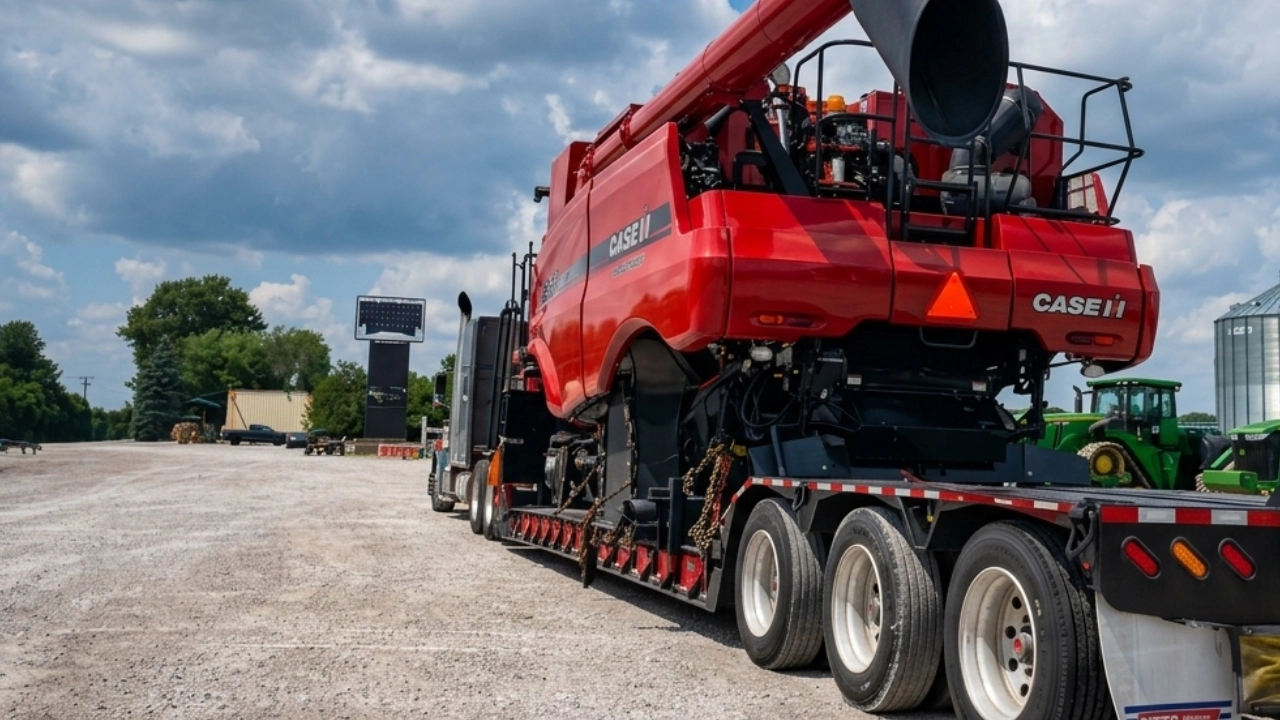
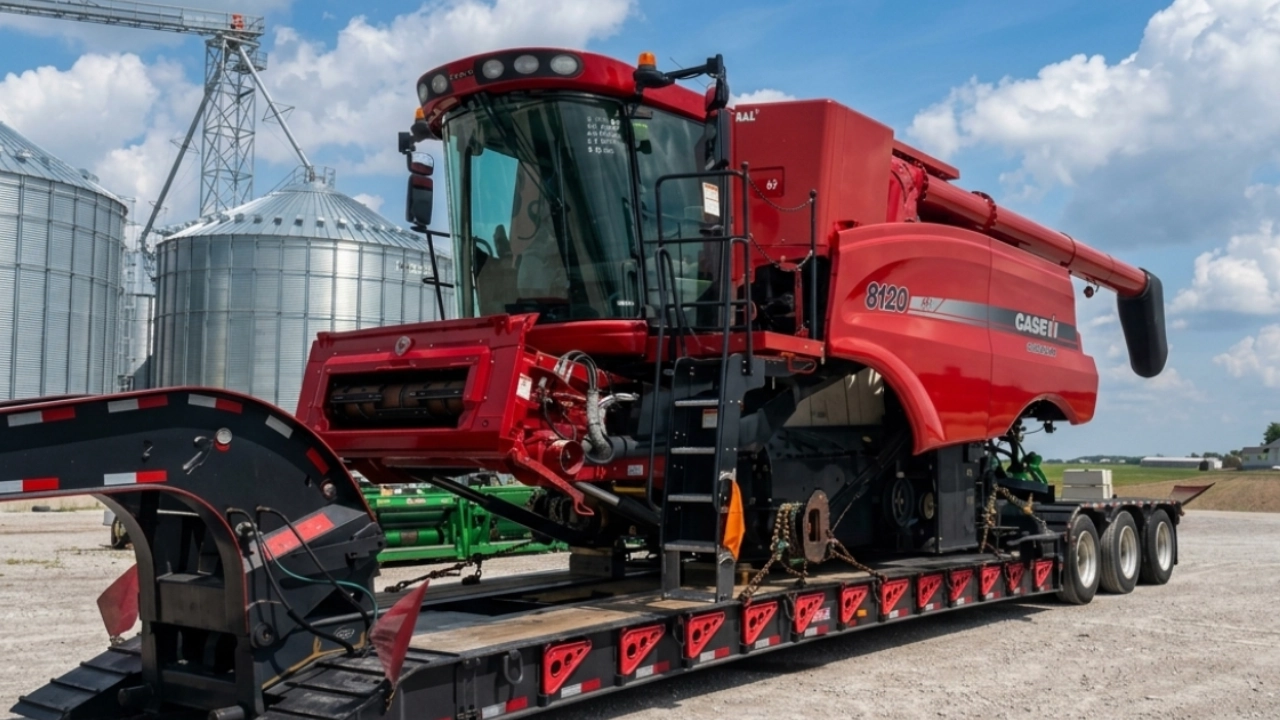
Case IH 8120 Combine Shipping from the USA to Egypt
Time:38 days, pickup in Georgia to final delivery in Ismailia
This case follows the export of a used 2012 Case IH 8120 Axial-Flow combine from Albany, Georgia, sourced through JumboBee for a buyer in Ismailia Governorate, Egypt. Atlantic Project Cargo coordinated the shipment from pickup in Georgia through delivery in Egypt. The Case IH 8120 is a Class 7 single-rotor grain combine, and its weight, […]
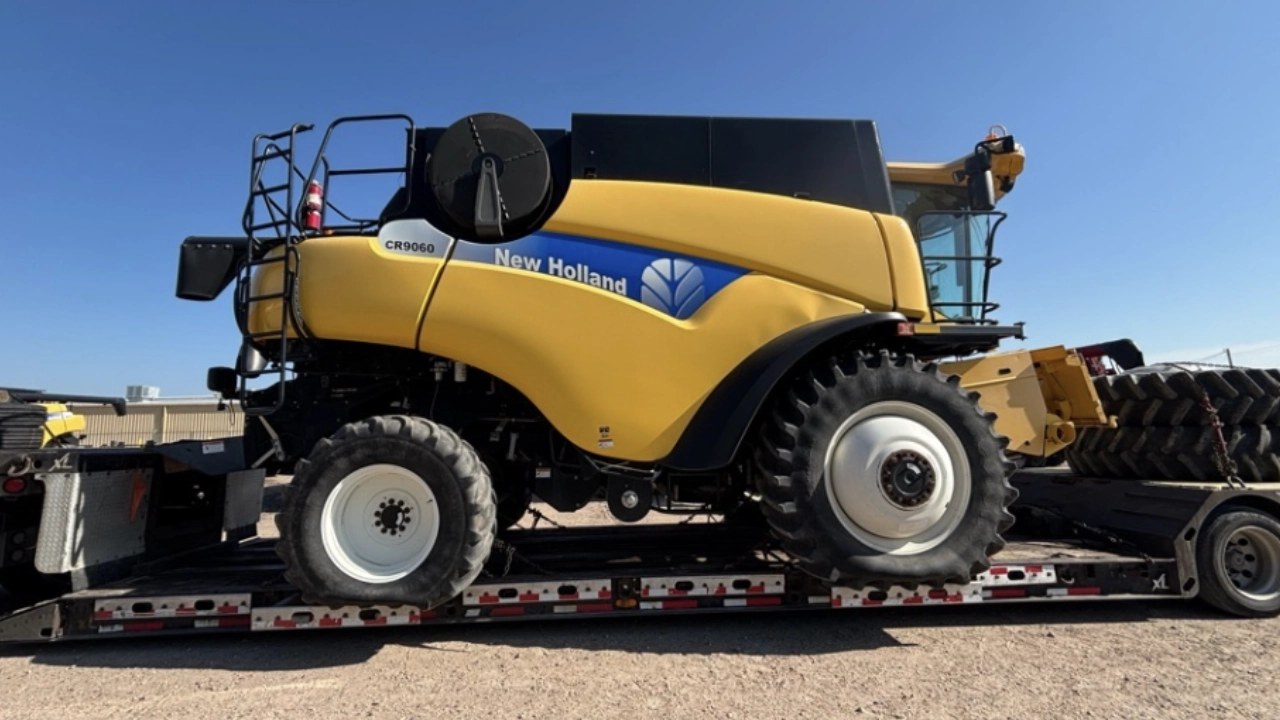
New Holland CR9060 Combine Shipping from the USA to Peru
Time:34 days, pickup in California through delivery in Peru
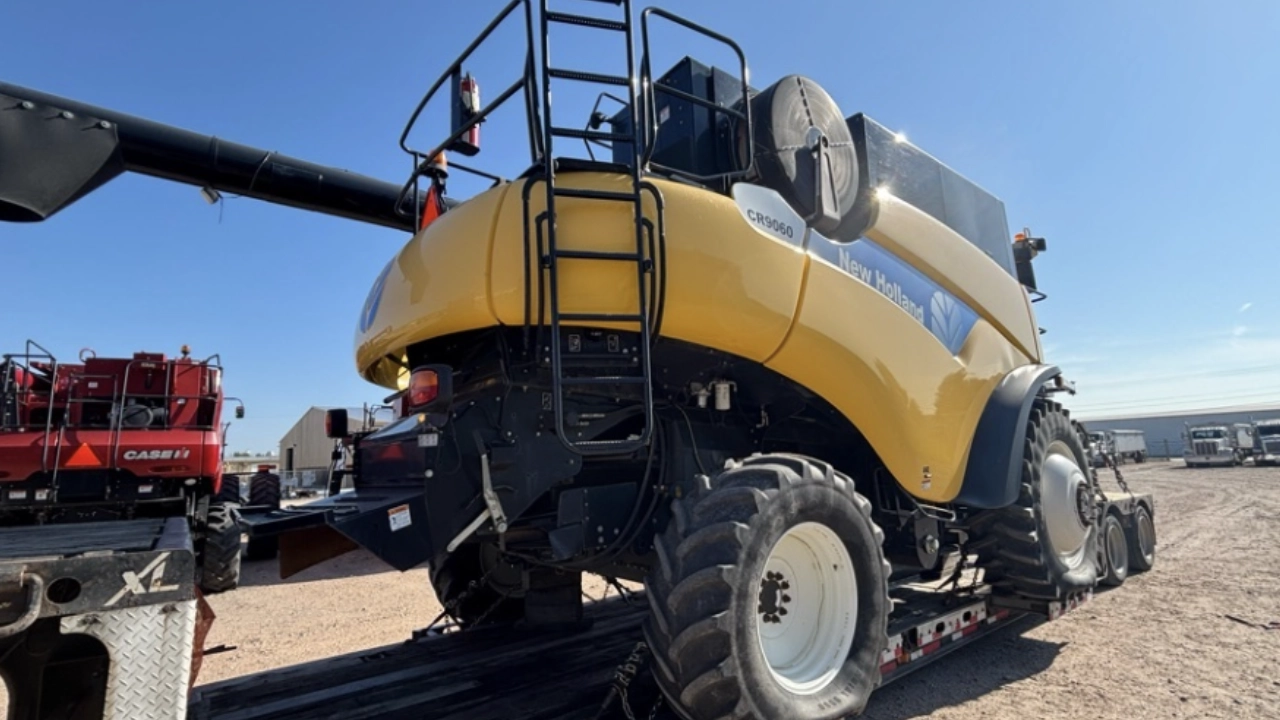
The New Holland CR9060 was purchased through JumboBee by an agricultural operation on Peru’s north coast, with Atlantic Project Cargo coordinating the international transport from California to the buyer’s destination. The machine was located in the Sacramento / Central Valley area and needed to reach a grain-producing operation near Chiclayo, in the Lambayeque region of […]
Jaguar XJ220 Air Freight from New York to Singapore
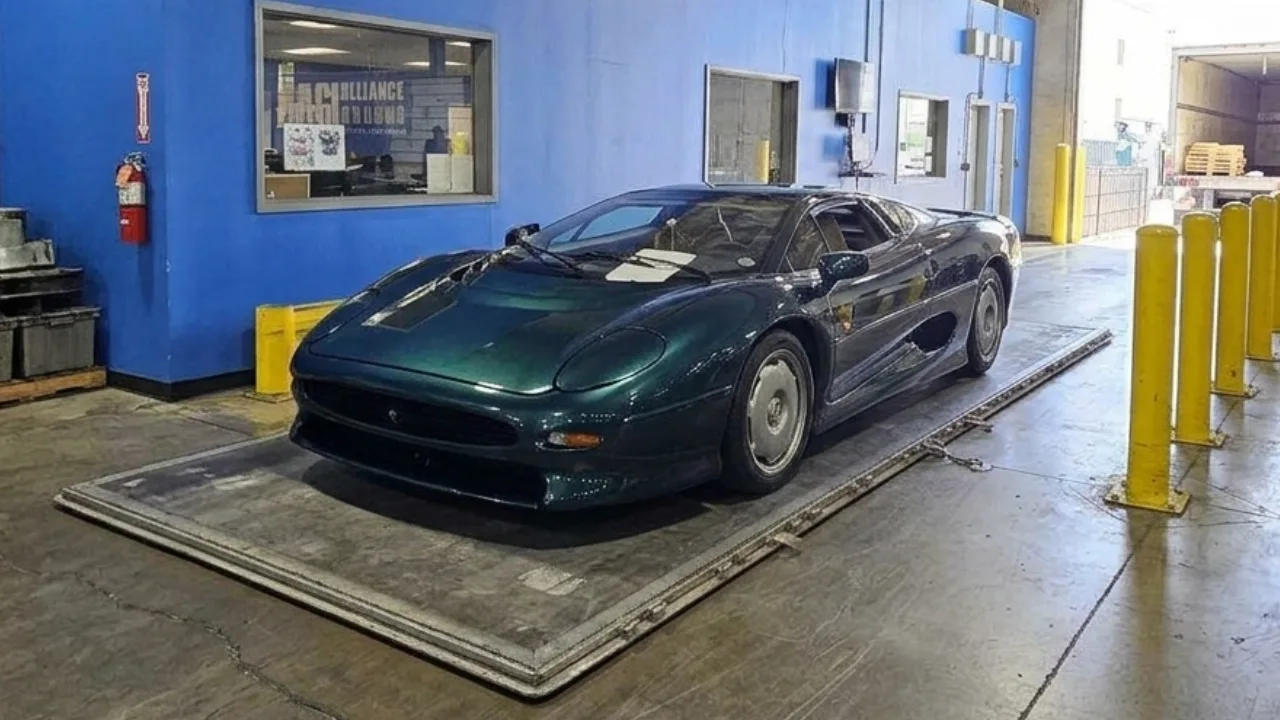
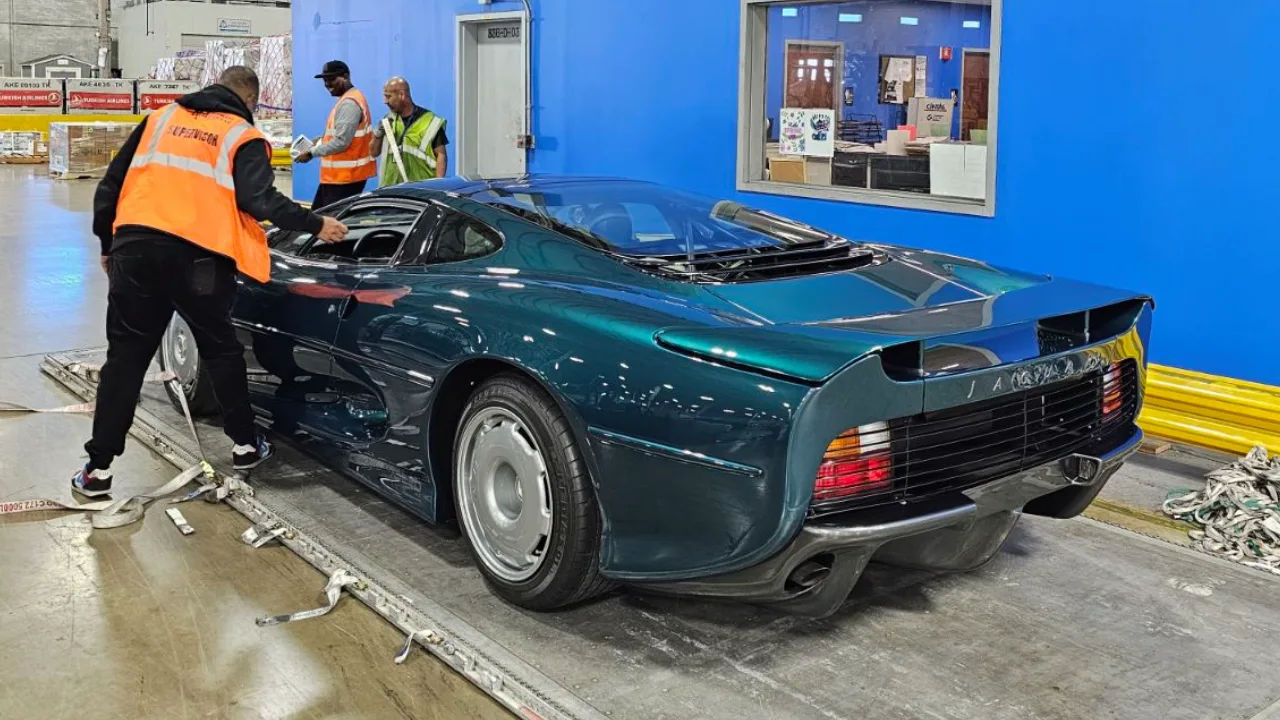
This case follows the air freight of a Jaguar XJ220 from New York to Singapore, departing from John F. Kennedy International Airport. Air freight was chosen for a vehicle of this value and rarity because it shortens the door-to-door timeline and keeps the car out of the marine environment, though it comes with its own […]
What are You Searching for?
Atlantic Project Cargo uses cookies to enhance your website experience. By continuing to browse, you agree to our use of cookies. For more information, please visit our Privacy Policy.