Jaguar XJ220 Air Freight from New York to Singapore Shipped United States → Singapore
International air transport of a rare collector vehicle, with UN3166 dangerous goods compliance, aircraft ULD loading, and end-to-end export coordination.
Total Timeline
10 days from collection to destination handover
Method
International Air Freight
Worldwide Shipping
Americas · Europe · Asia Pacific · Africa
100,000+
Shipments Worldwide
20+ Years
In Heavy Cargo Logistics
4.9 Rating
on Google · 50+ reviews
Licensed Freight Forwarding Company
Home
Projects
Jaguar XJ220 Air Freight from New York to Singapore Shipped from United States to Singapore
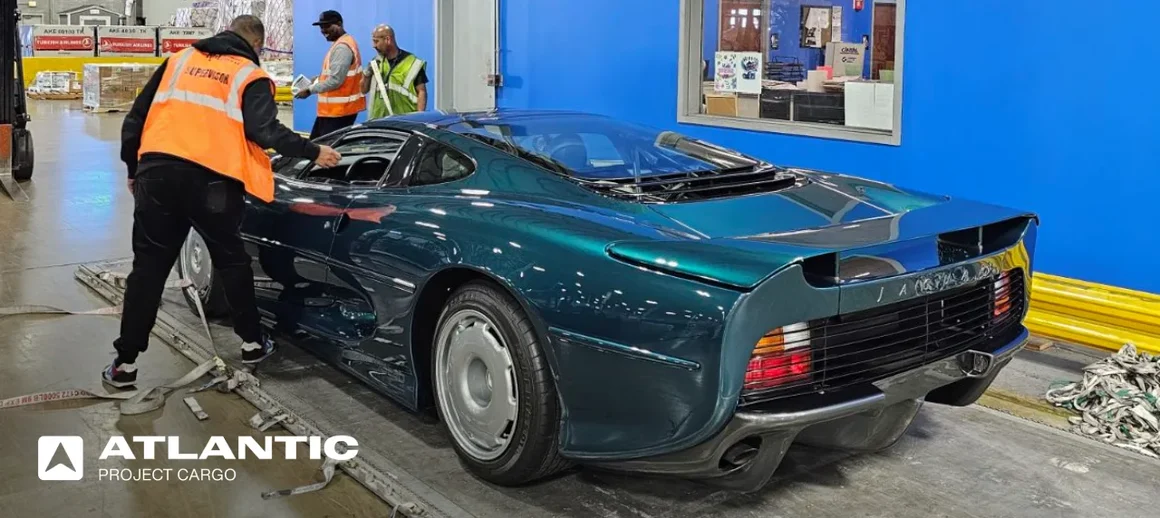
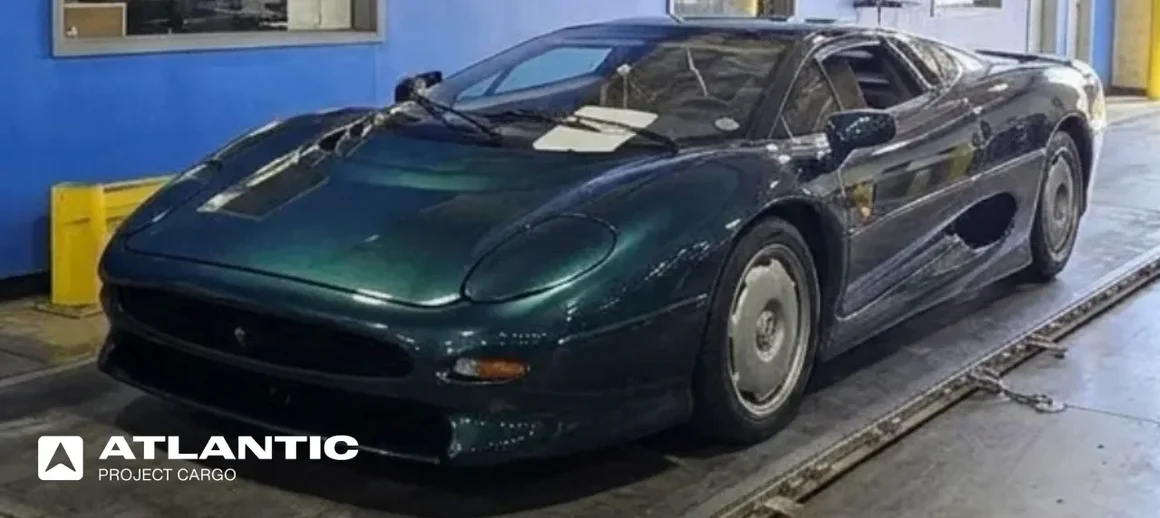
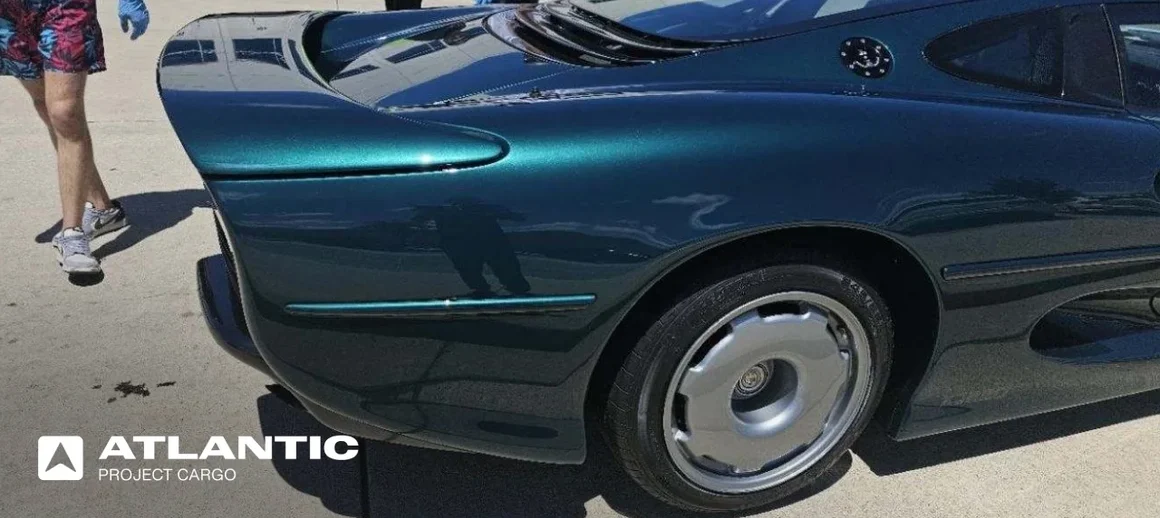
This case follows the air freight of a Jaguar XJ220 from New York to Singapore, departing from John F. Kennedy International Airport. Air freight was chosen for a vehicle of this value and rarity because it shortens the door-to-door timeline and keeps the car out of the marine environment, though it comes with its own version of the dangerous goods rules that apply to any fuel-powered vehicle in transit, by air or by sea.
The reason is simple: a running, fuel-powered car is dangerous goods the moment it goes on an aircraft. Under the IATA Dangerous Goods Regulations, a flammable-liquid-powered vehicle is classified under UN3166, and an airline will not accept it until the vehicle is prepared, documented, and presented exactly as those rules require.
Transporting a vehicle by air therefore takes more than booking cargo space. It involves vehicle preparation, dangerous goods compliance, pre-shipment condition documentation, secure loading onto an aircraft ULD pallet, a complete export document package, and formal airline cargo acceptance. Atlantic Project Cargo coordinated these stages so the car was presented to the airline ready to fly.
Shipping Overview
EquipmentJaguar XJ220
OriginJohn F. Kennedy International (JFK), United States
Total Timeline10 days from collection to destination handover
Key Takeaways
Why projects like this succeed — or get stuck at the port.
A running car is dangerous goods by air The Jaguar’s flammable-liquid fuel system places it under UN3166 in the IATA Dangerous Goods Regulations. That classification, not the car’s value, is what governs how it must be prepared and papered.
Fuel and battery preparation come first Under 49 CFR 173.220 — the U.S. hazmat rule that governs UN3166 gasoline-powered vehicles — no more than 500 mL (about 17 fl oz) of residual fuel may remain in the tank, fuel lines, and engine, with all fittings securely closed to prevent leakage, and the battery must be securely fastened with terminals protected against short circuit, heat, and damage.
The ULD pallet is the vehicle’s platform Rather than a container, the car travels on an aircraft unit load device (ULD) pallet sized and rated for air transport, so it can be positioned, restrained, and loaded through the aircraft door.
Restraint planning protects the bodywork A supercar’s low clearance, limited tie-down points, and valuable panels make securing it a planned task. Positioning and restraints are worked out before the car reaches the pallet, not improvised at the ramp.
Condition is documented before it moves A detailed pre-shipment condition record and VIN verification establish the car’s exact state before collection and terminal handling, so any later question has a factual baseline.
Paperwork decides whether it flies. Export documentation and the dangerous goods declaration have to be complete and consistent for the airline to accept the cargo. As an IATA-trained and certified DG shipper, our team prepared and signed the Shipper’s Declaration for Dangerous Goods (DGD) and supplied the airline with the completed form and the required UN-coded hazard placards. Incomplete paperwork is a common reason a booking is rolled to a later flight.Structured logistics planning eliminates delays and protects the timeline end-to-end.
Four Risks, Four Fixes
Each risk below was real for this shipment, and each was managed as part of the plan.
Airline rejection on DG non-compliance
A vehicle offered for air transport can be refused at acceptance if its UN3166 classification, preparation, or paperwork does not meet the airline’s and IATA’s requirements. A refusal at the terminal means storage costs and a missed flight.
Vehicle preparation and DG documentation
The car was prepared and documented against UN3166 requirements before it was presented to the airline, so the classification, condition, and declaration matched what the carrier expected. Because our team is IATA-trained and certified in dangerous goods, we were able to prepare and sign the Shipper’s Declaration (DGD) directly and hand the airline both the completed form and the correct UN-coded placards — removing a common point of rejection at acceptance.
Damage during ULD loading and flight
Low ground clearance, valuable bodywork, a limited number of factory tie-down points, and normal aircraft handling all put a supercar at risk of contact damage or movement in transit.
Controlled positioning and approved restraints
The Jaguar was positioned on the ULD pallet under control and secured with restraints suited to the vehicle and to air transport, planned to prevent movement during handling and flight. Typical practice for a vehicle of this type includes wheel chocking, rated ratchet tie-down straps anchored to the pallet’s rated tie-down points, and corner or panel protection padding at contact points.
Undocumented pre-existing damage.
Without a clear record of the car’s condition before it moved, any mark found later has no baseline, a genuine problem on a vehicle where a single panel can be worth a significant sum.
Pre-shipment condition inspection
The car’s condition and identifying details were recorded before collection, with the VIN and documentation verified, giving every party a shared factual starting point for the shipment.
Missed flight or acceptance delay
Incomplete paperwork or late delivery to the cargo terminal can mean a rejected booking, storage charges, and a wait for the next suitable flight, costly on a time-sensitive move.
Coordinated export and airline acceptance
Export documents, the DG documentation, terminal delivery, and the airline’s cut-off were coordinated so the shipment met acceptance requirements in time for its planned departure.
How the timeline played out
From booking to delivery — the full 30–35 day journey, phase by phase.
Booking & planning
Scope, air freight option, and DG requirements confirmed
2 days
Vehicle inspection
Condition and identifying details documented
Same day as collection
Vehicle and DG preparation
Prepared under applicable UN3166 requirements
2 days
ULD loading
Positioned and secured on the aircraft pallet
Same day as terminal delivery
Documentation and acceptance
Export and DG documents completed; cargo accepted at JFK
2 days
Air freight
Flown from New York to Singapore
2 days
Arrival and handover
Released for destination handling
3 days
How Each Phase Was Handled
Three phases carried the real weight of this project: preparing the car, meeting UN3166 and loading it onto the ULD, and getting it documented, accepted, and flown.
Vehicle inspection and preparation
Before the Jaguar left for the cargo facility, its condition was documented and its identity verified. The car was collected under controlled handling, and a pre-shipment inspection recorded its exact state along with the VIN, checked against the shipping documents. The fuel-system and battery preparation required for a UN3166 vehicle was carried out at this stage, and the car was moved to the cargo facility in a way that kept unnecessary handling to a minimum. Fuel and battery preparation for a UN3166 vehicle typically means draining the tank to a minimal residual level within the airline’s stated limit and disconnecting or securing the battery terminals. The exact fuel level, battery handling method, and the technician or party who carried it out for this shipment should be confirmed against the project record.
Condition documentation — Pre-shipment record of the car’s state, supporting the condition baseline and any insurance need. Vehicle identification — VIN and documents verified against the commercial invoice and shipping paperwork. Controlled collection — Collected and moved to the facility with minimal handling to protect the bodywork.
UN3166 compliance and ULD loading
Because the Jaguar is a flammable-liquid-powered vehicle, it falls under UN3166 in the IATA Dangerous Goods Regulations, so the applicable dangerous goods requirements applied to its preparation and paperwork. Once the car cleared the airline’s approval requirements, it was positioned on an aircraft-compatible ULD pallet and secured with restraints planned to prevent movement during handling and flight, with protection for the vehicle’s panels and low clearance. Vehicles of this size are commonly loaded onto a flat, aircraft-rated pallet sized for the aircraft’s cargo hold, secured with rated tie-down straps and protected with corner or panel padding. Our team is IATA-trained and certified in dangerous goods handling. As the certified DG shipper on this move, we prepared and signed the Shipper’s Declaration for Dangerous Goods (DGD) in accordance with the IATA Dangerous Goods Regulations, and supplied the airline with the completed DGD form along with the UN-coded hazard placards required for the shipment.
DG classification — Handled as a UN3166 vehicle under IATA DGR, the correct entry for a flammable-liquid-powered car. DG documentation — Our IATA-trained team prepared and signed the Shipper’s Declaration (DGD) and supplied the airline with the completed form and UN-coded hazard placards. Aircraft-compatible ULD — Positioned on a ULD pallet sized and rated for air transport of the vehicle. Approved restraints — Secured with restraints suited to the car and to air handling, planned to stop movement in transit.
Export documentation, air freight, and arrival
The export document package was assembled and checked for consistency, and the cargo was presented to the airline for acceptance at JFK ahead of the cut-off. Once accepted, the Jaguar flew to Singapore, and the shipment was tracked to arrival and handed over according to the agreed destination scope. U.S. export shipments of this value typically require an Electronic Export Information (EEI) filing through the Automated Export System (AES) in addition to the standard commercial documentation. The export package for a shipment like this commonly includes a commercial invoice, packing list, air waybill, dangerous goods declaration, and proof of ownership or title. Destination clearance in Singapore is typically handled by a local customs broker or the receiving agent named in the booking.
Export documentation — Commercial invoice, packing list, air waybill, dangerous goods declaration, and title/ownership documentation. Under 19 CFR 192.2(c)(1), a used vehicle exported by aircraft cannot be exported unless the carrier or its agent has the title or other ownership documents at least 72 hours before departure, with the VIN matching across the title, the air waybill, and the AES/EEI export filing (required for vehicle exports over $2,500 under the Foreign Trade Regulations). That 72-hour title requirement is why VIN verification happens as early as Phase 1’s pre-shipment inspection. Shipment tracking — The cargo was tracked from acceptance at JFK through to arrival in Singapore. Destination coordination — Handed over per the agreed scope; on a typical shipment of this kind, Singapore import clearance and any onward inland delivery are handled by the receiving agent or customs broker named on the air waybill, unless the client arranges direct airport collection.
Need to Ship a Collector Vehicle by Air?
Atlantic Project Cargo coordinates international air freight for collector, luxury, and specialty vehicles, including vehicle preparation, dangerous goods documentation, ULD loading, export coordination, and destination handling.
Every phase of the shipment, what happened in it, and how long it took — door to door.
PhaseWhat HappenedDuration
01Booking & planningShipment scope, air freight option, and DG requirements confirmed.2 days
02Vehicle collectionJaguar collected and delivered to the cargo facility.1 day
03InspectionVehicle condition and identifying details documented.Same day as collection
04DG preparationVehicle prepared under applicable UN3166 requirements.2 days
05DocumentationExport and dangerous goods documents completed.2 days (in parallel with preparation)
06ULD loadingVehicle positioned and secured on the aircraft pallet.Same day as terminal delivery
07Airline acceptanceCargo and documentation accepted at JFK.Same day, ahead of cargo cut-off
08Air freightVehicle transported from New York to Singapore.2 days transit
09Arrival and handoverCargo released for destination handling or final delivery.3 days
Door to doorCollection in New York through destination handover10 days
Result
The Jaguar XJ220 was accepted for air transport after completion of the required vehicle preparation, dangerous goods documentation, and ULD securing procedures. The vehicle arrived in Singapore and was handed over according to the agreed destination scope.
Accepted
Cleared airline cargo acceptance for air transport as a properly classified and documented UN3166 vehicle.
Secured
Positioned and restrained on the aircraft ULD pallet under a planned securing method
Tracked
Monitored from acceptance at JFK through to arrival in Singapore
Delivered
Handed over per the agreed destination scope in Singapore
All success stories
Case IH 8120 Combine Shipping from the USA to Egypt
Time:38 days, pickup in Georgia to final delivery in Ismailia
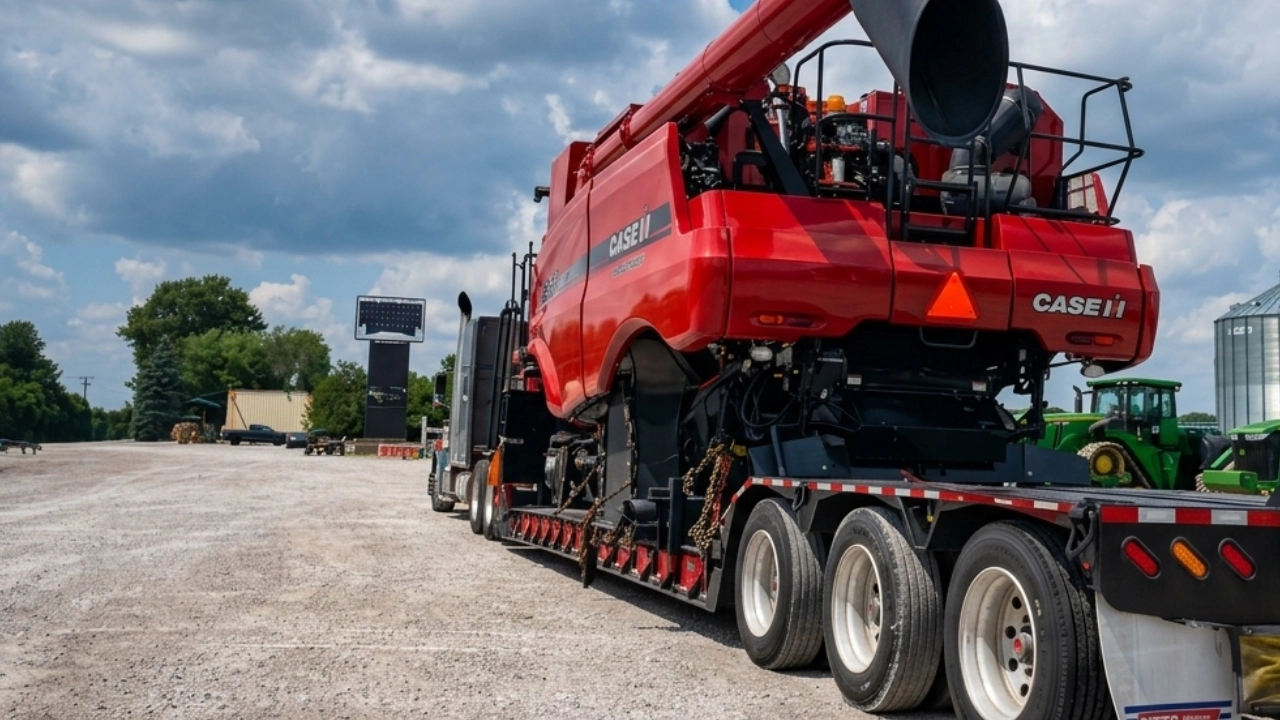
This case follows the export of a used 2012 Case IH 8120 Axial-Flow combine from Albany, Georgia, sourced through JumboBee for a buyer in Ismailia Governorate, Egypt. Atlantic Project Cargo coordinated the shipment from pickup in Georgia through delivery in Egypt. The Case IH 8120 is a Class 7 single-rotor grain combine, and its weight, […]
New Holland CR9060 Combine Shipping from the USA to Peru
Time:34 days, pickup in California through delivery in Peru
The New Holland CR9060 was purchased through JumboBee by an agricultural operation on Peru’s north coast, with Atlantic Project Cargo coordinating the international transport from California to the buyer’s destination. The machine was located in the Sacramento / Central Valley area and needed to reach a grain-producing operation near Chiclayo, in the Lambayeque region of […]
John Deere X9 1100 Combine Shipping – USA to New Zealand
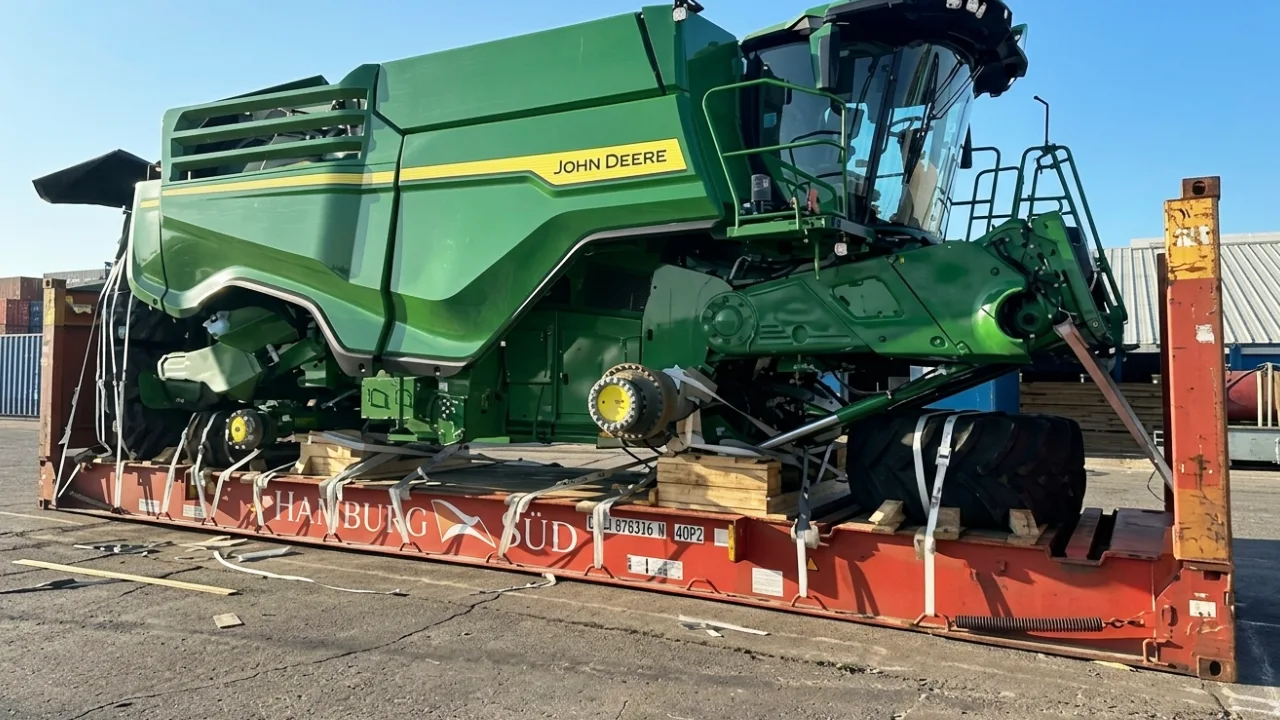
This John Deere X9 1100 combine was sold to an arable and cropping operation in Canterbury, New Zealand, with the machine located in Fargo, North Dakota. A combine of this size doesn’t travel in its field-ready configuration: the header had to come off and the unloading auger folded before the machine could move by road […]
What are You Searching for?
Atlantic Project Cargo uses cookies to enhance your website experience. By continuing to browse, you agree to our use of cookies. For more information, please visit our Privacy Policy.