Hours of operations:
9AM - 5PM / UTC -5 (EST)

Types of Bill of Lading Explained for Heavy Equipment Shipping

February 25, 2026
Shipping Quote
Customs Duties
Drayage Rate
Do you already own this equipment?

You Can Request a New Quote Every 15 Minutes

Please wait or contact us at [email protected]

Thank you for Choosing Us!

Looking to buy or sell heavy equipment?
With JumboBee, you can trade online with financing options and worldwide shipping.

Check Inventory
Calculate Import Duties
Get a free, no-obligation estimate of your import duties!
Calculate Import Duties
Get a Drayage Estimate
Get a free drayage estimate tailored to your exact needs!
Check a Drayage Rate
Home Insights Types of Bill of Lading Explained for Heavy Equipment Shipping
Written by
Atlantic Project Cargo Editorial Team

Key Takeaways

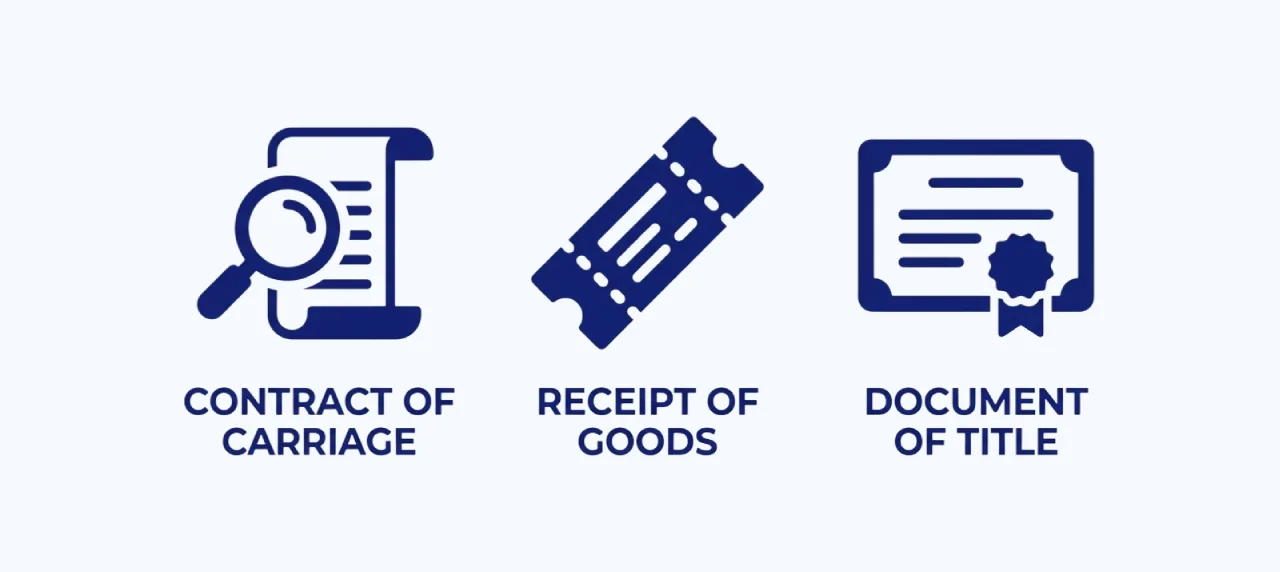
  • A bill of lading serves three core functions: receipt of goods, contract of carriage, and – depending on type – document of title.
  • Choosing the correct type of bill of lading is critical, as it determines cargo control, ownership transfer, and payment release conditions.
  • Accuracy is essential in heavy equipment shipping, especially cargo descriptions, weight, dimensions, and serial numbers to avoid customs or insurance issues.
  • Clean vs. claused bills of lading significantly impact insurance and trade finance, particularly for used machinery shipments.
  • Documentation errors can cause costly delays, including cargo holds, demurrage charges, rejected bank documents, and project disruptions.

A bill of lading (B/L) is one of the most fundamental documents in global shipping and logistics. It is issued by a carrier, vessel operator, or an authorized agent – such as a freight forwarder – after cargo has been received for transport. The document formally records what is being shipped, under what terms, and to whom the cargo will ultimately be delivered.

In practical terms, the meaning of the bill of lading goes far beyond basic documentation. It is a legal instrument that connects the physical movement of goods with commercial contracts, financial transactions, insurance coverage, and regulatory compliance. Without a valid bill of lading, international trade – especially for high-value or oversized cargo – cannot function efficiently.

When shippers ask, What is a bill of lading?, the most accurate answer is that it serves as the central reference document for all parties involved in the transport chain. Ports use it to release cargo, customs authorities use it to validate declarations, banks use it to control payments, and insurers rely on it to assess risk and liability.

For heavy equipment and industrial machinery, the bill of lading is especially critical. These shipments often involve large values, non-containerized cargo, and specialized handling methods. A minor documentation error can result in significant delays, additional port charges, or disputes that disrupt entire projects.

Calculate Import Duty in Minutes!

Bill of Lading Definition Explained Simply

From a legal and operational perspective, the bill of lading definition is based on three core functions that exist simultaneously within a single document.


1. Receipt of Goods

First, the bill of lading acts as a receipt. It confirms that the carrier has received the cargo in an apparent condition as described at the time of loading. This is particularly important for machinery and used equipment, where visible wear, damage, or missing components must be accurately recorded.

The condition noted on the bill of lading becomes a reference point for any future cargo damage claims. If damage is not recorded at origin, proving that it occurred during transport becomes far more difficult.


2. Contract of Carriage

Second, the bill of lading serves as formal evidence of the contract of carriage between the shipper and the carrier. In international shipments handled through professional ocean freight services such as those provided by Atlantic Project Cargo, this document clearly defines the responsibilities, rights, and liabilities of each party involved in the transport process.

This includes:

  • Applicable international conventions
  • Carrier liability limits
  • Agreed routing and final destination
  • Terms governing loss, damage, or delay

In heavy equipment shipping, where cargo may pass through multiple ports, transshipment hubs, and handling stages, the contract of carriage establishes who is responsible at each point of the journey—ensuring transparency, risk allocation, and legal protection throughout the entire ocean freight movement.


3. Document of Title (in Certain Forms)

Third, depending on its type, a bill of lading can function as a document of title. This means it can represent ownership of the goods while they are in transit.

Negotiable bills of lading allow ownership to be transferred by endorsement, enabling cargo to be sold or financed before it reaches its destination. This feature plays a critical role in international trade and project-based equipment sales.

What Does a Bill of Lading Mean in Real-World Shipping?

In real-world logistics, the bill of lading is the document that aligns physical cargo movement with commercial and legal reality. It ensures that everyone involved in a shipment – often across different countries and legal systems – is working from the same agreed information.

Without a properly issued bill of lading:

  • Cargo cannot be legally released at destination
  • Banks will not release funds under letters of credit
  • Insurance claims may be rejected
  • Customs authorities may delay or inspect the shipment

For oversized or heavy equipment cargo, these risks are amplified. Delays do not only increase shipping costs; they can halt construction projects, mining operations, or industrial installations that depend on timely delivery.

Why the Bill of Lading Exists

Global trade involves multiple independent stakeholders who may never directly interact with one another. The bill of lading exists to create a standardized, trusted framework that all parties can rely on.

Historically, as maritime trade expanded, merchants needed a way to prove that goods had been loaded, transferred, and sold while vessels were still at sea. The bill of lading evolved to meet this need and remains central to modern logistics despite advances in digital systems.

Today, the bill of lading connects – shippers exporting goods, carriers transporting cargo, buyers receiving shipments, banks financing transactions, insurers covering risk, authorities enforcing regulations.

In heavy equipment logistics, where shipments are often unique rather than standardized, this shared reference point is essential.

Why a Bill of Lading Is Important

The importance of a bill of lading can be divided into three key areas: legal, commercial, and operational.

Legal Importance

Legally, the bill of lading is the primary document used to determine responsibility when cargo is lost or damaged. Courts, insurers, and arbitrators rely on it as evidence of the agreed transport terms and the condition of the goods at loading.

Commercial Importance

Commercially, the bill of lading enables payment and financing. In international trade, banks often require original bills of lading before releasing funds. Without a compliant B/L, payment delays or disputes are almost inevitable.

Operational Importance

Operationally, the bill of lading guides ports, terminals, and logistics providers on how cargo should be handled and released. Accurate information ensures smoother transitions between transport modes and faster clearance at destination.

For heavy equipment shippers, the bill of lading is not just administrative paperwork – it is a core risk management tool.

Who Uses a Bill of Lading?

A bill of lading is used throughout the shipment lifecycle by multiple parties:

  • Shipper: The exporter or seller of the equipment
  • Carrier: The ocean line, RoRo operator, airline, or inland carrier
  • Consignee: The party entitled to receive the cargo
  • Notify Party: The entity notified when cargo arrives
  • Freight Forwarder: Often manages documentation and may issue a House Bill of Lading
  • Banks: Control release of cargo under trade finance arrangements
  • Insurers: Assess coverage and claims based on B/L details

Clear identification of each party is essential, especially in complex, multimodal heavy equipment shipments.

What Information Is Included in a Bill of Lading?

A bill of lading is only as effective as the accuracy of the information it contains. Even minor errors can lead to customs delays, cargo release issues, insurance disputes, or rejected banking documents. For this reason, understanding what information must appear on a bill of lading – and why each element matters – is essential for shippers, carriers, and logistics providers.

While formats may vary slightly between carriers, most bills of lading include a standardized set of fields designed to clearly define the shipment and the parties involved.

Core Information on a Bill of Lading

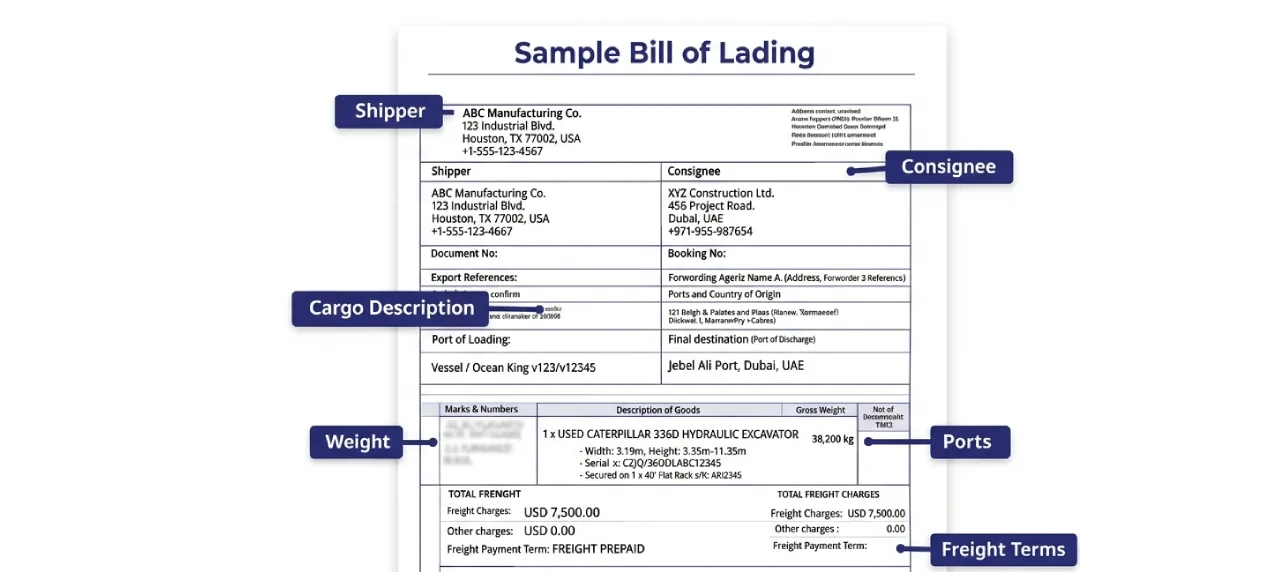
The following elements appear on nearly every bill of lading used in international shipping:

Shipper

The party exporting the goods. This must match the commercial invoice and export documentation. In heavy equipment shipments, incorrect shipper details can trigger export compliance issues.

Consignee

The party entitled to receive the cargo at destination. Depending on the type of bill of lading, this may be a named company or listed “to order.”

Notify Party

The entity to be informed when the cargo arrives. This is often the consignee, buyer, or customs broker.

Carrier

The shipping line, vessel operator, or transport provider responsible for moving the cargo under the contract of carriage.

Vessel and Voyage

Identifies the vessel and sailing, which is critical for tracking, customs filings, and insurance reference.

Port of Loading and Port of Discharge

Defines where cargo is loaded and where it is discharged. Errors here can cause misrouting or customs complications.

Cargo Description

A written description of the goods being shipped. This is one of the most critical fields on the bill of lading and a frequent source of disputes.

Weight, Dimensions, and Quantity

Used for vessel stowage planning, port handling, and regulatory compliance. For heavy equipment, verified measurements are essential.

Freight Terms

Indicates whether freight charges are prepaid or collect.

Dates and Signatures

Confirm when cargo was received and validate the document legally.


Why Cargo Description Accuracy Matters

The cargo description on a bill of lading must be precise and consistent with other shipping documents. Generic descriptions such as “machinery” or “equipment” are insufficient for most international shipments and may lead to customs inspections.

For industrial or heavy equipment, best practice is to include:

  • Equipment type and function
  • Manufacturer and model
  • Serial or identification numbers
  • New or used status

This level of detail protects both the shipper and the carrier by reducing ambiguity and documentation risk.

Types of Bill of Lading Explained

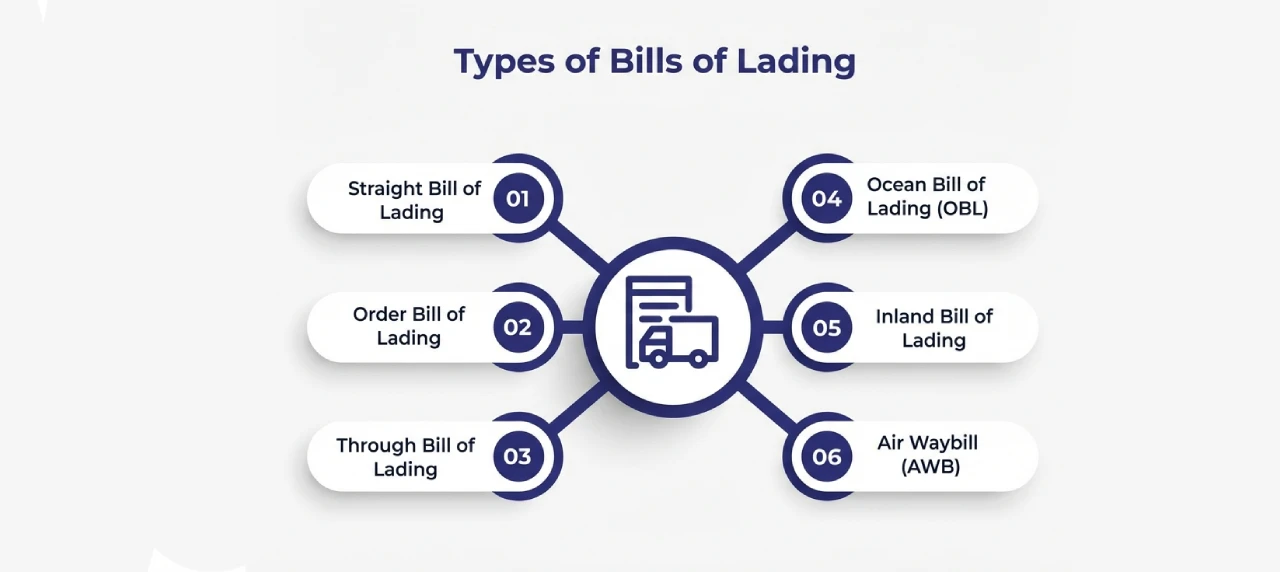
There are several types of bills of lading, each designed for specific commercial and logistical scenarios. Selecting the correct type is critical, as it affects cargo control, ownership transfer, and payment processes.

Straight Bill of Lading

A straight bill of lading is a non-negotiable document issued to a named consignee. Cargo can only be released to that consignee upon presentation of identification, not by endorsement of the document.

This type is commonly used when:

  • Buyer and seller have an established relationship
  • Payment has already been made
  • The shipment does not require trade finance

Straight bills of lading are frequently used in domestic shipping and low-risk international transactions.

Order Bill of Lading

An order bill of lading is a negotiable document that allows ownership of the goods to be transferred while in transit. It is typically issued “to order” or “to order of shipper.”

This type is widely used in international trade because it:

  • Enables goods to be sold before arrival
  • Supports letters of credit and documentary collections
  • Provides greater commercial flexibility

For high-value equipment shipments, order bills of lading are common when banks are involved in financing.

Bearer Bill of Lading

A bearer bill of lading allows cargo to be released to whoever physically holds the document. Because there is no named consignee, possession equals control.

Due to the high risk of theft or fraud, bearer bills of lading are rarely used in modern shipping and are generally discouraged.

Clean Bill of Lading

A clean bill of lading is issued when the carrier receives the cargo in apparent good order and condition, with no adverse remarks noted at loading.

Clean bills of lading are often required by:

  • Banks under letters of credit
  • Insurers for full coverage
  • Buyers as proof of acceptable shipment condition

For machinery shipments, obtaining a clean bill of lading may require pre-shipment inspections and careful cargo preparation.

Claused (Foul) Bill of Lading

A claused bill of lading – also known as a foul bill – includes remarks about visible damage, missing parts, or poor packaging at the time of loading.

While this protects the carrier, it can:

  • Limit insurance coverage
  • Delay payment under trade finance
  • Lead to disputes between buyer and seller

In heavy equipment logistics, used machinery often results in claused bills of lading unless condition is clearly documented and agreed upon.

Master Bill of Lading (MBL)

A master bill of lading is issued by the carrier to the freight forwarder or logistics provider who has contracted the space on the vessel.

The MBL governs the carrier’s responsibility and defines the legal relationship between the carrier and the forwarder.

House Bill of Lading (HBL)

A house bill of lading is issued by the freight forwarder to the shipper. It reflects the terms agreed between those parties.

For equipment shipments handled by forwarders, it is essential that the information on the HBL matches the MBL exactly. Discrepancies are a common cause of cargo release delays.

Through Bill of Lading

A through bill of lading covers multiple transport legs – such as inland trucking, ocean transport, and final delivery – under a single contract.

This type is especially useful for heavy equipment shipments moving door-to-door across borders, as it simplifies documentation and clarifies liability.

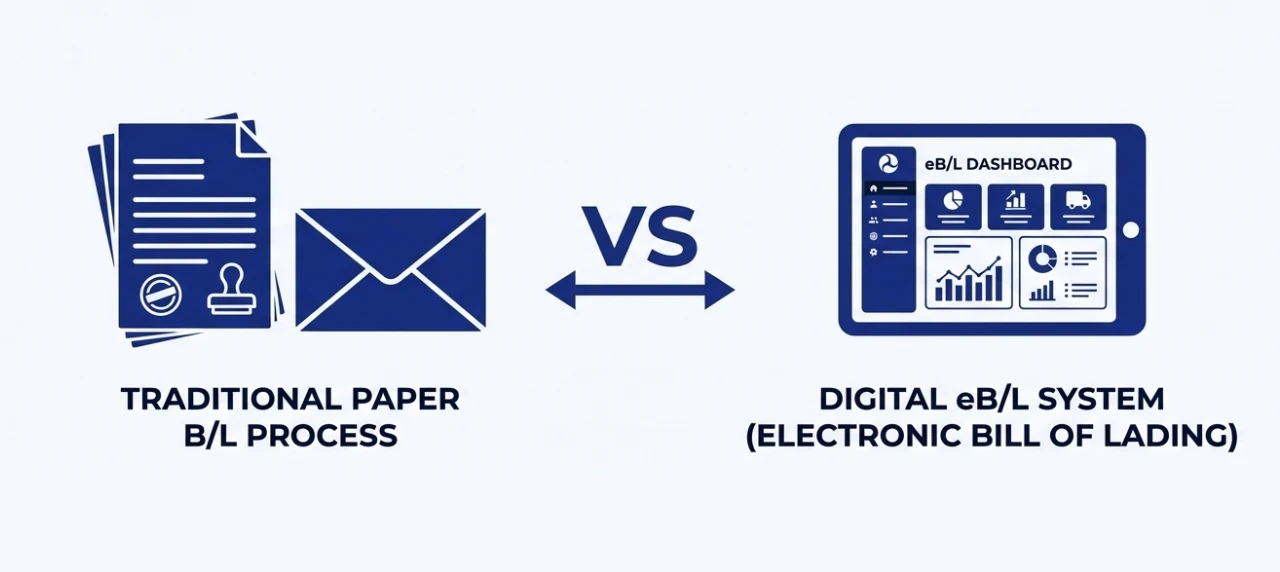
Electronic Bill of Lading (eB/L)

An electronic bill of lading is the digital equivalent of a traditional paper B/L. It offers faster transfer, reduced courier costs, and improved security.

However, eB/L acceptance depends on:

  • Carrier systems
  • Bank policies
  • Destination country regulations

For heavy equipment shipments involving banks or certain ports, original paper bills of lading may still be required.

Why Choosing the Right Type Matters

The type of bill of lading determines:

  • Who controls the cargo
  • When and how ownership transfers
  • Whether banks will release payment
  • How cargo is released at destination

Selecting the wrong type can cause costly delays or expose parties to unnecessary risk.

Why Heavy Equipment Requires Special Bill of Lading Handling

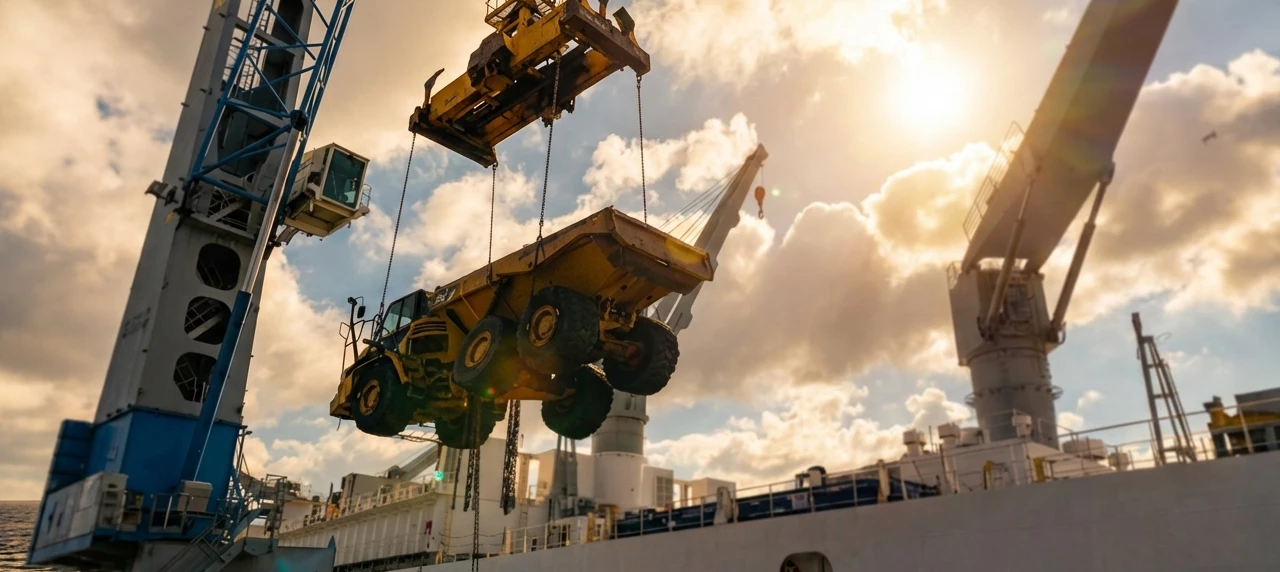
Shipping heavy equipment is fundamentally different from moving standard containerized cargo. Industrial machinery, construction equipment, agricultural units, and project cargo often exceed standard container dimensions, carry high individual value, and require specialized handling throughout the transport chain.

Because of this, the bill of lading for heavy equipment plays a far more critical role than it does in routine cargo movements. It must clearly communicate not only what is being shipped, but also how it must be handled, stowed, and released.

Common characteristics of heavy equipment shipments include: oversized or overweight dimensions, non-containerized transport, use of RoRo, breakbulk, or flat rack solutions, high exposure to handling damage, increased scrutiny from ports, insurers, and customs authorities.

Each of these factors increases documentation risk, making bill of lading accuracy essential.

Cargo Description Requirements for Heavy Equipment

The cargo description section of the bill of lading is the most important field for machinery shipments. Generic descriptions are a leading cause of disputes, inspections, and claim denials.

A proper heavy equipment description should include:

  • Equipment type (e.g., excavator, combine harvester, crane)
  • Manufacturer and model
  • Serial number or VIN
  • Gross weight and dimensions
  • New or used condition
  • Number of units

For example, stating “1 unit of used construction equipment” is insufficient. Customs authorities, insurers, and carriers expect a clear, technical description that matches the commercial invoice and packing list exactly.

Incorrect or vague descriptions can result in: customs inspections and delays, insurance coverage limitations, rejection of documentation by banks, disputes over cargo condition at delivery.

Calculate Import Duty in Minutes!

Clean vs. Claused Bill of Lading for Machinery

One of the most sensitive issues in heavy equipment shipping is the condition of the cargo at loading.

Clean Bill of Lading

A clean bill of lading indicates that the carrier received the equipment in apparent good order, with no visible damage noted at the time of loading. For new machinery, this is typically expected and often contractually required.

When shipments are arranged together with cargo insurance solutions from Atlantic Project Cargo, a clean bill of lading becomes especially important, as it supports insurance validity and simplifies claims handling if any damage occurs during transit.

Clean bills of lading are often required when:

  • The shipment is financed through a bank
  • The buyer requires documented proof of cargo condition
  • Full cargo insurance coverage is arranged

In international heavy equipment transport, ensuring both proper documentation and comprehensive cargo insurance coverage significantly reduces financial risk for buyers and sellers alike.

Claused (Foul) Bill of Lading

A claused bill of lading includes remarks about visible wear, damage, rust, missing components, or poor packaging at the time of loading.

Used equipment frequently results in claused bills of lading unless the condition is clearly documented and accepted by all parties in advance. While a claused B/L protects the carrier, it can:

  • Reduce or invalidate insurance coverage
  • Delay or prevent payment under a letter of credit
  • Create disputes at the destination

Best practice for used machinery includes pre-shipment inspections, detailed condition reports, and photographic evidence to support the agreed cargo condition.

Master vs. House Bill of Lading in Equipment Logistics

Heavy equipment shipments are often managed by freight forwarders or project cargo specialists. In these cases, two bills of lading may be involved.

Master Bill of Lading (MBL)

The master bill of lading is issued by the ocean carrier to the freight forwarder. It defines the legal relationship between the carrier and the forwarder and governs carrier liability.

House Bill of Lading (HBL)

The house bill of lading is issued by the freight forwarder to the shipper. It reflects the commercial agreement between those two parties.

For heavy equipment, absolute consistency between the MBL and HBL is essential. Differences in weight, dimensions, or cargo description can:

  • Delay cargo release
  • Trigger customs inspections
  • Complicate insurance claims
  • Shift liability in unintended ways

Through Bill of Lading for Multimodal Transport

Heavy equipment rarely moves on a single transport leg. A typical shipment may involve:

  • Inland trucking from the job site to port
  • Ocean transport
  • Inland delivery to the final destination

A through bill of lading covers the entire journey under one contract of carriage. This simplifies documentation and clarifies responsibility across modes.

Through bills of lading are particularly valuable for:

  • Door-to-door project cargo
  • Equipment shipped to inland destinations
  • Buyers seeking a single point of accountability

However, shippers should understand how liability is allocated across different transport segments.

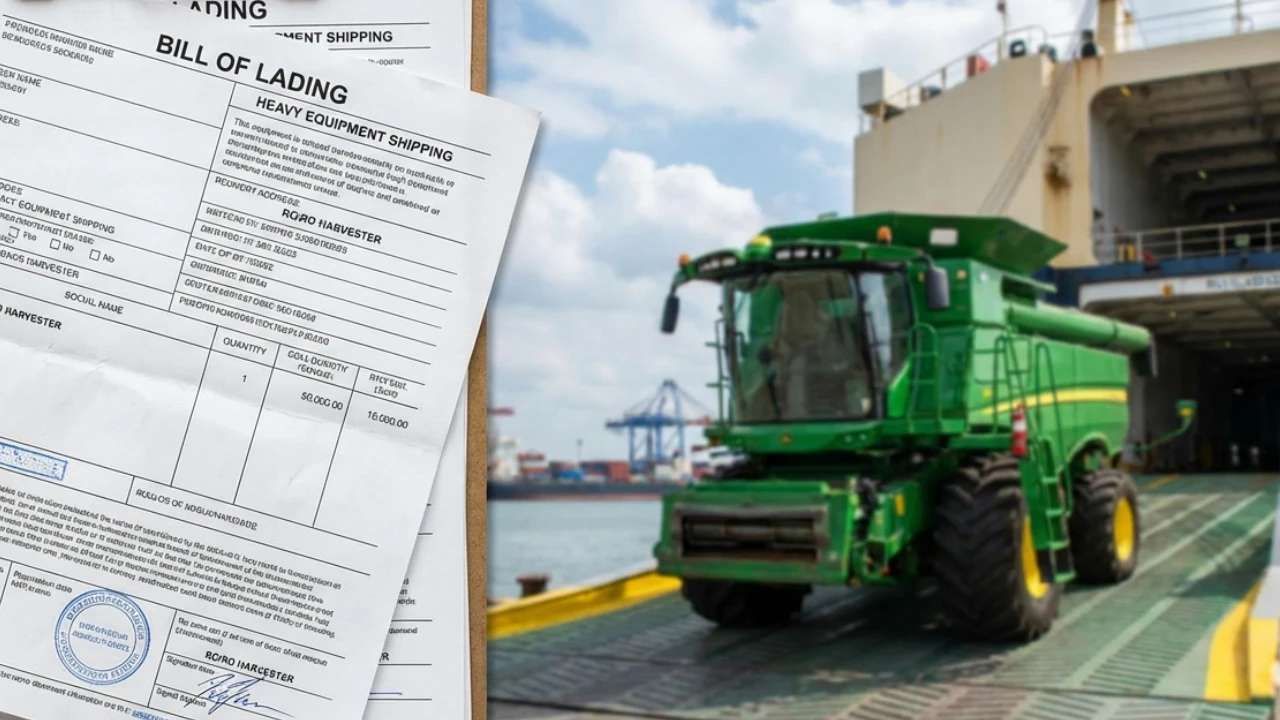
Bill of Lading Requirements for RoRo Shipments

Roll-on/roll-off (RoRo) transport is common for self-propelled machinery such as tractors, loaders, and trucks.

For RoRo shipments, the bill of lading should include:

  • Confirmation that equipment is self-propelled
  • Fuel level and battery condition
  • Pre-existing dents, scratches, or wear
  • Securing and lashing notes if applicable

Because RoRo cargo is driven on and off the vessel, condition remarks are particularly important. Disputes often arise when cosmetic damage is not clearly recorded at origin.

Bill of Lading Requirements for Breakbulk Cargo

Breakbulk shipments involve lifting and stowing cargo individually rather than in containers. This method is often used for oversized or extremely heavy machinery.

For breakbulk cargo, the bill of lading must accurately reflect:

  • Exact lifting points
  • Weight distribution
  • Special handling instructions
  • Stowage and lashing requirements

Incomplete or incorrect information increases the risk of handling damage and liability disputes.

Used Equipment and Customs Considerations

Used machinery receives heightened scrutiny from customs authorities due to concerns around valuation, environmental compliance, and safety standards.

The bill of lading must align perfectly with:

  • Commercial invoice
  • Packing list
  • Export and import declarations

Any discrepancy may result in inspections, fines, or shipment holds. For used equipment, clarity and consistency are essential.

Used Equipment, Compliance, and Customs Risk

In international shipping, customs authorities rely heavily on the bill of lading to validate the legitimacy of a shipment. This is especially true for used heavy equipment, which is often subject to stricter regulatory scrutiny than new machinery.

Customs officials compare the bill of lading against the commercial invoice, packing list, and import declarations. Any mismatch – such as differences in equipment description, quantity, weight, or consignee – raises red flags and increases the likelihood of inspection.

For used machinery, common customs concerns include:

  • Undervaluation or incorrect declared value
  • Environmental and emissions compliance
  • Safety and operational standards
  • Country-of-origin restrictions

A clear, accurate bill of lading that aligns with all supporting documents significantly reduces the risk of clearance delays, fines, or shipment holds.

Original vs. Electronic Bill of Lading

One of the most common questions in modern logistics is whether an original paper bill of lading is still required or if an electronic alternative can be used.

Original Bill of Lading

An original bill of lading is a physical document, typically issued in multiple originals. Possession of at least one original is usually required to release cargo at destination.

Original bills of lading are still required when:

  • Banks control cargo release under letters of credit
  • The buyer and seller do not have an established trust relationship
  • Destination ports or customs authorities do not accept electronic bills
  • High-value equipment shipments require strict control

For heavy equipment, original bills of lading remain common due to the financial value and risk involved.

Electronic Bill of Lading (eB/L)

An electronic bill of lading is a digital equivalent that allows ownership and control to be transferred electronically. It offers several advantages:

  • Faster document transfer
  • Reduced courier costs
  • Lower risk of document loss
  • Improved visibility and security

However, electronic bills of lading require acceptance by all parties, including carriers, banks, and destination authorities. For certain project cargo or developing markets, paper originals may still be the only practical option.

Common Bill of Lading Mistakes and Their Consequences

Even experienced shippers make bill of lading errors. In heavy equipment shipping, these mistakes often have outsized consequences due to cargo value and handling complexity.

Frequent Errors

Some of the most common mistakes include:

  1. Incorrect or incomplete cargo descriptions
  2. Missing serial or VIN numbers
  3. Inconsistent shipper or consignee names
  4. Incorrect weight or dimensions
  5. Late amendments after vessel departure
  6. Mismatch between house and master bills of lading

Operational and Financial Impact

These errors can lead to cargo release delays, demurrage and storage charges, customs inspections or penalties, rejected insurance claims, payment delays under trade finance arrangements.

In project-based equipment shipments, delays caused by documentation errors can disrupt entire construction or industrial timelines.

Bill of Lading in International Trade and Finance

The bill of lading plays a central role in international trade finance. Banks rely on it to control the release of goods and funds under letters of credit and documentary collections.

For banks, the bill of lading must:

  • Match the letter of credit terms exactly
  • Be issued within specified timelines
  • Be clean, unless otherwise agreed
  • Accurately identify the consignee and notify party

Any discrepancy – even a minor spelling error – can result in a “discrepant document” and delay or denial of payment.

For heavy equipment sellers, understanding these requirements is essential to avoid cash flow disruptions.

Bill of Lading vs Other Shipping Documents

The bill of lading is often confused with other transport documents, but its legal function is distinct.

Bill of Lading vs Sea Waybill

A sea waybill is a non-negotiable document used when ownership transfer is not required. Cargo can be released without presenting an original document.

Sea waybills are useful for:

  • Intra-company shipments
  • Trusted buyer–seller relationships
  • Time-sensitive deliveries

However, they do not provide the same level of cargo control as a bill of lading.

Bill of Lading vs Air Waybill

An air waybill is used in air freight and serves as a contract of carriage and receipt. Unlike a bill of lading, it is never a document of title.

For high-value heavy equipment shipped by air, shippers must rely on contractual and financial controls rather than document-based ownership transfer.

How a Bill of Lading Is Used: Step by Step

Understanding the lifecycle of a bill of lading helps reduce risk and confusion.

  1. Cargo is picked up and inspected
  2. Equipment is loaded and received by the carrier
  3. Bill of lading is issued
  4. Document is transferred or endorsed if negotiable
  5. Customs clearance is completed
  6. Cargo is released at destination

Each step depends on the accuracy and validity of the bill of lading.

Best Practices for Heavy Equipment Shippers

To minimize risk, heavy equipment shippers should follow these best practices.

Use detailed, consistent cargo descriptions

Clearly state equipment type, manufacturer, model, serial numbers, condition, and exact specifications. The description must match the commercial invoice and packing list to prevent customs delays and disputes.

Verify weight and dimensions before issuance

Confirm gross weight, measurements, and unit count prior to issuing the bill of lading. Incorrect figures can lead to vessel stowage problems, penalties, or cargo re-handling costs.

Align all documents before submission

Ensure the bill of lading, invoice, packing list, and export/import declarations contain identical information. Even minor inconsistencies can trigger inspections or bank document discrepancies.

Conduct pre-shipment inspections for used equipment

Document the equipment’s condition with detailed reports and photographs before loading. This reduces the risk of disputes and protects against unfair damage claims.

Review bills of lading carefully before release

Check all names, ports, cargo details, and freight terms before the document is finalized. Corrections after vessel departure can be costly and time-consuming.

Work with experienced project cargo specialists

Specialists understand oversized cargo requirements, multimodal transport risks, and documentation nuances. Their expertise helps prevent delays, compliance issues, and financial exposure.

These practices significantly reduce delays, disputes, and financial exposure.

Calculate Import Duty in Minutes!

Final Thoughts

Despite advances in digital logistics and automation, the bill of lading remains the backbone of international shipping. For heavy equipment and oversized cargo, it is not just a formality – it is a legal, commercial, and operational control instrument.

Shippers who understand how bills of lading work, choose the correct type, and ensure accuracy at every stage gain a clear advantage: faster clearance, lower risk, and smoother delivery of high-value equipment across borders.

By working with experienced logistics partners such as Atlantic Project Cargo, companies can ensure proper documentation, compliant routing, coordinated handling, and professional oversight throughout the entire transport process – reducing exposure and protecting valuable cargo from origin to final destination.

Read More

February 6, 2026
The Modern Way to Buy Heavy Machinery
Sourcing equipment used to be a local affair. You went to a dealer, kicked the tires, and negotiated a price. But for modern businesses in...
January 26, 2026
What Is Out-of-Gauge Cargo? Understanding the Logistics of Oversized Freight
In the global supply chain, the majority of goods move seamlessly in six-sided shipping containers. These conventional containers are the industry standard, enabling easy stacking...
January 26, 2026
How to Import Machinery to the USA
Importing heavy machinery into the United States is far more than a simple shipping order. For any business that relies on industrial equipment — whether...
Share via