Hours of operations:
9AM - 5PM / UTC -5 (EST)

Antique Farm Equipment: History, Purpose, and Global Logistics

January 9, 2026
Shipping Quote
Customs Duties
Drayage Rate
Do you already own this equipment?

You Can Request a New Quote Every 15 Minutes

Please wait or contact us at [email protected]

Thank you for Choosing Us!

Looking to buy or sell heavy equipment?
With JumboBee, you can trade online with financing options and worldwide shipping.

Check Inventory
Calculate Import Duties
Get a free, no-obligation estimate of your import duties!
Calculate Import Duties
Get a Drayage Estimate
Get a free drayage estimate tailored to your exact needs!
Check a Drayage Rate
Home Insights Antique Farm Equipment: History, Purpose, and Global Logistics
Written by
Atlantic Project Cargo Editorial Team

Key Takeaways


  • Antique farm equipment is both a high-value asset and a protected piece of agricultural history, requiring specialized handling
  • “Antique” status has a regulatory definition: typically 25+ years for DOT and 21+ years for EPA, with mandatory exemption filings
  • These assets are often oversized, fragile, non-running, and irreplaceable – making standard freight solutions unsuitable
  • Pre-shipment preparation, including mandatory cleaning and compliance checks, is critical to avoid seizure or re-export
  • Transport methods vary by condition and size, including Ro-Ro, breakbulk, heavy-lift, and custom crating solutions
  • Expert customs brokerage ensures proper exemption filings, reduced duties, and smooth clearance
  • A project-managed, end-to-end logistics approach is essential to protect value and ensure compliance from origin to final delivery

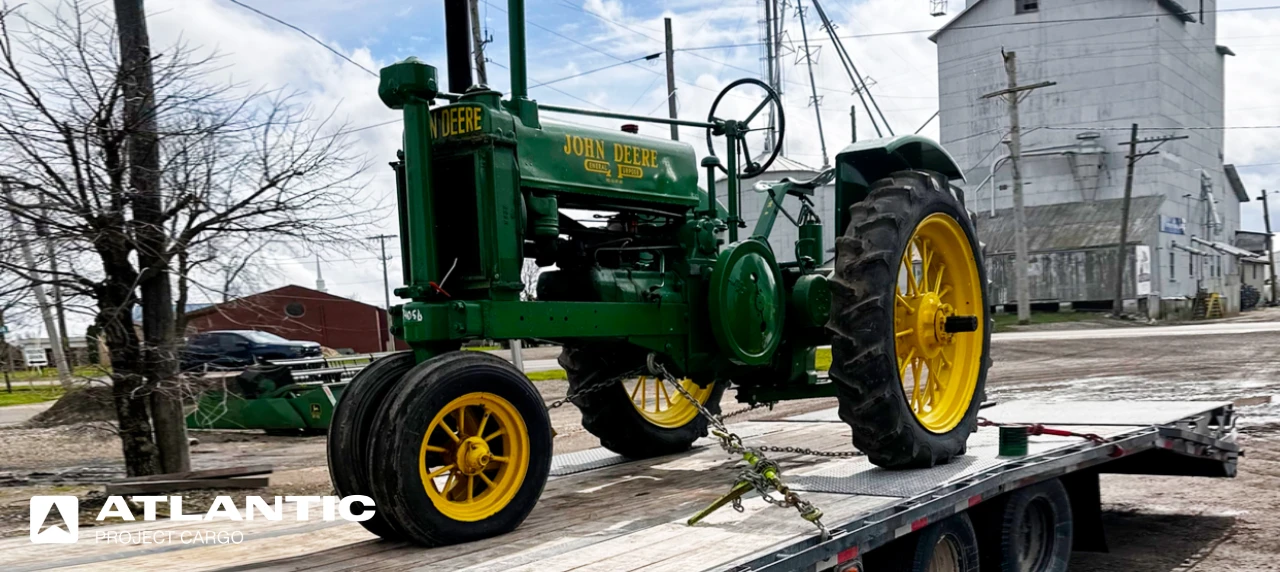
The roar of a hit-and-miss engine, the distinct shape of a John Deere Model D, or the sight of a McCormick-Deering threshing machine — these aren’t just old tools. They continue to be high-value assets and a living log of America’s agricultural history.

Antique farm equipment captures a moment in time when mechanization transformed the farm and the world. Today, these pieces are prized by collectors, restored for exhibitions, or even put back to work on small-scale farms.

But what happens when a rare antique farm tractor in Europe needs to be imported to a collector in the United States? Or when a complete harvesting set needs to be shipped from one state to another (and even overseas)?

These are not simple freight items. They are complex, high-value, and often over-dimensional assets. This guide explores what defines this equipment and, most importantly, the expert logistics required to move it safely and compliantly across the globe.

Calculate Import Duty in Minutes!

What Defines Antique Farm Equipment?

While “antique” can be a subjective term, in the world of logistics and import, it has a very specific meaning. For collectors, it refers to equipment from the golden age of the early to mid-20th century.

For U.S. Customs and Border Protection, however, the definition is regulatory. This is critical for anyone searching to import a piece of equipment:

DOT Exemption

The Department of Transportation (DOT) considers most vehicles 25 years or older (based on build date) to be antiques and exempts them from Federal Motor Vehicle Safety Standards (FMVSS).

EPA Exemption

The Environmental Protection Agency (EPA) exempts most on-road vehicles over 21 years old from emissions standards.

This 25-year-old mark is a key sign for importers. It makes the import process more feasible, but it does not mean it’s simple. You must still file the correct exemption paperwork (like DOT Form HS-7 and EPA Form 3520-1) to declare this status.

Common Types of Antique Farm Equipment

The category is vast, but most pieces fall into several key groups:

Antique Tractors

This is the most popular category. These tractors revolutionized farming by replacing draft animals.

Examples: Farmall F-Series, John Deere “Letter” Series (A, B, D), Fordson Model F.

Purpose: Plowing, tilling, belt work, and hauling.

Tillage Equipment

These are the implements pulled by the tractors.

Examples: Moldboard plows, disc harrows, cultivators.

Purpose: Preparing the soil for planting by breaking it up and removing weeds.

Harvesting Equipment

These machines automated the difficult process of bringing in the crop.

Examples: Grain binders (which cut and bundled grain), threshing machines (which separated grain from stalks), and early pull-type combines.

Purpose: Cutting, processing, and gathering crops like wheat, corn, and hay.

Stationary Engines

Before tractors had power take-off shafts, these hit-and-miss engines were the utility players.

Examples: Engines by manufacturers like Maytag, Fairbanks-Morse, or Hercules.

Purpose: Powering water pumps, saws, feed grinders, and other stand-alone machines.

Modern Challenge: Shipping Antique Farm Equipment

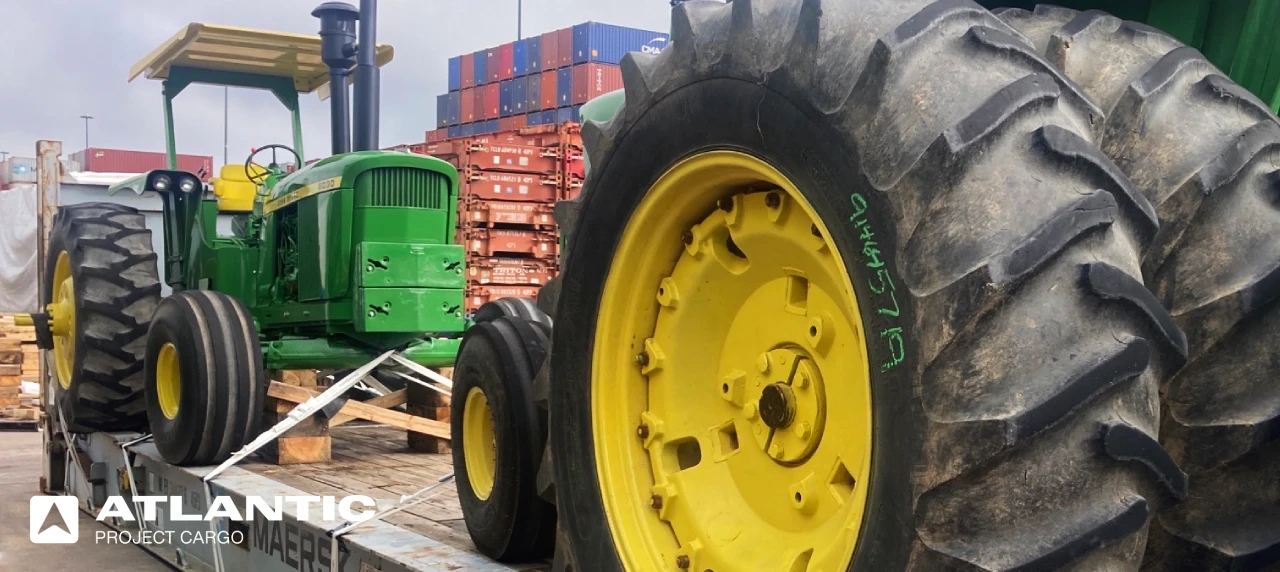
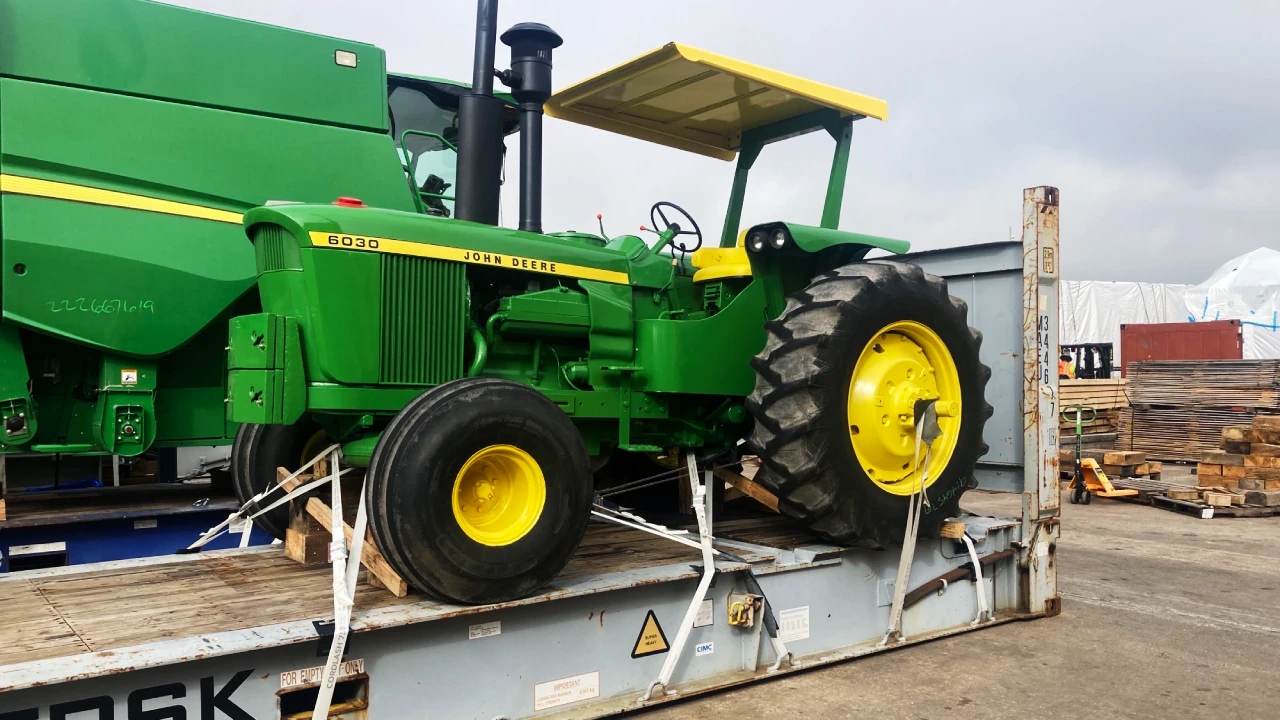
Moving a 70-year-old, 5-ton tractor is not a task for a standard shipping company. These assets present a unique combination of challenges that require true project cargo management.

  • High value: Many restored tractors are worth tens, or even hundreds of thousands of dollars. They are irreplaceable
  • Over-dimensional: A large threshing machine or vintage combine is heavy, wide, and non-standard, requiring special permits and heavy-haul trailers
  • Fragile: Despite being built of iron, antique equipment can be fragile. Cast iron parts can crack, and delicate components can be easily damaged if not properly secured
  • Non-running: Many project pieces do not run, meaning they cannot be simply driven onto a ship. They require “dead-tow” or lift-on/lift-off solutions

A Project-Managed Approach to Logistics

When you select a logistics partner, you need an expert who manages the entire project from end to end. This process transforms a complex logistical puzzle into a step-by-step plan.

Step 1: Admissibility and Feasibility

Before anything moves, the first step is a feasibility review. Our team confirms the equipment’s age, origin, and its admissibility into the U.S, Canada, or another import country. We review its location and destination to build a complete route study.

Step 2: Pre-Shipment Preparation

This is the most critical and often-overlooked step for farm equipment. Many countries have very specific preparation rules. For example, the U.S. Department of Agriculture mandates that all used farm equipment must be steam-cleaned and free of all soil and organic matter before entering the country.

Failure to comply can result in your high-value asset being seized at the port and ordered for re-export at your expense. We manage this pre-shipment requirement to ensure your cargo is compliant before it ships.

Step 3: Global Transport & Handling

How the asset is moved depends on its condition:

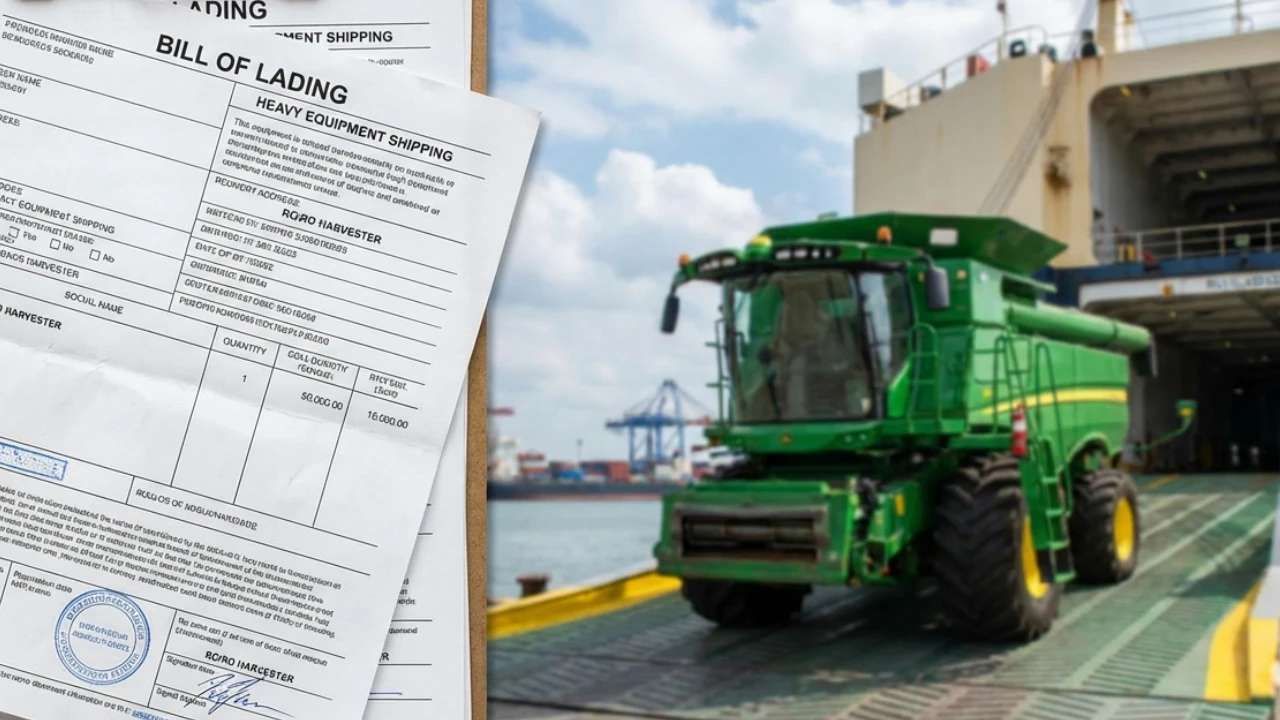
  • Ro-Ro (Roll-On/Roll-Off): For working antique tractors that can be safely driven, Ro-Ro is the most cost-effective and gentle method
  • Breakbulk & Heavy-Lift: If you have a large, non-running, or static equipment (like a stationary engine or thresher), we charter space on a breakbulk vessel. The piece is lifted by crane onto the ship and secured in the hold
  • Custom Crating: For extremely high-value or delicate pieces, we manage custom crating and securing to protect them during ocean transport

Step 4: Customs Clearance & Compliance

This is where expertise saves you time and money. As your licensed customs broker, we handle the complex paperwork.

For example, for an antique tractor (over 25 years old) imported into the U.S., our team:

  1. Files the EPA Form 3520-1, declaring its “over 21” exemption
  2. Files the DOT Form HS-7, declaring its “over 25” exemption
  3. Manages the formal customs entry with CBP

The “antique” status is a major benefit. This equipment is generally exempt from the 25% “Chicken Tax” on trucks and other new tariffs. An antique vehicle typically only incurs the standard 2.5% duty, but this must be declared correctly. Once cleared, we provide you with the signed CBP Form 7501 (Entry Summary) as proof of a compliant import.

Step 5: Final Inland-Haul

Once your asset is cleared, our project management doesn’t stop. We manage the final heavy-haul transport from the port to its final location, ensuring it arrives safely at your farm, workshop, or showroom.

Calculate Import Duty in Minutes!

Your Partner for High-Value Farm Equipment

Antique farm equipment is a testament to America’s industrial heritage. Protecting that heritage during transport requires more than just a shipping label — it demands a meticulous, expert-led logistics plan.

If you have questions about importing or shipping a specific piece of antique farm equipment, our team is here to build your solution. We continue to be your single point of contact for managing complex, high-value asset imports from origin to final destination.

Ready to start your project?

Contact our team today at [email protected] to review your requirements.

Read More

December 29, 2025
A Guide to Importing Machinery to Canada
For businesses in the machine industry, the border between the U.S. and Canada can look like a simple line on a map. However, when you're...
August 29, 2025
What is the Top of Goods Imported to Argentina
Key takeaways Argentina imports a wide range of goods, with a total import volume reaching approximately $60 million annually. Argentina’s majority of imports consist primarily...
June 16, 2025
Guide on Importing a Classic Car to the United States
Owning a foreign classic car is a dream for a lot of people. However, importing a vehicle into the US can be a complex process...
Share via