


John Deere S780 Combine Shipping from Illinois to Paraguay
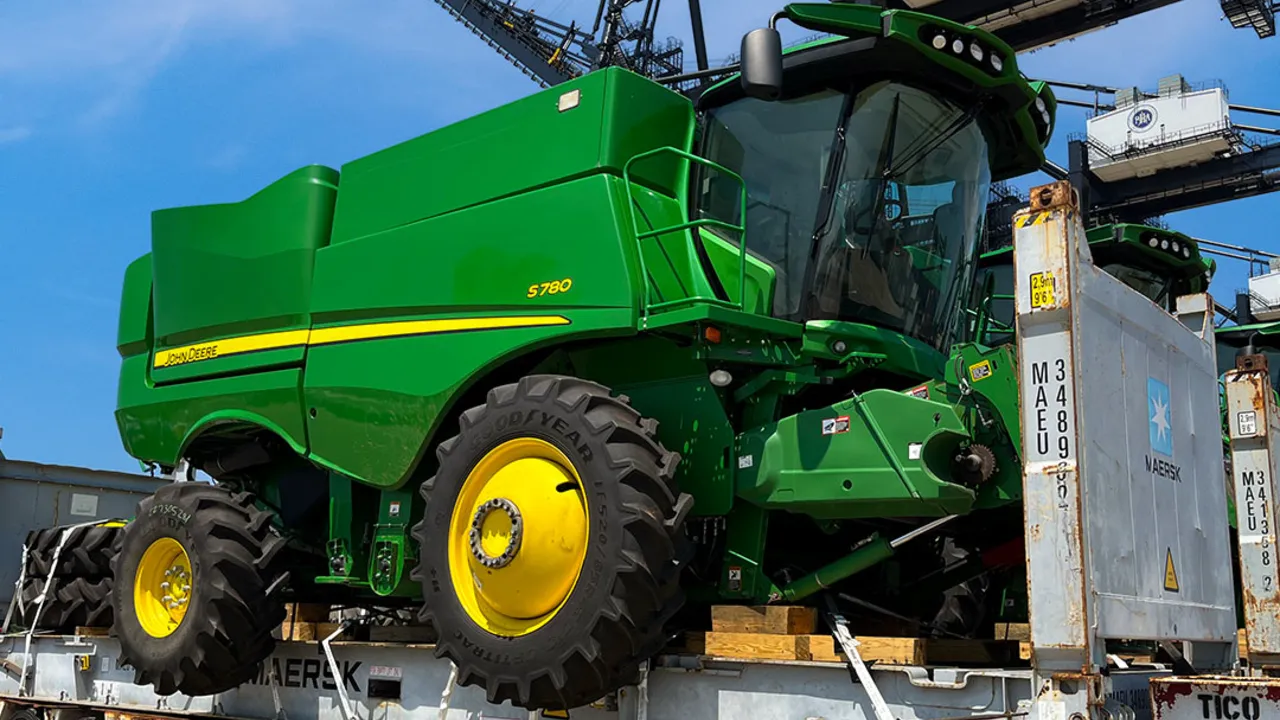
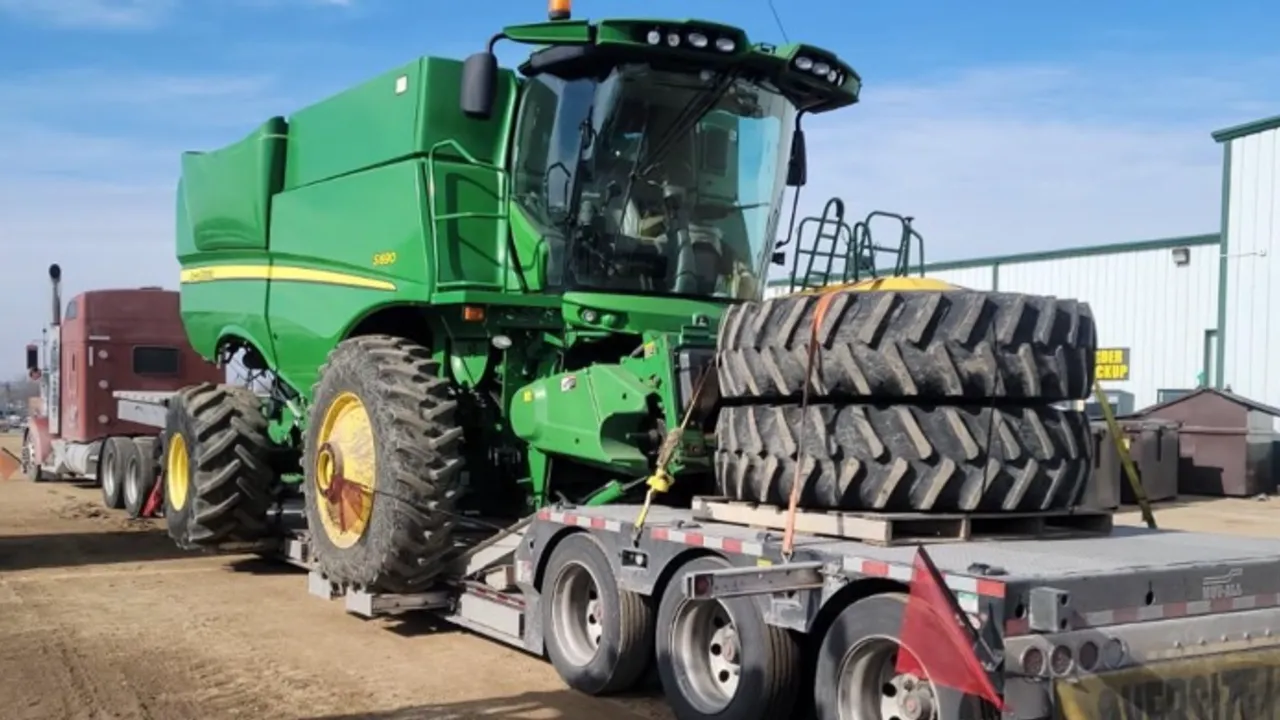
See how Atlantic Project Cargo shipped a John Deere S780 combine from Illinois to Paraguay via Montevideo using inland, ocean, and onward river transport.
Export of a John Deere X9 1100 combine from North Dakota to New Zealand, including oversized inland transport, equipment preparation, biosecurity cleaning, flat rack loading, and ocean freight coordination.



This John Deere X9 1100 combine was sold to an arable and cropping operation in Canterbury, New Zealand, with the machine located in Fargo, North Dakota. A combine of this size doesn’t travel in its field-ready configuration: the header had to come off and the unloading auger folded before the machine could move by road or by sea. Because it was also used agricultural equipment, it needed preparation for New Zealand’s biosecurity requirements – and, with the shipment falling inside the September-to-April Brown Marmorated Stink Bug risk season, an approved offshore treatment – before it could be accepted for import.
This project combined two logistics challenges: transporting one of the largest types of agricultural machinery, and preparing used farm equipment for New Zealand’s biosecurity controls. Atlantic Project Cargo coordinated the inland transport, equipment preparation, and ocean freight needed to get the X9 1100 from Fargo to Lyttelton.
Oversized Combine Transport
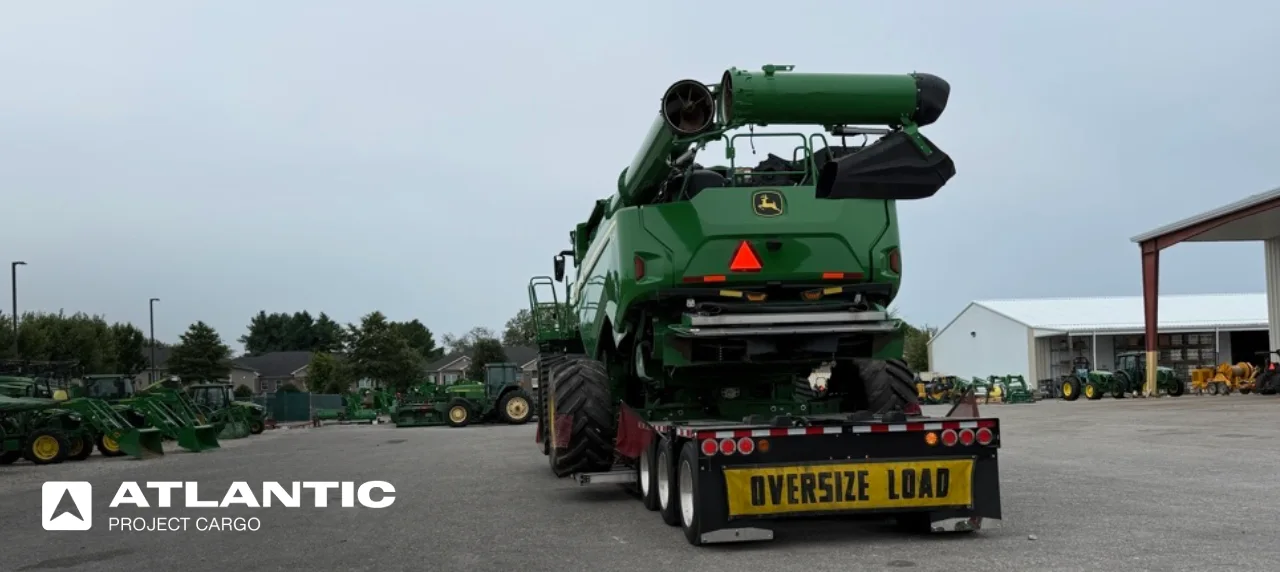
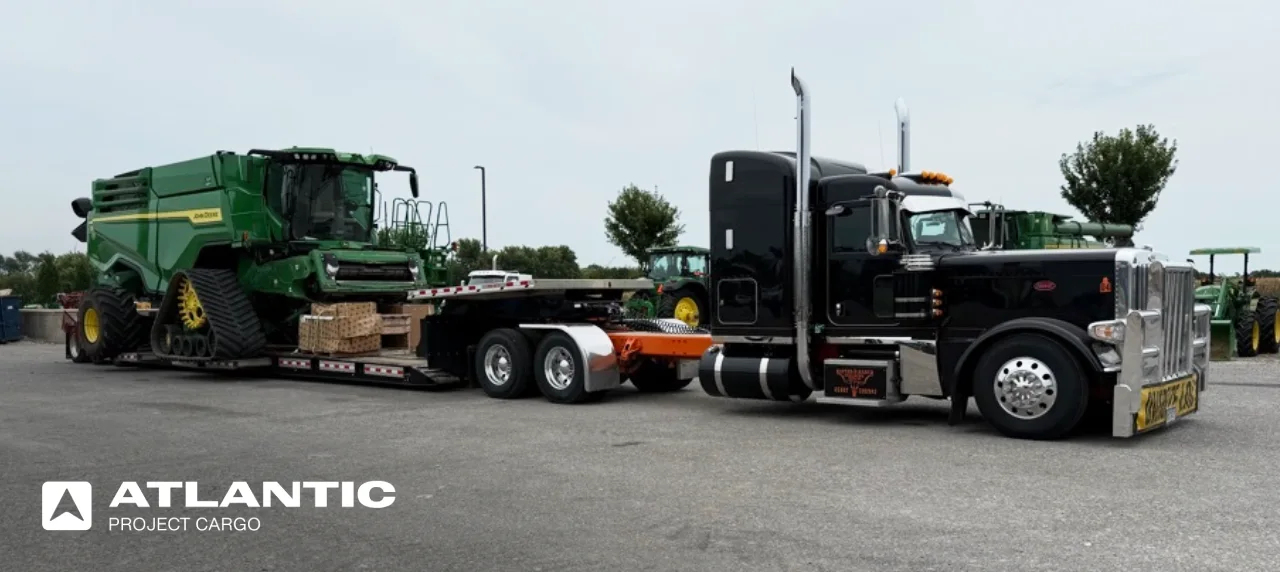
A John Deere X9 1100 is too large to move by road or by sea in its field-ready configuration. At roughly 9.5 meters long and close to 4 meters wide across its rear tires, it dictated the inland route from Fargo to Los Angeles, the oversize permits needed through five states, and the RGN trailer used to haul it.
Header Removal
The 45-foot flex draper header was removed and the unloading auger folded to bring the combine within shippable dimensions. It’s standard practice for a machine this size, and it also opens up the feeder house, auger housing, and header mounting frame for the cleaning stage that follows.
Biosecurity Preparation
Because the X9 1100 is used agricultural equipment, it needed a level of cleaning beyond a standard wash before it could be presented for export to New Zealand. Used machinery that has worked in fields carries organic material that New Zealand’s biosecurity system is specifically built to catch.
Hard-to-Reach Cleaning Areas
Combines are built with numerous cavities, harvesting components, guards, and undercarriage areas where soil, seed, and crop residue can collect and stay hidden from a surface inspection. Reaching those areas – without needing to dismantle the threshing rotors themselves – is what separates an adequate wash from one that holds up to inspection.
Flat Rack Shipping
The X9 1100 moved by flat rack rather than a standard container or RoRo service – the loading method suited to a machine of its dimensions once reduced to shippable size. The header shipped separately, on its own flat rack, loaded on its side.
New Zealand Arrival Inspection
On arrival, the machine was presented to Biosecurity New Zealand for the standard quarantine inspection required of imported machinery before release.
The John Deere X9 1100 could not be transported internationally, or even moved inland, in its normal operating configuration. Its dimensions and weight as a field-ready machine exceed what standard road transport and ocean freight can accommodate.
The 45-foot flex draper header was removed, the unloading auger folded to its transport position, and the combine’s folding grain tank extensions lowered – bringing the unit within shippable dimensions ahead of inland transport and loading. Atlantic Project Cargo coordinated this preparation with a heavy-equipment prep facility near the Fargo yard.
Used combines can retain soil, seeds, crop residue, plant material, and insects in places a casual inspection won’t find. This risk is higher on a combine than on many other equipment types because of how many enclosed and hard-to-reach areas a harvesting machine has by design.
The X9 1100 was cleaned at a licensed agricultural wash facility near the Port of Los Angeles, with high-pressure hot-water washing, compressed air, and vacuuming applied to the feeder house, threshing area (through its access panels, without dismantling the rotors), unloading auger, header mounting frame, and undercarriage. New Zealand’s biosecurity system requires imported machinery to arrive clean and free of biosecurity risk material under the Vehicles, Machinery and Parts Import Health Standard – that standard, not a general cleanliness target, is what the preparation was measured against.
If contamination is identified during the destination inspection, machinery can be held for further inspection, cleaning, or treatment, or referred to an approved Transitional Facility before release – a costly and time-consuming outcome on a shipment already on a timeline.
Once cleaning was complete, the combine’s cleanliness and the shipping and biosecurity documentation were checked by Atlantic Project Cargo’s team before it left the wash facility, and the shipment’s offshore BMSB treatment was scheduled to fall within the required window ahead of departure. Pre-export cleaning and checks reduce the likelihood of an issue at the New Zealand border; they are not a guarantee of first-pass clearance, which rests with Biosecurity New Zealand’s own inspection.
The combine’s weight, dimensions, high center of gravity, and separately shipped header create securing requirements beyond what a standard container shipment needs, both during terminal handling and the ocean crossing itself.
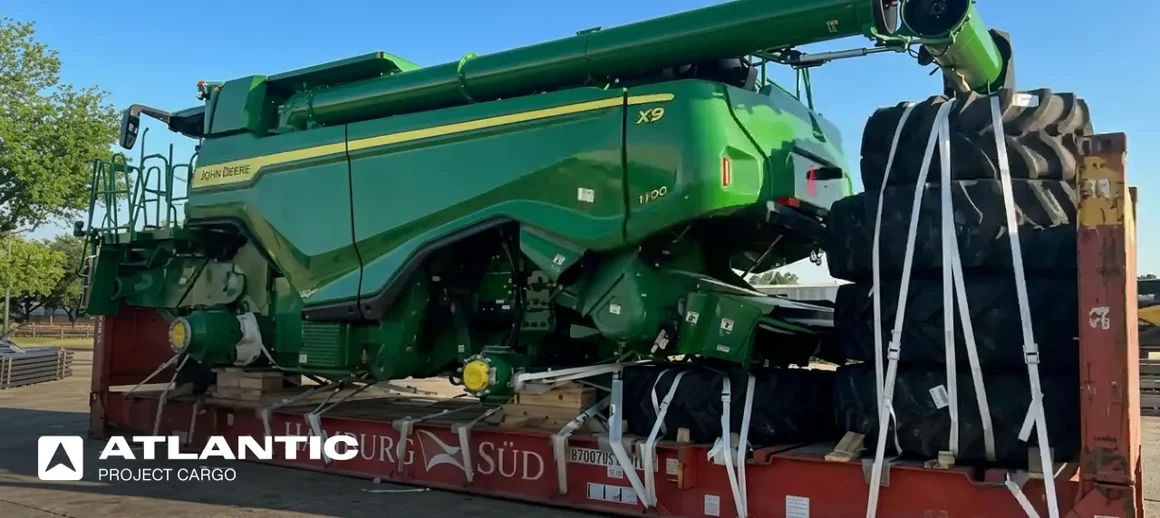
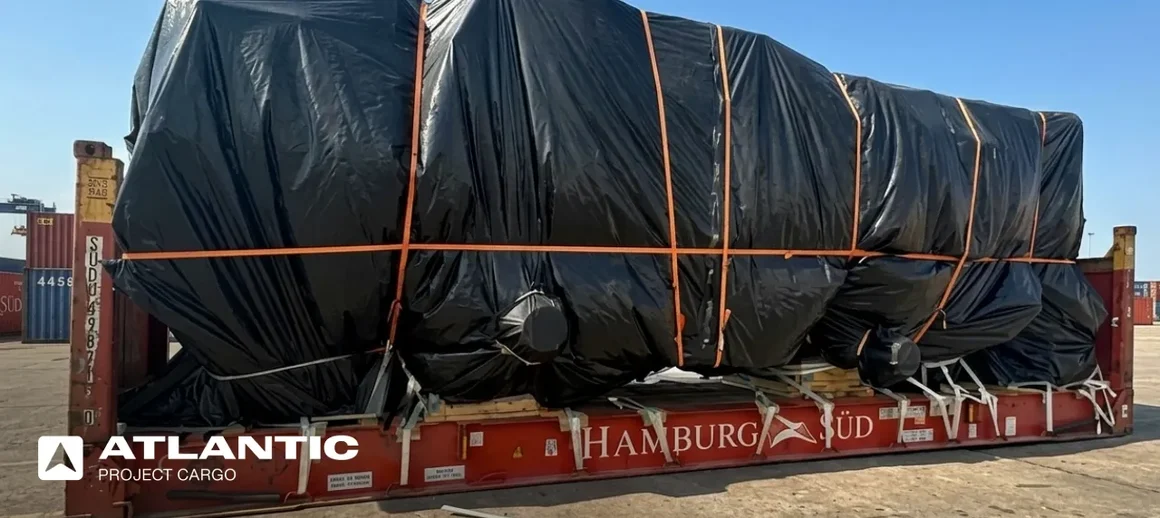
The X9 1100 was positioned on a 40-foot flat rack with its weight centered over the rack’s rated lift points, then blocked, chocked, and lashed down with rated chain and turnbuckle restraints. The header was loaded on its side on a second flat rack and secured the same way. Both racks passed a National Cargo Bureau stowage inspection before being released for loading.
From booking to delivery — the full 30–35 day journey, phase by phase.
John Deere X9 1100 shipment scoped and confirmed with the Canterbury buyer.
Day 1Dimensions, weight, inland route, and oversized transport requirements reviewed.
2 daysCombine collected from Fargo and hauled to the Port of Los Angeles.
5 daysHeader removed and unloading auger folded.
1 dayCombine cleaned and prepared for New Zealand biosecurity requirements, BMSB offshore treatment scheduled.
2 daysCombine and header prepared and secured for ocean transport.
1 dayEquipment exported from Los Angeles to Lyttelton, via Auckland.
22 daysquipment presented for Biosecurity New Zealand’s quarantine inspection and released.
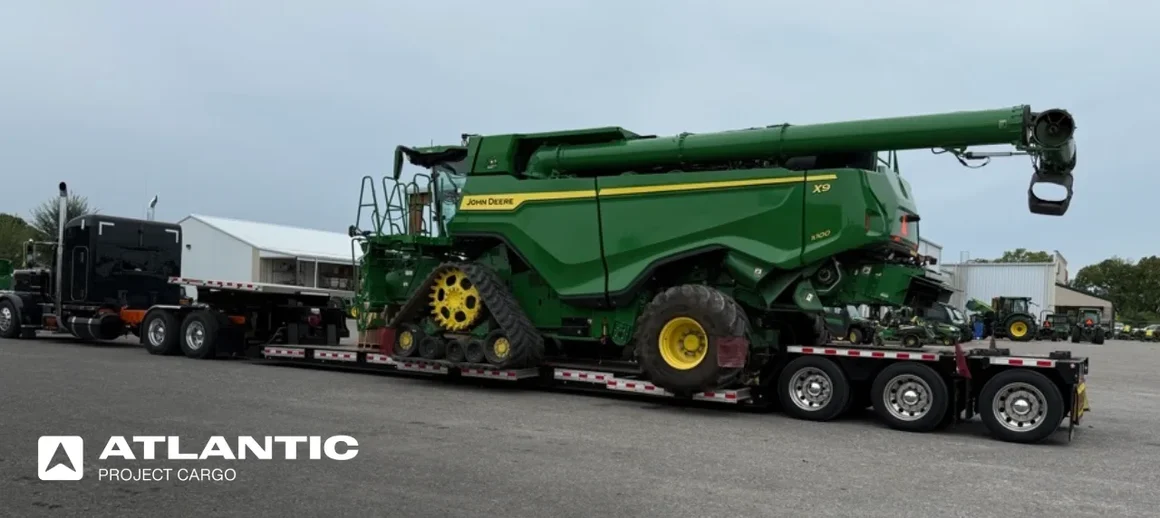
3 daysThe X9 1100 was collected from the selling operation’s yard outside Fargo, North Dakota, where its dimensions and weight as a field-ready combine set the terms for everything that followed: a route to the Port of Los Angeles routed through North Dakota, South Dakota, Wyoming, Utah, Nevada, and California, with oversize permits secured for each state and the combine hauled on an RGN trailer. Before the combine could be transported to the wash facility, the 45-foot flex draper header was removed and the unloading auger folded to its transport position. Atlantic Project Cargo coordinated the mechanical preparation through a contracted equipment facility rather than performing the disassembly directly.
Oversized Route Planning – Five-state permitted route mapped from Fargo to the Port of Los Angeles.
Header Removal – 45-foot flex draper header removed ahead of transport.
Shipping Dimension Reduction – Combine brought within transportable and loadable dimensions before it left for the port.
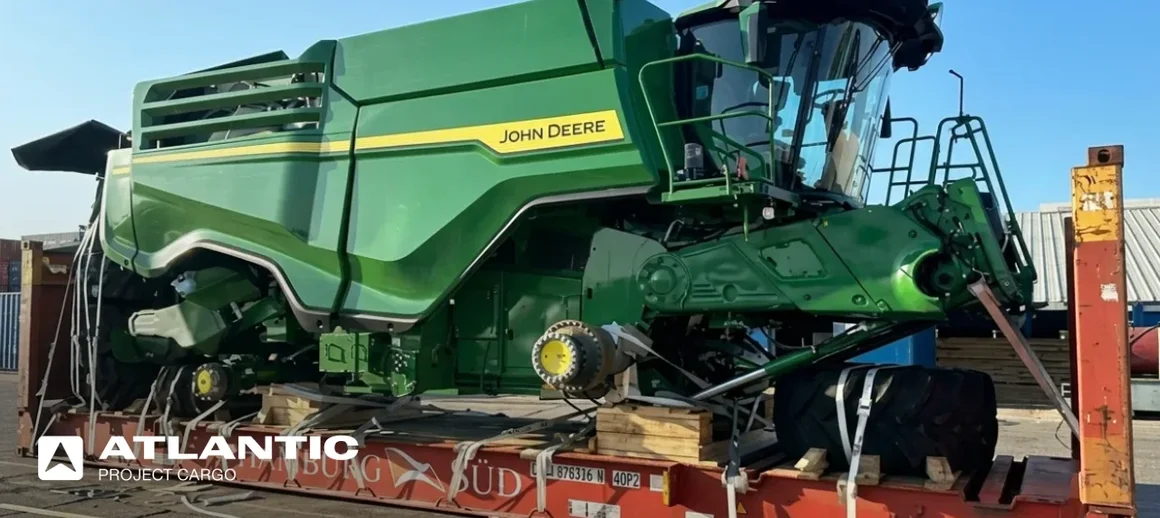
A used combine presents a higher contamination risk than most other equipment types, simply because of how it’s built: the threshing area, feeder house, header mounting frame, and undercarriage all create places where soil, seed, and crop residue can sit out of sight. The X9 1100 was cleaned at a licensed wash facility near the port, with high-pressure hot-water washing, compressed air, and vacuuming applied to those areas through their service panels, without dismantling internal components. Because the shipment fell inside New Zealand’s September-to-April BMSB risk season, an MPI-approved offshore treatment was also arranged, with the treatment certificate folded into the documentation package required under the Vehicles, Machinery and Parts Import Health Standard.
Detailed Equipment Cleaning – High-pressure wash, compressed air, and vacuuming of the threshing area, feeder house, header mounting frame, and undercarriage.
Hard-to-Reach Areas – Cavities, guards, and undercarriage areas addressed through service access panels.
Pre-Export Verification – Cleanliness, BMSB offshore treatment scheduling, and documentation checked ahead of departure.
Once prepared, the combine was delivered to the Port of Los Angeles and loaded onto a 40-foot flat rack, with the header – loaded on its side on a second flat rack – blocked, braced, and lashed for the crossing. Both racks passed a National Cargo Bureau stowage inspection ahead of the vessel’s cutoff. Atlantic Project Cargo compiled the export documentation package – commercial invoice, packing list, bill of lading, AES/EEI export filing, and the New Zealand biosecurity records – and the shipment moved by ocean freight, calling at Auckland before continuing coastal to Lyttelton, a transit of roughly 22 days. On arrival, the equipment was presented to Biosecurity New Zealand for inspection before release to the buyer’s Canterbury operation.
Flat Rack Loading – Combine and header positioned, secured, and NCB-inspected ahead of sailing.
Export & Ocean Freight – Export documentation completed and the shipment moved from Los Angeles to Lyttelton via Auckland.
Arrival Inspection – Equipment presented for Biosecurity New Zealand’s quarantine inspection on arrival.
Atlantic Project Cargo coordinates international shipping for combines, tractors, harvesters, and other agricultural equipment, including US pickup, equipment preparation, flat rack loading, export documentation, ocean freight, and destination coordination.
The John Deere X9 1100 was prepared for export, cleaned and treated to meet New Zealand’s biosecurity requirements, secured on flat racks for ocean transport, and shipped to Lyttelton. On arrival, the combine passed Biosecurity New Zealand’s quarantine inspection without referral to a Transitional Facility or need for additional treatment, and was released to the buyer’s Canterbury operation 39 days after collection in Fargo.
The combine passed its arrival biosecurity inspection without referral for additional cleaning or treatment
No further treatment required at the New Zealand border beyond the offshore BMSB treatment completed before departure
Combine and header shipped and secured separately for the ocean crossing
Fargo pickup through release in Canterbury
See how Atlantic Project Cargo shipped a John Deere S780 combine from Illinois to Paraguay via Montevideo using inland, ocean, and onward river transport.
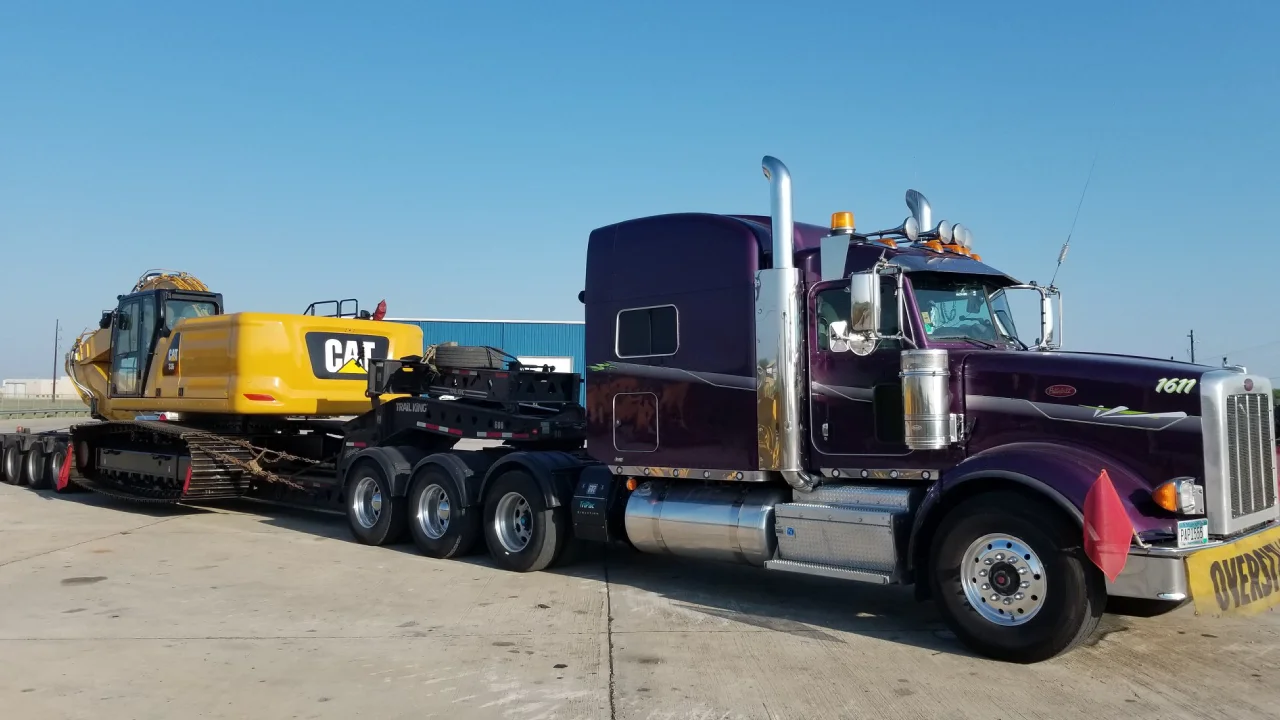
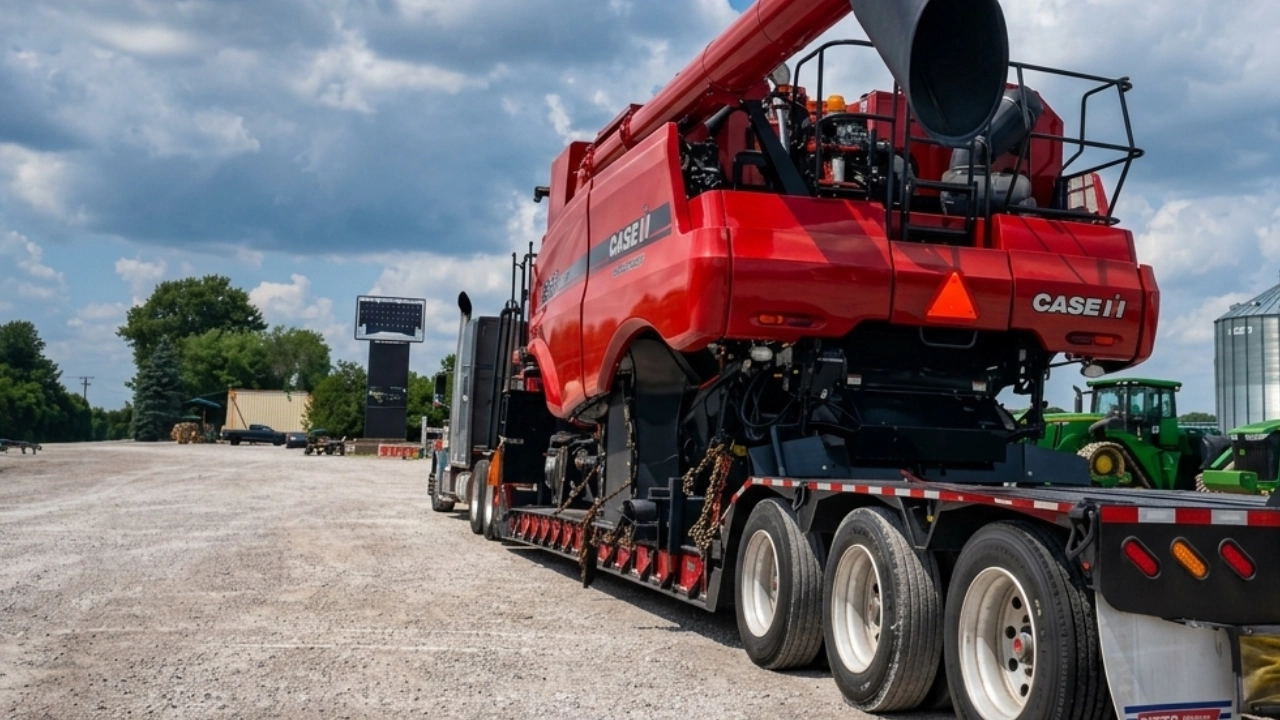
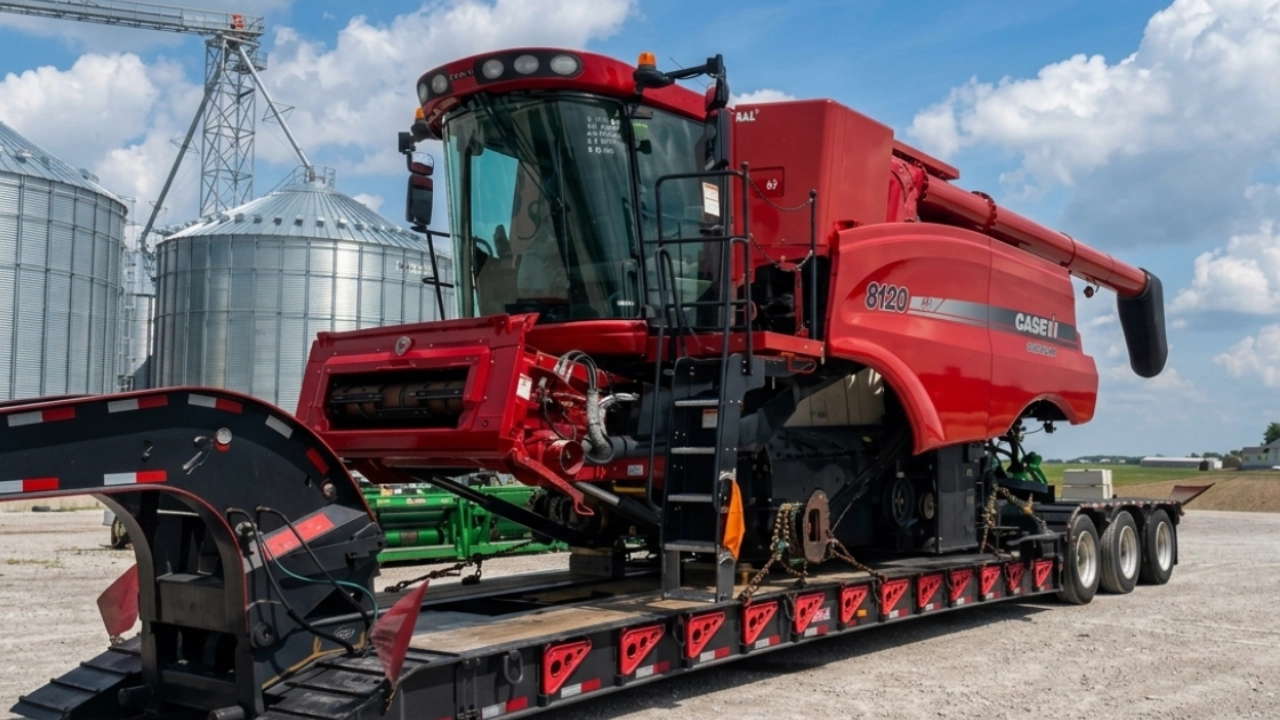
This case follows the export of a used 2012 Case IH 8120 Axial-Flow combine from Albany, Georgia, sourced through JumboBee for a buyer in Ismailia Governorate, Egypt. Atlantic Project Cargo coordinated the shipment from pickup in Georgia through delivery in Egypt. The Case IH 8120 is a Class 7 single-rotor grain combine, and its weight, […]