
Hours of operations:
9AM - 5PM / UTC -5 (EST)

Consignee vs Consignor: Understanding Shipping Responsibilities in International Equipment Transport

July 23, 2026
Shipping Quote
Customs Duties
Drayage Rate
Do you already own this equipment?

You Can Request a New Quote Every 15 Minutes

Please wait or contact us at [email protected]

Thank you for Choosing Us!

Looking to buy or sell heavy equipment?
With JumboBee, you can trade online with financing options and worldwide shipping.

Check Inventory
Calculate Import Duties
Get a free, no-obligation estimate of your import duties!
Calculate Import Duties
Get a Drayage Estimate
Get a free drayage estimate tailored to your exact needs!
Check a Drayage Rate
Home Insights Consignee vs Consignor: Understanding Shipping Responsibilities in International Equipment Transport
Reviewed by
Nick Yadryshnikov Senior Account Manager

Key Takeaways


  • The consignor originates the shipment and is typically the seller, manufacturer, or exporter of the heavy equipment.
  • The consignee is the final recipient of the shipment and is typically the buyer, distributor, or end-user.
  • The Bill of Lading determines who can legally claim the machinery at the destination port; only the properly named and endorsed holder may take delivery.
  • The sending party handles export compliance and origin documentation, while the receiving party handles import clearance and destination taxes.
  • Using exact, legally registered company names on all shipping documents is critical to avoiding customs holds and massive port demurrage fees.
  • The receiving party is not always the Importer of Record; this depends entirely on the agreed-upon Incoterms for the machinery sale.

The consignor is the party sending or exporting the goods, while the consignee is the party receiving or importing them. Both appear on shipping documents and play different legal and financial roles in international equipment transportation.

When moving heavy machinery across international borders, paperwork errors stop shipments instantly. Misunderstanding the core dynamics of consignee vs consignor leads to severe customs delays, unexpected port storage fees, and disputes over cargo ownership. According to U.S. Customs and Border Protection (CBP) trade statistics, the agency processed more than 32.5 million imported cargo containers at U.S. ports of entry in FY 2024, screening shipments for discrepancies that can trigger holds and inspections.

Whether you are exporting a fleet of John Deere tractors or importing a specialized mining excavator, evaluating consignor vs consignee roles dictates who pays duties, who files export declarations, and who legally claims the machinery at the destination port.

Note: This article provides general information on shipping documentation and roles – it is not legal, customs, or tax advice. Consult a licensed customs broker, freight forwarder, or trade attorney before relying on it for a specific shipment.

Who Is a Consignor?

To break down the foundational consignor meaning, this party is the individual or business entity that originates the shipment and acts as the legal sender of the freight. In international trade, this party is almost always the equipment seller, manufacturer, dealer, or exporter of record.

When determining who is the consignor in a heavy equipment transaction, look at who initiates the logistics chain. They hold physical possession of the machinery at the origin point and coordinate with an international logistics partner to kick off the export process. This party remains legally responsible for providing accurate equipment descriptions, commercial values, and technical specifications.

Under U.S. export regulations, the sending party typically acts as the U.S. Principal Party in Interest (USPPI). The U.S. Census Bureau defines the USPPI as the entity that receives the primary economic benefit from the export transaction. The USPPI must authorize any Electronic Export Information (EEI) filings through the Automated Export System (AES). Filing late, false, or missing EEI violates the Foreign Trade Regulations, enforced by CBP and the Census Bureau, with civil penalties of up to $10,000 per violation. Separately, if the shipment involves equipment subject to actual export licensing controls, a substantive violation of the Export Administration Regulations can trigger far steeper penalties from the Bureau of Industry and Security (BIS): civil fines up to the greater of $374,474 per violation or twice the transaction value (this is the 2025 figure, which remains in effect for 2026 after the annual inflation adjustment was cancelled).

In practical equipment shipping scenarios, the sender takes several forms depending on the structure of the purchase agreement:

  • Equipment dealers: A dealership in Texas selling a fleet of used Caterpillar crawler excavators to an overseas civil construction firm.
  • Machinery auction houses: An industrial auction company processing the export of heavy cranes or articulated dump trucks on behalf of a winning international bidder.
  • Original equipment manufacturers (OEMs): A manufacturing facility in the Midwest shipping newly assembled industrial power generation units to an international distributor.

When setting up your paperwork, the sender must ensure that the equipment title is legally clear of all domestic liens. If CBP inspects an export shipment and discovers an outstanding financial lien on a piece of machinery, the physical cargo is detained, and the sender faces immediate regulatory penalties.

Note: Penalty amounts and CBP figures cited are current as of 2026. Both the EEI/FTR penalty ($10,000 per violation) and the BIS/EAR penalty ($374,474 or 2x transaction value) are adjusted periodically for inflation – verify current figures with Census, CBP, and BIS before relying on them.

Consignor Responsibilities Summary

  • Prepares the physical machinery for safe export transport, including mandatory fluid reductions and equipment breakdown for transport viability.
  • Issues the original Commercial Invoice and detailed Packing List.
  • Initiates the initial booking request with the chosen transport provider.
  • Signs the formal Power of Attorney to allow automated export clearance filings.
  • Verifies that the equipment title is legally clear of domestic liens for U.S. Customs export validation.

Who Is a Consignee?

To properly understand the consignee meaning, this party is the individual or business entity legally designated to receive the shipment at its final destination. They act as the ultimate recipient of the cargo and are typically the buyer, importer, or end-user of the machinery.

When analyzing who is the consignee during an industrial transaction, they are the party that the ocean carrier and local border authorities look directly to when the heavy equipment arrives at a foreign destination port. To take physical possession of the equipment, this party must present proper corporate identification and surrender the matching documentation.

Unless specific commercial rules shift the burden back to the seller – such as Delivered Duty Paid (DDP) under the International Chamber of Commerce (ICC) Incoterms® 2020 rules – the receiving entity bears full operational and financial responsibility for all destination-country obligations. This includes paying import tariffs, managing local port drayage, and clearing stringent biosecurity and environmental inspections.

Note: Incoterms define cost and risk allocation but do not by themselves transfer title or replace the terms of your sales contract.

In real-world industrial shipping, the receiving party matches the specific industry vertical of the buyer:

  • Civil construction firms: A contractor in Dubai importing specialized wheel loaders and asphalt pavers for highway development.
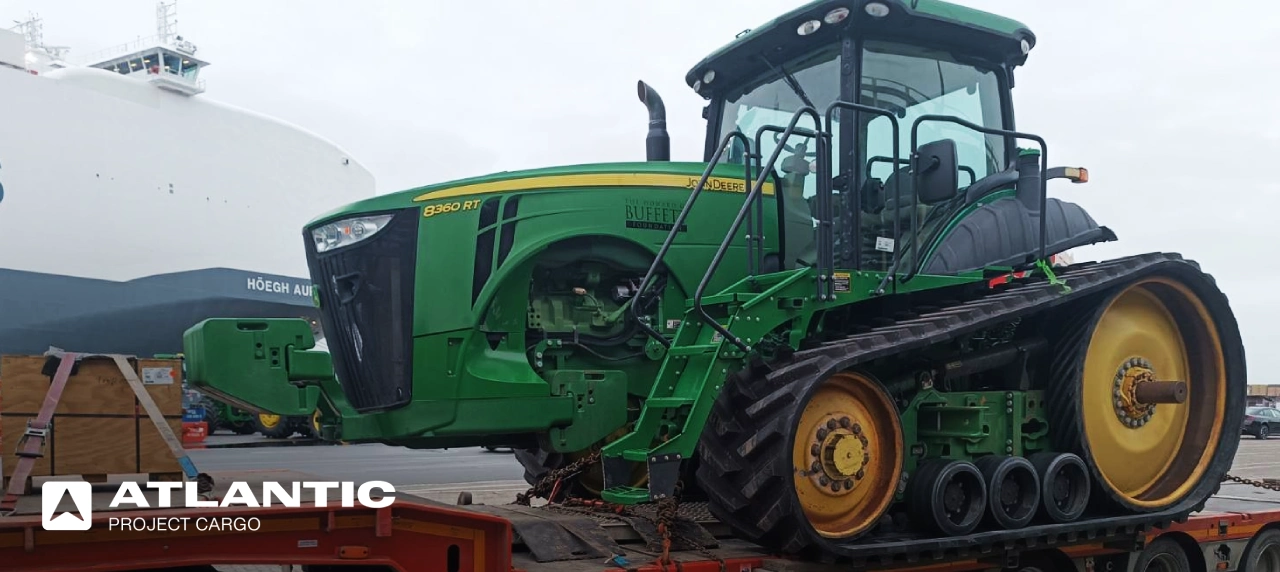
  • Agricultural cooperatives: A large-scale farming operation in Brazil taking delivery of high-capacity combine harvesters.
  • Commercial mining operations: A mining site in Chile receiving heavy-duty rock crushers, screeners, and off-highway haul trucks from North American suppliers.

Because heavy machinery represents a high-value asset class, the receiving party must ensure their corporate name is spelled exactly as it appears on their local import licenses. A variance as minor as substituting “Inc.” for “Ltd.” can cause foreign customs officials to flag the transaction as fraudulent, freezing the equipment in the port terminal yard.

Consignee Responsibilities Summary

  • Receives the physical machinery at the destination port terminal or designated delivery site.
  • Surrenders the original or properly endorsed Bill of Lading to secure cargo release from the carrier.
  • Pays all applicable import duties, value-added taxes, and terminal handling fees.
  • Retains a certified professional to manage local border entry declarations.
  • Conducts immediate physical inspections of the machinery to document any transit damage for insurance claims.

Consignee vs Consignor: Key Differences

Understanding the operational differences between these two entities requires looking at their physical location, legal liability, and exact documentation requirements.

Feature Consignor (Sender) Consignee (Receiver)
Definition The party originating and shipping the equipment. The party receiving and claiming the equipment.
Geographic Location Origin country (Export side of the supply chain). Destination country (Import side of the supply chain).
Ownership Role Typically the legal seller, manufacturer, or exporter. Typically the legal buyer, distributor, or end-user.
Shipping Responsibilities Prepares cargo, provides export docs, loads freight. Claims cargo at port, arranges final inland delivery.
Customs Involvement Handles export clearance (AES filing, title validation). Handles import clearance (Paying duties, import taxes).
Documentation Generates Commercial Invoice, Packing List. Receives Bill of Lading, provides import licenses.
Typical Examples Manufacturers, machinery dealers, auction houses. End-users, foreign distributors, heavy contractors.

While the sender initiates the transaction and proves the equipment is legally permitted to leave the country, the receiver finalizes the transaction by proving they have the right to bring the equipment into the destination country. Managing these roles is the core function of professional Heavy Equipment Shipping.

Where Do Consignee and Consignor Appear on Shipping Documents?

International trade relies on standardized documentation to move freight without physical friction. Precision matters; a misspelled company name or a mismatched address causes an immediate customs hold. Here is where these parties appear on critical paperwork.

Bill of Lading (B/L)

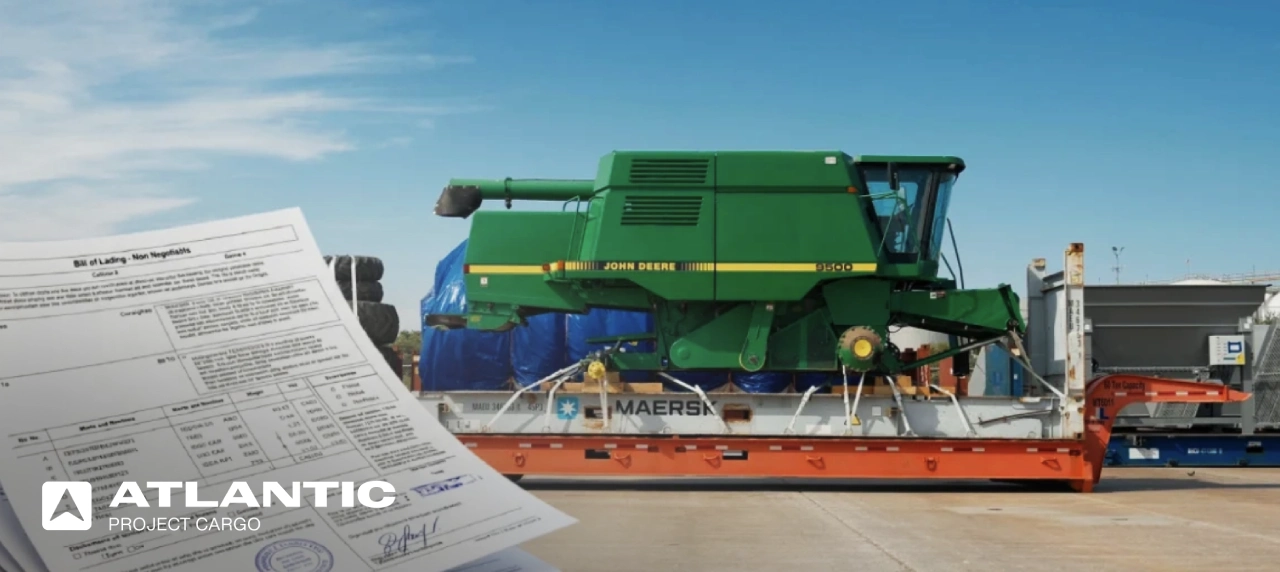
The Bill of Lading acts as the primary contract of carriage and receipt of goods. As a document of title under Article 7 of the Uniform Commercial Code, a negotiable B/L determines who is legally entitled to claim the freight during transit – separate from the FMC’s rules governing carrier billing and demurrage/detention practices, discussed below.

  • Shipper/consignor box: Located at the top left of the document, listing the exporter’s full legal name, corporate address, and tax registration number.
  • Consignee box: Situated directly beneath the shipper field. This box identifies the legal entity authorized to receive the cargo. If a shipment is structured under a financed transaction, this box may read “To Order of [Lending Bank],” requiring the bank’s formal endorsement before the physical machinery can be released to the buyer.

Commercial Invoice

This document serves as the financial record of the sale and the baseline document used by customs agents to calculate import duties.

  • The sending party appears explicitly as the “Seller” or “Exporter.”
  • The receiving party appears as the “Buyer” or “Sold To” party. Their information here must match the Bill of Lading exactly to avoid customs valuation disputes.

Packing List

This outlines the physical details of the freight, including exact weight, dimensions, and vehicle identification numbers. Both parties appear at the top of this document to establish clear origin and destination points for the port terminal operators handling the physical machinery.

Customs Documents

On U.S. export filings, the sender is listed as the USPPI. On U.S. import documentation, such as CBP Form 3461 (Entry/Immediate Delivery), the receiver’s information is heavily scrutinized to verify who is legally bringing the goods into domestic commerce and assuming liability for the machinery.

Example Shipment: Exporting a Tractor from Illinois to Argentina

To demonstrate how these roles interact in the real world, consider an agricultural shipment: a 2024 Case IH Steiger 540 tractor moving from an agricultural machinery dealership in Illinois to a farming operation in Córdoba, Argentina.

Illinois Dealer (Consignor) —> Port of Baltimore —> Vessel Transit —> Zárate Port (Argentina) —> Córdoba Farm (Consignee)

Step 1: Equipment Sale

The Argentine farming operation purchases the $450,000 tractor from the Illinois dealership under FOB Port of Baltimore terms, meaning risk transfers to the buyer once the tractor is loaded aboard the vessel.

  • Consignor: The Illinois Dealership.
  • Consignee: The Argentine Farming Operation.

Step 2: Export Documentation

The Illinois dealer (consignor) generates the official Commercial Invoice and a detailed Packing List specifying the tractor’s exact operating weight of approximately 44,000 pounds and its physical dimensions. They provide a signed Power of Attorney to the logistics coordinator to file the EEI.

Step 3: Inland Transportation

The logistics provider dispatches a specialized heavy haul trucking company utilizing a multi-axle lowboy trailer to pick up the tractor from the Illinois dealership yard. The truck driver signs the inland bill of lading, acknowledging that the consignor has handed over the machinery in good condition. The tractor travels over inland highways directly to the Port of Baltimore.

Step 4: Ocean Freight

At the port, the tractor rolls onto a specialized Roll-on/Roll-off (RoRo) vessel. The ocean carrier issues a Master Bill of Lading recording the Illinois dealership as the shipper/consignor and the Argentine farming operation as the designated consignee. The logistics partner executes the Ocean Freight Services to move the unit across the Atlantic.

Step 5: Customs Clearance

After transit, the vessel arrives at the Zárate port terminal near Buenos Aires. The Argentine farming operation engages a partner for Customs Brokerage to manage the legal entry, verify import compliance protocols, and submit the required declarations to local border authorities. The broker calculates the import duties and pays the fees using the receiver’s tax account.

Step 6: Final Delivery

Once local customs authorities issue an electronic release, the receiving party surrenders the original ocean Bill of Lading to the port terminal operator. The terminal releases the machine to a local flatbed transport company hired by the receiver, which delivers the tractor to its final operating site in Córdoba.

Through this workflow, the strict legal handover from the sender in Illinois to the receiver in Argentina dictates the entire administrative process.

Note: This example is illustrative; actual documentation, duties, and procedures depend on the specific carrier, ports, and current Argentine and U.S. regulations.

Common Mistakes with Consignee and Consignor Information

Errors in identifying these two parties cause expensive, cascading failures in project logistics. Heavy machinery cannot be easily moved or stored; it incurs massive daily demurrage and detention (D&D) fees at port terminals. The FMC’s final rule on Demurrage and Detention Billing highlights that unfair or delayed billing often stems from documentation errors regarding who actually owns or receives the cargo.

When mistakes happen, daily fees can quickly run into the hundreds or thousands of dollars per unit depending on the port and equipment type, destroying project budgets.

Incorrect Corporate Names

Listing a doing business as (DBA) name instead of a registered legal entity on the Bill of Lading causes foreign customs to reject an entry. If a commercial invoice lists “Smith Farms” but the official import license is registered under “Smith Agricultural Holdings LLC,” the destination port terminal will refuse to release the machinery until a formal, time-consuming manifest amendment is processed.

Wrong Legal Entities for Letters of Credit

When an international buyer finances heavy machinery through a bank using a Letter of Credit, the financial institution often requires the Bill of Lading to be consigned “To Order” of the bank to protect their capital. If the sender mistakenly lists the buyer’s name directly in the consignee box, the bank will refuse to release the funds. The seller remains completely unpaid while the machinery sits stuck at an ocean terminal.

Documentation Mismatches

CBP uses automated targeting systems to match export filings against ocean carrier manifests. If the forwarder’s export declaration lists one corporate entity as the ultimate receiver, but the ocean carrier’s manifest lists a different company name, customs flags the shipment. This mismatch triggers an intensive physical export examination, delaying the cargo.

Consignee vs Importer of Record: Are They Always the Same?

The logistics industry frequently confuses the receiving party with the Importer of Record (IOR). While they are often the same corporate entity, they represent entirely different legal concepts.

The consignee is simply the physical recipient of the goods at the final destination. The Importer of Record is the entity legally responsible to the destination government for ensuring the goods comply with local laws, filing the initial entry documentation, and paying all assessed import duties and taxes.

When They Are Identical

In a standard commercial transaction where an international buyer imports machinery directly for their own use, they act as both the receiving party and the IOR. They take physical delivery of the equipment and assume full legal accountability for the import entry.

When They Differ

Suppose a U.S. equipment manufacturer sells a stationary industrial rock crusher to a mining site in Canada under DDP terms. Under a DDP contract, the U.S. seller explicitly agrees to handle all Canadian import formalities, clear customs, and pay the local taxes.

  • Consignee: The Canadian mining site (they receive the physical machine at their yard).
  • Importer of Record: The U.S. manufacturer, operating as a Non-Resident Importer in Canada (they hold full legal liability for the customs entry and tariff payment).

Accurate Import & Export Compliance requires explicitly defining who holds the IOR liability before the machinery ever leaves the origin yard.


Note: This article is general information, not legal, customs, or tax advice. Import/export requirements vary by country, commodity, and transaction. Consult a licensed customs broker, freight forwarder, or trade attorney for your specific shipment.

Frequently Asked Questions

Usually, yes, but not legally guaranteed. The receiving party is the entity authorized to take physical delivery of the cargo. However, ownership transfer is dictated by the underlying sales contract and Incoterms, not just the shipping label. In cases of financed machinery, a bank may hold ownership until payment clears, even though the buyer is listed as the receiver.

Yes. This frequently occurs when multinational corporations move assets between their own global branches. For example, if a global construction firm moves an excavator from their Texas division to their subsidiary in Germany, they act as both the sending and receiving party on the documentation.

Both parties appear on the Bill of Lading. The sender is listed in the “Shipper/Consignor” box, and the receiving party is listed in the “Consignee” box. Their exact names and addresses must match the commercial invoice and customs declarations perfectly.

In most standard international transactions, the receiving party acts as the Importer of Record and pays all destination customs duties, taxes, and port fees. This only changes if the commercial contract specifically uses terms like DDP (Delivered Duty Paid), which shifts the tax burden to the sender.

If the information is incorrect, the destination port terminal will refuse to release the machinery. Correcting a Master Bill of Lading while the cargo sits at the destination requires a formal “manifest amendment” process with the ocean carrier and local customs. This takes days or weeks and results in heavy port storage penalties.

The receiving party is simply who the cargo is delivered to. The Importer of Record (IOR) is the entity legally accountable to customs authorities for the accuracy of the import entry and the payment of tariffs. While usually the same entity, a foreign supplier can act as the IOR while a local buyer acts solely as the receiving party.

In everyday logistics terminology, these terms are used interchangeably. Legally, the consignor is the party who initiates the transport contract. The shipper on a Bill of Lading functions in the exact same role. Both refer to the entity sending the heavy machinery.

Need Help Shipping Equipment Internationally?

Moving heavy machinery across the globe requires flawless documentation. A single typo identifying the sender or receiver can result in thousands of dollars in port delays and regulatory fines.

Whether you are exporting agricultural equipment to South America, importing construction equipment from Asia, or relocating industrial machinery globally, Atlantic Project Cargo provides comprehensive multimodal logistics. As a dual-licensed FMC NVOCC and freight forwarder, we manage your inland transport, ocean booking, customs brokerage, and export compliance through a single point of contact. We ensure your international equipment transport is documented perfectly from origin to destination.

Request a Shipping Quote today or Speak With a Shipping Specialist to streamline your next out-of-gauge machinery move.

Read More

July 19, 2026
Shipping Agricultural Equipment to Paraguay: Import Requirements & Compliance Guide
Paraguay tightened the rules on importing used agricultural machinery when it enacted Law No. 7565, and the change catches a lot of exporters off guard. A...
Reviewed by
Victoria Moseicuka
July 16, 2026
DDP vs DAP: Which Incoterm Is Better for International Equipment Shipping?
DDP and DAP both require sellers to arrange transportation to destination countries. The key difference is that under DDP, sellers are responsible for import duties,...
Reviewed by
Nick Yadryshnikov
July 13, 2026
NVOCC vs Freight Forwarder: Which One Should You Use for International Equipment Shipping?
Many equipment buyers, exporters, dealers, manufacturers, and project cargo owners encounter confusing terminology during the international shipping process. Navigating terms like ocean carrier, customs broker, and drayage provider can...
Reviewed by
Victoria Moseicuka
Share via