

Hours of operations:
9AM - 5PM / UTC -5 (EST)

Peloton vs. Flexport: What the FMC Demurrage and Detention Ruling Means for Equipment Shippers

September 24, 2026
Shipping Quote
Customs Duties
Drayage Rate
Do you already own this equipment?

You Can Request a New Quote Every 15 Minutes

Please wait or contact us at [email protected]

Thank you for Choosing Us!

Looking to buy or sell heavy equipment?
With JumboBee, you can trade online with financing options and worldwide shipping.

Check Inventory
Calculate Import Duties
Get a free, no-obligation estimate of your import duties!
Calculate Import Duties
Get a Drayage Estimate
Get a free drayage estimate tailored to your exact needs!
Check a Drayage Rate
Home Insights Peloton vs. Flexport: What the FMC Demurrage and Detention Ruling Means for Equipment Shippers
Reviewed by
Nick Yadryshnikov Senior Account Manager

Key Takeaways


  • An FMC administrative law judge dismissed Peloton’s $33.7 million claim, finding that store-door terms don’t automatically make the forwarder responsible for demurrage and detention charges.
  • The FMC’s 2024 Demurrage and Detention Final Rule governs who can be billed and how invoices are handled, but it doesn’t decide which party contractually agreed to bear each charge.
  • Aggregate claim totals aren’t enough. Challenging a charge requires evidence linking a specific container, event, and date to the disputed amount.
  • The strongest dispute file is built while the shipment is moving, including appointment cancellations, chassis shortages, interchange receipts, and pickup and return timestamps.
  • Heavy and oversized equipment carries extra delay risk because permits, specialized trucks, escorts, and inspections all have to be coordinated before the cargo becomes available.
  • The ruling is an initial ALJ decision and not binding precedent, but it signals how contractual responsibility and shipment-level evidence may be weighed in similar disputes.

A $33.7 million dispute between Peloton and Flexport has put an important shipping question back in focus: when demurrage and detention charges accumulate, who is actually responsible for paying them?

For equipment shippers, the answer matters.

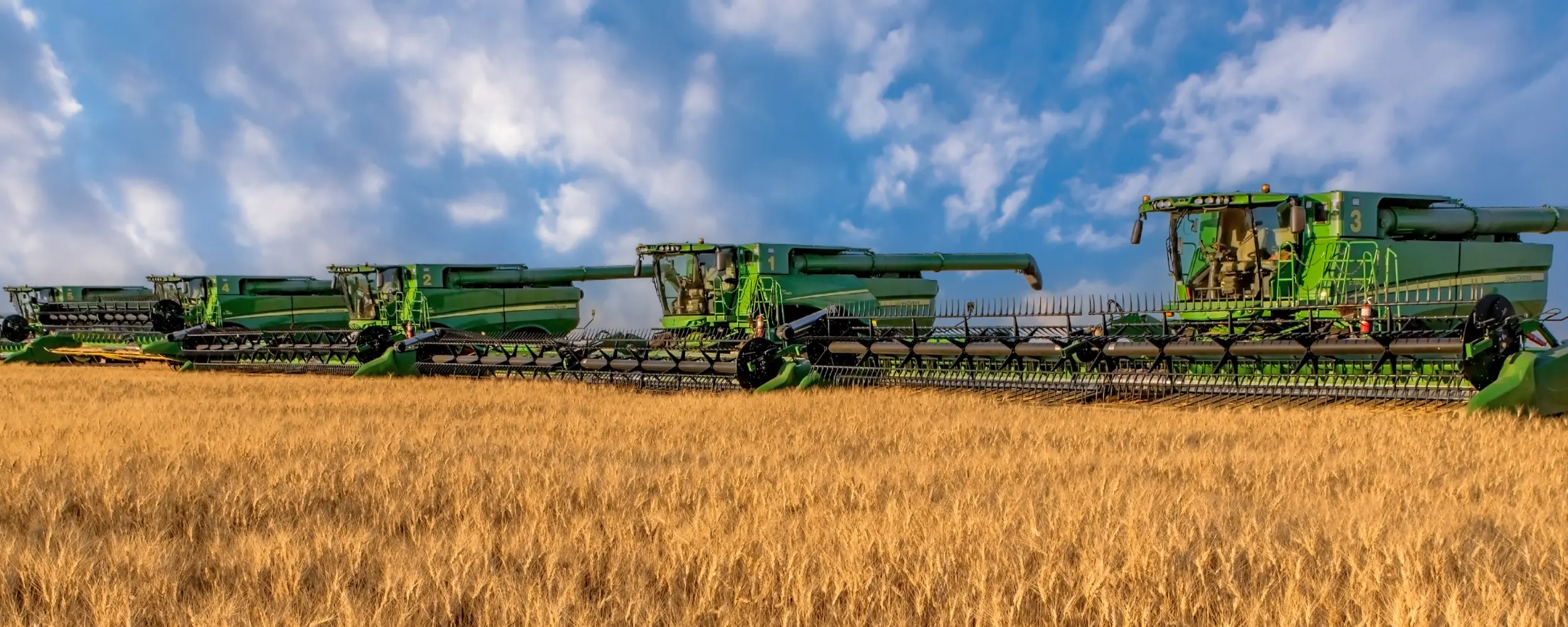
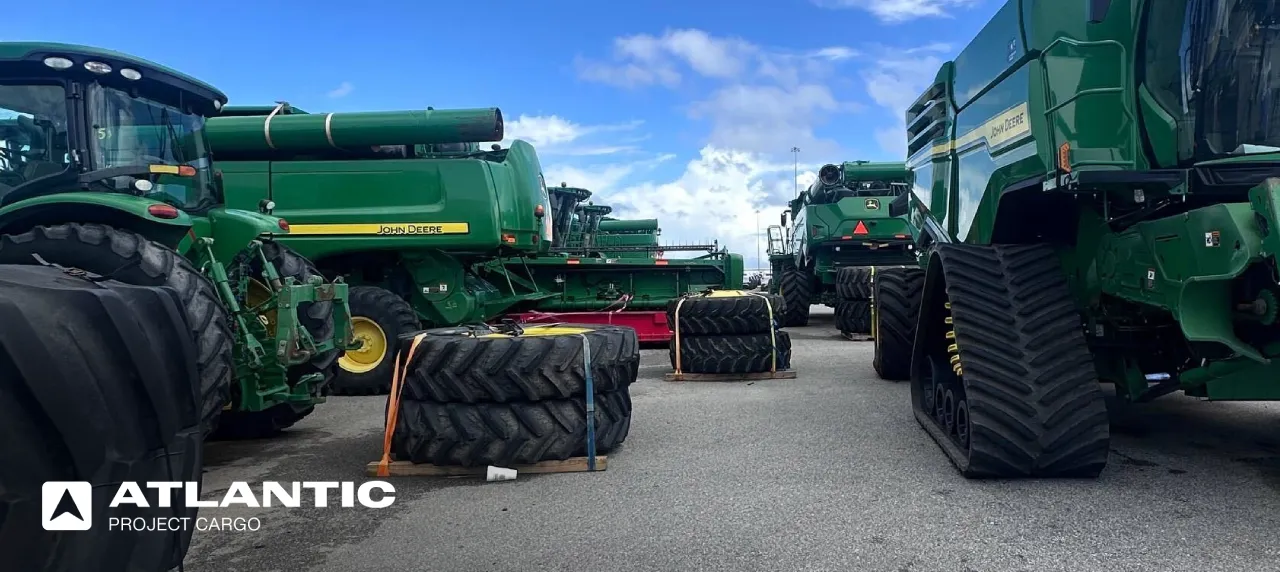
Heavy and oversized cargo often requires more coordination than a standard container shipment. Specialized trucks may need to be positioned before discharge. Oversize permits may have to be approved. Agricultural machinery may need cleaning or inspection. Documentation has to match the equipment exactly.

When one part of that process fails, equipment can remain at a terminal while charges accumulate.

A September 2026 initial decision from a Federal Maritime Commission administrative law judge provides a useful example of how disputes over those charges may be evaluated. The case involved thousands of shipments, store-door terms, millions of dollars in disputed charges, and a fundamental question about the evidence needed to establish responsibility.

For equipment dealers, importers, exporters, and project cargo shippers, the most useful lesson isn’t simply who won.

It’s what you need to document before a dispute ever happens.

What Happened in Peloton v. Flexport?

In early September 2026, Federal Maritime Commission Administrative Law Judge Mary Apostolakos Hervey dismissed Peloton’s $33.7 million claim against Flexport.

The dispute involved demurrage, equipment detention, and yard and warehouse storage charges associated with thousands of shipments during the severe congestion of 2020–2023.

Peloton argued that its shipments moved on store-door terms and that Flexport, which handled the inland portion of the transportation, should therefore have absorbed the disputed charges.

Judge Hervey disagreed.

The decision found that the FMC’s 2024 Demurrage and Detention Final Rule does not automatically transfer contractual responsibility for these charges to the forwarder simply because a shipment moves on store-door terms.

The rule addresses who may be billed and how demurrage and detention invoices are handled. It does not, by itself, determine which party has contractually agreed to bear every charge arising from a particular shipment.

That distinction is important.

For shippers, a store-door arrangement should not be treated as an automatic guarantee that a forwarder will absorb demurrage or detention. The contract, bill of lading, service terms, individual shipment circumstances, and supporting evidence still matter.

The September 2026 ruling is an initial administrative law judge decision and is not binding precedent. Binding precedent can be established by the full Commission or a federal appeals court. However, ALJ decisions can still influence how similar disputes are argued and evaluated.

Why Shipment-Level Evidence Became So Important

One of the most useful parts of the Peloton decision for shippers has less to do with the total amount of the claim and more to do with how the claim was supported.

A $33.7 million aggregate figure does not explain why a particular container incurred a particular charge.

To challenge a charge effectively, the evidence needs to connect:

  • a specific shipment or container;
  • a specific event;
  • a specific date or time period;
  • and the specific charge being disputed.

Peloton’s expert analysis relied in part on invoices that consolidated multiple containers. The judge was not persuaded that an aggregate analysis alone established what had happened on each individual shipment.

For an equipment shipper, the practical implication is straightforward.

If the terminal canceled your pickup appointment, retain the cancellation.

If a chassis was unavailable, document the shortage.

If the system showed a container as available but it could not actually be picked up, keep the records showing what happened.

If an empty container was returned on time, retain the interchange receipt.

The strongest file is not the one reconstructed months after an invoice arrives. It is the one built while the shipment is moving.

What Equipment Shippers Should Document

Good documentation should create a timeline that can be matched against the invoice later.

Depending on the shipment, useful records may include:

Category Records to Keep
Cargo & Container Cargo and container availability notices; chassis availability records; empty-container return records; equipment interchange receipts
Terminal Operations Terminal appointment requests; appointment confirmations and cancellations; terminal gate hours and closure notices
Communications Emails with carriers, terminals, truckers, and customers
Pickup & Delivery Pickup timestamps; delivery timestamps
Operational Exceptions Screenshots showing system errors or operational exceptions
Customs & Compliance Customs release information; permit application and approval records; inspection records
Shipping Documents Bills of lading and relevant service terms

The objective is not to collect paperwork for its own sake.

The objective is to be able to reconstruct exactly what prevented the cargo from moving and when.

That distinction becomes particularly important when the shipper believes a charge resulted from circumstances outside its control.

What the Ruling Means for Store-Door Equipment Shipments

Store-door shipping can create an assumption that responsibility for the inland movement — and therefore every charge associated with it — belongs entirely to the logistics provider.

The Peloton decision shows why that assumption can be dangerous.

Who physically manages the inland transportation and who is contractually responsible for a particular demurrage or detention charge are related questions, but they are not necessarily the same question.

Before an equipment shipment moves, all parties should clearly understand who is responsible for monitoring cargo availability, arranging terminal pickup, coordinating chassis and specialized trucking, obtaining permits where required, and managing the empty-container return. They should also confirm the applicable free time and review the contract terms covering demurrage and detention.

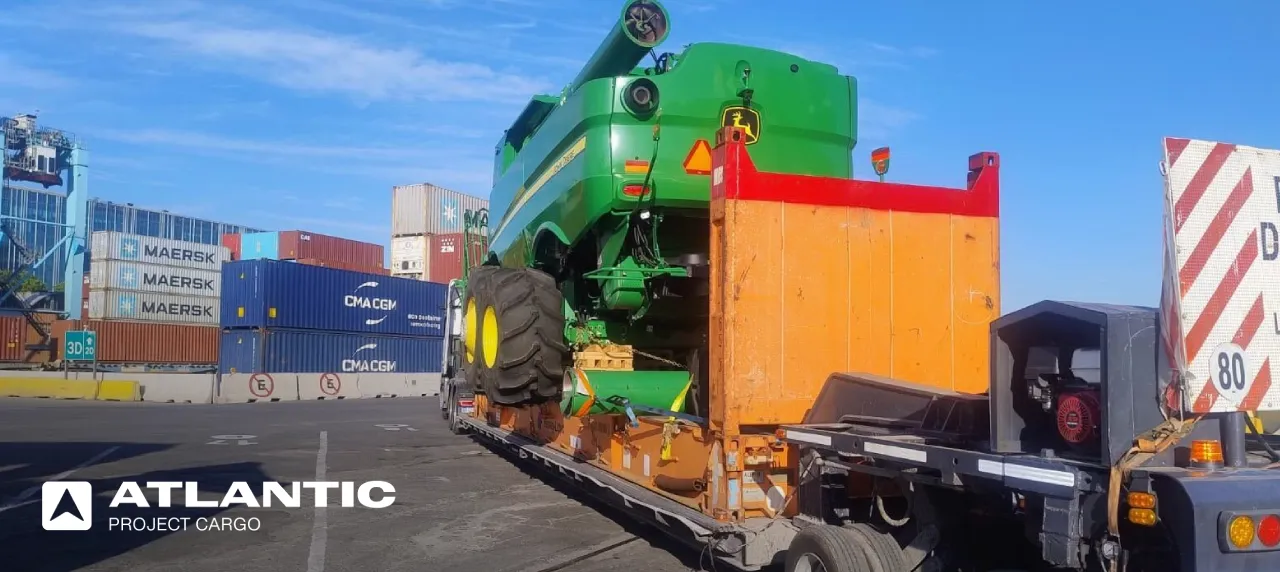
For heavy equipment, these questions can become even more important because pickup may require specialized transportation that cannot be arranged at the last minute.

Resolving responsibility before booking is considerably easier than debating it after charges have accumulated.

Why Heavy Equipment Creates Additional Delay Risk

Moving a standard container and moving a 38-ton excavator on a flat rack are not operationally identical.

Requirement What May Be Needed
Transportation Specialized trailers and heavy-haul carriers
Permits & Compliance Oversize or overweight permits and required inspections
Route Planning Route planning for oversized or overweight equipment
Escorts Escort vehicles where required
Lifting & Handling Cranes, lifting equipment, or other specialized handling equipment
Terminal Operations Terminal coordination and scheduling
Equipment Preparation Cleaning and other preparation before shipment
Customs Customs documentation and export/import preparation
Loading & Unloading Specialized loading, securing, and unloading procedures

Each additional requirement creates another dependency in the shipment.

If an oversize permit takes time to obtain and the application starts only after the vessel arrives, the equipment may remain at the terminal while the permit is processed.

If the truck required to move a piece of project cargo is not available during the vessel’s discharge window, additional handling or storage may become necessary.

If agricultural equipment reaches destination with contamination that should have been addressed at origin, an inspection can turn into a delay.

For project cargo, avoiding unnecessary terminal time therefore starts well before vessel arrival.

How Atlantic Project Cargo Manages These Risks Before Arrival

The most effective way to deal with a potential demurrage dispute is to prevent the avoidable part of the delay in the first place — while maintaining a clear record when something cannot be prevented.

Check Shipment Information Before Departure

Documentation is reviewed against the equipment and booking while corrections can still be made.

Depending on the cargo, that can include:

  • HTS information;
  • weight;
  • dimensions;
  • serial numbers;
  • VINs or PINs;
  • equipment descriptions;
  • ownership documentation.

A small discrepancy at origin can become a much more expensive problem after the cargo reaches another country.

Record Free Time and Relevant Terms

The applicable free time and expiration date should be visible in the shipment file rather than discovered only after charges begin appearing.

For a detailed explanation of how demurrage, detention, free time, and combined D&D work, see our guide to What Demurrage and Detention Mean in Shipping.

Prepare Customs and Inspections in Advance

Where possible, customs documentation should be prepared before arrival rather than after the cargo reaches the terminal.

The same principle applies to equipment-specific requirements.

Agricultural machinery may require cleaning and inspection. Oversized machinery may require permits and specialized inland transport. Project cargo may require discharge coordination.

The objective is to complete as much work as possible before terminal time becomes expensive.

Coordinate Specialized Transportation Around Actual Availability

Heavy equipment cannot always be collected by the next available truck.

The correct trailer, permits, escorts, terminal appointment, and route may all have to align.

Transportation planning therefore needs to account for the expected discharge or availability window instead of beginning only when the cargo is ready for pickup.

Document Operational Exceptions Immediately

A terminal cancellation documented on the day it occurs is much more useful than someone’s recollection of the cancellation six months later.

The same applies to chassis shortages, gate closures, system errors, cargo availability problems, and other exceptions.

Keep Proof of Empty Returns

When carrier equipment is returned, retain the interchange receipt and the date, time, and location of the return.

That record can become critical if a later invoice shows detention or per diem continuing beyond the actual return date.

Audit Charges Against the Shipment Timeline

A demurrage or detention charge should be compared against what actually happened.

Was the cargo available?

Was an appointment obtainable?

Was the chassis available?

When was the container collected?

When was it returned?

What do the contract and shipping documents say?

That shipment-level review is much closer to the evidentiary issue highlighted by the Peloton dispute than simply looking at the total value of an invoice.

What This Looks Like With Real Equipment

The principles in the FMC dispute become particularly clear when applied to actual machinery movements.

Generator Sets: Preparing for the Vessel’s Discharge Window

Breakbulk generator sets arriving in the United States can require specialized trucks and careful discharge coordination.

Where the operation allows, the objective may be to have the trucks ready so the units can move from the vessel’s hook directly onto the trailers.

If the equipment instead has to be landed inside the terminal, the customer may face additional handling, storage, and another lift before the cargo can leave.

That means trucks, permits, entry documentation, and other requirements need to be coordinated around the vessel’s discharge window.

The important point is timing: the vessel determines the operational window. The freight plan has to be ready for it.

A Serial Number Discrepancy Caught Before Sailing

On an autonomous weed-control machine moving from New York to Brisbane, the serial number shown in the paperwork did not match the plate on the equipment.

Our driver identified the discrepancy at pickup.

Because the machine was still at origin, the relevant documents could be corrected before it sailed, including the bill of sale, customs filing, fumigation certificate, and phytosanitary documentation.

Had the discrepancy been discovered after arrival in Brisbane, the machine could have been held while corrected documentation was issued from the United States.

One incorrect identifier can look insignificant at pickup.

At destination, it can become a logistics delay.

What to Do When You Receive a Demurrage or Detention Charge

If a significant charge appears on an invoice, the first question should not simply be whether the amount seems high.

Reconstruct the shipment.

1. Identify the Exact Charge

Determine which container or equipment movement the charge relates to and what period is being billed.

Avoid evaluating a large group of charges only as an aggregate amount.

2. Check the Applicable Terms

Review the service contract, bill of lading, applicable free-time terms, and the parties’ agreed responsibilities.

For store-door movements in particular, do not assume responsibility solely from the service description.

3. Build the Shipment Timeline

Establish:

  • when the cargo became available;
  • when customs released it;
  • when pickup was requested;
  • what appointments were available;
  • when the cargo actually left the terminal;
  • when delivery occurred;
  • and when carrier equipment was returned.

4. Match Exceptions to Evidence

If something prevented the shipment from moving, identify the record that proves it.

For example:

  • appointment cancellation;
  • chassis shortage;
  • terminal closure;
  • cargo unavailable for pickup;
  • customs or inspection hold;
  • operational restriction.

5. Compare the Evidence With the Invoice

The question is whether the billed period corresponds to what actually happened and whether the applicable terms support the charge.

Where the documentation shows grounds for a challenge, that evidence should be organized at the individual shipment level.

What the Peloton Decision Does — and Does Not — Tell Shippers

The Peloton decision should not be interpreted as meaning that all demurrage and detention charges on store-door shipments are automatically valid.

It also should not be interpreted as meaning that a forwarder can never be responsible for those charges.

The more useful conclusion is narrower:

Responsibility depends on the applicable contractual terms and the facts of the individual shipment, and a successful challenge requires evidence that connects the disputed charge to what actually happened.

For equipment shippers, that means operational planning and recordkeeping are not separate administrative tasks.

They are part of risk management.

FAQ

Potentially, depending on the contract and circumstances, but store-door terms alone do not automatically establish responsibility. In the September 2026 Peloton initial decision, the ALJ did not find that the FMC’s current rules automatically make an NVOCC responsible for demurrage and detention simply because it handles the inland portion of a store-door shipment.

The applicable contract and shipment-specific facts still matter.

No. The September 2026 decision was issued by an FMC administrative law judge and is not binding precedent. Binding precedent can be established by the full Federal Maritime Commission or a federal appeals court.

The decision is nevertheless useful for understanding how issues such as contractual responsibility and shipment-level evidence may be evaluated.

Useful evidence can include availability notices, terminal appointment records, appointment cancellations, chassis availability records, terminal operating information, emails, interchange receipts, pickup and return timestamps, and screenshots documenting operational exceptions.

The strongest evidence connects a particular event to a particular shipment and charge.

A large invoice total does not establish why each individual charge occurred.

Shipment-level records make it possible to show when cargo was available, whether pickup was possible, what prevented movement, when equipment was returned, and how those events correspond to the charge being disputed.

It can.

Heavy and oversized equipment may require permits, escorts, specialized transportation, inspections, cleaning, lifting, and specific terminal arrangements. These requirements create additional dependencies that need to be coordinated before the equipment becomes available.

The fundamentals include confirming free time, preparing customs documentation before arrival, arranging permits and specialized trucking early, monitoring cargo availability, documenting operational exceptions, retaining empty-return records, and reviewing charges against the actual shipment timeline.

For a broader explanation of demurrage, detention, free time, combined D&D, and prevention strategies, read What Demurrage and Detention Mean in Shipping.

The most important lesson from Peloton v. Flexport is not that one party should always pay demurrage and detention on a store-door shipment.

It’s that responsibility and evidence matter.

For equipment shippers, that means reviewing contractual terms before cargo moves, planning the operational requirements before arrival, and creating a shipment-level record while events are happening.

When something goes wrong, the question should not have to be reconstructed months later.

The file should already show what happened.

Atlantic Project Cargo coordinates international transportation for heavy equipment, machinery, and oversized cargo to and from the United States. Send us the equipment details, origin, and destination, and we’ll build the shipment plan around the cargo’s actual handling, documentation, and inland transportation requirements.

Get a Free Shipping Quote

Read More

Guide to Heavy Equipment Shipping from the USA to Chile: Costs, Ports & Import Requirements
September 11, 2026

Guide to Heavy Equipment Shipping from the USA to Chile: Costs, Ports & Import Requirements

Heavy equipment can be shipped from the USA to Chile by RoRo, flat rack, container, or breakbulk shipping, and the right method depends on the machine’s dimensions, weight, condition, destination,...

Reviewed by Nick Yadryshnikov Nick Yadryshnikov

Read
Heavy Equipment Shipping from the USA to Brazil: Costs, Transit Time & Import Guide
September 2, 2026

Heavy Equipment Shipping from the USA to Brazil: Costs, Transit Time & Import Guide

Heavy equipment can be shipped from the USA to Brazil by RoRo, flat rack, open-top container, or breakbulk, and the right choice depends on the machine’s dimensions, weight, and condition....

Reviewed by Victoria Moseicuka Victoria Moseicuka
Read
What Is Breakbulk Shipping? Complete Guide for Heavy Equipment, Project Cargo & Oversized Freight
August 31, 2026

What Is Breakbulk Shipping? Complete Guide for Heavy Equipment, Project Cargo & Oversized Freight

Breakbulk shipping is the transport of cargo loaded and unloaded piece by piece rather than in containers. It handles freight too large, too heavy, or too irregularly shaped to fit...

Reviewed by Nick Yadryshnikov Nick Yadryshnikov
Read
Share via