



Hours of operations:
9AM - 5PM / UTC -5 (EST)

Top 10 RV Manufacturers in 2026: Who’s Building America’s Best Rigs?

June 18, 2026
Shipping Quote
Customs Duties
Drayage Rate
Do you already own this equipment?

You Can Request a New Quote Every 15 Minutes

Please wait or contact us at [email protected]

Thank you for Choosing Us!

Looking to buy or sell heavy equipment?
With JumboBee, you can trade online with financing options and worldwide shipping.

Check Inventory
Calculate Import Duties
Get a free, no-obligation estimate of your import duties!
Calculate Import Duties
Get a Drayage Estimate
Get a free drayage estimate tailored to your exact needs!
Check a Drayage Rate
Home Insights Top 10 RV Manufacturers in 2026: Who’s Building America’s Best Rigs?
Reviewed by
Victoria Moseicuka Chief Operating Officer

Key Takeaways


  • The U.S. RV market is dominated by three major players – Forest River, Thor Industries, and Winnebago Industries – which control most of the industry’s best-known brands and account for the majority of RV sales.
  • Forest River leads in volume and variety, offering one of the broadest product portfolios in the industry, from travel trailers and fifth wheels to luxury motorhomes.
  • Brand ownership matters when comparing RVs. Popular names such as Airstream, Jayco, Keystone, Grand Design, and Newmar belong to larger parent companies, each targeting different buyer segments and price points.
  • Resale value and build quality are becoming key purchase factors, with buyers increasingly evaluating long-term ownership costs alongside upfront pricing.
  • There is an RV for every type of traveler in 2026, from affordable family-friendly models by Jayco and Dutchmen to premium luxury coaches from Newmar and Tiffin, and iconic adventure-focused trailers from Airstream.

The American love affair with recreational vehicles isn’t slowing down. Whether it’s remote workers trading cubicles for campgrounds or retirees finally hitting the open road, RV culture is firmly embedded in the U.S. lifestyle – and the industry’s top manufacturers are competing harder than ever for a slice of it.

But with so many brands, parent companies, and subsidiaries in the mix, the landscape can be confusing. This guide cuts through the noise with fresh data, ownership context, and what each of the Top 10 RV manufacturers actually does best in 2026.

A quick note on how we ranked: some entries are parent companies and others are brands those companies own — we’ve listed them the way buyers actually shop for them, with ownership noted throughout.

Get Your Free Quote Today!

Top 10 RV Manufacturers at a Glance: Comparison Table

With ten manufacturers, dozens of sub-brands, and three parent companies in the mix, a side-by-side view makes the differences easier to see. Here’s how the Top 10 stack up in 2026:

Manufacturer Founded Headquarters Parent Company Best Known For Popular Models / Lines Price Tier
Forest River 1996 Elkhart, IN Berkshire Hathaway Largest volume and broadest portfolio Salem, Wildwood, Rockwood Mini-Lite, Cherokee Entry to luxury
Thor Industries 1980 Elkhart, IN Independent (public) Parent of Airstream, Jayco, Keystone, Heartland Sold through its sub-brands All tiers
Winnebago Industries 1958 Forest City, IA Independent (public) Motorhomes and camper vans Travato, Micro Minnie, View Mid to premium
Keystone RV 1996 Goshen, IN Thor Industries North America's #1 towable manufacturer Bullet, Cougar, Cougar Sport Entry to mid
Grand Design RV 2012 Middlebury, IN Winnebago Industries Luxury towables with residential finishes Reflection, Momentum, Solitude Mid to premium
Jayco 1968 Middlebury, IN Thor Industries Family-friendly, accessible pricing Jay Flight, Eagle Entry to mid
Dutchmen 1988 Goshen, IN Thor Industries (via Keystone) Affordable, turnkey-ready towables Coleman Light, Lantern, Rubicon Entry
Tiffin Motorhomes 1972 Red Bay, AL Thor Industries (family-managed) Hand-crafted Class A and C diesel coaches Allegro, Phaeton Premium to luxury
Airstream 1931 Jackson Center, OH Thor Industries Iconic aluminum trailers, top resale value Classic trailers, Interstate, Atlas Premium
Newmar 1968 Nappanee, IN Winnebago Industries Hand-built luxury motor coaches Dutch Star, King Aire Ultra-luxury

A quick way to read this table: if budget and availability drive your decision, start at the top with Forest River, Keystone, and Jayco. If craftsmanship and long-term value matter more, work from the bottom up with Newmar, Airstream, and Tiffin.

1. Forest River

Founded: 1996

Headquarters: Elkhart, Indiana

If there’s one number that defines Forest River’s dominance, it’s this: with more than 120,000 units sold over the past year, Forest River leads U.S. RV unit sales by a wide margin, accounting for nearly one-third of all new RV sales among the top 10 brands.

Peter Liegl founded the company in 1996, and Warren Buffett’s Berkshire Hathaway acquired it in 2005 – a vote of confidence that speaks volumes. Forest River now owns well-known brands like Coachmen, Palomino, and Dynamax, and their catalog spans motorhomes, fifth wheels, travel trailers, and even boats.

Top-selling lines include the Salem, Wildwood, Rockwood Mini-Lite, and Cherokee – names that reliably move off dealer lots across every price tier. If you’re shopping for variety and availability, Forest River is impossible to overlook.

2. Thor Industries

Founded: 1980

Headquarters: Elkhart, Indiana

Measured by total revenue and the sheer number of brands under its roof, Thor Industries is the biggest company in the RV industry. Here’s the catch: most buyers don’t buy a “Thor.” They buy an Airstream, a Jayco, a Keystone, or a Heartland – all of which sit under the Thor Industries umbrella.

The company has grown through strategic acquisitions into a global powerhouse. Thor Industries owns big names like Airstream, Jayco, Keystone, and Heartland, giving it coverage across virtually every RV category and price point, from entry-level towables to iconic aluminum-shell luxury trailers.

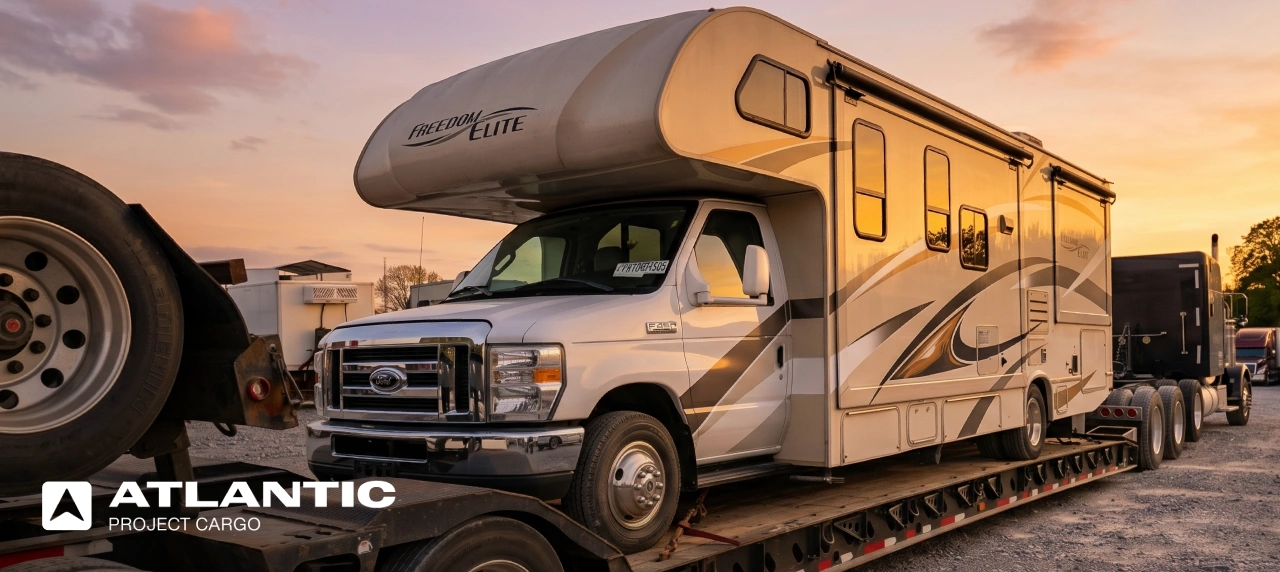
But any way you would need assistance with shipping your RV, that’s when Atlantic Project Cargo can help.

Get Your Free Quote Today!

3. Winnebago Industries – More Than One Brand

Founded: 1958

Headquarters: Forest City, Iowa

The iconic Winnebago Industries is known not just for the classic Winnebago brand, but also as the umbrella company for Grand Design RV and Newmar. Founded in 1958 in Iowa, Winnebago has built an excellent reputation for all things RV across nearly 70 years.

Every brand the company owns has its own niche: Winnebago is known for its motorhomes and camper vans, Grand Design specializes in towable RVs, and Newmar focuses on super-modern luxury motor coaches. It’s a portfolio strategy that keeps Winnebago Industries competitive at every level of the market.

Popular models in 2026 include the compact Travato (built on a Ram ProMaster chassis), the Micro Minnie travel trailer loved for its smart storage and light weight, and the View – a sleek Class C built on a Mercedes-Benz Sprinter.

4. Keystone RV

Founded: 1996

Headquarters: Goshen, Indiana

Cole Davis founded Keystone RV in 1996, and the company has grown to become North America’s #1 towable RV manufacturer. They manufacture fifth wheels, travel trailers, and toy haulers with tons of features and customizable upgrades, with facilities in Goshen, Indiana and Pendleton, Oregon. Thor Industries purchased Keystone in 2001.

Alongside Jayco and Grand Design, Keystone anchors the heart of the mid-tier market – together these three brands account for well over 100,000 new RV sales, spanning entry-level towables and mid-size motorhomes. Top models include the Bullet, Cougar, and Cougar Sport, all perennial bestsellers for dealers nationwide.

5. Grand Design RV

Founded: 2012

Headquarters: Middlebury, Indiana

Grand Design has achieved something remarkable: going from a startup in 2012 to one of the most respected names in luxury towables in just over a decade. Grand Design has built a reputation for quality control and responsive customer service that keeps owner loyalty unusually high – and makes it a reliable choice across entry and mid-price tiers.

The brand’s philosophy centers on customer experience – gathering owner feedback to continuously refine floor plans and feature lists. Walk into a Grand Design fifth wheel and you’ll find granite countertops, stainless steel appliances, and residential-style furniture at prices that undercut traditional luxury competitors. Their Reflection, Momentum, and Solitude lines have built loyal followings among full-timers and weekend adventurers alike.

6. Jayco

Founded: 1968

Headquarters: Middlebury, Indiana

Jayco brings decades of family-focused RV building to the Thor Industries portfolio. Known for accessible pricing and a wide range of travel trailers, fifth wheels, and motorhomes, Jayco has long been a go-to brand for families entering the RV lifestyle for the first time.

Alongside Keystone and Grand Design, Jayco sits at the heart of the mid-tier market – its models remain in steady demand year-round, which also helps resale when it’s time to upgrade. Popular lines include the Jay Flight – one of the best-selling travel trailer series in North America – and the Eagle fifth wheel for buyers ready to move up.

7. Dutchmen

Founded: 1988

Headquarters: Goshen, Indiana

Dutchmen’s RV lineup features travel trailers and fifth wheels backed by an industry-recognized structural warranty. Their recreational vehicles are ideal for first-time owners or young buyers looking for a turnkey-ready RV experience.

Dutchmen has carved a strong niche by keeping quality high and prices accessible. Their Coleman-branded lineup – the Coleman Light, Lantern, and Rubicon – targets buyers who want reliable outdoor utility without premium price tags. According to Camping World’s own sales data, Dutchmen consistently ranks among the top performers on dealer lots nationwide.

8. Tiffin Motorhomes

Founded: 1972

Headquarters: Red Bay, Alabama

In a market dominated by massive conglomerates, Tiffin stands out for keeping its family character intact. Bob Tiffin founded the company over 50 years ago, and although Tiffin joined the Thor Industries family in 2020, Tiffin family members still manage its key departments today – a rarity in today’s consolidation-heavy RV industry.

Tiffin has built its reputation on hand-crafted Class A and Class C diesel motorhomes known for intelligent floor plans, generous storage, and high-end interior finishes. Their Allegro and Phaeton lines are benchmarks of the luxury motorhome segment. For buyers who want personalized craftsmanship backed by decades of brand integrity, Tiffin remains a top-tier choice in 2026.

9. Airstream

Founded: 1931

Headquarters: Jackson Center, Ohio

Few RV brands carry the cultural weight of Airstream. Airstream resonates strongly with lifestyle-oriented buyers, and for good reason – their polished aluminum travel trailers are as recognizable today as they were in the mid-20th century.

But Airstream isn’t coasting on nostalgia. The company has expanded into Class B motorhomes with the Interstate and Atlas models, bringing the brand’s design sensibility to van-life adventurers. Their trailers hold resale value better than almost any other RV on the market, making them a smart long-term investment as well as a stylish travel companion.

10. Newmar

Founded: 1968

Headquarters: Nappanee, Indiana

Newmar targets buyers who want the absolute best – and delivers it. Every Newmar motorhome is hand-built with premium materials: rich leathers, hand-crafted cabinetry, spa-like bathrooms, and chef-grade kitchen appliances. These are not RVs in the traditional sense; they are road-going luxury residences.

Within the Winnebago Industries family, Newmar anchors the very top end of the market. Their Dutch Star and King Aire models routinely top industry awards for quality and innovation, attracting buyers who would otherwise be shopping for vacation properties rather than vehicles.

RV Industry Ownership Structure: Who Really Owns Your Favorite Brand?

The badge on the RV and the company behind it are rarely the same thing. Decades of consolidation have left the American RV industry organized around three corporate families – and knowing which family a brand belongs to tells you a lot about its parts supply, warranty backing, and dealer support.

The Thor Industries family

Thor is the industry’s biggest umbrella, covering Airstream, Jayco, Keystone, Heartland, Dutchmen (which operates under Keystone), and, since 2020, Tiffin Motorhomes. Buy any of these brands and you’re buying into the same parent company’s dealer network and supply chain – even though the products target completely different buyers.

The Forest River family (Berkshire Hathaway)

Forest River operates as a Berkshire Hathaway subsidiary and owns Coachmen, Palomino, and Dynamax, alongside its own enormous catalog of Forest River-branded lines. Its strength is sheer scale: more plants, more floor plans, and more units on dealer lots than anyone else.

The Winnebago Industries family

Winnebago owns Grand Design RV and Newmar in addition to its flagship brand. The portfolio is deliberately tiered – Winnebago for motorhomes and vans, Grand Design for towables, Newmar for top-shelf luxury coaches.

The independents

Truly independent builders are now the exception rather than the rule, and they typically command premium pricing for it. Even Tiffin, long the standard-bearer for family ownership, joined Thor in 2020 — though it remains family-managed from Red Bay, Alabama. Smaller niche builders like Oliver Travel Trailers compete on construction quality rather than volume.

Why does this matter to you as a buyer? Two RVs from the same corporate family often share suppliers, chassis partners, and warranty infrastructure. If a dealer near you services one Thor brand, getting support for another is usually easier. And if a parent company is financially healthy, its brands are more likely to honor warranties and keep parts available years down the road.

How to Choose an RV Manufacturer: A Practical Framework

With the landscape mapped out, the real question is which manufacturer fits your travel style. Work through these five factors in order and the shortlist usually builds itself.

1. Start with the type of RV, not the brand

Towable or motorized is the first fork in the road. If you already own a capable tow vehicle, travel trailers and fifth wheels from Keystone, Grand Design, or Jayco deliver the most living space per dollar. No tow vehicle? You’re shopping motorhomes – which points you toward Winnebago, Tiffin, Newmar, or Forest River’s motorized lines.

2. Set a realistic total budget

The purchase price is only the opening number. Factor in insurance, storage, maintenance, and depreciation. Entry-level buyers get the most value from Dutchmen, Jayco, and Forest River’s volume lines, while buyers at the top end comparing Newmar and Tiffin are really comparing craftsmanship philosophies, not price tags.

3. Weigh resale value

Some brands hold value dramatically better than others. Airstream is the standout – its trailers retain value better than almost anything else on the market – and premium-construction niche brands can hold a large share of their value a decade after purchase. If you expect to upgrade in five years, resale should weigh as heavily as the sticker price.

4. Check the dealer and service network near you

A great RV with no service center within 300 miles becomes a liability fast. The big three corporate families have the densest dealer networks; family-managed builders like Tiffin compensate with strong factory service reputations. Before committing to a brand, map where you’d actually take it for warranty work.

5. Match the brand to your travel lifestyle

Weekend family campers have different needs than full-timers logging 20,000 miles a year. Full-time living rewards heavier-duty construction (Grand Design’s Solitude, Tiffin’s diesel pushers), while occasional vacationers are better served by lighter, simpler, easier-to-store rigs like the Rockwood Mini-Lite or Micro Minnie.

The takeaway: choose Forest River, Jayco, or Dutchmen if value and availability lead your list; Keystone or Grand Design if you want towables with room to grow; Winnebago if motorhomes and van life call; and Airstream, Tiffin, or Newmar if you’re buying for the long haul and the resale chart matters as much as the floor plan.

Shipping an RV Internationally: What Owners Need to Know

Buying the right RV is one challenge – moving it across an ocean is another. Whether you’re relocating overseas, exporting a newly purchased American rig to a buyer abroad, or planning an extended European or Australian road trip with your own motorhome, international RV shipping comes down to three main methods.

Roll-on/Roll-off (RoRo). Your RV is driven onto a specialized vessel, secured on deck, and driven off at the destination port. RoRo is typically the most cost-effective option for operable motorhomes and is the workhorse method for standard-size rigs.

Container shipping. Smaller travel trailers and camper vans that fit inside a 40-foot or 45-foot high-cube container get the added protection of an enclosed box. This option suits high-value units like Airstreams, where shielding the polished aluminum shell from sea air is worth the extra cost.

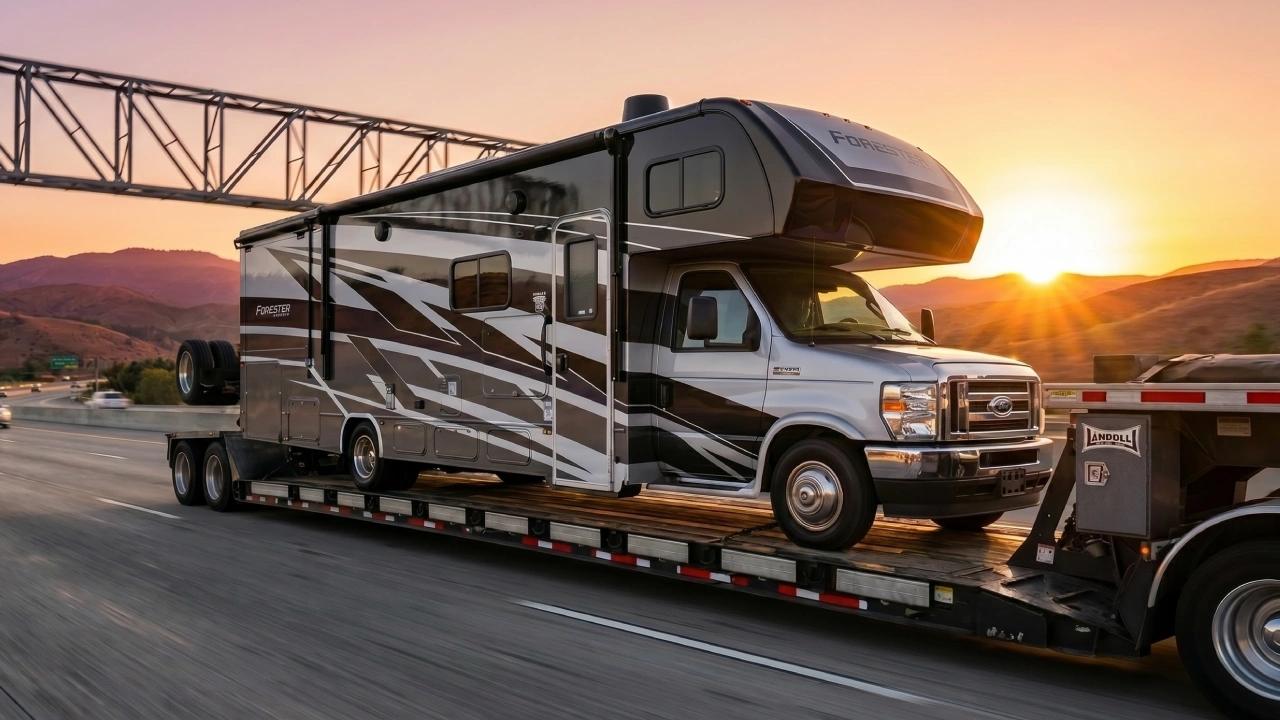
Flat rack shipping. Oversized fifth wheels and Class A coaches that won’t fit in a container can be secured to a flat rack – an open container platform – and loaded by crane. It’s the go-to solution for the large luxury coaches at the top of this list.

Before any RV ships internationally, a few preparations apply across the board: the title and bill of sale must be in order for customs clearance, propane tanks need to be emptied and certified, personal belongings generally must be removed, and the rig should be cleaned to meet the biosecurity standards of strict destinations like Australia and New Zealand. Destination-country import duties and compliance rules vary widely, so cost and feasibility should be confirmed before purchase, not after.

This is exactly where Atlantic Project Cargo will help. We handle the method selection, port logistics, customs documentation, and secure handling for RVs of every size – from a compact Micro Minnie to a 45-foot Newmar King Aire. Provide us with your RV’s dimensions and destination, and get your free quote today.

What the Market Looks Like in 2026

The 2026 U.S. RV market rewards buyers who do their homework before walking onto a lot. Legacy brands like Forest River and Keystone dominate in volume, but the best ownership experience often comes from balancing proven bestsellers against the niche brand that fits your exact lifestyle.

A few things stand out in today’s landscape

Consolidation is complete

Almost every brand you see on a dealer lot is owned by either Thor Industries, Winnebago Industries, or Forest River Inc. (Berkshire Hathaway). Even Tiffin, long the standard-bearer for family ownership, joined Thor in 2020 — true independents like Oliver Travel Trailers are increasingly rare and carry a premium for it.

Resale matters more than ever

Today’s buyers are weighing build quality, warranty terms, and resale value – and brands with double-hull or premium construction like Oliver Travel Trailers can hold 80% of their value a decade after purchase.

Niche brands punch above their weight

In outdoor-heavy states like Colorado, Utah, Arizona, and Oregon, niche RV brands can outperform national averages – so regional loyalty and lifestyle alignment matter as much as raw sales figures.

Conclusion

Whether you’re drawn to Forest River’s unmatched variety, Airstream’s timeless style, or Newmar’s rolling luxury estates, 2026 is an exceptional time to enter the RV market. These Top 10 RV manufacturers have spent decades – and in some cases nearly a century – refining what it means to travel in comfort. Your perfect rig is out there.


Need help shipping your RV to your destination? Atlantic Project Cargo specializes in safe, secure RV transportation at competitive rates. 

Get Your Free Quote Today!

Read More

June 26, 2026
Top 10 Construction Equipment Manufacturers
The global construction equipment industry has entered a new era. Driven by surging infrastructure investment, rapid urbanization, and a technology wave spanning electrification, autonomy, and...
Reviewed by
Victoria Moseicuka
June 23, 2026
SOLAS VGM Requirements for Heavy Equipment and Project Cargo: Practical Guide for Shippers
Shipping heavy equipment across oceans requires strict adherence to international safety regulations. As of 2026, global port authorities have implemented highly automated weighbridge systems, making...
Reviewed by
Victoria Moseicuka
June 16, 2026
How to Ship Agricultural Equipment Internationally: Costs, Ocean Freight, and Logistics
Moving massive machinery across borders takes a lot more than a standard flatbed. Combines, tractors, and sprayers have extreme weights and awkward shapes that make...
Reviewed by
Nick Yadryshnikov
Share via