
Key takeaways:
- Shipping method (RoRo, flat rack, or breakbulk) depends mainly on equipment dimensions and condition, not just weight.
- Ocean transit takes about 3–5 weeks, but total landed cost adds duties, VAT, and inland delivery on top of freight.
- Argentina’s 2025 reforms simplified used-equipment imports, but rules should be confirmed with a customs broker before buying.
- Dimensions are the biggest cost driver — a small size increase can push a machine into a pricier shipping category.
- Auction buys need freight and export paperwork lined up before bidding, due to tight removal deadlines.
Heavy equipment can be shipped from the USA to Argentina by RoRo, flat rack, breakbulk, or container shipping depending on the machine’s size, weight, dimensions, and operating condition. Most shipments also require inland transportation, export documentation, customs clearance, and specialized cargo handling.
Buyers who ship heavy equipment to Argentina supply agriculture, construction, mining, and infrastructure, drawn by deep US inventory and auction pricing. Argentina’s 2025 deregulation removed several long-standing barriers to used machinery. Cost is driven by dimensions first, then method, route, and weight.
Note: This article is general information, not legal, customs, or tax advice. Argentina import rules changed substantially in 2025 and continue to evolve. Confirm current requirements with a licensed Argentine customs broker before purchasing equipment.
How Does Heavy Equipment Shipping from the USA to Argentina Work?
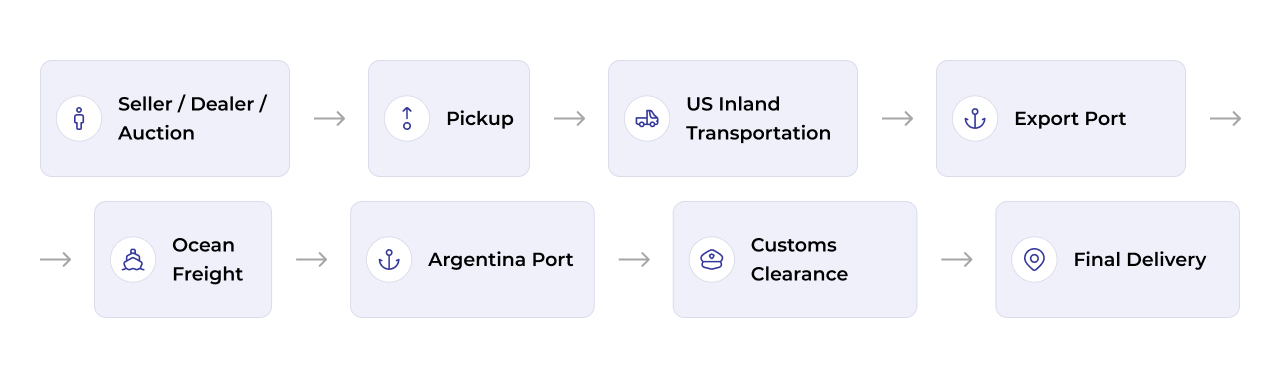
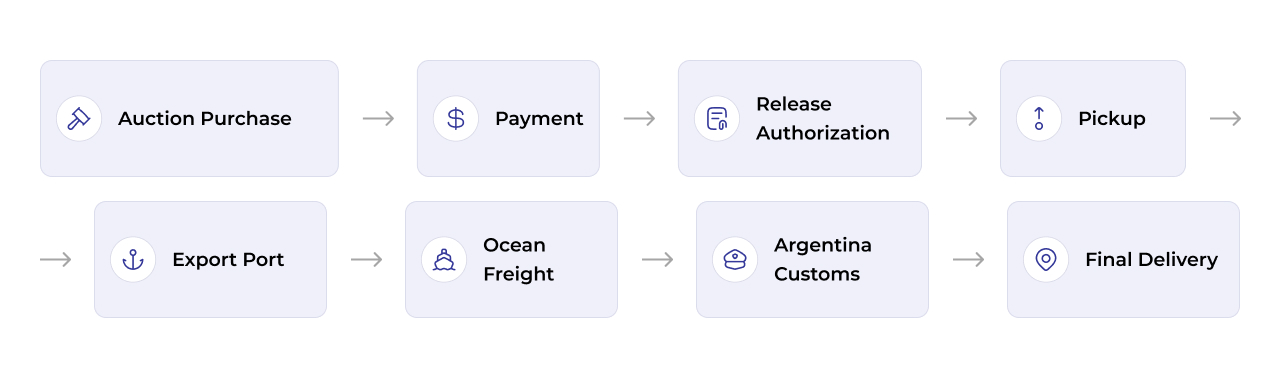
Heavy equipment shipping from the USA to Argentina follows six stages: pickup, US inland transport, export preparation, ocean freight, Argentine customs clearance, and final delivery.
| Step | Description |
|---|---|
| Pickup | Equipment collected from seller or auction |
| Inland transport | Delivery to export port |
| Export preparation | Documentation, inspection, loading |
| Ocean freight | Vessel transportation |
| Customs clearance | Import process |
| Final delivery | Transport to buyer |
The stages overlap. Export paperwork should start while the machine is still on the truck, because US Customs must inspect used self-propelled equipment before it loads.
What Equipment Is Commonly Shipped to Argentina?
Tractors, combines, excavators, and wheel loaders make up most machinery shipping to Argentina, alongside bulldozers, cranes, backhoes, forklifts, and stationary industrial plant.
| Equipment | Common Shipping Method |
|---|---|
| Tractor | RoRo / Flat rack |
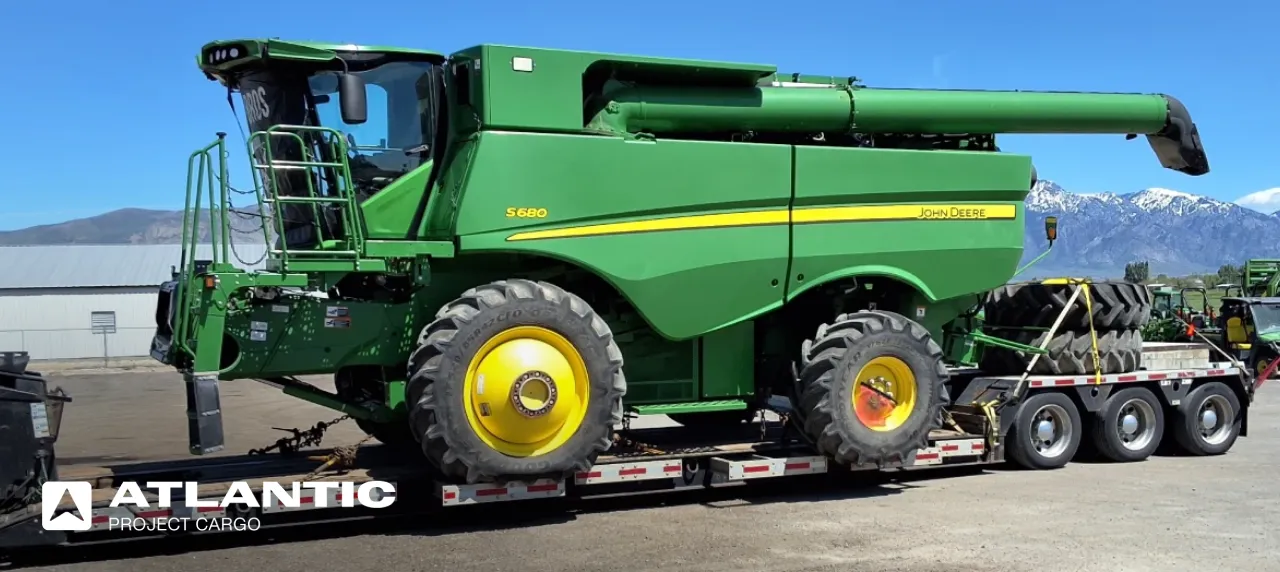
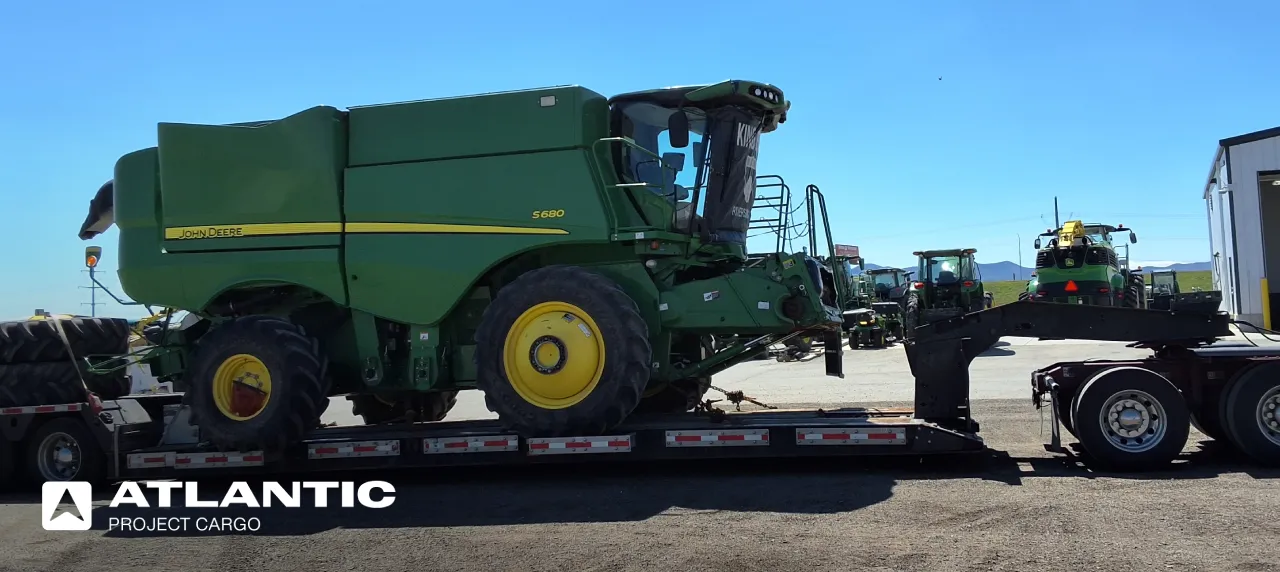
| Combine | Flat rack |
| Cotton picker | Flat rack / Breakbulk |
| Excavator | Flat rack / Breakbulk |
| Bulldozer | Breakbulk |
| Wheel loader | RoRo |
| Crane | Breakbulk |
| Backhoe | RoRo / Flat rack |
| Forklift | Container |
| Industrial machinery | Flat rack / Breakbulk |
Buying Heavy Equipment in the USA for Export to Argentina
Shipping machinery from USA sellers starts at dealers, manufacturers, private sellers, and auction platforms — Ritchie Bros., IronPlanet, MachineryTrader.
Auctions offer the best pricing and the tightest deadlines. Dealers cost more but supply cleaner paperwork, which matters when Argentine customs requires an invoice, bill of lading, and serial numbers to match exactly. APC handles sourcing, seller communication, inspection, and pickup as one job.
Which Shipping Method Is Best for Heavy Equipment?
There is no universal shipping method. The best option depends on equipment dimensions, operating condition, destination, and budget.
RoRo Shipping
RoRo shipping means driving the machine up a ramp into an enclosed vessel deck.
- Best for: Operable wheel loaders, tractors, backhoes.
- Advantages: No crane fees; enclosed against saltwater spray.
- Limitations: Must run, steer, brake; deck height caps size.
Flat Rack Shipping
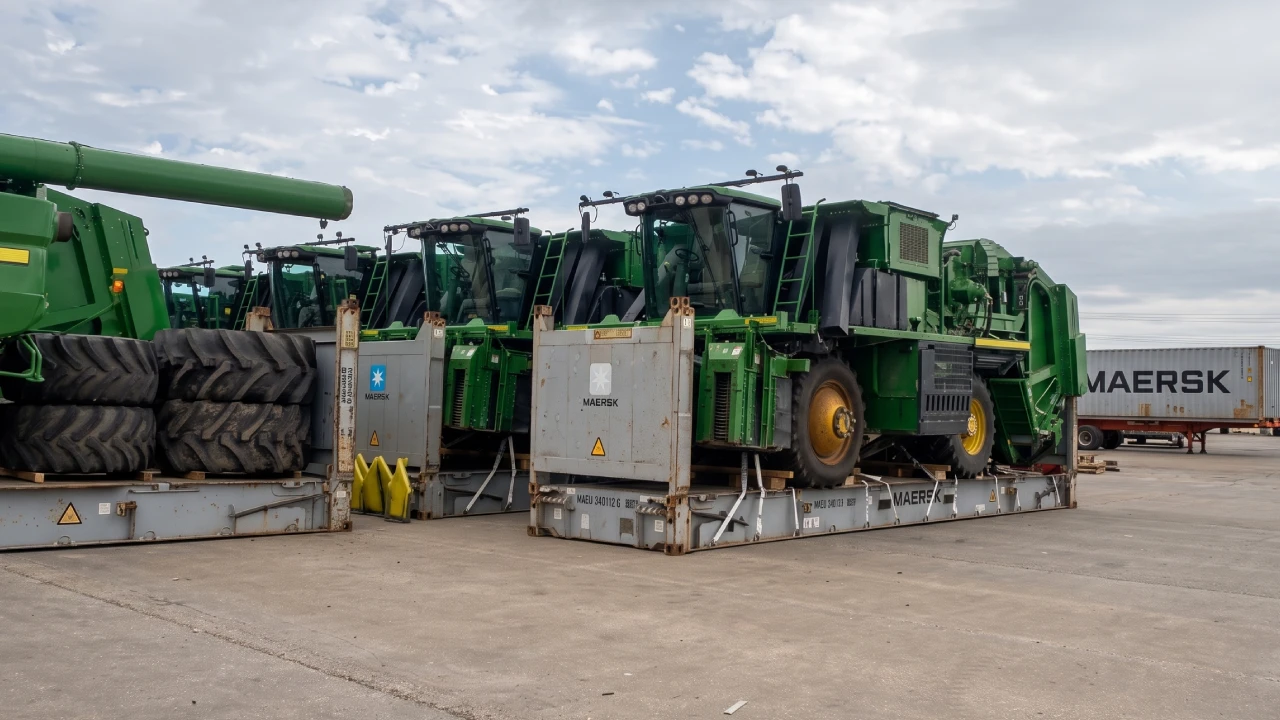
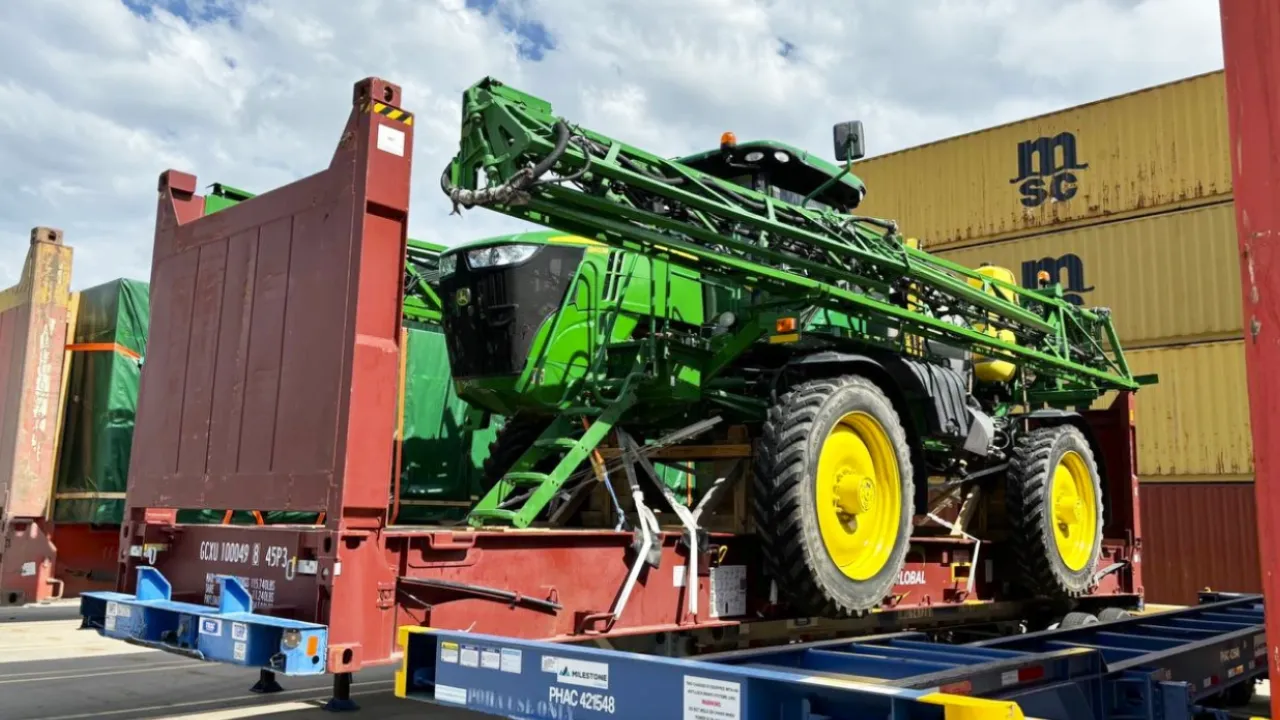
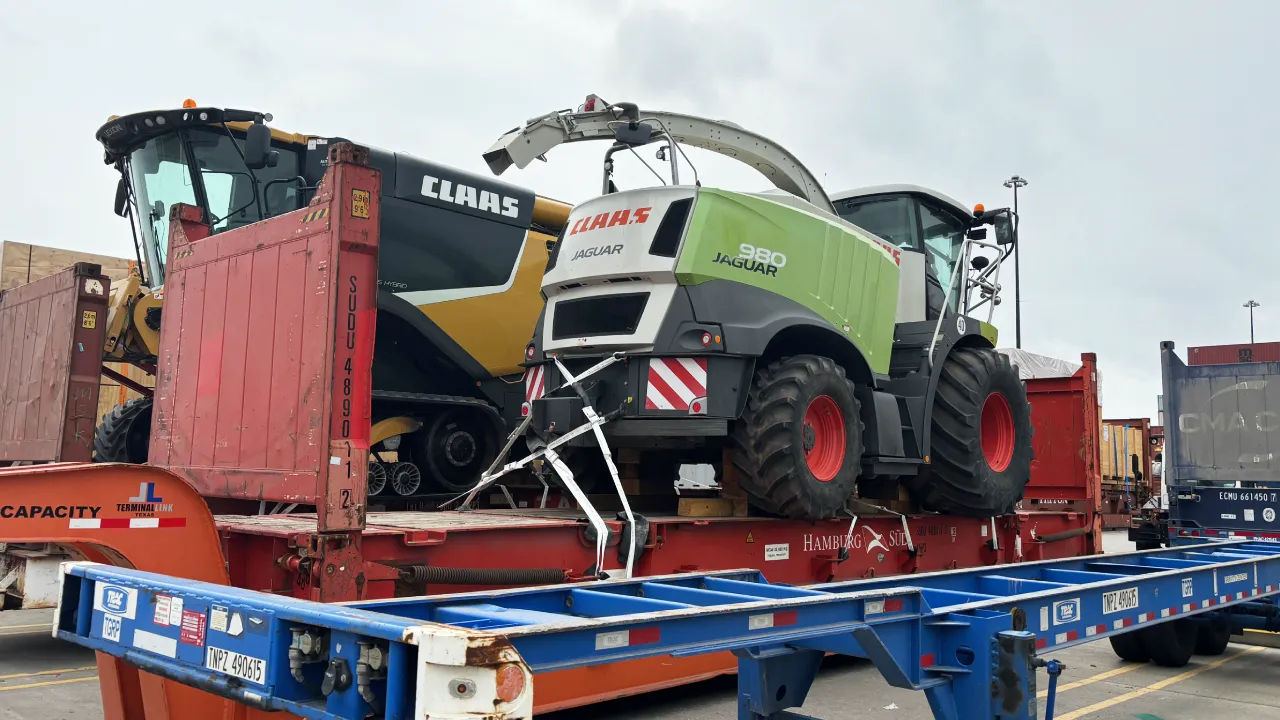
Flat rack shipping uses open steel platforms craned onto container vessels.
- Best for: Oversized or non-running machinery — combines, large excavators.
- Securing: Chains and blocking engineered to the machine’s lifting points.
- Export prep: Booms lowered, buckets removed, dimensions confirmed before booking.
Breakbulk Shipping
Breakbulk shipping lifts non-containerized cargo directly onto the vessel deck.
- Best for: Mining and industrial cargo beyond flat rack limits.
- Trade-off: Highest cost, fewest sailings; the only option above roughly 150,000 pounds.
Container Shipping
- Best for: Compact machinery, attachments, spare parts.
- Advantages: Theft-secure, lowest base ocean rate.
- Limitations: Doors are roughly 7.5 feet square; most machines will not fit.
| Method | Best For | Cost | Transit Protection |
|---|---|---|---|
| RoRo | Self-propelled equipment | $$ | Medium |
| Flat rack | Oversized equipment | $$$ | High |
| Breakbulk | Project cargo | $$$$ | Medium |
| Container | Compact machinery | $$ | High |
Note: Weight and dimension thresholds above are typical, not fixed – they vary by vessel, carrier, and sailing. Confirm limits for your specific booking.
Which Shipping Method Should You Choose?
| Equipment | Recommended Method |
|---|---|
| Tractor | RoRo |
| Combine | Flat rack |
| Excavator | Flat rack |
| Bulldozer | Breakbulk |
| Wheel loader | RoRo |
| Forklift | Container |
Starting points, not rules. Two excavators of identical weight can need different handling if one carries a raised cab. APC confirms manufacturer dimensions and operating condition, then matches the machine to available sailings.
How Much Does It Cost to Ship Heavy Equipment from the USA to Argentina?
Shipping cost depends on dimensions, weight, method, pickup location, export port, Argentine destination, fuel costs, port charges, and carrier availability.
| Equipment | Typical Method | Estimated Cost |
|---|---|---|
| Tractor | RoRo | Request quote |
| Excavator | Flat rack | Request quote |
| Bulldozer | Breakbulk | Request quote |
| Combine | Flat rack | Request quote |
| Forklift | Container | Request quote |
We do not publish fixed prices for this lane, and you should be sceptical of anyone who does. Rates move with fuel, vessel space, and seasonal demand. See our Heavy Equipment Shipping Cost guide.
Request a Quote for Your Argentina Shipment
Send us the make, model, dimensions, and pickup location, and we will price the full move.
What Really Makes Up the Total Cost?
Ocean freight is usually less than half of what you pay. Total landed cost adds US handling, Argentine duties and taxes, and destination delivery.
| Cost Component | Usually Included in Freight Quote? |
|---|---|
| Equipment purchase | No |
| Pickup in USA | Sometimes |
| Inland transport | Sometimes |
| Export documentation | Usually |
| Ocean freight | Yes |
| Marine insurance | Optional |
| Argentina customs duties | No |
| VAT | No |
| Customs broker fees | No |
| Port charges | Sometimes |
| Final delivery | Optional |
Two freight rates are not comparable unless both state where they start and stop.
What Increases Shipping Costs the Most?
Dimensions increase costs more than any other factor, because a single extra inch of width or height can reclassify a machine as out-of-gauge.
| Factor | Impact |
|---|---|
| Equipment dimensions | Very high |
| Shipping method | Very high |
| Route | High |
| Weight | High |
| Port charges | Medium |
| Customs | Medium |
| Marine insurance | Low |
A 40,000-pound excavator with a standard cab rolls onto a RoRo vessel. The same machine with a raised cab exceeds deck height, needs a crane and flat rack, and costs thousands more.
How Long Does Shipping from the USA to Argentina Take?
Ocean transit generally runs three to five weeks port to port, with door-to-door time longer once inland trucking, export staging, and customs are added.
| Route | Indicative Ocean Transit |
|---|---|
| East Coast → Buenos Aires | Approx. 20–30 days |
| Gulf Coast → Buenos Aires | Approx. 25–35 days |
| East Coast → Zarate | Approx. 22–32 days |
| Gulf Coast → Bahia Blanca | Approx. 30–40 days |
Planning ranges only. Confirm against live sailing schedules before committing to a delivery date.
Sailing frequency matters more than speed here. Breakbulk services can run monthly, so a missed cut-off costs weeks. Transshipment adds time on some services.
What Are the Best Shipping Routes from the USA to Argentina?
The best route depends on pickup location, shipping method, carrier availability, and the final destination inside Argentina.
| Pickup Region | Common Export Port | Typical Argentina Arrival Port |
|---|---|---|
| Texas | Houston / Galveston | Buenos Aires / Campana |
| Florida | Jacksonville | Buenos Aires / Zarate |
| Southeast USA | Savannah / Charleston | Buenos Aires |
| Midwest USA | Baltimore / Houston | Buenos Aires |
| Northeast USA | Baltimore / New York | Buenos Aires |
The closest port is not always the cheapest. A machine in Ohio may cost less routed to Baltimore on a frequent service than to a nearer port sailing monthly.
Best US Ports for Heavy Equipment Exports
| Port | Best For |
|---|---|
| Port of Houston | Project cargo, agricultural and industrial equipment |
| Port of Galveston | RoRo and oversized cargo |
| Port of Baltimore | Farm equipment, RoRo shipments |
| Port of Jacksonville | Vehicles and self-propelled machinery |
| Port of Savannah | Containerized machinery |
| Port of Charleston | Heavy and project cargo |
| Port of New York & New Jersey | Northeast exports |
APC selects ports on carrier schedules and total cost, not proximity. See our Top 10 Biggest Ports in the USA guide.
Main Ports in Argentina for Heavy Equipment Imports
Several Argentine ports handle imported machinery. The right one depends on cargo type and final delivery point.
| Port | Typical Cargo |
|---|---|
| Buenos Aires | Containers, machinery, general cargo |
| Zarate | RoRo cargo, agricultural and construction equipment |
| Campana | Industrial equipment and project cargo |
| Bahia Blanca | Heavy industry and bulk cargo |
Most heavy equipment shipping Argentina-bound discharges at Buenos Aires, which has the most frequent services. Zarate, upriver on the Paraná, is the main rolling-equipment terminal and natural discharge port for RoRo machinery. Campana takes project cargo; Bahia Blanca serves heavy industry. See our Top 5 Ports in Argentina guide.
Import Requirements for Heavy Equipment in Argentina
To import heavy equipment into Argentina, you need customs documentation, proper tariff classification, and compliance with local Argentina import regulations. Requirements vary by equipment type, whether the machine is new or used, and the importer’s legal status.
| Requirement | Purpose |
|---|---|
| Commercial invoice | Customs valuation |
| Bill of lading | Cargo release |
| Packing list | Cargo identification |
| HS / NCM code | Duty calculation |
| Customs broker | Import processing |
| Importer registration | Legal importation |
Two separate 2025 changes matter for used machinery. Argentina retired its SEDI import-statistics declaration in February 2025 (General Resolution 5651/2025), following the earlier repeal of the SIRA licensing regime. Then Decree 273/2025, effective mid-April 2025, eliminated the Certificate of Importation of Used Goods (CIBU), a requirement in force since 1994. Used capital goods now need only an electronic sworn statement via the Malvina system, and bans on used machinery, tractors, and industrial vehicles are lifted. The extra-zone duty on new goods is doubled for used goods, capped at 35%.
One requirement catches US exporters out: the commercial invoice must generally be in Spanish, signed, and carry a sworn declaration – exact copy count and dating rules should be confirmed with your broker, as brokers apply this differently by port.
Note: Confirm Argentine duty rates, classification, and documentation before you purchase, not after the machine is on the water. Classification and valuation drive the duty outcome on used equipment.
Documents Required for Shipping Equipment to Argentina
| Document | Required For |
|---|---|
| Commercial invoice | Customs declaration |
| Bill of lading | Cargo ownership |
| Packing list | Shipment details |
| Export declaration (AES/EEI) | US export compliance |
| Equipment ownership documents | Certain machinery |
| Insurance certificate | Cargo protection |
| Import documentation | Argentina customs clearance |
US export rules treat most used machinery as a vehicle. Under 19 CFR 192, “self-propelled vehicle” includes self-propelled agricultural machinery and construction equipment, so a used tractor or excavator must be presented to CBP at least 72 hours before export. Where a title exists, CBP requires the original Certificate of Title (or a certified copy) plus two complete copies and a lienholder release. Missing titles are the most common reason a machine misses its vessel; mismatched serial numbers are the next.
Note: US export requirements are enforced by CBP and can vary by port of exit; confirm current documentation rules with your freight forwarder before scheduling pickup.
How to Prepare Heavy Equipment for International Shipping
Proper preparation reduces loading delays, minimizes damage risk, and speeds customs inspection.
| Preparation Step | Reason |
|---|---|
| Clean the machine | Biosecurity and inspection |
| Measure dimensions | Accurate freight quotation |
| Record operating weight | Load planning |
| Remove loose accessories | Damage prevention |
| Photograph equipment | Insurance documentation |
| Verify serial number | Customs identification |
| Secure moving parts | Safe transportation |
Photographs taken before loading are your evidence base for any damage claim. See Export Inspections & Certifications and Marine Cargo Insurance.
Shipping Farm Equipment from the USA to Argentina
Argentina runs one of South America’s largest agricultural sectors, making farm equipment shipping Argentina-bound the busiest category on this lane — tractors, combines, cotton pickers, sprayers, seeders, harvesters.
The challenges are dimensional and seasonal. Combines and sprayers often need header removal and wheel adjustment to fit a flat rack, demand spikes around the planting and harvest calendar, and inland delivery to Córdoba or Santa Fe adds a heavy-haul leg. Tractor shipping to Argentina usually goes RoRo when the machine is operable. See Agricultural Equipment Shipping and our farm equipment guide.
Shipping Construction Equipment from the USA to Argentina
Construction equipment shipping Argentina-bound covers excavators, bulldozers, wheel loaders, backhoes, cranes, and motor graders, driven by infrastructure, mining, and energy projects.
Oversized machinery usually needs flat rack or breakbulk because track width, cab height, and boom length exceed RoRo clearances. Excavator shipping to Argentina is the clearest case: a 20-ton machine may roll on, while a 30-ton unit must be craned onto a flat rack. See Construction Equipment Shipping and how to ship an excavator.
Shipping Equipment Purchased at US Auctions
Machinery shipping to Argentina from auctions runs on a clock. Removal deadlines are typically 7 to 14 days, after which storage fees accrue daily.
Plan equipment shipping to Argentina before you bid. You need release numbers and gate passes before a truck enters the yard, some yards will not load non-running machines, and the 72-hour CBP presentation must fit around the vessel cut-off. Freight quoted after the hammer falls tends to erase the saving.
Example Shipping Scenarios
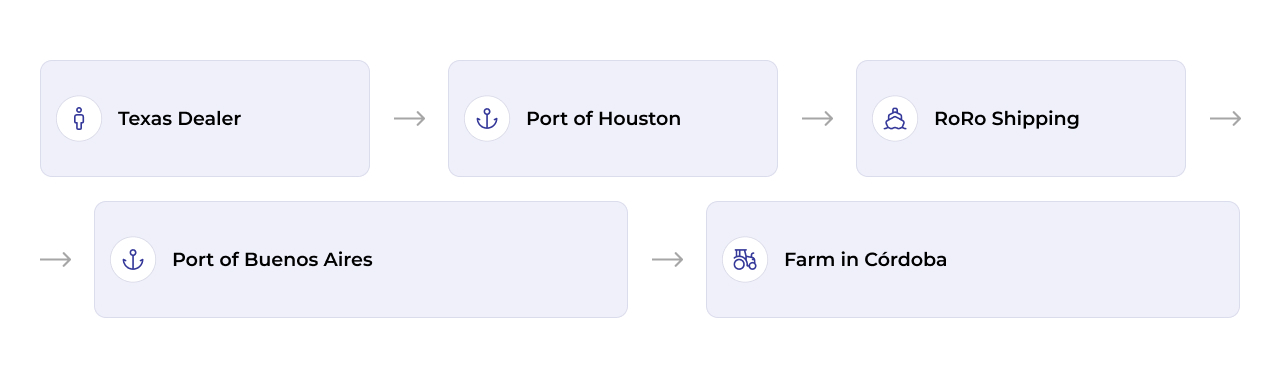
Example 1 — John Deere 8R tractor, Texas dealer to a farm in Córdoba
A grain producer buys a low-hour 8R from a Texas dealer. The machine runs, steers, and brakes, and at standard cab height it clears RoRo deck limits with the duals removed and shipped alongside. A heavy-haul trucker moves it to Houston, where it is pressure-washed at a staging yard — soil in the tread is the one thing that reliably stalls an Argentine agricultural inspection — and driven aboard on a scheduled sailing.
Why: RoRo eliminates the heavy-lift crane fee entirely, and Buenos Aires has the most frequent sailings. The duals ship as separate freight rather than paying an out-of-gauge width surcharge on the whole machine.
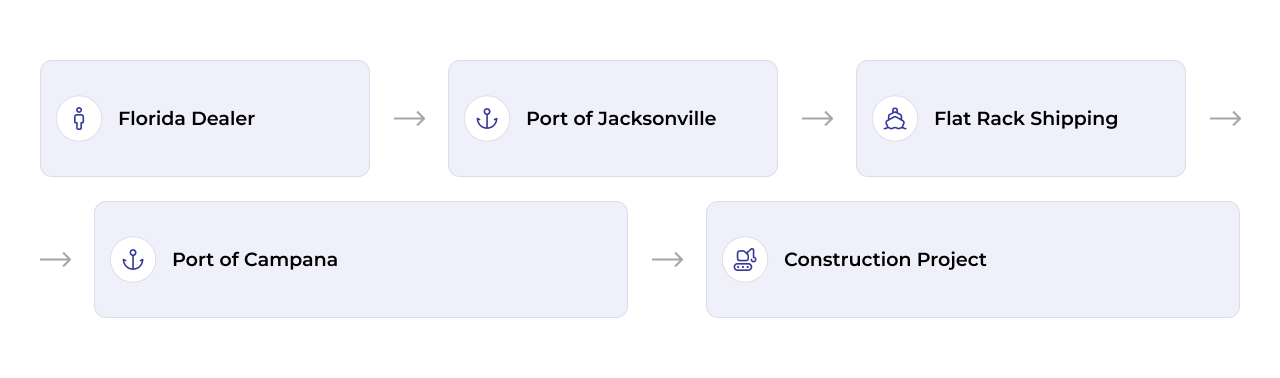
Example 2 — CAT 320 excavator, Florida auction to a construction project near Campana
A contractor wins a 50,000-pound CAT 320 at a Florida auction with a ten-day removal deadline. It runs, so RoRo looks obvious — until the dimensional check shows the boom adds fourteen feet of length and the machine misses the next vehicle sailing by a week. Flat rack is booked instead. At the staging yard, the bucket comes off, and the arm is tucked tight, cutting the declared length before lashing.
Why: Flat rack sailed sooner, and removing the bucket kept the unit inside a cheaper dimensional band. Campana discharges closer to the site than Buenos Aires, saving a long inland heavy-haul leg.
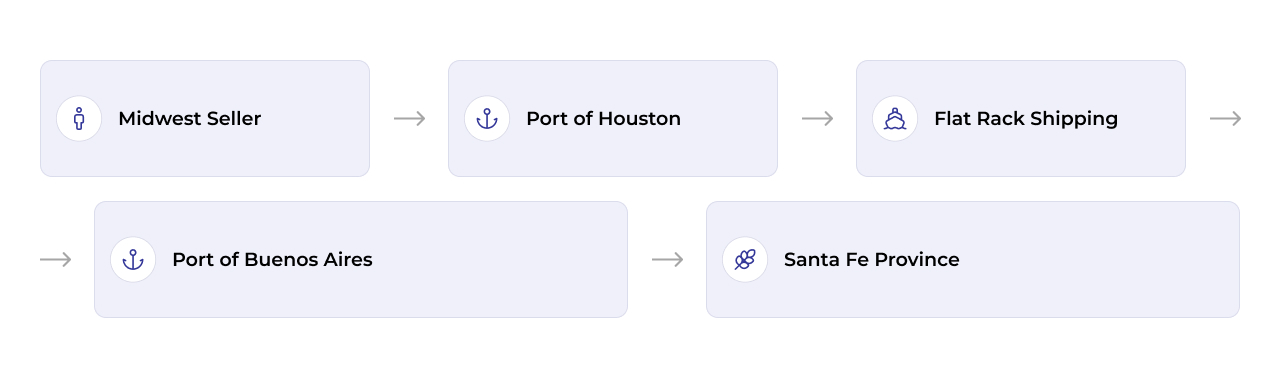
Example 3 — Case IH combine, Midwest seller to Santa Fe province
A dealer buys a used combine ahead of the Argentine planting season. Combines are the awkward case: wide, tall, and full of cavities that trap crop residue. The header is removed and shipped as separate freight, the machine is dismantled enough to clean the augers and hoppers properly, and the whole consignment moves flat rack out of Houston.
Why: Header removal drops the shipping width below the surcharge threshold, and thorough cleaning before departure avoids a destination hold that would land the machine after the planting window — the one delay that makes the purchase worthless.
Illustrative only. Actual routing depends on cargo specifications and vessel schedules.
Common Mistakes When Shipping Heavy Equipment to Argentina
- Buying before estimating freight. Shipping an oversized machine can exceed the auction saving.
- Guessing dimensions. Wrong trailer, wrong permits, missed sailing.
- Choosing the wrong method. RoRo for a machine over deck height wastes weeks.
- Ignoring import requirements. Confirm classification and used-goods treatment before purchase.
- Missing auction deadlines. Storage fees accrue daily.
- Assuming port-to-port covers everything. It excludes duties, VAT, broker fees, and inland delivery.
- Skipping cargo insurance. Carrier liability is capped by law and will not cover a $200,000 machine.
Summary: Most delays and unexpected costs can be avoided by confirming shipping requirements before purchasing the equipment.
Why Choose Atlantic Project Cargo?
We manage the entire chain rather than one leg of it.
| APC Service | Benefit |
|---|---|
| Equipment pickup | Nationwide coverage |
| Export logistics | Simplified documentation |
| Ocean freight | Multiple shipping methods |
| Cargo insurance | Shipment protection |
| Customs coordination | Faster import process |
| Final delivery | Complete logistics solution |
What Information Is Needed for a Shipping Quote?
| Information | Example |
|---|---|
| Equipment type | Excavator |
| Make & model | CAT 320 |
| Dimensions | L × W × H |
| Weight | Operating weight |
| Pickup location | Houston, TX |
| Destination | Córdoba, Argentina |
| Equipment condition | Running / non-running |
| Attachments | Bucket, blade, boom |
Complete specifications let us recommend the right method and quote the first time accurately.
Frequently Asked Questions
Regulations referenced below reflect Argentina’s 2025 reforms as of publication and may have changed. Confirm current rules with a licensed Argentine customs broker before acting on this information.
Heavy equipment shipping from the USA to Argentina is priced per machine, based on dimensions, weight, method, pickup location, and destination. We quote individually rather than publish fixed rates, because out-of-gauge surcharges and vessel availability vary widely.
Ocean transit typically runs three to five weeks port to port. Door-to-door is longer once inland trucking, export staging, and Argentine customs clearance are added.
Tractor shipping to Argentina usually goes RoRo when the machine is fully operable, which avoids crane fees and keeps it enclosed. Very wide or non-running tractors go on flat racks.
Excavator shipping to Argentina goes RoRo only if the machine drives and fits under deck height with the boom lowered. Larger, raised-cab, and non-running machines need flat rack or breakbulk shipping.
Yes — Ritchie Bros., IronPlanet, and dealer pickups nationwide, including release authorization, gate passes, and scheduling inside the removal deadline.
A Spanish-language commercial invoice, bill of lading, packing list, correct NCM classification, and clearance through a registered Argentine customs broker. The US side needs an EEI/AES filing and, for used self-propelled machinery, CBP presentation with title.
Yes. Decree 273/2025 eliminated the CIBU and lifted bans on used machinery, tractors, and industrial vehicles. Used capital goods now need only an electronic sworn statement, though duty on new goods is doubled for used, capped at 35%.
We coordinate Argentine customs clearance through licensed local brokers and prepare the US export documentation so both ends align.
Yes — from the seller or auction yard through to your site in Argentina, including inland heavy haulage on both ends.
Request a Heavy Equipment Shipping Quote
Whether you are moving a single tractor to Córdoba or a fleet of excavators to a mining project, international heavy equipment shipping works best when one team owns the whole chain — sourcing, auction pickup, inland transport, export documentation, ocean freight, cargo insurance, customs coordination, and delivery throughout Argentina.
Note: Argentine import regulations changed significantly during 2025 and remain in flux. Confirm duty rates, classifications, and documentation with Atlantic Project Cargo or a licensed Argentine customs broker before you buy.
Read More
Nick Yadryshnikov
Victoria Moseicuka
Victoria Moseicuka