
Hours of operations:
9AM - 5PM / UTC -5 (EST)

How to Ship an Excavator: Transportation Methods, Costs & International Shipping Guide

August 6, 2026
Shipping Quote
Customs Duties
Drayage Rate
Do you already own this equipment?

You Can Request a New Quote Every 15 Minutes

Please wait or contact us at [email protected]

Thank you for Choosing Us!

Looking to buy or sell heavy equipment?
With JumboBee, you can trade online with financing options and worldwide shipping.

Check Inventory
Calculate Import Duties
Get a free, no-obligation estimate of your import duties!
Calculate Import Duties
Get a Drayage Estimate
Get a free drayage estimate tailored to your exact needs!
Check a Drayage Rate
Home Insights How to Ship an Excavator: Transportation Methods, Costs & International Shipping Guide
Reviewed by
Nick Yadryshnikov Senior Account Manager

Key Takeaways


  • Excavators can be shipped via container, RoRo, flat rack, or breakbulk, depending entirely on their dimensional size and weight.
  • Mini and compact excavators are highly cost-effective to ship in standard containers.
  • Standard excavators typically ship via RoRo to avoid expensive heavy-lift port crane fees.
  • Large and mining excavators require out-of-gauge flat racks, breakbulk shipping, and expensive domestic heavy-haul permits.
  • Removing buckets, arms, and counterweights can significantly reduce shipping costs by minimizing dimensional volume.
  • Biosecurity cleaning is mandatory for countries like Australia to prevent devastating environmental contamination.
  • Auction purchases require immediate logistics planning to avoid massive daily storage fees from liquidators.
  • Always secure primary cargo insurance; never rely on the ocean carrier’s heavily restricted liability limits.

Excavators can be transported domestically using specialized heavy-haul trailers and internationally using container shipping, RoRo vessels, flat rack containers, or breakbulk shipping depending on machine size, weight, dimensions, and destination.

Excavators are the heavy hitters of the global construction industry. But their extreme weight, wide tracks, and awkward booms make them uniquely difficult to move. Whether you’re relocating a single compact unit across the state or exporting a massive fleet of mining shovels overseas, your logistics strategy determines your profit margin. Excavators require specialized transportation because they easily exceed standard highway weight limits and dimensional ocean freight parameters.

In this excavator shipping guide, you will learn exactly how to navigate domestic heavy-haul regulations and select the most cost-effective international shipping methods. We break down shipping costs, export preparation, biosecurity cleaning requirements, and the best practices for moving your machinery from an auction yard to a foreign jobsite without delays.

How Are Excavators Transported?

Excavators are transported by loading them onto heavy-haul flatbed trailers for domestic road transit and securing them to specialized maritime vessels — such as RoRo ships or flat racks — for international ocean crossings.

Moving an excavator from a seller location, dealer lot, or auction yard to its final destination is a multi-step process. First, an inland heavy-haul truck transports the machine to a coastal staging yard. There, the excavator is prepped, washed, and cleared through customs. Next, it is delivered to the port and loaded onto an ocean vessel. Finally, upon arrival, it clears destination customs and is trucked to the construction site.

Transport Method Typical Application
Truck Transport Domestic Transport (Lowboy, Step Deck, RGN)
RoRo Shipping Wheeled Excavators & Drivable Tracked Machines
Flat Rack Shipping Oversized Excavators (Out-of-Gauge)
Breakbulk Shipping Large Excavators & Mining Equipment
Container Shipping Mini Excavators

Excavator Shipping by Excavator Size

Excavator shipping methods are dictated by the machine’s physical footprint; mini excavators fit in standard containers, standard excavators typically use RoRo, and large excavators require out-of-gauge flat racks.

The physical size of your machine determines the transport trailer you need, the highway permits you must buy, and the vessel space you will occupy.

Excavator Category Typical Weight Common Shipping Method
Mini Excavator 2,000–10,000 lbs Container / RoRo / LTL
Compact Excavator 10,000–18,000 lbs Container / RoRo
Standard Excavator 30,000–70,000 lbs RoRo / Flat Rack
Large Excavator 70,000–150,000 lbs Flat Rack / Breakbulk
Mining Excavator 150,000+ lbs Breakbulk
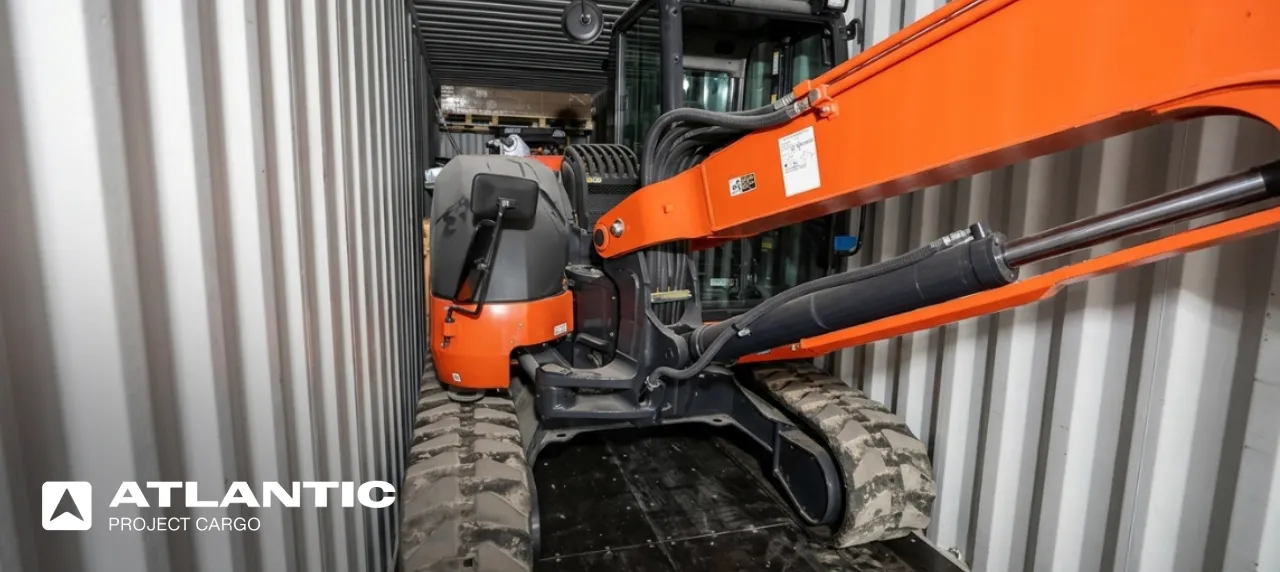
  • Mini excavators: Fit easily inside 20-foot or 40-foot standard shipping containers.
  • Compact excavators: Great for urban jobsites; they often roll right onto standard RoRo vessels.
  • Standard excavators: The workhorses of the industry. Machines in this class often require specialized lowboy trailers domestically to clear highway overpasses.
  • Large excavators: Trigger expensive out-of-gauge (OOG) shipping rates because their tracks overhang standard shipping platforms.
  • Mining excavators: Often require complete dismantling. The boom, cab, and tracks are shipped as separate massive components.

Excavator Shipping by Weight Class

Excavator shipping by weight class determines the axle configuration of the domestic transport truck and the heavy-lift crane capacity required at the export port.

Weight restrictions are strictly enforced. Exceeding standard highway weight capacities triggers the need for expensive multi-axle trailers and complex routing.

Weight Class Typical Equipment Common Shipping Method
Under 10,000 lbs Mini Excavators Container / RoRo
10,000–18,000 lbs Compact Excavators RoRo / Flat Rack
30,000–70,000 lbs Standard Excavators Flat Rack / RoRo
70,000–150,000 lbs Large Excavators Flat Rack / Breakbulk
150,000+ lbs Mining Excavators Breakbulk
  • Weight limitations: Standard U.S. highways cap gross vehicle weight at 80,000 pounds. Moving a 75,000-pound excavator means the combined weight of the truck and machine will exceed 110,000 pounds, requiring heavyweight permits.
  • Loading considerations: If an excavator is inoperable, port terminals must use heavy-lift gantry cranes to hoist it. Cranes capable of lifting 70,000+ pounds command premium hourly rates.
  • Cost implications: Heavier machines consume more fuel during inland transit and trigger higher base maritime rates. Method selection directly hinges on finding a carrier licensed to haul your specific weight tier.

Which Excavators Are Easiest and Hardest to Ship?

Mini excavators are the easiest to ship because they fit inside standard dry van containers, while massive mining excavators are the hardest to ship due to extreme out-of-gauge dimensions that require heavy-lift cranes and route surveys.

The complexity of Construction Equipment Shipping scales aggressively as you move up in machine size.

Excavator Type Shipping Complexity Typical Shipping Method
Mini Excavator Low Container / RoRo
Compact Excavator Low Container / RoRo
Standard Excavator Medium RoRo / Flat Rack
Large Excavator High Flat Rack
Mining Excavator Very High Breakbulk
  • Complexity factors: Track width and cabin height are the biggest hurdles. If an excavator cannot pass under a standard highway bridge, logistics planners must conduct expensive route surveys to find alternative backroads.
  • Loading requirements: Mining excavators cannot simply drive onto a ship. They require custom engineering plans and specialized stevedore lashing crews.
  • Cost implications: Shipping a standard excavator might cost $5,000 globally. Shipping a massive mining excavator requiring breakbulk handling can easily exceed $35,000.

Domestic Excavator Transportation

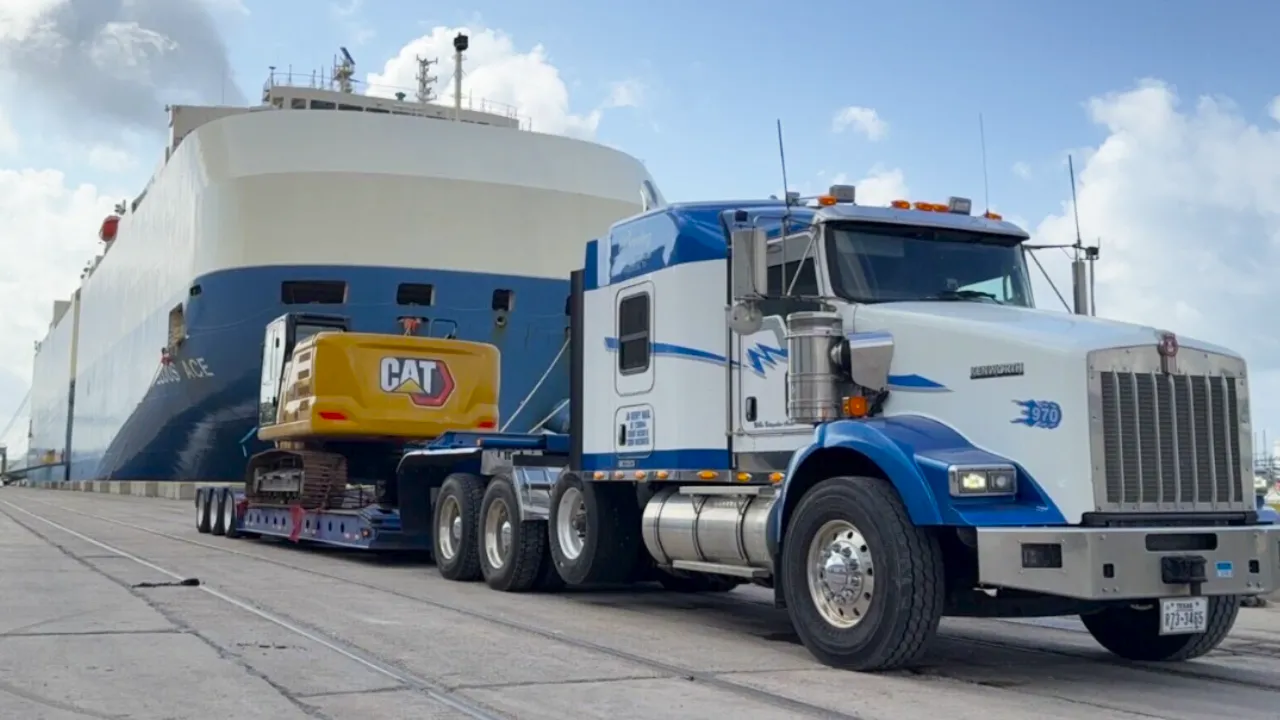
Domestic excavator transportation involves moving machinery over inland highways utilizing specialized heavy-haul trailers like Removable Goosenecks (RGNs), step decks, and lowboys to safely distribute weight and clear low overpasses.

Moving machinery across the country is the first critical leg of Heavy Equipment Shipping. State and federal regulations govern every mile of the journey.

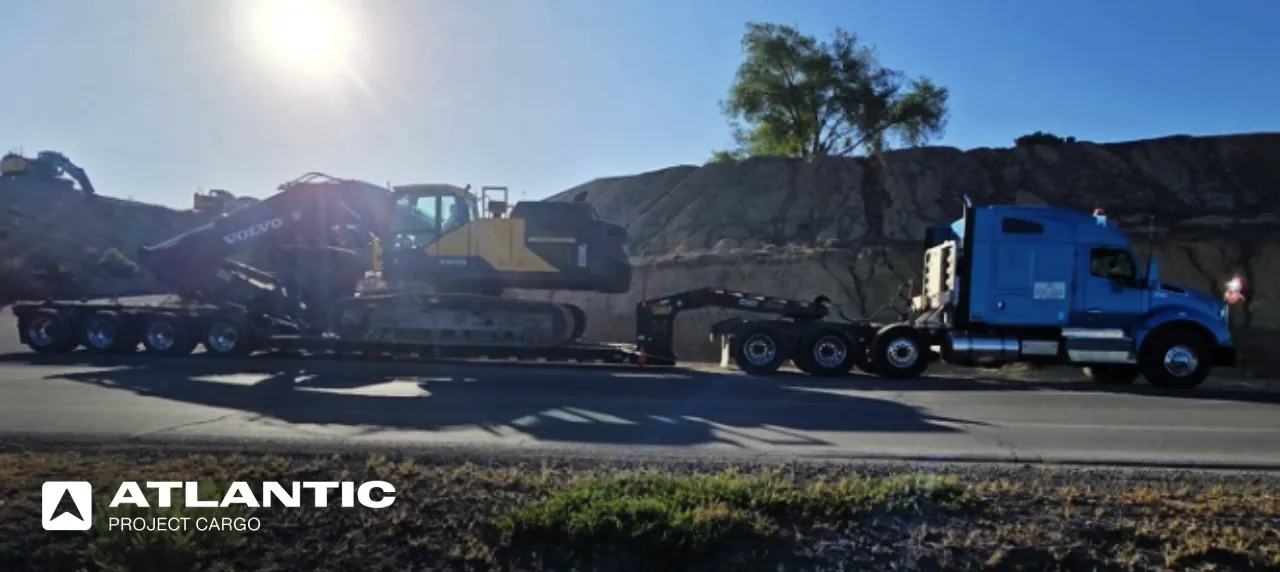
  • Lowboy trailers: The standard for excavator transport. The deck drops extremely close to the ground, allowing tall excavators to clear highway bridges safely.
  • Removable gooseneck (RGN) Trailers: The front of the trailer detaches to create a natural ramp. The excavator drives directly onto the deck, making it ideal for heavy tracked machinery.
  • Step deck trailers: Suitable for smaller, compact excavators that don’t pose a height clearance risk.
  • Oversize permits: If an excavator exceeds 8.5 feet in width or pushes the total vehicle height over 13.5 feet, you must purchase oversized load permits for every state the truck crosses.
  • Escort vehicles: Extremely wide excavators require civilian pilot cars or active police escorts to secure the highway.

Note: Exact width/height thresholds, permit fees, and escort requirements vary by state – confirm with each state DOT along the route before transport.

Excavator Type Typical Domestic Transport Solution
Mini Excavator Standard Flatbed / Step Deck
Compact Excavator Step Deck / Small RGN
Standard Excavator Lowboy / Standard RGN
Large Excavator Multi-Axle Heavy Haul RGN with Escorts

Domestic transportation challenges include navigating strict curfew hours (oversized loads often cannot travel at night or on weekends) and managing unpredictable permit delays that can cause your cargo to miss its scheduled export vessel.

From Auction Yard to Export Port

Moving an excavator from an auction yard to an export port involves inland heavy haulage, short-term staging, rigorous environmental washing, and precision terminal delivery coordination.

Buying from massive liquidators like Ritchie Bros., IronPlanet, or local dealer lots presents unique logistical hurdles. You cannot simply drive a 30-ton excavator off the lot.

  1. Auction pickup: Buyers have a strict time limit (usually 7 to 14 days) to remove the equipment before the auction house assesses massive storage fees.
  2. Inland transportation: A specialized heavy-haul trucker picks up the machinery and moves it to a staging yard near the port.
  3. Temporary storage & export preparation: At the staging yard, the equipment undergoes mechanical breakdown (removing the bucket if necessary) and aggressive pressure washing.
  4. Port delivery: The trucker delivers the machinery to the port terminal, perfectly timing the drop-off with the ocean carrier’s receiving window to avoid port storage fees.

Best Shipping Methods for Excavators

The best shipping method for an excavator depends on the machine’s dimensions and operability. RoRo is best for standard operable units, flat racks are necessary for oversized units, and containers are ideal for compact equipment.

RoRo Excavator Shipping

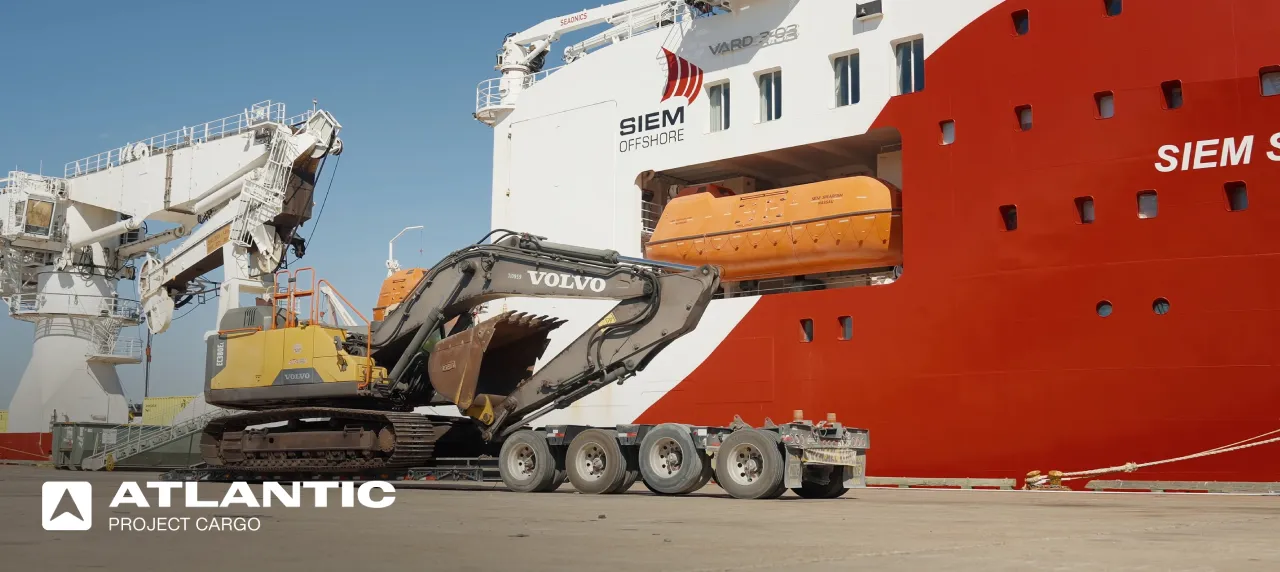
Roll-on/Roll-off shipping involves driving the excavator directly up a ramp and into the hull of a specialized vessel.

  • How it works: Port workers drive the machine onto the ship and park it on an enclosed deck.
  • Best equipment types: Fully operable wheeled excavators and standard tracked excavators.
  • Advantages: Eliminates heavy-lift crane fees and protects the machine from the elements.
  • Limitations: The machine must run, brake, and steer. If it dies on the ramp, tow fees are exorbitant.

Flat Rack Excavator Shipping

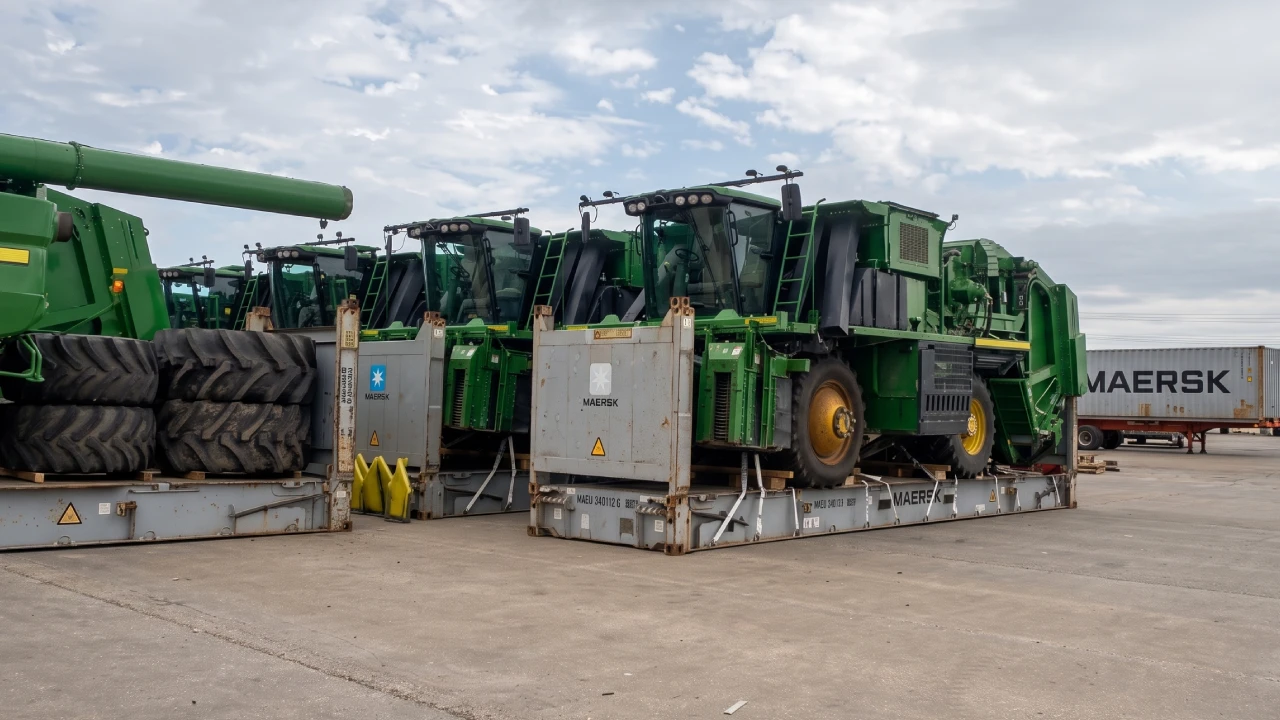
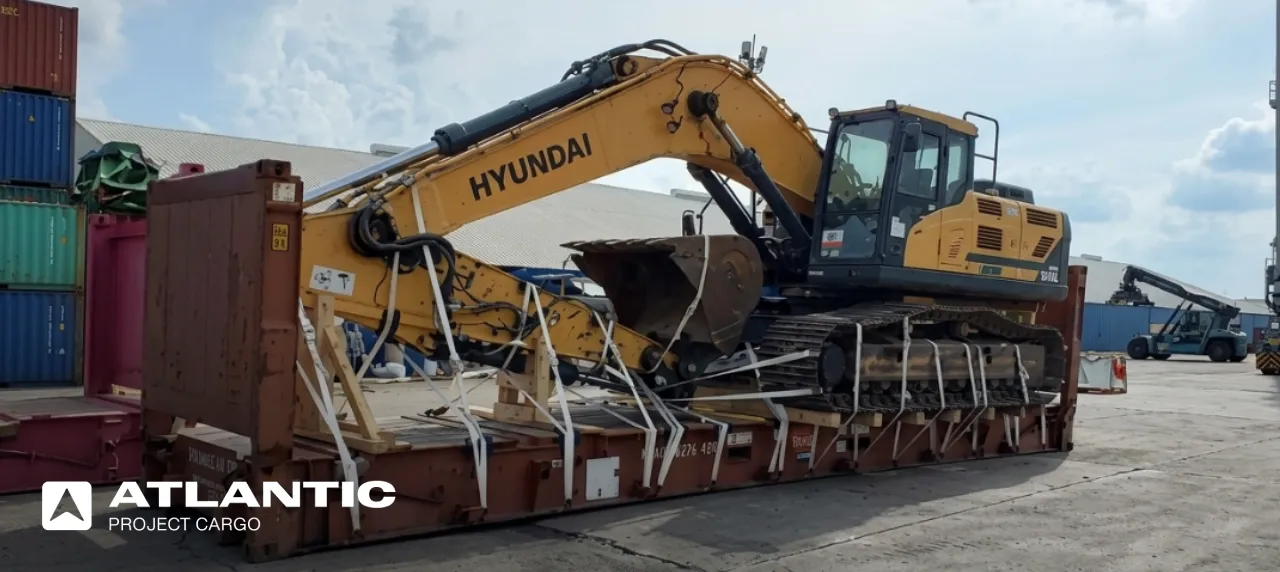
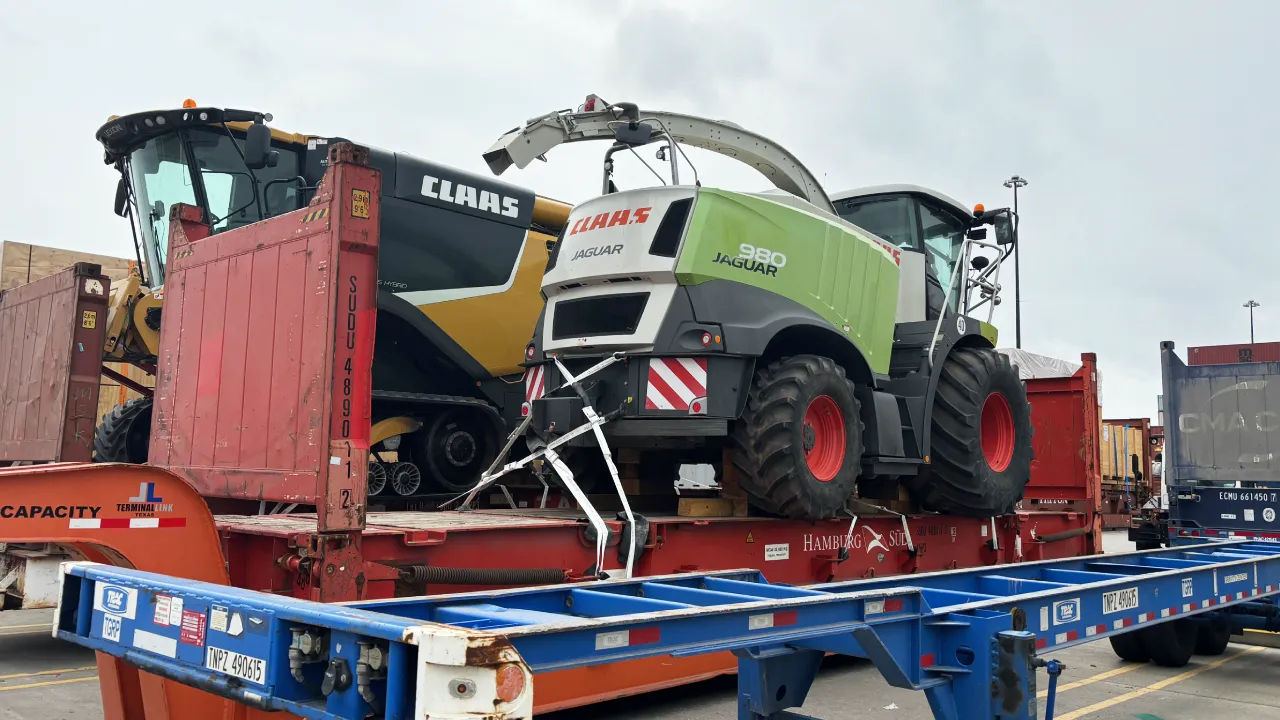
Flat racks are open-sided steel platforms loaded onto container ships.

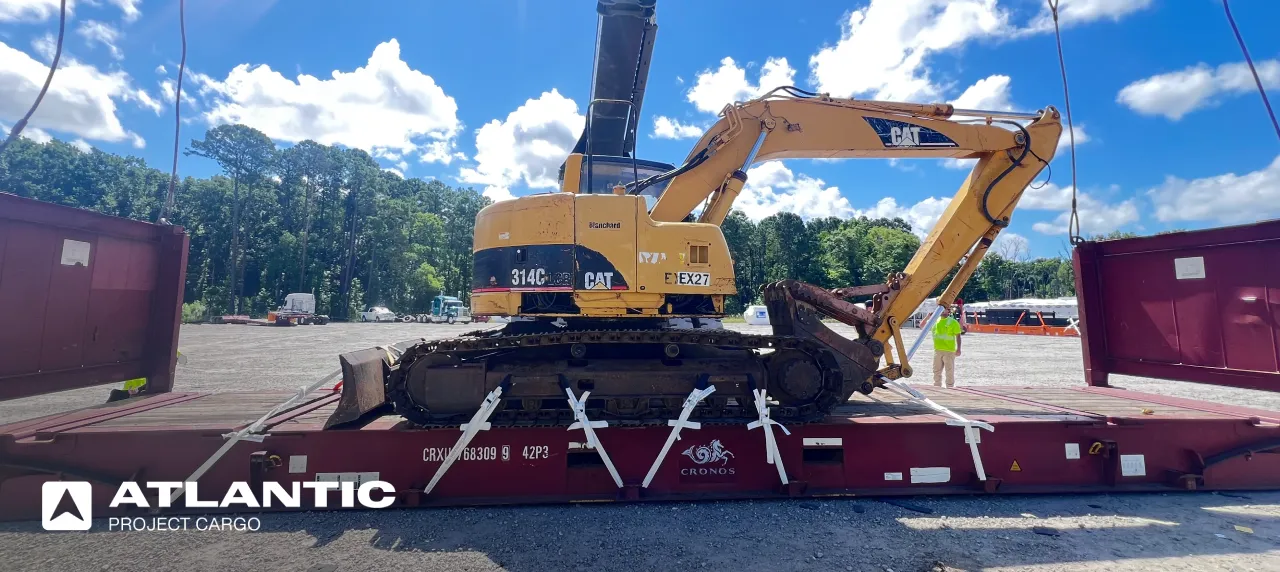
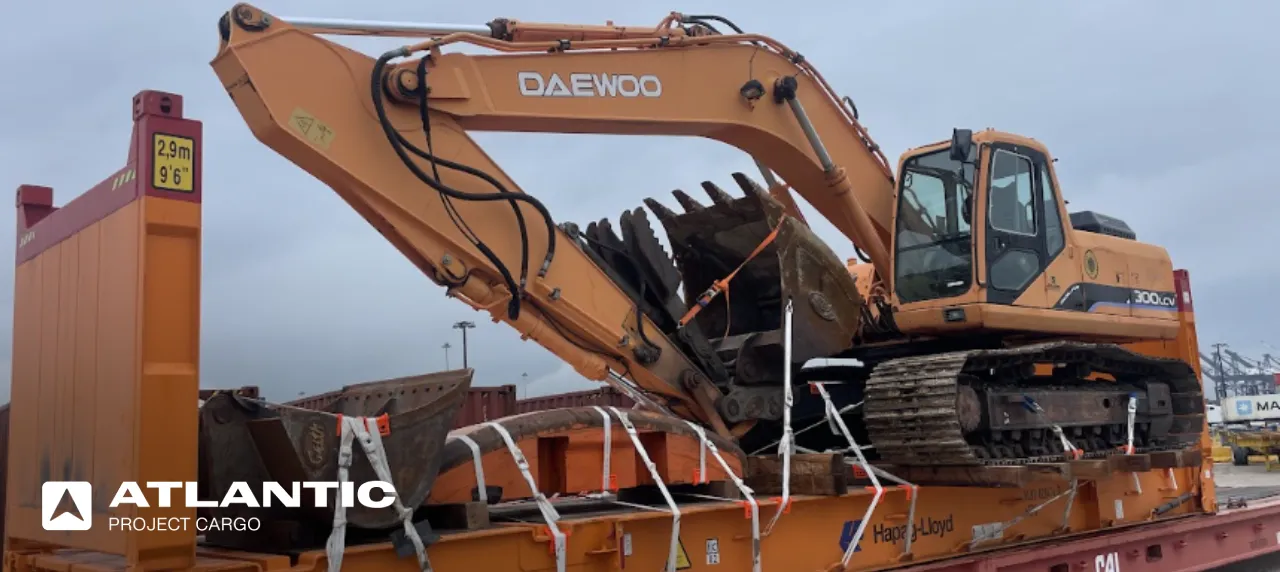
  • How it works: The excavator is hoisted via crane onto the rack, lashed down with heavy-duty chains, and loaded onto the vessel.
  • Best equipment types: Large, out-of-gauge excavators or inoperable machinery.
  • Advantages: Handles massive, oversized loads while utilizing standardized container shipping routes.
  • Limitations: The machinery is exposed to saltwater spray during transit, and crane fees add significant cost.

Container Shipping

  • How it works: Shipping inside enclosed 20-foot or 40-foot steel boxes.
  • Best equipment types: Mini excavators.
  • Advantages: Highly secure, protects against theft, and offers the cheapest base ocean freight rates.
  • Limitations: Most standard excavators physically cannot fit through the container doors.

Breakbulk Shipping

Breakbulk shipping means lifting massive, non-containerized cargo directly onto the deck of a ship.

  • How it works: Custom-engineered heavy-lift cranes hoist the machinery onto the vessel.
  • Best equipment types: Massive mining excavators.
  • Advantages: The only way to move 150,000+ pound machines.
  • Limitations: Extremely expensive and only available on specific trade routes.
Method Cost Transit Protection Equipment Size
RoRo Moderate High (Enclosed) Up to Standard
Flat Rack High Low (Open Air) Large / Oversized
Container Low Very High Mini / Compact
Breakbulk Very High Low to Moderate Mining / Massive

Can an Excavator Be Shipped in a Container?

Yes, an excavator can be shipped in a container, but only if it is a mini or compact model, or if a standard excavator is heavily dismantled to fit through the strict dimensional limits of the container doors.

Standard shipping container doors are approximately 7 feet 6 inches tall and 7 feet 8 inches wide (high-cube containers have taller doors, around 8 feet 5 inches). If your excavator’s cab or track width exceeds these dimensions, it cannot be loaded as a Full Container Load (FCL).

Excavator Type Container Compatible
Mini Excavator Yes
Compact Excavator Often (May require minor breakdown)
Standard Excavator Rarely (Requires extreme disassembly)
Large Excavator No
Mining Excavator No

Loading restrictions dictate that even if the machine fits, it must be safely blocked and braced with heavy lumber to prevent shifting.

Key takeaway: Most standard excavators are too large for conventional shipping containers and must utilize RoRo or flat rack shipping instead.

Tracked vs Wheeled Excavator Shipping

Wheeled excavators are easier and cheaper to ship via RoRo vessels due to their mobility, while tracked excavators often require specialized trailers domestically and trigger strict port handling protocols to prevent damage to terminal surfaces.

Factor Tracked Excavator Wheeled Excavator
RoRo Compatibility Yes, but steel tracks may require padding. High; drives like a standard truck.
Loading Complexity Medium to High. Low.
Inland Transport Requires RGN or lowboy trailers. Can sometimes be towed short distances.
Typical Shipping Cost Higher due to weight and loading limits. Generally lower.

Steel-tracked excavators can tear up the wooden decks of specialized trailers or the steel ramps of RoRo vessels. Ports frequently require heavy-duty rubber matting before allowing steel-tracked machines to roll onto a ship, adding to the handling costs.

Which Shipping Method Is Best for an Excavator?

The best shipping method is determined by balancing the excavator’s operating dimensions against your budget; RoRo is best for standard operable units, while flat racks are best for inoperable or out-of-gauge equipment.

Excavator Type Recommended Method
Mini Excavator Container
Compact Excavator Container or RoRo
Standard Excavator RoRo
Large Excavator Flat Rack (up to ~85,000 lbs) / Breakbulk (above)
Mining Excavator Breakbulk

There is no universal solution for international excavator shipping. A standard excavator shipping to Germany might easily roll onto a daily RoRo vessel, but that same machine shipping to a remote port in South America might require a flat rack because RoRo vessels do not service that specific trade lane.

When Does an Excavator Become Oversized Cargo?

An excavator becomes oversized (out-of-gauge) cargo when its length, width, height, or weight exceeds standard regulatory limits for highway trucking or standard container dimensions for ocean freight.

Oversized cargo disrupts standardized logistics. For ocean shipping, any machine wider than 8 feet or taller than 8.5 feet will overhang a standard flat rack, blocking adjacent container slots on the ship. The ocean carrier penalizes the shipper by charging for all the “lost” container space.

Dimension Issue Typical Impact
Excess Width Requires escort vehicles domestically; triggers wide-load ocean surcharges.
Excess Height Requires route surveys to avoid bridge strikes; forces flat rack shipping.
Excess Weight Requires multi-axle heavy-haul trailers; triggers heavy-lift crane fees.
Attachments Installed Extends the total length, increasing cubic meter (CBM) ocean rates.

When dimensions are extreme, flat rack is required, or for the largest mining units, breakbulk becomes necessary. Every dimensional violation adds additional handling costs and permit requirements.

Do Excavators Need to Be Disassembled Before Shipping?

Excavators do not strictly need to be disassembled, but removing buckets, booms, arms, and counterweights often reduces the machine’s dimensions enough to avoid massive out-of-gauge shipping penalties.

If an excavator with its boom fully extended is 40 feet long, you pay for 40 feet of vessel space. By removing the bucket and tucking the arm inward, you might reduce the length to 30 feet, saving thousands of dollars in ocean freight charges.

  • Width restrictions: Removing side-steps or mirrors can bring a machine under the 8.5-foot width limit, negating the need for highway escort vehicles.
  • Weight restrictions: Stripping massive cast-iron counterweights off a large excavator allows the main body to ride on a standard heavy-haul trailer rather than requiring an expensive 11-axle super-load truck.

Shipping Excavator Attachments

Excavator attachments like buckets, hydraulic hammers, and grapples should be shipped securely strapped to the main deck of the machine or removed and palletized to lower the overall transportation profile.

Leaving an oversized bucket attached to a boom extended over the back of a trailer creates dangerous overhangs and increases the required footprint on an ocean vessel.

Attachment Ship With Machine Separate Shipment Recommended
Bucket Yes, if tucked tight to the machine. Yes, if it causes length overhangs.
Hydraulic Hammer No, highly susceptible to theft/damage. Yes, crated and shipped in a container.
Grapple Rarely Yes, palletized.
Auger No. Yes, banded to a pallet.
Thumb Yes, folded and secured tight to the arm. No.

Shipping attachments separately in an LTL (Less Than Truckload) container consolidation is often cheaper than paying the dimensional surcharges for leaving them awkwardly extended on a RoRo vessel.

How to Prepare an Excavator for Shipping

Preparing an excavator for shipping requires securing loose components, washing off all environmental contaminants, draining excess fluids, and thoroughly documenting the machine’s condition to protect your freight liability.

Failing to properly prepare machinery results in rejected terminal deliveries, leaked fluids that incur HAZMAT cleanup fees, and denied freight damage claims.

Preparation Checklist:

  1. Equipment inspection: Walk around the machine and log all pre-existing cosmetic or structural damage.
  2. Cleaning: Aggressively pressure wash the tracks, undercarriage, and radiator grilles.
  3. Fluid checks: Drain fuel down to 1/4 tank (mandatory maritime safety rule) and ensure zero hydraulic leaks.
  4. Attachment removal: Securely strap removed buckets to the trailer deck or palletize them.
  5. Documentation: Ensure the serial numbers match the commercial invoice and Bill of Lading Guide perfectly.
  6. Photographs: Take high-resolution photos of the machine loaded and strapped to the truck to prove its condition before transit.

Agricultural and Biosecurity Cleaning Requirements

Biosecurity cleaning requirements mandate that excavators must be completely free of soil, plant matter, seeds, and biological contaminants before entering countries with strict environmental protections like Australia and New Zealand.

Global agricultural agencies treat used earthmoving equipment as high-risk vectors for invasive species and diseases.

  • Soil contamination risks: Dirt stuck inside the tracks or packed into the undercarriage will trigger an immediate customs hold.
  • Cleaning standards: Machines must be surgically clean. This requires specialized dismantling, pressure washing, and sometimes chemical fumigation at the export port.
Requirement Potential Impact
Cleaning Costs $500 to $2,000+ at the origin port.
Inspection Destination customs may hold the machine for weeks.
Re-cleaning If it fails destination inspection, re-cleaning abroad costs triple.
Storage Delays Demurrage vs Detention fees accrue rapidly while the machine is quarantined.

Note: Biosecurity rules and cleaning costs vary by destination country and are updated periodically by agricultural authorities – verify current requirements before export.

International Excavator Shipping Costs

International excavator shipping costs range from $3,000 for a mini excavator in a container to upwards of $20,000 for a large excavator on a flat rack, driven by the machine’s dimensions, origin location, and ocean route.

The pricing below represents estimates for general budgeting; actual logistics rates fluctuate based on global fuel prices, port charges, and vessel availability.

Excavator Type Domestic Transport (Est.) International Shipping (Est.)
Mini Excavator $500 – $1,500 $2,000 – $4,000
20 Ton Excavator $1,500 – $3,500 $4,500 – $8,000
30 Ton Excavator $2,500 – $5,000 $6,000 – $12,000
50 Ton Excavator $4,000 – $8,000+ $12,000 – $25,000+
Mining Excavator Custom Pricing Required Custom Project Pricing

Major pricing factors include distance to the port, heavy-lift crane fees, and out-of-gauge surcharges. For a deeper breakdown, consult our Heavy Equipment Shipping Cost guide. To compare this to agricultural machinery, you can also review the Agricultural Equipment Shipping Cost Guide.

Shipping Popular Excavator Models

Shipping popular excavator models requires analyzing their specific factory dimensions to determine whether they can roll onto a RoRo vessel or if they require specialized flat rack lashing.

  • CAT 320: At roughly 50,000 pounds, this is the industry standard. It generally ships via RoRo quite easily, provided the boom is lowered to meet height restrictions.
  • CAT 336: Weighing over 80,000 pounds, this heavy hitter pushes the limits of standard transport. It requires multi-axle heavy-haul trailers domestically and often utilizes flat racks internationally due to its width.
  • Komatsu PC210: A highly versatile machine that perfectly fits RoRo parameters, making it highly cost-effective to export globally.
  • John Deere 350G: Its larger track gauge often classifies it as an oversized load, triggering wide-load permits for inland trucking.
  • Hitachi ZX350: Frequently exported for heavy infrastructure projects; careful attention must be paid to draining excess hydraulic fluids to meet strict export port safety standards.

Note: Weights and dimensions reflect standard factory configurations; actual figures vary by model year, undercarriage, and attachments – confirm exact specs with the OEM spec sheet before booking.

International Excavator Shipping Routes

International excavator shipping routes dictate the transit time, the available shipping methods (RoRo vs Flat Rack), and the base ocean freight rates, which vary wildly based on global trade lane volumes.

Note: Route costs are directional estimates only; actual quotes depend on current fuel surcharges, port congestion, and vessel space availability at the time of booking.

Route Typical Cost Range (Standard Excavator)
USA → Australia $6,500 – $12,000
USA → UAE (Jebel Ali) $4,500 – $8,000
USA → Saudi Arabia $5,000 – $9,000
USA → Argentina $7,000 – $14,000
USA → Germany $4,000 – $7,500
USA → South Africa $6,000 – $11,000

Route-specific considerations matter. Shipping to the UAE is highly cost-effective due to massive RoRo trade lanes, whereas shipping to Argentina involves complex import regulations and less frequent vessel sailings, driving up costs.

How Long Does Excavator Shipping Take?

Excavator shipping takes between 15 and 45 days, depending on the distance of the ocean crossing, port congestion at the origin, and the complexity of destination customs clearance.

Note: Transit times are estimates and can shift with vessel schedule changes, weather, and port congestion.

Route Typical Transit Time (Port-to-Port)
USA → Australia 35 – 45 Days
USA → UAE 25 – 35 Days
USA → Germany 12 – 18 Days
USA → Argentina 20 – 30 Days
USA → Saudi Arabia 25 – 35 Days
USA → South Africa 30 – 40 Days
  • Port congestion: Major hubs face backlogs, leaving machinery idling in staging yards.
  • Customs delays: Failing to provide accurate commercial invoices or utilizing an inexperienced broker for your Customs Clearance adds weeks to the delivery timeline.

What Factors Affect Excavator Shipping Costs?

Excavator shipping costs are affected by the physical dimensions of the machine, the selected shipping method, the origin and destination route, the total weight, and mandatory terminal handling charges.

Factor Impact on Cost
Dimensions Very High
Shipping Method Very High
Route High
Weight High
Port Charges Medium
Insurance Low

Weight drives inland transport and crane fees. The route dictates the vessel frequency. Port charges cover terminal handling and storage. Insurance is based purely on commercial value. But dimensions rule everything.

What Increases Excavator Shipping Costs the Most?

The dimensional size of the excavator increases shipping costs the most, as a single inch of excess width or height can reclassify a standard machine as out-of-gauge, doubling the ocean freight rate.

Cost Driver Impact
Dimensions Very High
Shipping Method Very High
Route High
Weight High
Attachments Medium
Insurance Low

Why can two excavators with the same 40,000-pound weight have significantly different shipping costs? If Machine A has a standard cab and Machine B has an aftermarket raised forestry cab that exceeds the RoRo deck height limit, Machine B must be loaded via crane onto a flat rack. This instantly adds thousands of dollars in heavy-lift and out-of-gauge penalties.

Shipping Excavators Purchased at Auction

Shipping an excavator purchased at an auction requires rapid logistics coordination, as auction houses enforce strict removal deadlines and assess massive daily storage fees for abandoned machinery.

Whether buying from a local equipment liquidation or a massive international hub like Ritchie Bros. or IronPlanet, auction logistics must be planned before you bid.

  • Yard pickup: Auction yards are chaotic. Your heavy-haul trucker must have explicit release numbers and gate passes.
  • Loading requirements: Some auction yards will not assist with loading inoperable “dead row” machinery, forcing you to hire mobile cranes.
  • Export preparation: Machinery bought “as-is” is often filthy and requires extensive biosecurity washing before it can be exported.

Key takeaway: Auction logistics should be quoted and planned before bidding to ensure shipping costs do not erase your auction savings.

How Atlantic Project Cargo Selects the Best Shipping Method for an Excavator

Atlantic Project Cargo selects the optimal shipping method by conducting a rigorous dimensional analysis of your excavator, evaluating the most direct global trade routes, and balancing transit speed against base freight costs.

Our decision-making process ensures your budget is protected:

  1. Equipment assessment: We verify exact manufacturer specs (L x W x H) and operating weight.
  2. Method selection: If it rolls and fits, we book RoRo. If it is oversized, we engineer a Flat Rack lashing plan.
  3. Route & port selection: We route cargo through ports that specialize in heavy machinery (e.g., Baltimore, Galveston, Savannah) to avoid unnecessary inland trucking miles.
  4. Documentation review: We utilize container seals protocols for containerized attachments and finalize all export customs paperwork to prevent terminal holds.

Real Excavator Shipping Examples

  • Mini excavator in Container: A 6,000-pound Kubota mini excavator was loaded into a 20-foot standard container in Florida, blocked and braced, and shipped to the Bahamas. Why: Cheapest freight rate, total protection from the elements.
  • CAT 320 via RoRo: A 50,000-pound standard excavator was driven directly onto a RoRo vessel in Texas bound for Germany. Why: The machine was fully operable and fit under the 15-foot RoRo deck height limits, bypassing crane fees.
  • CAT 336 on Flat Rack: An 80,000-pound excavator was too wide for RoRo doors. It was lifted by gantry cranes onto a 40-foot flat rack in Savannah for shipment to Australia. Why: Out-of-gauge flat rack was the only way to accommodate the excess track width.
  • Mining excavator via Breakbulk: A massive 200,000-pound Hitachi mining shovel was dismantled into three sections and loaded breakbulk onto the deck of a heavy-lift vessel. Why: The weight exceeded all container and flat rack limitations.

Common Excavator Shipping Mistakes

The most common excavator shipping mistakes include misreporting machine dimensions to forwarders, failing to properly wash the undercarriage for biosecurity compliance, and signing clean delivery receipts without inspecting for transit damage.

  • Incorrect dimensions: Guessing a machine’s width results in heavy-haul trucks showing up without the proper oversized permits, causing days of delays.
  • Attachment-related issues: Leaving a thumb or grapple fully extended increases the total length, leading to unexpected dimensional ocean surcharges.
  • Last-minute bookings: Attempting to book RoRo space one week before a required deadline guarantees you will pay inflated spot-market rates.

Summary: Most Common Causes of Delays and Costs

Inaccurate dimensional reporting, failing destination agricultural inspections due to dirt in the tracks, and incomplete export customs paperwork are the primary drivers of massive port storage penalties.

What Information Is Needed for an Excavator Shipping Quote?

To receive an accurate logistics quote, you must provide the exact make, model, year, dimensions (Length x Width x Height), operating weight, physical pickup address, final destination, and the current operational status of the machine.

You must also clearly state if there are aftermarket modifications (like raised cabs or extra counterweights) and list all attachments (buckets, hydraulic hammers) that will ship alongside the primary machine.

Frequently Asked Questions

Domestic transport ranges from $500 to $5,000 depending on distance and permits. International shipping ranges from $3,000 for a mini excavator in a container to over $20,000 for a massive mining excavator requiring out-of-gauge flat rack handling. Figures are general estimates; actual rates vary by carrier, route, and market conditions.

Yes, but typically only mini excavators (under 10,000 lbs) and compact excavators fit inside the strict dimensional limits of standard 20-foot or 40-foot shipping containers without requiring extensive disassembly.

For standard, operable excavators (like a CAT 320), Roll-on/Roll-off (RoRo) is the best method because it avoids expensive port crane fees. For oversized or inoperable excavators, Flat Rack shipping is required.

They do not strictly need to be removed, but removing them and packing them tightly against the machine reduces the overall length and width, which drastically lowers your dimensional ocean freight rate.

Often, yes. Steel-tracked excavators can damage domestic trailers and RoRo vessel decks, meaning logistics providers must use specialized RGN trailers or lay down protective rubber dunnage at the port, increasing handling fees.

Flat racks can handle extremely large cargo. While a standard 40-foot flat rack payload is around 85,000 pounds, out-of-gauge excavators can overhang the sides and top, provided the shipper pays for the displaced adjacent container slots. Rated flat rack capacity varies by carrier and rack type – confirm exact figures with your carrier.

Breakbulk shipping is required when an excavator is so massive (typically exceeding 120,000 to 150,000 pounds) that it exceeds the structural lifting capacity of standard container gantry cranes and flat racks.

Shipping a 20-ton (40,000 lb) standard excavator internationally typically runs $4,500–$8,000 as a general estimate (actual rates vary by carrier, route, and market conditions), assuming it is fully operable and can utilize standard RoRo shipping routes.

Depending on the route, international ocean transit takes anywhere from 15 days (USA to Europe) to 45 days (USA to Australia), plus additional time for inland heavy haulage, staging, washing, and customs clearance. Timelines are estimates and can shift with vessel schedules and port congestion.

They are picked up by specialized heavy-haul trucking carriers using lowboy or RGN trailers, transported to an inland staging yard for export prep (washing and dismantling), and then delivered to the port terminal during a strict receiving window.

You must provide a clear commercial invoice, a Bill of Sale proving ownership, the original equipment title (if applicable/required by customs), a Packing List, and an Electronic Export Information (EEI) filing cleared by a customs broker. Requirements vary by destination country and change periodically; confirm current rules with a customs broker before shipment.

Need Help Shipping an Excavator?

Moving oversized construction machinery requires flawless logistics. Attempting to navigate heavy-haul permits, port handling fees, and international customs without an expert exposes your business to massive financial risks and project delays.

Whether you need domestic excavator transportation from an auction yard, or comprehensive international excavator shipping using specialized RoRo, flat rack, or breakbulk methods, Atlantic Project Cargo has the expertise to move your assets safely. Our team engineers custom transport solutions for everything from compact Kubotas to massive CAT mining shovels.

Don’t let logistics eat your profit margin. Let true project cargo experts secure your supply chain.

Request a Shipping Quote | Talk To a Shipping Expert

Read More

August 3, 2026
How Much Does It Cost to Ship a Tractor? International & Domestic Transport Rates (2026 Guide)
Tractor shipping costs typically range from approximately $500 to $6,000+ for domestic transportation and $2,500 to $15,000+ for international shipping, depending entirely on tractor size,...
Reviewed by
Victoria Moseicuka
July 31, 2026
Heavy Equipment Freight Charges Explained: Port Fees, Ocean Freight, and Hidden Costs
Shipping heavy equipment internationally goes far beyond the ocean crossing. Base freight quotes rarely cover customs, insurance, heavy haul trucking, or mandatory port fees –...
Reviewed by
Nick Yadryshnikov
July 30, 2026
RoRo vs Flat Rack vs Open Top Container: Which Is Best for Heavy Equipment?
Choosing the wrong ocean freight method for oversized machinery leads to budget overruns, port delays, and damaged cargo. In 2026, with global supply chains facing...
Reviewed by
Nick Yadryshnikov
Share via