
Hours of operations:
9AM - 5PM / UTC -5 (EST)

Heavy Equipment Shipping from the USA to Brazil: Costs, Transit Time & Import Guide

September 2, 2026
Shipping Quote
Customs Duties
Drayage Rate
Do you already own this equipment?

You Can Request a New Quote Every 15 Minutes

Please wait or contact us at [email protected]

Thank you for Choosing Us!

Looking to buy or sell heavy equipment?
With JumboBee, you can trade online with financing options and worldwide shipping.

Check Inventory
Calculate Import Duties
Get a free, no-obligation estimate of your import duties!
Calculate Import Duties
Get a Drayage Estimate
Get a free drayage estimate tailored to your exact needs!
Check a Drayage Rate
Home Insights Heavy Equipment Shipping from the USA to Brazil: Costs, Transit Time & Import Guide
Reviewed by
Victoria Moseicuka Chief Operating Officer

Key Takeaways


  • Shipping method depends on equipment size, weight, and mobility — RoRo, flat rack, open-top container, or breakbulk.
  • Ocean transit from the USA to Brazil takes about 3-7 weeks depending on ports and method.
  • Costs vary by shipment, so pricing always requires a custom quote rather than fixed rates.
  • Agricultural equipment must be thoroughly cleaned to pass MAPA biosecurity inspection.
  • Used equipment imports need a non-automatic license via Siscomex and proof no domestic equivalent exists.
  • Choosing a Brazilian port near the final destination cuts costly inland trucking.

Heavy equipment can be shipped from the USA to Brazil by RoRo, flat rack, open-top container, or breakbulk, and the right choice depends on the machine’s dimensions, weight, and condition. Before anything sails, it is worth confirming Brazil’s customs process, import duties, and the MAPA requirements that apply to agricultural machinery, because getting those details right early keeps a shipment moving smoothly upon arrival.

Brazil is South America’s largest economy, and its appetite for imported American machinery has grown steadily, so machinery shipping to Brazil now spans agriculture, mining, infrastructure, construction, and heavy industry. Farmers want proven US tractors and combines, construction firms need excavators and loaders, and mining and industrial operations rely on equipment that often makes more sense to import than to source locally.

This guide to heavy equipment shipping from the USA to Brazil walks through the whole journey from a US seller’s yard to a Brazilian job site, whether you are a farm owner, a procurement manager, or a first-time importer.

How Does Heavy Equipment Shipping from the USA to Brazil Work?

Shipping heavy equipment from the USA to Brazil is a coordinated sequence that begins when you buy the machine and ends when it reaches its final site. The equipment is collected in the US, moved to an export port, loaded onto a vessel, cleared through Brazilian customs, and delivered inland. In order, the seven stages run from pickup to US inland transport, export documentation, ocean freight, MAPA inspection where agricultural equipment is involved, customs clearance, and final delivery.

Pickup Description
Inland Transport Equipment is collected from the seller, dealer, auction, or job site
Export Documentation Equipment is moved to a US export port
Ocean Freight Export paperwork and shipping documents are prepared
MAPA Inspection Cargo moves internationally by vessel
Customs Clearance Used agricultural equipment may be inspected for soil or organic material
Final Delivery Import documents and duties are processed in Brazil
Equipment is transported to the buyer or project site

The value of an experienced forwarder shows up in how these stages connect: when pickup, documentation, ocean freight, and customs are handled by one team, the handoffs stay clean, which is usually where time and money are saved or lost.

Why Ship Heavy Equipment from the USA to Brazil?

Companies choose heavy equipment shipping from the USA to Brazil because American machinery is often the most cost-effective and reliable option for the country’s fast-growing industries, even after freight and duties. Demand runs across several sectors, each with its own reasons for buying north.

  • Agriculture is the largest source of equipment shipping to Brazil, as producers value the reliability and resale strength of US tractors, combines, sprayers, and cotton pickers.
  • Mining calls for specialized, often oversized equipment readily available in the US market.
  • Construction adds excavators, loaders, graders, and cranes for roads, housing, and energy work, while industrial buyers bring in generators, compressors, and manufacturing machinery.

The choice between local and imported machinery comes down to availability, specification, and value. Certain models, configurations, and used-equipment deals are not available in Brazil at the same price or timeline, which is why importing from the US so often makes sense. A well-chosen imported machine is a long-term investment that pays back over years of service.

What Heavy Equipment Can Be Shipped to Brazil?

Almost any machine can be shipped from the USA to Brazil, from a compact skid steer to a mining excavator weighing dozens of tonnes. Heavy machinery shipping to Brazil covers everything in between; what changes is the shipping method, chosen to match the equipment’s size, weight, and whether it moves under its own power.

Agricultural Equipment

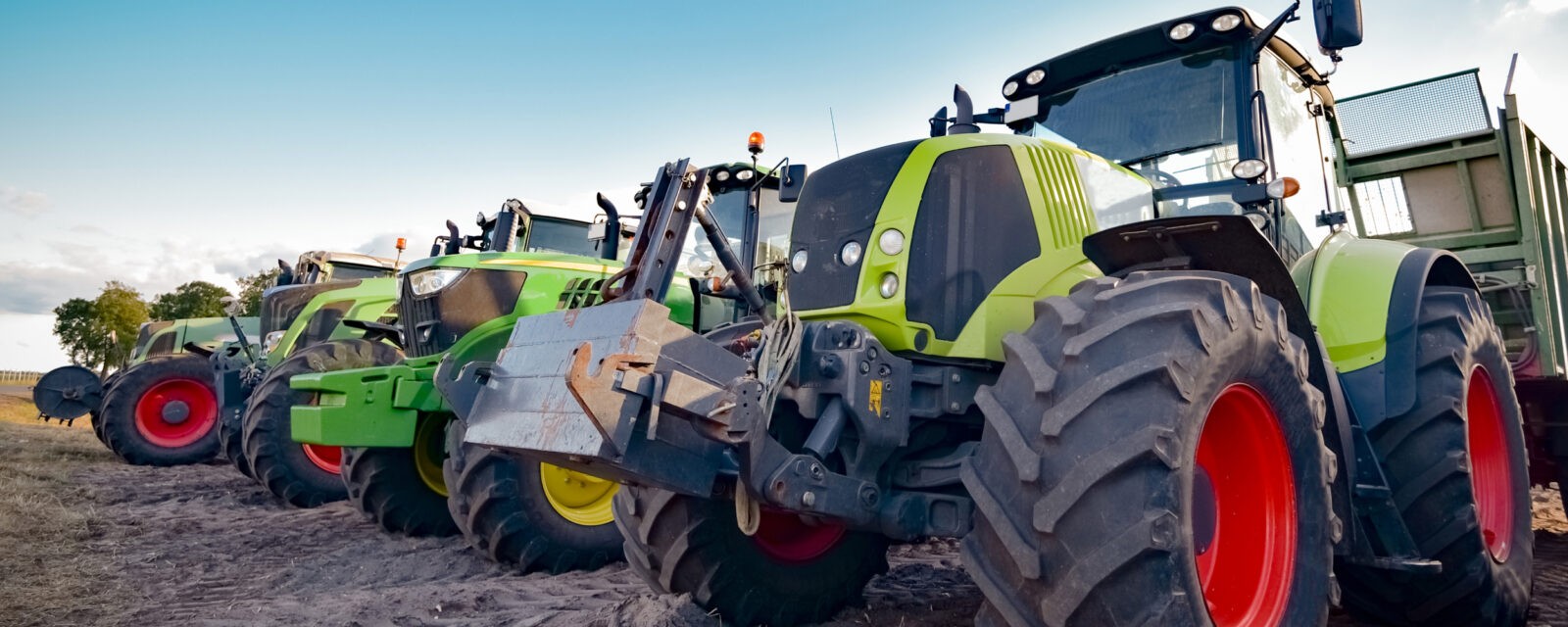
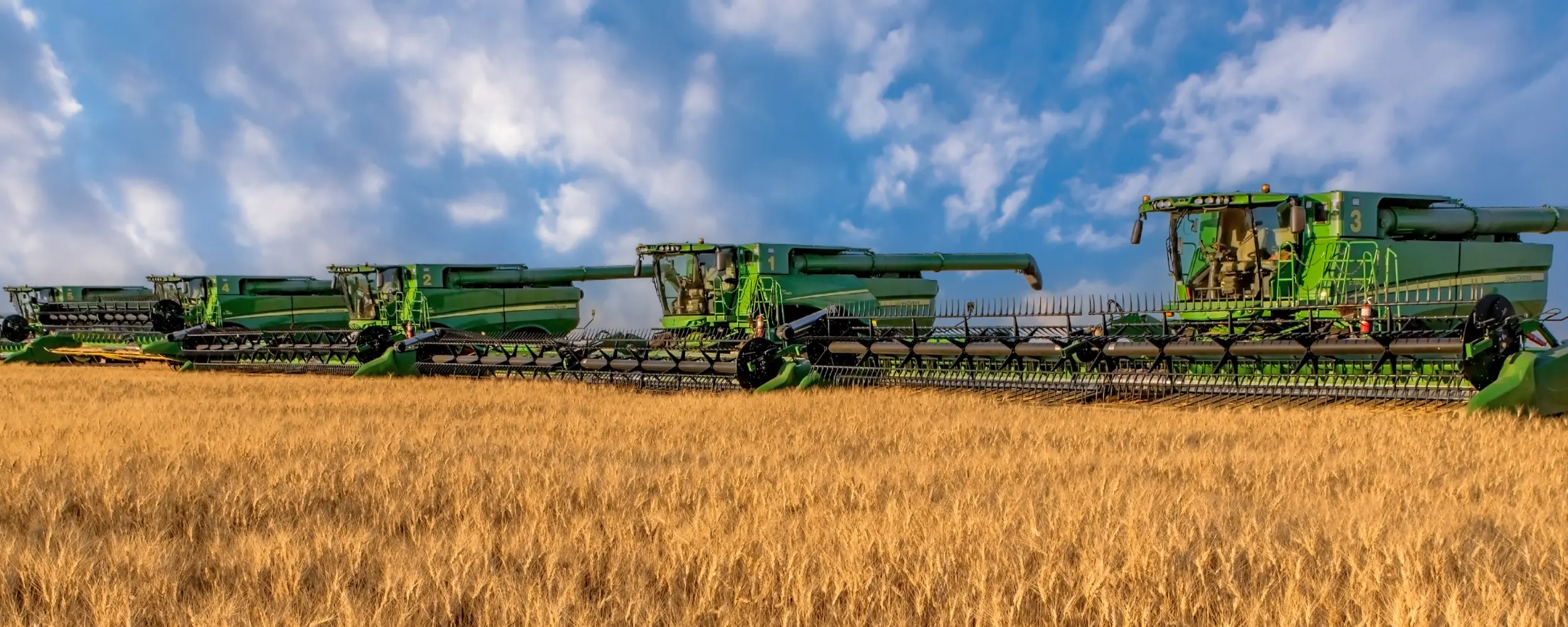
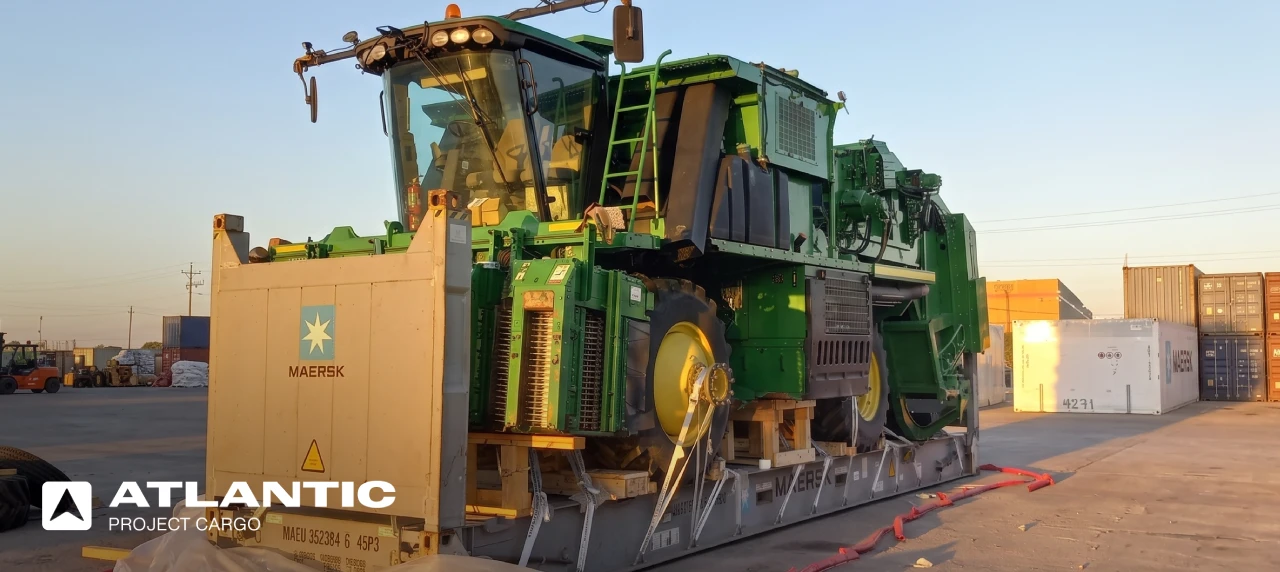
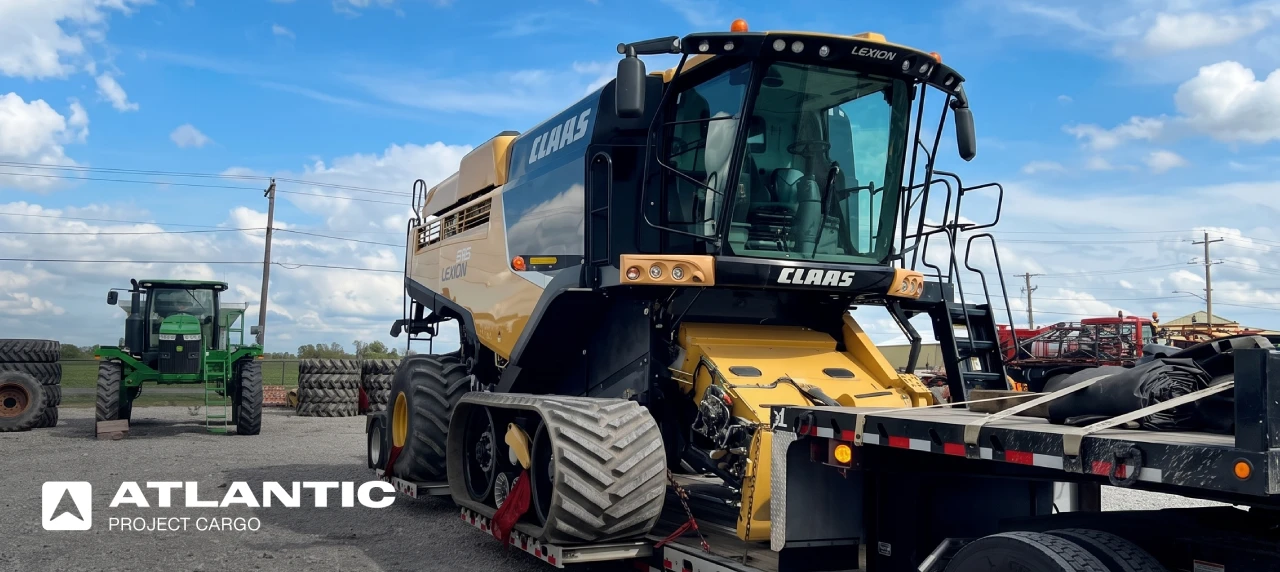
Agricultural equipment shipping Brazil covers a wide range of American machinery, and this is where preparation matters most because of biosecurity rules. Common examples include tractors, combines, sprayers, planters, cotton pickers, and balers. Our agricultural equipment shipping service is built around these machines.

Construction Equipment

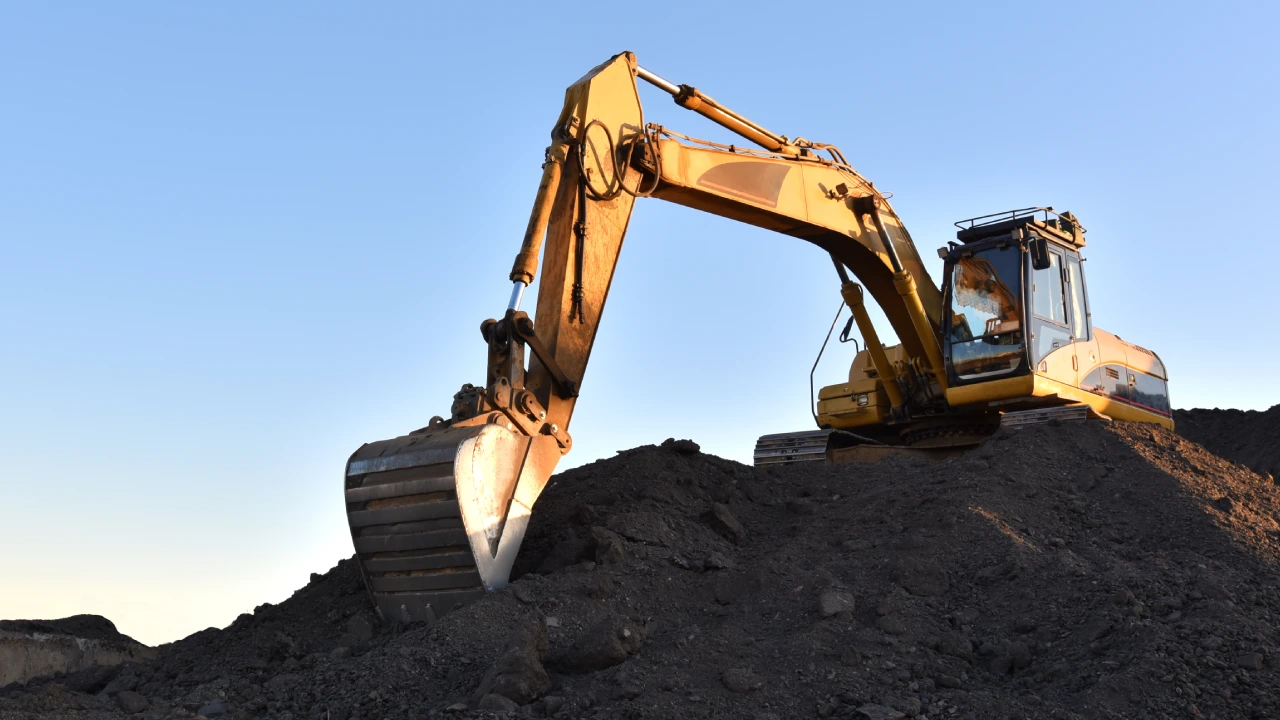
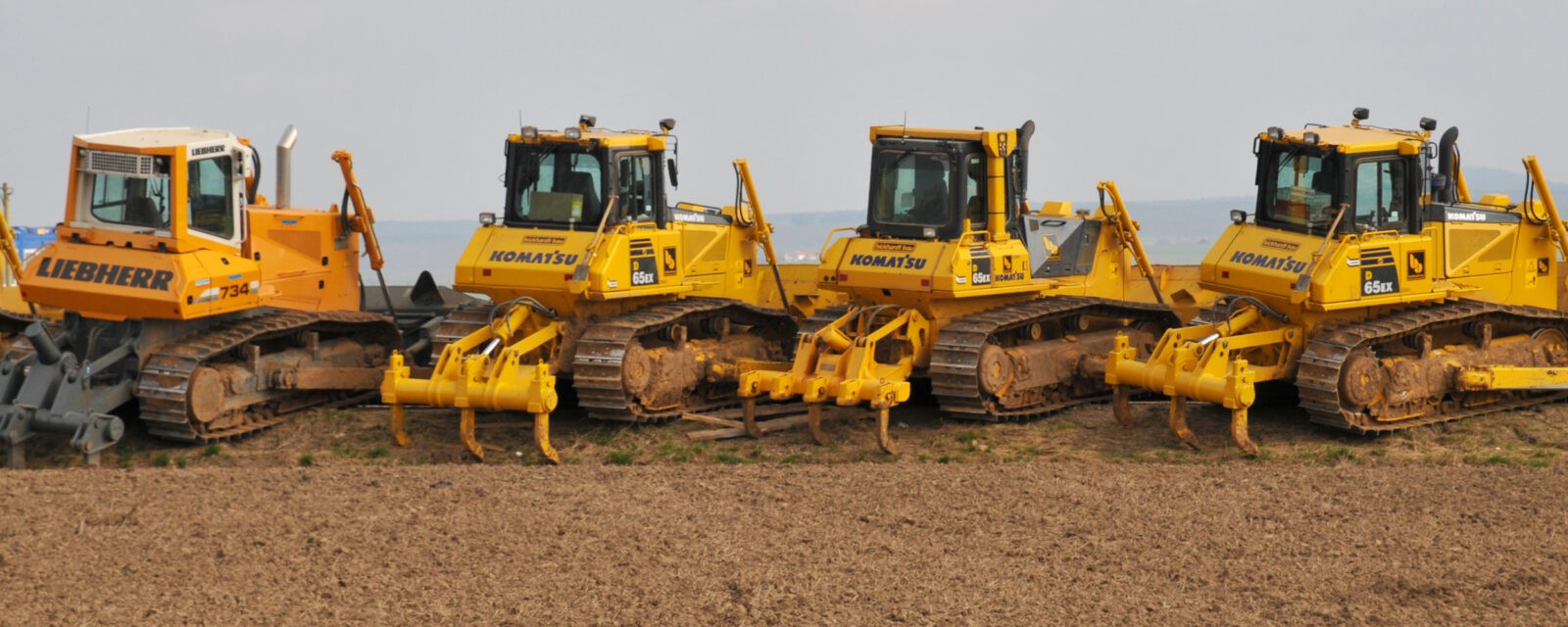
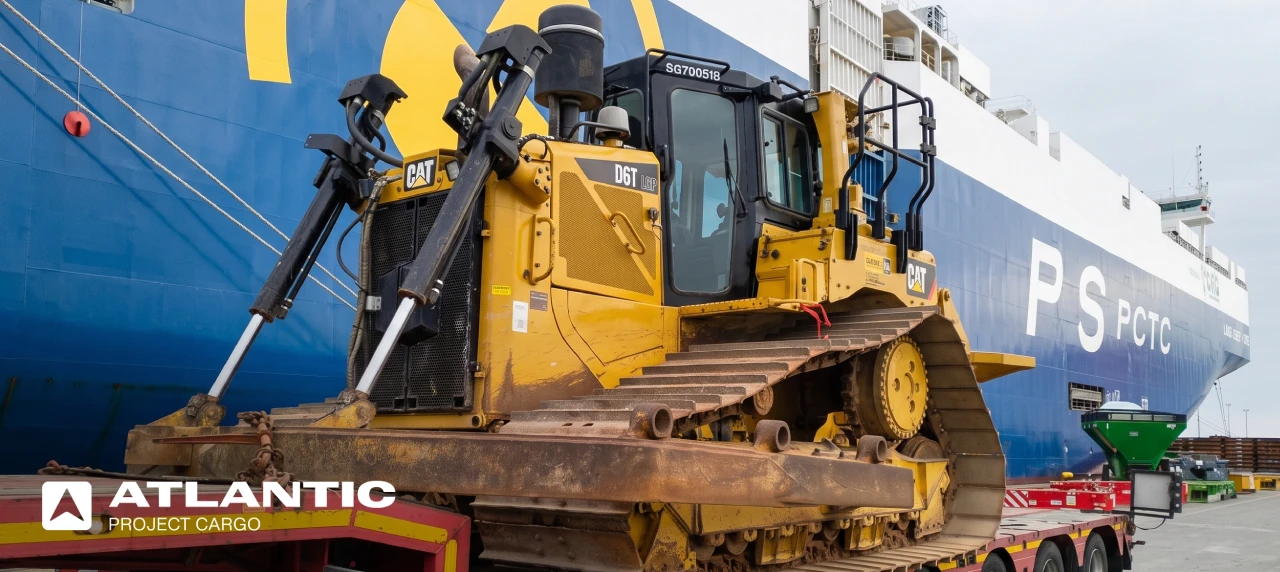
Construction equipment shipping in Brazil moves in large volumes: excavators, bulldozers, loaders, graders, cranes, skid steers, and telehandlers, each with its own loading needs. See our construction equipment shipping page for details.

Industrial Equipment

Industrial equipment shipping Brazil covers the machinery that keeps facilities running: generators, compressors, manufacturing machinery, forklifts, and processing equipment, much of which travels in containers when dimensions allow. Our industrial equipment shipping service handles this cargo end to end.

Oversized and Project Cargo

The largest and most complex shipments fall into the project cargo Brazil category: mining equipment, transformers, industrial modules, oversized machinery, and heavy structural components, which usually call for breakbulk handling and careful engineering.

The table below shows how the main equipment types most commonly move.

Equipment Common Shipping Method
Tractor RoRo / Flat Rack
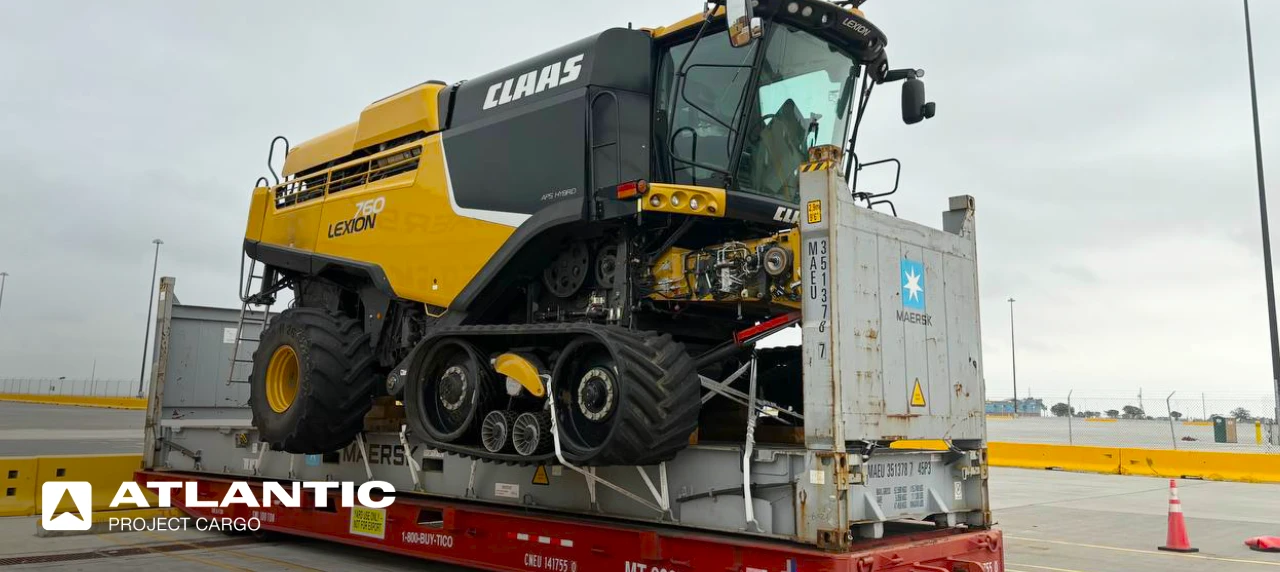
Combine / Cotton Picker Flat Rack
Excavator Flat Rack / Breakbulk
Bulldozer Flat Rack / Breakbulk
Generator / Compressor Container / Flat Rack
Forklift Container / RoRo
Mining Equipment / Transformers Breakbulk

Buying Heavy Equipment in the USA for Export to Brazil

Most Brazil-bound equipment is bought from dealers and manufacturers for new machines, or, for used units, from auction houses, online equipment marketplaces such as JumboBee, and private sellers. Whichever route you take, the shipping decisions begin at the point of purchase.

Atlantic Project Cargo supports buyers with equipment sourcing, seller communication, and pre-purchase inspection, and arranges pickup, export planning, and quote comparison so the freight cost is clear before the machine is bought. Sorting these details out in advance is the best way to avoid surprises later.

Best Shipping Methods for Heavy Equipment to Brazil

The best shipping method depends on whether the machine can be driven, how large it is, and how much it weighs. There are four main options, each suited to a particular kind of cargo.

RoRo Shipping to Brazil

RoRo, or roll-on/roll-off, is the simplest and most economical method for machinery that can drive or be towed aboard under its own power. Self-propelled equipment such as tractors, wheel loaders, and forklifts is a natural fit, driven up the ramp and secured on deck without a crane. The advantages are speed and cost; the limitation is that the machine must run and fit the vessel’s deck height. When your equipment rolls and fits, RoRo shipping on Brazil routes is usually what we recommend first.

Flat Rack Shipping to Brazil

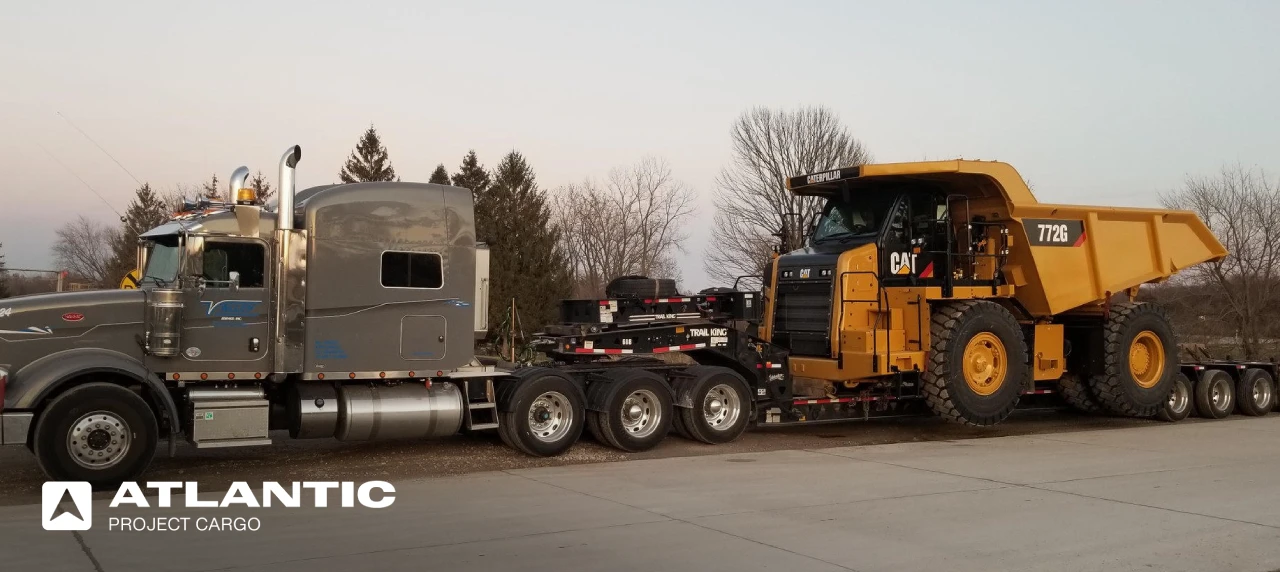
Flat rack shipping suits oversized machinery that will not fit inside a standard container but can be craned onto an open platform. Excavators, combines, and similar wide or tall machines travel well this way, secured with heavy-duty chains and lashings and braced against movement at sea. Its strength is flexibility with awkward dimensions; its limitation is exposure to the elements and pricing partly on the space occupied. See our guide to flat rack shipping.

Open Top Container Shipping to Brazil

Open top containers suit equipment that fits a container’s length and width but stands too tall for a closed box. The removable roof lets the machine be lowered in by crane and covered with a tarpaulin for the voyage. It is a good middle ground for machines that are almost container-friendly except for their height, keeping much of a standard container‘s security while allowing extra clearance.

Breakbulk Shipping to Brazil

Breakbulk is the method for the largest and heaviest cargo, pieces too big to containerize. Mining equipment, transformers, industrial modules, and extremely large machinery are lifted directly onto the vessel and secured individually. Because each piece is handled on its own terms, breakbulk carries the most engineering and is priced case by case. It is the natural home for true project cargo, where size and weight leave no simpler alternative.

The comparison below summarizes how the four methods line up.

Equipment Type Cost Transit Efficiency Size Limitations Recommended Use
Wheeled/running machinery $$ High Standard dimensions RoRo
Oversized machinery $$$ Medium Exceeds container size Flat Rack
Tall machinery $$$ Medium Exceeds container height Open Top Container
Project cargo/mining equipment $$$$ Case-specific No standard limit Breakbulk

Which Shipping Method Should You Choose?

The right method almost always follows from the machine itself. The table below is a practical starting point; the final choice also depends on exact measurements and condition.

Equipment Recommended Method
Tractor RoRo / Flat Rack
Combine / Cotton Picker Flat Rack
Excavator Flat Rack / Breakbulk
Bulldozer Flat Rack / Breakbulk
Forklift Container / RoRo
Mining Equipment Breakbulk

Major Shipping Ports for Heavy Equipment Transport Between the USA and Brazil

Equipment bound for Brazil can leave from several US ports and arrive at several Brazilian ones, with the pairing chosen to suit the cargo’s origin, destination, and method. The right combination keeps both the ocean leg and the inland haul short and economical.

United States

On the US side, the departure port usually reflects where the equipment is located, and heavy haul shipping to the gateway is common.

  • Gulf Coast ports such as Houston and Galveston serve the central and southern states, especially for agricultural and project cargo.
  • East Coast ports including Savannah, Charleston, Jacksonville, Baltimore, and New York and New Jersey handle the eastern half of the country, while Los Angeles and Long Beach serve the west.

The rule is to choose the port that minimizes inland trucking while offering a suitable service to Brazil.

Brazil

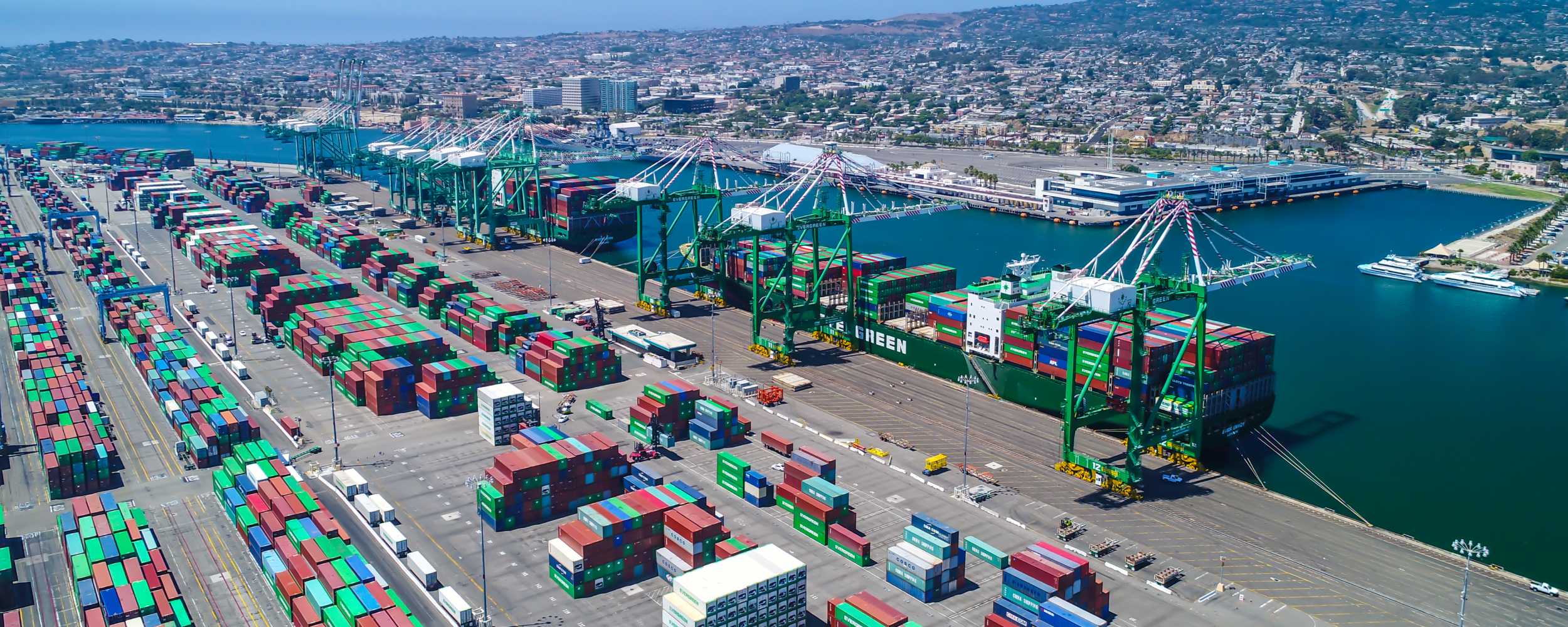
On the Brazilian side, the arrival port is chosen to sit close to the equipment’s final destination. Santos Port is the largest in Brazil and the natural gateway for São Paulo and central regions; the others each have their own strengths.

Brazilian Port Best For
Santos General cargo, containers, and the largest port serving São Paulo and central Brazil
Paranaguá Agricultural machinery and cargo serving southern Brazil
Rio de Janeiro General and project cargo serving southeastern Brazil
Vitória Industrial and mining cargo
Itajaí Container cargo serving southern Brazil

Transit Time for Shipping Heavy Equipment from the USA to Brazil

Ocean transit from the USA to Brazil generally takes between three and seven weeks, depending on the port pairing and service. The figures below are planning estimates rather than guarantees, and your forwarder confirms the current schedule at booking.

US Port Brazilian Port Estimated Transit Time Typical Method
Houston Santos Approx. 3–5 weeks RoRo / Flat Rack
Savannah Santos Approx. 3–5 weeks Container / Flat Rack
Miami / Jacksonville Rio de Janeiro Approx. 3–5 weeks RoRo / Container
Houston Rio Grande Approx. 4–6 weeks Breakbulk
Los Angeles Santos Approx. 5–7 weeks Flat Rack / Breakbulk

Several things influence the timeline. The port pairing sets the baseline, and carrier schedules, transshipment, and customs inspections add or remove time, with weather and seasonal congestion stretching it further. The ocean leg is only part of the story: inland transport at both ends and customs clearance contribute to the total door-to-door time.

How Much Does It Cost to Ship Heavy Equipment to Brazil?

The cost of shipping heavy equipment to Brazil varies from one shipment to the next, so Atlantic Project Cargo prepares a customized quotation for every machine rather than publishing fixed rates. The main drivers are the equipment’s dimensions and weight, the shipping method, and the distances on both sides. The pickup location, destination port, inland transport, crane requirements, customs clearance, cargo insurance, and special permits all add to it.

Equipment Typical Method Pricing Note
Tractor RoRo / Flat Rack Quote required
Excavator Flat Rack Quote required
Bulldozer Flat Rack / Breakbulk Quote required
Combine / Cotton Picker Flat Rack Quote required
Mining Equipment Breakbulk Quote required

Because so many variables feed into the total, the most reliable way to know your cost is to request a quote built around your specific machine and route.

Factors That Affect Heavy Equipment Shipping Costs to Brazil

A handful of factors carry most of the weight in a quote. Oversized dimensions and the shipping method have the largest influence, since together they set how much vessel space the cargo takes and how it is handled. Weight and inland trucking distance come next, then port handling, demurrage, and customs inspections, with seasonal freight-market swings nudging the total either way.

Factor Impact
Dimensions Very High
Shipping Method Very High
Weight High
Inland Trucking Distance High
Port Handling / Demurrage Medium
Customs Inspections Medium
Seasonal Market Fluctuations Low / Medium

Importing Heavy Equipment into Brazil

To import heavy equipment into Brazil, buyers must meet the country’s customs requirements, and the process rewards careful preparation. Every shipment needs complete documentation; some cargo is inspected on arrival, and requirements vary by equipment type. Agricultural machinery carries an extra layer of biosecurity checks that other cargo does not.

Brazilian Customs Clearance Process

Brazilian customs clearance follows a clear five-step sequence once the cargo arrives, and knowing each step tells you where the time goes.

  1. Customs declaration. The importer or their customs broker files the import declaration with the Brazilian authorities, formally registering the shipment.
  2. Customs broker review. The broker checks that the documentation is complete and consistent, since mismatched values or descriptions are a common cause of delay.
  3. Inspections. The authorities carry out any physical or documentary inspections the shipment calls for, including biosecurity checks on agricultural machinery.
  4. Customs release. Once duties are settled and the paperwork is in order, customs releases the cargo.
  5. Delivery after clearance. The equipment leaves the port for its final destination.

The smoothness of the whole sequence depends on the paperwork. When documentation is complete and consistent, clearance tends to be straightforward, which is why coordinating it with an experienced broker matters.

Import Duties and Taxes in Brazil

Brazil applies several federal and state taxes to imported equipment, and the amounts depend on the machine and its classification, so exact figures should always be confirmed rather than assumed. The main charges are the Import Duty (II), the IPI industrial products tax, the PIS and COFINS federal contributions, the ICMS state tax, and AFRMM, a merchant marine surcharge applied to the ocean freight cost itself.

Tax / Duty Depends On
Import Duty (II) HS code, product classification, customs value
IPI Product type and applicable rate
PIS / COFINS Customs value and applicable federal rate
ICMS State of entry and applicable state rate
AFRMM Ocean freight value and route type (long-haul vs. cabotage)

Because ICMS is set at the state level and the others depend on the HS code and declared value, the total burden differs from one shipment to another. A customs broker familiar with machinery imports is the right person to confirm the figures for your case.

MAPA Requirements for Agricultural Equipment

Agricultural machinery most often needs special attention, because Brazil’s Ministry of Agriculture, Livestock, and Food Supply, known as MAPA, enforces strict biosecurity measures at the border. MAPA regulates and inspects imported agricultural equipment, with a focus on preventing soil-borne pests and diseases, and publishes its phytosanitary requirements for importers.

In practice, used agricultural equipment must arrive thoroughly clean, with soil, seeds, and plant residue removed from tracks, undercarriages, tires, and any recess where dirt collects. Equipment may be inspected on arrival. Because the rules can change, it is wise to confirm the current MAPA requirements before shipping, and a machine cleaned properly before it leaves the US is far less likely to face a hold.

Used Heavy Equipment Import Requirements in Brazil

Used machinery can be imported into Brazil, but it is subject to Brazil’s restrictions on used capital goods: as a rule, used equipment may only be imported when there is no comparable item manufactured domestically, and the shipment requires a non-automatic import license obtained through Siscomex before it ships, not just documentation on arrival. It generally also needs clear proof of condition and may face inspection at the port. Because these rules and their exceptions can change, confirm eligibility and licensing for your specific machine and HS code before committing to a purchase, rather than assuming a unit will qualify.

Documents Required to Ship Heavy Equipment to Brazil

Every shipment to Brazil relies on a core set of documents, and keeping them complete and accurate is one of the simplest ways to avoid delays.

Document Purpose
Bill of Lading Ocean freight contract and cargo release
Commercial Invoice Customs valuation
Packing List Shipment details
Export Declaration US export compliance
Certificate of Origin Required when applicable
Insurance Certificate Cargo protection
Import Documentation Brazilian customs clearance

When these documents match one another, the shipment moves through customs with far fewer questions, which is what you want on a high-value machine.

How to Prepare Heavy Equipment for Shipping to Brazil

Good preparation protects your equipment, keeps the shipment on schedule, and reduces the risk of a customs or biosecurity hold. The checklist below covers the steps that matter most.

Preparation Step Why It Matters
Cleaning equipment Reduces MAPA inspection risk and supports customs acceptance
Photographing condition Supports insurance and condition records
Checking for leaks Required for terminal and carrier acceptance
Securing loose components Reduces damage risk in transit
Removing detachable accessories Simplifies loading and the customs description
Disconnecting batteries if required Some carriers require batteries to be disconnected
Preparing keys and documentation Avoids delays at pickup and port receiving

Cleaning is the most important of these for agricultural machinery: a few hours with a pressure washer before the machine leaves the US can save weeks of trouble at the Brazilian border.

Shipping Agricultural Equipment from the USA to Brazil

Agricultural machinery is one of the most common categories shipped from the USA to Brazil, covering tractors, combines, sprayers, planters, cotton pickers, and balers. What sets it apart is biosecurity: soil, seeds, and plant material on a used machine can trigger MAPA inspection issues on arrival. Cleaning is not an afterthought here but central to a successful import, since a spotless machine clears biosecurity far more easily.

For the wider process from pickup to delivery, our heavy equipment shipping guide covers each step in more depth.

Shipping Construction and Industrial Equipment from the USA to Brazil

Construction and industrial machinery travels to Brazil in large volumes, including excavators, bulldozers, loaders, graders, cranes, skid steers, telehandlers, generators, compressors, and forklifts. It faces fewer biosecurity hurdles than farm machinery but still needs the right method and complete documentation. The method follows the machine’s size and whether it runs: smaller units go in containers, wheeled machines suit RoRo, and larger pieces travel on flat racks or as breakbulk.

Shipping Oversized and Project Cargo to Brazil

The largest shipments to Brazil fall under project cargo: mining equipment, transformers, industrial modules, and heavy structural components. Defined by their size and weight, these pieces almost always call for breakbulk handling and detailed engineering of the lift, route, and securing plan. Because the values are high and the pieces irreplaceable, cargo insurance matters especially here. Our crane transport service supports many of these heavy-lift moves.

Shipping Equipment Purchased at US Auctions and Marketplaces

A great deal of Brazil-bound equipment is bought at US auction houses and online equipment marketplaces such as JumboBee, as well as directly from dealers. Buying this way adds a few steps between the purchase and delivery in Brazil, and they run in this order:

  1. Purchase confirmed. The winning bid is placed (at auction), or the listed price is agreed (on a marketplace or with a dealer).
  2. Payment and release. Payment clears, and the seller releases the machine for collection.
  3. Pickup appointment. A collection slot is booked at the seller’s yard.
  4. Preparation. The machine is cleaned and prepared for export, which matters most for used agricultural equipment facing MAPA checks.
  5. US port. The equipment is trucked to the export port.
  6. Ocean freight. It sails to Brazil by the chosen method.
  7. Brazilian customs and MAPA clearance. The shipment clears customs and, where applicable, MAPA biosecurity.
  8. Final delivery. The machine reaches its destination.

The most useful habit for auction and marketplace buyers alike is to check the shipping and MAPA cleaning requirements before buying, especially for used agricultural equipment, so the true landed cost is known in advance.

Example Shipping Scenarios

The clearest way to understand the process is to follow a few machines through it. The three journeys below are the kinds of moves handled all the time, and each shows how the early decisions shape everything that follows.

Example 1 — a John Deere tractor for a Mato Grosso farm

A grain producer in Mato Grosso finds the model he wants at a dealer in the American Midwest, in better condition and at a better price than anything available at home.

Because the tractor runs and drives, RoRo is the obvious choice. There is no crane to book and no container to pack; a truck carries it to the Port of Houston, and it drives up the ramp onto the vessel under its own power.

The one thing that could derail the shipment is biosecurity. As a used farm machine, it has to reach Brazil spotless, so it is pressure-washed to bare metal before it leaves, with special attention to the tyres and any recess where soil hides.

From Houston, it sails to Santos, Brazil’s largest port and the shortest road link into the central farming belt, then travels the final stretch by truck to the farm.

Example 2 — a CAT excavator for a southern construction site

A construction firm in southern Brazil buys a used excavator from a seller in California. This machine is a different problem from the tractor: it neither fits inside a standard container nor makes sense on RoRo, so a flat rack is the right call.

At the Port of Los Angeles, a crane lifts the excavator onto the open flat-rack platform, where it is chained and braced so it cannot shift during weeks at sea.

The port choice is where the money is. Rather than route through Santos and truck the machine back down the coast, the shipment heads for Paranaguá, which sits much closer to the southern destination and spares the buyer hundreds of kilometres of inland haulage. That saving on the land leg is exactly what makes port choice a cost decision, not just a logistics one.

Example 3 — mining equipment for an inland project

A mining operation needs a piece of equipment so large and heavy that neither a container nor a RoRo ramp can take it. Here the method chooses itself: breakbulk, with the machine lifted directly onto the vessel and secured as its own individual load.

It leaves the US Gulf Coast through the Port of Houston, a natural fit for oversized project cargo, and crosses to the Port of Rio Grande in southern Brazil, which has the heavy-lift capacity to receive it.

From the quay, it faces a demanding inland move to the mine site, planned in advance around the machine’s dimensions and the route it has to travel. Every step, from the lift plan to the final haul, is engineered rather than booked off a schedule.

None of these routings is fixed. The real path always depends on the machine’s specifications, the carrier schedules running at the time, port availability, and how well the MAPA preparation is handled. What stays constant is the logic underneath all three: match the machine to the method it truly needs, and land it at the port that puts it closest to where it is going.

Common Mistakes When Shipping Equipment to Brazil

A few avoidable mistakes account for most delays and unexpected costs. The most common is buying equipment before checking shipping and customs costs, which can turn a good deal into an expensive one. Others include using the wrong HS code, underestimating MAPA cleaning requirements, and leaving soil in tracks or undercarriages. Relying on manufacturer dimensions instead of the actual machine can book the wrong method, and choosing a port on distance alone can ignore inland delivery costs that erase the savings.

For Brazil-bound shipments, thorough MAPA preparation and accurate documentation can matter as much as the freight booking itself.

Why Choose Atlantic Project Cargo for Heavy Equipment Shipping to Brazil

Atlantic Project Cargo manages the entire journey from a US seller’s yard to a Brazilian job site, coordinating every stage so the handoffs stay clean. Our experience spans heavy equipment logistics, agricultural and construction machinery, project cargo, oversized freight, customs coordination, marine cargo insurance, equipment sourcing, and door-to-door delivery.

APC Service Benefit
Equipment Sourcing Helps buyers find and evaluate machinery in the USA
Inland Transport Moves equipment to the export port
Shipping Method Selection Matches cargo with the right method
Export Documentation Reduces paperwork delays
Customs & MAPA Coordination Helps reduce inspection and clearance delays
Cargo Insurance Protects high-value machinery
Door-to-Door Logistics Supports delivery to the final project site

Because we handle the whole chain, the details that trip up a Brazil shipment, from MAPA cleaning to customs paperwork, are managed as one coordinated plan rather than left to chance.

What Information Is Needed for a Shipping Quote?

Preparing an accurate quote is quick with the right details to hand. The more precise the information, the more precise the quote.

Information Needed Example
Equipment Type Tractor, excavator, combine
Make and Model John Deere, CAT, Case IH, Komatsu
Dimensions Length, width, height
Weight Operating or shipping weight
Pickup Location Dealer, auction, farm, job site
Destination Port or final address in Brazil
Condition Running or non-running
Attachments Bucket, blade, header, boom
Preferred Method RoRo, flat rack, open top, breakbulk

Frequently Asked Questions About Shipping Heavy Equipment to Brazil

It depends on the equipment’s dimensions, weight, and condition, the shipping method, and the ports at each end, so it is quoted individually. The most reliable way to know your cost is to request a quote built around your machine and route.

Ocean transit generally runs three to seven weeks depending on the port pairing, with inland transport and customs clearance adding to the door-to-door total. Your forwarder confirms the current schedule at booking.

Yes, used machinery is commonly imported into Brazil and makes up a large share of American equipment sold there. It needs clear documentation, may be inspected on arrival, and must meet the applicable rules, so confirm the current requirements for your machine before buying.

It depends on the machine. Running, wheeled equipment suits RoRo, oversized machines travel on flat racks, tall equipment uses open top containers, and the largest project cargo goes breakbulk. We help match the method to the machine on every shipment.

The right port usually sits closest to your equipment’s final destination. Santos serves São Paulo and central Brazil, Paranaguá and Rio Grande suit the south, and others serve specific regions and industries.

The core set is the bill of lading, commercial invoice, packing list, export declaration, and import documentation, with a certificate of origin and insurance certificate as needed. Complete, consistent paperwork keeps clearance smooth.

Yes. We coordinate Brazilian customs clearance and, for agricultural machinery, the MAPA process, to keep inspections and clearance moving.

Yes, we arrange marine cargo insurance to protect high-value machinery in transit, especially important for oversized and project cargo.

Yes, oversized and project cargo is a core part of what we do, using flat rack, breakbulk, and heavy-lift methods matched to the machine.

Yes, we regularly collect equipment bought at US auction houses, online marketplaces, and dealers, handling pickup, preparation, and export.

Request a Heavy Equipment Shipping Quote to Brazil

Shipping heavy equipment from the USA to Brazil is far simpler when one experienced team manages the whole journey, from sourcing and pickup through ocean freight, customs, MAPA clearance, and final delivery. Atlantic Project Cargo brings experienced project managers, customized logistics, worldwide heavy equipment transportation, and responsive support to every shipment. The best next step is a quote built around your actual machine and destination, so you know the cost and the plan before anything moves.

Request a Shipping Quote | Talk To a Shipping Expert

Get Your Free Quote Today!

Read More

What Is Breakbulk Shipping? Complete Guide for Heavy Equipment, Project Cargo & Oversized Freight
August 31, 2026

What Is Breakbulk Shipping? Complete Guide for Heavy Equipment, Project Cargo & Oversized Freight

Breakbulk shipping is the transport of cargo loaded and unloaded piece by piece rather than in containers. It handles freight too large, too heavy, or too irregularly shaped to fit...

Reviewed by Nick Yadryshnikov Nick Yadryshnikov
Read
Top 10 Ports in Australia: Best Shipping Hubs for International Cargo & Heavy Equipment
August 28, 2026

Top 10 Ports in Australia: Best Shipping Hubs for International Cargo & Heavy Equipment

The best Australian port for international cargo depends on the shipment type and final destination. Melbourne is Australia’s largest container port, while Brisbane and Fremantle are strong gateways for heavy...

Reviewed by Victoria Moseicuka Victoria Moseicuka
Read
Heavy Equipment Shipping from the USA to Australia: Costs, Transit Time & Import Guide
August 24, 2026

Heavy Equipment Shipping from the USA to Australia: Costs, Transit Time & Import Guide

Heavy equipment can be shipped from the USA to Australia by RoRo, flat rack, container, or breakbulk shipping depending on the machine’s dimensions, weight, condition, destination, and cleaning requirements. Australia...

Reviewed by Nick Yadryshnikov Nick Yadryshnikov
Read
Share via