Hours of operations:
9AM - 5PM / UTC -5 (EST)

Guide to Heavy Equipment Shipping from the USA to Chile: Costs, Ports & Import Requirements

September 11, 2026
Shipping Quote
Customs Duties
Drayage Rate
Do you already own this equipment?

You Can Request a New Quote Every 15 Minutes

Please wait or contact us at [email protected]

Thank you for Choosing Us!

Looking to buy or sell heavy equipment?
With JumboBee, you can trade online with financing options and worldwide shipping.

Check Inventory
Calculate Import Duties
Get a free, no-obligation estimate of your import duties!
Calculate Import Duties
Get a Drayage Estimate
Get a free drayage estimate tailored to your exact needs!
Check a Drayage Rate
Home Insights Guide to Heavy Equipment Shipping from the USA to Chile: Costs, Ports & Import Requirements
Reviewed by
Nick Yadryshnikov Senior Account Manager

Key Takeaways


  • Shipping method depends on the machine: RoRo works for running equipment, flat rack for oversized units, breakbulk for the largest mining and project cargo, and container for compact machinery. The final choice also factors in condition, dimensions, and destination in Chile.
  • Used agricultural machinery must be cleaned of soil, seeds, and plant residue to satisfy SAG inspection before it can clear Chilean customs. Poor cleaning is the most common cause of delays and added costs on this route.
  • A US purchase doesn’t automatically qualify for reduced duty under the US–Chile Free Trade Agreement. Eligibility depends on the equipment’s actual country of origin and a valid certificate of origin.
  • Total landed cost includes far more than ocean freight, since duty, VAT, broker fees, port charges, and SAG cleaning are usually billed separately. Comparing full landed cost, not just freight quotes, protects the budget.
  • Transit time runs about 2–8 weeks depending on the route, with direct Pacific sailings from Los Angeles or Long Beach faster than Gulf or Atlantic sailings via the Panama Canal. Port selection should match the cargo’s final destination in Chile.

Heavy equipment can be shipped from the USA to Chile by RoRo, flat rack, container, or breakbulk shipping, and the right method depends on the machine’s dimensions, weight, condition, destination, and cleaning requirements. Chile adds two things most guides skip: accurate customs valuation with rules of origin under the US–Chile free trade agreement, and SAG cleaning standards for used agricultural machinery. Getting the preparation and paperwork right before the machine leaves the US is what keeps it moving on arrival.

Chile buys a great deal of American machinery because its mining, construction, agriculture, forestry, and energy sectors need reliable used and late-model equipment that is not always available locally at the same price. That demand runs through a handful of shipping methods and one important layer of biosecurity and customs rules. This guide walks the whole route, from a US seller’s yard to a Chilean job site, and explains where Chile-bound shipments most often run into trouble.

How Does Heavy Equipment Shipping from the USA to Chile Work?

Heavy equipment shipping from USA to Chile is a coordinated sequence: the machine is collected in the US, moved to an export port, shipped by sea, cleared through Chilean customs and, for used farm machinery, an agricultural inspection, and then delivered inland. Each stage has its own paperwork and timing, and the cleaner each handoff, the fewer holds at the far end.

In order, the process runs from the seller, dealer, or auction where the machine is bought, to pickup in the US, US inland transport to the coast, the export port, ocean freight, arrival at a Chilean port, customs and SAG inspection, customs clearance, and final delivery.

Step Description
Pickup Equipment is collected from the seller, dealer, auction, or job site
Inland transport Equipment is moved to a US export port
Export documentation Export paperwork and shipping documents are prepared
Ocean freight Cargo moves internationally by vessel
SAG inspection Used agricultural equipment may be inspected for soil, seeds, or plant material
Customs clearance Import documents and duties are processed in Chile
Final delivery Equipment is transported to the buyer or project site

The value of one coordinated team shows up in these handoffs. When pickup, documentation, ocean freight, and customs are managed together, the machine tends to move through each stage without the gaps where time and money leak away.

Can You Ship Heavy Equipment from the USA to Chile?

Used machinery import Chile or new machinery import rules are workable but specific: new and used machinery can generally be shipped from the USA to Chile, provided it is correctly classified, documented, and cleared, and the importer is eligible to bring it in. It is not a case of anything goes: correct HS classification, ownership documents, an accurate customs valuation, and importer eligibility all matter, and some categories carry their own conditions.

The equipment that moves this route covers excavators, bulldozers, wheel loaders, cranes, forklifts, and skid steers on the construction side, tractors, combines, and harvesters in agriculture, and forestry and mining machinery for Chile’s resource industries. Road vehicles and certain specialized machinery may face different requirements, and used road vehicles in particular are restricted in Chile, so the rules for a given machine should be checked before purchase.

What Equipment Is Commonly Shipped to Chile?

Most Chile-bound machinery falls into a few familiar types, and each has a method that usually suits it best. The table below is a starting point; the final choice depends on the exact machine.

Equipment Common Shipping Method
Tractor RoRo / Flat Rack
Excavator Flat Rack / Breakbulk
Bulldozer Flat Rack / Breakbulk
Combine / Harvester Flat Rack
Mining Equipment Breakbulk
Forklift Container / RoRo
Industrial Machinery Container / Flat Rack / Breakbulk

Why Import Heavy Equipment from the USA to Chile?

Machinery shipping from USA to Chile is driven by simple economics: the American market offers a larger selection of used machinery, deep auction inventory, and access to specific brands, late-model units, and replacement parts, often at competitive prices. For many Chilean operators, a well-chosen US machine lands cheaper and better-specified than the local alternative, even after freight and duties.

The demand sits across Chile’s core industries. Mining in the north drives much of the heavy and oversized equipment trade, while construction and infrastructure need earth-moving machines, agriculture and forestry in the central and southern regions bring in tractors, harvesters, and forestry machinery, and energy and industrial manufacturing add their own specialized plant. Chile machinery import demand is broad enough that the right shipping method genuinely changes from one shipment to the next.

Buying Heavy Equipment in the USA for Export to Chile

Most machinery bound for Chile is bought from dealers and manufacturers for newer units, or from auction houses and marketplaces such as Ritchie Bros., IronPlanet, and MachineryTrader, along with private sellers. Each source shapes the logistics that follow, and the shipping decisions start at the point of purchase.

Atlantic Project Cargo supports buyers through that whole front end: equipment sourcing and evaluation, communication with the seller, and coordination of any pre-purchase inspection. It also arranges pickup logistics, plans the export, and compares shipping quotes, so the freight and preparation cost is understood before the machine is bought rather than discovered afterward.

Best Shipping Methods from the USA to Chile

The best method comes down to whether the machine runs, how big and heavy it is, and where in Chile it is going. Four methods cover almost everything, and each suits a particular kind of cargo.

RoRo Shipping to Chile

RoRo, roll-on/roll-off, is the simplest and often most economical choice for machines that can drive or be towed aboard under their own power. Tractor shipping to Chile often starts here: RoRo fits running tractors, wheel loaders, self-propelled cranes, and any equipment that can safely roll on and off the vessel, with no crane or container packing needed.

Flat Rack Shipping to Chile

Flat rack suits oversized machines that will not fit a standard container but can be craned onto an open platform, and excavator shipping to Chile most often uses this method. Excavators, dozers, combines, other oversized machinery, and non-running equipment travel this way, chained and braced to the rack. You can read more about flat rack shipping and how it is loaded.

Breakbulk Shipping to Chile

Breakbulk is for the largest and heaviest cargo that cannot be containerized: mining equipment, industrial machinery, very large construction equipment, and non-containerized project cargo, lifted aboard and secured individually. Much of Chile’s northern mining equipment moves this way.

Container Shipping to Chile

Container shipping fits compact machinery, forklifts, attachments, and parts that sit within a standard box, often after light preparation. It gives the most weather protection and the easiest handling of the four.

Method Best For Cost Level Cargo Protection
RoRo Self-propelled equipment $$ Medium
Flat Rack Oversized equipment $$$ Medium / High
Breakbulk Project cargo and mining equipment $$$$ Case-specific
Container Compact machinery and parts $$ High

Which Shipping Method Should You Choose?

The method usually follows from the machine, so start with the equipment type. The table below is a practical guide, and the final call also depends on measurements and condition.

Equipment Recommended Method
Tractor RoRo / Flat Rack
Combine Flat Rack
Excavator Flat Rack / Breakbulk
Bulldozer Flat Rack / Breakbulk
Wheel Loader RoRo / Flat Rack
Forklift Container / RoRo
Mining Equipment Breakbulk

Atlantic Project Cargo selects the method by weighing the equipment’s dimensions and weight, its running condition, the routes and vessels available, the port handling options at each end, the SAG cleaning and preparation the machine needs, and its final destination in Chile. A running tractor bound for a central-Chile farm and a non-running excavator headed to a northern mine call for different answers.

How Much Does It Cost to Ship Heavy Equipment from the USA to Chile?

The cost of heavy equipment shipping from USA to Chile varies from one shipment to the next, so Atlantic Project Cargo prepares a customized quote for each machine rather than publishing fixed rates. The main drivers are the equipment’s dimensions and weight and the shipping method it needs, with pickup location, the US export port, the Chilean destination port, carrier availability, cleaning and SAG preparation, port charges, insurance, and final delivery distance all feeding into the total.

Equipment Typical Method Pricing Note
Tractor RoRo / Flat Rack Quote required
Excavator Flat Rack / Breakbulk Quote required
Bulldozer Flat Rack / Breakbulk Quote required
Combine Flat Rack Quote required
Mining Equipment Breakbulk Quote required

Because so many variables feed the total, the reliable way to know your cost is a quote built around your specific machine and route.

Request a Shipping Quote | Talk to a Shipping Specialist

Get Your Free Quote Today!

What Makes Up the Total Landed Cost?

The freight quote is only part of what it costs to land a machine in Chile. Duties, VAT, broker fees, and SAG cleaning sit outside most freight quotes, so the smart comparison is total landed cost, not ocean freight alone.

Cost Component Usually Included in Freight Quote?
Equipment purchase No
US pickup Sometimes
Inland transport Sometimes
Export documentation Usually
Ocean freight Yes
Marine insurance Optional
Chilean customs duty No
VAT No
Customs broker fees No
SAG inspection / cleaning No
Port charges Sometimes
Final delivery Optional

Two machines can carry near-identical ocean freight and still land at very different total costs once duty, VAT, and preparation are counted. Comparing the whole picture is what protects the budget.

What Affects Shipping Costs the Most?

A few factors carry most of the weight in a quote. Dimensions and shipping method have the largest influence, since together they set how much vessel space the machine takes and how it must be handled, with weight and route close behind.

Factor Impact
Dimensions Very High
Shipping Method Very High
Weight High
Route High
Port Charges Medium
SAG Cleaning Medium
Customs Classification Medium
Marine Insurance Low

There is a hidden cost worth naming: poorly cleaned agricultural equipment. A machine that fails a SAG inspection can trigger re-cleaning, treatment, or storage charges and lost days, so cleaning that looks like a preparation cost is really a way of avoiding a larger one later.

How Long Does Shipping from the USA to Chile Take?

Ocean transit from the USA to Chile generally runs two to eight weeks depending on the port pairing and service – Pacific-coast sailings with direct service run shorter, while Gulf and Atlantic sailings that route via the Panama Canal or a transshipment hub run longer.

Route Typical Transit Time
Los Angeles → Valparaíso, Chile Approx. 2–4 weeks (direct Pacific service)
Long Beach → San Antonio, Chile Approx. 2–4 weeks (direct Pacific service)
Houston → San Antonio, Chile Approx. 4–7 weeks (routes via the Panama Canal or transshipment)
Houston → Antofagasta, Chile Approx. 4–7 weeks (routes via the Panama Canal or transshipment)
Savannah → San Antonio, Chile Approx. 5–8 weeks (Atlantic origin, longer routing)

These figures are directional based on typical routing patterns; always confirm current transit time with the carrier at time of booking, since Gulf and Atlantic sailings to Chile are especially sensitive to Panama Canal scheduling and transshipment.

Best US Export Ports for Shipping Equipment to Chile

Equipment can leave from several US ports, and the choice usually reflects where the machine is and which service suits the cargo. Gulf and Southeast ports serve central and southern US origins, while the West Coast offers Pacific service to Chile.

US Port Best For
Houston Heavy machinery, agricultural equipment, project cargo
Galveston RoRo and oversized cargo
Los Angeles / Long Beach West Coast routes and Pacific service to Chile
Savannah / Charleston Southeast machinery exports, container and RoRo service
Baltimore RoRo and farm equipment
New York / New Jersey Northeast machinery and container exports

The aim is to pick the port that keeps inland trucking short while still offering a suitable service to Chile.

Main Chilean Ports for Heavy Equipment Imports

On the Chilean side, the arrival port is chosen to sit close to the final destination and the industry it serves. Central Chile and Santiago are served mainly through San Antonio and Valparaíso, the mining north through Antofagasta and the far-northern ports, and the south through San Vicente, Coronel, and Puerto Montt.

Chilean Port Best For
San Antonio Central Chile, Santiago, construction and agricultural cargo
Valparaíso Containerized and general cargo serving central Chile
Antofagasta Mining, energy, and industrial projects in northern Chile
Iquique / Mejillones Northern mining and industrial cargo
San Vicente / Coronel Southern-central industrial and forestry cargo
Puerto Montt General cargo gateway to southern Chile's agriculture and aquaculture regions

Terminal capabilities differ from one port to the next, so whether a given port suits RoRo, flat rack, or breakbulk for a specific machine is confirmed against current service before booking.

SAG Cleaning Requirements for Used Agricultural Machinery

This is the section that catches the most Chile-bound farm equipment. Chile’s agricultural authority, the Servicio Agrícola y Ganadero (SAG), enforces phytosanitary controls at the border, and used machinery is expected to arrive visually free of soil, plant residue, and regulated pests. Cleaning should be done in the country of origin before the machine ships, and depending on the equipment it may involve washing, steam, forced air, vacuuming, or partial dismantling to reach hidden areas.

The high-risk machines are the ones that work in soil and crop: tractors, combines, harvesters, cotton pickers, sprayers, planters, tillage equipment, and forestry machinery. On arrival, SAG may carry out documentary and physical inspections, and inadequate cleaning can trigger a range of outcomes.

Cleaning Issue Potential Impact
Soil on tires, tracks, or undercarriage Inspection delay / cleaning may be required
Plant residue or seeds SAG inspection concern
Contaminated engine compartment Re-cleaning or treatment may be required
Dirty attachments (buckets, headers) Additional inspection
Debris in cabin or removable panels Additional inspection

None of these outcomes is automatic. Whether a machine is held, re-cleaned, treated, stored, re-exported, or rejected depends on inspection findings, which is exactly why thorough cleaning before shipping is the surest way to keep a used machine moving.

Does Construction or Mining Equipment Need to Be Cleaned?

Yes, though usually for different reasons than farm machinery. Even where specific agricultural rules do not apply, construction and mining equipment should be free of loose soil, vegetation, debris, and significant fluid leakage, both to satisfy the terminal and carrier and to avoid drawing an inspection. A leaking hydraulic system or a bucket packed with dirt can hold a machine up regardless of its category.

The practical habit is to inspect the machine before pickup and again before it is delivered to the port, so anything that would fail acceptance is caught while it is still cheap to fix.

Chilean Customs Duties, VAT and the US–Chile Free Trade Agreement

Landing a machine in Chile involves several separate charges, and it helps to keep them distinct: the customs value is what the duty and VAT are calculated on, the customs duty is the import tariff, VAT is charged on top, and port charges and customs broker fees are separate again. The US–Chile free trade agreement can reduce or eliminate the duty, but only where the goods genuinely qualify.

This is where the most expensive assumption lives. Equipment bought in the USA is not automatically considered US-origin. A machine manufactured in another country does not qualify for preferential treatment just because a US dealer sold it, so the certificate of origin and the agreement’s rules of origin have to be checked for the specific machine. Even when the duty is reduced or removed, VAT and other import charges may still apply.

Element Depends On
Customs Duty HS code, country of origin, certificate of origin
VAT Customs value, applicable rate
Preferential FTA Treatment Rules of origin, documentation, product classification

This is not legal or tax advice. Duty, VAT, and origin questions should be confirmed with the Chilean customs authority, SAG, and a licensed customs broker for the specific machine and importer.

Documents Required to Ship Heavy Equipment to Chile

Every Chile shipment relies on a core document set, and having it complete and consistent is one of the simplest ways to avoid a hold.

Document Required For
Commercial Invoice Customs valuation
Bill of Lading Ocean freight and cargo release
Packing List Shipment details
Certificate of Origin Preferential duty treatment, if applicable
Customs Declaration Chilean import processing
SAG Documentation Agricultural inspection, if applicable
Insurance Certificate Cargo protection
Ownership Documents Customs and importer verification

The documents should be checked for accuracy and consistency before the cargo leaves the USA, because a mismatch is far easier to fix at origin than after the machine has sailed.

How to Prepare Heavy Equipment for Shipping to Chile

Good preparation protects the machine, keeps the shipment on schedule, and lowers the risk of a SAG or customs hold. The checklist below covers what matters most.

Preparation Step Why It Matters
Pressure wash equipment Reduces SAG inspection risk
Clean tires, tracks, and undercarriage Common contamination areas
Remove soil and plant material Helps avoid SAG delays
Clean attachments separately Buckets, blades, and headers often hold debris
Confirm dimensions and weight Required for an accurate freight quote
Take photos Supports insurance and condition records
Verify serial number Supports customs documentation
Secure loose parts Reduces damage risk

For agricultural machinery, cleaning is the highest-value step of all: a few hours with a pressure washer at origin can save weeks of trouble at the Chilean border.

Shipping Agricultural Equipment from the USA to Chile

Agricultural equipment shipping to Chile is one of the most common categories on this route, covering tractors, combines, harvesters, planters, sprayers, balers, tillage equipment, irrigation equipment, and forestry machinery. Farm equipment shipping is set apart by biosecurity: soil, seeds, crop residue, and plant material on a used machine are exactly what SAG inspects for, so cleaning and documentation carry more weight here than anywhere else.

Our agricultural equipment shipping service is built around this cargo and the SAG preparation it needs.

For the wider process and costs across every machine type, the heavy equipment shipping guide covers each stage in more depth.

Shipping Construction and Mining Equipment from the USA to Chile

Construction equipment shipping to Chile moves in large volumes: excavators, bulldozers, loaders, cranes, drilling equipment, dump trucks, graders, crushing equipment, mining machinery, and generators. Because of their weight, width, height, and the remote delivery points in northern Chile, these machines often move on flat rack or as breakbulk rather than in a container.

Mining equipment shipping is a core part of this route, and our construction equipment shipping service handles the earth-moving and mining side.

Heavier industrial plant is covered by our industrial equipment shipping service.

The largest machines are often prepared through equipment disassembly and loading to bring them within shippable dimensions, which is what makes a container or flat rack workable for an oversized unit.

Shipping Equipment Purchased at US Auctions

A large share of Chile-bound equipment is bought at US auctions such as Ritchie Bros., IronPlanet, and MachineryTrader, as well as from dealers. Buying this way adds a few steps between the winning bid and delivery in Chile, and they run in order: auction purchase, payment and release, a pickup appointment, cleaning and preparation, the US port, the sea crossing, Chilean customs and SAG inspection, and final delivery.

The most useful habit for auction buyers is to check the shipping and cleaning requirements before bidding, especially for used agricultural and construction equipment, so the true landed cost and the SAG preparation are known in advance rather than discovered after the hammer falls.

Example Shipping Scenarios

Three routings show how the pieces fit together, from the type of machine down to the port it lands at. Each is illustrative, and the real path depends on the equipment, carrier schedules, port availability, and SAG preparation.

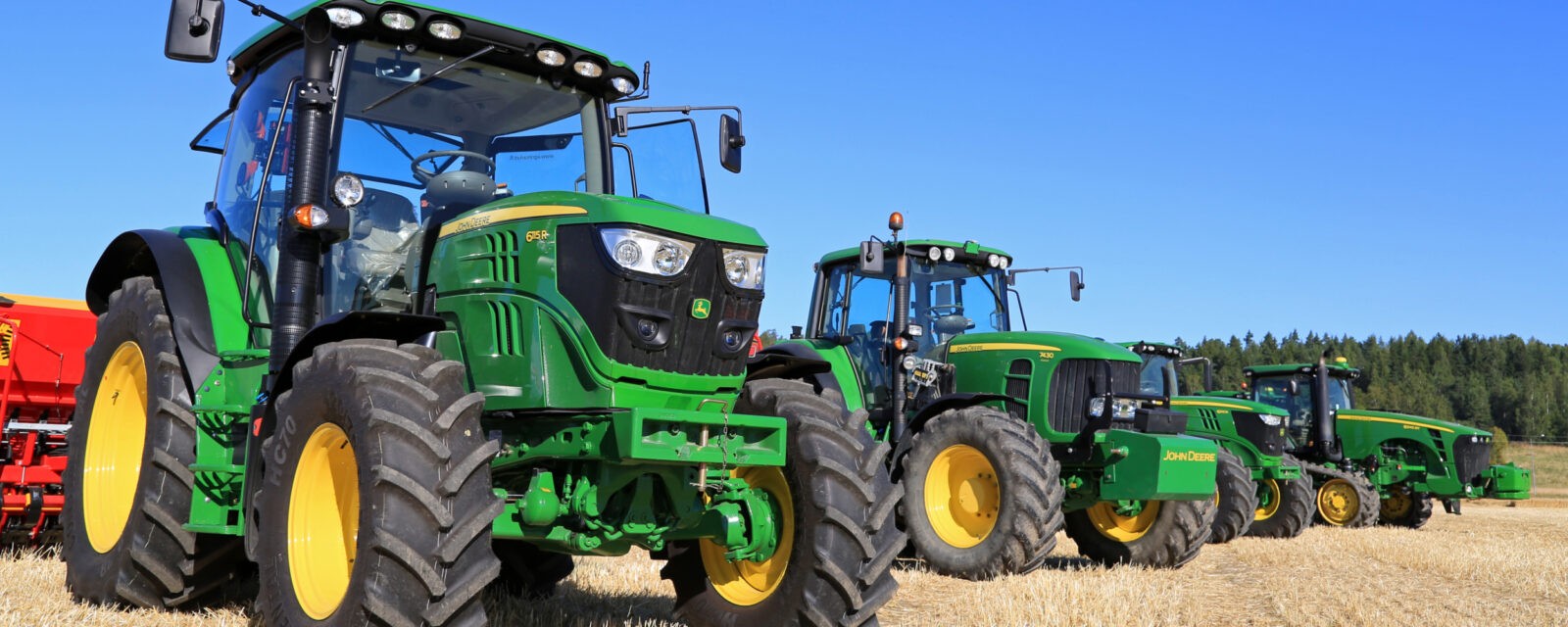
Example 1 – a John Deere tractor for a central-Chile farm

A grain farmer in central Chile tracks down the tractor he wants at a Midwest dealer, and it beats the local option on both price and spec. He’s planning for next season, so he’d rather trade a few extra weeks in transit for a reliable Southeast sailing than gamble on a tighter connection.

The tractor runs, so RoRo makes the most sense, with a flat rack as the fallback if a better sailing comes up. A truck carries it to Savannah to catch a service south.

What decides this shipment happens before it ever reaches the water. A used farm machine has to satisfy SAG, so the crew washes it down to bare metal at origin, digging soil and crop residue out of the tyres and undercarriage, because that is what an inspector in Chile will look for first.

The tractor lands at San Antonio, the port with the shortest road into the central farming belt, and covers the last stretch to the farm by truck.

Example 2 – a CAT excavator for a site near Santiago

A construction firm near Santiago picks up a used excavator from a California seller, and this machine hands the shipper a different puzzle than the tractor did. It is too wide and heavy for a container and makes no sense on RoRo, so a flat rack is the answer.

At Los Angeles a crane lifts the excavator onto the open platform, and the crew chains and braces it to ride out weeks of ocean movement without shifting.

Here the port choice earns its keep. San Antonio is the primary gateway for the Santiago region – closer to the city than Valparaíso and built for higher container volume – so routing the excavator there instead of Valparaíso keeps the road leg short, and it finishes the journey overland.

Example 3 – mining equipment for a northern mine

A mining operation in the north needs a machine no container or RoRo ramp can take, which settles the method before anyone debates it: breakbulk.

The piece leaves the US Gulf Coast through Houston, a port that handles oversized project cargo day in and day out, and a crane sets it aboard as its own individual load.

It crosses to Antofagasta, the gateway for the northern mining region, and the real work begins at the quay: a demanding inland haul to the mine that the team maps out in advance around the machine’s width, height, and weight.

All three come back to the same decision: put the machine on the method it actually needs, and bring it in through the Chilean port that sits closest to where it is headed.

Common Mistakes When Shipping Equipment to Chile

A handful of avoidable mistakes cause most of the delays and surprise costs on Chile-bound shipments. The most common is buying a machine before checking shipping and customs costs, which can turn a good auction price into an expensive one. Others include using the wrong HS code, assuming a US purchase automatically qualifies for FTA duty treatment, and failing to obtain a valid certificate of origin.

The rest cluster around preparation and planning: underestimating SAG cleaning requirements, leaving soil in tracks or undercarriages, using manufacturer dimensions instead of measuring the actual machine, choosing a port on distance alone, ignoring destination port charges, and shipping without cargo insurance. For Chile-bound shipments, customs classification and SAG cleaning preparation can matter as much as the freight booking itself.

How APC Handles Heavy Equipment Shipping to Chile

Atlantic Project Cargo manages the whole route from a US seller’s yard to a Chilean destination, coordinating each stage so the handoffs stay clean. That covers equipment sourcing support, pickup from sellers and auctions, inland transport, shipping method selection, export documentation, RoRo, flat rack, container, and breakbulk booking, cargo insurance, SAG cleaning guidance, customs broker coordination, and final delivery planning.

APC Service Benefit
Equipment Pickup Coordinates collection from seller or auction
Inland Transport Moves equipment to the export port
Shipping Method Selection Matches cargo with the right method
Export Documentation Reduces paperwork delays
SAG Cleaning Guidance Helps reduce inspection and quarantine risk
Cargo Insurance Protects high-value machinery
Final Delivery Planning Supports port-to-door or door-to-door shipping

Because the whole chain is handled together, the two things that most often trip up a Chile shipment, customs classification and SAG cleaning, are planned in from the start rather than left to chance.

What Information Is Needed for a Shipping Quote?

An accurate quote comes together quickly with the right details to hand. The more precise the information, the more precise the quote.

Information Needed Example
Equipment Type Tractor, excavator, bulldozer
Make and Model John Deere, CAT, Case IH, Komatsu
Dimensions Length, width, height
Weight Operating or shipping weight
Pickup Location Dealer, auction, farm, job site
Destination Port or final address in Chile
Condition Running / non-running
Attachments Bucket, blade, header, boom
Cleaning Status Washed / not washed / unknown
Preferred Method RoRo, flat rack, container, breakbulk

Frequently Asked Questions

It depends on the machine’s dimensions, weight, and condition, the shipping method, and the ports at each end, so it is quoted individually rather than as a fixed price. A quote built around your specific machine and route is the reliable way to know the cost.

Ocean transit generally runs two to eight weeks depending on the port pairing and service, with inland transport, customs, and SAG inspection adding to the door-to-door total. Schedules are confirmed at booking.

Yes, used machinery can generally be imported, subject to correct classification, valuation, ownership documents, and, for used farm equipment, SAG cleaning. Used road vehicles are a different case and are restricted, so the rules for a specific machine should be confirmed before purchase.

Yes. SAG may carry out documentary and physical inspections of used agricultural machinery for soil, seeds, and plant material, and findings can affect whether the machine is released, re-cleaned, or treated.

Used machinery is expected to arrive visually free of soil, plant residue, and regulated pests, with cleaning done in the country of origin. Tracks, undercarriages, engine compartments, and attachments are the areas that most often cause problems.

Not automatically. A US purchase does not by itself make a machine US-origin. Preferential treatment under the US–Chile free trade agreement depends on the rules of origin and a valid certificate of origin, and should be checked for the specific machine with a licensed customs broker.

Running tractors often suit RoRo, while larger or non-running units may go on a flat rack. The right answer depends on the tractor’s size, condition, and destination.

Yes. Excavators are commonly shipped on flat racks, craned onto the platform and braced, though the largest units may move as breakbulk instead.

Yes. Atlantic Project Cargo regularly collects equipment bought at Ritchie Bros., IronPlanet, and other auctions and dealers, handling pickup, preparation, export, and ocean freight to Chile.

The core set includes the commercial invoice, bill of lading, packing list, customs declaration, and ownership documents, with a certificate of origin for preferential duty and SAG documentation for agricultural machinery where applicable.

Request a Heavy Equipment Shipping Quote to Chile

Shipping heavy equipment from the USA to Chile is simpler when one team manages the whole route: pickup anywhere in the USA, auction logistics, RoRo, flat rack, container, and breakbulk options, export documentation, customs and SAG preparation guidance, ocean freight, cargo insurance, customs broker coordination, and final delivery planning. The best next step is a quote built around your actual machine and destination.

Request a Shipping Quote | Talk to a Shipping Specialist

Get Your Free Quote Today!

Read More

Heavy Equipment Shipping from the USA to Brazil: Costs, Transit Time & Import Guide
September 2, 2026

Heavy Equipment Shipping from the USA to Brazil: Costs, Transit Time & Import Guide

Heavy equipment can be shipped from the USA to Brazil by RoRo, flat rack, open-top container, or breakbulk, and the right choice depends on the machine’s dimensions, weight, and condition....

Reviewed by Victoria Moseicuka Victoria Moseicuka
Read
What Is Breakbulk Shipping? Complete Guide for Heavy Equipment, Project Cargo & Oversized Freight
August 31, 2026

What Is Breakbulk Shipping? Complete Guide for Heavy Equipment, Project Cargo & Oversized Freight

Breakbulk shipping is the transport of cargo loaded and unloaded piece by piece rather than in containers. It handles freight too large, too heavy, or too irregularly shaped to fit...

Reviewed by Nick Yadryshnikov Nick Yadryshnikov

Read
Top 10 Ports in Australia: Best Shipping Hubs for International Cargo & Heavy Equipment
August 28, 2026

Top 10 Ports in Australia: Best Shipping Hubs for International Cargo & Heavy Equipment

The best Australian port for international cargo depends on the shipment type and final destination. Melbourne is Australia’s largest container port, while Brisbane and Fremantle are strong gateways for heavy...

Reviewed by Victoria Moseicuka Victoria Moseicuka
Read
Share via