
Key Takeaways
- Freight charges include inland trucking, port handling, ocean transit, customs brokerage, and final delivery, not just the ocean freight quote.
- Equipment size and shipping method (RoRo, Flat Rack, Breakbulk) are the largest drivers of heavy machinery shipping costs.
- Port fees and Terminal Handling Charges are mandatory administrative and handling expenses required to load machinery onto vessels.
- Hidden costs like port demurrage, customs inspections, and biosecurity cleaning can devastate a logistics budget if not planned for properly.
- Marine insurance adds upfront cost but protects buyers from catastrophic financial loss if equipment is severely damaged in transit.
- Buyers can control costs by optimizing shipping methods and avoiding storage delays, but government tariffs and port fees remain strictly fixed.
- Evaluating the total landed cost is the only accurate way to determine the financial viability of an international heavy equipment purchase.
Shipping heavy equipment internationally goes far beyond the ocean crossing. Base freight quotes rarely cover customs, insurance, heavy haul trucking, or mandatory port fees – leaving unprepared buyers blindsided by hidden costs.
Miscalculate your total landed cost, and you can instantly wipe out your profit margin. This guide breaks down what you need to know before buying machinery overseas. You will learn:
- What drives freight charges: Beyond just the ocean voyage.
- How to spot hidden fees: The costs that catch importers off guard.
- How to budget accurately: Step-by-step guidance to estimate your true landed cost.
What Determines Heavy Equipment Freight Charges?
Heavy equipment freight charges are determined primarily by the physical dimensions of the machinery, the total operational weight, and the selected shipping method. Logistics providers calculate freight cost based on how much space the machinery occupies on a vessel and how difficult the equipment is to handle at the port terminal.
Several distinct factors dictate the final invoice for international equipment transportation:
- Equipment dimensions: Length, width, and height dictate whether the machinery fits inside standard containers or requires specialized flat racks.
- Equipment weight: Extremely heavy machinery, such as a 90,000-pound mining excavator, incurs overweight surcharges and requires specialized crane handling.
- Shipping method: Roll-on/Roll-off (RoRo) shipping generally costs less than out-of-gauge flat rack shipping.
- Origin location: The distance from the seller’s yard to the origin export port drives the inland trucking costs.
- Destination country: Import regulations, local port infrastructure, and destination tariffs vary wildly by country.
- Port selection: Different port authorities assess different terminal handling fees.
- Transportation complexity: Moving a crawler crane requires extensive disassembly and multiple transport trailers, increasing the base shipping charges.
- Market conditions: Global fuel prices and vessel capacity dictate the base ocean freight rates charged by major carriers.
- Seasonal demand: Agricultural equipment shipping spikes before harvest seasons, driving up transit costs due to limited vessel space.
Biggest Factors Influencing Freight Charges
Equipment size and shipping method are usually the largest drivers of freight costs; accurate dimensions are essential for accurate logistics budgeting.
Heavy Equipment Shipping Cost Breakdown
A comprehensive heavy equipment shipping cost breakdown encompasses every financial transaction required to move machinery from the seller’s yard to the final destination jobsite. You need to account for origin charges, transit charges, and destination charges.
| Cost Category | Typical Stage of Shipment | Primary Expense Driver |
|---|---|---|
| Inland Transportation | Origin | Heavy haul trucking from dealer to export port. |
| Export Documentation | Origin | Electronic Export Information filing fees. |
| Export Customs Clearance | Origin | Title validation and customs broker processing. |
| Port Handling | Origin Port | Terminal handling charges and crane lifts. |
| Ocean Freight | Transit | Vessel space, bunker adjustment factors (fuel). |
| Marine Insurance | Transit | Premium based on total commercial equipment value. |
| Destination Charges | Destination Port | Unloading fees, port security, and local THC. |
| Import Customs Clearance | Destination | Customs broker fees for filing import entry. |
| Duties and Taxes | Destination | Government-assessed tariffs based on HS codes. |
| Final Delivery | Destination | Heavy haul trucking to the final buyer location. |
This complete logistics lifecycle demonstrates why isolating the ocean freight rate provides an incomplete picture of the overall transportation budget.
Key takeaway: Total international equipment transportation requires paying multiple specialized vendors across the supply chain, not just the ocean shipping line.
Freight Charges by Shipping Method
Freight charges vary entirely depending on the shipping method selected to transport the heavy machinery across the ocean. The method dictates the loading procedure, the vessel type, and the port handling fees. Choosing between RoRo vs Flat Rack vs Open Top Container significantly alters the logistics budget.
RoRo Freight Charges
Roll-on/Roll-off shipping involves driving self-propelled machinery directly onto the vessel.
- Vehicle-based loading: Because port stevedores drive the machinery onto the ship, RoRo eliminates expensive crane lifting fees.
- Port handling requirements: The equipment must be fully operable, with functioning brakes and steering.
- Typical cost drivers: RoRo ocean freight is calculated by measuring the total cubic meters of the machinery.
Flat Rack Freight Charges
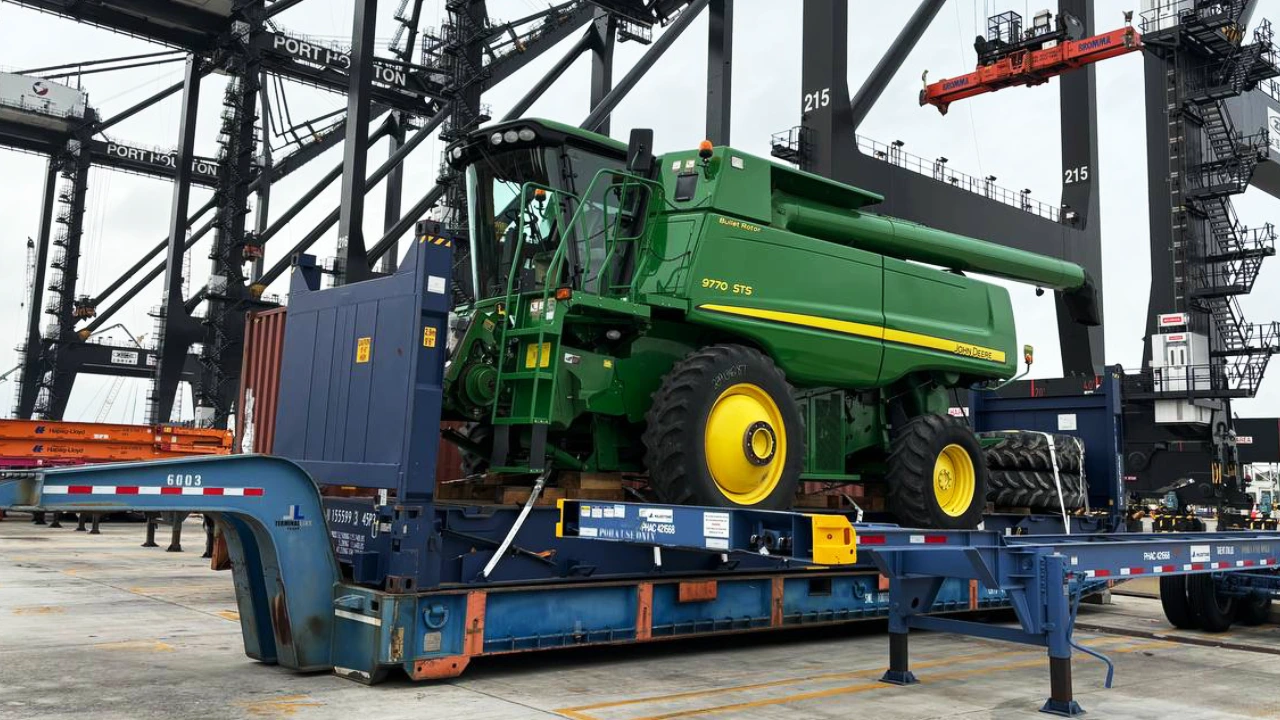
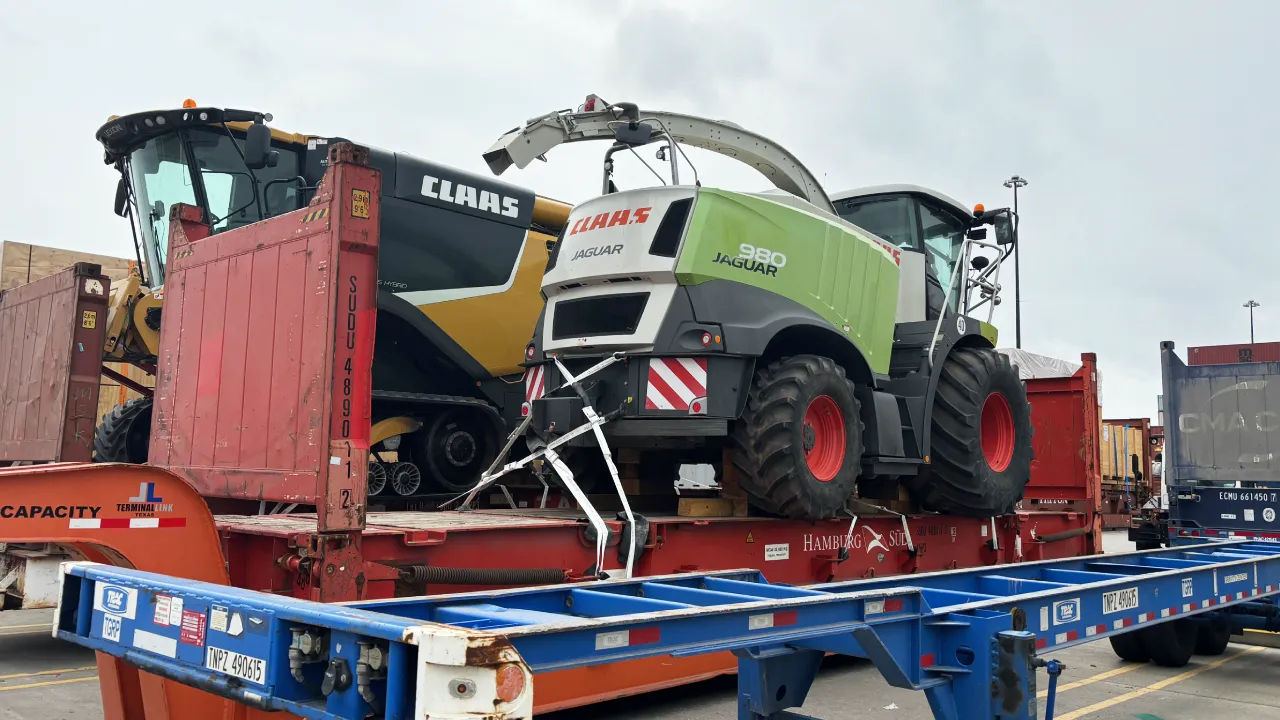
Flat rack shipping involves securing machinery to open-sided platforms that are loaded onto standard container ships.
- Out-of-gauge cargo: Equipment that exceeds standard dimensions incurs out-of-gauge (OOG) surcharges because the cargo blocks adjacent container slots on the vessel.
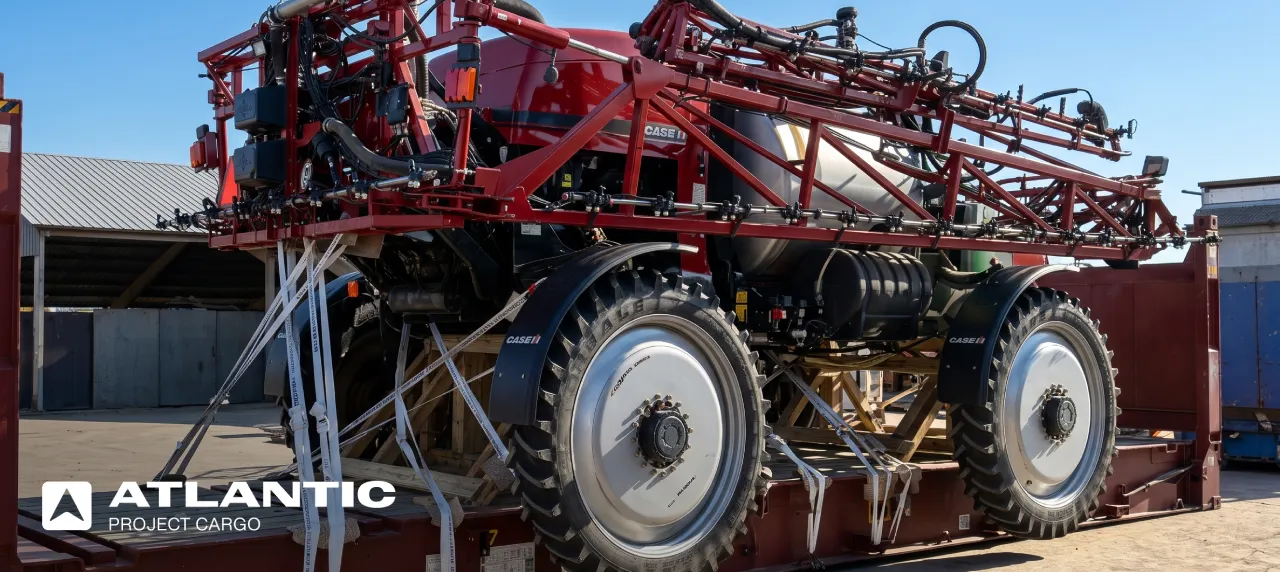
- Securing and lashing: Flat rack shipping requires specialized riggers to secure the machinery using heavy-duty chains and blocking.
- Crane handling: Port terminals charge high fees to lift loaded flat racks using specialized gantry cranes.
Breakbulk Freight Charges
Breakbulk shipping involves lifting massive, non-containerized machinery directly into the hull or onto the deck of a transport vessel.
- Crane operations: Moving massive mining equipment requires heavy-lift cranes, which assess high hourly operational rates.
- Project cargo handling: Breakbulk requires complex engineering plans and custom lifting points.
- Specialized loading: Labor costs are significantly higher due to the custom lashing required to secure the cargo to the vessel deck.
Container Freight Charges
Container shipping involves loading dismantled machinery or standard attachments into enclosed 20-foot or 40-foot steel boxes.
- Standard container transport: Full Container Load shipping offers the most standardized and predictable ocean freight rates.
- FCL and container-related costs: Buyers must pay for the labor to dismantle the machinery, load the machinery into the box, and block the equipment safely inside the container walls.
How Shipping Method Impacts Freight Costs
RoRo shipping typically offers the lowest handling fees for operable wheeled or tracked machinery. Flat rack and breakbulk methods incur significantly higher port handling and lashing charges due to crane requirements.
Key takeaway: The shipping method dictates the port handling requirements; selecting the wrong method for oversized machinery guarantees massive cost overruns.
Inland Transportation Costs
Inland transportation costs cover the specialized heavy haul trucking required to move heavy machinery from the seller’s origin location to the designated export port terminal. This initial movement requires highly specialized carriers.
When buyers purchase machinery, the pickup location dictates the complexity of the origin inland transport. An auction pickup often involves strict deadlines and requires trucking companies that can navigate crowded auction yards. A dealer pickup is generally more streamlined, as dealers possess loading ramps. A remote jobsite pickup may require dispatching mobile cranes to load inoperable equipment onto the transport trailer.
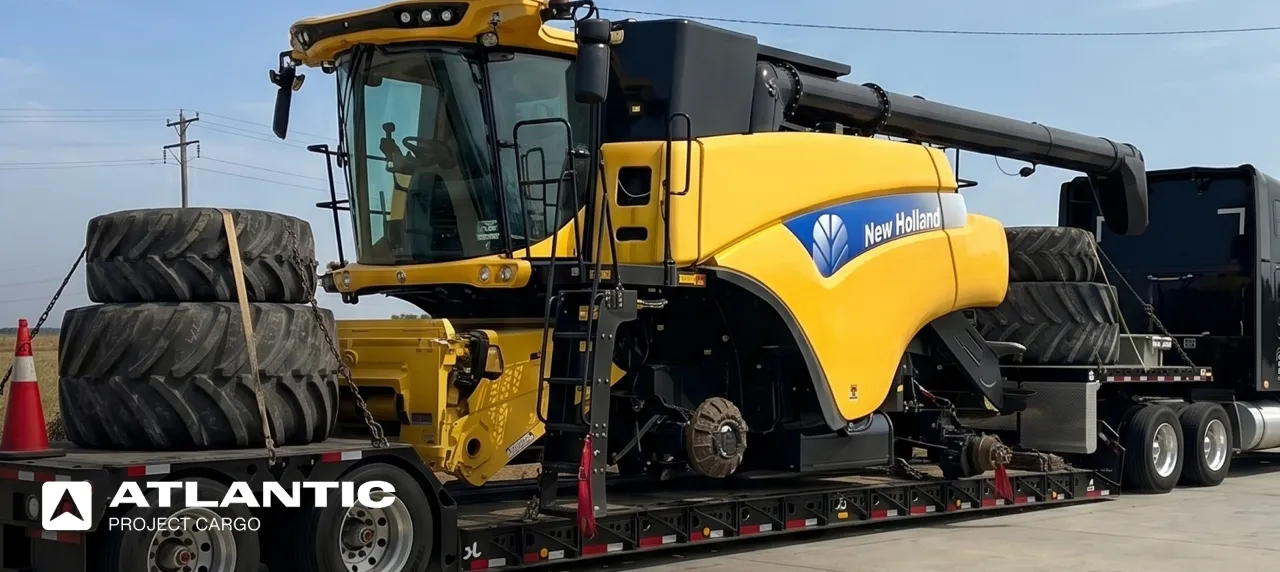
For oversized machinery like an articulated dump truck, Heavy Equipment Shipping inland transport requires heavy haul transportation. Moving wide or heavy loads requires state-issued oversized load permits, which cost money and restrict travel times. Extremely wide construction equipment also requires civilian or police escort vehicles, which add hundreds of dollars per day to the trucking invoice. Furthermore, regional transportation differences mean trucking a combine harvester through the narrow roads of the Northeastern United States costs significantly more than hauling the same machine across the flat highways of Texas.
Key takeaway: Origin inland trucking often represents the second-largest expense in the entire logistics budget due to the permits and specialized trailers required for heavy machinery.
Port Fees and Terminal Charges
Port fees and terminal charges are the administrative and physical handling costs assessed by the port authority and terminal operators to receive, store, and load heavy equipment onto the ocean vessel.
Heavy equipment buyers often overlook these fees because the fees are usually billed separately from the base ocean freight rate.
- Terminal Handling Charges: THC covers the physical movement of the machinery from the port gate to the resting yard, and eventually to the vessel side.
- Port handling fees: General administrative fees assessed by the port authority to maintain port infrastructure.
- Loading costs: The labor fees charged by stevedores (port workers) to drive or secure the equipment onto the ship.
- Crane fees: If the machinery is inoperable or shipping via flat rack, the terminal charges heavy-lift crane fees to hoist the equipment.
- Security charges: Ports assess International Ship and Port Facility Security fees to cover mandatory maritime security protocols.
- Port storage fees: Ports offer very limited free time. If machinery arrives too early, the terminal assesses daily storage penalties.
These fees are commonly overlooked because buyers assume the ocean carrier’s freight quote includes the origin port operations, which is rarely the case unless explicitly stated in the logistics contract.
Most Common Port-Related Expenses
Terminal Handling Charges and port loading fees are mandatory, non-negotiable expenses required to move machinery through international export terminals.
Customs, Documentation, and Compliance Costs
Customs, documentation, and compliance costs encompass the governmental fees, broker charges, and mandatory inspections required to legally clear heavy machinery across international borders.
Every international equipment shipment requires flawless paperwork. Moving machinery out of the United States requires export documentation fees to file the Electronic Export Information (EEI) via the Automated Export System. Buyers must hire experts in Customs Clearance for Heavy Equipment to navigate this process.
The customs brokerage fee covers the licensed professional who files the paperwork on the buyer’s behalf. At the destination, the buyer pays customs clearance fees to formally enter the machinery into domestic commerce. Depending on the machinery type, governments may require expensive import permits.
Agricultural and mining machinery faces strict biosecurity laws. Destination countries frequently require mandatory inspection requirements and pre-export agricultural cleaning requirements. If a used tractor arrives in Australia with soil on the tires, the Australian government will mandate extreme compliance-related charges for fumigation or deep cleaning.
Documentation issues, such as an incorrect VIN number on the commercial invoice, cause customs holds that multiply port storage costs exponentially.
Key takeaway: Investing in professional customs brokerage prevents documentation errors that cause expensive border delays and massive daily storage penalties.
Marine Insurance Costs
Marine insurance costs are the premium payments made to an underwriting agency to protect the financial value of the heavy equipment against loss, damage, or destruction during international transit.
Relying on the ocean carrier for financial reimbursement is a catastrophic financial mistake. Under the Carriage of Goods by Sea Act, ocean carriers often limit liability to just $500 per customary freight unit. If a $200,000 wheel loader sinks in the ocean, the carrier may only owe $500.
Why insurance matters is simple: primary cargo insurance pays out based on the true commercial value of the machinery.
What affects premiums is the total value of the equipment, the shipping route, and the shipping method. Enclosed container shipments usually secure lower insurance rates than open flat rack shipments exposed to saltwater. Typical coverage protects against total loss, transit collisions, and port handling damage.
Common risks for machinery include dropping during crane lifts, severe weather causing the equipment to break its lashing, or theft of valuable cab attachments.
Key takeaway: Insurance adds cost but can significantly reduce financial risk when shipping high-value agricultural or construction assets internationally.
Common Freight Charges for Oversized Equipment
Oversized equipment incurs specialized heavy equipment freight charges that standard palletized cargo never faces. Moving out-of-gauge project cargo requires highly specialized engineering and transport logistics.
When shipping a 120,000-pound crawler crane, buyers must budget for massive crane charges at both the origin and destination ports to lift the tracks and main body. Inland transport requires heavy haul permits for every state the truck crosses.
Wide loads require civilian or police escort vehicles to secure the highway. Before the truck ever leaves the yard, the logistics provider must conduct paid route surveys to ensure bridges can support the heavy load and overpasses are tall enough to clear the machinery.
Specialized handling requires hiring certified riggers to secure the machinery to multi-axle trailers. OOG cargo requirements on ocean vessels mean the machinery takes up the space of multiple standard containers, resulting in exponential ocean freight rate increases.
Finally, port restrictions may force the equipment to route through a more distant port that possesses the infrastructure required to lift super-loads, increasing the inland trucking costs.
Key takeaway: Oversized construction and mining equipment triggers mandatory dimensional and weight surcharges across every leg of the supply chain.
Hidden Freight Charges Equipment Buyers Often Miss
Hidden freight charges are the unexpected penalties, storage fees, and administrative costs that accrue when an equipment shipment experiences delays, documentation failures, or failed inspections.
These fees destroy transportation budgets. Understanding What is Demurrage and Detention in Shipping Terms is critical. Demurrage occurs when heavy equipment sits at the port terminal beyond the allowed free time before being loaded or after being unloaded. Detention fees occur when buyers hold onto specialized carrier equipment (like flat racks) for too long outside the port.
Other hidden costs include storage fees assessed by origin warehouses when vessels are delayed. Port congestion charges are implemented by major carriers like MSC or CMA CGM when vessels must wait outside crowded ports for days. Customs authorities assess inspection fees if they pull machinery for a physical exam. If an inland trucker arrives at the delivery site but no one is there to unload the machinery, they will assess re-delivery charges.
Furthermore, failing environmental checks results in massive cleaning and fumigation invoices. Simple typos require documentation corrections that incur administrative fees, and delayed pickup costs accumulate if the buyer cannot secure destination trucking promptly.
Most Common Hidden Freight Charges
Port demurrage, customs exam fees, mandatory agricultural cleaning, and delayed pickup storage charges represent the most common hidden expenses that inflate logistics budgets.
Key takeaway: Unexpected fees often occur when shipments are delayed or documentation is incomplete; rigorous pre-planning eliminates most hidden charges.
Why Freight Quotes and Total Landed Costs Are Different
A base freight quote covers only a fraction of the logistics process, whereas the total landed cost represents the actual final financial investment required to put the machinery to work at the destination jobsite.
Freight quote limitations exist because most forwarders initially quote just the terminal-to-terminal ocean rate. However, additional transportation expenses like heavy haul trucking, oversized load permits, and Drayage Trucking must be added to the budget. Customs costs, including tariffs and broker fees, are never included in a base freight quote. Insurance premiums must be purchased separately. Finally, massive destination fees, including local port unloading, import taxes, and final delivery trucking, round out the true cost.
| Expense Element | Included in Standard Freight Quote | Included in Total Landed Cost |
|---|---|---|
| Ocean Vessel Transit | Yes | Yes |
| Origin Heavy Haul Trucking | Rarely | Yes |
| Port Terminal Handling | Sometimes | Yes |
| Cargo Insurance | No | Yes |
| Import Duties & Taxes | No | Yes |
| Final Destination Trucking | No | Yes |
Key takeaway: Equipment buyers must demand comprehensive, door-to-door cost estimates rather than making purchasing decisions based on port-to-port ocean quotes.
Cost Breakdown Example: Shipping a Tractor Internationally
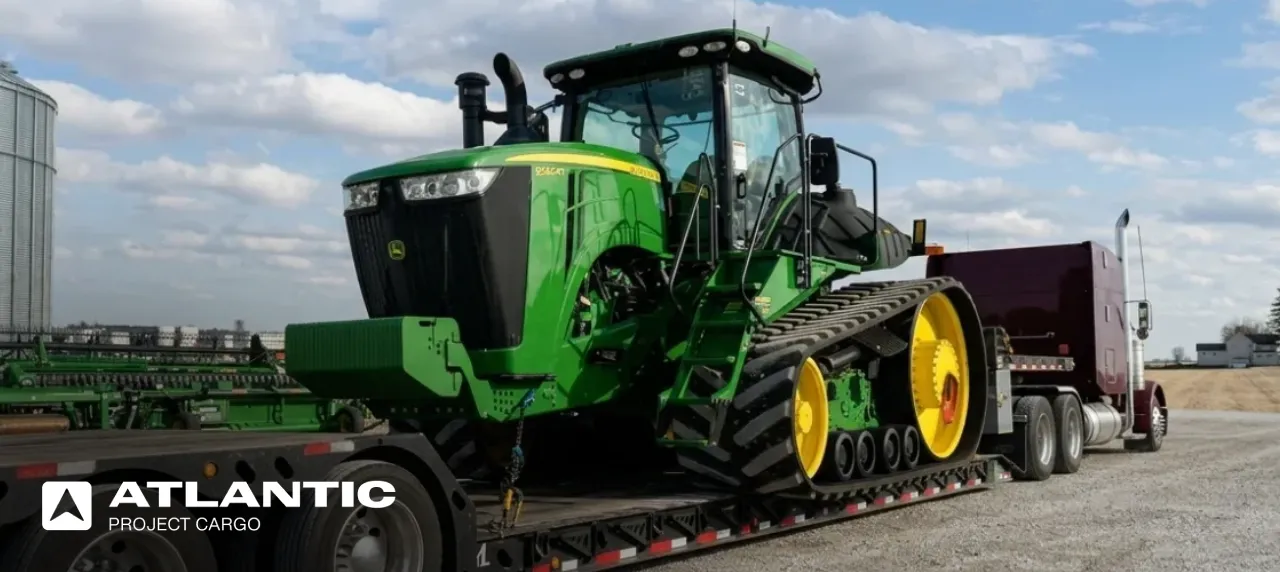
To demonstrate how international equipment shipping cost structures work, this scenario analyzes exporting a 20,000-pound agricultural tractor from a dealer in Iowa to a buyer in Germany via RoRo shipping.
| Cost Category | Included in Total Transportation Budget |
|---|---|
| Inland Transportation | Flatbed trucking from Iowa to the Port of Baltimore. |
| Export Preparation | Power washing to meet European biosecurity standards. |
| Port Charges | Origin RoRo terminal receiving fee. |
| Ocean Freight | Base ocean rate calculated per cubic meter (CBM). |
| Insurance | Marine insurance premium based on tractor invoice value. |
| Customs | Export AES filing fee and German import clearance fee. |
| Final Delivery | European inland trucking from Bremerhaven to the farm. |
Because the tractor is wheeled and operational, the buyer avoids expensive crane handling fees, making RoRo the most cost-effective method for this agricultural equipment.
Key takeaway: RoRo shipments for operable agricultural equipment minimize port handling fees but still require extensive budgeting for inland transport and biosecurity cleaning.
Cost Breakdown Example: Shipping an Excavator Internationally
Shipping a 75,000-pound crawler excavator from Texas to Australia introduces massive heavy machinery shipping cost increases due to the equipment’s physical size and tracks.
| Cost Category | Included in Total Transportation Budget |
|---|---|
| Inland Transportation | Multi-axle heavy haul trucking, state permits, and escort vehicles. |
| Export Preparation | Intensive biosecurity dismantling and extreme pressure washing. |
| Port Charges | Heavy-lift crane fees to load the excavator onto a flat rack. |
| Ocean Freight | Flat rack ocean freight rate plus out-of-gauge space surcharges. |
| Insurance | Comprehensive all-risk cargo insurance. |
| Customs | U.S. export filing and Australian import brokerage and quarantine inspections. |
| Final Delivery | Specialized Australian heavy haul transport to the mining site. |
This scenario highlights oversized cargo expenses. The additional transportation requirements, such as heavy haul permits and flat rack crane loading, drastically change the cost structure compared to standard wheeled tractors.
Key takeaway: Tracked construction and mining equipment triggers expensive heavy haul trucking rates, crane fees, and out-of-gauge vessel surcharges.
Which Freight Charges Can Be Controlled and Which Cannot?
When building a logistics budget, equipment buyers must understand which freight charges they can negotiate and optimize, and which fees are legally fixed by governments or port authorities.
| Can Often Be Reduced (Controllable) | Usually Fixed (Non-Negotiable) |
|---|---|
| Shipping method (Choosing RoRo over Flat Rack). | Government fees (Import tariffs and taxes). |
| Port selection (Routing through cheaper regional ports). | Duties (Based strictly on HS commodity codes). |
| Transportation timing (Avoiding peak season surges). | Mandatory inspections (Customs or ag exams). |
| Storage avoidance (Planning exact port delivery times). | Regulatory requirements (Export title validations). |
| Inland trucking rates (Bidding out to multiple carriers). | Terminal Handling Charges (Set by the port authority). |
Providing practical budgeting guidance means focusing time on the controllable column. Buyers who attempt to negotiate government import tariffs waste time, but buyers who proactively schedule inland trucking to avoid port storage fees save thousands of dollars.
Key takeaway: Buyers optimize transportation budgets by planning efficient shipping routes and avoiding storage penalties, rather than trying to negotiate fixed government tariffs.
How to Reduce Heavy Equipment Freight Charges
Reducing your equipment shipping cost requires strategic planning long before the machinery leaves the origin yard.
- Choosing the right shipping method: Utilize Ocean Freight Services that offer RoRo capabilities whenever the machinery is drivable to avoid heavy-lift crane fees.
- Planning shipments early: Booking vessel space weeks in advance secures better rates and avoids last-minute market spot-pricing surges.
- Avoiding storage charges: Synchronize your inland heavy haul trucking delivery perfectly with the port’s narrow receiving window to prevent daily demurrage penalties.
- Preparing equipment correctly: Dismantle easily removable attachments (like excavator buckets) to reduce the overall dimensional volume, which directly lowers the ocean freight rate.
- Consolidating shipments: If purchasing multiple machines, ship the equipment together to split the origin and destination customs brokerage fees.
- Working with experienced freight forwarders: Partner with experts who understand NVOCC vs Freight Forwarder dynamics and can secure wholesale ocean rates for out-of-gauge project cargo.
Key takeaway: The most effective way to reduce heavy equipment shipping costs is to dismantle attachments to reduce dimensional volume and strictly control the port delivery schedule.
Frequently Asked Questions
The physical dimensions (length, width, height) and total weight of the machinery have the greatest impact on freight charges. Larger, heavier equipment requires specialized heavy haul trucking, heavy-lift port cranes, and out-of-gauge ocean vessel space, all of which multiply the base shipping cost.
Ocean freight is usually the largest single line item, but it rarely represents the majority of the total landed cost. When combining origin heavy haul trucking, port handling fees, cargo insurance, and destination import tariffs, the ocean freight rate often accounts for less than half of the total logistics budget.
Buyers must budget for Terminal Handling Charges (THC) covering the physical movement of the machinery at the port, heavy-lift crane fees if the machinery is inoperable, port security fees, and documentation fees assessed by the terminal operator.
The most damaging hidden charges are demurrage and detention (storage fees for lingering at the port), mandatory customs exam fees, agricultural cleaning and fumigation fees for soiled machinery, and administrative fees for correcting documentation errors.
Yes, purchasing a primary all-risk cargo insurance policy adds an upfront premium to the shipping budget. However, because ocean carriers legally limit their liability to as little as $500 per unit under international maritime law, this insurance is mandatory to protect the commercial value of heavy machinery.
Buyers can reduce charges by dismantling attachments to shrink the equipment’s dimensional volume, selecting RoRo shipping over flat rack shipping for operable machinery, avoiding port storage fees through precise delivery timing, and utilizing a Heavy Equipment Shipping Cost Quote to compare routing options.
A freight cost (or freight quote) typically only covers the physical transportation from port to port. The total landed cost includes the freight cost plus origin trucking, origin port fees, insurance, export/import customs brokerage, government duties, taxes, and final inland delivery to the jobsite.
Need Help Estimating Heavy Equipment Shipping Costs?
Understanding the complexities of international freight charges prevents unexpected invoices and protects your purchasing budget. Attempting to navigate heavy haul permits, port handling fees, and customs duties without expert guidance exposes your business to massive financial risk.
Whether you are importing agricultural equipment from Europe, exporting construction equipment to South America, relocating mining machinery to Australia, or moving heavy industrial equipment globally, Atlantic Project Cargo provides comprehensive international transportation planning. We calculate precise, door-to-door landed costs so you can make informed purchasing decisions without fearing hidden terminal fees.
Avoid unexpected logistics costs and secure your equipment’s journey with true project cargo experts.
Get Your Free Quote Today!
Read More
Victoria Moseicuka
Nick Yadryshnikov
Victoria Moseicuka