
Hours of operations:
9AM - 5PM / UTC -5 (EST)

Top Ports in Colombia: Major Shipping Hubs for Heavy Equipment & International Cargo

October 12, 2026
Shipping Quote
Customs Duties
Drayage Rate
Do you already own this equipment?

You Can Request a New Quote Every 15 Minutes

Please wait or contact us at [email protected]

Thank you for Choosing Us!

Looking to buy or sell heavy equipment?
With JumboBee, you can trade online with financing options and worldwide shipping.

Check Inventory
Calculate Import Duties
Get a free, no-obligation estimate of your import duties!
Calculate Import Duties
Get a Drayage Estimate
Get a free drayage estimate tailored to your exact needs!
Check a Drayage Rate
Home Insights Top Ports in Colombia: Major Shipping Hubs for Heavy Equipment & International Cargo
Reviewed by
Victoria Moseicuka Chief Operating Officer

Key Takeaways


  • Colombia has two coasts, so shippers have a real routing choice. Cartagena, Barranquilla, Santa Marta, and Puerto Antioquia serve the Caribbean (US Gulf/East Coast, Europe). Buenaventura is the only major Pacific gateway (Asia, US West Coast).
  • The destination matters more than the coast. Bogotá, Medellín, and Cali all sit inland behind mountains. The final destination usually decides the best port more than ocean distance does.
  • Cartagena and Buenaventura are the main gateways. Cartagena handled about 4 million TEU in 2025 and leads on container connectivity and transshipment. Buenaventura (about 1.7 million TEU) is the main port for Cali, the southwest, and Asia-origin cargo.
  • The smaller ports fill specialized roles. Barranquilla suits industrial cargo but has river-related draft limits. Santa Marta is the deepest natural port and focuses on coal and bulk. Puerto Antioquia, newly in service since 2026, is the closest Caribbean port to Medellín, but its heavy-lift capability should be confirmed first.
  • The inland heavy-haul leg often costs more than the sea crossing. Mountain roads, permits, route surveys, and bridge or weight limits can make the nearest port on the map the wrong choice operationally.
  • Choose the port based on total delivered cost, not the ocean rate. Weigh cargo dimensions, shipping method, origin, vessel availability, terminal capability, and the inland route together. Port selection and inland planning are one decision.

Colombia’s principal maritime gateways are Cartagena and Buenaventura, backed by Barranquilla and Santa Marta on the Caribbean coast, and by the new Puerto Antioquia on the Gulf of Urabá. What makes Colombia unusual is its two-coast geography: Cartagena, Barranquilla, Santa Marta, and Puerto Antioquia sit on the Caribbean, Buenaventura sits on the Pacific and several of the country’s biggest markets, Bogotá, Medellín, and Cali, lie inland behind mountains. For heavy equipment, that means the right port is rarely just the nearest one; the whole route, from the ocean leg to the mountain haul, decides the real cost.

Colombia is the only South American country with coastlines on both the Caribbean and the Pacific, which gives shippers a genuine routing choice that its neighbours do not have. That choice matters most for oversized and heavy cargo, because the inland leg from the coast to an Andean city can cost more and demand more planning than the sea crossing itself. This guide profiles the major ports, explains the Caribbean-versus-Pacific decision, and shows how the final destination, not the map, should drive port selection.

Quick Facts About Colombia's Major Ports

Here is the short version before the detail. The biggest ports in Colombia are split across two coasts, and the table sums up what each of the main Colombian ports does.

Category Port / Information
Major Caribbean gateway Port of Cartagena
Major Pacific gateway Port of Buenaventura
Major container hub(s) Cartagena (Caribbean), Buenaventura (Pacific)
Key Magdalena River-connected port Port of Barranquilla
Major bulk / specialized cargo port Port of Santa Marta (coal, bulk; deepest natural port)
Newest Caribbean port Puerto Antioquia (Gulf of Urabá; regular services since 2026; closest Caribbean port to Medellín)
Main inland commercial centers Bogotá, Medellín, Cali
Main international trade connections United States, Asia-Pacific, Europe, Latin America

Caribbean vs Pacific Shipping Routes in Colombia

The Colombia shipping ports worth knowing serve different trade directions depending on their coast, and the coast you route through shapes everything that follows. These seaports in Colombia split into a Caribbean group and a single Pacific gateway. The Caribbean ports face the US Gulf and East Coast, the Caribbean itself, the Atlantic, and Europe; the Pacific port faces the west coast of the Americas and Asia. That single geographic fact is the starting point for any Colombia shipment.

On the Caribbean Sea side, Cartagena, Barranquilla, and Santa Marta handle the bulk of trade with North America and Europe, and Cartagena in particular is a major transshipment hub connected to hundreds of ports worldwide. For cargo leaving the US Gulf or East Coast, a Caribbean routing is usually the shorter and simpler ocean leg. Farther west on the Caribbean coast, Puerto Antioquia on the Gulf of Urabá began receiving regular vessel services in 2026 and adds a Caribbean option much closer to Medellín and northwestern Colombia.

On the Pacific Ocean side, Buenaventura stands largely alone as the country’s western gateway, handling a large share of Colombia’s seaborne trade and connecting it to Pacific shipping networks and Asia. For Asia-origin cargo, or for destinations in the southwest around Cali, the Pacific routing through Buenaventura often makes the most sense.

Factor Caribbean Coast Pacific Coast
Main ports Cartagena, Barranquilla, Santa Marta, Puerto Antioquia Buenaventura
Major trade directions US Gulf and East Coast, Caribbean, Europe Western Americas, Asia-Pacific
US routing considerations Shorter ocean leg from Gulf and East Coast Favors US West Coast origins
Asia-Pacific connectivity Available via the Panama Canal; less direct than Pacific routing Direct Pacific services
Major inland destinations Bogotá, Medellín, and the north Cali and the southwest
Key logistics considerations Strong container and transshipment network Single main gateway; congestion can matter

Actual vessel services and carrier availability change over time, so the specific routing for a shipment should always be confirmed against current schedules rather than assumed from the coast alone.

Why Port Selection Matters for Heavy Equipment and Project Cargo

Among the international ports in Colombia, the best one for heavy equipment delivers the lowest total logistics cost, which is rarely the one with the cheapest ocean freight. Project cargo needs a different selection process than a container of consumer goods, because the constraints shift from the sea leg to the handling and the haul.

The factors that decide it include the equipment’s dimensions and weight, the shipping method it requires, and vessel availability on the route, but also the terminal’s handling capability, whether it can take breakbulk and project cargo at all, any heavy-lift crane requirement, and the port charges. Then comes the part that often dominates the total: the inland heavy-haul move, the route restrictions along it, and the final delivery to site. A machine landed at the cheapest port can still cost the most overall if that port sits at the wrong end of a long, difficult mountain haul.

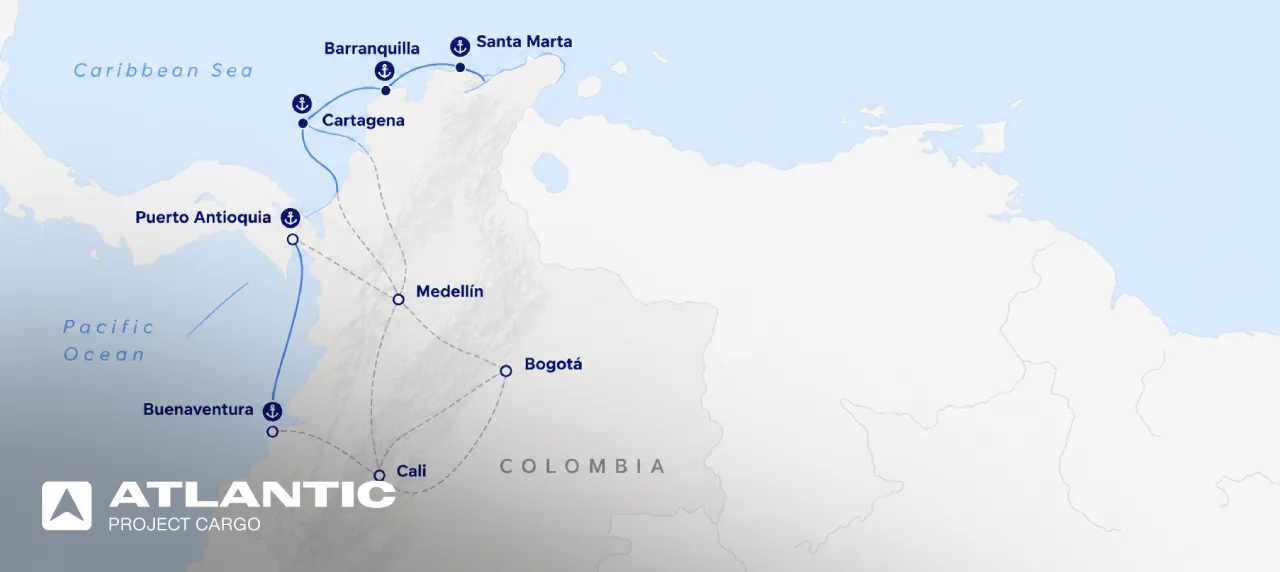
Map of Major Ports and Inland Destinations in Colombia

The geography divides cleanly. Three Caribbean ports sit along the northern coast, with Puerto Antioquia farther west on the Gulf of Urabá; Buenaventura sits alone on the Pacific, and the three largest inland markets, Bogotá in the central highlands, Medellín in the northwest, and Cali in the southwest, all lie behind mountain ranges. The reason the map matters is that no coastal port is truly close to these cities in heavy-haul terms: every route inland climbs, so the port that looks nearest on paper is not always the one that delivers a machine most cheaply or safely.

Quick Comparison of Colombia's Major Ports

Port Coast Containers Breakbulk / Project Cargo Inland Connectivity Best Suited For
Cartagena Caribbean Very high Yes Road to the interior Container and transshipment cargo, Atlantic routings
Buenaventura Pacific High Yes Road to Cali and the southwest Pacific and Asia trade, southwestern destinations
Barranquilla Caribbean Moderate Yes (industrial focus) Road and Magdalena River Industrial and bulk cargo; draft-restricted
Santa Marta Caribbean Low Limited; confirm project-cargo capability Road; rail mainly for coal and some containerized and general cargo Coal and bulk; the only public multipurpose Caribbean port with rail
Puerto Antioquia Caribbean (Gulf of Urabá) Growing; new services from 2026 General cargo, vehicles, and RoRo; confirm project-cargo handling Road to Medellín; still developing Cargo for Antioquia, Medellín, and northwestern Colombia

Capabilities differ across the cargo ports in Colombia and by terminal within each complex, and they change over time, so any specific handling requirement should be confirmed with the operator before booking.

Major Ports in Colombia

The five profiles below run from the two principal gateways to the specialized Caribbean ports, ending with the newest, Puerto Antioquia. Cartagena and Buenaventura carry the most detail because they matter most to international and heavy-equipment cargo.

1. Port of Cartagena

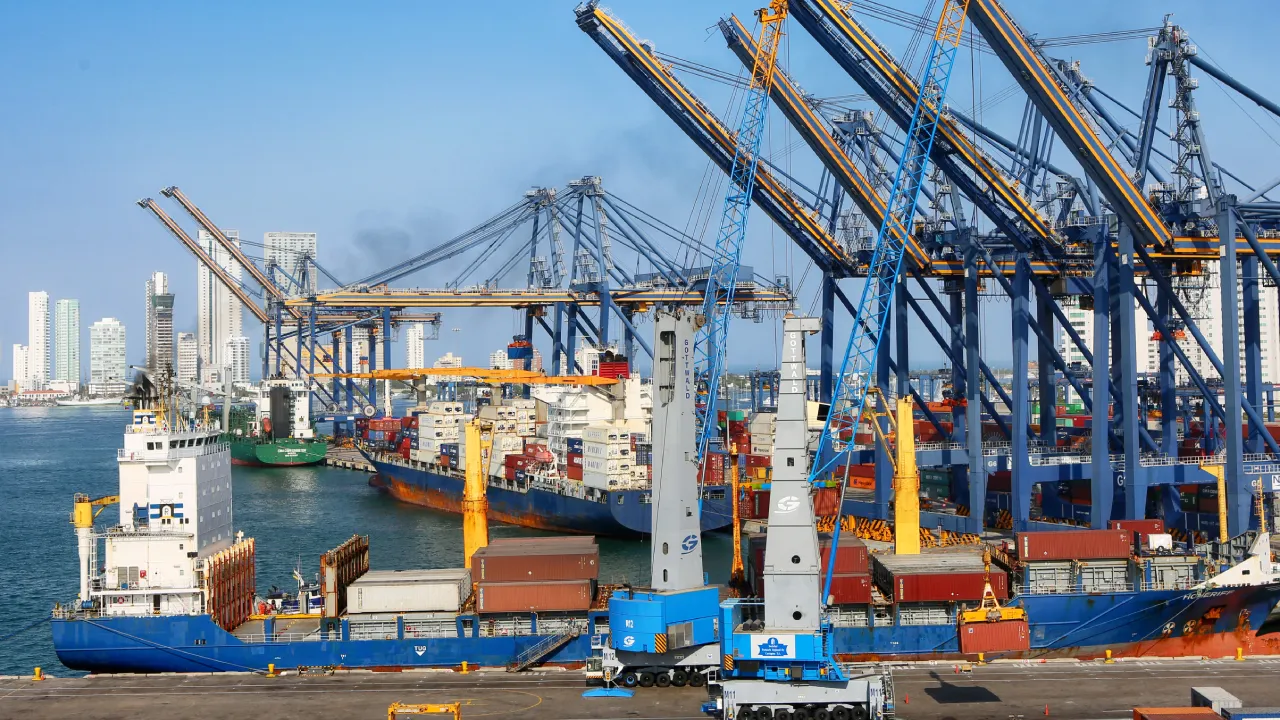
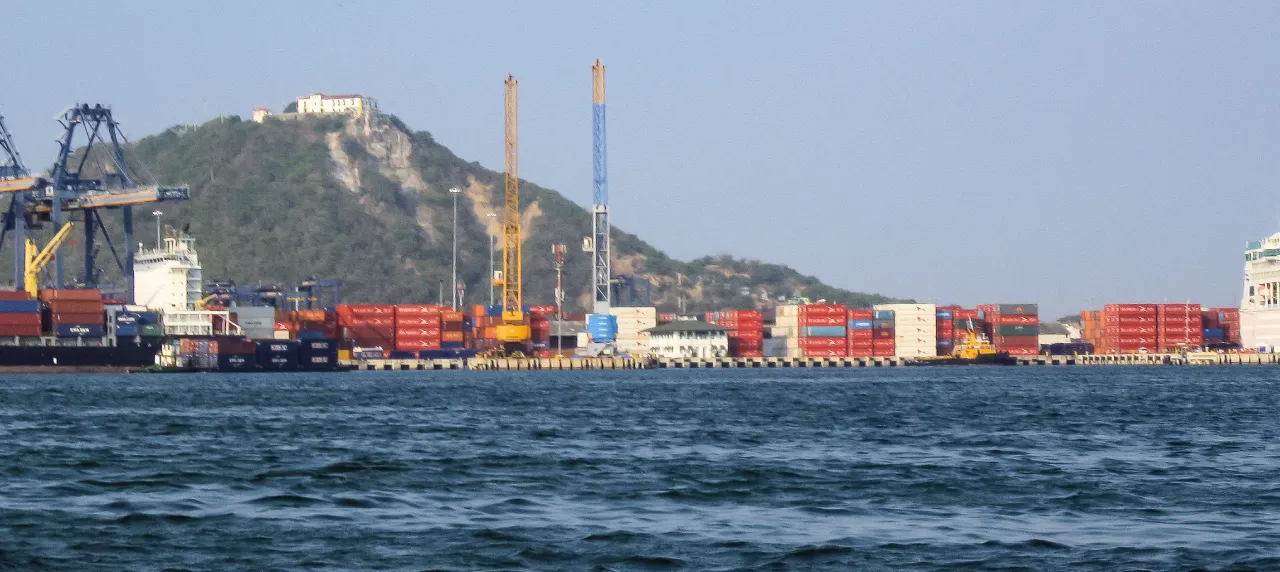
Cartagena is Colombia’s principal container port and the largest transshipment hub in the Caribbean, on the northern Caribbean coast at Cartagena Bay. Its terminals, chiefly SPRC and Contecar under Grupo Puerto de Cartagena, handled about 4 million TEU in 2025, a record for the port, and according to ECLAC it is the port company with the highest container traffic in Latin America and the Caribbean. Contecar alone handled about 2.7 million TEU that year and is equipped for the largest vessels. The port connects to hundreds of ports worldwide.

For US-origin and Atlantic or Caribbean-route cargo, Cartagena is often the natural entry point, both for its service frequency and for its position near the Panama Canal transoceanic routes. Its container connectivity is the deepest in the country, and its terminals handle general and, at Contecar, RoRo cargo alongside containers.

Strong container connectivity does not automatically make Cartagena the best terminal for every oversized piece, though. A shipment’s specific project-cargo or heavy-lift requirement, and the inland route to its final site, still need checking, because a machine bound for Medellín or the southwest may be better served elsewhere despite Cartagena’s scale. For a machine destined for the central interior, however, Cartagena’s combination of service choice and road access to the interior frequently makes it the practical choice.

2. Port of Buenaventura

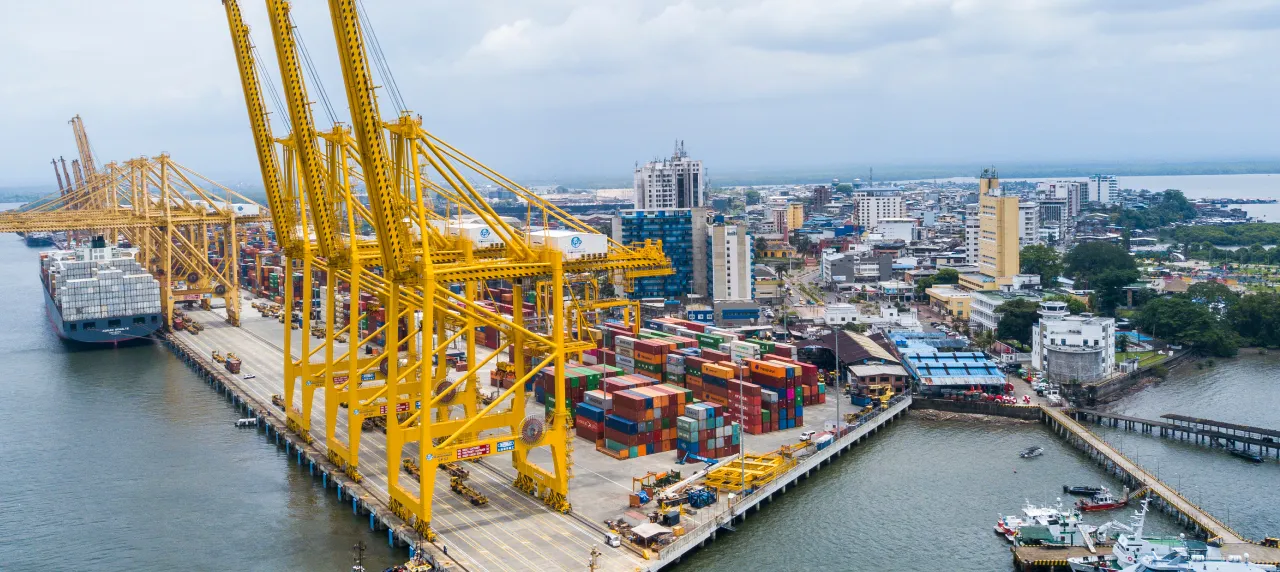
Buenaventura is Colombia’s main Pacific port and its gateway to Asia, centred on Cascajal Island in the Valle del Cauca department. It handles a large share of the country’s seaborne trade and moved about 1.7 million TEU in 2025 through terminals including SPRBUN, TCBUEN, and Aguadulce, and its container terminals draw calls from major global lines. Beyond containers, the port handles dry and liquid bulk, breakbulk, and RoRo cargo such as vehicles and machinery.

What makes Buenaventura strategically different from the Caribbean gateways is its coast. For cargo coming from Asia or from the US West Coast, the Pacific routing avoids the longer haul around to the Caribbean side, and for destinations in the southwest, above all Cali, Buenaventura is much closer than any northern port. That proximity to Cali and the Valle del Cauca industrial region is its defining advantage.

Its main limitations are that it is effectively the country’s only major Pacific gateway, so it carries heavy traffic and can face congestion, and that the road corridor up to the interior is demanding. The August 2026 earthquake briefly illustrated this exposure, causing road disruptions and temporary restrictions on empty-container intake at two terminals. For machinery bound for Cali and the southwest, Buenaventura is usually the stronger option; for the central and northern interior, a Caribbean port often wins despite the coast.

The August 2026 earthquake briefly illustrated this exposure, causing road disruptions and temporary restrictions on empty-container intake at two terminals.

Cartagena vs Buenaventura: Which Port Should Importers Choose?

Neither port is universally better; the right one depends on the origin, the cargo, and above all the destination. Cartagena leads on container connectivity and Atlantic-route trade, while Buenaventura owns the Pacific and the southwest.

Factor Cartagena Buenaventura
Coast Caribbean Pacific
Main trade directions US Gulf and East Coast, Caribbean, Europe Asia-Pacific, western Americas
US connectivity Strong from Gulf and East Coast Favors US West Coast origins
Asia-Pacific connectivity Via the Panama Canal; less direct than Pacific Direct Pacific services
Container services Widest in the country Strong, Pacific-focused
Heavy / project cargo capabilities Established, with RoRo at Contecar Breakbulk, bulk, and RoRo handling
Inland destinations Bogotá and the north; Medellín (alongside Puerto Antioquia) Cali and the southwest
Best suited for Atlantic-route cargo and central or northern interior Asia and West Coast origins, southwestern interior

The decision comes down to where the cargo starts, which vessel service is available, the machine’s dimensions and shipping method, the final destination, the inland route, and the total logistics cost. A US Gulf-origin machine bound for Bogotá often favours Cartagena; an Asia-origin machine bound for Cali often favours Buenaventura. Origin and destination usually settle it before the ocean rate does.

3. Port of Barranquilla

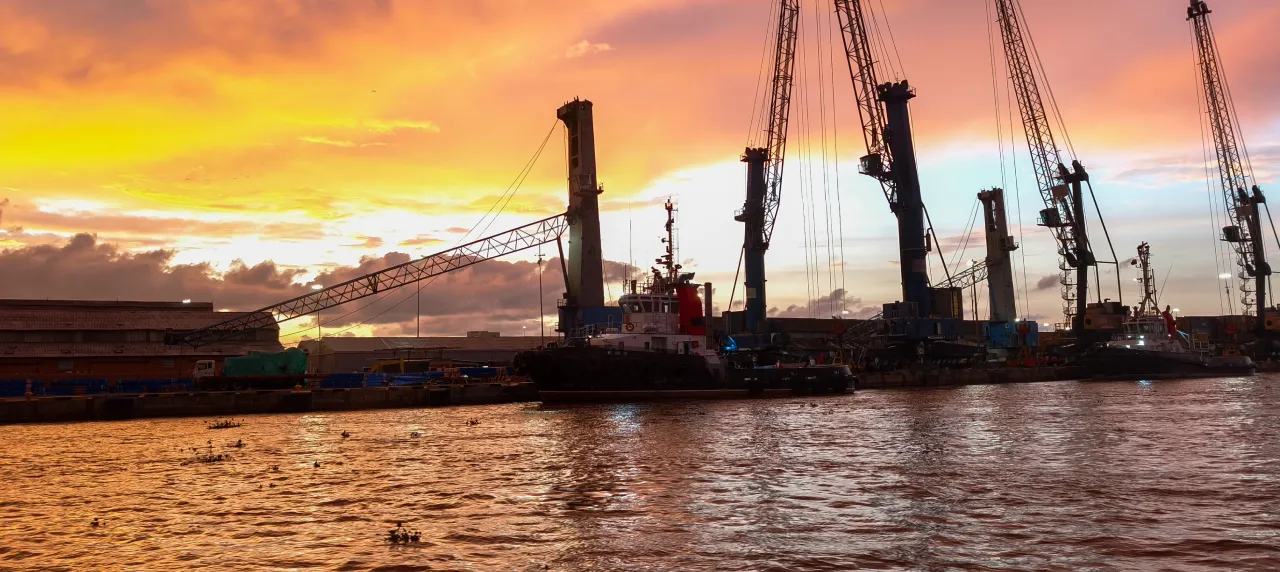
Barranquilla is a Caribbean industrial port with a distinctive feature: its terminals sit along an access channel running roughly 20 kilometres up the Magdalena River, Colombia’s principal waterway, rather than on the open coast. That river location gives it a strong industrial and general-cargo role and an inland-waterway connection into the interior, and its terminals handle containers, bulk, liquid bulk, breakbulk, and project cargo for the surrounding industrial region.

The river is also its main constraint. The entrance channel is subject to constant sedimentation, and the authorized draft fluctuates with it, historically ranging from about 7.4 to 10.4 metres as set by Dimar notices, well below the deeper Caribbean ports, which limits the size of vessel it can take and requires ongoing dredging. For a shipper, that means Barranquilla can be an efficient choice for industrial and project cargo suited to its facilities, particularly when the river connection helps, but the draft restriction should be checked against the vessel and cargo before it is chosen over Cartagena.

Barranquilla is worth evaluating instead of Cartagena when the cargo fits its industrial and bulk strengths, when a shipper values the Magdalena River link into the interior, or when its specific services suit the routing. It is not a like-for-like substitute for Cartagena’s container scale.

4. Port of Santa Marta

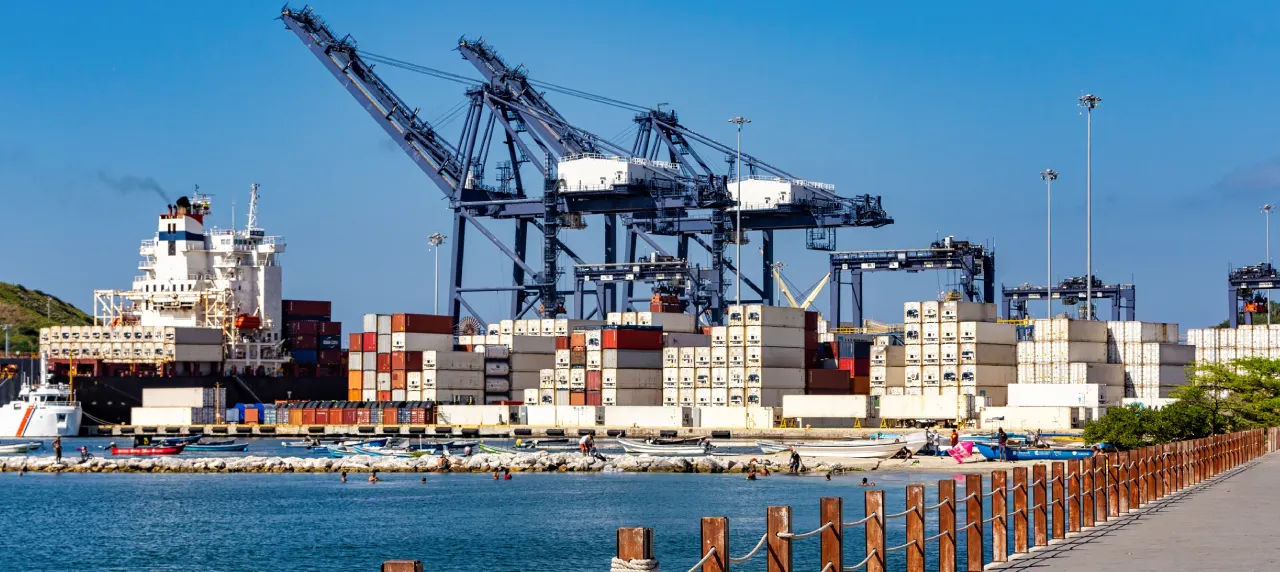
Santa Marta is a Caribbean port with two features that set it apart: it is Colombia’s deepest natural port, and it is the only public multipurpose port on the country’s Caribbean coast with a direct rail connection. Operated by Sociedad Portuaria de Santa Marta, it handles coal, bulk, containers, coffee, bananas, and general cargo. The wider Santa Marta port zone, which includes nearby coal terminals, ranks among the country’s largest by tonnage, although its container volume is modest, at about 128,000 TEU in 2025.

Its natural depth is a genuine advantage for large bulk vessels. The rail connection serves a narrower role than it may appear: the line to the port mainly carries coal from the mines in the Cesar department, and since 2019 a weekly train has moved containers and some general cargo between the port and La Dorada, on the Magdalena River. The rail network does not reach Bogotá and is not currently an option for heavy or oversized machinery, so for heavy equipment the inland leg from Santa Marta should be planned by road. Its coal and bulk terminals are a defining part of its business.

For heavy equipment and project cargo, Santa Marta’s relevance is more specialized than Cartagena’s. Its container and general-cargo operations are real but smaller, and cruise and perishable-export priorities can occasionally affect container handling. It is worth considering whether its depth or its location on the north coast offers a genuine advantage for the route, but its project-cargo capability should be confirmed rather than assumed.

5. Puerto Antioquia

Puerto Antioquia is Colombia’s newest Caribbean port, on the Gulf of Urabá near Turbo in the Antioquia department. It received its first large containership, the CMA CGM FIORDLAND, in February 2026, and began receiving regular vessel services that year. According to CMA CGM, the port sits about 300 kilometres from Medellín, much closer than Colombia’s other Caribbean terminals.

It is a multipurpose terminal designed to handle containers, vehicles, RoRo, general cargo, and bulk cargo, with an expected annual capacity of approximately 650,000 TEU and 50,000 RoRo units. CMA CGM and Maersk have both added services calling at the terminal, including Maersk services that previously called at Turbo, among them its US East Coast service.

For cargo bound for Antioquia, Medellín, and northwestern Colombia, Puerto Antioquia can shorten the inland leg considerably compared with Cartagena or Barranquilla. It is, however, a new port: its service network and inland road connectivity are still developing, and its handling capability for heavy-lift and oversized project cargo should be confirmed with the operator before a shipment is planned around it.

Colombia’s Pacific network also includes the smaller port of Tumaco in the southwest, but it handles mainly bulk and oil rather than significant container or project cargo, so for the heavy-equipment shipments this guide concerns, Buenaventura remains the Pacific option.

Best Colombian Ports by Cargo and Shipping Requirements

For heavy equipment shipments to Colombia, the right port depends more on how the cargo is configured and shipped than on the machine category alone. The table below works from the shipping requirement to the ports worth evaluating, and every recommendation stays conditional on the specifics.

Cargo / Shipping Requirement Port(s) to Evaluate Key Considerations
Containerized machinery Cartagena, Buenaventura Match the coast to the origin and destination
RoRo equipment Cartagena (Contecar), Buenaventura Confirm current RoRo service on the specific route
Flat rack cargo Cartagena, Buenaventura Craneable oversized pieces within platform limits
Breakbulk/project cargo Cartagena, Buenaventura, Barranquilla Verify project-cargo handling for the piece
Oversized equipment Depends on destination and inland route The inland haul often decides the port
Heavy industrial cargo Cartagena, Barranquilla Cartagena for larger vessels; Barranquilla for industrial cargo within its draft limits

These are starting points based on each port’s verified role. Whether a given port suits a specific machine still depends on its dimensions and weight, the vessel service available, the terminal’s handling capability, the origin, and the final destination. Where RoRo service is not currently offered on a route, it should not be assumed.

Which Colombian Port Is Best for Bogotá, Medellín and Cali?

Colombia’s biggest markets sit inland, so the destination usually drives the port choice more than the coast does. The table works from the city back to the ports worth evaluating.

Final Destination Ports to Evaluate What to Compare
Bogotá Cartagena, Barranquilla, Puerto Antioquia, Buenaventura Ocean service plus the inland route into the highlands; Puerto Antioquia is about 250 km closer by road than Cartagena
Medellín Puerto Antioquia, Cartagena, Barranquilla Port access and heavy-haul feasibility to the northwest; Puerto Antioquia's current services and handling
Cali Buenaventura, Cartagena Pacific versus Caribbean routing
Caribbean region Cartagena, Barranquilla, Santa Marta Proximity and local handling
Northern Colombia Santa Marta, Barranquilla Short inland legs on the north coast
Other inland projects Depends on site Route survey and total logistics cost

Bogotá sits in the central highlands and can be reached from either coast, so the choice turns on the origin and the specific inland route. Medellín, in the northwest, is usually served from the Caribbean, through Cartagena, Barranquilla, and now Puerto Antioquia, the closest Caribbean port to the city. Cali, in the southwest, is closest to Buenaventura and most often routed through it. In every case, the answer depends on road infrastructure, mountain crossings, cargo dimensions, heavy-haul feasibility, permits and restrictions, vessel availability, port capabilities, and total logistics cost, not on straight-line distance.

Inland Transportation of Heavy and Oversized Cargo from Colombian Ports

For heavy and oversized equipment, the inland leg is frequently the deciding factor in port selection, because the country’s geography turns the coast-to-city move into the hard part of the journey. Every major inland market sits behind mountains, so a machine landed on either coast usually faces a climb on winding roads with real constraints.

That move can involve lowboy and heavy-haul transport, oversized-load permits, route surveys to confirm a machine will physically pass, road-width and clearance checks, and bridge or weight restrictions along the way. Mountainous terrain, final-mile access to construction and industrial sites, and remote project locations all add cost and planning. The routes toward Bogotá, Medellín, and Cali each carry their own challenges, and a piece that moves easily to one city may be difficult to route to another.

This is why the closest port geographically is not always the most practical port operationally. A port that appears nearer on a map can sit at the start of a harder or more restricted heavy-haul route, while a port slightly farther away may offer a better road or a shorter mountain crossing. The core message runs through this whole guide: a lower ocean freight rate does not mean a lower total cost once terrain, road restrictions, vessel availability, and heavy-haul requirements are counted. Choosing the port and planning the inland route are one decision.

Shipping Heavy Equipment from the USA to Colombian Ports

For equipment shipped from the United States, the US origin shapes the Colombian destination port: a Gulf or East Coast origin usually favours a Caribbean routing into Cartagena, Barranquilla, Santa Marta, or Puerto Antioquia, while a West Coast origin can make the Pacific routing into Buenaventura more competitive.

Beyond origin, the destination port depends on the available ocean services, the Caribbean-versus-Pacific decision, the shipping method, the equipment’s dimensions, and the final destination in Colombia. The complete USA-to-Colombia process, covering import requirements, customs, detailed costs, and transit times, is a larger subject than port selection and belongs in a dedicated guide; here the focus stays on choosing the right destination port for the cargo and route. Our heavy equipment shipping guide covers the wider process from pickup to delivery.

How to Choose the Right Port in Colombia

With the coasts, the ports, and the inland routes understood, the choice comes down to a clear sequence. Working through these steps in order turns port selection into a route decision rather than a guess.

  1. Identify the cargo type. Fix what the machine is and how it is configured for shipping.
  2. Confirm dimensions and weight. Measure the actual unit, since size and weight drive method and handling.
  3. Determine the shipping method. Container, flat rack, RoRo, or breakbulk, matched to the machine.
  4. Identify the cargo origin. US Gulf, East, or West Coast, or elsewhere, since origin shapes the coast.
  5. Determine the final destination in Colombia. The inland endpoint drives much of the decision.
  6. Compare Caribbean versus Pacific routing. Weigh the ocean leg against the inland leg for each coast.
  7. Check current vessel availability. Confirm suitable services on the shortlisted routes.
  8. Verify terminal handling capabilities. Make sure the candidate port can handle the machine as it arrives.
  9. Evaluate the inland heavy-haul route. Survey the road or rail leg from each candidate port to the site.
  10. Compare the complete logistics cost. Choose based on the total of ocean, terminal, and inland, not the sea rate alone.

Frequently Asked Questions About Ports in Colombia

Colombia’s main ports are Cartagena, Buenaventura, Barranquilla, and Santa Marta. Cartagena, Barranquilla, and Santa Marta are on the Caribbean coast, while Buenaventura is the principal Pacific port. Cartagena and Buenaventura handle the largest share of international cargo. Puerto Antioquia, on the Gulf of Urabá, is the newest Caribbean port, with regular services since 2026.

Cartagena is Colombia’s largest container port and the biggest transshipment hub in the Caribbean, handling about 4 million TEU in 2025 across its terminals. Buenaventura is the largest port on the Pacific coast.

Cartagena is Colombia’s main Caribbean port, with the country’s deepest container connectivity and a major transshipment role linking it to hundreds of ports worldwide. Barranquilla, Santa Marta, and Puerto Antioquia serve additional Caribbean roles.

Buenaventura is Colombia’s main and effectively only major Pacific port, handling a large share of the country’s seaborne trade and serving as its gateway to Asia and the western Americas.

Neither is universally better. Cartagena suits Atlantic and Caribbean routings and cargo for the central and northern interior, while Buenaventura suits Asia and US West Coast origins and destinations in the southwest such as Cali. The origin and final destination usually decide.

It depends on the origin, the cargo, and the destination. Cartagena and Buenaventura both handle heavy and project cargo, and the better choice is the one whose combined ocean and inland route delivers the machine at the lowest total cost, not the lowest ocean rate.

Bogotá, in the central highlands, can be reached from either coast, so the choice depends on the origin and the inland route. Cartagena is the most common Caribbean option, with Barranquilla and the newer Puerto Antioquia also worth evaluating, and Buenaventura considered for Pacific-origin cargo.

Medellín, in the northwest, is usually served through the Caribbean ports. Puerto Antioquia, about 300 kilometres from the city, now offers the shortest Caribbean routing, while Cartagena and Barranquilla remain established options. Because Puerto Antioquia is new, confirm its current services and handling capability for your cargo. The heavy-haul route into the mountains matters as much as the port itself.

Buenaventura is the main port for Cali, as it sits closest to the city on the Pacific coast and keeps the inland leg shorter than any Caribbean routing. Cartagena may still be considered depending on the cargo and service.

Yes. Breakbulk shipping handles oversized machinery that cannot be containerized, at ports with project-cargo capability, chiefly Cartagena and Buenaventura, with Barranquilla an option for cargo within its draft limits. The machine’s dimensions and the destination determine the routing.

All five ports profiled here can receive US cargo, including Puerto Antioquia through Maersk’s US East Coast service. Gulf and East Coast origins usually route to the Caribbean ports, above all Cartagena, while West Coast origins can favour the Pacific routing into Buenaventura.

Need Help Choosing the Right Port in Colombia?

Atlantic Project Cargo evaluates the complete route rather than quoting the cheapest ocean rate in isolation. Working from your equipment type, dimensions, weight, origin, shipping method, the Caribbean-versus-Pacific decision, the candidate Colombian ports, the final destination, and the inland heavy-haul requirements, we identify the combination of export port, ocean route, destination port, and inland delivery that lands your machine at the best total cost.

For heavy and oversized cargo bound for Colombia, that whole-route view, from origin pickup through the mountain haul, is what separates a low freight quote from a low delivered cost. Tell us what you are shipping and where it needs to go, and we will map the coast, the port, and the route to match.

Get a Free Quote | Request a Shipping Estimate

Get Your Free Quote Today!

Read More

Heavy Equipment Shipping from the USA to Peru: Costs, Ports & Import Requirements
October 7, 2026

Heavy Equipment Shipping from the USA to Peru: Costs, Ports & Import Requirements

Heavy equipment can be shipped from the United States to Peru by RoRo, Flat Rack, Breakbulk, or container shipping, depending on the machine's dimensions, weight, mobility, and final destination. The...

Reviewed by Nick Yadryshnikov Nick Yadryshnikov
Read
Peloton vs. Flexport: What the FMC Demurrage and Detention Ruling Means for Equipment Shippers
September 24, 2026

Peloton vs. Flexport: What the FMC Demurrage and Detention Ruling Means for Equipment Shippers

Key Takeaways   An FMC administrative law judge dismissed Peloton’s $33.7 million claim, finding that store-door terms don’t automatically make the forwarder responsible for demurrage and detention charges. The FMC’s...

Reviewed by Nick Yadryshnikov Nick Yadryshnikov
Read
Guide to Heavy Equipment Shipping from the USA to Chile: Costs, Ports & Import Requirements
September 11, 2026

Guide to Heavy Equipment Shipping from the USA to Chile: Costs, Ports & Import Requirements

Heavy equipment can be shipped from the USA to Chile by RoRo, flat rack, container, or breakbulk shipping, and the right method depends on the machine's dimensions, weight, condition, destination,...

Reviewed by Nick Yadryshnikov Nick Yadryshnikov
Read
Share via