
Hours of operations:
9AM - 5PM / UTC -5 (EST)

Heavy Equipment Shipping from the USA to Peru: Costs, Ports & Import Requirements

October 7, 2026
Shipping Quote
Customs Duties
Drayage Rate
Do you already own this equipment?

You Can Request a New Quote Every 15 Minutes

Please wait or contact us at [email protected]

Thank you for Choosing Us!

Looking to buy or sell heavy equipment?
With JumboBee, you can trade online with financing options and worldwide shipping.

Check Inventory
Calculate Import Duties
Get a free, no-obligation estimate of your import duties!
Calculate Import Duties
Get a Drayage Estimate
Get a free drayage estimate tailored to your exact needs!
Check a Drayage Rate
Home Insights Heavy Equipment Shipping from the USA to Peru: Costs, Ports & Import Requirements
Reviewed by
Nick Yadryshnikov Senior Account Manager

Key Takeaways


  • The machine decides the method. RoRo suits running machines, flat rack suits oversized units within rack limits, breakbulk handles the largest and heaviest cargo, and containers suit compact machines and parts.
  • Ocean freight is only part of the cost. Inland trucking at both ends, port handling, customs, and permits often decide the total price, so choose the port with the lowest cost to the final site.
  • Callao is the main gateway, but not always the best choice. Matarani often suits southern Peru and mining projects, and Paita is closest for the north.
  • Check import rules before you buy. Peru requires an active RUC and a customs agent for imports over US$2,000. Duties depend on the HS code, sales taxes total 18%, and the IGV advance payment can reach 10% for first-time importers.
  • Used farm machinery must arrive clean. Since September 2024, SENASA requires used agricultural machinery to be cleaned before export, carry an APHIS phytosanitary certificate, and pass inspection on arrival, or it can be rejected.
  • Plan the inland leg early. Loads over 2.60 m wide, 4.10 m high, or 48 tons need Provías Nacional authorization, and routes into the Andes climb above 4,800 meters.

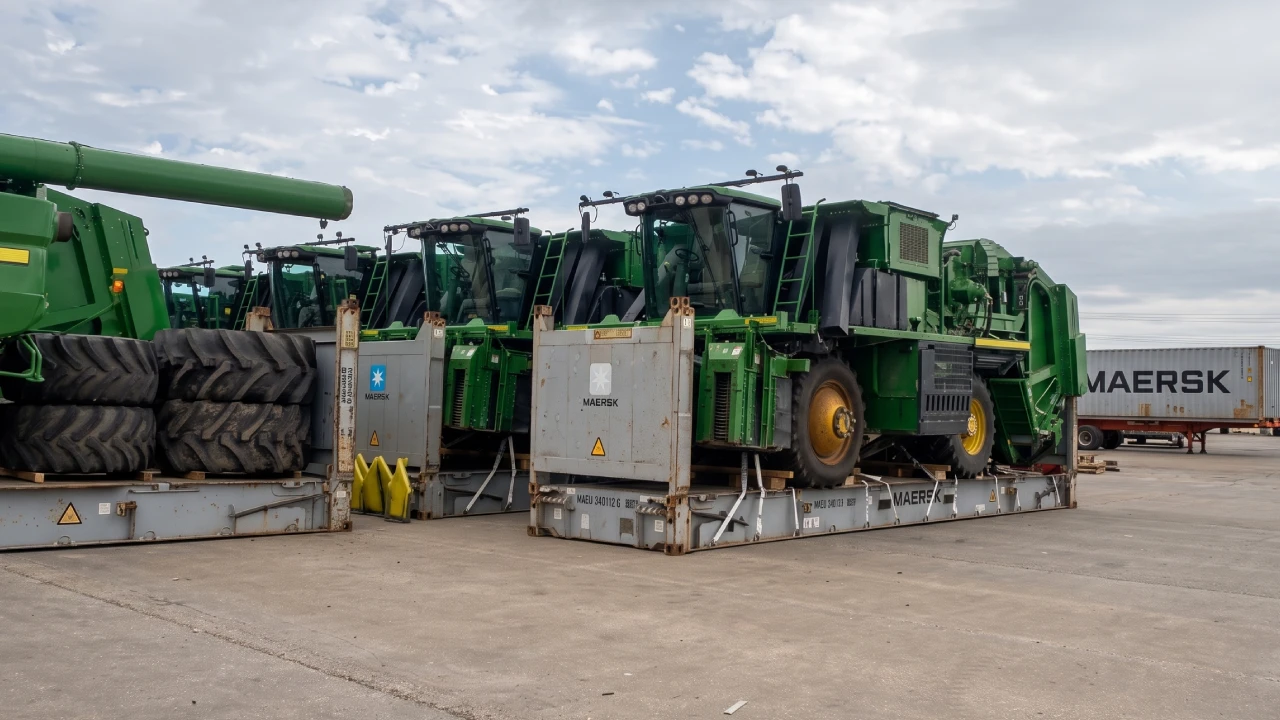
Heavy equipment can be shipped from the United States to Peru by RoRo, Flat Rack, Breakbulk, or container shipping, depending on the machine’s dimensions, weight, mobility, and final destination. The machine is trucked to a US export port, carried by ocean freight through the Panama Canal, discharged at a Peruvian port such as the Port of Callao, cleared through Peru customs, and delivered inland to the site.

Heavy equipment shipping to Peru covers excavators, loaders, tractors, combines, drilling rigs, and mining machinery. Callao is the main gateway, while Matarani, Paita, and Chancay serve specific regions and routes. Import planning matters as much as the freight booking, especially for used machinery, and the inland leg through the Andes can be the hardest part of the move.

This guide covers shipping methods, cost factors, transit time, US and Peruvian ports, import requirements, used equipment rules, preparation, and inland delivery.

How Heavy Equipment Shipping from the USA to Peru Works

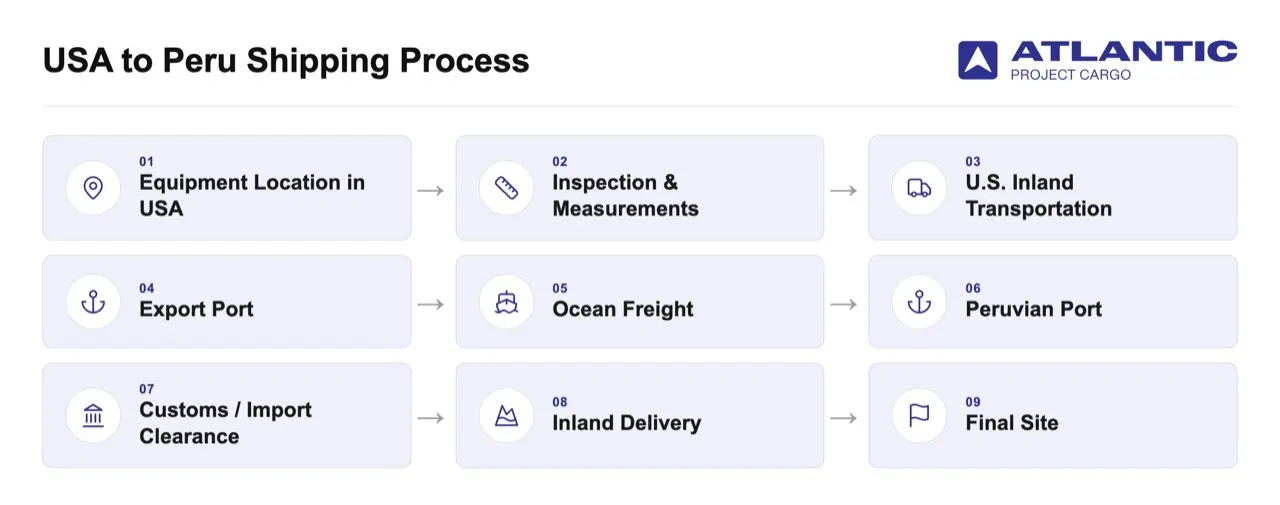
Heavy equipment shipping from the USA to Peru runs through nine stages, and a delay at any one of them delays the rest.

  1. Equipment location in the USA: the dealer, auction yard, farm, or job site.
  2. Inspection and measurements: actual dimensions, weight, condition, and serial number.
  3. US inland transportation: trucking to the export port, with permits if oversized.
  4. Export port: receiving, export filing, and loading.
  5. Ocean freight: usually through the Panama Canal, though some RoRo sailings go around South America via Brazil and Argentina.
  6. Peruvian port: discharge and terminal handling.
  7. Customs and import clearance: declaration, duties and taxes, and any inspection.
  8. Inland delivery: trucking from the port, often into the Andes.
  9. Final site: unloading at the mine, farm, or construction site.

What Heavy Equipment Can Be Shipped to Peru?

Heavy machinery shipping to Peru covers almost any machine, from attachments to mining trucks:

  • Construction equipment: excavators, bulldozers, wheel loaders, and backhoes.
  • Lifting equipment: mobile and crawler cranes.
  • Agricultural equipment: tractors, combines, and sprayers.
  • Mining machinery: haul trucks, crushers, and drilling equipment.
  • Power and industrial machinery: generators and processing equipment.
  • Attachments: buckets, headers, breakers, and parts.

The category alone does not decide the method. Dimensions, weight, running condition, and configuration matter more: a running wheel loader can drive onto a RoRo vessel, but the same loader with a failed engine needs a crane.

Best Shipping Methods for Heavy Equipment to Peru

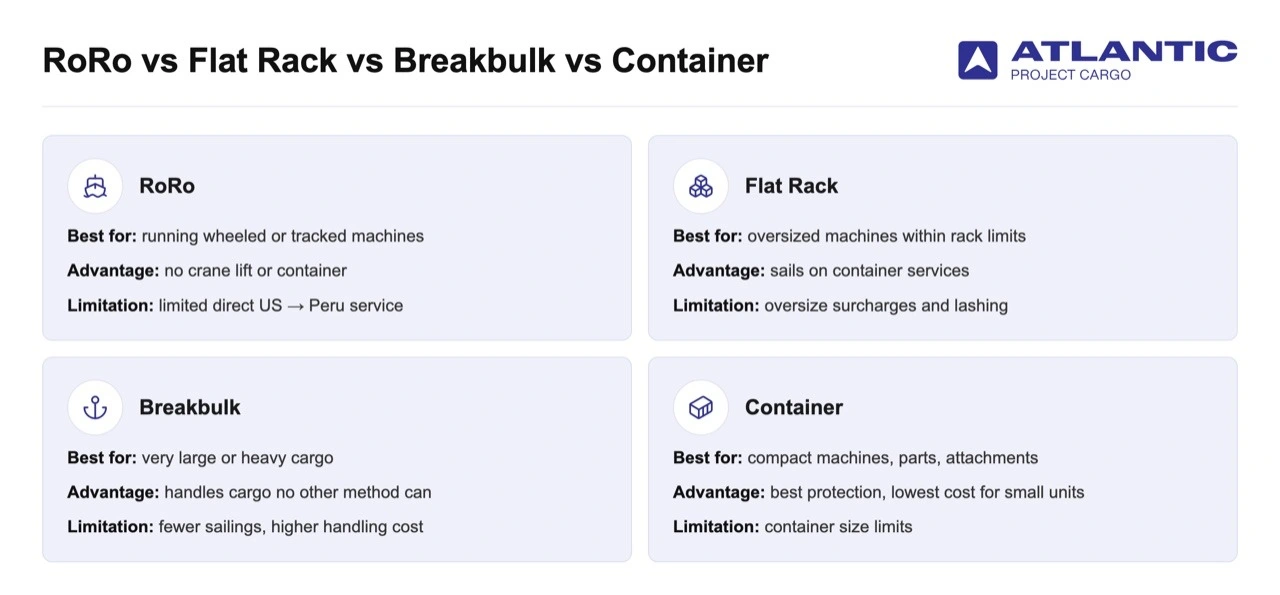
There are four main methods for equipment shipping to Peru: RoRo, Flat Rack, Breakbulk, and containers.

Method Best For Main Advantage Main Limitation
RoRo Running wheeled or tracked machines No crane lift or container Limited direct US → Peru service
Flat Rack Oversized machines within rack limits Sails on container services Oversize surcharges and lashing
Breakbulk Very large or heavy cargo Handles cargo no other method can Fewer sailings, higher handling cost
Container Compact machines, parts, attachments Best protection, lowest cost for small units Container size limits

RoRo Shipping to Peru

RoRo shipping to Peru suits machines that can be driven or towed aboard. RoRo means roll-on/roll-off: the machine rolls up a ramp into the vessel.

  • Suitable equipment: running tractors, wheel loaders, backhoes, mobile cranes, and some excavators.
  • Operational condition: carriers usually require machines to run and brake; non-running units need a roll trailer and the carrier’s approval.
  • Advantages: no lifting, less lashing, and cargo protected inside the vessel.
  • Limitations: direct service is limited, and carriers set weight and height limits.

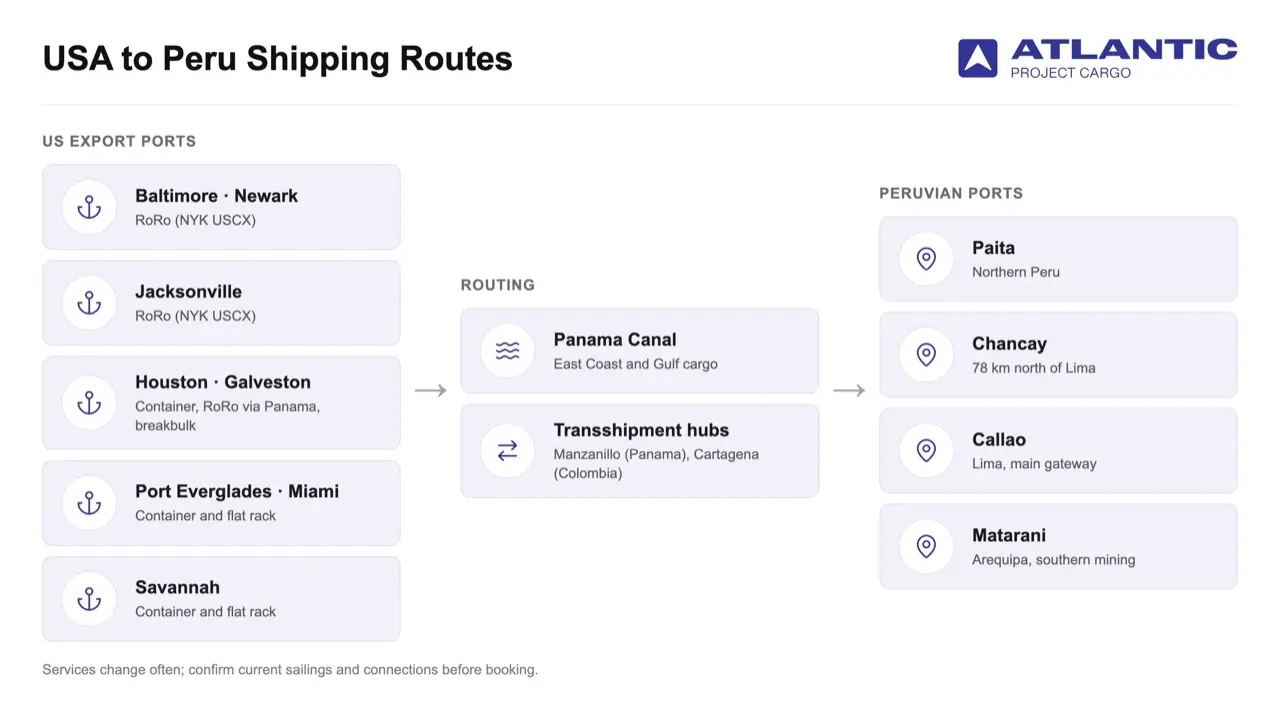
NYK RORO’s published schedule lists USCX sailings from Baltimore, Newark, and Jacksonville to Callao via Manzanillo, Panama. Gulf Coast RoRo cargo usually transships in Panama. RoRo is not available on every USA → Peru route, so confirm the load port and sailing before planning around it.

Flat Rack Shipping to Peru

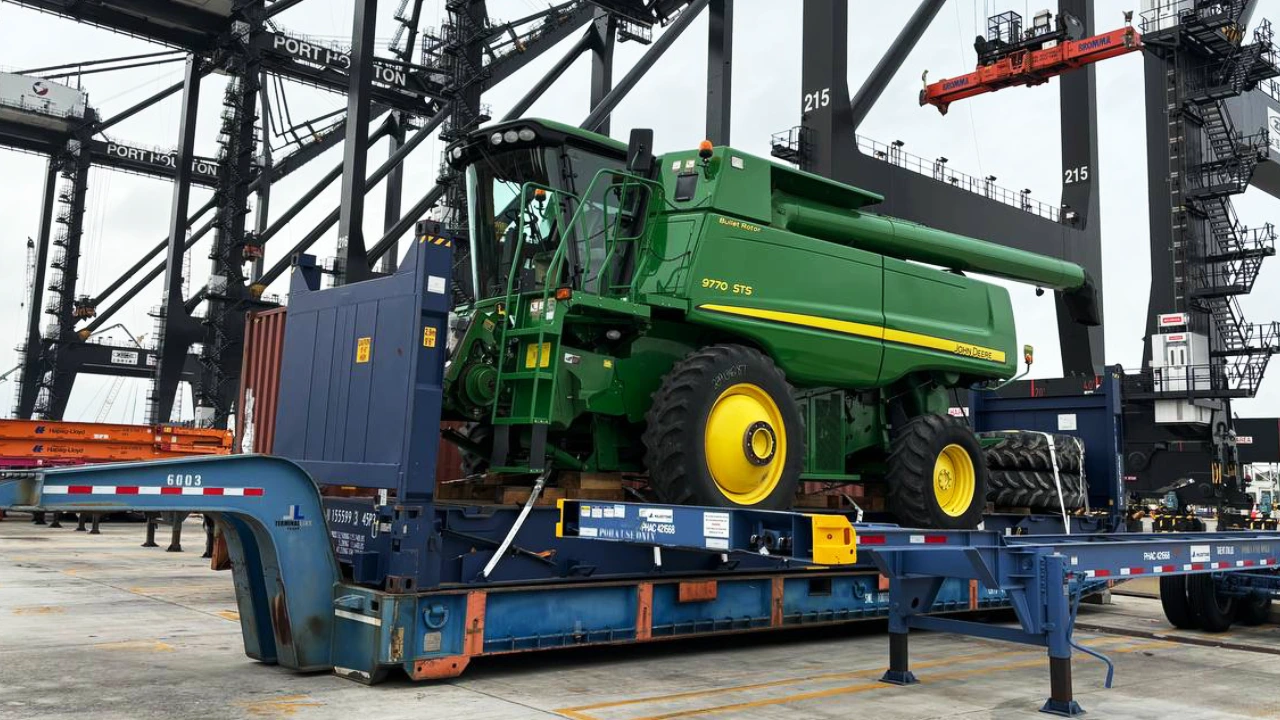
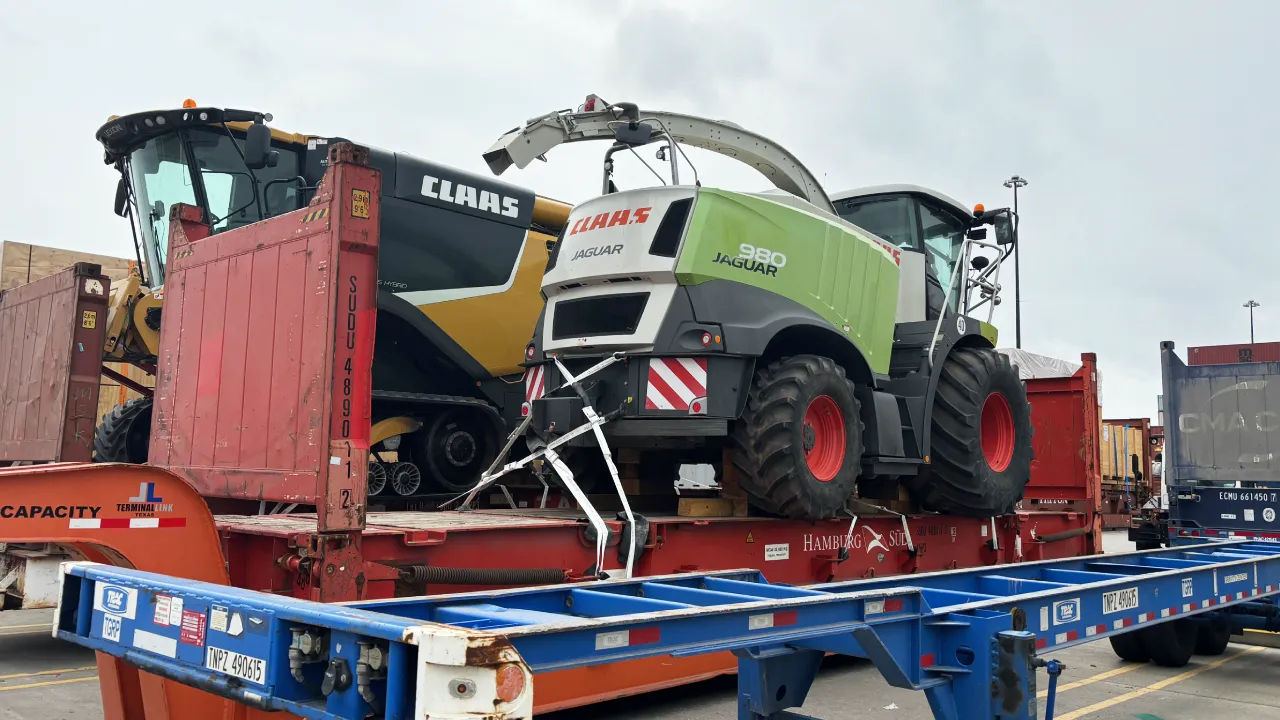
Flat Rack shipping to Peru suits machines too wide or tall for a closed container. A flat rack is a container base with end walls but no roof or sides.

  • When it fits: excavators, dozers, and tracked machines within the rack’s weight and size limits.
  • Oversized dimensions: overhanging cargo blocks neighboring vessel slots, which carriers charge as surcharges.
  • Securing: the machine is chained and blocked so it cannot shift at sea.
  • Trade-off: more sailings than RoRo or breakbulk, but lashing, crane lifts, and surcharges add cost.

Our guide to RoRo vs Flat Rack vs Open Top containers compares the options.

Breakbulk Shipping to Peru

Breakbulk shipping to Peru is for machinery too large or heavy for a container or flat rack. Each piece is lifted aboard by heavy-lift cranes.

  • Typical cargo: mining haul trucks, crushers, large drilling rigs, and project cargo.
  • Crane loading: lifts are planned with confirmed weights and lifting points.
  • Trade-off: far fewer size limits, though vessel cranes, hatch size, and port lifting capacity still set a ceiling; fewer sailings and higher handling costs.

Our breakbulk shipping guide explains the process step by step.

For project cargo, our breakbulk shipping service books the vessel and plans the lifts.

Container Shipping to Peru

Compact machines, attachments, components, and partly disassembled equipment can ship in standard or High Cube containers, which are about a foot taller.

Which Shipping Method Is Best for Your Equipment?

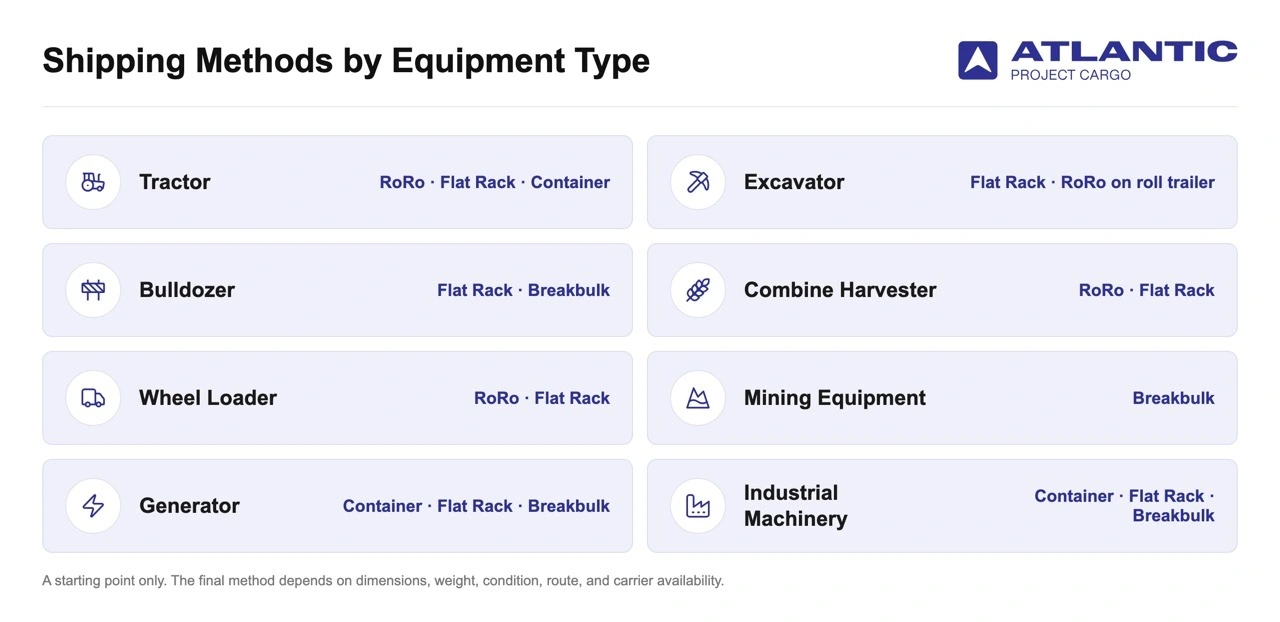
The best method depends on the machine’s size, weight, condition, route, and available carrier services. Treat this table as a starting point, not a rule.

Equipment Method(s) to Consider Key Consideration
Tractor RoRo, Flat Rack, container Running condition, width with dual wheels
Excavator Flat Rack, RoRo (self-driven if running and within carrier limits, or on a roll trailer) Tracks, boom height, bucket removal
Bulldozer Flat Rack, Breakbulk Blade width and weight
Combine Harvester RoRo, Flat Rack Header removal and cleaning
Wheel Loader RoRo, Flat Rack Running condition, bucket width
Mining Equipment Breakbulk Weight and port lifting capacity
Generator Container, Flat Rack, Breakbulk Weight and lifting points
Industrial Machinery Container, Flat Rack, Breakbulk Crating and disassembly

How Much Does It Cost to Ship Heavy Equipment from the USA to Peru?

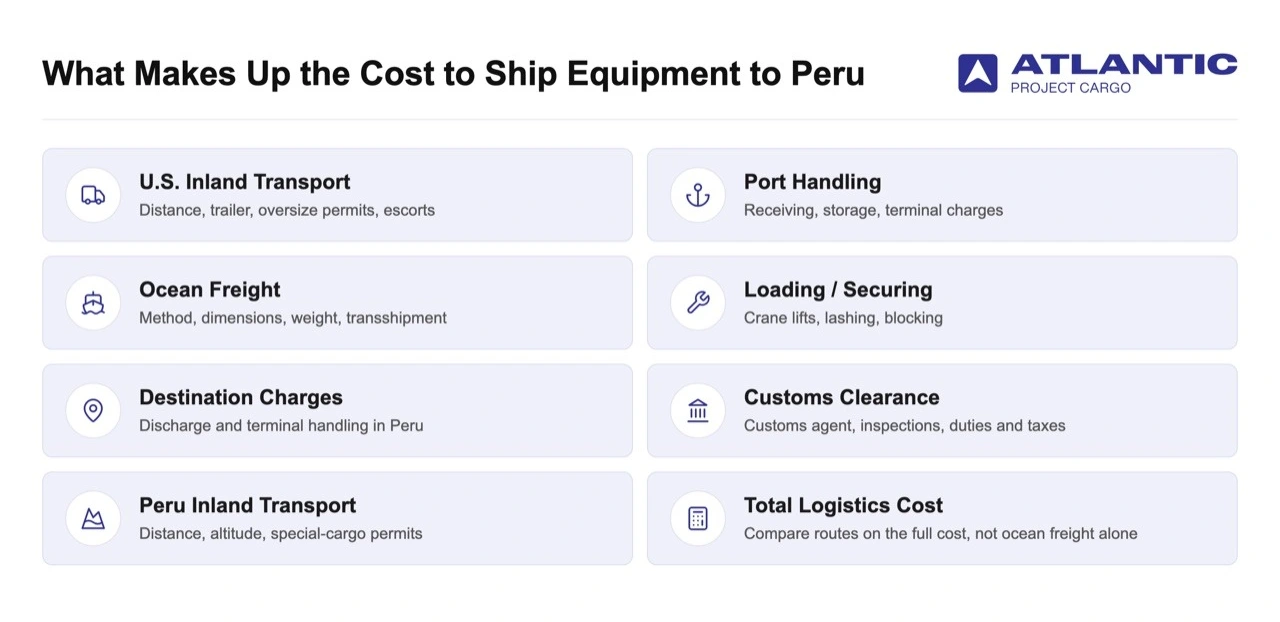
There is no universal rate for shipping heavy equipment from the USA to Peru. The cost covers the whole route, from US pickup to delivery in Peru, and ocean freight is only one part of it.

Cost Component What Affects It
US inland transport Distance, trailer type, oversize permits, escorts
Port handling Receiving, storage, and terminal charges in the US
Ocean freight Method, dimensions, weight, route, transshipment
Loading / securing Crane lifts, lashing, blocking
Destination charges Discharge and terminal handling in Peru
Customs clearance Customs agent fees, inspections, duties and taxes
Peru inland transport Distance, altitude, road restrictions, special-cargo permits

Dimensions matter at every step. The multipurpose terminal at Callao, for example, classes any unit that cannot move under its own power and exceeds 35 tons or 50 cubic meters as project cargo, with its own handling surcharge.

Our guide to heavy equipment freight charges explains each charge.

For cost ranges by machine type, see how much it costs to ship heavy equipment internationally.

Information Needed for an Accurate Shipping Quote

An accurate quote to ship heavy equipment to Peru needs:

  • Make, model, and year
  • Dimensions and weight
  • Pickup ZIP code or location
  • Destination in Peru
  • Operational or non-operational condition
  • Photos from all sides
  • Attachments
  • Whether the machine can be disassembled

Accurate dimensions matter most for Flat Rack, Breakbulk, and heavy-haul pricing. A few extra inches of width can change the vessel slots charged, the crane needed, or the road permit in both countries.

How Long Does Heavy Equipment Shipping from the USA to Peru Take?

Total time is much longer than the voyage. It adds up from pickup scheduling, US inland transport, port handling, the vessel schedule, ocean transit, destination handling, customs clearance, and final delivery.

Ocean freight to Peru can be quick on a direct service: a recent NYK RORO USCX sailing was scheduled at about 10 days from Jacksonville to Callao, and USCX sails roughly monthly. Missing a sailing, however, can mean weeks of waiting for the next suitable vessel.

NYK’s MSX sailings from the same ports reach Callao via Brazil and Argentina, which takes roughly five to six weeks, so confirm which service your booking is on.

Transshipment changes the picture. Many services move cargo through Manzanillo in Panama or Cartagena in Colombia, and the wait for the connecting vessel adds to the transit. Confirm the full schedule, including connections, before booking.

Major U.S. Ports for Shipping Heavy Equipment to Peru

The best US export port depends on where the machine is and which services sail from there to Peru.

  • Jacksonville, Baltimore, and Newark: load ports on NYK RORO’s USCX service to Callao, suited to equipment from the Southeast, Mid-Atlantic, and Northeast. Not every vessel in the rotation accepts US cargo for Callao, so confirm the specific sailing.
  • Houston and Galveston: gateways for Texas and the Midwest. Container carriers serve Peru from the Gulf, Wallenius Wilhelmsen routes Galveston RoRo cargo through its Panama hub, and Intermarine (part of the SAL Heavy Lift Group) runs a monthly US Gulf breakbulk service to the west coast of South America, including Peru.
  • Port Everglades and Miami: container services from South Florida call at Callao, useful for flat rack and containerized machinery.
  • Savannah: a major container port with flat rack capacity for the Southeast.

West Coast ports are used less often: most services to Peru load on the East and Gulf coasts, so West Coast cargo usually transships.

Main Ports for Heavy Equipment Shipping to Peru

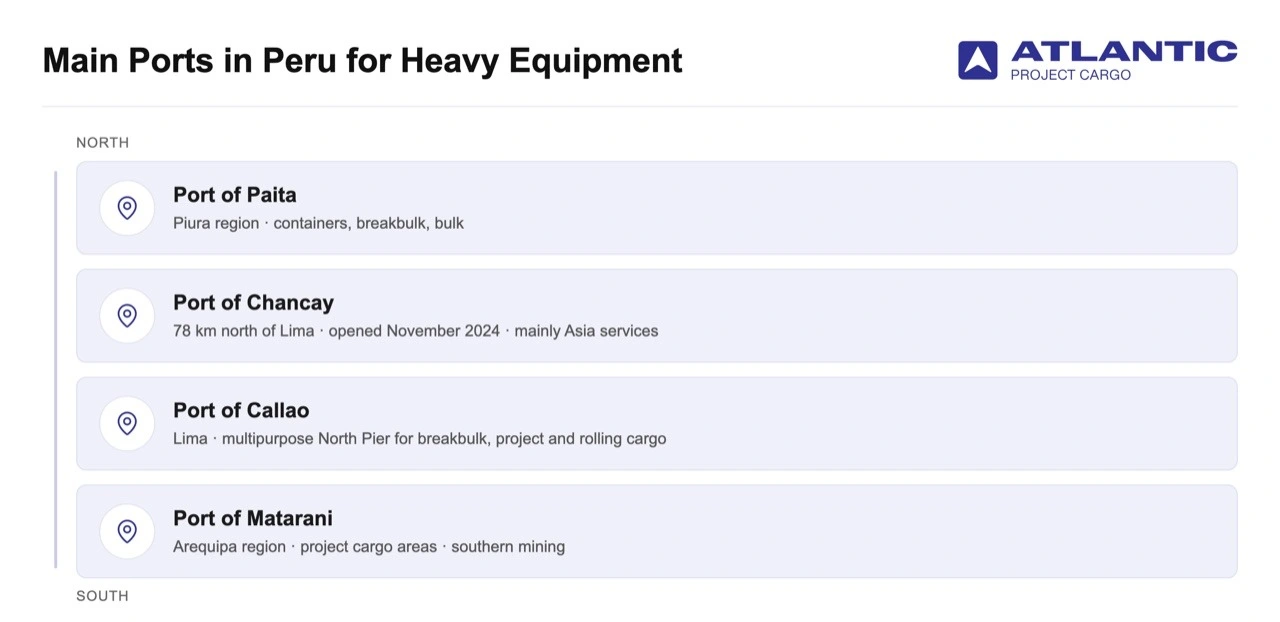
The Port of Callao is the main destination for US heavy equipment, while Chancay, Matarani, and Paita serve specific regions. See our complete guide to the major ports in Peru.

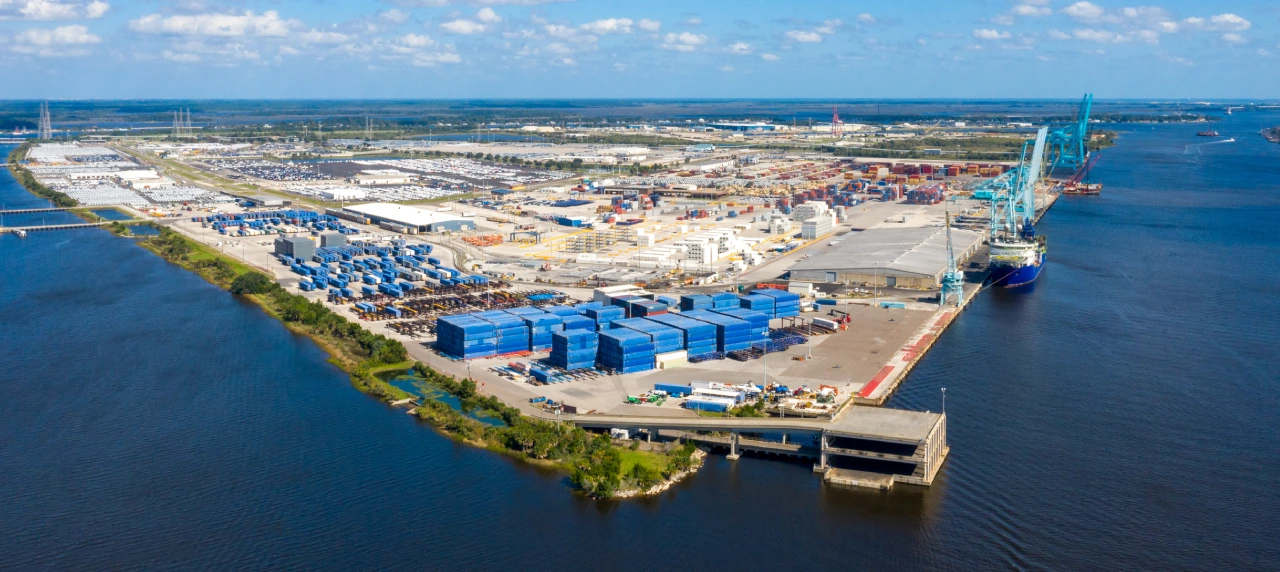
  • Port of Callao: next to Lima. APM Terminals Callao runs the multipurpose North Pier for containers, breakbulk, project cargo, and rolling cargo; DP World’s South Pier handles containers only.
  • Port of Chancay: about 78 km north of Lima, opened in November 2024 with container and multipurpose berths, according to COSCO Shipping Ports. Its services connect mainly with Asia, so US cargo reaches it by transshipment, if at all.
  • Port of Matarani: in the Arequipa region, run by TISUR, with about 160,000 square meters of project cargo storage and a strong southern mining focus.
  • Port of Paita: in northern Peru near Piura, handling containers, breakbulk, and bulk cargo.

Callao, Chancay, Matarani or Paita: Which Port Should You Choose?

Choose the port with the lowest total cost to the final site, not the lowest ocean freight. Confirm current vessel services and lifting capacity for your cargo.

Destination / Requirement Port(s) to Consider Why
Lima / Central Peru Callao Most US services, shortest road to Lima
Northern Peru (Piura, Lambayeque) Paita Closest port for the north; check US breakbulk and container calls
Central coast alternative to Callao Chancay Mainly Asia services; US cargo usually transships
Arequipa/ Southern Peru Matarani Avoids a long haul from Callao
Southern mining projects Matarani Project cargo areas, mining focus
Containerized machinery Callao Frequent US container services
Project / oversized cargo Callao, Matarani Multipurpose terminals; confirm lift capacity

Import Requirements for Heavy Equipment in Peru

To import heavy equipment to Peru, you need a tax registration, a customs agent for most commercial imports, and a customs declaration, usually filed before arrival. Peru equipment import requirements then depend on the machine’s classification, value, and origin. These rules come from SUNAT, which runs Peru customs.

What Peruvian rules require:

  • Importer registration: an active RUC, Peru’s taxpayer number.
  • Customs agent: for imports over US$2,000 FOB, SUNAT states a customs agent is mandatory.
  • Customs declaration: the DAM (Declaración Aduanera de Mercancías).
  • Inspection channels: green (no review), orange (document review), or red (physical inspection).
  • Classification: duty depends on the HS code. SUNAT’s tariff currently shows 0% duty for common excavator, bulldozer, wheel loader, tractor, and combine codes, but check every machine.
  • Taxes: 18% in general sales taxes, split in 2026 as 15.5% IGV and 2.5% IPM under Law 32387. The total stays at 18% as the split shifts each year through 2029.
  • IGV advance payment: SUNAT’s percepción is generally 3.5%, 5% for used goods, and 10% for first-time importers and other higher-risk cases. Since March 2, 2026, Legislative Decree 1714 has added new risk cases that trigger the 10% rate. For a first-time importer, every partial or total dispatch under the same cargo manifest is treated as the first import.
  • Valuation: WTO valuation methods apply, and price lists are not accepted as proof of value for used goods.

No single duty or tax rate covers all heavy equipment; treatment varies by HS code, origin, equipment type, and trade rules.

The US–Peru Trade Promotion Agreement, in force since February 1, 2009, applies only to goods that qualify as US or Peruvian originating. A US-bought machine made in Japan or Europe does not automatically qualify.

What we recommend: confirm the HS code, duty, and taxes with your Peruvian customs agent before you buy the machine.

Documents Required to Ship Heavy Equipment from the USA to Peru

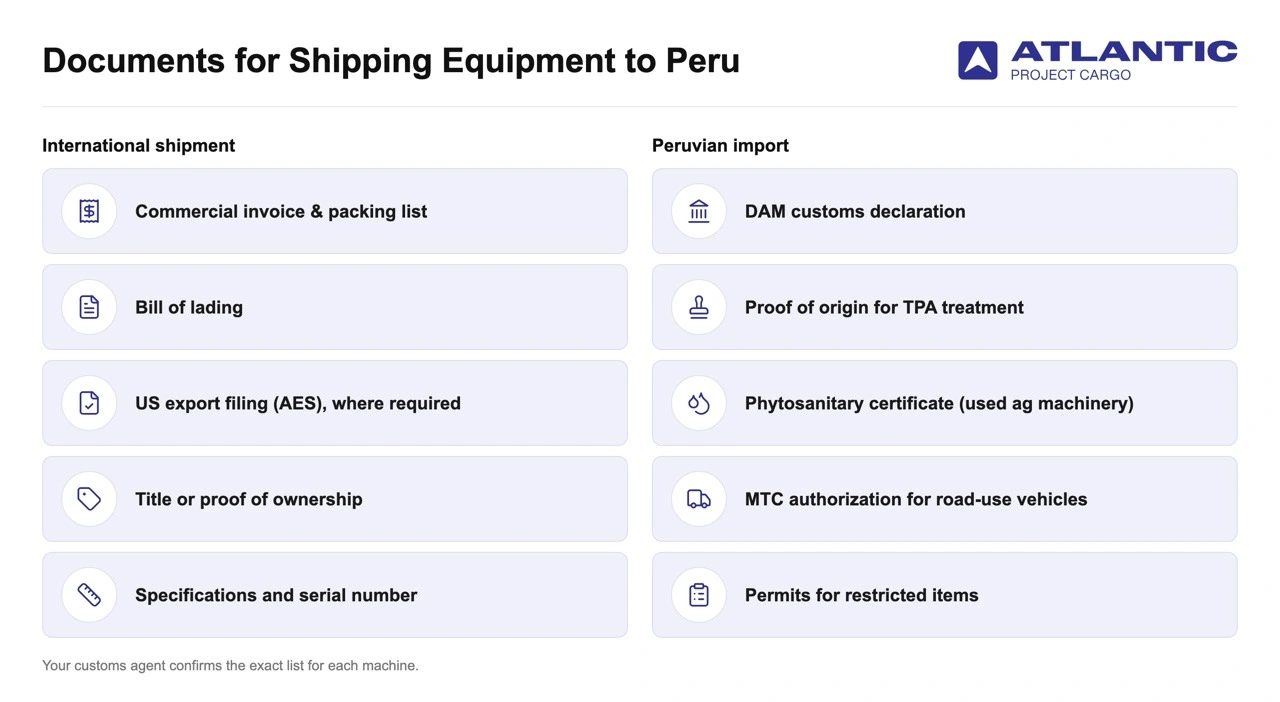
Documents typically required for the international shipment:

  • Commercial invoice and packing list
  • Bill of lading
  • US export filing (AES Electronic Export Information), where required
  • Title or proof of ownership, where applicable
  • Equipment specifications and serial number


Documents Peruvian authorities may require for the import:

  • DAM customs declaration, filed by the customs agent
  • Proof of origin, if claiming Trade Promotion Agreement treatment
  • Phytosanitary certificate for used agricultural machinery
  • Andean Value Declaration (DAV), for goods over US$5,000 FOB
  • MTC authorization for special vehicles intended for road use
  • Permits for restricted items, such as telecom equipment

Importing Used Heavy Equipment to Peru

Used heavy equipment can be imported into Peru, but the rules depend on the type of machine. Road vehicle rules do not automatically apply to construction, mining, or agricultural machinery.

  • Machinery vs road vehicles: Peru’s used-vehicle age limits apply to road vehicles. SUNAT states the rule excludes machines built only for off-road use in construction, mining, and agriculture.
  • Road-going equipment: truck tractors, crane trucks, and concrete mixer trucks are road vehicles, so the used-vehicle rules can apply.
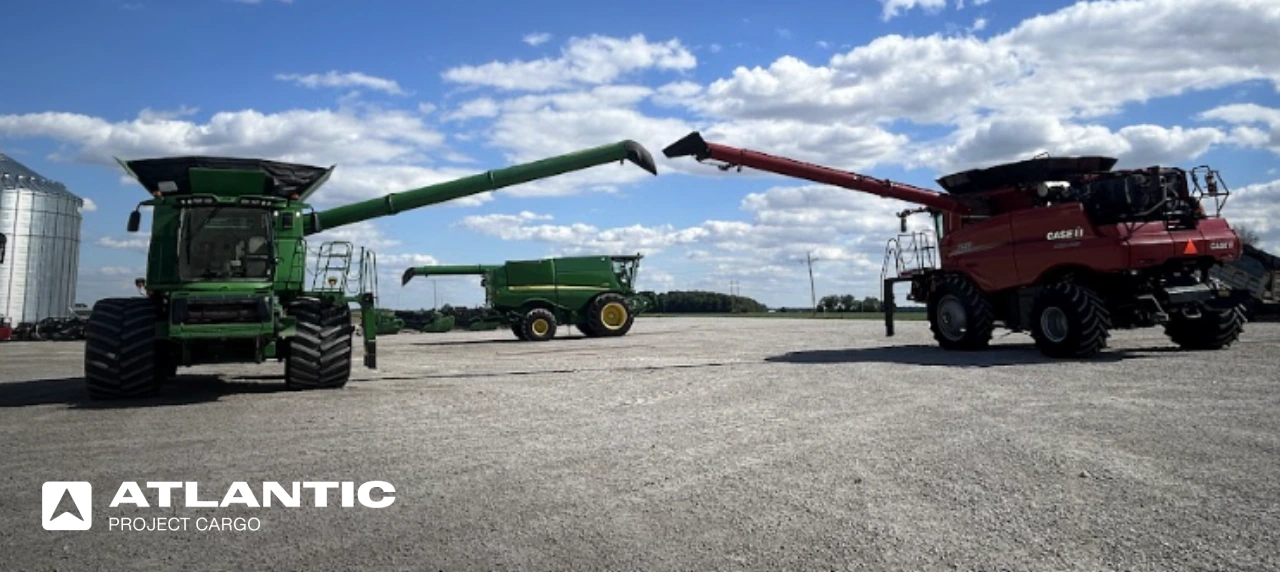
  • Agricultural equipment shipping to Peru: since September 1, 2024, a SENASA rule requires used agricultural machinery to be cleaned inside and out before export. It needs a phytosanitary certificate from APHIS stating it is free of soil, pests, and plant debris, and it is inspected on arrival. Machines that fail can be rejected and reshipped.
  • Construction and mining machinery: the SENASA rule does not cover them, but clean machines draw fewer inspections.
  • Emissions: Peru’s vehicle emission limits exclude vehicles used only off the national road network; no separate emission rule applies to imported non-road machinery, but confirm with your customs agent before shipping.

Our USDA equipment washing and inspection service prepares agricultural machinery before export.

For export inspection and certification steps, see our export inspections guide.

How to Prepare Heavy Equipment for Shipping to Peru

  1. Clean the equipment, especially tracks, undercarriage, and radiators.
  2. Remove personal and loose items.
  3. Document the condition.
  4. Measure actual dimensions with attachments in shipping position.
  5. Confirm the weight.
  6. Secure booms, doors, and hoods.
  7. Lower or remove attachments where appropriate.
  8. Prepare lifting points for crane handling.
  9. Check fluid, battery, and fuel requirements with the carrier.
  10. Photograph the machine from every side before pickup.

Disassembly can cut costs significantly: removing a bucket, blade, header, or cab can move a machine from breakbulk to flat rack, or from flat rack into a container. Our loading and disassembly team handles this before export.

Inland Transportation and Final Delivery in Peru

Inland transportation in Peru needs as much planning as the ocean leg, because many sites are in the Andes or remote mining regions. The cost of this leg often decides the best port.

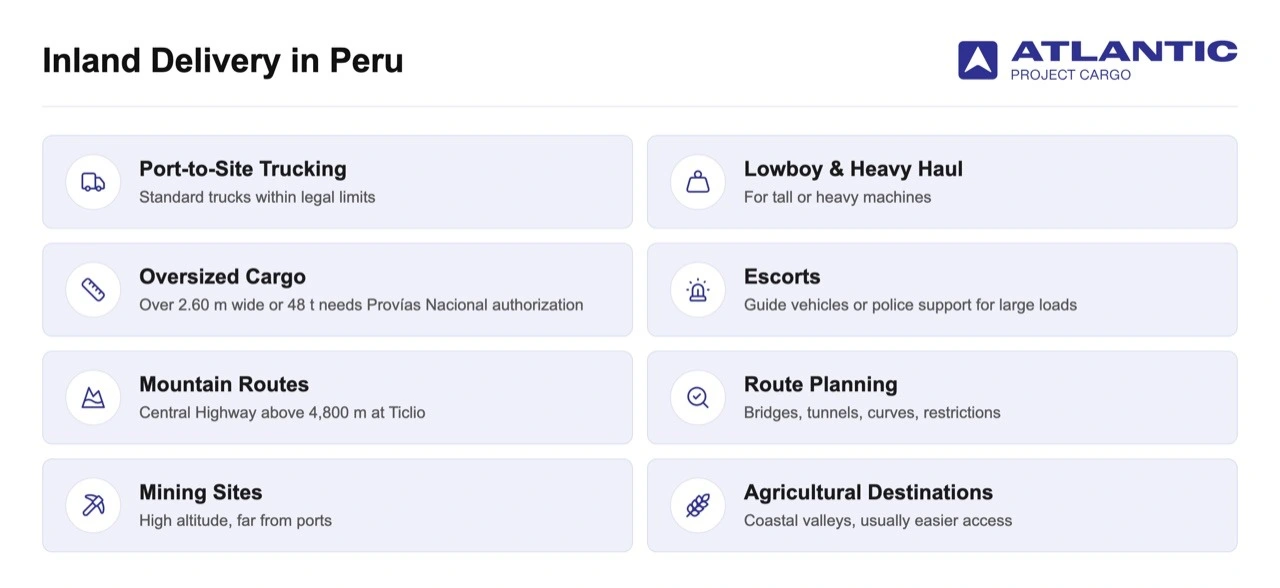
  • Port-to-site trucking: standard trucks for machines within legal limits; lowboys and heavy-haul trailers for tall or heavy loads.
  • Oversized cargo: Peru’s vehicle regulation (D.S. 058-2003-MTC) sets a maximum width of 2.60 meters,a maximum height of 4.10 meters for general cargo, measured from the road surface to the top of the load (higher limits apply only to closed vans and containers), and a gross weight of 48 tons. Height is often the limiting factor for excavators and dozers on lowboys, so measure the loaded height, not just the machine. Larger loads need prior authorization from Provías Nacional, part of the Ministry of Transport and Communications (MTC), and may need escort vehicles or police support.
  • Route planning: bridges, tunnels, curves, and road restrictions are checked before the load moves.
  • Mountainous terrain: the Central Highway from Lima climbs above 4,800 meters at the Ticlio pass, and steep grades slow heavy loads.
  • Destinations: mines sit at high altitude far from ports, urban construction sites have access limits, and coastal farming valleys are usually easier to reach.

Shipping Mining Equipment from the USA to Peru

Mining equipment shipping to Peru usually means oversized cargo, breakbulk or heavy-lift handling, and a long haul to a high-altitude mine.

  • Typical equipment: excavators, haul trucks, crushers, drilling equipment, loaders, generators, and processing machinery.
  • Oversized dimensions: haul trucks and crushers often exceed flat rack limits and ship in pieces or as breakbulk.
  • Port selection: southern mines are often closer to Matarani; central highland mines are usually reached from Callao.
  • Heavy-haul routing: permits, escorts, and route surveys should be ready before the vessel arrives.

Our mining machinery shipping team plans these moves end to end.

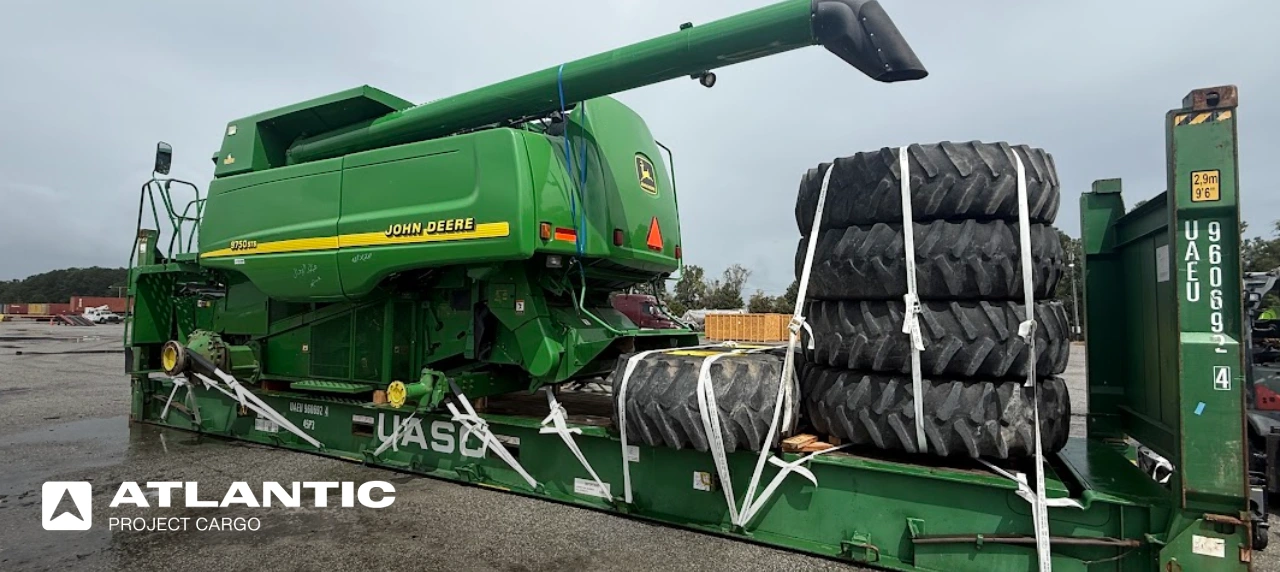
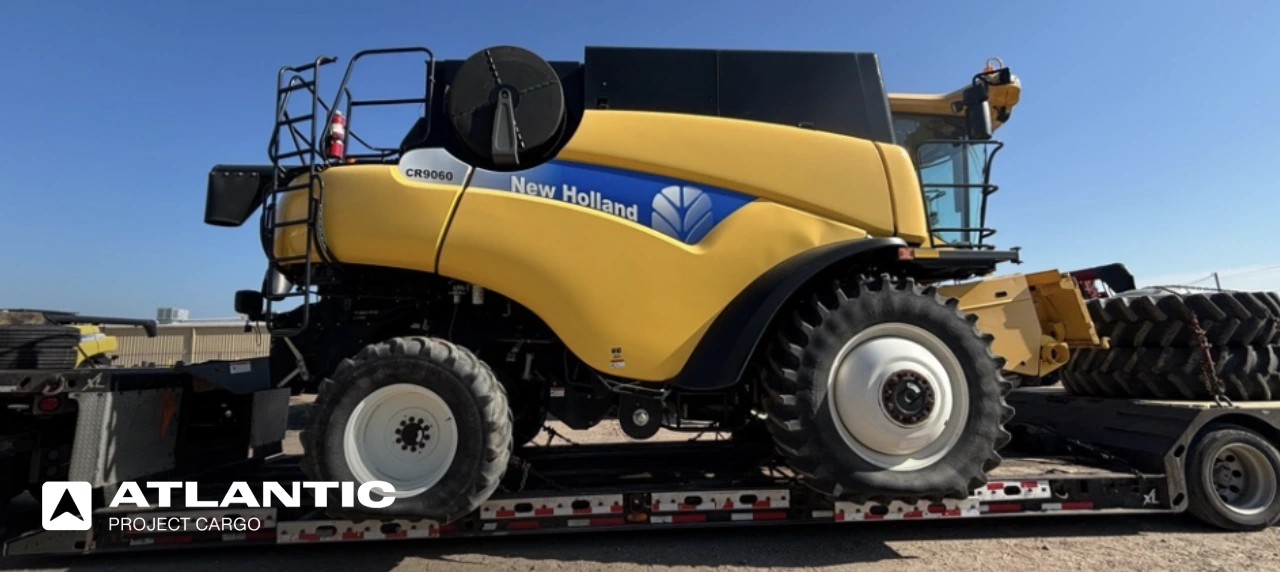
Example: Shipping a New Holland CR 9060 Combine from the USA to Peru

  • Equipment: New Holland CR9060 Twin Rotor combine harvester, purchased through JumboBee
  • Origin: Woodland, California (Sacramento / Central Valley)
  • Destination in Peru: a grain-producing operation near Chiclayo, Lambayeque region
  • Shipping challenge: The combine was too wide to ship or truck as one piece. As a used twin-rotor machine fresh from a harvest season, it also held soil, seed, and crop residue in hard-to-reach areas: the feeder house, rotor cages and concaves, cleaning shoe, grain tank, and undercarriage. Under Peru’s SENASA rules, a dirty used combine can be rejected and reshipped.
  • Preparation: The header was removed and crated, and the unloading auger was folded and secured. The combine body moved on a lowboy to the Oakland export facility under an oversize permit. There it was pressure washed outside, compressed air cleared the rotor area, cleaning system, and undercarriage, and a visual check confirmed it was free of visible soil and plant material before loading.
  • Shipping method: Flat rack for the combine body, with the crated header shipped separately
  • Port: Port of Oakland → Port of Callao, 19 days transit
  • Import and compliance considerations: Peru-side import documents were prepared with the buyer’s customs broker before the combine left the US, so the paperwork matched what SENASA and customs would check at Callao. SENASA carried out the arrival inspection, and the broker handled customs clearance.
  • Final outcome: The combine passed SENASA’s arrival inspection with no request for extra cleaning or treatment. It cleared inspection and customs within 2 days of arrival and was delivered to the farm near Chiclayo. Total time was 34 days from purchase to delivery.

Read the Full USA → Peru Shipping Project

Common Mistakes When Shipping Heavy Equipment to Peru

  • Incorrect dimensions: brochure figures instead of measurements.
  • Selecting a port based only on ocean freight: a cheaper sea rate can mean a costlier inland haul.
  • Unsuitable shipping method: a non-running machine booked on RoRo without a roll trailer or carrier approval.
  • Incomplete documentation: mismatched serial numbers or missing certificates.
  • Not checking import requirements before purchase: HS code, taxes, and used-machinery rules.
  • Ignoring inland delivery costs: the final leg to a mine can be a large part of the budget.
  • Poor preparation: dirty agricultural machinery can be rejected by SENASA.
  • Assuming RoRo is available for every route: direct US → Peru RoRo service is limited.
  • Underestimating port and storage charges: delays are billed by the day.
  • Not planning oversized inland transport: authorizations and escorts take time.

Frequently Asked Questions About Shipping Heavy Equipment to Peru

There is no fixed rate. Cost depends on dimensions, weight, shipping method, the US and Peruvian ports, and inland delivery at both ends.

It depends on the service. A direct RoRo sailing from Jacksonville to Callao can take about 10 days at sea, but schedules, transshipment, customs, and inland delivery add to the total.

The Port of Callao is usually best for Lima and central Peru. Matarani is often better for Arequipa and southern mines.

Yes. Peru’s used-vehicle age limits apply to road vehicles, not to off-road construction, mining, or agricultural machinery. Road-going units such as crane trucks and concrete mixer trucks can still fall under the used-vehicle rules.

Yes. Tractor shipping to Peru is common; used agricultural machinery must be cleaned, carry an APHIS phytosanitary certificate, and pass SENASA inspection.

Sometimes. A running excavator can drive aboard if it meets the carrier’s height and weight limits; otherwise it needs a roll trailer and carrier approval. Many excavators ship on flat racks.

Usually the commercial invoice, packing list, bill of lading, a DAM and Andean Value Declaration filed by a customs agent, plus a phytosanitary certificate for used farm machinery.

Flat Rack is usually cheaper for machines within rack limits. Breakbulk is for cargo too large or heavy for a flat rack.

Yes. Site delivery is possible with inland trucking, special-cargo authorization for oversized loads, and route planning.

Get a Heavy Equipment Shipping Quote to Peru

An accurate quote needs the make and model, dimensions, weight, pickup location, final destination, condition, and photos. With those, we evaluate the complete route: US pickup, export port, ocean shipping, Peruvian port, customs, and inland delivery.

Most machinery shipping to Peru we handle is agricultural, construction, mining, or industrial, planned through our heavy equipment shipping process.

We coordinate ocean freight bookings by RoRo, flat rack, breakbulk, or container.

We also arrange marine cargo insurance for the machine’s full value.

Get a Free Quote

Get Your Free Quote Today!

Read More

Peloton vs. Flexport: What the FMC Demurrage and Detention Ruling Means for Equipment Shippers
September 24, 2026

Peloton vs. Flexport: What the FMC Demurrage and Detention Ruling Means for Equipment Shippers

A $33.7 million dispute between Peloton and Flexport has put an important shipping question back in focus: when demurrage and detention charges accumulate, who is actually responsible for paying them?...

Reviewed by Nick Yadryshnikov Nick Yadryshnikov

Read
Guide to Heavy Equipment Shipping from the USA to Chile: Costs, Ports & Import Requirements
September 11, 2026

Guide to Heavy Equipment Shipping from the USA to Chile: Costs, Ports & Import Requirements

Heavy equipment can be shipped from the USA to Chile by RoRo, flat rack, container, or breakbulk shipping, and the right method depends on the machine’s dimensions, weight, condition, destination,...

Reviewed by Nick Yadryshnikov Nick Yadryshnikov
Read
Heavy Equipment Shipping from the USA to Brazil: Costs, Transit Time & Import Guide
September 2, 2026

Heavy Equipment Shipping from the USA to Brazil: Costs, Transit Time & Import Guide

Heavy equipment can be shipped from the USA to Brazil by RoRo, flat rack, open-top container, or breakbulk, and the right choice depends on the machine’s dimensions, weight, and condition....

Reviewed by Victoria Moseicuka Victoria Moseicuka
Read
Share via