
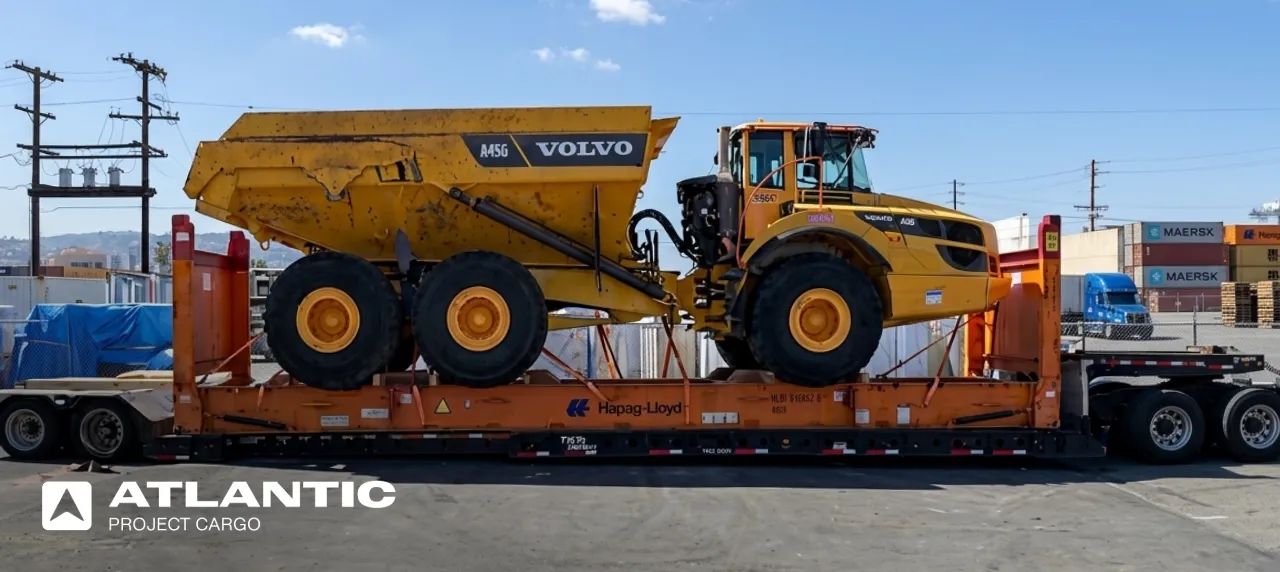
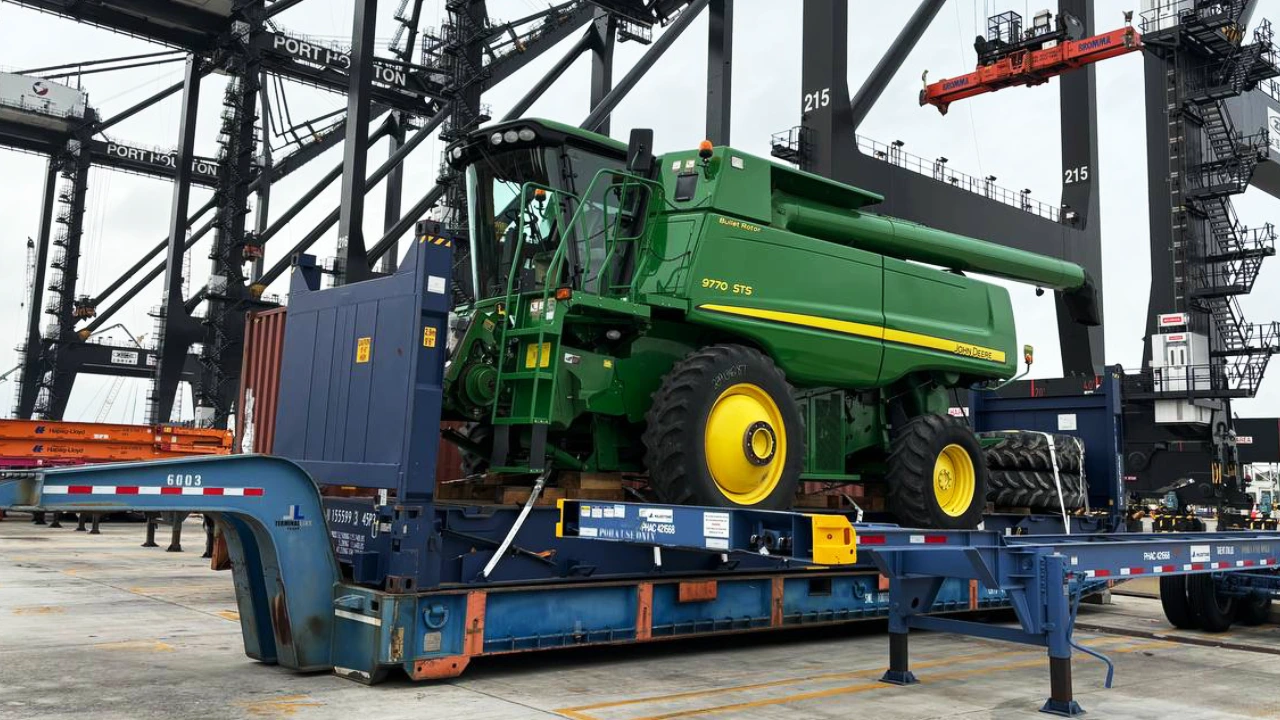
Choosing the wrong ocean freight method for oversized machinery leads to budget overruns, port delays, and damaged cargo. In 2026, with global supply chains facing strict emissions regulations and tight vessel schedules, precision in logistics is more critical than ever.
Evaluating heavy equipment shipping methods requires understanding your machinery dimensions, operational condition, and destination port capabilities. No single ocean freight method works for every machine. Shipping a fleet of running agricultural tractors requires a completely different operational approach than exporting a dismantled 80,000-pound mining excavator.
This guide is a hands-on case study and comparison matrix. We will break down RoRo, Flat Rack, and Open Top container solutions, helping buyers, dealers, and construction companies determine the right fit for their cargo. By the end of this resource, you will understand how to optimize your supply chain, reduce loading costs, and navigate international heavy machinery logistics with confidence.
Quick Comparison: RoRo vs Flat Rack vs Open Top
Understanding the baseline differences between these three primary methods helps you eliminate incorrect choices immediately. Below is a direct operational comparison.
| Feature | RoRo Shipping | Flat Rack Container | Open Top Container |
|---|---|---|---|
| Best For | Wheeled, running machinery | Oversized, heavy, irregular cargo | Tall cargo fitting standard width |
| Cargo Type | Operational vehicles | Out-of-gauge (OOG) machinery | In-gauge width, over-height cargo |
| Size Limitations | Restricted by vessel door height | Flexible width and height | Flexible height, strict width limit |
| Cost Level | Generally lowest | Highest due to cranes and lashing | Moderate to high |
| Protection Level | Fully enclosed in vessel hull | Exposed to weather and salt | Protected by heavy-duty tarps |
| Loading Method | Driven or towed via ramp | Overhead crane or heavy forklift | Overhead crane |
| Port Availability | Limited to specialized RoRo ports | Available at most major seaports | Available at most major seaports |
| Transit Flexibility | Fixed routes, fewer transshipments | High flexibility, easy transfers | High flexibility, easy transfers |
| Best Equipment Examples | Tractors, graders, wheeled loaders | Excavators, bulldozers, crushers | Industrial presses, tall generators |
| Main Limitations | Equipment must run and steer | High handling and lashing costs | Cargo cannot exceed container width |
What Is RoRo Shipping?
RoRo shipping stands for Roll-on/Roll-off. Unlike traditional container ships that lift cargo over the side using massive cranes, RoRo vessels act like massive floating parking garages. Machinery is driven or towed up a heavy-duty ramp directly into the belly of the ship.
Once inside, dockworkers secure the equipment to the heavy-duty steel decks using specialized lashing chains and tensioners. Because the cargo remains fully enclosed within the vessel, it stays protected from harsh saltwater spray and unpredictable ocean weather.
When evaluating RoRo shipping heavy equipment, logistics managers often favor it because it eliminates the need for expensive port cranes and complex dismantling procedures. If your machine runs, steers, and has functional brakes, this is usually the most streamlined path across the ocean.
Best Equipment Types for RoRo Shipping
Machinery that rolls on wheels or functional tracks is the ideal candidate for this method.
- Tractors
- Combine harvesters
- Articulated dump trucks
- Motor graders
- Road rollers
- Operational wheeled loaders
Advantages of RoRo Shipping
- Lower handling costs: Eliminating heavy-lift crane fees significantly reduces terminal charges.
- Faster loading and unloading: Driving a machine onto a ship takes minutes compared to the hours required to lift, position, and secure oversized cargo on a flat rack.
- Reduced preparation time: Machinery rarely needs to be dismantled, saving expensive mechanic labor hours at both origin and destination.
- Built-in weather protection: Cargo sits safely inside the ship hull, avoiding exposure to corrosive saltwater.
RoRo Shipping Limitations
- Requires operational machinery: If equipment cannot start or move under its own power, ports will reject it or charge exorbitant towing fees.
- Strict height restrictions: Cargo must clear the vessel ramp door. While modern RoRo ships accommodate massive machinery, extreme heights still pose a hard limit.
- Limited port availability: Not all global ports feature RoRo ramps. Shipping to remote destinations often requires discharging at a major hub and arranging expensive inland transport.
- Strict cleanliness rules: Authorities enforce severe penalties for dirty undercarriages. Soil on tracks can lead to immediate rejection due to agricultural import laws.
What Is Flat Rack Shipping?
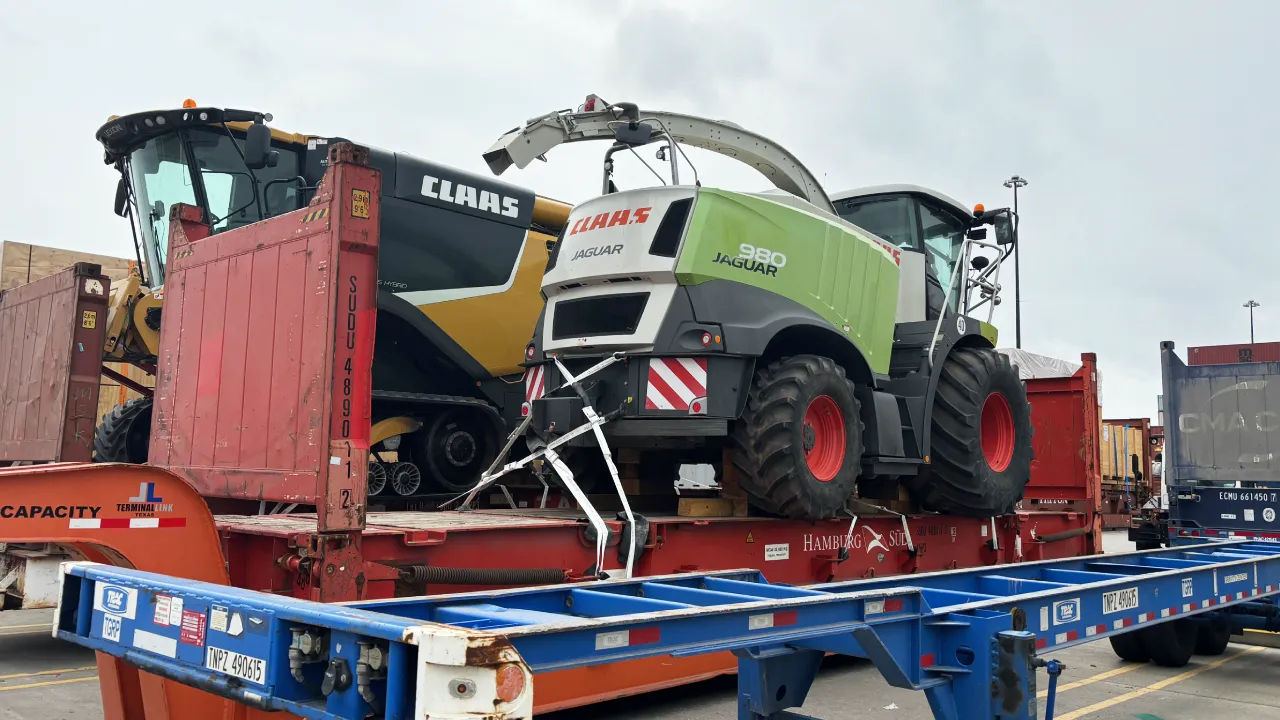
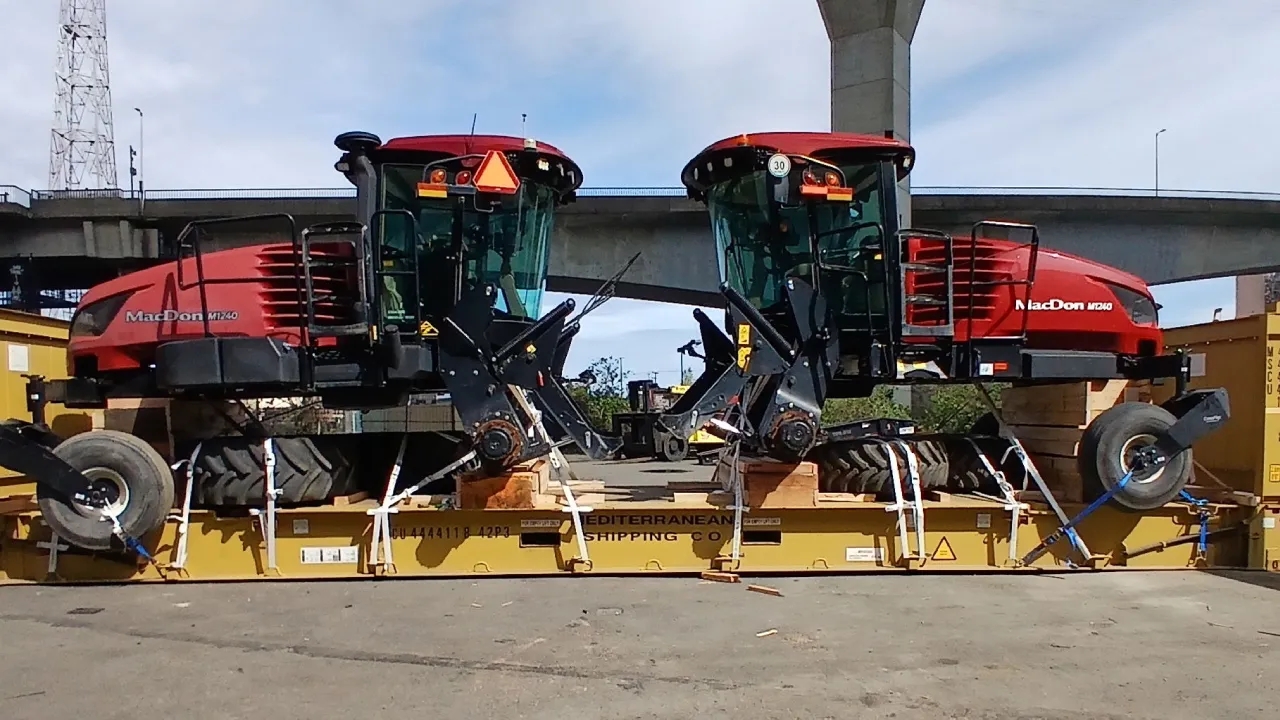
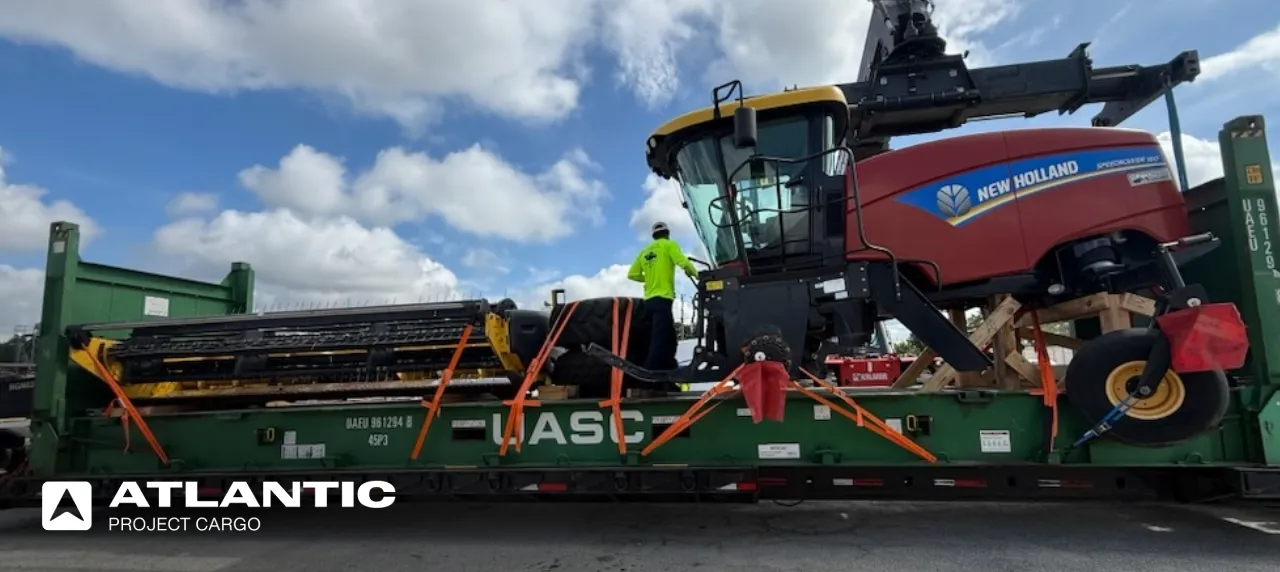
To answer what is a flat rack, you must visualize a standard shipping container stripped down to its barest structural elements. It consists of a heavy-duty reinforced steel floor and two end walls, which can often collapse or fold down flat. It has no side walls and no roof.
This open design makes flat rack shipping the ultimate solution for Out-of-Gauge (OOG) cargo. When machinery is too wide, too tall, or too heavy to fit inside standard closed boxes, it gets lashed to this heavy-duty platform. Because the sides are open, cargo can safely overhang the edges of the floor, provided the port cranes have the clearance to lift it.
Securing cargo on this platform requires intense engineering. Stevedores use heavy-duty chains, wire ropes, steel turnbuckles, and specialized wooden dunnage to prevent the machinery from shifting during rough ocean transits.
Best Equipment Types for Flat Rack Shipping
This method dominates the construction and mining sectors, where raw weight and awkward dimensions rule.
- Heavy crawler excavators
- Large bulldozers
- Cranes and lifting equipment
- Oversized wheel loaders
- Drilling and trenching equipment
- Dismantled mining machinery
Advantages of Flat Rack Shipping
- Handles extreme oversized cargo: Machinery can overhang the sides and top, breaking standard dimensional boundaries.
- Ideal for non-operational machinery: Dead batteries, broken engines, or dismantled parts present no problem since cranes handle the loading.
- Global port access: Unlike RoRo vessels, standard container ships carry these platforms, opening up virtually every seaport in the world.
- Flexible loading options: Warehouses can load cargo from the top or the side using heavy forklifts or overhead gantry cranes.
Flat Rack Shipping Limitations
- Higher handling costs: OOG cargo requires special crane lifts, certified lashing surveys, and premium vessel slot fees.
- Total weather exposure: Machinery faces direct assault from rain, wind, and corrosive ocean salt. Shrink-wrapping or applying anti-corrosion spray becomes mandatory for sensitive parts.
- Complex lashing requirements: Improper securing leads to catastrophic cargo loss. Lashing must meet strict maritime safety standards.
- Vessel slot displacement: If cargo overhangs the sides or top, it blocks adjacent container spaces on the ship. Carriers charge you for those empty, unusable spaces.
Learn More About Out-of-Gauge Cargo Shipping
Explore Out-of-Gauge Services
What Is an Open Top Container?
This container looks exactly like a standard dry van, complete with solid steel side walls and functional end doors. However, it lacks a solid steel roof. Instead, it features removable steel roof bows covered by a heavy-duty, weatherproof tarpaulin.
Open-top container shipping solves a very specific logistical puzzle: cargo that is too tall to fit through standard container doors but narrow enough to fit within the standard internal width of 7 feet 8 inches (2.34 meters).
During loading, the heavy machinery is lowered directly through the open roof using an overhead crane. Once the cargo is secured to the internal floor rings, the roof bows are locked back into place, and the tarp is lashed down, creating a fully enclosed, weather-tight environment.
Best Equipment Types for Open Top Shipping
This method is perfect for tall, dense, but relatively narrow industrial equipment.
- Tall industrial generators
- Stamping presses
- Machinery exceeding standard door height (over 7’5″ for standard containers, over 8’5″ for high-cube)
- Agricultural equipment with non-removable tall cabs
- Heavy pipes or steel structures requiring overhead crane loading
Advantages of Open Top Containers
- Superior cargo protection: The steel side walls and heavy-duty tarp offer significantly better weather protection than flat racks.
- Easier top loading: Dropping heavy machinery directly through the roof is safer and faster than trying to slide it through standard rear doors.
- Cost-effective for over-height cargo: It avoids the extreme side-clearance surcharges associated with wide flat rack cargo.
Open Top Container Limitations
- Strict width restrictions: Cargo absolutely cannot exceed the internal width of the container. If a machine is even one inch too wide, it will not fit.
- Overhead crane required: Loading and unloading demand specialized lifting equipment at both the origin warehouse and destination facility.
- Tarp limitations: If cargo protrudes significantly above the roofline, standard tarps will not fit, requiring expensive custom weather-proofing solutions.
Flat Rack vs Open Top Container: What’s the Difference?
When comparing flat rack vs open top container shipping, the decision almost always comes down to cargo width and weather sensitivity.
Structurally, flat racks lack side walls, offering unrestricted width flexibility. Open tops have rigid steel side walls, strictly limiting cargo width to roughly 7 feet 8 inches (2.34 meters). If you are shipping a bulldozer with a 10-foot wide blade that cannot be detached, the open top is instantly disqualified.
Regarding loading processes, flat racks allow machinery to be driven on, forklifted from the side, or lowered from above. Open tops restrict loading exclusively to overhead cranes lowering cargo through the roof, or heavy forklifts pushing cargo through the rear doors (which defeats the purpose of the open top).
Cargo protection heavily favors the open top. The steel walls and tight tarp keep machinery dry and salt-free. Machinery on a flat rack acts like a sponge for ocean weather, requiring expensive industrial shrink-wrapping to prevent rust.
Cost differences also play a major role. Because flat rack cargo often overhangs and blocks adjacent container slots on the vessel, ocean carriers charge premium out-of-gauge fees. Open tops, provided the cargo does not protrude wildly above the roofline, generally incur lower freight rates because they stack more neatly within the ship’s cellular guides.
Best Shipping Method by Equipment Type
To streamline your logistics planning, use this practical recommendation matrix based on current 2026 industry standards.
| Equipment Type | Recommended Shipping Method | Why It Works Best |
|---|---|---|
| Tractors | RoRo | Easy to drive on/off, highly cost-effective, minimal prep required. |
| Excavators (Large) | Flat Rack | Tracks and cabs often exceed standard width and height limits. |
| Bulldozers | Flat Rack | Wide blades and heavy tracks require the strength and open sides of a flat platform. |
| Cranes (Mobile) | RoRo | Can be driven onto specialized heavy-duty vessel ramps easily. |
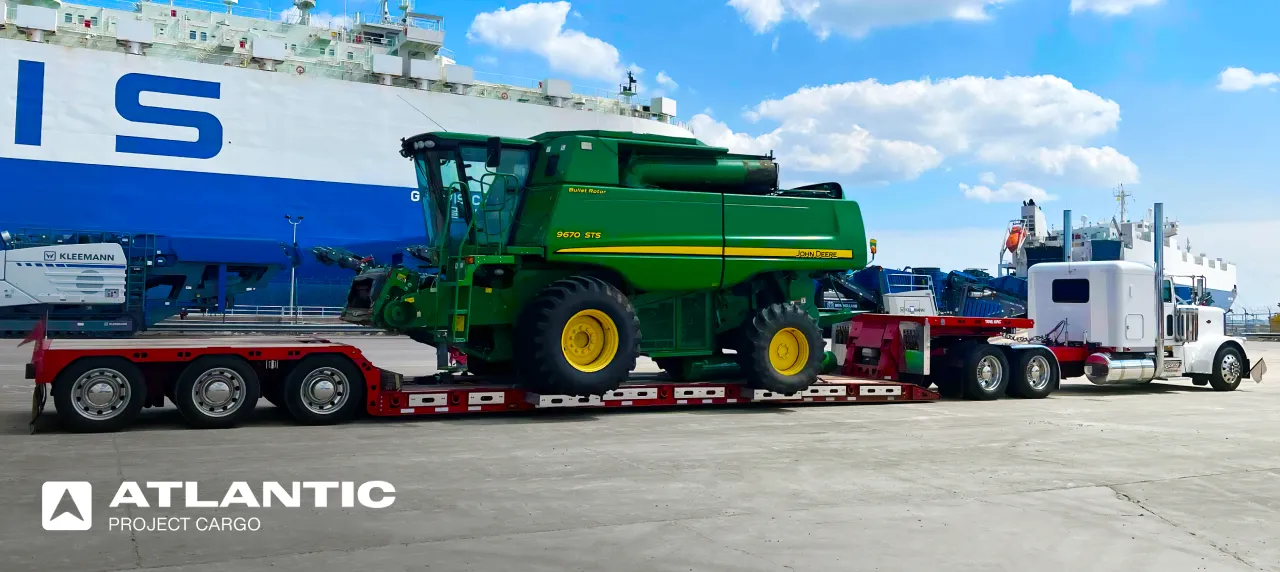
| Combine Harvesters | RoRo | Drive-on capability saves massive dismantling and crane loading costs. |
| Skid Steers | Standard Container | Small enough to fit inside standard dry vans, saving maximum money. |
| Mining Equipment | Flat Rack | Usually dismantled; excessive weight requires heavy-duty floor lashing. |
| Industrial Machinery | Open Top | Tall, narrow manufacturing presses benefit from top-loading and tarp protection. |
Shipping Agricultural or Construction Equipment Overseas?
Atlantic Project Cargo ships tractors, combines, excavators, cranes, and oversized machinery worldwide using RoRo, Flat Rack, Open Top, and breakbulk solutions.
Agricultural Equipment Shipping | Construction Equipment Shipping
Get Your Free Quote Today!
Which Shipping Method Is the Most Affordable?
Determining the cheapest way to move machinery requires looking past the base ocean freight rate and calculating total door-to-door logistics costs.
When evaluating RoRo vs flat rack, RoRo almost always wins on pure affordability for operational equipment. Let us look at a practical calculation for moving a 30,000-pound motor grader.
If you choose RoRo, your primary costs are the inland transport to the port, the base ocean freight, and standard port receiving fees. Because dockworkers simply drive the grader onto the ship, terminal handling charges remain low.
If you choose a flat rack for that same motor grader, the cost structure explodes. You must pay:
- Base Ocean Freight
- Out-of-Gauge (OOG) Surcharges (rates vary by carrier and lane, but commonly add a substantial premium over base freight – get a lane-specific quote before budgeting)
- Heavy-lift crane fees at the origin port
- Certified lashing and securing materials (chains, timber, turnbuckles)
- Independent marine surveyor fees to approve the lashing
- Heavy-lift crane fees at the destination port
In many real-world scenarios, flat rack shipping costs significantly more than RoRo for the same machine, once OOG surcharges, crane fees, and lashing/survey costs are added – get quotes on both methods before committing, since the gap varies widely by route and season.
However, affordability flips when machinery cannot run. Towing a dead machine onto a RoRo vessel incurs massive penalty fees from the carrier – if they accept it at all. In cases of non-running or heavily dismantled equipment, paying the extra crane fees for a flat rack or open top becomes the most cost-effective, and often the only, viable solution.
Note: Freight rates, surcharges, and the percentages above are illustrative, not quoted pricing – actual costs vary by carrier, trade lane, season, and cargo specifics. Get a quote for your route.
Factors That Determine Best Shipping Method
Logistics experts do not guess; they analyze data. Choosing between these methods requires evaluating several strict parameters.
Equipment Dimensions and Weight
Every inch and pound matters. A machine measuring 7 feet 8 inches wide might fit snugly into an open-top container. If it measures 8 feet 2 inches, it must go on a flat rack. Weight distribution also dictates the choice; concentrated heavy loads require the reinforced steel flooring of a flat rack.
Operational Condition
Does the engine start? Do the brakes hold? Does the hydraulic system leak? RoRo carriers maintain zero-tolerance policies for leaking fluids or failing brakes. If your machine is an auction purchase in rough condition, flat rack shipping is mandatory.
Destination Country and Port Infrastructure
You cannot ship RoRo to a port that lacks a specialized RoRo ramp. Similarly, many smaller ports in developing nations lack the 50-ton gantry cranes required to lift heavily loaded flat racks. Route planning must align with port capabilities. According to the latest International Maritime Organization (IMO) guidelines, port infrastructure data is readily available to forwarders to prevent routing errors.
Import and Export Restrictions
In 2026, environmental compliance dictates logistics. Shipping muddy construction equipment will trigger severe USDA or destination-country agricultural penalties. Furthermore, disassembled components can sometimes fall under different, lower-duty tariff codes than the assembled machine, but customs authorities scrutinize this closely, and misclassification carries penalties, so this should only be pursued with a licensed customs broker’s guidance.
Note: Import regulations vary by destination country and change over time. Confirm the current requirements with a freight forwarder such as Atlantic Project Cargo or a customs broker before shipping.
Common Mistakes When Shipping Heavy Equipment Overseas
Working in international logistics exposes you to catastrophic errors made by inexperienced shippers. Avoiding these pitfalls saves thousands of dollars.
Choosing RoRo for Non-Operational Equipment
Buyers frequently purchase cheap, non-running machinery at auction and book RoRo freight to save money. When the truck arrives at the port, the terminal rejects the cargo because it cannot drive up the ramp. The shipper is then hit with port storage fees, return trucking fees, and the cost of re-booking on a flat rack.
Incorrect Cargo Measurements
Guessing dimensions based on a manufacturer’s brochure from ten years ago is a massive mistake. Custom attachments, upgraded tires, or aftermarket exhaust stacks change the length, width, and height. If you declare a machine is in-gauge for an open top, but it arrives two inches too wide, the steamship line will refuse to load it.
Ignoring Destination Port Limitations
Booking a flat rack to a remote port without verifying crane capacity results in stranded cargo. The ship arrives, the port cannot lift the machinery off the vessel, and the cargo is shipped back to the origin country at the owner’s expense.
Poor Cargo Preparation
Failing to disconnect batteries, drain excess fuel, or tape over fragile glass cabins leads to safety violations and transit damage. Furthermore, neglecting to thoroughly pressure-wash dirt from excavator tracks guarantees costly delays and fumigation fees upon arrival.
How Atlantic Project Cargo Helps Choose Right Shipping Method
Navigating international heavy machinery logistics requires engineering precision and deep regulatory knowledge. Atlantic Project Cargo eliminates the guesswork from complicated supply chains.
Our process begins with comprehensive cargo evaluation. We conduct precise OOG analysis to determine exactly how your machinery should be routed. If dismantling an excavator arm saves you in ocean freight by allowing it to fit into standard containers, our expert rigging and crating teams manage the entire breakdown process.
We handle end-to-end route planning, ensuring the chosen destination port has the correct infrastructure – whether that means specialized RoRo ramps or heavy-lift gantry cranes. Our teams provide loading supervision, certified lashing, and seamless inland transport integration.
Furthermore, we manage complex customs coordination, including EPA and DOT import compliance, ensuring your machinery crosses borders without regulatory friction.
Work With Oversized Cargo Specialists
From route planning and port coordination to cargo securing and customs support, Atlantic Project Cargo manages the entire heavy equipment shipping process.
Talk to a Shipping Expert| Explore Ocean Freight Services
Get Your Free Quote Today!
FAQ Section
If the machinery is fully operational, wheeled, or tracked, RoRo (Roll-on/Roll-off) is generally the cheapest method. It eliminates expensive crane lifts, complex lashing materials, and out-of-gauge vessel surcharges. For smaller machinery like skid steers, loading them into standard 40-foot dry containers is the most cost-effective route.
Yes, in almost all scenarios involving running machinery. Flat rack shipping incurs premium out-of-gauge ocean freight rates, heavy-lift crane fees at both the origin and destination ports, and mandatory certified lashing costs. RoRo avoids all these accessorial charges.
A flat rack has no side walls or roof, making it ideal for extremely wide or irregularly shaped cargo that overhangs the edges. An open top container has solid steel side walls but a removable tarp roof, making it perfect for cargo that is too tall for standard doors but narrow enough to fit within standard container width.
Generally, no. RoRo vessels require equipment to be driven or towed up the ship’s ramp. While some carriers allow static cargo loaded onto specialized mafi trailers, this is expensive and heavily restricted. Non-running equipment is much better suited for flat rack or open top shipping.
Extremely heavy, wide, or awkwardly shaped machinery dominates this category. Large crawler excavators, massive bulldozers, mining crushers, oversized wheel loaders, and heavy industrial plant components that exceed standard container dimensions are perfectly suited for flat racks.
You should choose this method when your machinery exceeds the door opening height (about 7’5″ on standard containers, 8’5″ on high-cube) but stays narrower than 7 feet 8 inches (allowing it to fit between the container walls). It is highly recommended for industrial presses, tall generators, and machinery requiring heavy weather protection.
Out-of-gauge (OOG) cargo refers to any freight that exceeds the standard internal dimensions of a standard 20-foot or 40-foot shipping container. If machinery is too wide, too tall, or too long to fit inside a closed box, it is classified as OOG and requires specialized equipment like flat racks or open tops.
You must measure the exact length, width, height, and weight of the machine. Next, assess its operational condition (running vs non-running). Finally, consult with a specialized freight forwarder like Atlantic Project Cargo to analyze destination port capabilities, budget constraints, and current ocean carrier availabilities to select the optimal route.
Read More
Victoria Moseicuka
Nick Yadryshnikov
Victoria Moseicuka