
Hours of operations:
9AM - 5PM / UTC -5 (EST)

What to Do If Heavy Equipment Arrives Damaged After Shipping

July 27, 2026
Shipping Quote
Customs Duties
Drayage Rate
Do you already own this equipment?

You Can Request a New Quote Every 15 Minutes

Please wait or contact us at [email protected]

Thank you for Choosing Us!

Looking to buy or sell heavy equipment?
With JumboBee, you can trade online with financing options and worldwide shipping.

Check Inventory
Calculate Import Duties
Get a free, no-obligation estimate of your import duties!
Calculate Import Duties
Get a Drayage Estimate
Get a free drayage estimate tailored to your exact needs!
Check a Drayage Rate
Home Insights What to Do If Heavy Equipment Arrives Damaged After Shipping
Reviewed by
Victoria Moseicuka Chief Operating Officer

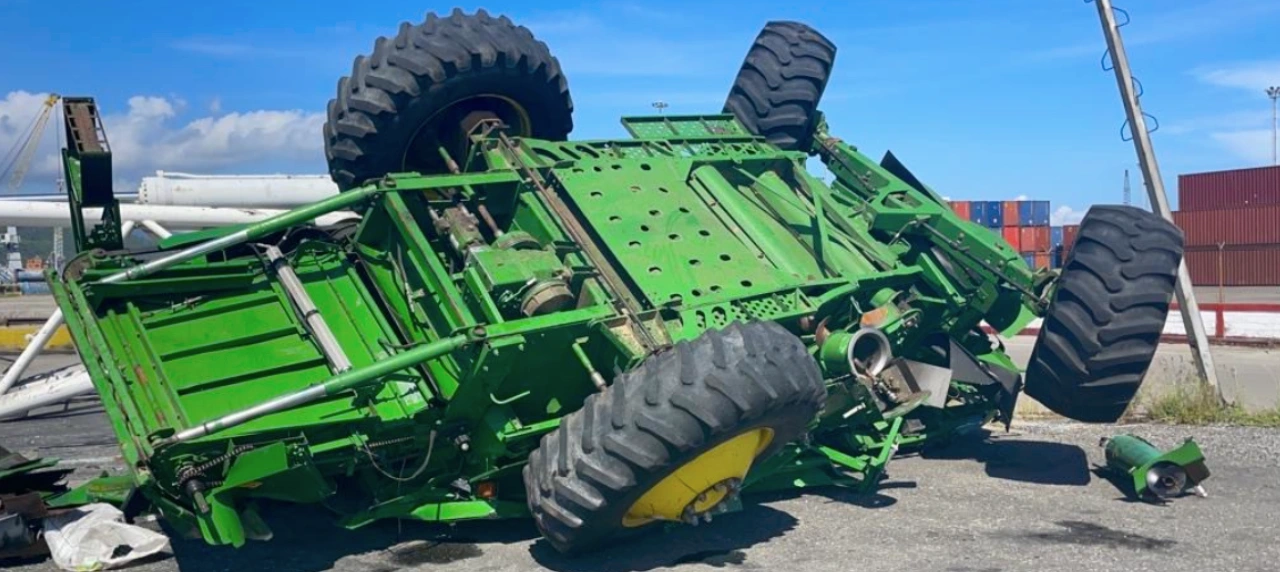
Moving heavy machinery across oceans and interstate highways subjects massive physical assets to immense dynamic forces. Despite rigorous planning and professional handling, heavy equipment shipping damage occasionally occurs. Shipments encounter severe weather, harsh port handling, sudden braking on highways, and complex loading variables.

Whether you are importing a fleet of John Deere tractors, exporting Caterpillar excavators, receiving Case IH combines, transporting Komatsu wheel loaders, or relocating stationary industrial machinery, discovering damage at the destination is a stressful event.

The first few hours after delivery dictate the financial outcome of this situation. Signing a delivery receipt without proper inspection essentially absolves the carrier of liability. How you document the scene, who you notify, and how quickly you file a damaged freight claim determines whether you absorb a massive financial loss or successfully recover the repair costs.

Let’s break down the steps to protect your assets and execute a successful freight claim proces

Note: This article is for general informational purposes only and does not constitute legal, insurance, or financial advice. Freight claim rules, carrier liability limits, and reporting deadlines vary by carrier, mode of transport, jurisdiction, and the specific terms of your bill of lading and insurance policy. Always consult a qualified attorney, licensed insurance broker, or your logistics provider before acting on a specific shipment or claim.

What Counts as Shipping Damage?

Before filing paperwork, you must accurately categorize the damage. Heavy machinery frequently ships used, meaning pre-existing wear and tear is expected. Carriers will aggressively dispute claims if they believe the damage existed before loading. True damaged equipment during shipping falls into four categories.

Cosmetic Damage

Cosmetic issues affect the appearance of the machinery but do not impede its mechanical function. While often viewed as minor, cosmetic damage on a brand-new $400,000 combine harvester significantly reduces its resale value.

  • Examples: Deep scratches in factory paint, dented engine cowlings, cracked fiberglass cab panels, or shattered cab glass from flying road debris.

Structural Damage

Structural damage compromises the integrity and safety of the equipment. This usually results from improper lifting techniques at the port or severe collisions during transit.

  • Examples: Bent ROPS (Roll-Over Protection Structures), warped trailer frames on mobile machinery, crushed exhaust stacks, or twisted boom arms on excavators.

Operational Damage

This occurs when the internal mechanics or sensitive systems of the equipment are compromised by impact, severe vibration, or environmental exposure during the voyage.

  • Examples: Severed hydraulic lines, water-logged electrical systems from saltwater exposure, crushed control panels, or cracked engine blocks caused by improper tie-down tension.

Missing Parts or Attachments

Sometimes the damage is not what is broken, but what is gone. Heavy equipment often ships with detachable components that can easily be misplaced or stolen during port transfers. According to Verisk CargoNet’s 2025 supply chain risk analysis, cargo theft losses surged to an estimated $725 million in 2025 – up 60% from the prior year – as thieves increasingly target higher-value freight.

  • Examples: Missing excavator buckets, stolen GPS receivers from tractor cabs, missing forklift tines, or absent spare tire kits.

What to Do Immediately After Discovering Damage

Your actions at the exact moment the delivery truck arrives are the most important part of the entire freight claim process. Follow this protocol before the truck driver leaves your yard.

Step 1: Stop and Inspect the Equipment

Do not let the driver unchain the equipment or drive it off the trailer until you have conducted a walk-around inspection. Look for fresh fluid leaks, broken glass, and misaligned components.

Step 2: Document Everything

If you see damage, note it explicitly on the Bill of Lading or Proof of Delivery before you sign it. Avoid vague notations like “subject to inspection” – carriers routinely reject these as insufficient to preserve a claim. Instead, write specific, concrete notes such as: “Cab glass shattered, hydraulic fluid leaking from left track.”

Step 3: Photograph the Damage

Take extensive photos before the equipment is unloaded. Capture the chains, straps, and blocking. If the machine shifted during transit, the exact position of the securement devices proves liability.

Step 4: Review Delivery Documentation

Compare the arrival condition to the origin condition report. Check the driver’s paperwork to ensure the VIN and serial numbers match what was loaded.

Step 5: Notify Relevant Parties

Immediately call your logistics coordinator, the carrier’s dispatch office, and your Cargo Insurance provider to report the incident on the record.

Step 6: Preserve Evidence

Do not repair the machinery. Move the equipment to a secure, covered location if possible, but leave the damaged components exactly as they arrived until an insurance adjuster can physically inspect them.

How Heavy Equipment Gets Damaged During Transport

Understanding how damage occurs helps you identify liability and prevent future incidents. Partnering with experts in Construction Equipment Shipping mitigates these risks, but recognizing the hazards is critical for equipment owners.

Improper Securement

Heavy haul trucking falls under strict regulations from the Federal Motor Carrier Safety Administration (FMCSA). If a carrier fails to calculate the correct Working Load Limit of their chains, or runs chains over soft hydraulic lines without edge protection, the equipment will shift or sustain crush damage during transit.

Loading and Unloading Incidents

Driving a 90,000-pound articulated dump truck onto a steep lowboy trailer requires precision. Misaligned ramps, inexperienced operators, or attempting to load on uneven ground frequently results in machinery slipping off the deck, causing catastrophic structural damage.

Port Handling Damage

When utilizing Ocean Freight, machinery must be loaded onto the vessel. In breakbulk or flat rack shipping, port stevedores use massive gantry cranes to lift the equipment. If they attach rigging to weak points instead of designated factory lifting eyes, the frame can warp.

Weather Exposure During Transit

Machinery shipped on open flat racks across the ocean faces extreme saltwater spray. If the origin shipper fails to apply proper cosmoline rust-inhibitor coatings or shrink-wrap sensitive electrical panels, the equipment will arrive heavily corroded.

Road Transport Incidents

Interstate transit exposes equipment to low overpasses, high winds, and erratic passenger vehicles. A driver swerving to avoid a collision can cause top-heavy machinery, like a wheel loader, to break its securement and impact the trailer structure.

Missing Attachments and Accessories

In RoRo Shipping, the equipment is driven onto the vessel like a parking garage. Because the cab is often left unlocked for port operators, loose items inside the cab (radios, GPS screens, manuals) are highly susceptible to theft during the voyage.

Visible vs Concealed Shipping Damage

The timeline for executing freight damage claims depends entirely on when the damage is discovered.

Visible Damage

Visible damage is obvious the moment the truck pulls into the yard. A smashed windshield or a dented engine hood is immediately apparent. You must note this damage on the delivery receipt before signing. If you sign a clean receipt with visible damage staring you in the face, the carrier will almost certainly deny your claim, arguing the damage happened after they dropped it off.

Concealed Damage

Concealed damage is discovered after the driver leaves. For example, the exterior of an industrial generator looks perfect, but when your technicians open the access panel three days later, they discover the internal engine mounts sheared completely off due to transit impact.

Why Reporting Quickly Matters

For concealed damage, the clock is ticking rapidly. Because most heavy equipment moves via specialized truckload and heavy-haul carriers rather than standard LTL carriers, the deadline that applies to your shipment is usually set by the carrier’s own bill of lading or rules tariff – not a universal federal timeline. As a benchmark, carriers that participate in the National Motor Freight Classification (NMFC), published by the National Motor Freight Traffic Association (NMFTA), require concealed damage to be reported within just 5 business days of delivery. Wait beyond your carrier’s window, and your cargo damage claim will likely be denied due to delayed notification. Always confirm the exact deadline in your specific bill of lading before you assume you have more time.

Note: Deadlines and procedures cited here are general defaults and can change; confirm the exact requirements in your carrier’s current tariff and bill of lading, as these control your actual rights.

How to Properly Document Shipping Damage

Documentation is the only currency that matters to claims adjusters. Vague complaints get rejected; objective, timestamped evidence gets paid.

Photographs You Should Take

  • Wide-angle photos: Capture the entire truck, trailer, and machinery sitting in your yard to establish context and location.
  • Close-up damage photos: Get high-resolution shots of the specific damage from multiple angles.
  • Serial numbers: Photograph the manufacturer’s identification plate and stamped VIN to prove the damaged machine is the exact unit listed on the BOL.
  • Loading condition: Photograph the chains, binders, and blocking before the driver removes them. If a chain snapped, photograph the broken link.

Documents You Should Save

  • Original Bill of Lading.
  • Annotated delivery receipt proving you noted the damage.
  • Pre-shipment origin inspection reports and photos.
  • The commercial invoice proving the financial value of the machine.
  • Repair estimates from certified mechanics.

Notes That Strengthen a Claim

Document the exact time the truck arrived, the weather conditions (e.g., “raining heavily, cab interior exposed due to broken glass”), the truck’s license plate number, and the name of the driver.

Who Is Responsible for Shipping Damage?

Determining who writes the check for your damaged freight claim requires understanding the complex web of logistics liability.

Carrier

The physical asset owner (the trucking company, ocean liner, or rail operator) holds primary liability while the freight is in their possession. However, carrier liability is strictly limited by law and tariff rules. They will aggressively defend against claims by citing “acts of God” (severe weather) or improper packaging by the shipper.

Freight Forwarder

Your logistics broker or forwarder does not own the trucks or ships. They act as your agent. Unless the forwarder is negligent in their hiring practices or issues their own House Bill of Lading (acting as a Non-Vessel Operating Common Carrier), they are generally not financially liable for the physical damage. However, a premium forwarder will manage the freight claim process on your behalf.

Cargo Insurance Provider

If you purchased primary all-risk cargo insurance, this provider is your best friend. Instead of fighting the carrier’s legal team for months, you file the claim with your insurance company. They pay you out based on the policy terms, and then they assume the burden of subrogating (suing) the carrier to recoup their money.

Shipper

The party who loaded the machinery at the origin can be held liable if they failed to prep the equipment properly. For example, if a dealer ships an excavator but fails to lower the boom to a safe transport position, resulting in an over-height bridge strike, the carrier will blame the shipper for providing unsafe freight.

Consignee

As the receiver, you become liable if you sign a clean delivery receipt, fail to report concealed damage within the required window, or destroy the evidence by attempting unauthorized repairs before an inspection.

Understanding the Freight Claim Process

Filing a claim is a formal legal procedure. Follow these steps sequentially.

Step 1: Notify the Carrier

Send a formal “Notice of Intent to File a Claim” to the carrier in writing immediately upon discovering the damage.

Step 2: Notify the Insurance Provider

Contact your cargo insurance underwriter to trigger their internal claims process. They will likely assign an independent marine surveyor or heavy equipment adjuster to visit your site.

Step 3: Submit Supporting Documentation

Compile the BOL, delivery receipt, commercial invoice, repair quotes, and photographic evidence into a single comprehensive claim packet.

Step 4: Damage Assessment

The insurance adjuster and carrier representatives will evaluate the evidence. They will compare the repair quote against the total value of the machine.

Step 5: Claim Review

Under federal rules for motor carriers, the carrier generally has 30 days to acknowledge receipt of the claim, and 120 days from the date it received the claim to pay, decline, or make a firm settlement offer (or provide a written status update if more time is needed). (Timelines differ for ocean and rail.)

Step 6: Resolution

The claim will be approved, partially paid, or denied. If denied, the carrier must provide a specific legal justification, at which point you may need to escalate to arbitration or litigation.

Note: These federal timelines apply to for-hire motor carriers subject to 49 CFR Part 370. Ocean, rail, and some private or exempt carriers follow different rules – confirm the applicable process with your carrier or forwarder.

Common Reasons Freight Claims Are Rejected

Carriers employ dedicated claims departments trained to find technicalities that absolve them of financial responsibility. Avoid these fatal errors:

  • Signing a clean delivery receipt: The number one reason claims fail. If you sign the POD without writing “Damaged” on it, you legally agree the machine arrived in perfect condition.
  • Insufficient evidence: Providing blurry photos or lacking pre-shipment origin photos to prove the machine was undamaged before loading.
  • Delayed reporting: Missing the strict 5-business-day window for reporting concealed damage (or whatever deadline the carrier’s tariff specifies).
  • Discarded evidence: Discarding snapped chains, broken crates, or repairing the machinery before the adjuster conducts their inspection.
  • Inability to prove transport-related damage: Failing to prove the damage happened on the truck rather than at the origin yard or during offloading at the destination.

Need Help With a Damaged Equipment Shipment?

Dealing with damaged machinery delays your projects and drains your capital. Atlantic Project Cargo helps coordinate heavy equipment transportation, comprehensive cargo insurance solutions, and meticulous shipment documentation for domestic and international freight to ensure your assets are protected.

Request Shipping Assistance

Get Your Free Quote Today!

Cargo Insurance vs Carrier Liability

Understanding the difference between these two concepts is the most critical financial lesson in Industrial Equipment Shipping. Relying strictly on the carrier to pay for your damaged $300,000 machinery is a massive financial risk.

Carrier Liability

By law, carriers must carry liability coverage, but it is deeply restricted. For domestic U.S. trucking, the Carmack Amendment dictates liability, but motor carriers cap their payouts in their fine-print tariffs (sometimes as low as $0.10 to $2.00 per pound).

For ocean freight, the situation is even more dangerous. Under the Carriage of Goods by Sea Act, ocean carriers limit their liability to just $500 per customary freight unit. If your $150,000 tractor falls off a RoRo vessel and sinks to the bottom of the Atlantic, the ocean carrier’s legal liability might max out at $500 total, unless a higher value was explicitly declared and paid for in advance.

Cargo Insurance

Primary cargo insurance is a policy you purchase specifically for your freight. An All-Risk policy pays out based on the actual commercial value of the equipment, regardless of whether the carrier admits fault. It covers acts of God, extreme weather, and transit accidents without the debilitating legal limitations of carrier tariffs.

General Average: When You Have to Pay the Carrier, Even If They're at Fault

Every scenario above assumes the money flows one way: the carrier owes you. General average flips that. Under this doctrine, you can owe the carrier — and be forced to pay before they’ll even release your cargo — regardless of who caused the underlying incident.

General average is a maritime law principle, standardized today by the York-Antwerp Rules, dating back centuries. When a vessel and its cargo face a common peril at sea and the ship’s master takes extraordinary action to save them (jettisoning cargo, incurring emergency salvage or towing costs, paying for urgent repairs), the cost of that rescue is shared proportionally among everyone with a financial stake in the voyage: the shipowner and every cargo owner aboard, whether or not their individual shipment was actually damaged. An independent average adjuster calculates each party’s share based on cargo value, and the carrier can hold a lien on your cargo until you pay your contribution or post a general average bond or guarantee — even if your equipment arrived in perfect condition.

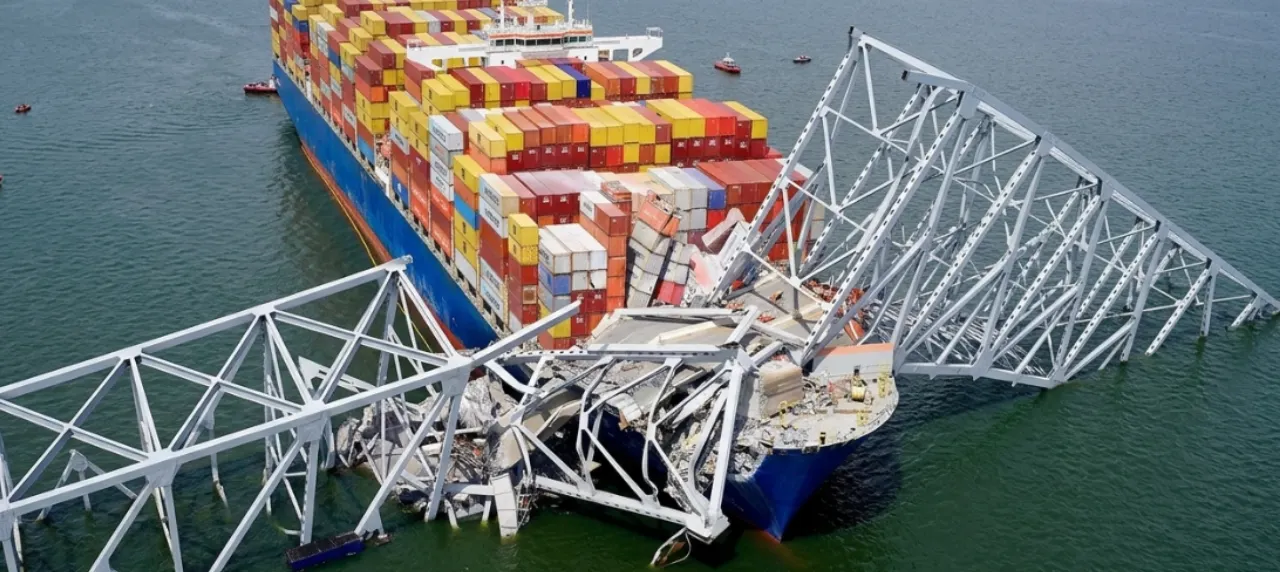
The 2024 collapse of Baltimore’s Francis Scott Key Bridge is the highest-profile recent illustration. After the container ship Dali lost power and struck the bridge, closing the Port of Baltimore for months, the vessel owner declared general average to help cover the enormous salvage and refloating costs. Every one of the roughly 4,000 containers aboard was pulled into the declaration: cargo owners had to post security before their goods — damaged or not — would be released.

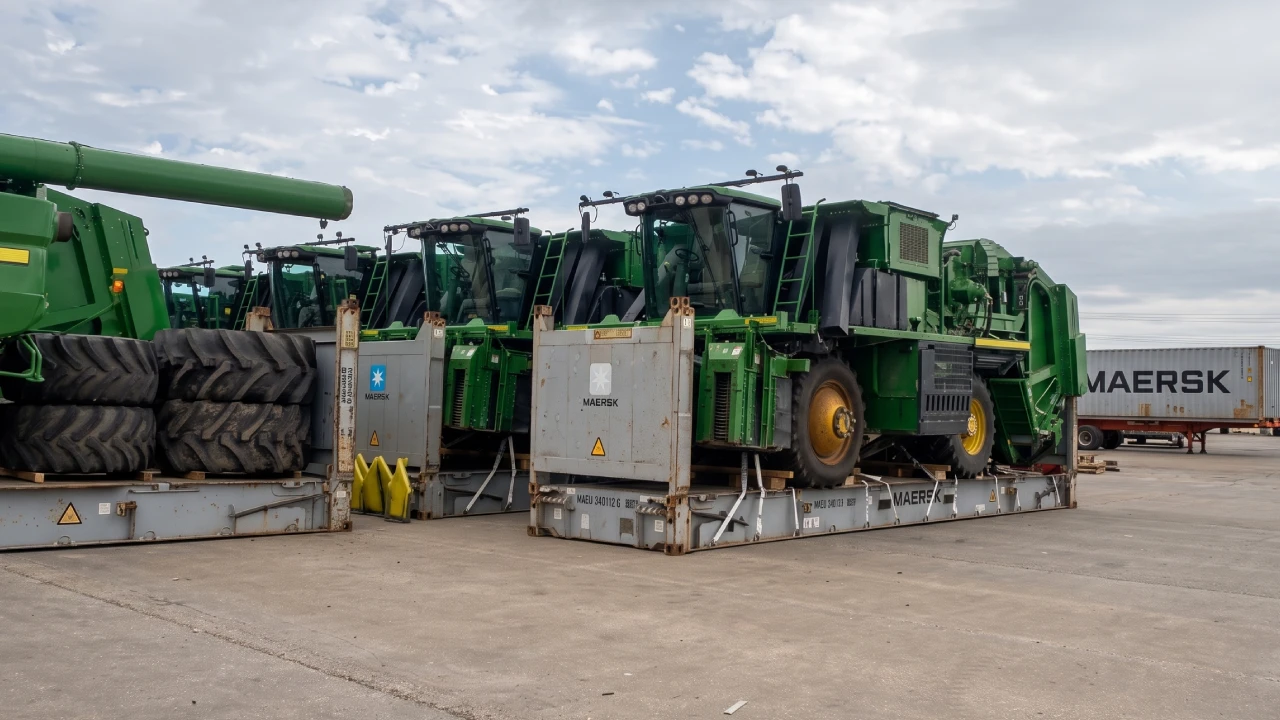
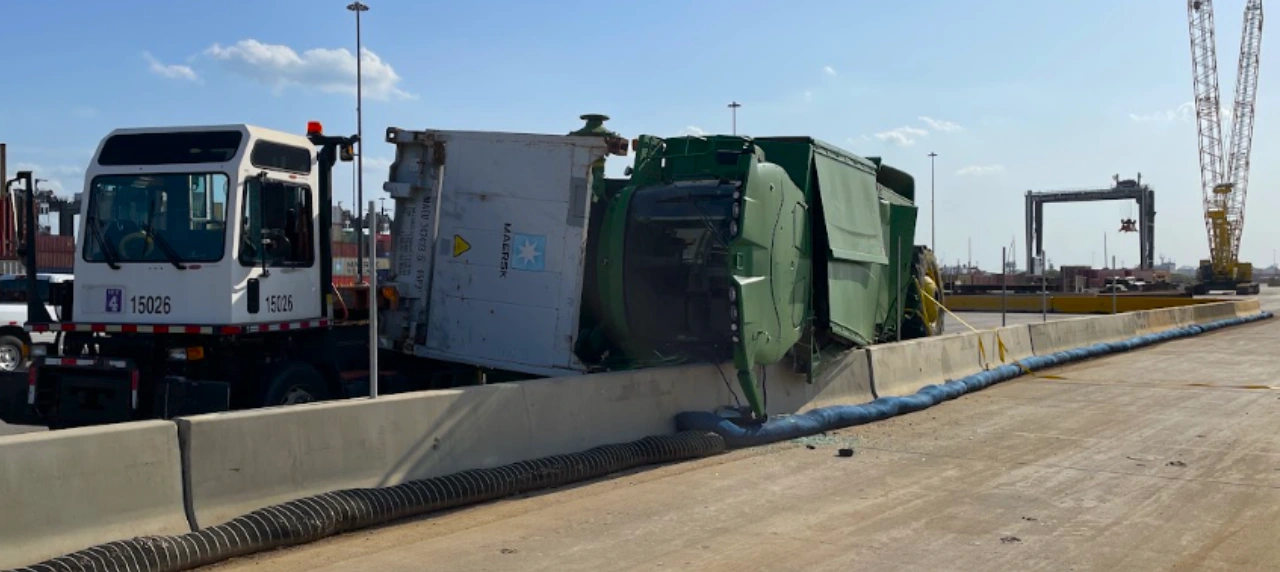
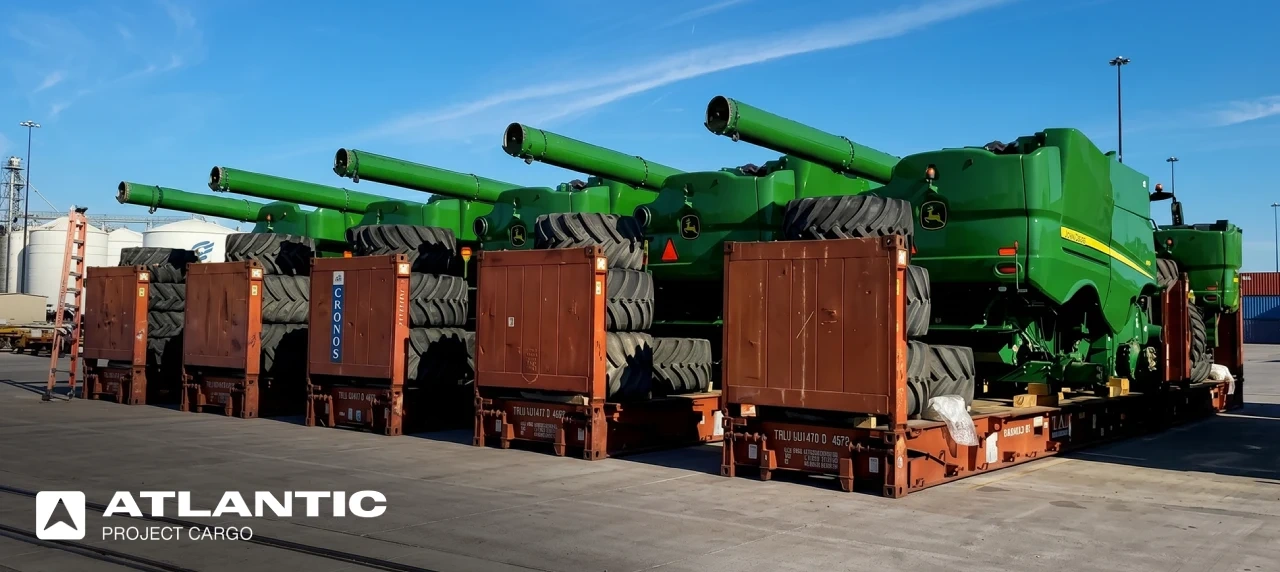
We’ve been on the paying end of a general average declaration ourselves. We had four combines aboard a vessel involved in a general average incident. Two combines were covered by cargo insurance, two were not. For the insured units, our insurer posted the guarantee and paid roughly $50,000 per combine directly to Maersk to secure their release. For the uninsured units, we had to pay that same $50,000-per-combine contribution out of pocket before Maersk would release the equipment — even though the vessel side, not us, was responsible for the incident. That’s the counterintuitive part of general average: fault doesn’t determine who pays first. You do, whether or not you caused the problem, and any dispute over ultimate responsibility gets sorted out separately, afterward. It’s one more reason all-risk cargo insurance is worth the premium: it’s the difference between your insurer writing that check and your company writing it.

Note: General average obligations, bond and guarantee requirements, and adjustment procedures vary by vessel, carrier, flag state, and the rules incorporated into your bill of lading. Confirm your specific exposure with your forwarder, cargo insurer, or a maritime attorney before a voyage — not after a casualty is declared.

Why High-Value Equipment Requires Additional Protection

When shipping a 100,000-pound crane, the gap between carrier liability and the actual asset replacement cost can be hundreds of thousands of dollars. You must secure primary cargo insurance before the machinery is ever loaded onto the first truck.

Note: Liability limits, statutory rules, and coverage all depend on the specific carrier tariff, bill of lading terms, policy exclusions, and applicable law. The figures cited are illustrative defaults, not guarantees. Consult a licensed broker or maritime/transportation attorney for your situation.

How to Reduce the Risk of Equipment Shipping Damage

The best freight damage claims are the ones you never have to file. Implementing a strict pre-transport protocol minimizes risk.

Pre-Shipment Inspections

Hire a third-party inspector to thoroughly document the machinery at the origin point. Video walkthroughs proving the machine starts, runs, and has no body damage eliminate the carrier’s ability to claim “pre-existing conditions.”

Proper Securement

Ensure the heavy haul trucking company utilizes DOT-compliant Grade 70 or Grade 80 transport chains. Request that they use soft-edge protectors when routing chains over painted surfaces or hydraulic cylinders.

Professional Loading Procedures

If shipping via ocean freight, work with experts in Customs Brokerage and port logistics to ensure the machinery is delivered to the port terminal with proper lifting diagrams so stevedores know exactly where to attach crane rigging.

Experienced Heavy Equipment Carriers

Do not broker heavy machinery to standard dry-van freight carriers. Utilize specialized lowboy, step-deck, and multi-axle heavy haulers who understand weight distribution, permit routing, and out-of-gauge transport dynamics.

Equipment Condition Reports

Mandate that both the origin shipper and the destination receiver sign a formal Equipment Condition Report. This creates a legally binding paper trail of custody and condition.

Common Equipment Damage Scenarios

To illustrate the proper response, here is how experienced logistics professionals handle real-world heavy equipment shipping damage.

Excavator Arrives With Visible Body Damage

A new excavator arrives at a construction site. The receiving manager immediately notices the right-side engine door is crushed inward.

  • Action: The manager stops the unloading process. They photograph the damage and the truck’s license plate. They write “Right engine door crushed on arrival” clearly on the Bill of Lading. They instruct the driver to sign next to the note. They then unload the machine, park it safely, and immediately notify their insurance provider to send an adjuster.

Tractor Delivered With Missing Attachments

A used agricultural tractor arrives via Agricultural Equipment Shipping, but the expensive front-end loader bucket listed on the commercial invoice is nowhere to be found on the trailer.

  • Action: The consignee checks the origin photos, confirming the bucket was loaded. They annotate the POD: “Front-end loader bucket missing at delivery.” They immediately notify the freight forwarder, who traces the shipment back to the port terminal where the bucket was accidentally separated during a RoRo transfer.

Industrial Machinery With Concealed Damage

A crated industrial lathe arrives at a manufacturing plant. The wooden crate is perfect. Three days later, technicians uncrate the machine and find the internal spindle is snapped due to the crate being dropped flat on its base.

  • Action: The plant manager halts the installation. They save all the crating materials. Because they are within the 5-business-day NMFC window, they immediately file a concealed damage notification with the carrier and request an immediate physical inspection from the carrier’s claims department.

Final Thoughts

Discovering damage to high-value heavy machinery requires immediate, clinical action. Emotion and anger will not recover your financial loss; objective documentation will. Inspect every inch of the equipment before signing the delivery receipt, document the scene with high-resolution photographs, preserve all physical evidence, and thoroughly understand your strict reporting timelines.

Most importantly, recognize that carrier liability is heavily restricted by law. Protecting your capital requires proactive logistics planning and comprehensive cargo insurance. Act quickly, document thoroughly, and lean on experienced logistics partners to navigate the complexities of international freight claims.

Shipping High-Value Equipment Internationally?

Protect your machinery with experienced logistics planning, comprehensive cargo insurance options, and transportation solutions designed for oversized and heavy equipment. Avoid the financial devastation of shipping damage by partnering with true project cargo experts.

Request a Quote | Learn About Cargo Insurance

FAQ

Stop the unloading process immediately. Document the exact condition of the machinery and the securement devices with extensive photographs. Notate the specific damage clearly on the driver’s Bill of Lading or delivery receipt before signing it. Notify your logistics provider and cargo insurance underwriter immediately.

A freight damage claim is a formal legal and financial demand made by a shipper or consignee to a carrier (or insurance provider) seeking financial reimbursement for cargo that was lost, damaged, or destroyed while in the carrier’s custody and control during transit.

Take wide-angle contextual photos of the delivery truck and close-up photos of the specific damage. Photograph the VIN/serial plates and the tie-down methods. Save the annotated delivery receipt, the original Bill of Lading, the commercial invoice, and the origin pre-shipment inspection reports.

Concealed damage occurs when the exterior packaging or the outward appearance of the machinery looks completely intact upon delivery, but internal or structural damage is discovered later after the carrier has left the premises. It typically must be reported within 5 business days of delivery.

Generally, the asset-owning carrier transporting the goods holds primary liability while the equipment is in their custody – under the Carmack Amendment, carriers are presumed liable once you show the equipment was in good condition at origin and arrived damaged, and the burden shifts to them to prove they weren’t negligent. That said, if the origin shipper loaded or secured the freight improperly, liability can shift to them instead. Ultimately, primary cargo insurance providers step in to cover the buyer’s financial loss and subrogate against the responsible party.

Yes, if you purchase an All-Risk primary cargo insurance policy, it is designed to cover physical loss or damage to the freight during transit. This is vastly superior to relying solely on the motor carrier’s or ocean liner’s limited legal liability tariffs.

Yes, but it is significantly harder if you signed a clean delivery receipt. If the damage is concealed, you can still file a claim, but you must report it immediately – usually within 5 business days of the delivery date under standard NMFC guidelines, though carrier tariffs can vary – and you bear the burden of proving the damage occurred during transit, not after drop-off.

A successful claim packet requires the original Bill of Lading, the delivery receipt (with damage noted), the commercial invoice (proving equipment value), a certified repair estimate, pre-shipment photos, arrival photos, and a formal letter of intent to claim.

Partner with specialized heavy haul carriers, like Atlantic Project Cargo, utilize third-party pre-shipment origin inspections, ensure proper DOT-compliant securement practices, purchase primary all-risk cargo insurance, and work with experienced freight forwarders who specialize in out-of-gauge machinery transport.

Carrier liability is mandated by law but heavily restricted by tariffs (e.g., $500 per unit for ocean freight), and under the Carmack Amendment the burden falls on the carrier to disprove negligence once you show the equipment was damaged in transit. Cargo insurance is a separate policy you purchase that pays out based on the actual value of your equipment for transit damages, regardless of whether the carrier admits fault.

Yes, potentially. General average is a maritime law principle under which all cargo owners aboard a vessel share the cost of extraordinary measures taken to save the ship and cargo from a common peril – such as the 2024 Dali/Key Bridge incident – regardless of whose fault the peril was or whether your specific cargo was damaged. The carrier can withhold your goods until you pay your share or post security. All-risk cargo insurance typically covers this contribution; without it, you pay out of pocket, as we did on two uninsured combines in a general average case that required a $50,000-per-unit payment to Maersk before release.

Note: As with everything above, these answers are general defaults – your specific rights and deadlines depend on your bill of lading, carrier tariff, insurance policy, and applicable law. When real money is on the line, confirm the details with a trusted carrier like Atlantic Project Cargo, broker, or an attorney before you act.

Read More

July 23, 2026
Consignee vs Consignor: Understanding Shipping Responsibilities in International Equipment Transport
The consignor is the party sending or exporting the goods, while the consignee is the party receiving or importing them. Both appear on shipping documents...
Reviewed by
Nick Yadryshnikov
July 19, 2026
Shipping Agricultural Equipment to Paraguay: Import Requirements & Compliance Guide
Paraguay tightened the rules on importing used agricultural machinery when it enacted Law No. 7565, and the change catches a lot of exporters off guard. A...
Reviewed by
Victoria Moseicuka
July 16, 2026
DDP vs DAP: Which Incoterm Is Better for International Equipment Shipping?
DDP and DAP both require sellers to arrange transportation to destination countries. The key difference is that under DDP, sellers are responsible for import duties,...
Reviewed by
Nick Yadryshnikov
Share via