
Key Takeaways
- NVOCC function as ocean transport providers but do not operate the physical shipping vessels.
- Transportation forwarders coordinate complex logistics across multiple transport providers door-to-door.
- Understanding NVOCC meaning helps shippers realize they can get wholesale ocean rates without contacting vessel operators directly.
- Many international equipment shipments require both ocean booking and inland logistics coordination.
- Oversized cargo like excavators and cranes require specialized heavy haul specialists, permits, and port handling.
- Heavy equipment shipping demands strict compliance with environmental washing regulations and export documentation laws.
- Integrated logistics management reduces port delays, eliminates communication issues, and lowers overall shipping costs.
Many equipment buyers, exporters, dealers, manufacturers, and project cargo owners encounter confusing terminology during the international shipping process. Navigating terms like ocean carrier, customs broker, and drayage provider can quickly become overwhelming.
For most international equipment shipments, a freight forwarder manages the broader logistics process, while an NVOCC primarily provides ocean transportation services. Many shipments actually involve both. Understanding the difference between these organizations can help you reduce shipping costs, avoid port delays, and eliminate communication problems.
This guide explains the distinction between these logistics providers from the perspective of heavy equipment owners. Rather than focusing on regulatory definitions, we will show you how these organizations participate in real-world machinery shipments and help you determine which logistics partner you need.
What Is an NVOCC?
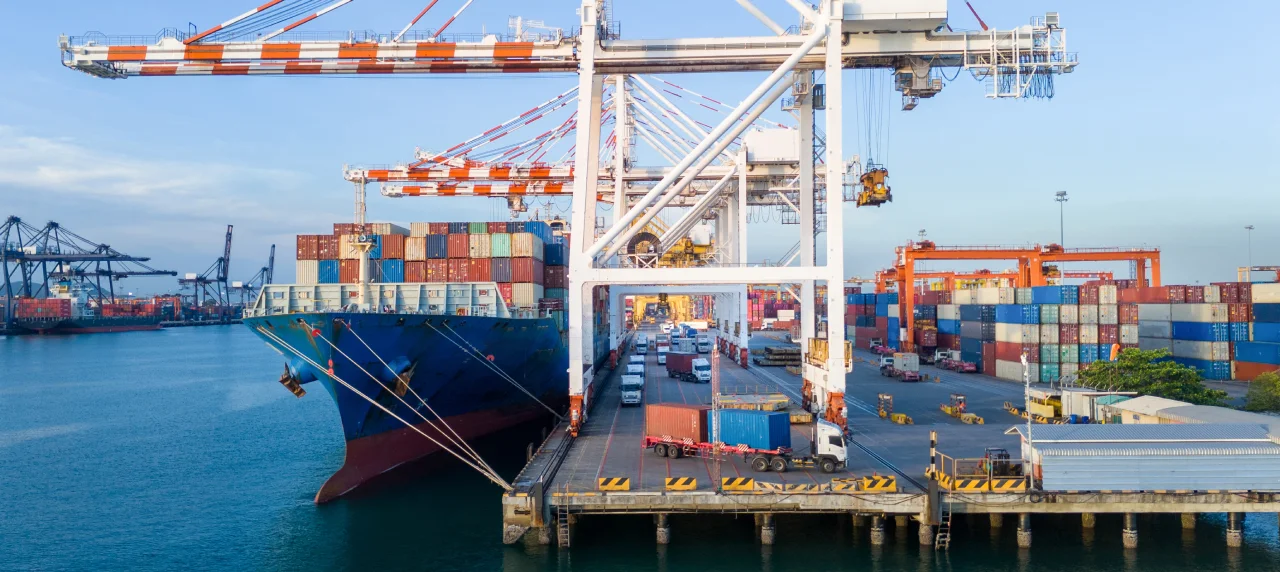
Non-Vessel Operating Common Carriers function as virtual ocean carriers that sell shipping space to customers without actually owning or operating the shipping vessels. They purchase large blocks of cargo space from actual vessel operators at discounted volume rates and resell that space to individual shippers.
Understanding NVOCC meaning requires looking at their legal relationship with your cargo. When you book space through this type of provider, they issue their own House Bill of Lading. This document serves as a legal contract of carriage and a receipt for your machinery. To the actual vessel operator, the Non-Vessel Operating Common Carrier is the shipper. To you, they act as the carrier.
Companies relying on NVOCC shipping services gain access to better ocean freight rates than they could negotiate independently. Many shippers choose NVOCCs because they may provide access to negotiated carrier rates and additional booking flexibility. Virtual carriers leverage their massive shipping volumes to offer you wholesale rates while handling the ocean transit booking.
NVOCC Responsibilities
- Books ocean freight space on shipping vessels
- Issues House Bill of Lading for ocean transit
- Negotiates volume shipping rates with vessel operators
- Acts as the legal carrier for the ocean segment
- Does not own or operate the physical ships
- Does not typically manage inland heavy haul transportation
- Does not typically handle international customs clearance
What Is a Freight Forwarder?
Freight forwarders operate as logistics architects who organize and manage the door-to-door transportation supply chain. They do not move your cargo themselves. Instead, they coordinate various transportation providers to ensure your machinery travels seamlessly from the seller location to the final destination.
When examining freight forwarder vs NVOCC roles, logistics coordination stands out as the primary difference. Forwarders handle transportation planning, export documentation management, customs support, and multi-modal logistics.
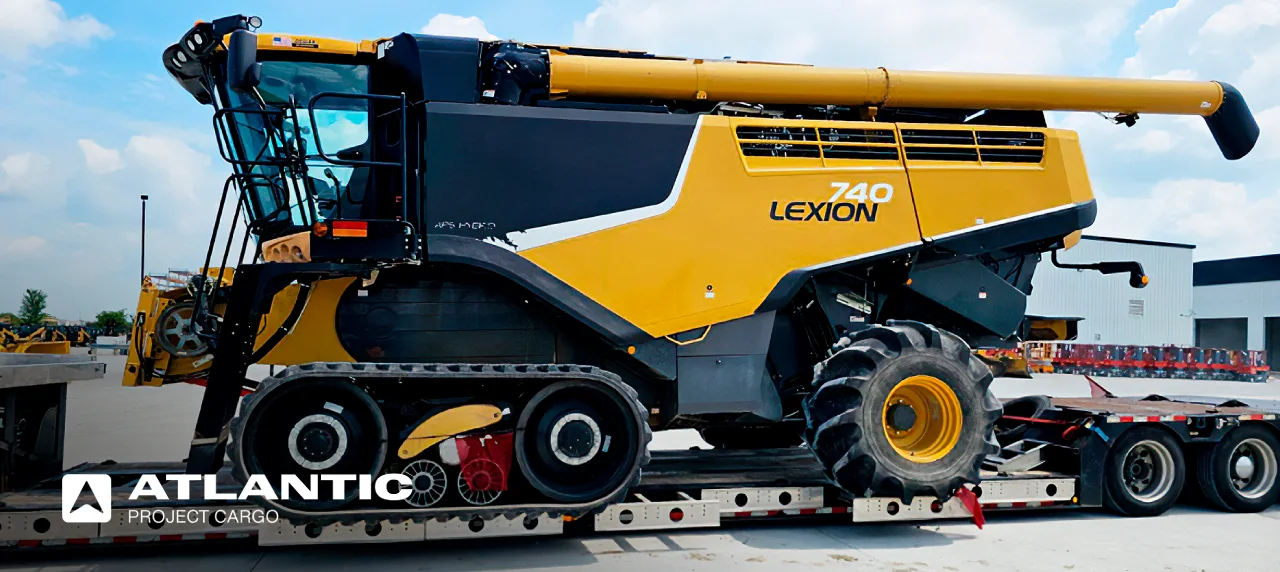
If you purchase a John Deere combine harvester in the United States and need it delivered to a farm in Australia, this logistics partner will arrange the origin trucking, port delivery, ocean crossing, customs clearance, and final destination delivery.
These organizations act as your single point of contact. They troubleshoot scheduling conflicts, ensure compliance with export regulations, and manage the complex paperwork required for international heavy equipment transportation.
Freight Forwarder Responsibilities
- Organizes multi-modal transportation door-to-door
- Coordinates heavy haul trucking and port drayage
- Manages export and import documentation
- Facilitates customs clearance processes
- Arranges cargo insurance and equipment washing
- Does not act as the legal ocean carrier
- Does not issue a master contract of carriage
NVOCC vs Freight Forwarder: Key Differences
Choosing between NVOCC vs freight forwarder services becomes easier when you compare their specific operational capabilities side by side.
| Feature | Non-Vessel Operating Common Carrier | Freight Forwarder |
|---|---|---|
| Carrier Status | Acts as legal ocean carrier | Acts as logistics agent |
| Bill Of Lading | Issues House Bill of Lading | Issues Forwarder Cargo Receipt |
| Ocean Transportation | Primary core service | Outsourced to carriers |
| Inland Transportation | Rarely provided | Core managed service |
| Customs Support | Rarely provided | Core managed service |
| Warehousing | Sometimes provided | Frequently provided |
| Multi-Modal Logistics | Limited to port-to-port | Comprehensive door-to-door |
| Liability | Assumes carrier liability | Assumes agent liability |
| Equipment Suitability | Best for simple port-to-port moves | Best for complex door-to-door moves |
| Project Cargo | Handles ocean segment only | Manages entire project lifecycle |
| Customer Relationship | Transactional ocean booking | Consultative logistics partnership |
Analyzing the NVOCC vs freight forwarder comparison reveals that virtual carriers focus strictly on the ocean voyage. They excel at securing space on Roll-on/Roll-off vessels or container ships. Conversely, forwarders focus on the entire supply chain, ensuring your oversized machinery successfully navigates inland highways, port terminals, and international borders.
Why the Difference Matters for Equipment Owners
Understanding freight forwarder vs NVOCC distinctions impacts your bottom line and project timeline. Selecting the wrong type of partner for an oversized machinery shipment can lead to disastrous financial consequences.
Shipping costs fluctuate heavily based on your provider. Booking directly with a NVOCC for a port-to-port move might save money on the ocean segment. However, if you lack the expertise to arrange your own heavy haul trucking and export customs clearance, the resulting port storage fees will quickly erase any initial savings.
Project coordination requires seamless communication. Heavy machinery like articulated dump trucks or crawler excavators require specialized transport permits. If your logistics provider only handles the ocean segment, you must personally coordinate the arrival of the heavy haul truck with the port terminal receiving window. Missing this specific delivery window means your equipment cannot load onto the scheduled vessel.
Delivery timelines depend on precise execution. International equipment shipments require strict adherence to document cutoff times. Forwarders monitor the entire timeline, ensuring your commercial invoice, packing list, and title clearing documents arrive before customs deadlines.
Cargo visibility and liability also differ significantly. When using comprehensive logistics partners, you receive unified tracking updates. If damage occurs during transit, determining liability becomes complicated when you manage multiple independent providers yourself. A unified logistics partner simplifies claims processing and cargo insurance management. Keep in mind that ocean carrier liability is typically limited by law to $500 per package or, for cargo not shipped in packages, per customary freight unit unless a higher value is declared – another reason proper cargo insurance matters for six-figure machinery.
Need Help Coordinating an International Equipment Shipment?
Atlantic Project Cargo helps equipment buyers, dealers, and exporters manage inland transport, ocean freight, customs clearance, and oversized cargo logistics through a single point of contact.
Get Your Free Quote Today!
Can a Freight Forwarder Also Be an NVOCC?
Yes. Many modern logistics companies operate as dual-role organizations.
To legally sell ocean freight services in the United States, a company must obtain an Ocean Transportation Intermediary license from the Federal Maritime Commission. The commission licenses OTIs under two classifications: ocean freight forwarder and NVOCC. A company can hold one or both.
Industry-leading logistics providers frequently hold both licenses. This integrated structure provides equipment owners with massive advantages. When you work with a dual-licensed company like Atlantic Project Cargo, you get the wholesale ocean freight rates of a NVOCC combined with the door-to-door coordination capabilities of a forwarder.
This dual capability perfectly answers the what is an NVOCC search intent for many shippers. It means you do not have to choose between cheap ocean rates and comprehensive logistics management. Integrated service providers deliver both.
Who Actually Handles an International Equipment Shipment?
Moving heavy machinery across oceans requires an entire ecosystem of specialized professionals. Understanding who does what prevents confusion and responsibility disputes.
Seller or Shipper prepares the equipment for transport, provides commercial invoices, and signs the required export power of attorney.
Logistics Coordinator organizes the overall strategy, books the various transportation legs, and ensures all parties communicate effectively.
Virtual Ocean Carrier secures the actual deck space on the vessel and issues the ocean transit documentation.
Actual Ocean Carrier owns and operates the physical RoRo vessel or container ship that moves the machinery across the water.
Customs Broker submits the required documentation to border authorities, pays applicable import duties, and secures legal entry for the equipment. If you are looking for a certified professional to handle this step, you can search the member directory at the National Customs Brokers & Forwarders Association of America website.
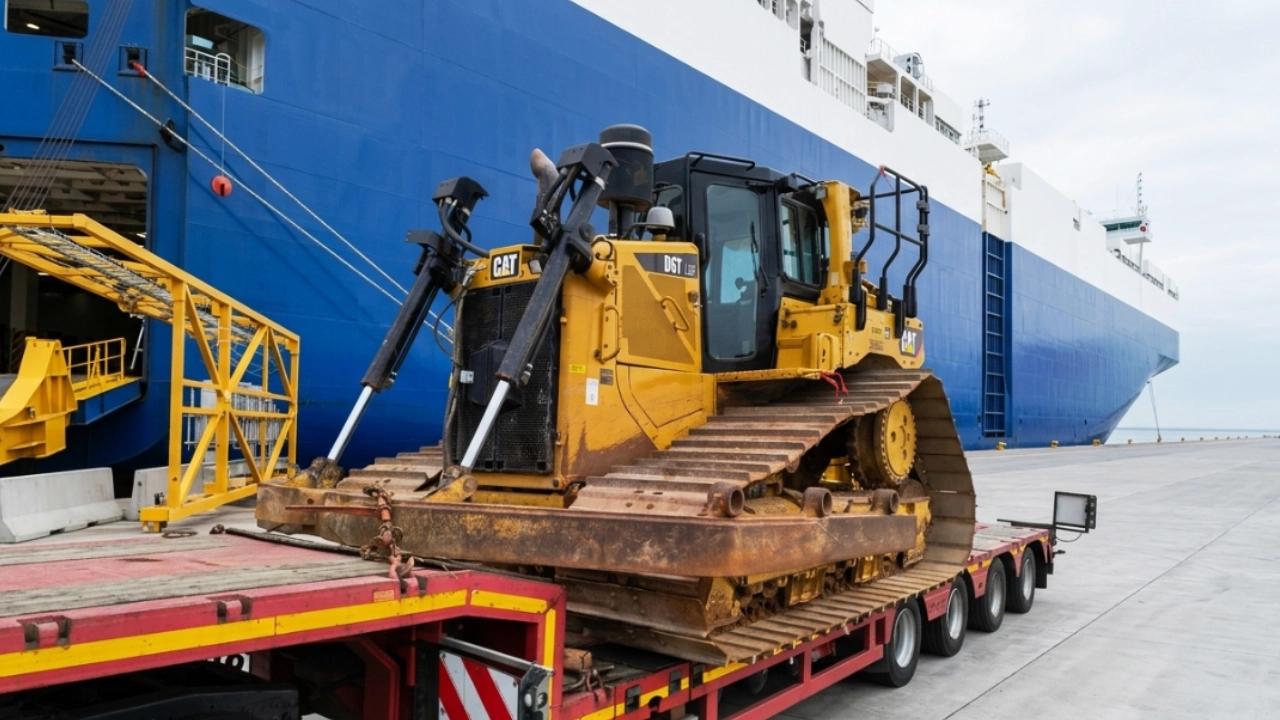
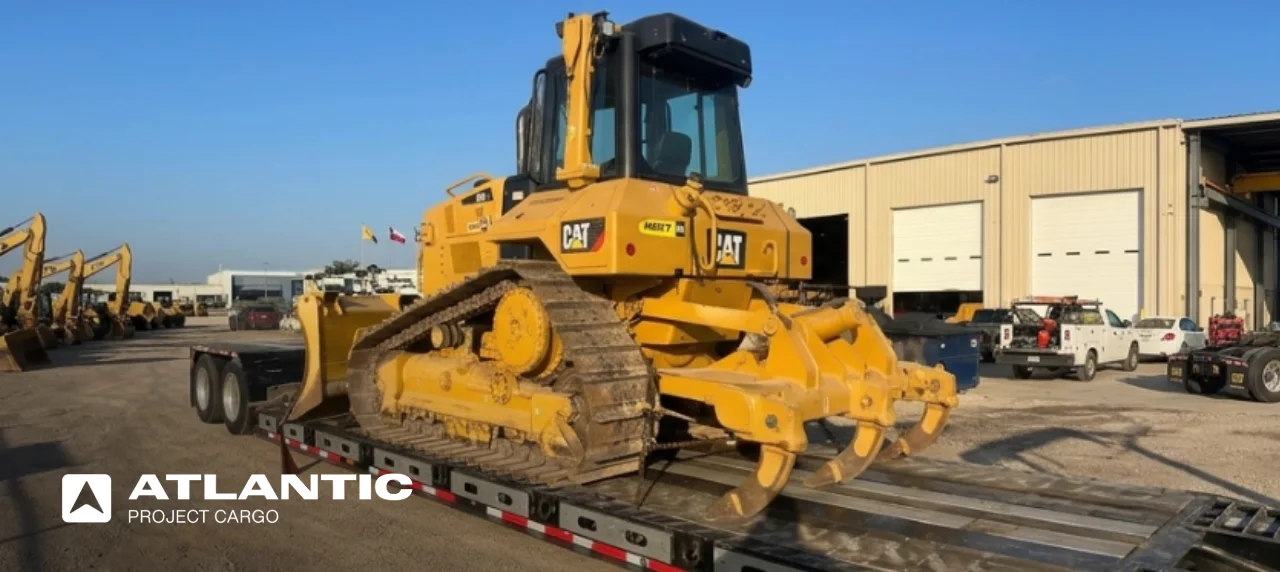
Heavy Haul Carrier provides specialized flatbed, step-deck, or lowboy trailers to move oversized machinery over inland highways safely.
Drayage Provider moves standardized shipping containers or flat rack equipment between the port terminal and nearby warehouses or rail ramps.
Port Terminal Operator physically receives the equipment, stores it safely in the port yard, and drives or lifts the machinery onto the actual vessel.
Example Shipment: Moving a Used Excavator from Texas to Argentina
Disclaimer: This is an illustrative example. Costs are estimates and not a quote; actual pricing and regulatory requirements vary and may change. This is general information, not legal, customs, or tax advice – confirm details with a licensed customs broker before shipping.
To truly understand how these organizations interact, we will examine a real-world case study from early 2026. A construction firm purchased a used Caterpillar 336 excavator in Dallas, Texas, and needed it delivered to a mining site in Salta, Argentina.
This massive machine weighs roughly 81,000 pounds and requires specialized handling. Here is exactly how the shipment unfolded and who managed each step.
Step 1: Equipment Pickup at Seller Location
The logistics process began in Dallas. The forwarder arranged for a specialized heavy haul trucking company to load the Caterpillar 336. Because the machine exceeded standard highway weight limits, the forwarder secured overweight permits for the Texas highways. A virtual ocean carrier has zero involvement at this stage.
Step 2: Heavy Haul Transport to Export Port
The heavy haul truck transported the excavator from Dallas to the Port of Galveston. The forwarder monitored the transit to ensure the truck arrived during the specific port receiving window. Arriving too early results in port storage fees. Arriving too late means missing the vessel.
Step 3: Export Documentation and Compliance
Before the port accepted the machinery, the forwarder filed the Electronic Export Information through the Automated Export System. Atlantic Project Cargo also handled the mandatory US Customs title validation required for used self-propelled machinery, presenting the title and the machine itself to CBP at least 72 hours before export as required under 19 CFR Part 192.
Step 4: Ocean Booking
Weeks before the truck even picked up the machine, the dual-licensed logistics provider utilized its NVOCC status to book space on a RoRo vessel heading to South America. They negotiated a wholesale rate based on the exact dimensions and weight of the Caterpillar 336.
Step 5: Vessel Loading
Port terminal stevedores physically drove the excavator onto the RoRo vessel. The forwarder monitored the terminal reports to confirm the machine successfully loaded without damage. Once loaded, the NVOCC issued the House Bill of Lading to the shipper.
Step 6: Ocean Transportation
The physical vessel operator navigated the ship from Texas to Zárate port terminal near Buenos Aires. During this three-week transit, the forwarder provided the construction company with weekly tracking updates.
Step 7: Customs Clearance
Upon arrival in Argentina, a local customs broker partnered with the forwarder submitted the import documentation. Thanks to Argentina’s Decree 273/2025, which eliminated the long-standing Certificate of Importation of Used Goods (CIBU), the used excavator only required an electronic sworn statement filed through the customs system. The broker filed the import declaration and calculated the applicable duties – Argentina applies a doubled extra-zone duty rate to used capital goods, capped at 35%, paid separately by the importer – then cleared inspections and secured release of the machinery from the port terminal.
Step 8: Final Delivery
The forwarder arranged for an Argentine heavy haul carrier to pick up the excavator from the port and transport it inland to the mining site in Salta.
Case Study Cost Breakdown Calculation
- Excavator Purchase Price: $150,000
- Inland Heavy Haul Dallas to Galveston: $2,100
- Port Preparation and Export Clearance: $450
- Ocean Freight Galveston to Buenos Aires: $9,200
- Argentina Customs Clearance and Port Fees: $2,800
- Inland Heavy Haul Zárate to Salta: $5,600
- Total Logistics Investment: $18,150
Note: This breakdown covers transportation and clearance services only. Argentine import duties and taxes on used capital goods are calculated separately based on the machine’s customs value and are paid by the importer.
This detailed workflow clearly demonstrates why heavy equipment shipments require comprehensive logistics management. If the buyer had only hired a virtual carrier, they would have been personally responsible for hiring trucks, securing permits, filing export declarations, and clearing Argentine customs.
Planning a Similar Equipment Shipment?
Our team coordinates heavy haul transportation, export compliance, ocean freight, customs clearance, and final delivery for construction, agricultural, and industrial equipment worldwide.
Get Your Free Quote Today!
What Can Go Wrong When Multiple Logistics Providers Are Involved?
Fragmented logistics management creates massive risk for equipment owners. When you attempt to act as your own general contractor by hiring separate trucking companies, NVOCC, and customs brokers, several critical failures can occur.
Documentation mistakes happen frequently. If your inland trucker delivers the machinery to the port but your export documentation contains a typo in the equipment VIN number, customs will reject the export.
Missed vessel cutoffs cost thousands of dollars. Port terminals enforce strict deadlines for receiving cargo. If your independent trucking company experiences a flat tire and misses the cutoff by one hour, your equipment stays at the port until the next vessel arrives. You will pay daily storage charges for weeks.
Communication failures lead to responsibility disputes. If your machinery arrives scratched or damaged, the trucking company will blame the port terminal, the terminal will blame the ocean carrier, and the ocean carrier will blame the trucking company. Without a unified logistics partner, you must investigate the damage yourself.
Scheduling conflicts destroy project timelines. Coordinating the exact arrival of an import vessel with the availability of a specialized multi-axle heavy haul trailer requires precision. If the vessel arrives three days early and your truck is not ready, port storage fees accumulate rapidly.
Why Heavy Equipment Shipping Is Different from Standard Cargo Shipping
Standard retail goods travel in uniform steel containers. Heavy machinery shipping requires entirely different transportation methods, specialized knowledge, and strict compliance protocols.
Oversized dimensions dictate the shipping method. You cannot put a massive articulated dump truck inside a standard shipping container. Instead, logistics providers utilize Roll-on/Roll-off vessels where the machinery drives directly onto the ship like a floating parking garage.
Weight restrictions require specialized routing. Moving a 100,000-pound crane across the country requires route planning that avoids weak bridges and low overpasses. Standard freight brokers do not understand how to secure super-load permits or arrange police escorts.
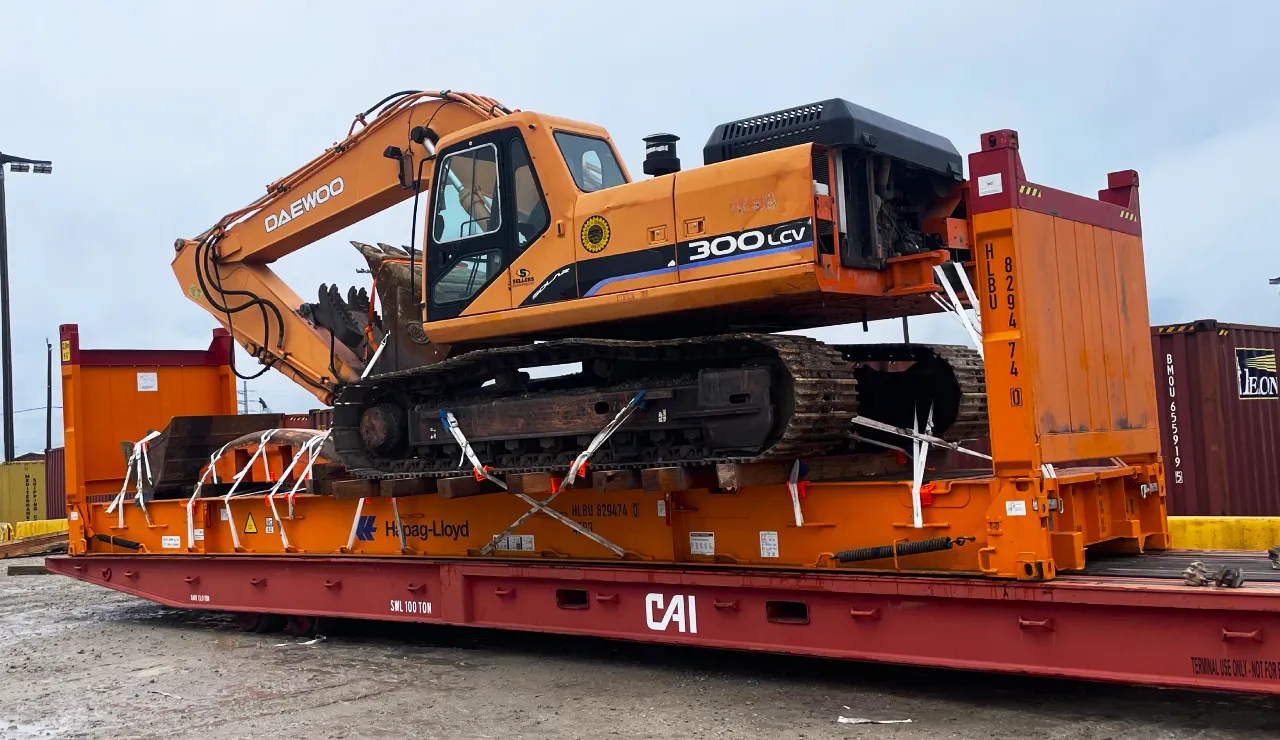
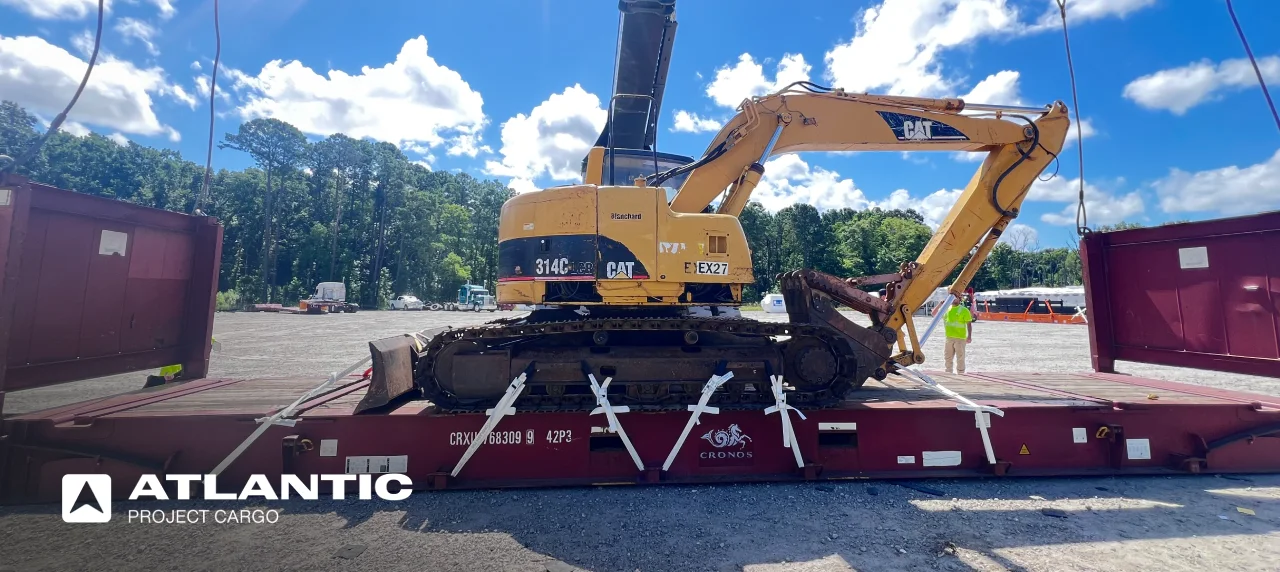
Flat rack shipping provides an alternative for stationary equipment. Machinery that cannot drive, such as large industrial generators or disassembled plant infrastructure, gets strapped to flat rack containers. These open-sided platforms allow oversized cargo to load onto standard container ships.
Equipment washing requirements catch many first-time exporters off guard. International agricultural and environmental agencies enforce strict soil contamination laws. Used combine harvesters and tractors must undergo rigorous pressure washing to remove all dirt, seeds, and biological material before shipping. Destination-country biosecurity agencies – such as Australia’s DAFF or New Zealand’s MPI – inspect arriving machinery, and USDA inspects used equipment entering the United States. Failing these inspections can result in mandatory cleaning, quarantine treatment, or re-export at your expense.
Export preparation involves physical mechanical work. Excavator buckets must be lowered and attachments secured. For containerized or flat rack shipments, battery cables must be disconnected and fuel tanks drained. For RoRo shipments, the machine must remain drivable, with fuel typically limited to a quarter tank to meet international maritime safety regulations.
When Is an NVOCC Enough?
Certain situations exist where hiring a standalone virtual carrier makes financial sense.
Port to port containerized shipping represents the best use case. If you are shipping standard palletized machinery parts inside a 40-foot container, and you already have an internal logistics team capable of handling trucking and customs, booking direct ocean freight works perfectly.
Ocean transport priority applies when you purchase equipment already sitting at a port terminal, and the buyer in the destination country plans to pick it up directly from the destination port. In this rare scenario, you only need to purchase the ocean crossing.
When Do You Need a Freight Forwarder?
Most equipment owners require the comprehensive services of a logistics coordinator.
Door-to-door shipments demand multi-party coordination. If your machinery needs to move from a factory floor in Ohio to a construction site in Germany, you need a partner who can manage the trucks, trains, ports, and ships involved in the journey as one continuous process.
Oversized cargo requires specialized engineering. Moving out-of-gauge equipment involves center-of-gravity calculations, custom rigging, and specialized securing techniques. Forwarders maintain networks of heavy lifting specialists.
Complex compliance requirements necessitate expert guidance. Exporting dual-use industrial equipment or military-grade machinery requires specialized export licenses and strict adherence to international trade laws.
When Do You Need a Full-Service Logistics Partner?
Equipment dealers, construction firms, and mining companies prefer working with a single organization that coordinates every aspect of the supply chain while also holding the necessary licenses to negotiate direct ocean rates.
Integrated logistics management removes the stress from international trade. When you partner with a comprehensive provider, you make one phone call. The provider handles the inland transport, ocean freight, customs clearance, port operations, and cargo insurance.
Atlantic Project Cargo operates as a fully licensed Freight Forwarder and an FMC-approved Non-Vessel Operating Common Carrier. This dual capability allows us to manage complex heavy equipment shipments from start to finish while securing the most competitive ocean freight rates available. Our team handles the heavy lifting, both literally and administratively.
Frequently Asked Questions
No. Shipping lines own and operate the physical vessels that cross the ocean. NVOCC purchase cargo space from these shipping lines in bulk and resell that space to individual shippers, issuing their own documentation for the voyage.
A pure freight forwarder issues a Forwarder Cargo Receipt, which is a receipt for the cargo rather than a contract of carriage. A forwarder can only issue a House Bill of Lading if it also holds an NVOCC license – at that point, it is legally acting as the carrier for the ocean segment, and that House Bill of Lading functions as both the receipt for the cargo and the contract of carriage.
They can handle the ocean transit portion of an oversized equipment shipment by booking space on RoRo or breakbulk vessels. However, they typically do not arrange the specialized heavy haul trucking required to get the oversized equipment to the port.
Most international shipments require both functions. The forwarder manages the physical transportation of the equipment, while the customs broker handles the legal entry, tax payments, and regulatory compliance at the border. Many comprehensive logistics companies provide both services in-house.
Responsibility depends on the cause of the delay. If the heavy haul truck arrived late, the trucking company or the logistics coordinator managing them is responsible. If customs flagged the equipment due to missing paperwork, the shipper or their customs agent bears responsibility. A unified logistics partner helps resolve these issues quickly.
An OTI is a regulatory classification created by the US Federal Maritime Commission. It encompasses both freight forwarders and virtual ocean carriers. Companies must obtain an OTI license to legally facilitate international ocean transportation in the United States.
Yes. Many leading logistics providers hold dual licenses. This allows them to negotiate direct wholesale ocean rates while also managing complex door-to-door transportation logistics for heavy equipment owners.
Logistics coordinators and forwarders typically manage inland heavy haul transportation. They source specialized multi-axle trailers, secure state permits, arrange police escorts if necessary, and ensure the truck arrives at the port terminal during the accepted receiving window.
Rarely. Project cargo involves massive, out-of-gauge industrial equipment that requires extensive engineering, route surveys, custom rigging, and multi-modal transport. A standalone NVOCC only handles the ocean segment, making them insufficient for end-to-end project cargo management.
The best option is partnering with a fully licensed, dual-role logistics provider that understands heavy machinery. They can secure competitive RoRo shipping rates while managing the complex inland permits, equipment washing, and customs clearance required for international machinery transport.
Need Help Shipping Equipment Internationally?
Navigating the complexities of NVOCC shipping and international freight forwarding does not have to be difficult. Whether you need to export a fleet of John Deere tractors to Europe or import a massive mining excavator from Japan, having the right logistics partner guarantees success.
Atlantic Project Cargo brings over 20 years of experience to every shipment. We specialize in agricultural equipment, construction machinery, industrial infrastructure, and oversized project cargo. As a fully licensed forwarder and NVOCC, we provide comprehensive door-to-door solutions tailored entirely to your specific heavy equipment needs.
Stop worrying about port cutoffs, export documentation, and inland heavy haul permits. Let our team of over 100 international cargo experts streamline your supply chain.
Request a Shipping Quote
Get a free, no-obligation estimate for your next heavy machinery shipment in seconds.
Speak With a Shipping Specialist
Call us at (305) 224-1975 to discuss your specific project cargo requirements today.
Get Your Free Quote Today!
Read More
Nick Yadryshnikov
Victoria Moseicuka
Victoria Moseicuka