
Key Takeaways
- Tractor shipping costs range from $500–$6,000 domestically and $2,500–$15,000+ internationally.
- Machine dimensions (width and height) impact international shipping rates far more than total weight.
- RoRo (Roll-on/Roll-off) is generally the most economical shipping method for standard, operable row crop and utility tractors.
- Removing dual wheels, weights, and front loaders shrinks the machine’s footprint, saving thousands in out-of-gauge shipping penalties.
- Total Landed Cost is the only metric that matters; it includes freight, inland trucking, port fees, customs, and insurance.
- Biosecurity washing is mandatory and expensive when shipping to Australia and New Zealand.
- Auction buyers must coordinate inland transport immediately to avoid massive yard storage penalties.
- Always secure primary cargo insurance to protect the commercial value of your machinery.
Tractor shipping costs typically range from approximately $500 to $6,000+ for domestic transportation and $2,500 to $15,000+ for international shipping, depending entirely on tractor size, shipping method, route, and destination country.
Buying heavy agricultural machinery is a massive capital investment. But the purchase price is only the beginning. Shipping a 40,000-pound row crop tractor across the world is a complex logistical operation. Tractor shipping costs vary wildly because every machine has a unique dimensional footprint. International shipping drastically differs from domestic transportation because it introduces port handling fees, ocean freight rates, customs tariffs, and strict biosecurity cleaning requirements.
Smart buyers don’t just ask for a freight rate; they calculate the total landed cost. A cheap base ocean freight quote means nothing if you get hit with $3,000 in port storage and cleaning fees upon arrival.
In this guide, you will learn exactly what dictates average shipping costs, how domestic transport costs compare to international shipping costs, and which shipping methods offer the best value. We will break down route-specific examples, expose the hidden expenses that ruin budgets, and show you exactly how to calculate the true cost of getting your tractor to the farm.
Note: All figures in this guide are illustrative 2026 estimates based on typical market ranges. Actual quotes vary by carrier, vessel availability, fuel surcharges, and current trade policy – confirm final pricing with a licensed freight forwarder before budgeting a shipment.
Tractor Shipping Cost Calculator
To get an accurate tractor shipping quote, you must provide your logistics partner with the exact physical dimensions, weight, and operational status of your specific machine.
Without precise data, forwarders can only guess. Guessing leads to unexpected oversized cargo penalties at the port.
| Information Needed | Example Data |
|---|---|
| Tractor Type | Row Crop Tractor |
| Make & Model | John Deere 8R 410 |
| Operating Weight | 30,000 lbs |
| Dimensions (L x W x H) | 21 ft x 9 ft x 11.5 ft |
| Pickup Location | Houston, TX |
| Destination | Buenos Aires, Argentina |
| Shipping Method | RoRo (Roll-on/Roll-off) |
Every variable here dictates your final invoice. Weight determines the axle configuration of the domestic transport truck. Dimensions dictate whether the tractor fits inside an enclosed ship deck or requires an open flat rack. The pickup location drives your inland trucking costs. The shipping method determines your port handling fees.
Get Your Free Quote Today!
How Much Does It Cost to Ship a Tractor?
The cost to ship a tractor depends directly on its physical category. Compact tractors ship cheaply inside standard containers, while massive articulated tractors require specialized heavy-haul trailers and expensive out-of-gauge maritime shipping.
| Tractor Type | Est. Domestic Shipping | Est. International Shipping |
|---|---|---|
| Compact Tractor | $500 – $1,500 | $2,500 – $4,500 |
| Utility Tractor | $1,000 – $2,500 | $3,500 – $6,000 |
| Row Crop Tractor | $2,000 – $4,500 | $5,000 – $9,000 |
| Articulated Tractor | $3,500 – $6,000+ | $8,500 – $15,000+ |
Note: Pricing is illustrative and fluctuates based on 2026 fuel markets and vessel capacity.
Tractor size matters because transport capacity is limited by physical space, not just weight. In international shipping, dimensions often affect pricing far more than weight. If your tractor’s dual wheels make it 12 feet wide, it takes up the space of two standard shipping slots on a vessel. The ocean carrier will charge you for all that displaced space. This dimensional penalty is exactly why larger agricultural tractors cost exponentially more to transport than standard utility models.
Tractor Shipping Cost by Tractor Size
Shipping costs scale aggressively as tractors increase in physical size, primarily because larger machines require specialized lifting equipment and wide-load highway permits.
| Tractor Category | Typical Weight | Typical Shipping Cost Driver |
|---|---|---|
| Compact Tractor | 2,000 – 6,000 lbs | Fits in containers (Low cost) |
| Utility Tractor | 6,000 – 15,000 lbs | Highly RoRo suitable (Medium cost) |
| Row Crop Tractor | 20,000 – 40,000 lbs | Wide tires trigger surcharges (High cost) |
| Articulated Tractor | 40,000 – 60,000+ lbs | Requires Breakbulk/Flat Rack (Highest cost) |
- Container compatibility: Compact tractors are the cheapest to ship because they roll directly into standard 20-foot shipping containers.
- RoRo suitability: Utility and row crop tractors dominate RoRo (Roll-on/Roll-off) vessels. As long as they fit under the ship’s deck height limits, they are highly cost-effective to export.
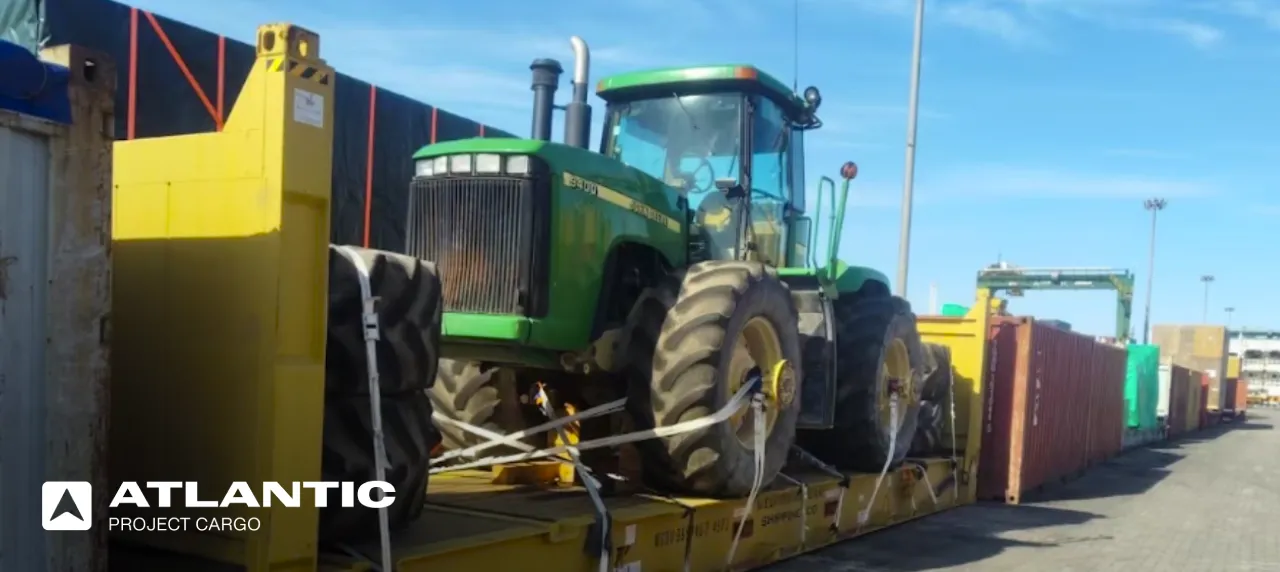
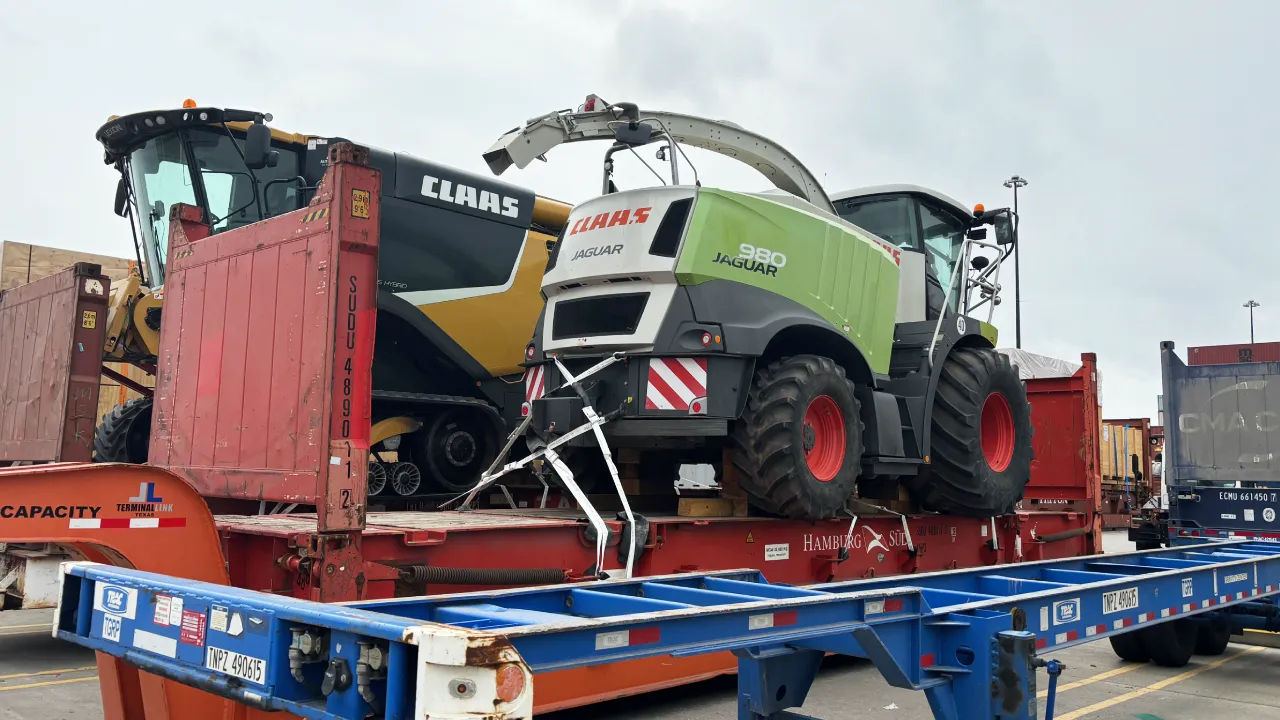
- Flat Rack requirements: When a tractor has an oversized cab or non-removable duals that make it too wide for RoRo doors, it requires flat rack shipping. This triggers heavy-lift crane fees at the port.
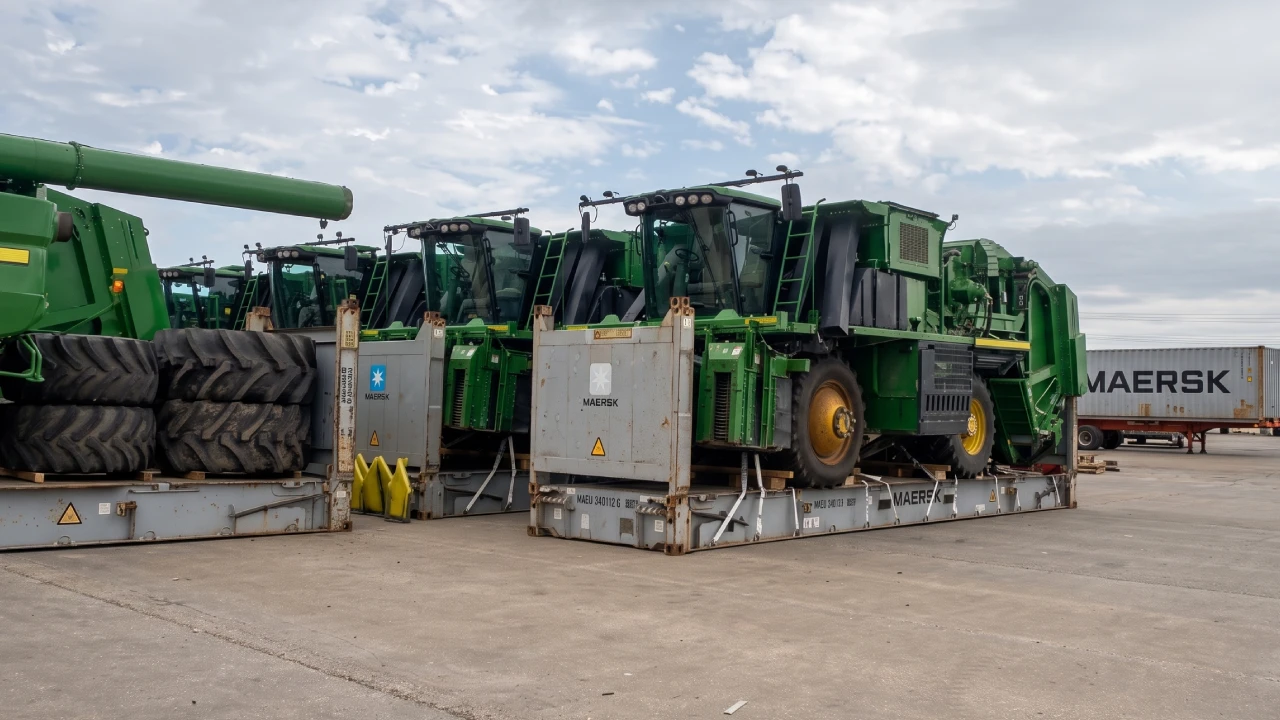
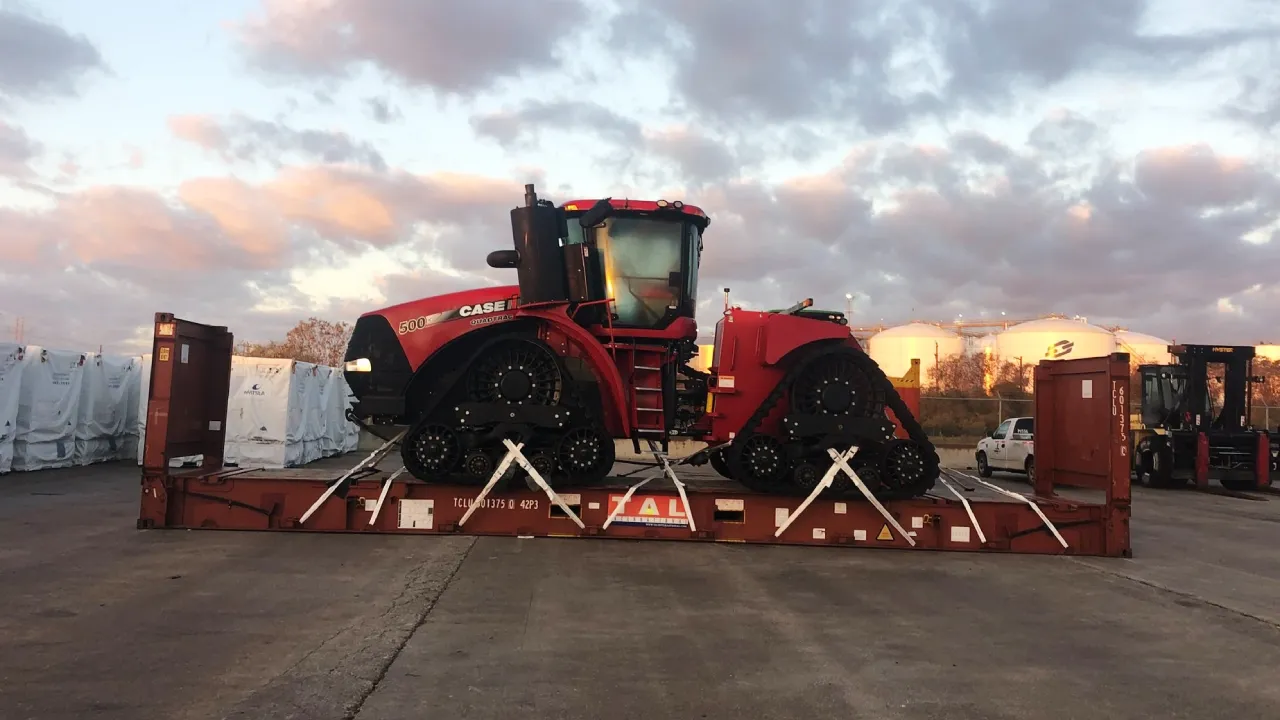
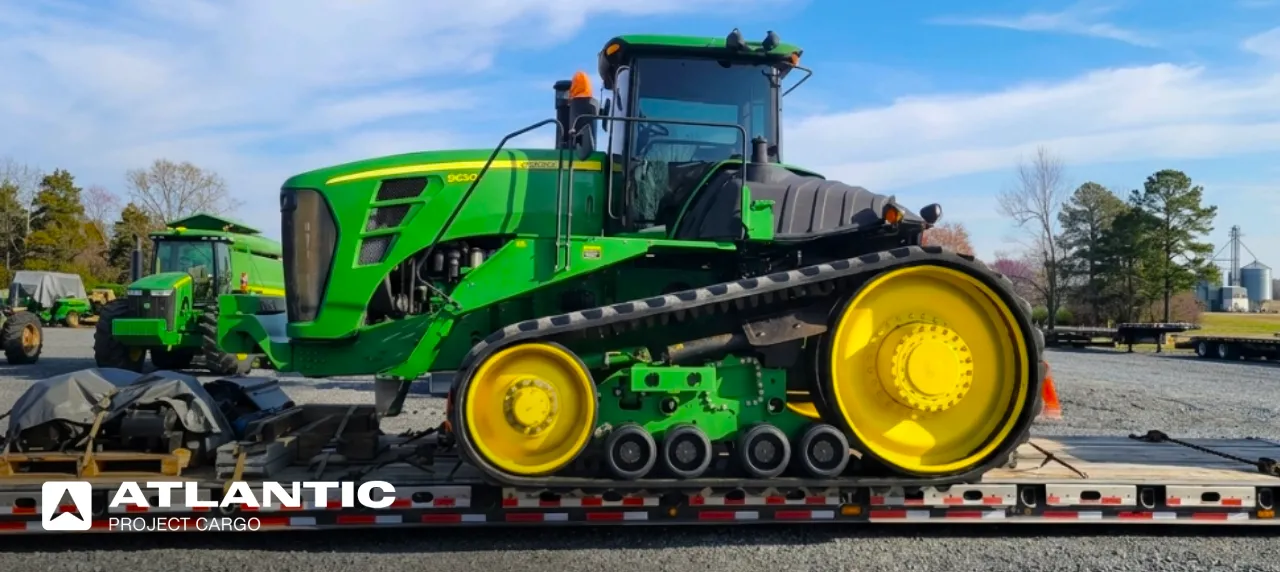
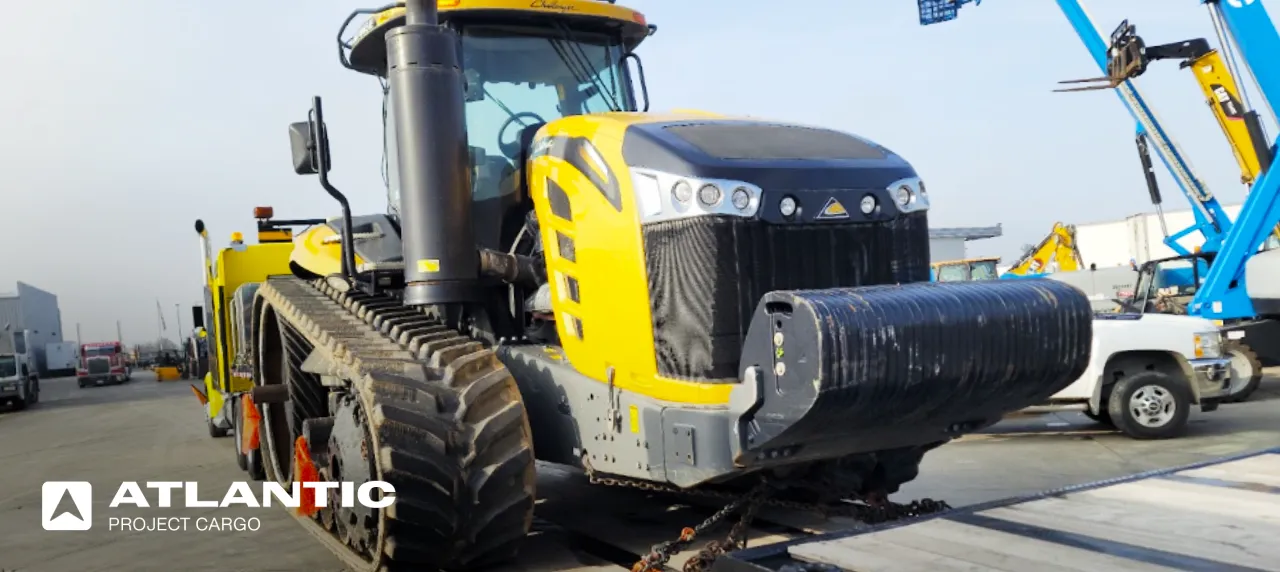
- Breakbulk considerations: Massive articulated tractors (like the Case IH Steiger series) often exceed standard flat rack width and height limits – not weight limits, since most Steiger models fall well within flat rack payload capacity – and require breakbulk shipping, where they are lifted directly onto the ship’s deck.
Key takeaway: The larger the tractor, the greater the impact of dimensions on your total shipping cost.
International Tractor Shipping Costs
International tractor shipping costs rely heavily on the specific ocean trade lane. Shipping a tractor from the USA to Europe is highly routine and cost-effective, while shipping that same tractor to Australia introduces massive distance and strict biosecurity requirements.
Here is a look at standard base ocean freight ranges for a mid-sized utility/row-crop tractor originating from the United States.
| Route | Typical Ocean Cost Range |
|---|---|
| USA → Australia | $6,000 – $11,000 |
| USA → New Zealand | $6,500 – $11,500 |
| USA → Argentina | $5,500 – $9,500 |
| USA → Chile | $5,000 – $9,000 |
| USA → UAE | $4,500 – $8,000 |
| USA → Saudi Arabia | $5,000 – $8,500 |
| USA → Germany | $3,500 – $6,500 |
| USA → South Africa | $5,500 – $9,500 |
Transit time heavily influences your logistics planning. Port congestion and vessel transshipment (moving cargo from one ship to another midway) can stretch timelines.
| Route | Est. Transit Time | Typical Ocean Cost Range |
|---|---|---|
| USA → Australia | 35 – 45 Days | $6,000 – $11,000 |
| USA → New Zealand | 35 – 45 Days | $6,500 – $11,500 |
| USA → UAE | 25 – 35 Days | $4,500 – $8,000 |
| USA → Germany | 12 – 18 Days | $3,500 – $6,500 |
| USA → Argentina | 20 – 30 Days | $5,500 – $9,500 |
- Ocean freight costs: These form the base of your quote, fluctuating based on global fuel prices (Bunker Adjustment Factors).
- Destination charges: Every country charges local terminal handling fees to unload the tractor.
- Export port impact: Shipping out of major RoRo hubs like Baltimore or Galveston is cheaper than routing a tractor through a smaller, less-equipped port.
- Route-specific considerations: Shipping to Australia requires mandatory, highly expensive agricultural washing before the tractor ever boards the ship.
Key takeaway: International tractor shipping costs depend heavily on the destination, the exact dimensions of the machine, and the chosen shipping method.
Why Tractor Shipping Costs Vary So Much
Tractor shipping costs vary so much because two tractors with the exact same operating weight can have vastly different physical dimensions, triggering massive out-of-gauge shipping penalties.
Consider a real-world scenario. A John Deere 8R row crop tractor shipped from Texas to Argentina may cost $6,500. However, a John Deere 9RX tracked articulated tractor shipped on the exact same route might cost $14,000. Why? The 8R rolls onto a standard RoRo deck. The 9RX is too wide and too tall. It requires specialized crane lifting onto a flat rack and takes up the space of three standard containers on the vessel.
| Cost Driver | Impact Level |
|---|---|
| Width | Very High |
| Height | High |
| Weight | Medium |
| Shipping Method | Very High |
| Route | High |
Oversized dimensions dictate the price. Loading complexity requires expensive port stevedore labor. If your equipment configuration includes massive dual wheels, port handling requirements escalate instantly. You pay for the space you displace.
Domestic Tractor Transportation Costs
Domestic tractor transportation costs rely primarily on the total mileage, the trailer type required, and the necessity of oversized load highway permits.
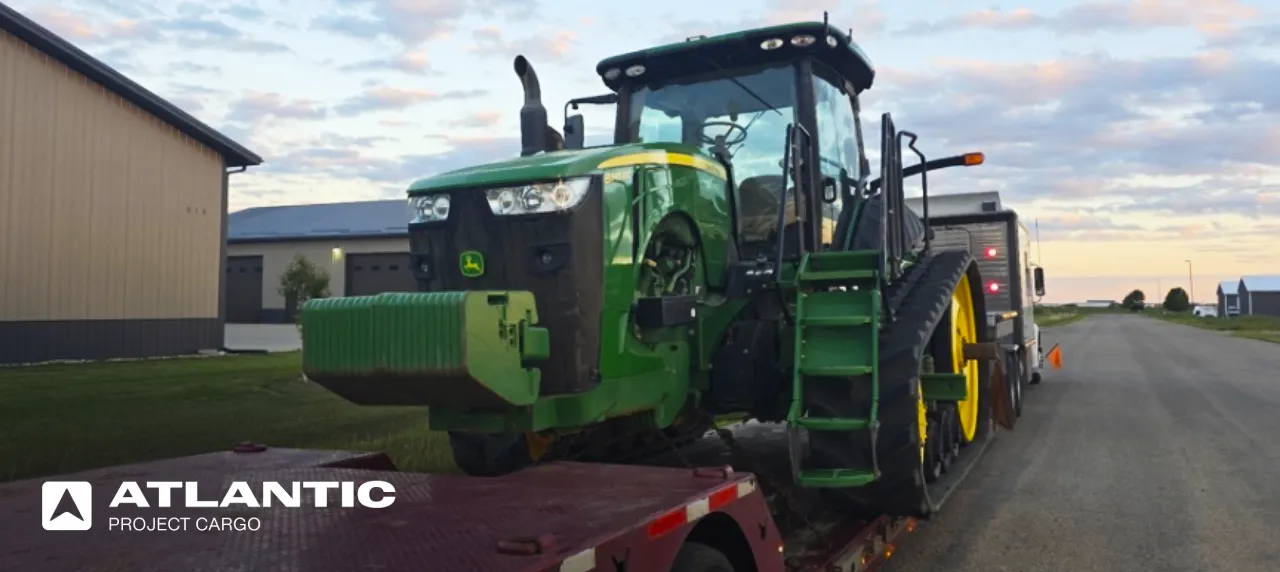
Moving Agricultural Equipment units across the country requires specialized heavy-haul trucking. Compact and utility tractors easily fit on step deck trailers. Massive row crop tractors require lowboy trailers to drop the machine’s height close to the pavement to clear highway bridges. If your tractor exceeds 8.5 feet in width, you must purchase oversize permits for every state the truck passes through.
Cost Per Mile Breakdown
Domestic trucking operates on a sliding scale. The longer the distance, the lower the per-mile rate, because the carrier spends less time loading and unloading.
| Distance | Typical Rate Per Mile |
|---|---|
| 0–200 Miles | $4.00 – $6.00+ |
| 200–500 Miles | $3.00 – $4.50 |
| 500–1,000 Miles | $2.50 – $3.50 |
| 1,000+ Miles | $2.00 – $3.00 |
Note: Oversized tractors instantly add $1.00 to $2.00 per mile due to permit and pilot car requirements.
Tractor Shipping Cost by Transport Method
Selecting the right transport method is the single biggest financial decision you will make. Consult our RoRo Shipping, Flat Rack Shipping, and Container Shipping pages to identify the most efficient logistics path for your equipment.
RoRo Shipping Cost
Roll-on/Roll-off shipping involves driving the tractor directly onto the vessel.
- Typical pricing: Moderate. It offers the best value for operable machinery.
- Tractor suitability: Perfect for wheeled utility and row crop tractors.
- Advantages: No expensive crane handling fees; the tractor is protected inside an enclosed deck.
- Limitations: The tractor must run, steer, and brake perfectly.
Flat Rack Shipping Cost
The tractor is hoisted onto an open-sided steel platform and loaded onto a container ship.
- Typical pricing: High.
- Oversized tractors: Ideal for wide, tall, or inoperable machines.
- Port handling costs: Triggers expensive heavy-lift crane fees at both origin and destination.
- Loading requirements: Requires certified riggers and heavy-duty lashing chains.
Container Shipping Cost
The tractor is driven or loaded into a standard 20-foot or 40-foot enclosed box.
- Typical pricing: Low.
- Suitability: Perfect for compact tractors and small utility tractors.
- Attachments: Excellent for shipping extra loaders or mower decks safely.
Breakbulk Shipping Cost
The tractor is lifted directly onto the deck or into the hold of a general cargo ship.
- Typical pricing: Very High.
- Suitability: Reserved for massive agricultural equipment and articulated tractors.
- Project cargo situations: Used when equipment is too heavy for even flat rack handling.
| Method | Cost Level | Best For |
|---|---|---|
| RoRo | Moderate | Standard operational tractors |
| Container | Low | Compact tractors |
| Flat Rack | High | Wide/Tall/Inoperable tractors |
| Breakbulk | Very High | Massive articulated tractors |
What Is the Cheapest Way to Ship a Tractor?
The cheapest way to ship a tractor is via standard container shipping, but this is only physically possible for small, compact models. For standard agricultural tractors, RoRo shipping is the most economical method available.
| Method | Cost Efficiency |
|---|---|
| Container | Most Efficient (Size permitting) |
| RoRo | Highly Efficient (For operable units) |
| Flat Rack | Low Efficiency (Oversized surcharges) |
| Breakbulk | Lowest Efficiency (Massive handling fees) |
RoRo is the most economical option for full-sized farm equipment because it eliminates heavy-lift port crane fees. Container shipping makes sense when you have a compact tractor and want to load it with spare parts and attachments. However, a flat rack may be strictly required — despite the higher cost — if your tractor has an aftermarket cab that exceeds the height restrictions of the RoRo vessel doors.
Do Tractors Need to Be Disassembled Before Shipping?
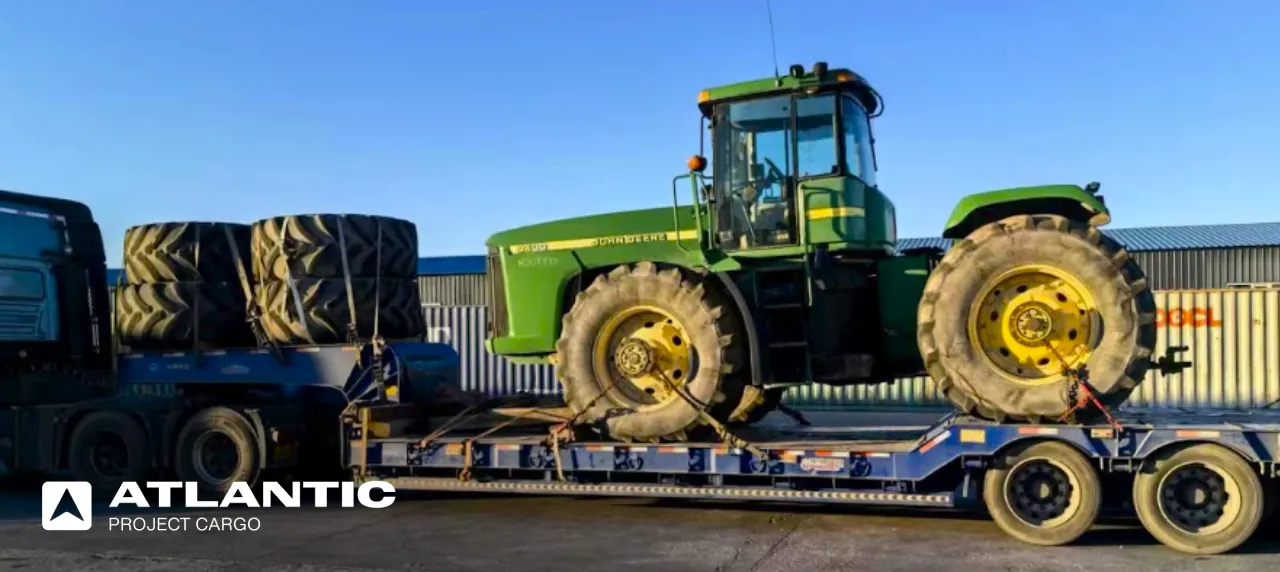
Tractors do not strictly need to be disassembled before shipping, but removing dual wheels, front loaders, and mirrors can shrink the machine’s dimensions enough to save thousands of dollars in oversized shipping penalties.
- Compact tractors: Rarely need disassembly. They fit easily inside containers.
- Utility tractors: Can usually ship fully assembled via RoRo.
- Row crop tractors: Removing dual wheels is highly recommended. Duals drastically increase the width, pushing the machine into a higher pricing tier.
- Articulated tractors: Often require extensive disassembly to reduce the massive dimensional volume.
Removing front loaders and packing them tightly against the chassis reduces the overall length. Stripping off mirrors and exhaust stacks reduces height and width. Preparation requirements dictate your final volume, which directly affects your shipping cost.
Key takeaway: Preparation requirements can significantly impact final transportation expenses; always remove dual wheels if possible.
Freight Cost vs Total Landed Cost
Freight cost is simply the base price to move the tractor across the ocean, whereas total landed cost includes every single expense required to get the tractor from the seller to your actual farm, including origin trucking, customs, taxes, and port handling.
Relying purely on a freight quote is how equipment buyers blow their budgets.
| Cost Component | Included in Base Freight Quote? |
|---|---|
| Ocean Freight | Yes |
| Port Charges (THC) | No |
| Customs Clearance | No |
| Duties & Taxes | No |
| Cargo Insurance | Usually No |
| Inland Delivery | No |
Landed Cost Example
You purchase a John Deere Row Crop Tractor at auction in Texas.
- Purchase price: $95,000
- Ocean freight: $4,000
- Cargo insurance: $500
- Origin & destination port charges: $700
- Import tariffs & final delivery: $2,800
- Total shipping-related costs: $8,000 – double the $4,000 base freight quote once insurance, port charges, and tariffs are added. Final landed cost, including the $95,000 purchase price: $103,000.
Key takeaway: Shipping cost and landed cost are not the same thing. Always budget for the landed cost.
Note: Tariff and tax figures above are illustrative; confirm actual duty rates with a customs broker before finalizing your budget.
What Factors Affect Tractor Shipping Costs?
Every tractor shipping quote is built upon a distinct set of operational and market variables.
| Factor | Impact on Cost |
|---|---|
| Dimensions | Very High |
| Shipping Method | Very High |
| Route | High |
| Weight | Medium |
| Port Charges | Medium |
| Seasonal Demand | Medium |
| Insurance | Low |
Dimensions and shipping method drive the base cost. The route determines the distance multiplier. Weight triggers heavy-haul limits. Port charges are mandatory administrative handling fees. Seasonal demand matters heavily in agricultural shipping; vessel space tightens significantly right before the global spring planting and fall harvest seasons. Insurance is a low-cost, high-value necessity. For more data, consult our Heavy Equipment Shipping Cost guide.
Agricultural Cleaning Requirements and Their Impact on Shipping Cost
Used agricultural equipment is heavily scrutinized by global customs agencies. Tractors must be immaculately clean — free of all soil, seeds, and biological material — before they are permitted entry into countries with strict biosecurity laws.
This is especially true for Australia and New Zealand. Biosecurity inspections are ruthless. If the destination country finds a single clump of dirt stuck inside the tractor’s undercarriage, they will quarantine the machine.
Note: Biosecurity standards are updated periodically. Confirm current requirements directly with the destination country’s agricultural inspection agency (e.g., Australia’s Department of Agriculture) before shipment.
| Requirement | Potential Impact |
|---|---|
| Cleaning | Base origin wash costs $500–$1,500+. |
| Inspection | Customs delays machine release. |
| Re-cleaning | Destination re-cleaning costs triple the origin rate. |
| Storage Delays | Quarantines trigger massive daily port storage fees. |
You must factor origin agricultural cleaning standards into your shipping budget. It is infinitely cheaper to pay for a rigorous pressure wash and dismantling in the USA than to pay for forced quarantine re-cleaning in Australia.
Key takeaway: Agricultural cleaning requirements can significantly affect both shipping costs and transit times.
Additional Tractor Shipping Costs Buyers Often Overlook
When reviewing a tractor shipping quote, buyers frequently miss the administrative and penalty fees that accumulate in the background of global logistics.
Port Charges
Terminal Handling Charges (THC) are mandatory fees assessed by the port to physically move your tractor from the staging yard onto the vessel.
Customs Clearance Fees
You must hire a licensed broker to file your export and import paperwork. For more details, read our Customs Clearance Guide.
Note: Duty rates and import tariffs change with trade policy and vary by country and HS code. This guide does not constitute customs or legal advice – confirm current tariff rates with a licensed customs broker for your specific destination.
Cargo Insurance
Ocean carriers carry virtually no financial liability (often capped at $500). You must purchase a primary All-Risk cargo insurance policy based on your tractor’s actual commercial value.
Demurrage
If your tractor sits at the port terminal past its allotted “free time” waiting to clear customs, the port charges daily demurrage penalties.
Detention
If you use the carrier’s flat rack equipment and fail to return it on time, you pay daily detention fees. Understand the difference via our Demurrage vs Detention breakdown.
Inland Transportation
The cost of moving the tractor from the destination port to your actual farm is never included in the ocean freight rate.
Summary: Most Commonly Overlooked Expenses
Origin and destination Terminal Handling Charges, biosecurity washing fees, and port demurrage (storage) penalties are the most frequently ignored costs that destroy a buyer’s logistics budget.
How Much Does It Cost to Ship a Tractor Purchased at Auction?
Shipping a tractor purchased at an equipment auction introduces urgent timelines and strict yard fees that drastically impact the final transportation cost.
Buying farm equipment from Ritchie Bros., IronPlanet, or local farm liquidations requires immediate logistics execution. Auctions offer incredible deals, but they afford zero logistical flexibility.
| Cost Item | Typical Impact |
|---|---|
| Yard Storage | High (Massive daily fees if picked up late) |
| Loading Fees | Medium (Auctions may charge to assist loading) |
| Inland Transportation | High (Requires immediate heavy-haul dispatch) |
| Documentation | Low (Ensuring Bill of Sale matches export docs) |
| Export Preparation | Medium (Auction tractors usually require deep cleaning) |
Auction buyers routinely suffer yard storage fees because they wait until they win the bid to start looking for a trucking company. By the time the truck arrives, the auction house’s “free time” has expired. Inland transportation from rural auction yards to coastal export ports is often more expensive than standard dealer pickups. Ensure your Bill of Lading Guide protocols are set before the trucker arrives.
Key takeaway: The auction purchase price is only one component; rapid inland transport and yard fees define the total transportation cost.
Real Tractor Shipping Cost Examples
To understand how tractor shipping rates behave in the real world, review these illustrative 2026 shipping scenarios. (Note: Pricing is illustrative and varies based on live market conditions).
Compact Kubota Tractor
- Shipping method: 20-Foot Container.
- Cost range: $2,500 – $4,000 (USA to Europe).
- Cost drivers: The cost is highly contained because it fits in a standard box. The base ocean freight dictates the price.
John Deere 8R Row Crop Tractor
- Shipping method: RoRo.
- Cost range: $6,000 – $9,000 (USA to South America).
- Why selected: It is fully operable and, once the dual wheels were removed, fit perfectly under the enclosed RoRo deck limits, bypassing expensive crane fees.
Case IH Magnum
- Shipping method: RoRo or Flat Rack.
- Cost range: $8,500 – $13,000 (USA to Australia, including mandatory washing)
- Route considerations: Heavy agricultural washing fees were required at the origin port in Savannah to pass Australian biosecurity standards.
John Deere 9RX Articulated Tractor
- Shipping method: Breakbulk or specialized oversized Flat Rack.
- Cost range: $13,000 – $16,000+ (USA to UAE) — near the top of the articulated tractor range due to breakbulk handling and wide-load highway escorts.
- Dimensions impact: The massive width of the tracks required wide-load highway escorts domestically and triggered maximum out-of-gauge surcharges on the ocean vessel.
How to Reduce Tractor Shipping Costs
Reducing the cost to ship a tractor requires aggressive logistics planning.
- Choosing the right shipping method: Always utilize RoRo if the tractor is operable and dimensions allow it.
- Booking early: Secure vessel space weeks in advance to avoid paying premium spot-market rates during peak agricultural seasons.
- Avoiding storage charges: Time your inland delivery perfectly so the tractor arrives at the port exactly during the carrier’s receiving window.
- Proper equipment preparation: Remove duals, weights, and attachments to shrink your dimensional footprint.
- Consolidating shipments: If you bought a tractor and a planter, ship them together to share customs brokerage and document fees.
- Selecting the best export port: Route your tractor to major heavy-equipment hubs (like Baltimore or Jacksonville) to access cheaper, higher-frequency RoRo sailings.
Common Tractor Shipping Cost Mistakes
Avoid these fatal financial errors when coordinating tractor transport.
Summary: Most Common Budget Destroyers
- Underestimating dimensions: Guessing width leads to permit violations and rejected port deliveries.
- Ignoring destination charges: Failing to budget for destination port handling and import tariffs.
- Choosing the wrong method: Paying for flat rack shipping when a minor disassembly would have allowed for cheaper RoRo shipping.
- Booking freight too late: Triggers emergency rush fees.
- Skipping cargo insurance: Risking a total financial wipeout if the ship encounters a severe storm.
- Forgetting cleaning requirements: Results in thousands of dollars in quarantine fees.
- Assuming FOB means total cost: Free On Board only gets the tractor to the port; it does not cover the ocean transit.
What Information Is Needed for an Accurate Tractor Shipping Quote?
To receive a binding, accurate shipping quote, you must provide your logistics partner with exact data.
You need the Make and Model of the machine. You must provide exact Dimensions (L x W x H) to the inch, and the gross operating Weight. State the exact physical Pickup location (with zip code) and the final Destination country and city. Specify if you have a Preferred shipping method (RoRo vs Container) and list any extra Attachments moving with the machine. Finally, clarify your Delivery requirements (e.g., do you need delivery to a rural farm without a loading dock?).
Frequently Asked Questions
International tractor shipping generally costs between $2,500 and $15,000+. Compact tractors in containers sit at the low end of the spectrum, while massive articulated tractors requiring flat racks sit at the high end.
Overseas shipping rates depend heavily on the trade route. Shipping a mid-sized tractor from the USA to Europe typically costs $4,000 to $7,000, while shipping that same tractor to Australia costs $8,500 to $13,000 once mandatory biosecurity washing is included.
For small compact tractors, container shipping is the cheapest. For standard, full-sized utility and row crop tractors, RoRo (Roll-on/Roll-off) shipping is the most cost-effective method because it avoids expensive port crane fees.
Yes, RoRo is significantly cheaper than flat rack shipping. Flat racks trigger out-of-gauge dimensional surcharges and require expensive heavy-lift cranes and specialized stevedore lashing labor at both the origin and destination ports.
Domestic tractor transport costs between $2.00 and $6.00 per mile. Short hauls (under 200 miles) carry a higher per-mile rate, while long cross-country hauls feature lower per-mile rates. Oversized wide-load tractors add $1.00 to $2.00 per mile.
Yes, but only compact and mini tractors. A standard 20-foot or 40-foot shipping container has doors roughly 7.7 feet wide and 7.5 feet tall (standard cube) to 8.5 feet tall (high cube). Most standard agricultural tractors are far too large to fit inside.
They do not strictly need to be, but it is highly recommended. Removing dual wheels, mirrors, and exhaust stacks shrinks the machine’s width and height, keeping the tractor within cheaper shipping classifications and avoiding oversized penalties.
A rigorous agricultural pressure wash to meet export biosecurity standards generally costs between $500 and $1,500 at the origin port, depending on the size of the machine and the level of soil contamination.
Large tractors displace space. Ocean freight is largely priced by volume. If a tractor’s massive tires overhang a standard shipping slot, the ocean carrier charges the shipper for all the adjacent space that can no longer be sold to other customers.
Quotes are calculated by taking the base ocean freight rate (determined by L x W x H dimensions), adding origin inland trucking, calculating origin and destination terminal handling port charges, and factoring in cargo insurance based on the machine’s value.
Need Help Shipping a Tractor?
Calculating total landed costs and navigating international port regulations is incredibly complex. A single miscalculation on tractor dimensions or biosecurity requirements can devastate your purchasing budget.
Whether you are coordinating domestic tractor transportation from an auction yard or executing complex international tractor transport for a massive fleet of row crop machines, Atlantic Project Cargo provides end-to-end logistics. We specialize in agricultural equipment shipping, offering tailored ocean freight solutions via RoRo, flat rack, and container shipping.
Stop guessing at freight rates. Let true project cargo experts build your logistics budget.
Get Your Free Quote Today!
Read More
Nick Yadryshnikov
Nick Yadryshnikov

Victoria Moseicuka