
Hours of operations:
9AM - 5PM / UTC -5 (EST)
November 9, 2026 29 min

Guide to Shipping Heavy Equipment from the USA to Mexico: Costs, Routes & Import Requirements

Shipping heavy equipment from the USA to Mexico can be done by road, by sea, or by a combination of both.
Worldwide Shipping
Americas · Europe · Asia Pacific · Africa
100,000+
Shipments Worldwide
20+ Years
In Heavy Cargo Logistics
4.9 Rating
on Google · 50+ reviews
Licensed Freight Forwarding Company
Home Insights Guide to Shipping Heavy Equipment from the USA to Mexico: Costs, Routes & Import Requirements

Shipping heavy equipment from the USA to Mexico can be done by road, by sea, or by a combination of both. The right choice depends on where the machine sits in the U.S., where it needs to end up in Mexico, its dimensions and weight, and what type of equipment it is.

That is what makes Mexico different from most international destinations. For a buyer in Peru or Chile, an ocean leg is a given. For a buyer in Monterrey, Saltillo or Querétaro, a lowboy can often run from the pickup site in Texas straight across a land border to the job site. Direct cross-border trucking is a real option, and for many shipments it is the most practical one.

It is not automatically the best one. Oversized machines bring permits, escorts, route surveys and bridge restrictions on both sides of the border. Equipment located far from the border but close to a Gulf or Pacific port may move more efficiently by RoRo, flat rack or breakbulk to a Mexican port. And the cheapest freight rate rarely produces the lowest total logistics cost once loading, border handling, customs, duties and final-mile delivery are added.

This guide walks through the full route – U.S. pickup, transport method, border crossing or port, Mexican customs and inland delivery – and covers how to compare trucking against ocean freight, what drives cost, which documents and import requirements apply, and what to check before you buy used machinery in the U.S. for use in Mexico.

How Heavy Equipment Shipping from the USA to Mexico Works

Every USA-to-Mexico equipment move follows the same chain: U.S. pickup → transport method → border crossing or port → Mexican customs → inland delivery. The order of decisions matters more than any single step, because an early mistake (wrong dimensions, an ineligible machine) can invalidate everything planned after it.

  1. Collect equipment location and specifications. Make, model, year, serial number, pickup address and the Mexican delivery site.
  2. Confirm real dimensions and weight. Measure the actual machine with its attachments, tracks or tires as configured – not just the brochure figures.
  3. Check import eligibility and compliance. The Mexican importer and customs broker confirm the tariff classification and any permits, standards or inspections that apply to that specific equipment.
  4. Select the transport method. Direct cross-border trucking, ocean freight (RoRo, flat rack, breakbulk, container), or a multimodal combination.
  5. Select the route. A border crossing for road moves, or a U.S. port and Mexican port pair for ocean moves.
  6. Prepare the equipment. Cleaning, securing or removing attachments, reducing height where practical, documenting condition.
  7. Complete U.S. export requirements. Export filing where required, plus any carrier and port documentation.
  8. Complete the Mexican import process. A licensed Mexican customs broker files the pedimento, duties and taxes are paid, and the shipment is released or selected for inspection.
  9. Cross the border or discharge at the Mexican port.
  10. Complete inland and final-mile delivery to the job site, farm, mine or plant, including unloading.

What Types of Heavy Equipment Can Be Shipped to Mexico?

Nearly any machine can be physically transported from the USA to Mexico; the real questions are how it moves and which import rules apply to its category. Equipment typically falls into four groups, each with different transport and compliance profiles.

IndustryTypical equipmentWhat usually shapes the move
ConstructionExcavators, bulldozers, wheel loaders, backhoes, cranes, telehandlersOperating weight, track width, boom/arm height; many machines need a lowboy or RGN
AgricultureTractors, combines, sprayers, cotton pickers, harvestersWidth (headers, booms, duals), cleanliness for phytosanitary inspection, seasonal timing
MiningMining trucks, large loaders, drilling rigs, crushers and screensExtreme weight and width; frequent disassembly; often breakbulk or project cargo
IndustrialGenerators, presses, CNC and manufacturing machinery, factory equipment, oversized componentsCrating, center of gravity, rigging and plant access at destination

For detail on individual machines, see Construction Equipment Shipping, Agricultural Equipment Shipping, Industrial Equipment Shipping, How to Ship an Excavator and How Much Does It Cost to Ship a Tractor?.

Cross-Border Trucking vs Ocean Freight: Which Is Better for Shipping Equipment to Mexico?

There is no universal winner. Cross-border trucking usually makes sense when the machine is in the southern or southwestern U.S. and is going to northern or central Mexico; ocean freight becomes competitive when the machine is near a U.S. seaport, is very large, or is headed to a region closer to a Mexican port than to the border. The comparison that matters is the total route cost, not a truck rate against an ocean rate.

FactorCross-Border TruckingOcean Freight
Best suited forEquipment in Texas, the Southwest or the central U.S. going to northern Mexico, the Bajío or central MexicoEquipment near Gulf or Pacific ports; very large or heavy units; destinations near Veracruz, Altamira, Manzanillo or Lázaro Cárdenas
Origin/destinationStrongest when both ends are inland and the border sits roughly on the direct lineStrongest when the U.S. origin is close to a port with regular Mexico sailings and the Mexican site is near the discharge port
Oversized equipmentPossible, but permits are needed in each U.S. state and in Mexico, plus escorts and route checksRoRo, flat rack or breakbulk absorb much of the dimensional problem at sea; oversize permits are still needed for road legs at each end
Handling/transloadingFewer lifts; may involve a trailer interchange or transload at the borderPort handling at both ends; trucking to and from the ports
Route complexityMultiple jurisdictions, bridge and clearance restrictions, border queue and inspection timingSailing schedules, port cut-offs, vessel space and terminal handling
Cost driversHeavy-haul mileage, permits, escorts, border services, Mexican carrierPre-carriage to port, ocean freight, terminal and port charges, on-carriage in Mexico
Final-mile implicationsTruck can often deliver directly to siteA separate inland move is needed from the Mexican port, sometimes long and oversized

Cross-Border Trucking for Heavy Equipment from the USA to Mexico

Direct road transportation is practical when the machine can be loaded once, hauled to a commercial border crossing, cleared, and driven to the job site without long detours or unnecessary handling. For a mid-size excavator in Houston going to Monterrey, that is often the simplest route on the map.

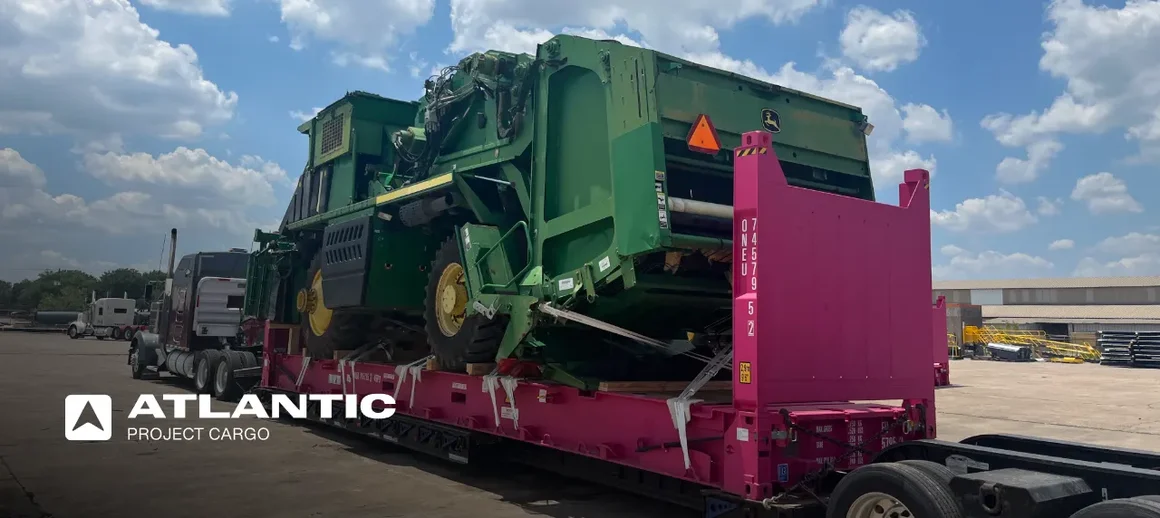
Trailer choice follows the machine’s dimensions. Flatbeds and step-decks suit lighter, lower equipment such as compact loaders, small tractors and generators. Removable gooseneck (RGN) and lowboy trailers carry tall or heavy machines – excavators, dozers, larger wheel loaders – because their low deck height keeps the overall load height down. Multi-axle and specialized trailers are used when weight has to be spread further.

A cross-border move is rarely one truck from end to end. Common setups include a U.S. carrier bringing the load to the border, a transfer move across the bridge, and a Mexican carrier for the domestic leg; some providers run direct trailer service through interchange agreements, and some loads are transloaded at border yards with heavy-lift cranes.

Each handoff adds coordination, and a Mexican customs broker must have the pedimento ready before the load can enter Mexico.

On the Mexican side, the domestic leg must also carry the Complemento Carta Porte, the electronic transport document Mexican importers and carriers have had to comply with since August 2023 (trade.gov).

Shipping Oversized Equipment Across the U.S.–Mexico Border

Oversized equipment can cross the land border, but it is planned as a heavy-haul project rather than a standard truckload. As a general reference, U.S. loads wider than 8.5 feet, taller than roughly 13.5–14 feet or heavier than 80,000 lb typically count as oversize or overweight, while in Mexico NOM-012 caps loads on federal roads at 2.60 m (about 8.5 ft) wide and 4.25 m (about 13.9 ft) high (NOM-012 text) Exact limits depend on the state, road class and vehicle configuration, so they must be confirmed for every route.

  • Permits in every jurisdiction. Each U.S. state on the route issues its own oversize/overweight permit. In Mexico, maximum weights and dimensions on federal roads are set by NOM-012-SCT-2-2017, and loads beyond them need a special permit from the transport ministry (SICT) (NOM-012 text).
  • Bridge and border geometry. Not every port of entry can take an oversize load. At Laredo, for example, oversize freight is generally routed over the Colombia–Solidarity Bridge rather than the World Trade Bridge.
  • Route surveys. For unusual dimensions, a survey checks bridge capacities, overhead clearances, turning radii and toll-plaza widths along the full route.
  • Escorts. Pilot cars and, for some loads, police escorts may be required depending on dimensions and jurisdiction.
  • Coordination. U.S. permits, the border crossing appointment, the customs release and Mexican permits all need to line up in time; a delay in one pushes back the others.

The practical consequence: a machine just over the legal width can still be a straightforward cross-border move, while a 100-ton mining unit may be cheaper and simpler to send by sea. See Heavy Equipment Shipping for how APC plans heavy-haul moves.

Ocean Freight Options for Heavy Equipment to Mexico

Ocean freight to Mexico uses the same four methods as any international equipment shipment; what is Mexico-specific is which U.S. port pairs with which Mexican port, and how far the machine travels inland afterward. For full method guides, see RoRo vs Flat Rack vs Open Top Container and Ocean Freight.

RoRo Shipping to Mexico

Roll-on/roll-off suits self-propelled or towable equipment – wheel loaders, tractors, combines, graders, cranes on wheels or tracks where the carrier accepts them. The machine is driven or towed aboard, so it usually needs to run and brake reliably. RoRo availability depends on carrier schedules between specific U.S. and Mexican ports, so confirm a sailing exists before planning around it.

Flat Rack Shipping to Mexico

Flat racks carry out-of-gauge equipment within container logistics: an excavator too wide for a standard box, or a non-running machine that cannot use RoRo. They work well when the equipment exceeds container dimensions but stays within flat-rack weight and overhang limits.

Breakbulk Shipping to Mexico

Breakbulk is for cargo that does not fit RoRo or flat racks: large mining trucks, heavy industrial components, transformers, or project cargo lifted individually by ship or port cranes. It requires port and vessel lifting capacity at both ends. See What Is Breakbulk Shipping? and Breakbulk Shipping.

Container Shipping to Mexico

Standard 20- and 40-foot containers fit compact equipment, attachments, spare parts and crated industrial machinery. They are also used to ship buckets, forks and other removed attachments alongside a machine that travels by RoRo or truck. See Types and Sizes of Shipping Containers.

How to Choose Between Trucking, RoRo, Flat Rack and Breakbulk

Start from the machine and its location, then test the most likely method against the complete route. The table below shows where evaluation usually begins – not a fixed recommendation.

Equipment / SituationLikely method to evaluateWhy
Excavator (20–40 t) in Texas → northern MexicoCross-border trucking (RGN/lowboy)Short haul to the border; one loading; direct site delivery
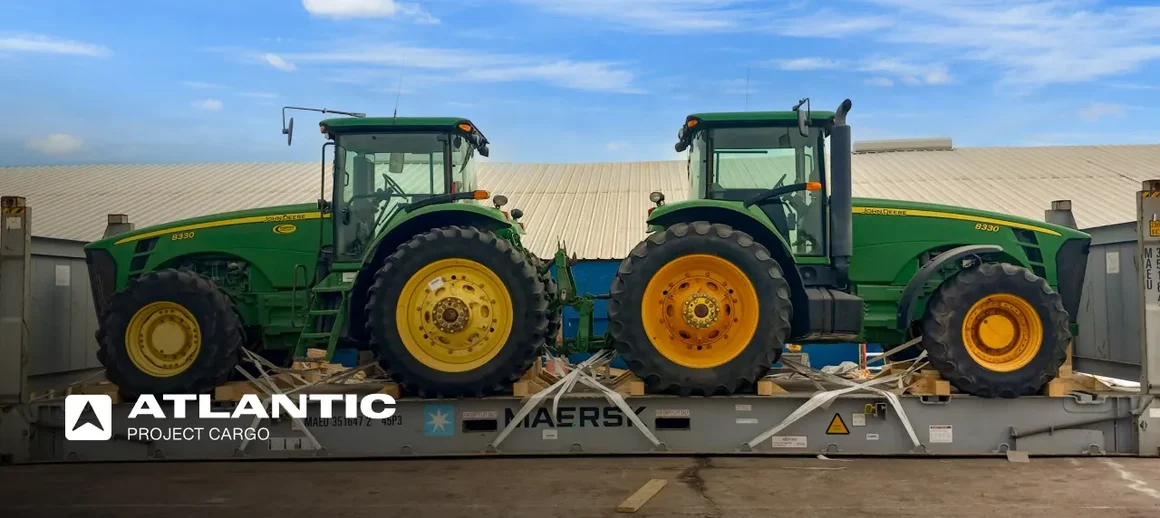
Tractor in the Midwest → Bajío or JaliscoCross-border trucking; RoRo if near a Gulf portUsually within or slightly over legal width; can often roll on/off
Combine harvesterTrucking with header removed; RoRo as alternativeHeader width drives permits; separating header changes the method
Bulldozer (large)Trucking with oversize permits; flat rack if near a portWeight and blade width push it into heavy-haul territory
Large industrial machine or mining unitBreakbulk or multimodal; trucking only after route surveyWeight/dimensions may exceed practical road permits
Equipment near the U.S.–Mexico borderCross-border truckingOcean leg would add handling with no distance benefit
Equipment far from the border but near a U.S. portRoRo, flat rack or breakbulk to the nearest suitable Mexican portAvoids long U.S. heavy-haul legs and multiple state permits

How Much Does It Cost to Ship Heavy Equipment from the USA to Mexico?

The cost of shipping heavy equipment from the USA to Mexico is the sum of every leg and service on the route, so it cannot be reduced to a single price range. Two quotes for the same machine can differ widely because the pickup site, the destination and the dimensions change which costs apply.

The machine: dimensions, weight, whether it runs, and whether it needs disassembly.

U.S. leg: distance to the border or port, heavy-haul trucking, state oversize/overweight permits, escorts, and loading at pickup.

Border or port: transfer or interchange services, transloading where required, export handling, ocean freight where applicable, and terminal and port charges.

Mexican customs: customs broker fees, import duty (IGI) where applicable, 16% IVA on imports, customs processing fees, and any inspection or storage costs. Whether duty applies depends heavily on the machine’s origin, meaning where it was made, not where it was bought. Goods qualifying under USMCA can enter duty-free, and machines built in countries with another Mexican trade agreement, such as the EU or Japan, may also qualify for preference. Machines from countries without a trade agreement with Mexico may face higher rates: Mexico raised duties on 1,463 tariff lines from non-FTA origins on January 1, 2026 (Clark Hill) and added 185 more lines in April 2026 (White & Case). The increases are concentrated in sectors such as autos, steel, textiles and plastics, so check the machine’s specific tariff fraction.

Mexican leg and protection: inland transport and permits, unloading at site, and Marine Cargo Insurance.

For a full breakdown of international equipment pricing, see How Much Does It Cost to Ship Heavy Equipment Internationally? and Heavy Equipment Freight Charges Explained.

Example: What Goes Into a USA-to-Mexico Heavy Equipment Shipping Quote?

Take a hypothetical case: a used Caterpillar excavator at a contractor’s yard in Houston, Texas, going to an industrial site near Monterrey, Nuevo León. The route looks obvious, but the quote depends on answers APC would need before pricing either option.

Quote elementOption A: Cross-border heavy haul (Houston → Laredo → Monterrey)Option B: Ocean/multimodal (Houston port → Altamira → Monterrey)
DimensionsDetermines trailer type and whether Texas and Mexican oversize permits applyDetermines RoRo vs flat rack and port handling method
Operational statusRunning machine can drive onto the trailer; non-running needs crane or winchRoRo generally needs a running machine; otherwise flat rack
Pickup accessibilityYard access for a lowboy; loading equipment on siteSame pickup, plus drayage to the Houston terminal
PermitsTexas OS/OW permit; SICT permit in Mexico if over limitsPermits only for the road legs at each end
Border/port routingWhich Laredo bridge the load can use; border yard or transload needsSailing schedule; port and terminal charges at both ends
HandlingOne load, possible interchange at the borderLifts or drive-on at two ports, plus two truck legs
CustomsPedimento filed for land entry; USMCA origin depends on where the machine was builtSame Mexican import process, at the port customs office
Final deliveryOften direct to site on the same trailerSeparate inland haul of several hundred kilometers from Altamira

For most mid-size excavators on this lane, Option A will usually be simpler, because Houston is a few hours’ drive from the border and Monterrey is close to it. But a non-running machine, an oversize configuration that the preferred bridge cannot take, or a buyer who also needs other cargo consolidated could change the answer. The same excavator in Chicago or Seattle would produce an entirely different comparison.

What Information Is Needed for an Accurate Shipping Quote?

An accurate quote needs the machine’s real specifications and both ends of the route. Send:

  • Equipment make, model and year
  • Length, width, height and weight as configured for transport
  • Operating condition and whether it can move under its own power
  • Pickup ZIP code or address, and whether loading equipment is available there
  • Destination city and site type in Mexico
  • Photos of the machine and attachments
  • Attachments and accessories traveling with it
  • Preferred timeline

Verify manufacturer specifications against the actual machine. Aftermarket guards, cabs, counterweights, wider tracks or a different bucket can change transport dimensions enough to move a load into a different permit category.

Major Shipping Routes from the USA to Mexico

The preferred route is set by where the machine is and where it must end up – not by which border crossing or port is closest on a map.

  • Texas → Northern and Central Mexico. The core cross-border corridor. Equipment from Houston, Dallas, or San Antonio commonly moves via Laredo toward Monterrey, Saltillo, the Bajío, Querétaro, and Mexico City; South Texas crossings such as Pharr–Reynosa serve Tamaulipas and the northeast.
  • Southwest U.S. → Chihuahua, Sonora and the northwest. El Paso/Ciudad Juárez and Arizona crossings such as Nogales serve Chihuahua’s industrial and mining regions and the Sonora–Sinaloa agricultural and mining belt.
  • California → Baja California and western Mexico. Otay Mesa serves Tijuana and Baja California directly. For Jalisco or Michoacán, a Pacific Ocean route to Manzanillo or Lázaro Cárdenas may compete with a long road haul.
  • Gulf Coast → Mexican Gulf ports. Equipment near Houston, other Gulf ports or the Southeast can move by sea to Altamira or Veracruz when the route and dimensions favor it.
  • Port arrival + inland transport. Any ocean route ends with a road (or, for some cargo, rail) leg from the Mexican port to the site, which can be long and may need its own oversize permits. See Multimodal Transportation.

Major U.S.–Mexico Border Crossings for Heavy Equipment Shipments

A handful of commercial gateways carry most U.S.–Mexico truck freight, and each serves different markets. Oversize suitability must be confirmed per load with the carrier, the bridge operator and the customs brokers on both sides.

GatewayGeography and markets servedNotes for equipment shipments
Laredo / Nuevo Laredo – World Trade BridgeCentral Texas corridor to Nuevo León, Coahuila, the Bajío and Mexico CityLargest U.S.–Mexico truck port; generally used for standard commercial freight (Cargado)
Laredo / Colombia, N.L. – Colombia–Solidarity BridgeUpriver from Laredo, connecting toward MonterreyThe Laredo gateway’s designated route for hazmat and oversize loads, per the City of Laredo (Cargado); its operator lists oversized-load capability (Puente Colombia)
Pharr / ReynosaRio Grande Valley to Tamaulipas and northeast MexicoMajor commercial bridge; expansion adding commercial lanes (Mexico Business News). Confirm oversize handling per load
El Paso / Ciudad Juárez (Ysleta–Zaragoza)West Texas and New Mexico to ChihuahuaOne of the highest-value U.S.–Mexico crossings (FreightWaves); serves Chihuahua’s manufacturing and mining
Otay Mesa / TijuanaSouthern California to Baja CaliforniaCalifornia’s main commercial truck crossing; mainly relevant for Baja California destinations
Nogales, AZ / Nogales, Son.Arizona to Sonora and SinaloaGateway for the northwest’s agricultural and mining regions

Eagle Pass / Piedras Negras is another relevant Texas crossing toward Coahuila. Choosing a gateway without checking the full route on both sides is one of the most common planning errors.

Mexican Ports Used for Heavy Equipment and Project Cargo

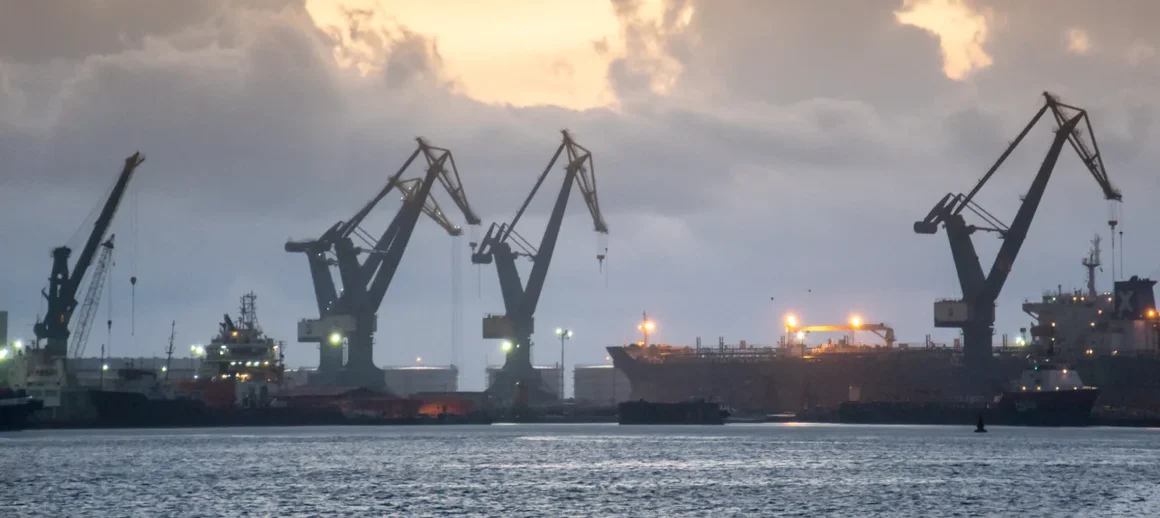
Four Mexican ports most often enter the evaluation for equipment arriving by sea: Veracruz and Altamira on the Gulf, Manzanillo and Lázaro Cárdenas on the Pacific. The right one is the port that minimizes the complete route to site. For a deeper comparison, see Top Ports in Mexico for Heavy Equipment & International Cargo.

Port of Veracruz

Gulf coast port with a long history of general cargo, vehicles and machinery, now expanded with new terminals. It is the natural sea gateway for Mexico City, Puebla and central-southern Mexico, and enters the evaluation for equipment shipped from U.S. Gulf or East Coast ports.

Port of Altamira

Industrial port in Tamaulipas serving the petrochemical and manufacturing economy of northeast Mexico. Its proximity to Monterrey and the northeast makes it an alternative to land crossings for oversized or project cargo from the U.S. Gulf.

Port of Manzanillo

Mexico’s busiest container port, on the Pacific in Colima, linked to Guadalajara and the Bajío. It handles containers, vehicles and general cargo, and enters the evaluation for equipment from the U.S. West Coast going to western and central Mexico. Congestion has been a recurring issue.

Port of Lázaro Cárdenas

Deep-water Pacific port in Michoacán with a diversified cargo mix including steel, vehicles and breakbulk, plus rail links inland. It is an alternative to Manzanillo for West Coast cargo, though road and rail connections to the Bajío can be a constraint (Container Magazine).

Import Requirements for Heavy Equipment in Mexico

There is no single import rule for all heavy equipment entering Mexico. Requirements are tied to each machine’s tariff classification, so an excavator, a combine and a road tractor can face different permits, standards and inspections. The baseline obligations below apply to most commercial imports; the equipment-specific ones must be checked case by case.

Importer registration. The Mexican importer needs a tax ID (RFC) and must be listed in the Padrón de Importadores; some sectors also require registration in special sector registries (trade.gov).

Customs declaration. Every commercial crossing requires a pedimento, Mexico’s import declaration, filed by a licensed Mexican customs broker (agente aduanal) and accompanied by a Spanish-language commercial invoice, the transport document and any compliance documents (trade.gov).

Tariff classification. The HS/Mexican tariff fraction determines the duty rate, permits and standards. Construction machinery, agricultural machinery, mining equipment, industrial machinery and road-going vehicles fall into different headings with different rules.

Valuation. Duties and taxes are calculated on customs value. Used equipment draws closer scrutiny, so the declared value should be supported by the bill of sale and invoice.

Duties and taxes. Import duty depends on the classification and origin. U.S.-, Canadian- or Mexican-originating goods can claim USMCA preference with a certification containing nine minimum data elements (trade.gov). USMCA remains in force: at the July 2026 joint review the U.S. declined to extend it, which triggers annual reviews, but no tariffs or rules changed (USTR). Goods from Mexico’s other FTA partners may claim preference under those agreements. Mexico raised duties on 1,463 tariff lines for goods from countries without an FTA, effective January 1, 2026. IVA (VAT) of 16% applies on top.

Permits and authorizations. Some fractions require a prior permit from the Secretaría de Economía, a phytosanitary authorization, or NOM compliance. The check always starts from the tariff code.

Inspections. Clearance uses a risk-based selection: shipments are released or sent for physical inspection.

Customs reform. Mexico’s reformed Customs Law took effect January 1, 2026. Importers and customs brokers now share joint liability for the accuracy of declarations, and a mandatory electronic value declaration applies to imports. Expect closer scrutiny of descriptions, values and supporting documents, and give your broker complete, accurate information, because errors are now the importer’s liability too.

For how clearance works in practice, see the Customs Clearance Guide for Heavy Equipment and APC’s Customs Clearance service.

Documents Needed to Ship Heavy Equipment from the USA to Mexico

Documents fall into two groups: what moves the machine out of the U.S., and what clears it into Mexico. Not every document applies to every shipment.

GroupDocumentWhen it applies
U.S. transport / exportCommercial invoiceAlways
U.S. transport / exportBill of saleUsed equipment; proof of ownership
U.S. transport / exportPacking listMultiple pieces, attachments or crates
U.S. transport / exportBill of lading or transport documentAlways (truck BOL or ocean B/L)
U.S. transport / exportElectronic Export Information (EEI) filingWhen U.S. export rules require it. Used self-propelled vehicles, including construction and agricultural machinery, generally require EEI regardless of value
U.S. transport / exportTitle or ownership documents for CBPUsed self-propelled vehicles, which CBP’s rules define to include self-propelled agricultural machinery and construction equipment (eCFR); typically presented at least 72 hours before export (CBP)
Mexican importPedimentoAlways; filed by the Mexican customs broker
Mexican importCommercial invoice in Spanish with serial numbersAlways
Mexican importUSMCA certification of originWhen claiming preferential duty
Mexican importPermits, phytosanitary documents or NOM certificatesOnly where the tariff fraction requires them
Mexican importCarta Porte complementDomestic transport leg in Mexico
BothCargo insurance certificateRecommended; required by some buyers or lenders

The most common cause of delay is inconsistency: a serial number or description that differs between the invoice, bill of sale and pedimento.

Importing Used Heavy Equipment from the USA to Mexico

Used heavy equipment can be imported into Mexico, but eligibility depends on the machine’s tariff classification, not on a general “used machinery” rule. Check before you buy.

Category matters. The Secretaría de Economía’s prior-permit list for used merchandise covers vehicles in headings 8701–8706, for definitive import (Calder & Vale). That heading range includes agricultural and crawler tractors (8701), road-going trucks (8704) and special-purpose vehicles such as truck-mounted cranes, drilling trucks and concrete mixers (8705). A used tractor, truck or truck crane may therefore need a permit, while a used excavator generally does not. Rules written for passenger cars and road vehicles should never be assumed to apply to off-road machinery – or vice versa.

Agricultural machinery. Certain used agricultural machines (such as some harvesting equipment) are regulated by SADER/SENASICA, with phytosanitary requirements. Soil, seeds and plant residue are the typical problems at inspection.

Standards. A definitive import of a used machine in a tariff fraction subject to a NOM may require a certificate showing the machine is used.

Ownership and serial numbers. Serial and PIN plates must be legible and match the bill of sale, invoice and pedimento. Missing or altered numbers can stop a shipment on either side of the border.

Condition and cleaning. Clean equipment thoroughly – tracks, undercarriage, radiators, cabs and headers. Leaking fluids create both transport and inspection issues.

Valuation. Expect customs to look closely at the declared value of used equipment, which is now filed through an electronic value declaration. Keep the purchase documents, auction invoice and payment proof together.

All of the above must be confirmed for the exact machine with the importer’s customs broker. See Export Inspections & Certifications for Used Heavy Equipment.

How to Prepare Heavy Equipment for Shipping to Mexico

Preparation affects both cost and clearance: a few inches of height or a removed attachment can change the trailer, the permits and even the transport method.

  • Measure accurately. Record length, width, height and weight in transport position, with the attachments that will travel on the machine.
  • Remove or secure attachments. Buckets, forks, headers and booms are often shipped separately or secured to the deck.
  • Lower transport height where practical. Lowering booms, folding ROPS where the manufacturer allows, or removing cabs and exhaust stacks can keep a load under height limits.
  • Fuel and fluids. Follow carrier rules for fuel levels; fix leaks before pickup.
  • Batteries and security. Disconnect batteries where required; lock cabs and remove loose items.
  • Clean thoroughly. Remove soil and plant material, especially from agricultural and earthmoving equipment.
  • Protect vulnerable components. Cover glass, lights, hydraulic fittings and control panels.
  • Document condition. Take dated photos of all sides, serial plates and existing damage.
  • Plan loading. Confirm whether the machine drives on, or needs a crane, forklift or ramps at pickup.

When disassembly turns an oversize load into a legal-dimension load, or lets a machine fit a flat rack instead of breakbulk, it can lower the total cost even after paying for the labor. APC’s Loading & Disassembly Services cover this assessment.

Inland and Final-Mile Transportation in Mexico

The best entry point is determined by the complete route to the final destination, not by the closest border crossing or the cheapest port. The Mexican inland leg is where many quotes go wrong.

Destination accessibility. A plant in an industrial park outside Monterrey or Querétaro usually has access roads built for heavy trucks. A farm in Sinaloa, a mine in Zacatecas or a construction site inside Mexico City may not; narrow access, soft ground or urban traffic rules can require a smaller trailer or a transfer near the site.

Oversized loads. Loads beyond NOM-012 limits need SICT permits for the federal network, and may have to follow approved corridors that avoid restricted bridges or rural roads (Logistics Management). State and municipal rules can add further restrictions.

Route planning. Bridge heights, weight ratings, toll-plaza widths and mountain grades – for example between the Gulf ports and the central plateau – all affect the route and the equipment needed.

Unloading. Confirm who unloads, with what equipment, and whether the site can receive a lowboy. A machine that arrives with nobody able to offload it creates waiting charges.

Buying Heavy Equipment in the USA and Shipping It to Mexico

Mexican buyers source machinery in the U.S. from dealers, auctions, manufacturers and private sellers. The order of steps protects against buying a machine that cannot be imported or costs far more to deliver than expected:

  1. Identify the equipment.
  2. Verify Mexican import eligibility for its tariff classification and origin.
  3. Confirm real dimensions, weight and condition.
  4. Estimate the landed logistics cost, including duties and inland delivery.
  5. Review ownership and export documentation.
  6. Purchase the equipment.
  7. Arrange pickup and shipping.

Do not buy first and investigate import eligibility afterward. Auction purchases often have short pickup windows, which leaves little time to fix a documentation or eligibility problem. See Equipment Sourcing & Procurement Services and the Farm Equipment Auction Shipping Process.

Common Mistakes When Shipping Heavy Equipment from the USA to Mexico

  • Comparing freight rates instead of total landed logistics cost.
  • Assuming trucking is always cheapest because Mexico borders the U.S.
  • Choosing a border crossing without checking the complete route on both sides.
  • Quoting from brochure dimensions instead of measuring the actual machine.
  • Forgetting attachments, counterweights or headers that change width or weight.
  • Buying machinery before checking Mexican import eligibility.
  • Assuming USMCA duty-free treatment for a machine manufactured outside North America, or assuming the opposite: that any non-North American machine pays the highest duty, without checking Mexico’s other trade agreements.
  • Treating road-vehicle regulations as if they applied to all machinery.
  • Underestimating permits, escorts and heavy-haul costs.
  • Missing or inconsistent serial numbers and ownership documents.
  • Choosing a Mexican port on ocean freight price alone.
  • Failing to plan final-mile delivery and unloading.
  • Underestimating loading or disassembly requirements.

Frequently Asked Questions About Shipping Heavy Equipment to Mexico

Confirm the machine’s dimensions, weight and import eligibility, choose cross-border trucking or ocean freight based on the full route, prepare the equipment, complete U.S. export requirements, clear Mexican customs through a licensed customs broker with a pedimento, then deliver it inland to the site.
Yes. Many machines move by truck through commercial border crossings such as Laredo, Pharr or El Paso. Oversized loads need permits in each U.S. state and in Mexico, and must use a crossing that can handle their dimensions.
Cost depends on dimensions, weight, U.S. origin, Mexican destination, transport method, permits, port or border charges, customs, duties, taxes and final delivery. A reliable figure requires a route-specific quote rather than a generic price range.
Neither is always better. Trucking usually suits equipment in the southern U.S. going to northern or central Mexico. Ocean freight can win when the machine is near a U.S. port, is very large, or is going to a region near a Mexican port.
Transit time depends on distance, permits, border or port scheduling, customs clearance and inland delivery. Oversize permits and documentation readiness are often bigger factors than driving or sailing time, so timelines are confirmed per shipment.
Typically a commercial invoice, bill of sale for used equipment, transport document, packing list where relevant, a pedimento filed by a Mexican customs broker, and, when claiming USMCA preference, a certification of origin. Permits or certificates apply only to certain tariff classifications.
Yes, but eligibility depends on the tariff classification. Used vehicles in headings 8701–8706, which include tractors, trucks and truck-mounted cranes, can require a prior permit and some used agricultural machinery has phytosanitary requirements. Check the specific machine before purchase.
The best crossing is the one that fits the load’s dimensions and the full route. In the Laredo gateway, oversize loads generally use the Colombia–Solidarity Bridge; other crossings suit other regions.
Veracruz and Altamira on the Gulf and Manzanillo and Lázaro Cárdenas on the Pacific are the ports most often evaluated for heavy equipment and project cargo.
Yes. Excavators commonly move by cross-border trucking on RGN or lowboy trailers, or by RoRo or flat rack by sea. Weight, track width and boom height determine permits and method. See How to Ship an Excavator.
Yes. Tractors and combines can move by truck or RoRo; combines usually travel with the header removed. Used tractors may need a prior import permit and used agricultural machinery can face phytosanitary checks, so verify eligibility first.
With state oversize/overweight permits in the U.S., a Mexican SICT special permit for loads beyond NOM-012 limits, route surveys where needed, escorts where required, and a border crossing that can physically accept the load.
Yes. Confirm the tariff classification, permits, origin-based duty and documentation before paying for the machine. Fixing an eligibility problem after purchase is expensive and sometimes impossible.

Get a Heavy Equipment Shipping Quote to Mexico

The best way to ship heavy equipment from the USA to Mexico depends on the specific machine and the specific route. APC coordinates shipments around the equipment and its dimensions, the U.S. origin, the Mexican destination, the choice of border crossing or ocean route, loading requirements, customs and final delivery – so you can compare options on total logistics cost, not just freight rate.

Get a Free Quote

Request a Shipping Estimate

Sources

Shipping Insights & Guides

Largest Farm Equipment Manufacturers in the USA
November 15, 2023

Largest Farm Equipment Manufacturers in the USA

The agricultural sector stands as a cornerstone of the United States economy, vital for both domestic needs and global food supply. In this era of large-scale agriculture, farmers increasingly depend...

Reviewed by Nick Yadryshnikov Nick Yadryshnikov
Read
Top 10 Tractor Companies in the World
May 20, 2026

Top 10 Tractor Companies in the World

The global farm tractor market is a crucial segment of the agricultural industry, with an expected total value of around $66.1 billion by 2027. While specific rankings can vary slightly...

Reviewed by Nick Yadryshnikov Nick Yadryshnikov
Read
Top 10 Construction Equipment Manufacturers
June 26, 2026

Top 10 Construction Equipment Manufacturers

The global construction equipment industry has entered a new era. Driven by surging infrastructure investment, rapid urbanization, and a technology wave spanning electrification, autonomy, and AI-powered fleet management, the market...

Reviewed by Victoria Moseicuka Victoria Moseicuka
Read
John Deere’s Most Powerful Tractors Yet: the New 2025 9RX Series
April 23, 2024

John Deere’s Most Powerful Tractors Yet: the New 2025 9RX Series

John Deere has released its most powerful tractor to date, the 2025 9RX series. This ground-up redesign has increased horsepower and efficiency, allowing farmers to cover more ground and reduce...

Reviewed by Nick Yadryshnikov Nick Yadryshnikov
Read
Top 10 RV Manufacturers in 2026: Who’s Building America’s Best Rigs?
June 18, 2026

Top 10 RV Manufacturers in 2026: Who’s Building America’s Best Rigs?

The American love affair with recreational vehicles isn’t slowing down. Whether it’s remote workers trading cubicles for campgrounds or retirees finally hitting the open road, RV culture is firmly embedded...

Reviewed by Victoria Moseicuka Victoria Moseicuka
Read
Top 15 Combine Harvester Producers
February 13, 2024

Top 15 Combine Harvester Producers

In the previous article we discussed the Top 10 Tractor Companies, today we will focus on harvesters. From the huge plains of the US to the rice paddies of Asia,...

Reviewed by Nick Yadryshnikov Nick Yadryshnikov
Read
Top 10 Biggest Farms in the US
June 12, 2025

Top 10 Biggest Farms in the US

The agricultural landscape of the United States is huge and varied, but certain farms stand out not just for their heritage or production, but for their sheer scale. These operations...

Reviewed by Nick Yadryshnikov Nick Yadryshnikov
Read
Guide how to Import a Car to the United States
September 27, 2024

Guide how to Import a Car to the United States

Car import into the U.S. can be challenging with potential pitfalls: laws, requirements, and paperwork. However, with the right guidance and understanding of the process, it can be a straightforward...

Reviewed by Maryana Serafinas Maryana Serafinas
Read
Top 10 World Bulldozer Manufacturers
February 20, 2024

Top 10 World Bulldozer Manufacturers

In our previous article we had a look at the Top 15 harvester producers, today we will focus on bulldozers. Bulldozers are a crucial part of construction and agriculture. Their...

Reviewed by Victoria Moseicuka Victoria Moseicuka
Read
What Are the Top 10 Biggest and Busiest Ports in the US?
April 8, 2024

What Are the Top 10 Biggest and Busiest Ports in the US?

Today we are starting a series of articles related to the world’s biggest ports, and we will start with the United States. The United States has a wide network of...

Reviewed by
Read