
Key Takeaways
- Heavy equipment can be shipped from the USA to Venezuela using several methods. RoRo, flat rack, container, and breakbulk shipping can accommodate different equipment sizes, weights, dimensions, and configurations.
- Choosing the right shipping method depends on the equipment. Cargo dimensions, weight, mobility, and handling requirements determine whether specialized equipment or conventional ocean freight is the best option.
- Oversized machinery requires careful logistics planning. Inland transportation, loading, port handling, vessel requirements, and cargo preparation must be coordinated before the shipment moves.
- Customs clearance is an important part of the process. Accurate commercial documentation and compliance with export and Venezuelan import requirements help minimize delays and unexpected costs.
- Port selection can affect the overall shipment. Selecting an appropriate Venezuelan gateway based on the cargo and final destination can improve handling efficiency and transportation planning.
- Experienced freight forwarding simplifies complex equipment shipments. Coordinating ocean freight, inland transportation, cargo handling, documentation, and customs support through one logistics partner helps keep the shipment organized from origin to destination.
Heavy equipment can be shipped from the USA to Venezuela by RoRo, flat rack, container, or breakbulk shipping depending on the machine’s size, weight, condition, and destination. However, shipments to Venezuela require additional export compliance review, including cargo type, end user, sanctions screening, documentation, and customs requirements.
Current Venezuela Shipping Update – July 2026. Two things changed this lane recently. Nicolás Maduro was removed from power in January 2026, after which OFAC issued general licenses easing parts of the programme while leaving the underlying regulations and the great majority of existing Venezuela-related SDN designations in force (OFAC has designated more than 150 persons and entities under EO 13692 alone since 2015, on top of designations under separate authorities). Then on 24 June 2026, twin magnitude 7.2 and 7.5 earthquakes struck northern Venezuela. The confirmed death toll has climbed sharply since – from roughly 1,700–1,900 in the days after the quakes, past 3,500 by early July, to more than 6,000 as of early August 2026 – and central-coast port infrastructure was damaged. Ocean services are still being restored.
Sanctions authorizations and port conditions changed significantly in 2026, so older routing and compliance information should be reverified.”
Note: This article is general information, not legal or sanctions advice. U.S. sanctions on Venezuela are changing quickly, and authorizations can be amended or revoked without notice. Confirm the current position with sanctions counsel and a licensed customs broker before committing to any shipment.
Can You Ship Heavy Equipment from the USA to Venezuela?
Often yes – but never as a standard booking. OFAC sanctions on Venezuela are targeted rather than a blanket embargo, so the question is not whether the country is open but whether your transaction is permitted.
Every enquiry clears a pre-check before anyone quotes a rate:
- Cargo type and export classification
- End user – screened against the SDN list
- Final destination and intended use
- Sanctions screening of all parties, including the consignee’s bank
- Export documentation and any licensing requirement
- Carrier acceptance of Venezuela cargo
- Importer readiness – registered, broker appointed
If any one fails, the shipment does not happen regardless of freight budget. We run the check before quoting, not after.
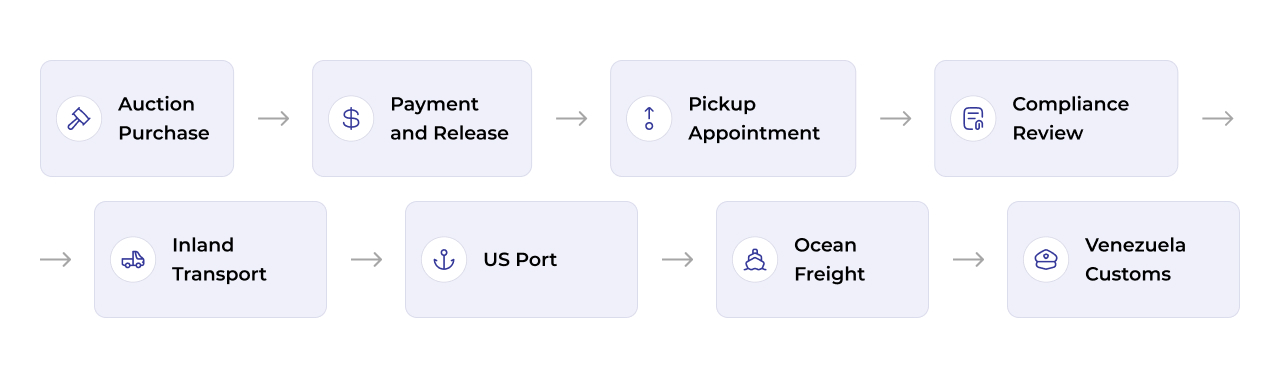
How Does Heavy Equipment Shipping from the USA to Venezuela Work?
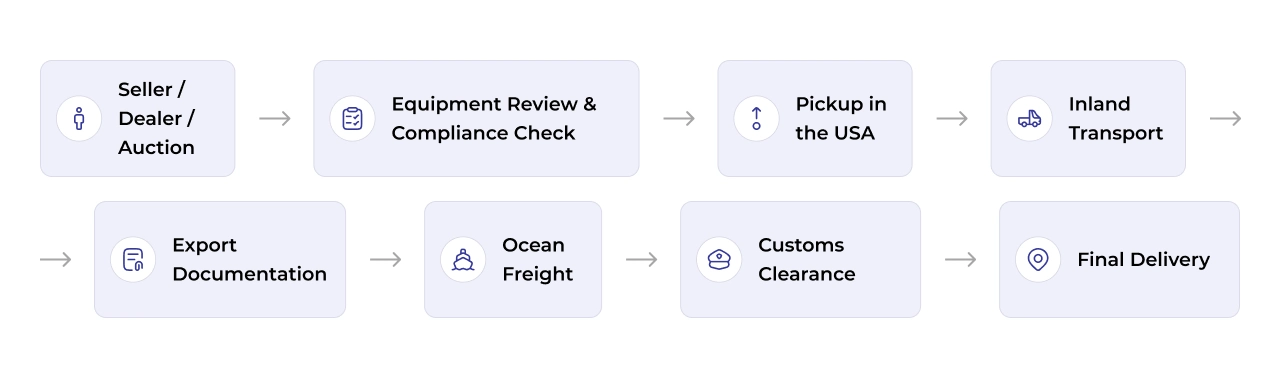
Heavy equipment shipping from the USA to Venezuela runs through seven stages, with a compliance review inserted before any freight is booked.
| Step | What Happens |
|---|---|
| Equipment review | Cargo type, dimensions, condition, and compliance checked |
| Pickup | Equipment collected from dealer, auction, farm, or job site |
| Inland transport | Machine moved to US export port |
| Export documentation | AES, invoice, bill of lading, and supporting documents prepared |
| Ocean freight | Cargo shipped by RoRo, flat rack, container, or breakbulk |
| Customs clearance | Import documents reviewed by Venezuelan customs |
| Final delivery | Equipment delivered to buyer or project site |
What Types of Equipment Can Be Shipped to Venezuela?
Machinery shipping to Venezuela covers agricultural, construction, industrial, mining, and oilfield equipment, subject to classification and end-use review.
| Equipment Type | Common Shipping Method |
|---|---|
| Tractor | RoRo / Flat rack |
| Combine | Flat rack |
| Excavator | Flat rack / Breakbulk |
| Bulldozer | Flat rack / Breakbulk |
| Wheel loader | RoRo / Flat rack |
| Backhoe | RoRo / Flat rack |
| Forklift | Container / RoRo |
| Crane | Breakbulk |
| Mining equipment | Breakbulk |
| Industrial machinery | Container / Flat rack / Breakbulk |
Farm equipment shipping to Venezuela and construction equipment shipping to Venezuela follow the same compliance path; only the classification differs. Oilfield equipment is the exception – goods supplied for oil or gas exploration, development, or production fall under a specific authorization rather than general commercial rules.
Compliance Checks Before Shipping to Venezuela
Export compliance is the gating item. OFAC administers the Venezuela Sanctions Regulations at 31 CFR Part 591, and while the 2026 general licenses widened what is permitted, the regulations and designations remain in force.
| Compliance Check | Why It Matters |
|---|---|
| End user | Confirms who receives the equipment |
| End use | Confirms how the equipment will be used |
| Cargo type | Determines export classification and restrictions |
| Sanctions screening | Reduces risk of prohibited transactions |
| Carrier acceptance | Confirms vessel/operator can handle the shipment |
| Documentation review | Prevents export and customs delays |
Three points matter most for machinery:
Oil and gas supply is separately authorized. OFAC General License 48 authorizes goods, technology, software, or services from the United States for oil or gas exploration, development, or production in Venezuela, including maintenance and spare parts. Conditions apply: payments to the Government of Venezuela or PdVSA must generally go into the Foreign Government Deposit Funds account established under Executive Order 14373, and new joint ventures – or anything tied to Russian, Iranian, North Korean, Cuban, or Chinese entities – are excluded.
A general license is not blanket clearance. OFAC states certain exports under GL 48 may still need separate authorization from the Commerce Department’s Bureau of Industry and Security. Sanctions clearance and export-control clearance are different checks.
Earthquake relief has its own authorization. General License 60 authorizes transactions related to earthquake relief efforts in Venezuela specifically – it is not a general clearance for routine commercial cargo, so any shipment relying on it should be checked against the license’s actual scope before booking.
Screen every party and check OFAC’s recent actions before booking – designations have changed repeatedly through 2026. The Congressional Research Service maintains an overview of U.S. sanctions policy on Venezuela.
Best Shipping Methods from the USA to Venezuela
RoRo Shipping to Venezuela
RoRo suits running tractors, trucks, wheel loaders, and other self-propelled equipment. Service frequency is the constraint, not capability.
Flat Rack Shipping to Venezuela
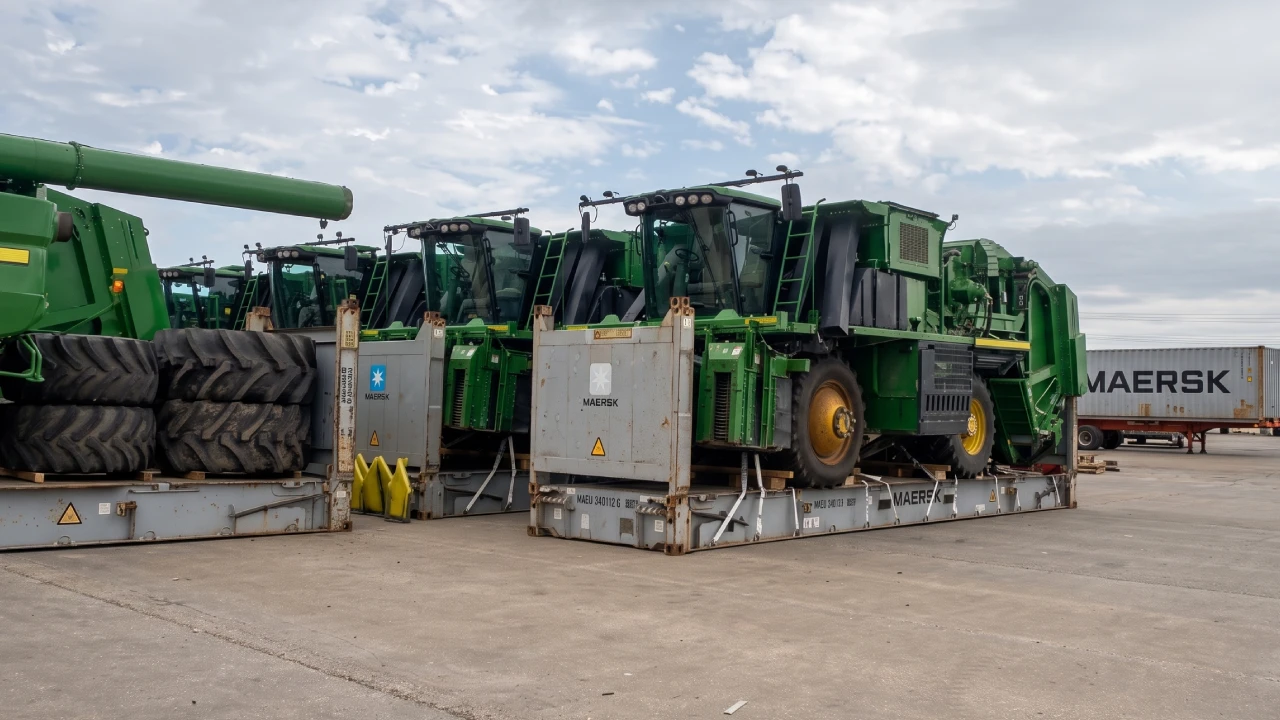
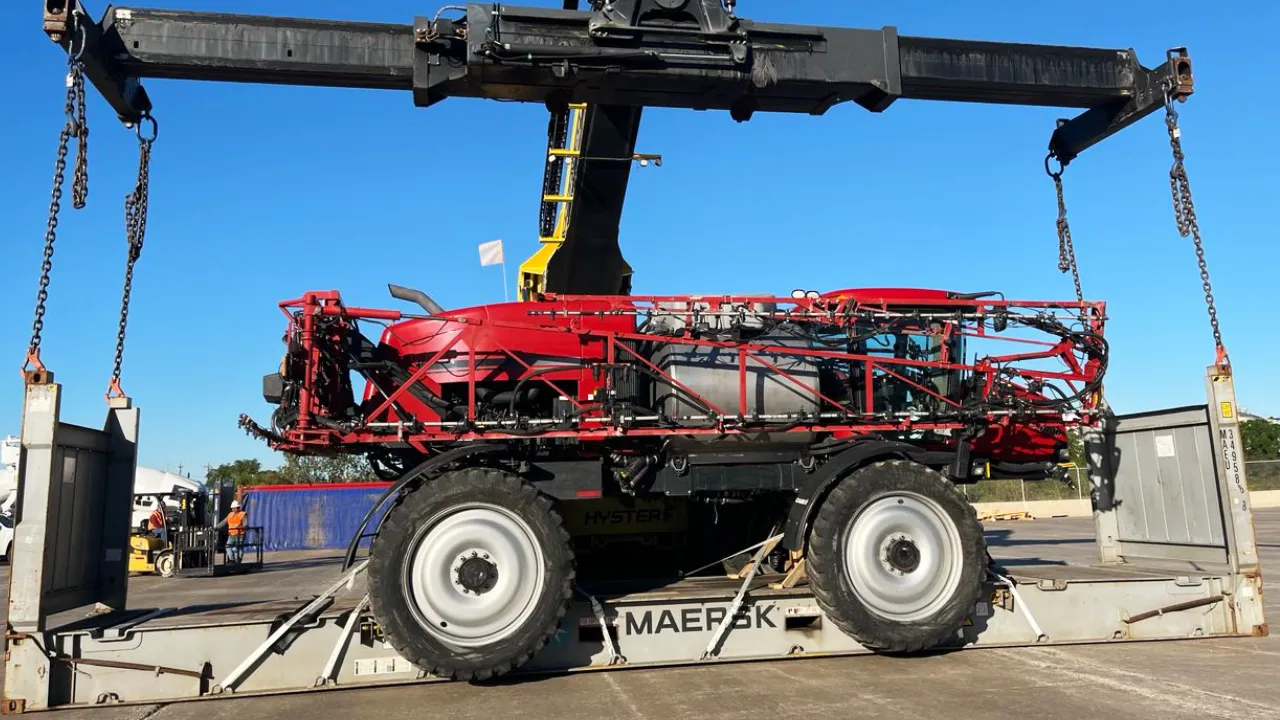
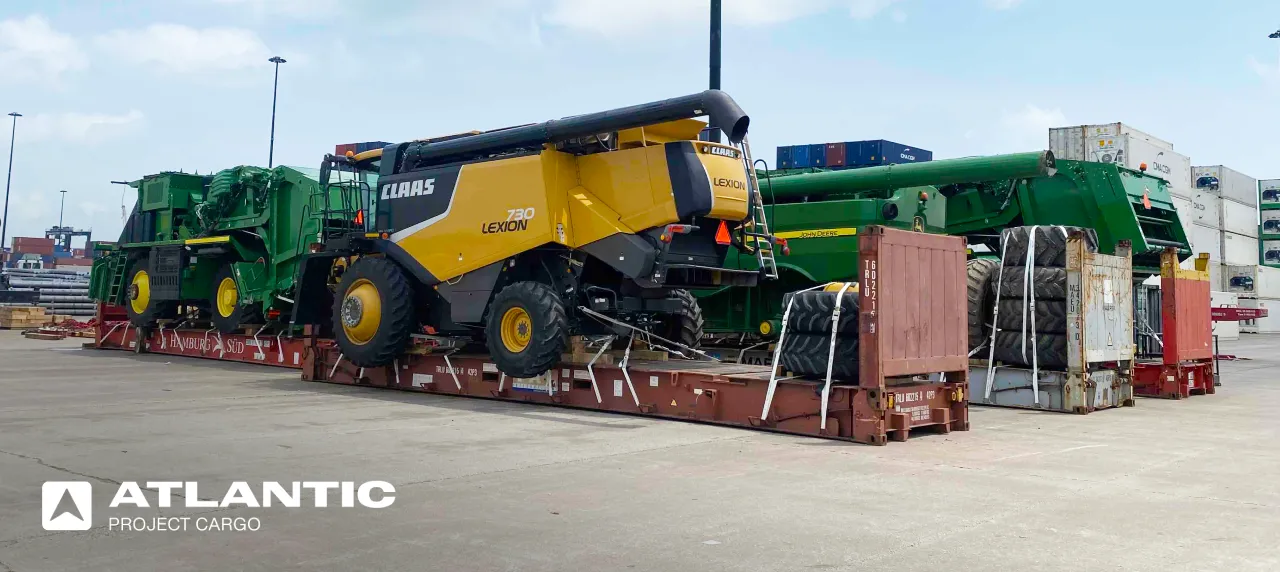
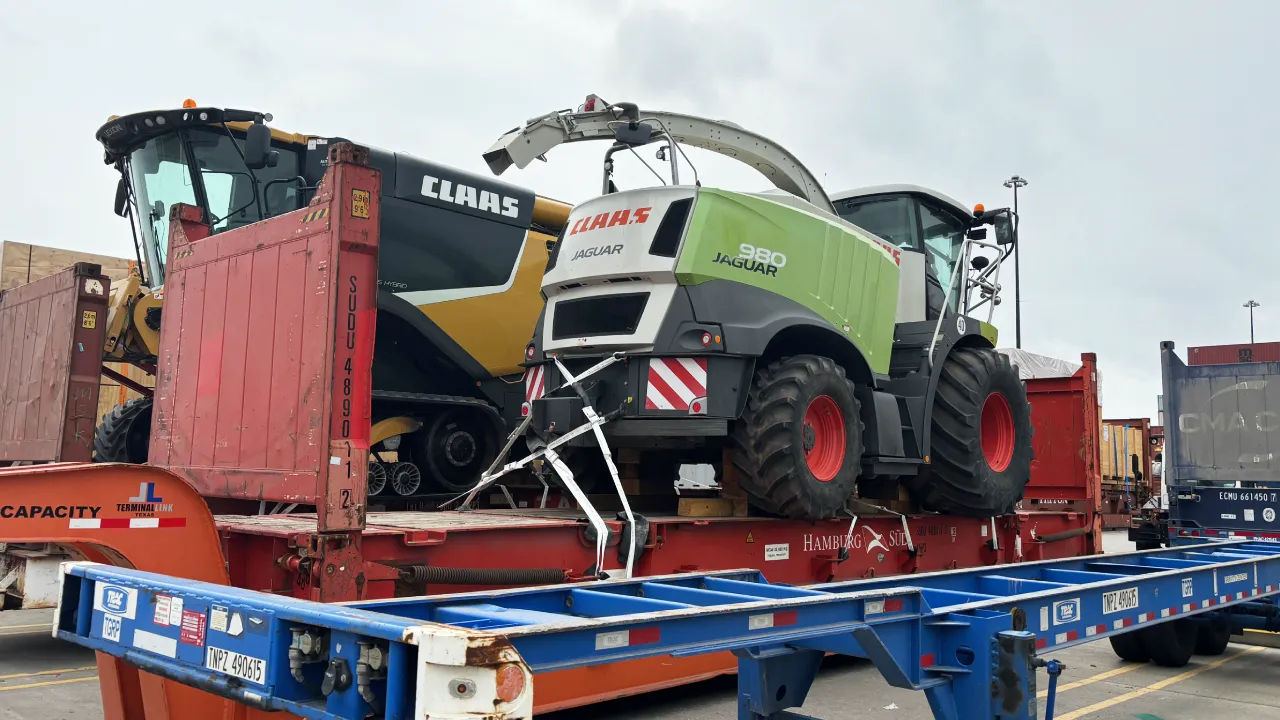
Flat racks handle excavators, dozers, oversized machinery, and anything that cannot move under its own power. The machine is craned on and lashed down.
Container Shipping to Venezuela
Containers suit compact machinery, forklifts, attachments, and spare parts – best protection, lowest base rate.
Breakbulk Shipping to Venezuela
Breakbulk covers large industrial units, mining machinery, oilfield equipment, and non-containerized cargo beyond flat rack limits.
| Method | Best For | Pros | Limitations |
|---|---|---|---|
| RoRo | Self-propelled machinery | Efficient loading | Limited by schedule and port availability |
| Flat rack | Oversized equipment | Flexible for large machines | Higher securing and handling cost |
| Container | Small machinery and parts | Better protection | Size restrictions |
| Breakbulk | Heavy/project cargo | Best for oversized cargo | Requires more planning |
How Much Does It Cost to Ship Heavy Equipment from the USA to Venezuela?
Cost depends on machine dimensions, weight, condition, pickup location, export port, arrival port, shipping method, compliance and documentation work, insurance, port charges, and final delivery.
| Equipment Type | Typical Method | Pricing Note |
|---|---|---|
| Tractor | RoRo / Flat rack | Quote required |
| Excavator | Flat rack | Quote required |
| Bulldozer | Flat rack / Breakbulk | Quote required |
| Forklift | Container / RoRo | Quote required |
| Industrial machinery | Flat rack / Breakbulk | Quote required |
We do not publish rate ranges here. Carrier availability is unsettled, and compliance work varies, so any figure published today would mislead you next month.
What Makes Up the Total Landed Cost?
| Cost Component | Usually Included in Freight Quote? |
|---|---|
| Equipment purchase | No |
| US pickup | Sometimes |
| Inland transport | Sometimes |
| Export documentation | Usually |
| Ocean freight | Yes |
| Marine insurance | Optional |
| Venezuela customs duties | No |
| VAT / import taxes | No |
| Customs broker fees | No |
| Port storage/demurrage | No |
| Final delivery | Optional |
Venezuela commonly assesses duties and VAT on CIF value, so freight and insurance feed the dutiable base. Have your customs broker confirm the classification before you buy the machine.
How Long Does Shipping from the USA to Venezuela Take?
| Route | Typical Transit Time |
|---|---|
| US Gulf Coast → Puerto Cabello | Approx. 2–4 weeks |
| US East Coast → La Guaira | Approx. 2–5 weeks |
| Florida → La Guaira / Puerto Cabello | Approx. 2–4 weeks |
| Houston → Puerto Cabello | Approx. 2–5 weeks |
These are historical planning ranges and are less reliable than usual while post-earthquake service restoration continues. Confirm at booking.
Vessel availability, transshipment, congestion, Venezuela customs clearance, inspections, and inland delivery all bear on transit. Right now service restoration is the dominant variable.
Best US Ports for Shipping Equipment to Venezuela
| US Port | Best For |
|---|---|
| Houston | Heavy machinery, project cargo, industrial equipment |
| Galveston | RoRo and oversized cargo |
| Jacksonville | Vehicles and self-propelled machinery |
| Miami / Port Everglades | Florida-origin cargo and smaller shipments |
| Savannah | Containerized machinery and parts |
| Baltimore | RoRo and farm equipment |
| New York / New Jersey | Northeast exports |
Main Ports in Venezuela for Heavy Equipment Imports
Puerto Cabello is currently the primary working gateway for commercial cargo, having absorbed traffic redirected from La Guaira after the June earthquakes.
| Venezuela Port | Best For |
|---|---|
| Puerto Cabello | General cargo, containers, machinery, heavy equipment |
| La Guaira | Containers, general cargo, cargo near Caracas |
| Maracaibo | Western Venezuela, oil and industrial cargo |
| Guanta | Eastern Venezuela and regional cargo |
| El Guamache | Island and regional cargo flows |
La Guaira’s container terminal was structurally damaged and designated an emergency operations centre, with carriers redirecting calls to Puerto Cabello during assessment. Maersk suspended intra-Americas bookings to La Guaira and moved empty returns to Puerto Cabello. A phased resumption began in late July 2026.
Port choice follows delivery location, vessel service, cargo type, and current conditions – which on this lane carry more weight than usual.
Import Requirements for Heavy Equipment in Venezuela
Venezuela equipment import requires a registered importer of record, a licensed customs broker filing with SENIAT, and a document set that matches across every page.
| Requirement | Why It Matters |
|---|---|
| Importer registration | Confirms legal ability to import |
| Customs broker | Handles customs filing |
| Commercial invoice | Used for customs valuation |
| Bill of lading | Cargo release document |
| Packing list | Describes shipment contents |
| Certificate of origin | May support customs processing |
| Import permit | May be required for certain categories |
Machinery import to Venezuela is documented in Spanish. Serial numbers, models, and declared values must match across the invoice, bill of lading, and packing list – mismatches routinely cause holds.
Documents Needed to Ship Heavy Equipment to Venezuela
| Document | Required For |
|---|---|
| Commercial invoice | Customs valuation |
| Bill of lading | Ocean freight and cargo release |
| Packing list | Cargo details |
| AES / export filing | US export compliance |
| Equipment ownership documents | Proof of ownership if needed |
| Insurance certificate | Cargo protection |
| Compliance documents | Sanctions / end-user review |
| Import permit | If required by cargo type |
Incomplete documents delay export clearance, loading, and customs release. On a sanctions-sensitive lane, they also invite scrutiny of the whole shipment.
Preparing Heavy Equipment for Shipment to Venezuela
| Preparation Step | Why It Matters |
|---|---|
| Clean equipment | Reduces inspection issues |
| Confirm dimensions | Prevents incorrect quote |
| Confirm weight | Supports load planning |
| Secure attachments | Reduces damage risk |
| Photograph equipment | Supports insurance records |
| Verify serial number | Supports customs documents |
| Confirm running condition | Determines RoRo eligibility |
Shipping Equipment Purchased at US Auctions
Buyers source from Ritchie Bros., IronPlanet, MachineryTrader sellers, dealers, and private sellers. A compliance step is added to the usual auction clock:
Key takeaway: Check feasibility before bidding. Compliance restrictions, pickup deadlines, and port availability can make a machine unshippable after you own it.
Common Mistakes When Shipping Equipment to Venezuela
- Skipping sanctions screening, or assuming the forwarder did it
- Buying before checking feasibility – the compliance answer can be no
- Inconsistent documents across invoice, BOL, and packing list
- Assuming all ports accept all cargo types
- Underestimating customs delays
- Choosing RoRo for non-running equipment – it must drive on
- Ignoring inland delivery from port to site
- Skipping marine cargo insurance
Summary: The biggest risks when shipping to Venezuela are not freight costs. They are compliance, documentation, carrier acceptance, and customs clearance.
Example Shipping Scenarios
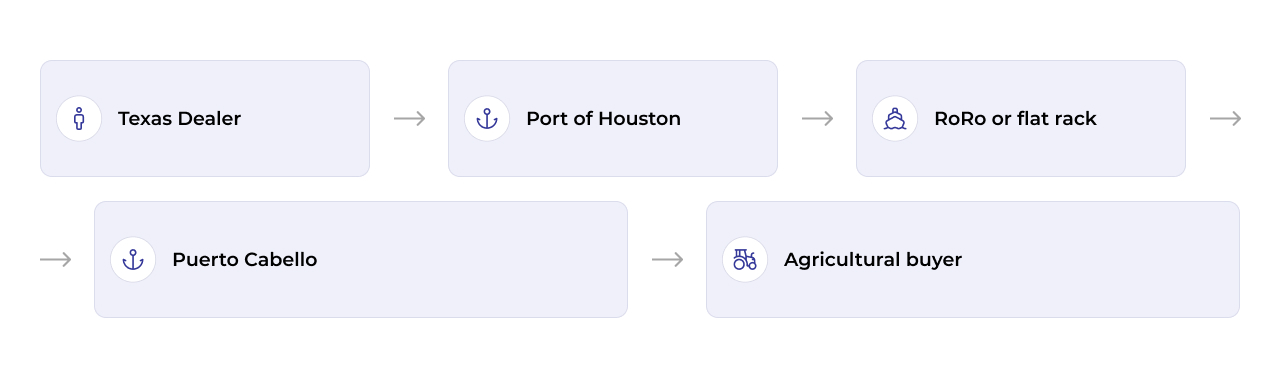
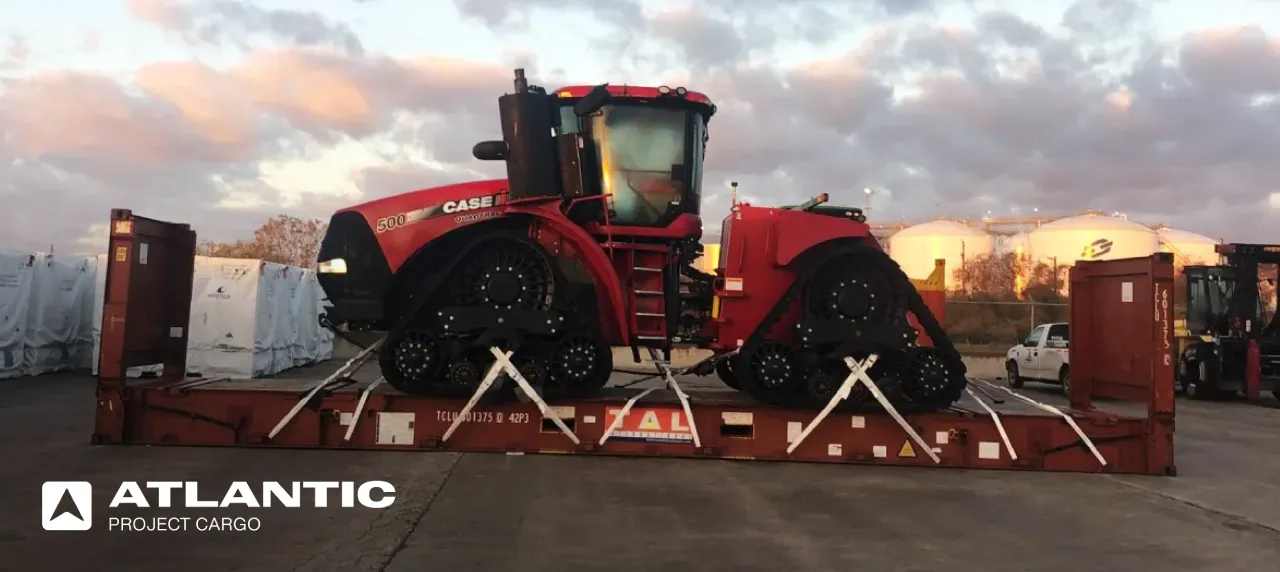
Example 1 – Tractor from Texas to a private agricultural buyer
A Venezuelan farming company orders a used tractor from a Texas dealer. The compliance check runs first: the buyer is a private business with no state ownership, screening returns clean against the SDN list, the end use is agricultural, and the machine carries no dual-use classification issue. Only then is freight quoted. The tractor runs, so it is a RoRo candidate – but sailing frequency on this lane is thin, and the next vehicle service is five weeks out, so flat rack out of Houston wins on timing.
Why: Screening cleared before any money moved. Puerto Cabello is the working commercial gateway while La Guaira restores capacity, and flat rack beat waiting for the next RoRo call.
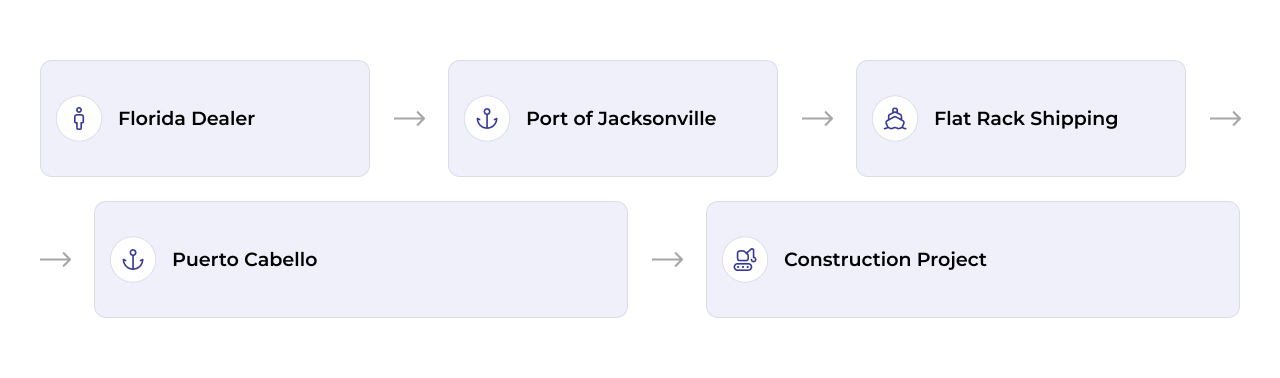
Example 2 – CAT excavator from Florida to a construction project
A contractor buys a 30-ton excavator in Florida for a project near Caracas. The consignee had originally nominated La Guaira as the discharge port for its proximity to the site. Following the June earthquakes, the container terminal there was damaged and carriers redirected calls, so the booking is rewritten to Puerto Cabello with an additional inland leg cost included from the start rather than discovered on arrival.
Why: Machine too large for RoRo doors, so flat rack. The port change was made at booking, which is far cheaper than a machine sitting at a terminal that cannot discharge it.
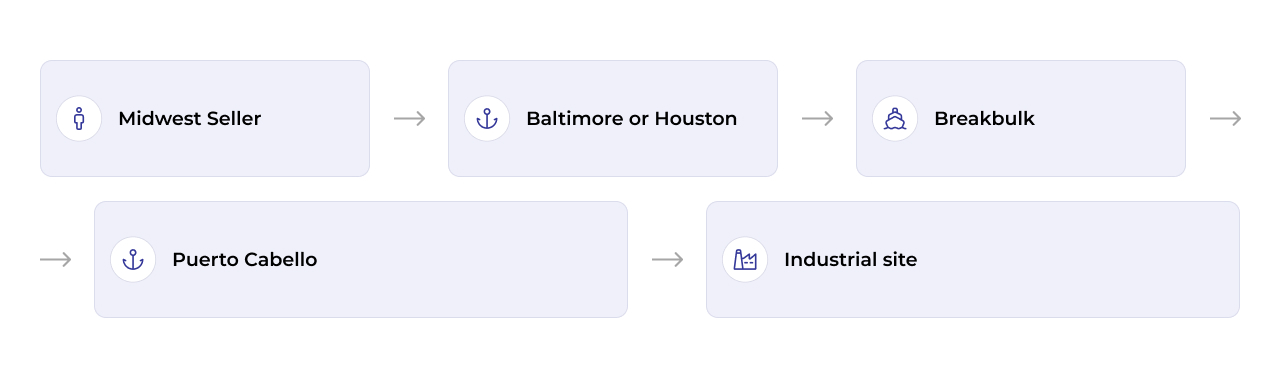
Example 3 – Oilfield equipment from the Midwest to an industrial site
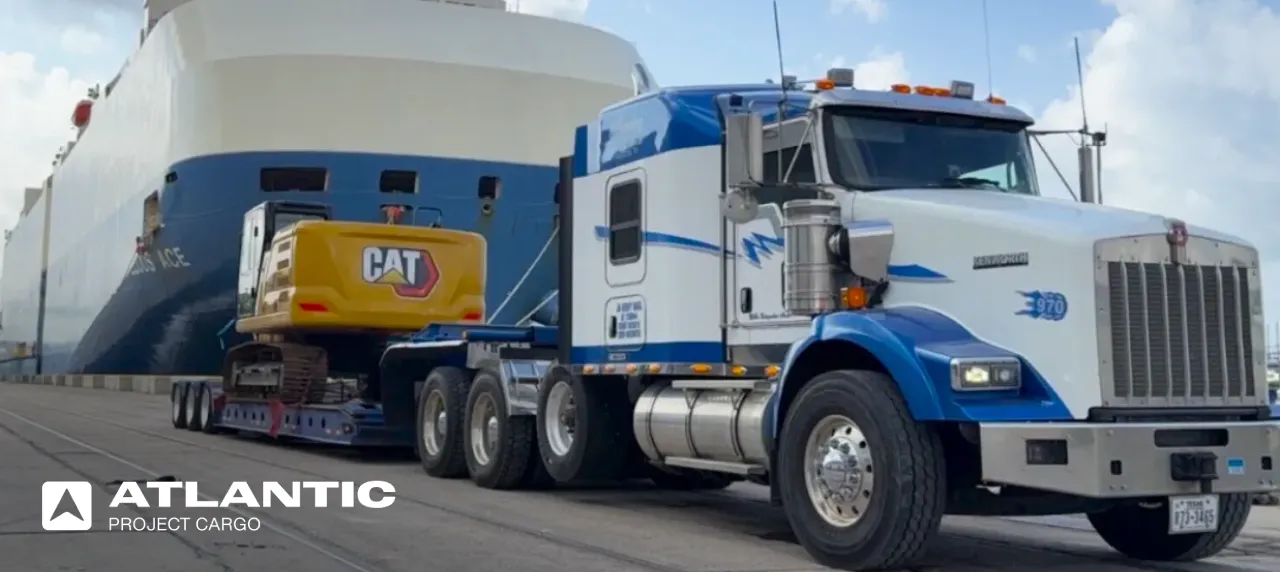
A supplier ships replacement pumping equipment destined for oil production work. This is the case where the authorization matters: goods supplied for oil or gas exploration, development, or production fall under General License 48, which permits the supply but attaches conditions on payment routing and excludes new joint ventures and anything tied to Russian, Iranian, North Korean, Cuban, or Chinese entities. Sanctions counsel confirms the structure, a separate check confirms whether Commerce Department authorization applies, and only then does the equipment move to the port.
Why: Breakbulk suits the dimensions, but the gating item was authorization, not vessel space. A general license is permission to transact under conditions – not a waiver of export-control clearance.
Illustrative only. Actual routing depends on cargo dimensions, carrier schedules, port acceptance, and compliance review.
How APC Handles Heavy Equipment Shipping to Venezuela
| APC Service | Benefit |
|---|---|
| Compliance pre-check | Helps identify shipment feasibility |
| Equipment pickup | Coordinates collection from seller or auction |
| Inland transport | Moves equipment to export port |
| Freight booking | Selects RoRo, flat rack, container, or breakbulk |
| Documentation support | Reduces export and customs delays |
| Cargo insurance | Protects high-value machinery |
| Delivery coordination | Supports port-to-door or door-to-door planning |
What Information Is Needed for a Shipping Quote?
| Information Needed | Example |
|---|---|
| Equipment type | Tractor, excavator, bulldozer |
| Make and model | John Deere, CAT, Case IH |
| Dimensions | Length, width, height |
| Weight | Operating weight |
| Pickup location | Dealer, auction, job site |
| Destination | Port or final address in Venezuela |
| Condition | Running / non-running |
| Attachments | Bucket, blade, boom, tires |
| End user | Buyer or receiving company |
| Intended use | Agriculture, construction, industrial, mining |
The last two rows are not optional. Without end user and intended use, there is no compliance check, and without the check there is no quote.
Frequently Asked Questions
Often yes. Sanctions are targeted rather than a total embargo, so feasibility depends on cargo, end user, intended use, and carrier acceptance. Each shipment needs individual review.
Yes. All parties must be screened against OFAC’s SDN list, and the applicable general licenses and their conditions must be confirmed for your specific transaction before booking.
We quote per shipment. Carrier availability is unsettled after the June 2026 earthquakes, so published rate ranges would not be reliable.
Historically two to five weeks port to port depending on route. Service restoration after the earthquakes makes current schedules less predictable, so confirm at booking.
Puerto Cabello, which handles general cargo, containers, and machinery and has absorbed traffic redirected from La Guaira.
Yes, when the tractor runs, steers, and brakes. Tractor shipping to Venezuela by RoRo depends on service availability, which is more limited than on major lanes.
Yes, on flat rack or breakbulk, where the machine is craned rather than driven aboard. Non-running units cannot use RoRo.
Commercial invoice, bill of lading, packing list, certificate of origin where applicable, and any category import permit – filed by a licensed broker for a registered importer. The US side requires an AES filing.
Yes, nationwide – but confirm feasibility before you bid, because compliance and carrier acceptance can rule out a machine you already own.
Yes, subject to compliance clearance and port conditions – pickup, export documentation, ocean freight, customs coordination, and inland delivery.
Request a Heavy Equipment Shipping Quote to Venezuela
Shipping machinery from the USA to Venezuela is workable for many buyers right now, but it is not a lane to book blind. The compliance position changed in January, the ports in June, and both are still moving.
Atlantic Project Cargo runs the compliance review first, then handles pickup, inland transport, freight booking, cargo insurance, customs coordination, and delivery planning.
Get Your Free Quote Today!
Note: Sanctions authorizations, designations, and port conditions described here reflect the position in July 2026 and are changing. Nothing in this article is legal or sanctions advice, and it is not a determination that any particular shipment is permitted. Confirm the current position with Atlantic Project Cargo, qualified sanctions counsel, and a licensed customs broker before you buy or book.
Read More
Nick Yadryshnikov
Victoria Moseicuka
Victoria Moseicuka