
Key Takeaways
- Law No. 7565 limits the import of used agricultural machinery to equipment that is no more than five years old and adds new phytosanitary and documentation requirements, replacing Paraguay’s previously unrestricted import regime.
- Compliance has to happen in the U.S. before the equipment ships — cleaning, inspection, and certification can’t be fixed once cargo is already at sea.
- Six documents are required: cleaning declaration, treatment certificate, phytosanitary certificate, technical inspection, hours-of-use declaration, and warranty proof.
- Eligibility should be checked before purchase, not after. Buying first and verifying later is the top cause of shipments that get stuck at customs.
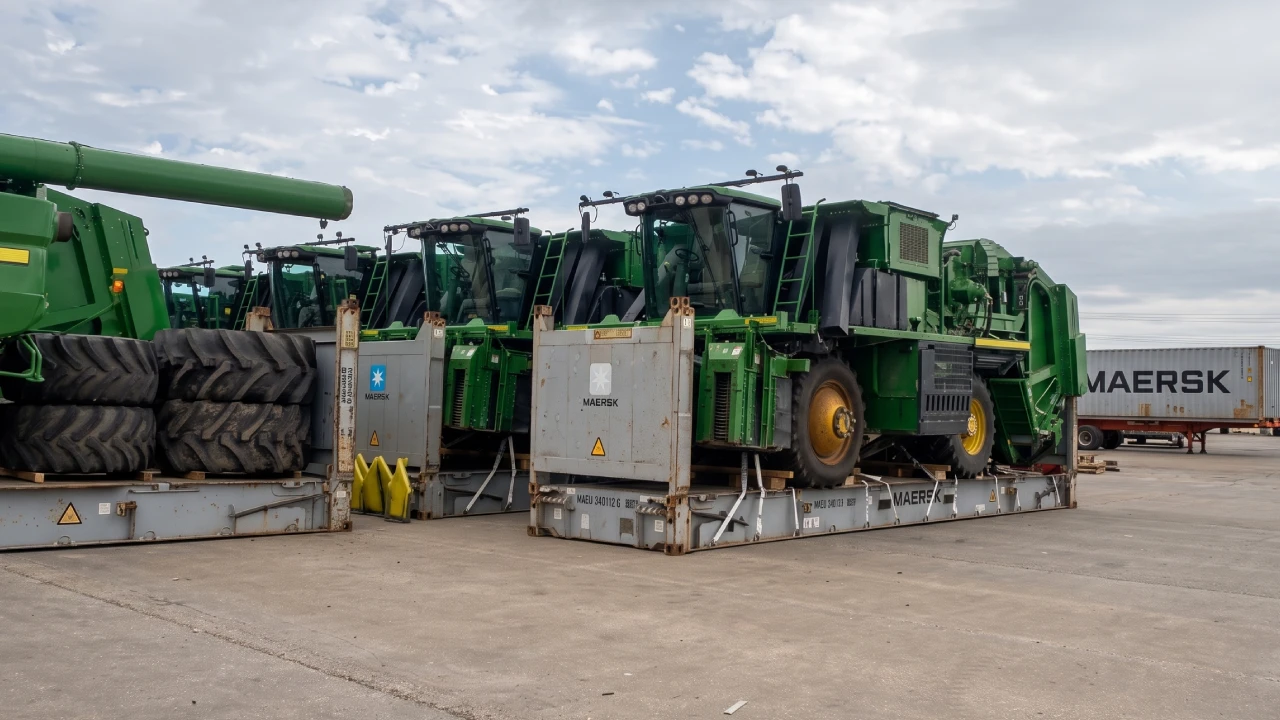
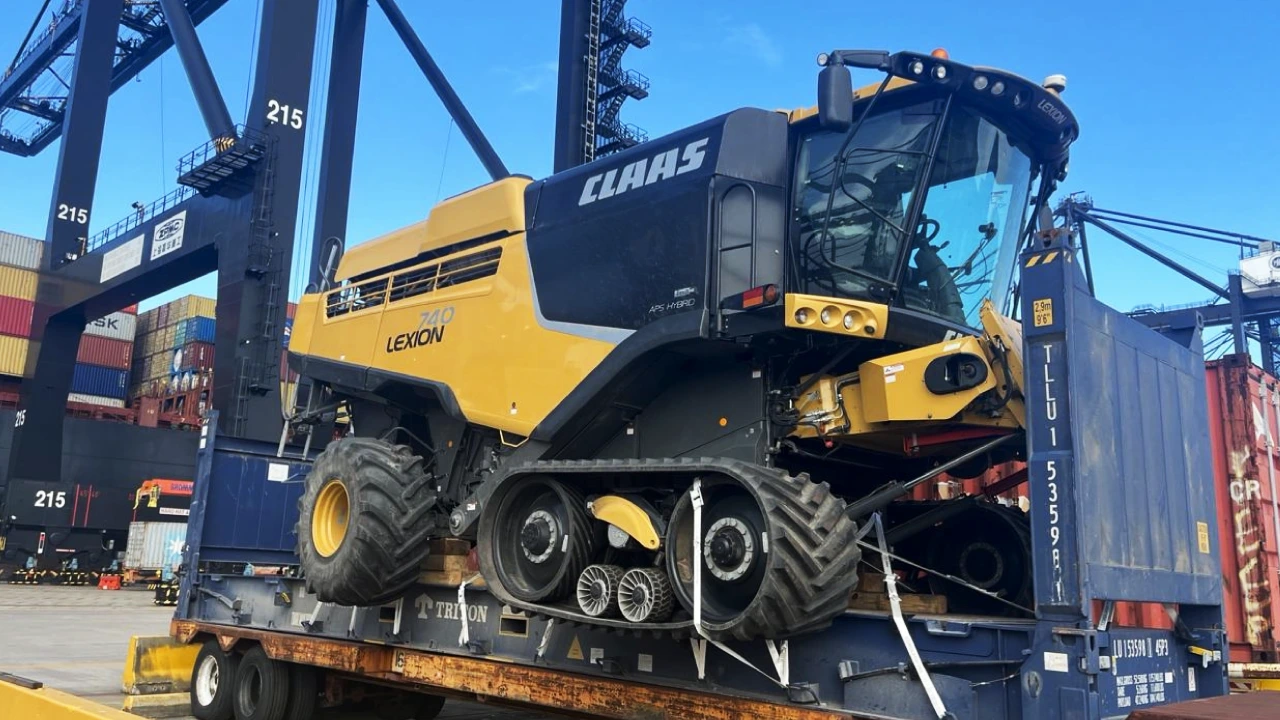
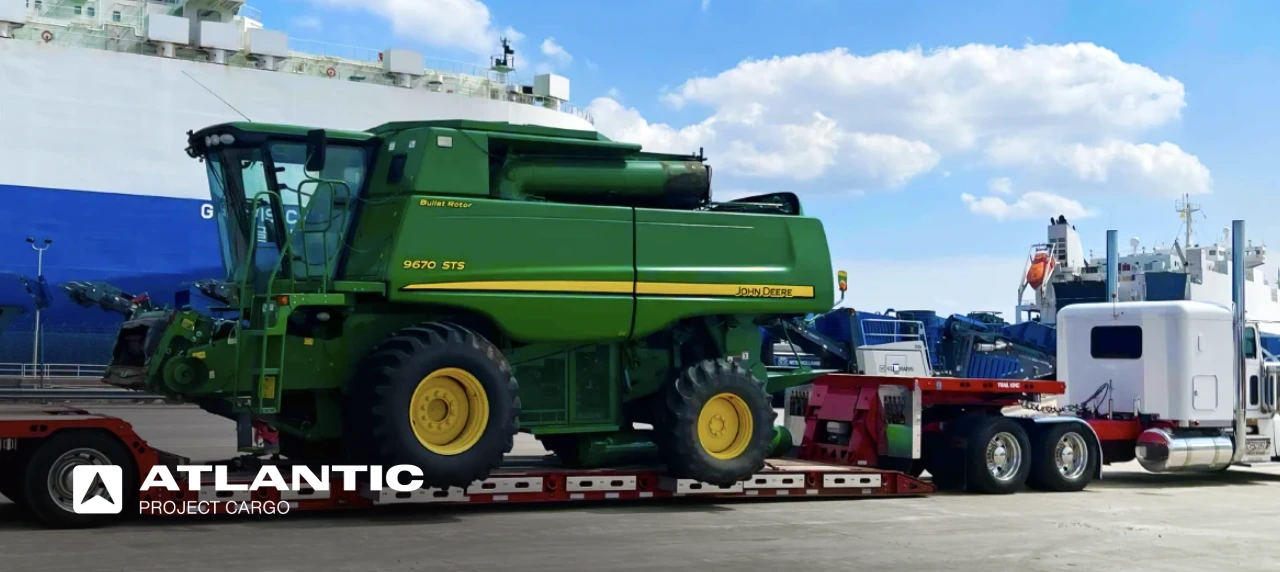
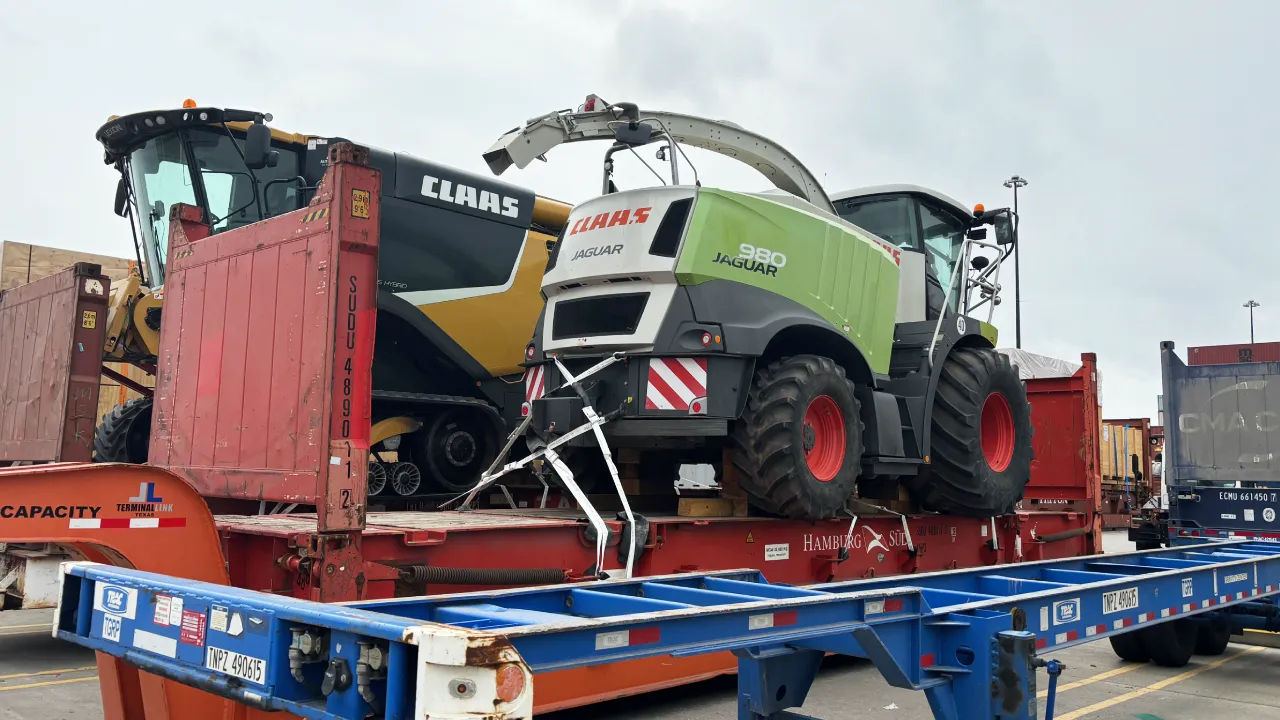
- Shipping method depends on the equipment: RoRo for self-propelled machines, flat rack for oversized implements, breakbulk for non-standard cargo, and containers for smaller parts.
- Most customs delays trace back to avoidable errors — incomplete cleaning, mismatched serial numbers, tampered hour meters, or missing certificates.
- Atlantic Project Cargo builds compliance into the shipping process itself, so equipment is fully prepared before it ever leaves the United States.
Paraguay tightened the rules on importing used agricultural machinery when it enacted Law No. 7565, and the change catches a lot of exporters off guard. A tractor that would have cleared customs without question two years ago can now sit at the port of Villeta or Asunción while paperwork gets sorted out, or worse, get flagged for mandatory re-export.
The problem is timing. Compliance with Law No. 7565 isn’t something you handle after the equipment arrives in Paraguay – it has to be built into the shipment before the machine ever leaves the United States. Cleaning, inspection, certification, and documentation all happen at origin. By the time a combine or sprayer is on the water, it’s too late to fix a missing phytosanitary certificate or an undocumented hour meter.
This guide walks through what Law No. 7565 actually requires, which documents need to be in hand before booking freight, how to choose the right shipping method for tractors, harvesters, and other equipment, and how Atlantic Project Cargo builds compliance into every step of the export process so shipments don’t get stuck at the Paraguayan border.
Get Your Free Quote Today!
Why Paraguay Introduced New Import Rules
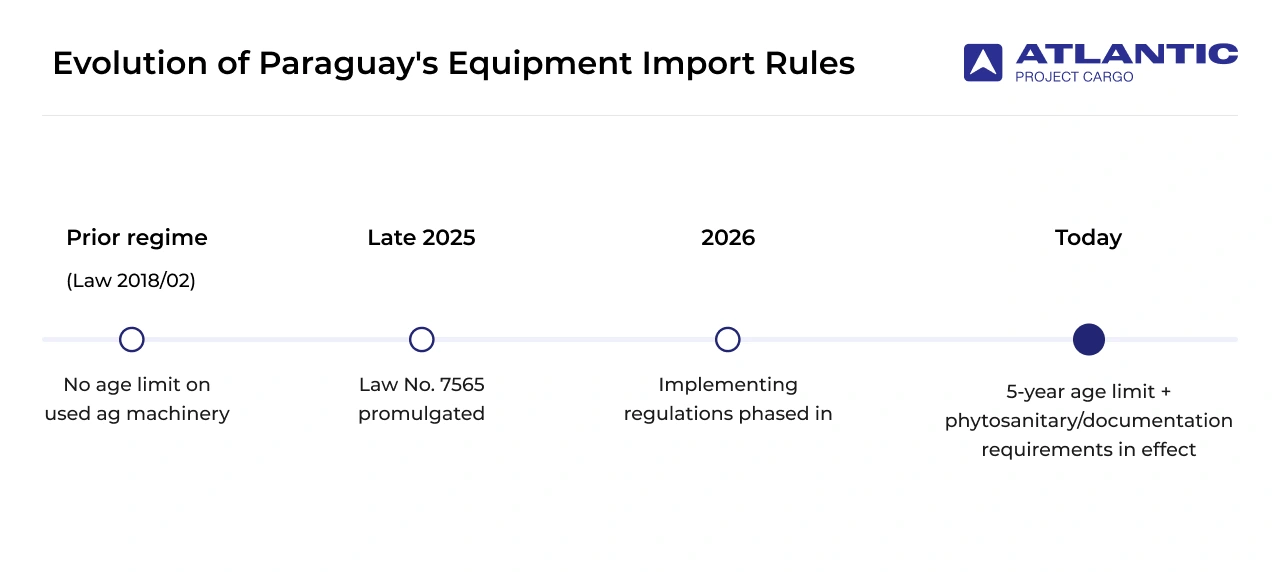
For years, Paraguay’s import regime for used agricultural machinery was comparatively open. Under Law No. 2018/02 and its later modifications, used tractors, harvesters, and other farm equipment could enter the country regardless of age, brand, or country of origin, as long as tax and commercial requirements were met.
Law No. 7565 changes that calculus. The law establishes phytosanitary measures and risk mitigation requirements for the introduction of used agricultural machinery, equipment, and implements into Paraguay. The stated goal is biosecurity: used equipment that has worked fields overseas can carry soil, plant material, seeds, and pests that put Paraguay’s own agricultural production at risk. Instead of leaving these risks unmanaged, the law requires exporters to prove that the machinery has been cleaned, inspected, and complies with Paraguay’s age restrictions before it is allowed into the country.
The headline change most exporters need to know: a maximum age limit of five years for imported used agricultural machinery. That’s a significant shift from the prior regime, which placed no age ceiling on farm equipment at all (unlike passenger vehicles, which have long been subject to age restrictions).
The equipment categories affected include:
- Tractors
- Harvesters and combines
- Seeders and planters
- Sprayers
- Fumigators
The law was promulgated in late 2025, with implementing regulations rolling out through 2026 to define the operational details – inspection protocols, accepted certification formats, and enforcement procedures. Because that regulatory detail continues to develop, exporters and buyers should confirm current requirements with SENAVE, DNIT, or a licensed customs broker before finalizing a purchase, rather than relying solely on the prior year’s practice.
Industry opinion on the law isn’t unanimous. Paraguay’s National Competition Commission (CONACOM) reviewed the bill and raised concerns that some provisions could create barriers to competition in the used-machinery market. That debate matters for context, but it doesn’t change the practical reality for exporters today: equipment has to meet the new standards to clear Paraguayan customs.
Who Is Affected by the New Requirements?
Law No. 7565 touches nearly everyone in the agricultural equipment supply chain between the United States and Paraguay, not just the end buyer signing for the machine at delivery.
Equipment exporters and dealers now need to screen inventory for age and condition before listing it for sale to Paraguayan buyers. A machine that’s a strong fit on paper can become unsellable if it’s six years old or arrives without service records.
Buyers and importers in Paraguay carry the financial risk if a shipment doesn’t clear. A rejected shipment doesn’t just delay delivery – it can mean the cost of re-export, demurrage at the port, and a machine that never generates a single hour of fieldwork.
Auction purchases deserve particular caution. Equipment bought at a U.S. auction often comes with limited manufacturing history, unclear hour-meter accuracy, and no manufacturer or distributor warranty on file. All three are now compliance issues under the new rules, not just quality-of-purchase considerations.
Freight forwarders and logistics providers are on the hook to verify documentation before booking ocean freight, since a shipment that leaves the U.S. without the right paperwork has no clean way to resolve compliance gaps once it’s at sea.
Procurement managers buying on behalf of farms, cooperatives, or dealerships need a verification step built into the purchasing process itself – before a purchase order is signed, not after.
Can Your Equipment Be Imported Into Paraguay?
Before booking international freight, it’s worth running every machine through a straightforward eligibility check. This is the same screening Atlantic Project Cargo runs with clients before any equipment moves toward the port.
| Requirement | Status |
|---|---|
| Manufactured within the last 5 years | ✓ |
| Properly cleaned (no soil, plant matter, or pest residue) | ✓ |
| Technical inspection completed | ✓ |
| Phytosanitary requirements met | ✓ |
| Manufacturer/distributor warranty available | ✓ |
| Hours of use declared and verifiable | ✓ |
If any row on this table isn’t a confirmed “yes,” the equipment isn’t ready to ship yet. A tractor that fails the cleaning check, for example, can often be brought into compliance with a proper wash-down and treatment before departure. A tractor that fails the age check has no such fix – it’s simply not eligible under Law No. 7565, and no amount of paperwork changes that.
The practical lesson: run this checklist before you commit to a purchase, not after the machine is already sitting in a yard waiting for export. Buyers who verify eligibility before bidding at auction or signing a purchase agreement avoid the worst outcome in this business – owning equipment that can’t legally enter its destination country.
Required Documents Before Shipping
Law No. 7565 shifts several requirements that used to be handled informally, if at all, into formal documentation that has to travel with the shipment. Each document below addresses a specific part of the compliance picture.
Cleaning Declaration
A formal declaration confirming the equipment has been thoroughly cleaned of soil, plant residue, seeds, and other organic material before export. This is the first line of defense against introducing pests or pathogens, and it’s typically the starting point for phytosanitary clearance. Cleaning needs to reach into wheel wells, undercarriages, headers, and any surface that contacted soil or crop material during use.
Treatment Certificate
Where cleaning alone isn’t sufficient – for example, on equipment that worked in regions with known pest pressure – a treatment certificate documents that the machine underwent an approved disinfection or fumigation process. This certificate should specify the treatment method, the date it was performed, and the facility or provider that carried it out.
Phytosanitary Certificate
Issued by the relevant plant health authority, this certificate confirms the equipment meets Paraguay’s biosecurity standards for entry. It’s the document SENAVE and Paraguayan customs will look for as evidence that cleaning and treatment requirements have actually been met, not just claimed.
Certified Technical Inspection
An independent, documented inspection confirming the equipment’s condition, mechanical soundness, and consistency with its declared specifications. This inspection report is what ties the physical machine to its paper trail – model, serial number, year of manufacture, and condition all need to match what’s declared on the shipping documents.
Declaration of Hours of Use
A formal statement of the machine’s actual operating hours, cross-checked against the engine hour meter and, where applicable, the odometer. This declaration needs to reflect genuine, unaltered readings – inspectors are specifically looking for signs of meter tampering, since a rolled-back hour meter is one of the most common ways sellers misrepresent a machine’s condition.
Manufacturer or Distributor Warranty
Documentation showing that a warranty from the original manufacturer or an authorized distributor is available on the equipment, even if the machine is being sold used. This gives Paraguayan authorities and buyers assurance that the equipment isn’t being offloaded specifically because it’s near end-of-life or has known defects.
Shipping Agricultural Equipment from the USA to Paraguay
Getting a tractor, combine, or sprayer from a U.S. farm, dealership, or auction lot to a buyer in Paraguay involves several distinct stages, and compliance work has to happen early, not at the end.
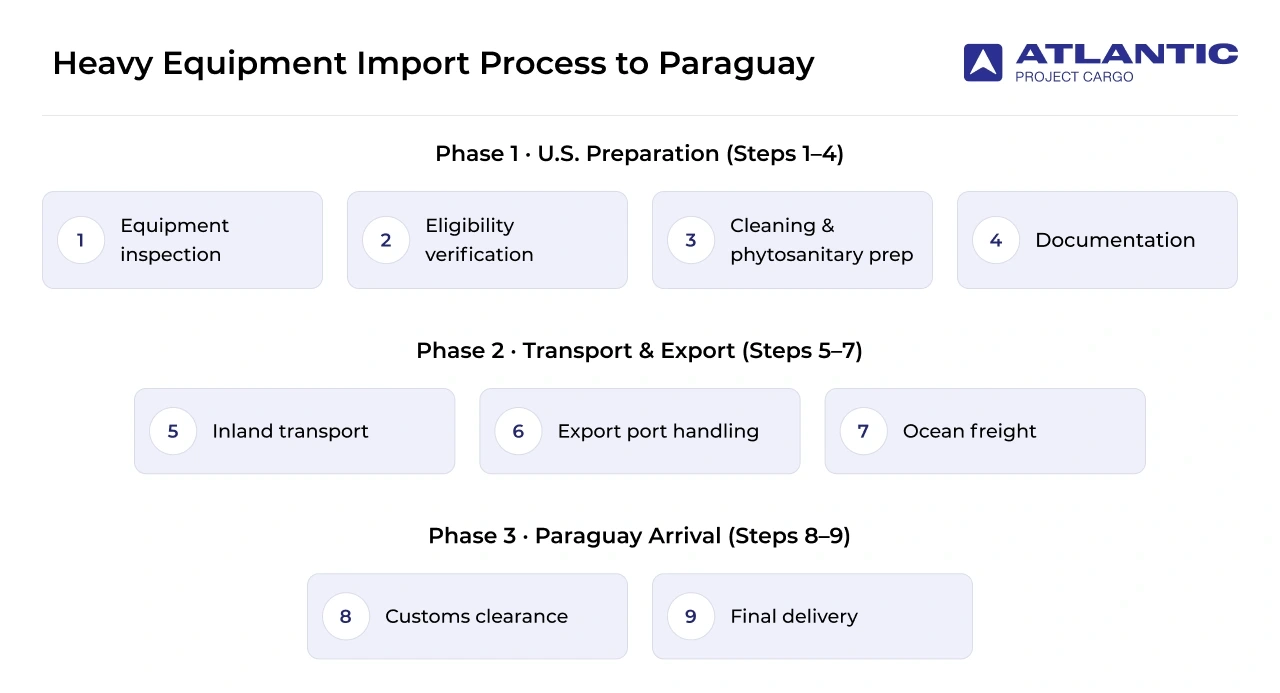
- Equipment inspection. Before anything else, the machine gets a physical inspection to document its actual condition, age, hours, and serial number against what’s been represented.
- Eligibility verification. The equipment is checked against Law No. 7565’s requirements – age limit, condition standards, and documentation availability – before any shipping arrangements are made.
- Cleaning and phytosanitary preparation. The machine is cleaned to the required standard, treated if necessary, and the corresponding declarations and certificates are issued.
- Documentation. All required paperwork – cleaning declaration, treatment certificate, phytosanitary certificate, technical inspection report, hours-of-use declaration, and warranty documentation – is assembled and reviewed for completeness.
- Inland transport. The equipment moves from its origin point (farm, dealership, or auction yard) to the export port, typically by flatbed or specialized heavy-haul trucking depending on size and configuration.
- Export port handling. At the U.S. port, the equipment is staged, measured, and prepared for loading according to the shipping method selected.
- Ocean freight. The equipment is loaded and transported by sea to Paraguay, generally routed through a South American port with onward river or inland transport, given Paraguay’s landlocked geography.
- Customs clearance. On arrival, Paraguayan customs (DNIT) and phytosanitary authorities (SENAVE) review the documentation package against the physical shipment before releasing it.
- Final delivery. Once cleared, the equipment is transported inland to its final destination – a farm, dealership, or distribution point within Paraguay.
The steps that make or break compliance are 1 through 4. Everything downstream – inland transport, ocean freight, customs clearance – runs smoothly when the eligibility and documentation work is done correctly at the start. It runs into trouble when it isn’t.
Get Your Free Quote Today!
Choosing the Right Shipping Method
Not every piece of agricultural equipment ships the same way, and the right method depends on size, value, and how the machine is configured for transport.
| Method | Best Equipment Type | Cost | Loading Method | Main Advantages | Limitations |
|---|---|---|---|---|---|
| RoRo (Roll-on/Roll-off) | Self-propelled equipment: tractors, combines, self-propelled sprayers | Generally the most economical for driveable equipment | Driven on and off the vessel under its own power | Fast loading/unloading, lower handling costs, frequent sailings | Requires the equipment to be operational and driveable; less protection from weather exposure |
| Flat Rack | Oversized or irregularly shaped equipment: wide implements, folded planters, large attachments | Mid-to-higher, based on dimensions | Lifted onto an open flat-rack container by crane | Handles out-of-gauge dimensions well, good visibility for securing cargo | Exposed to weather; requires careful lashing and securing |
| Breakbulk | Very large or non-containerized equipment, oversized combines, industrial implements | Higher, priced by volume/weight | Loaded individually, often with specialized lifting equipment | Handles cargo that doesn't fit any container or RoRo profile | Longer scheduling lead times, higher handling complexity |
| Container Shipping | Smaller implements, disassembled equipment, parts, attachments | Generally economical for standard dimensions | Loaded into standard or high-cube containers | Full weather protection, easier to secure, straightforward customs handling | Limited by container dimensions; not suitable for most full-size self-propelled machinery |
A practical example: a self-propelled combine harvester is usually the strongest fit for RoRo, since it can be driven directly onto the vessel and avoids the handling costs of lifting equipment. A wide-span sprayer or planter with fold-out booms, on the other hand, often needs a flat rack so the oversized width can be secured without disassembly. Breakbulk tends to come into play for the largest or least standard equipment, where neither RoRo nor container shipping is a realistic fit.
Choosing the wrong method isn’t just a cost issue – it can also affect how easily the equipment’s condition and documentation match up during Paraguayan customs inspection, since some methods make it easier to keep equipment exactly as inspected and certified at origin.
Common Mistakes That Cause Customs Problems
Most compliance failures under Law No. 7565 trace back to a small set of avoidable mistakes, and they tend to happen well before the shipment reaches the water.
Purchasing equipment before verifying eligibility. Buyers sometimes fall in love with a machine at auction or on a dealer lot before checking whether it meets the five-year age limit or has a clean documentation trail. By the time the eligibility gap surfaces, the purchase is already made.
Buying machinery older than the legal limit. This is the most straightforward disqualifier, and it’s also the most common one to overlook, especially with older-model tractors and combines that are otherwise in excellent mechanical condition.
Incomplete cleaning. Cleaning that addresses visible surfaces but misses undercarriages, headers, or internal compartments where soil and plant material collect is one of the most frequent reasons phytosanitary certificates get held up.
Missing certificates. A shipment that’s missing even one document – the treatment certificate, for instance, or the technical inspection report – can be held at the Paraguayan port while paperwork is chased down after the fact, at real cost in demurrage and delay.
Incorrect serial numbers. Discrepancies between the serial number on the shipping documents and the serial number stamped on the equipment itself are an immediate red flag for customs review.
Odometer/hour meter manipulation. Altered or inconsistent hour-meter readings are treated as a serious compliance issue, not a cosmetic one, since the declared hours of use are meant to reflect the machine’s real condition.
Missing warranty documents. Equipment sold without evidence of manufacturer or distributor warranty support can be flagged, particularly when combined with other documentation gaps.
Booking freight before compliance review. This is the mistake that turns a fixable paperwork gap into an expensive delay. Once equipment is booked on a vessel, there’s no good way to pause the shipment mid-transit to sort out a missing certificate – the review needs to happen before the booking, not after.
This is exactly where a logistics partner with hands-on experience in agricultural equipment exports earns its keep: catching these issues while the equipment is still in the United States, when they’re inexpensive and quick to fix, instead of after arrival in Paraguay, when they’re neither.
How Atlantic Project Cargo Prepares Shipments for Paraguay
Atlantic Project Cargo treats Law No. 7565 compliance as part of the shipping process itself, not a separate legal exercise the exporter has to sort out on their own. Here’s how that works in practice:
Equipment evaluation. Every machine is assessed against age, condition, and documentation requirements before any shipping plan is built, so eligibility gaps surface immediately rather than after freight is booked.
Documentation review. The full document package – cleaning declaration, treatment certificate, phytosanitary certificate, technical inspection, hours-of-use declaration, and warranty records – is checked for completeness and consistency against the physical equipment.
Compliance verification. Requirements are cross-checked against current Law No. 7565 guidance from SENAVE, DNIT, and the Ministry of Industry and Commerce (MIC), since implementing regulations continue to be refined.
Cleaning coordination. Where cleaning or treatment work is still needed, Atlantic Project Cargo coordinates with qualified providers to bring the equipment up to the required standard before it reaches the port.
Route planning. Inland transport and export port routing are planned around the equipment’s dimensions, weight, and configuration, factoring in whether the machine is self-propelled or needs specialized handling.
Export documentation. All U.S. export paperwork is prepared and aligned with the destination documentation, so nothing gets lost in translation between origin and arrival requirements.
Ocean freight coordination. The right shipping method – RoRo, flat rack, breakbulk, or container – is selected and booked based on the equipment’s actual profile, not a default option.
Customs support. Documentation is packaged and presented in the format Paraguayan customs and phytosanitary authorities expect, reducing back-and-forth after arrival.
Inland delivery. Once cleared, Atlantic Project Cargo coordinates final inland transport to the buyer’s location within Paraguay.
The through-line across every step: compliance work happens in the United States, before the equipment leaves, so there are no surprises waiting at the Paraguayan port.
Before You Ship: Paraguay Compliance Checklist
A quick reference to run through before confirming an export booking:
- Equipment age verified against the 5-year limit
- Serial numbers checked against all shipping and inspection documents
- Cleaning completed (undercarriage, headers, and internal compartments included)
- Technical inspection completed and documented
- Required certificates issued (cleaning, treatment, phytosanitary)
- Hours of use declared and verified against the meter
- Manufacturer or distributor warranty documentation confirmed
- Shipping method selected based on equipment type and dimensions
- Documentation reviewed for completeness and consistency
- Export booking confirmed only after compliance review is complete
Frequently Asked Questions
Yes, but under Law No. 7565, used agricultural machinery has to meet a maximum age limit of five years and satisfy phytosanitary, cleaning, and documentation requirements before it can be legally imported.
Law No. 7565 is Paraguayan legislation that establishes phytosanitary measures and risk mitigation requirements for the import of used agricultural machinery, equipment, and implements, replacing the previously unrestricted age regime for this category.
Under Law No. 7565, used agricultural machinery generally cannot be older than five years from its date of manufacture to qualify for import into Paraguay.
At minimum, a cleaning declaration, treatment certificate (where applicable), phytosanitary certificate, certified technical inspection, declaration of hours of use, and proof of manufacturer or distributor warranty.
Yes. Tractors are one of the equipment categories directly covered by Law No. 7565, and self-propelled tractors are typically well suited to RoRo shipping.
Non-compliant shipments can be held at the port, rejected by customs, or subject to mandatory re-export, all of which add cost and delay well beyond what proper preparation would have required.
It depends on the equipment. Self-propelled machines like tractors and combines are usually best suited to RoRo, oversized or irregularly shaped implements often need a flat rack, very large or non-standard equipment may require breakbulk, and smaller implements or parts can move in standard containers.
Yes. Atlantic Project Cargo evaluates equipment eligibility, reviews and coordinates required documentation, arranges cleaning and compliance preparation, and manages the full logistics chain from U.S. origin to final delivery in Paraguay.
Get Your Free Quote Today!
Law No. 7565/2025 (Paraguay) – phytosanitary measures and risk mitigation for used agricultural machinery imports; legislative review via CONACOM Opinion D/13/2025
SENAVE – Servicio Nacional de Calidad y Sanidad Vegetal y de Semillas, Paraguay’s plant health and phytosanitary authority
DNIT – Dirección Nacional de Ingresos Tributarios, Paraguay’s customs and tax authority
Ministry of Industry and Commerce (MIC), Paraguay – trade and commercial policy oversight
Read More
Nick Yadryshnikov
Victoria Moseicuka
Nick Yadryshnikov