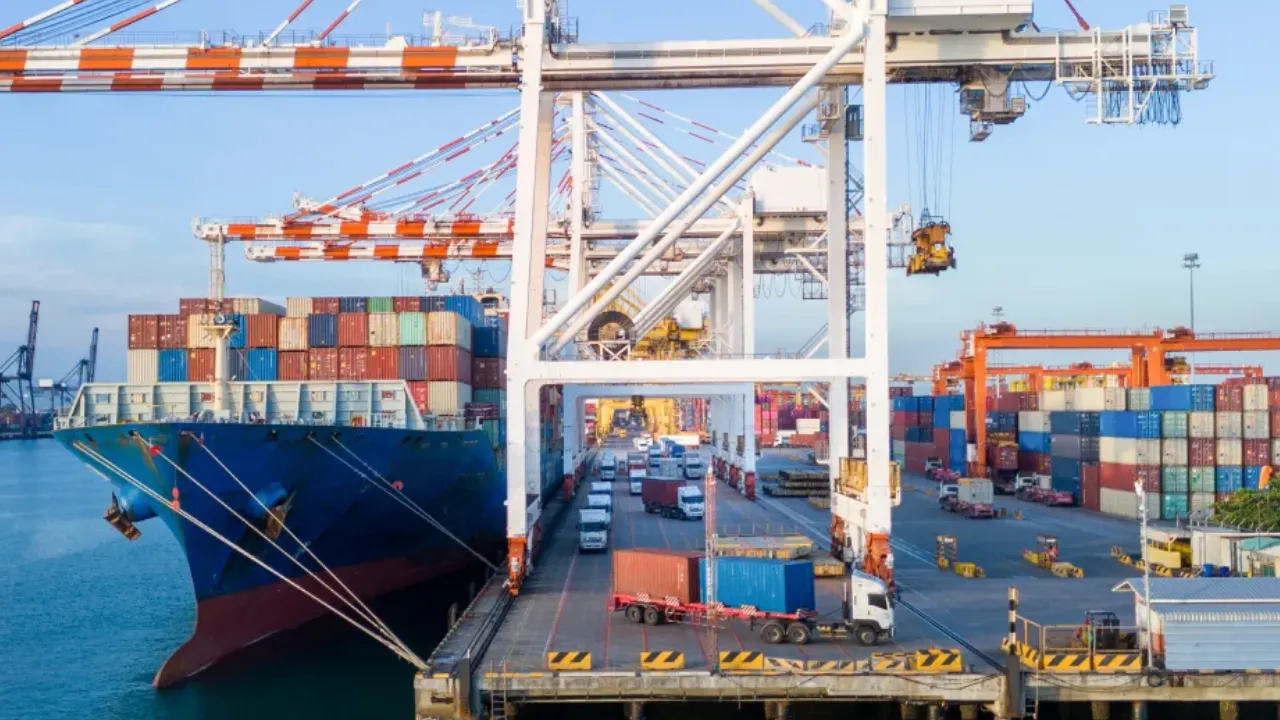
POD is an abbreviation for port of discharge, the port where cargo is unloaded from the vessel. It appears on the booking, the Bill of Lading and the cargo manifest. In other contexts, POD can also mean proof of delivery, a document signed when cargo is received.
Not to be confused with Place of Delivery, the final inland point where the carrier delivers the cargo.
How POD Works in Shipping
The Bill of Lading lists the port of loading (POL), the port of discharge (POD) and, if the carrier delivers inland, the place of delivery. Free time and destination charges are tied to the POD. Customs clearance usually starts there, unless the cargo moves in bond to an inland point.
Proof of delivery is a different document. The consignee or its agent signs it on receipt, noting any visible damage or shortage.
For example, a combine shipped from Savannah to Santos has Savannah as the POL and Santos as the POD. If the carrier also trucks it to a farm inland, that farm is the place of delivery.
Why POD Matters for Heavy Equipment Shipping
The POD decides which terminals, cranes and customs offices handle the machine. Not every port can discharge heavy or out-of-gauge units, so the POD should be checked before booking. Atlantic Project Cargo compares discharge ports when it plans ocean freight for large equipment.
FAQ
Not sure which discharge port fits your machine? Get a quote with the final delivery address.