
Key Takeaways
- Shipping method (RoRo, flat rack, breakbulk, container) depends on machine size, weight, and condition – and affects biosecurity treatment rules too.
- Australia’s biosecurity rules are the real challenge: used machinery must arrive clean of soil, seeds, and plant material, or face mandatory inspection.
- Sept 1–Apr 30 stink bug season requires offshore treatment for breakbulk/flat rack cargo from the US, or it risks being refused entry.
- Total landed cost includes duty, GST, inspection, and cleaning – none of which are in the ocean freight quote itself.
- Transit runs roughly 4–8 weeks; West Coast US departures are usually faster despite longer inland hauls.
- Thorough cleaning before export beats costly re-cleaning or treatment ordered after the machine arrives in Australia.
- Customs and biosecurity are separate approvals – clearing one doesn’t clear the other.
Heavy equipment can be shipped from the USA to Australia by RoRo, flat rack, container, or breakbulk shipping depending on the machine’s dimensions, weight, condition, destination, and cleaning requirements. Australia also has strict biosecurity inspections, so equipment must be properly cleaned and documented before shipping.
Australia buys American machinery for agriculture, mining, construction, and industry, and the ocean leg is the straightforward part. What separates this lane is Australian biosecurity: used machinery faces mandatory on-arrival inspection, and a machine arriving with soil in its tracks can be sent for cleaning, treatment, or re-export at your expense. Cleaning is a cost line that can run into the thousands of dollars, and on heavily-contaminated agricultural equipment can approach the ocean freight cost itself.
Note: This article is general logistics information, not legal or biosecurity advice. Import conditions vary by machine and are determined by the Australian Department of Agriculture, Fisheries and Forestry. Confirm requirements in BICON and with a licensed customs broker before you buy.
How Does Heavy Equipment Shipping from the USA to Australia Work?
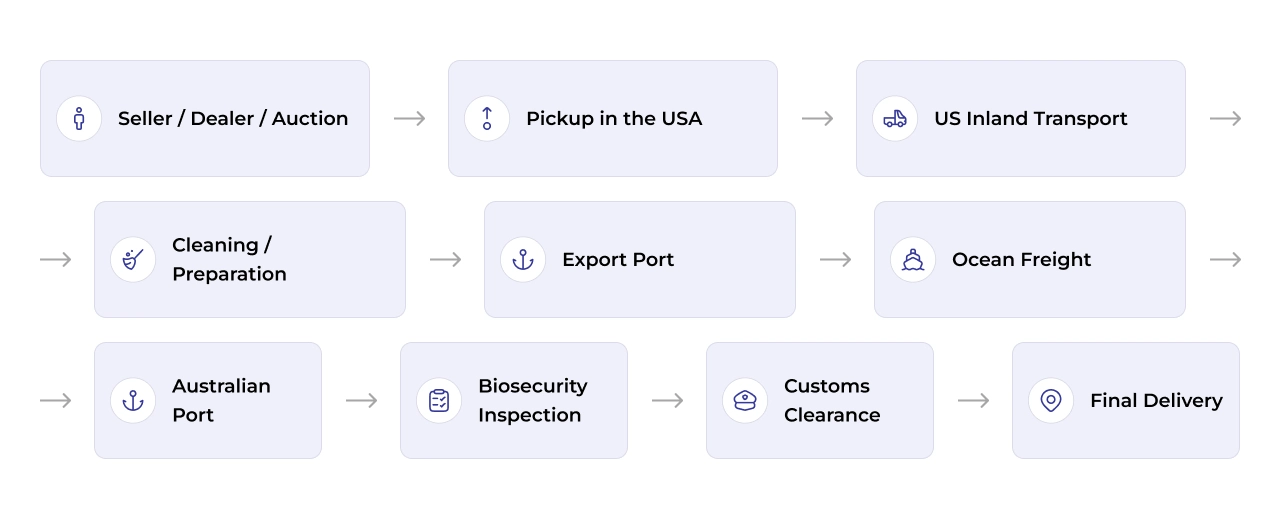
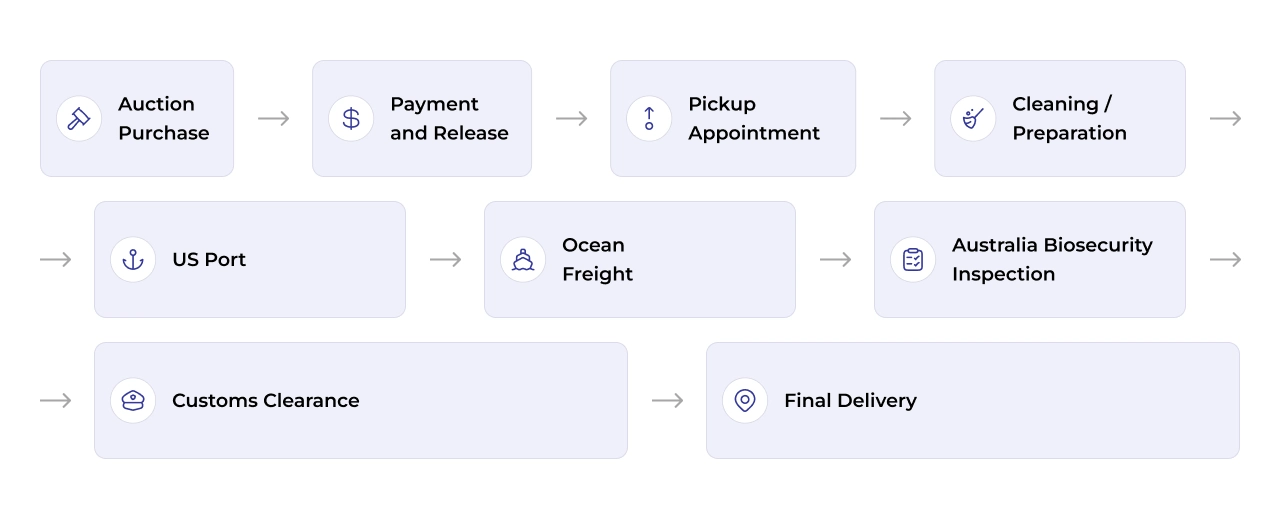
Heavy equipment shipping from USA to Australia runs pickup, inland transport, export documentation, ocean freight, biosecurity inspection, customs clearance, and delivery — with cleaning before the machine reaches the port.
| Step | Description |
|---|---|
| Pickup | Equipment collected from seller, dealer, auction, or job site |
| Inland transport | Equipment moved to a US export port |
| Cleaning / preparation | Equipment washed and prepared to meet Australian biosecurity requirements before export |
| Export documentation | Export paperwork and shipping documents prepared |
| Ocean freight | Cargo moves internationally by vessel |
| Biosecurity inspection | Equipment may be inspected for soil, seeds, plant material, or contamination |
| Customs clearance | Import documents processed in Australia |
| Final delivery | Equipment transported to buyer or job site |
What Equipment Is Commonly Shipped to Australia?
Machinery shipping Australia-bound spans agricultural, mining, construction, and industrial equipment, with tractors, combines, excavators, and mining plant the highest volumes.
| Equipment | Common Shipping Method |
|---|---|
| Tractor | RoRo / Flat rack |
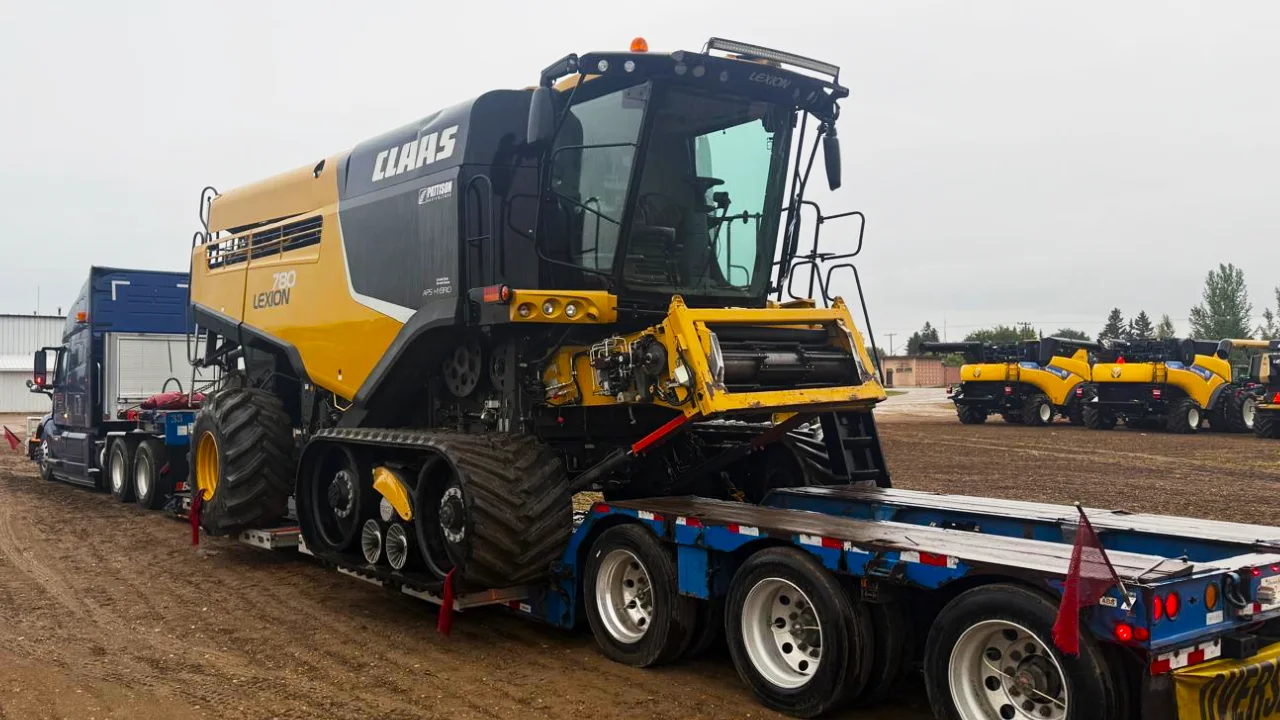
| Combine | Flat rack |
| Cotton picker | Flat rack |
| Excavator | Flat rack / Breakbulk |
| Bulldozer | Flat rack / Breakbulk |
| Wheel loader | RoRo / Flat rack |
| Crane | Breakbulk |
| Mining equipment | Breakbulk |
| Forestry equipment | Flat rack / Breakbulk |
| Forklift | Container / RoRo |
| Industrial machinery | Container / Flat rack / Breakbulk |
Buying Heavy Equipment in the USA for Export to Australia
Buyers source from dealers, manufacturers, private sellers, and auction platforms — Ritchie Bros., IronPlanet, MachineryTrader.
For Australia the purchase decision and the cleaning decision are the same one. A machine sitting in a muddy yard costs more to prepare than one stored under cover, and that difference belongs in your bid. We handle sourcing, seller communication, inspection, pickup, export planning, and quote comparison as one workflow.
Best Shipping Methods from the USA to Australia
RoRo Shipping to Australia
RoRo shipping suits running tractors, wheel loaders, and self-propelled machinery that can roll on and off safely under its own power.
Flat Rack Shipping to Australia
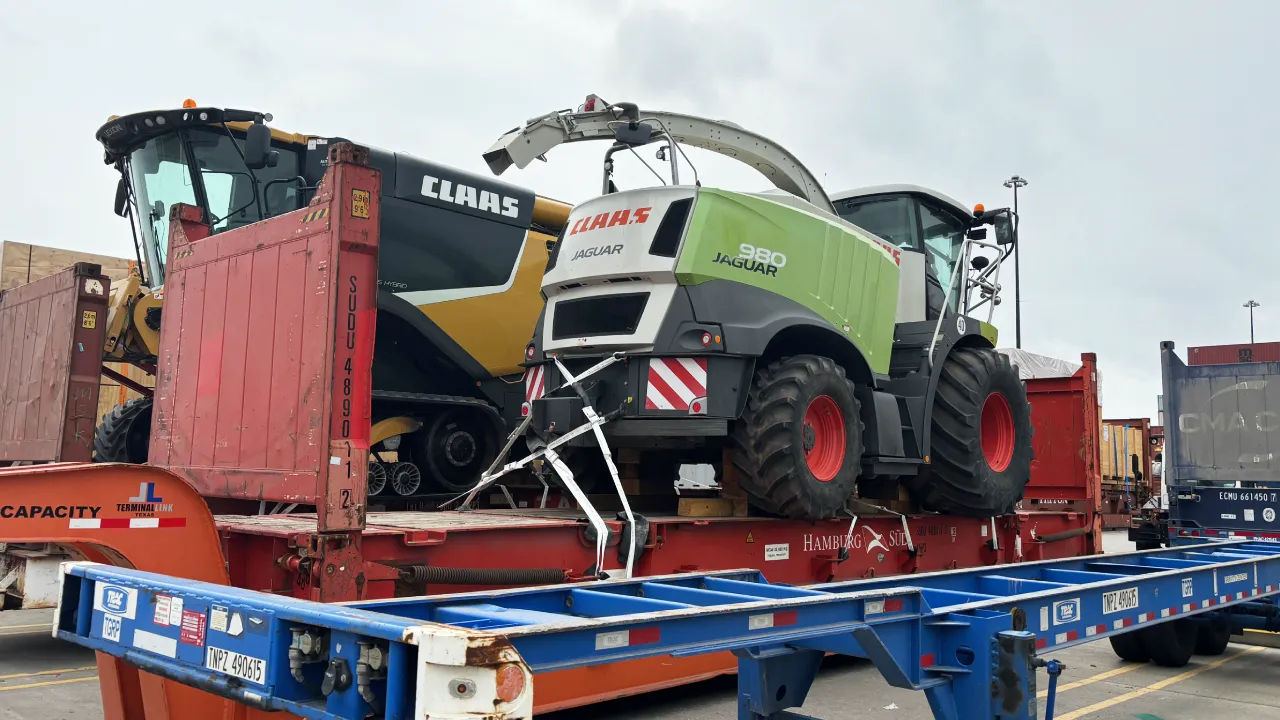
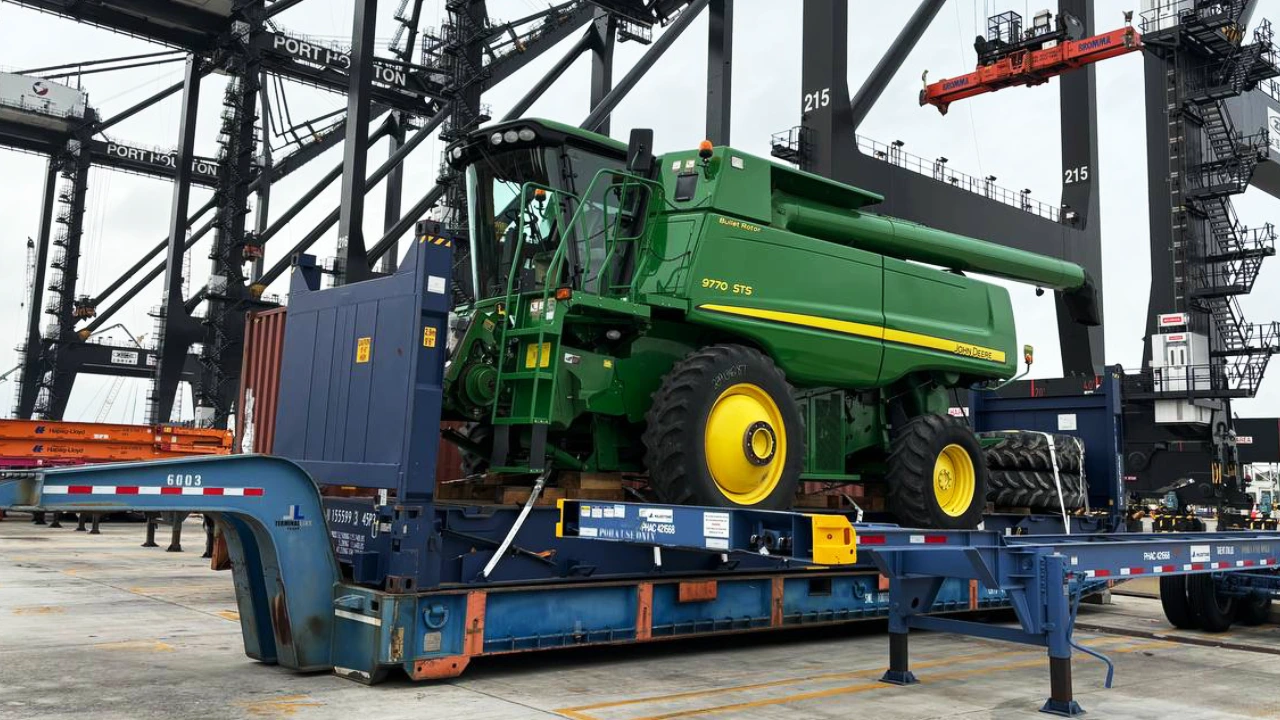
Flat rack shipping handles excavators, dozers, combines, and oversized machinery that will not fit inside a standard container.
Breakbulk Shipping to Australia
Breakbulk shipping covers mining equipment, industrial machinery, very large construction units, and non-containerized project cargo.
Container Shipping to Australia
Containers suit compact machinery, forklifts, attachments, parts, and small industrial equipment, with the best protection and lowest base rate.
| Method | Best For | Cost Level | Cargo Protection |
|---|---|---|---|
| RoRo | Self-propelled equipment | $$ | Medium |
| Flat rack | Oversized equipment | $$$ | Medium / High |
| Breakbulk | Project cargo and mining equipment | $$$$ | Case-specific |
| Container | Compact machinery and parts | $$ | High |
Method choice carries a biosecurity consequence here, covered below. It is not purely a cost decision.
Which Shipping Method Should You Choose?
| Equipment | Recommended Method |
|---|---|
| Tractor | RoRo / Flat rack |
| Combine | Flat rack |
| Excavator | Flat rack |
| Bulldozer | Flat rack / Breakbulk |
| Wheel loader | RoRo / Flat rack |
| Forklift | Container / RoRo |
| Mining equipment | Breakbulk |
We select against dimensions, weight, running condition, route availability, port handling, biosecurity preparation needs, and final destination. A machine bound for a remote Western Australian mine site is planned differently from one going to a Melbourne yard.
How Much Does It Cost to Ship Heavy Equipment from the USA to Australia?
Cost depends on dimensions, weight, method, pickup location, export port, arrival port, carrier availability, cleaning and biosecurity preparation, port charges, insurance, and final delivery distance.
| Equipment | Typical Method | Pricing Note |
|---|---|---|
| Tractor | RoRo / Flat rack | Quote required |
| Excavator | Flat rack | Quote required |
| Bulldozer | Flat rack / Breakbulk | Quote required |
| Combine | Flat rack | Quote required |
| Mining equipment | Breakbulk | Quote required |
We quote each machine individually rather than publishing rates, because dimensional surcharges and cleaning requirements vary too much to generalise — our guide to heavy equipment shipping costs explains the mechanics.
Get Your Australia Shipment Quoted
Send the make, model, dimensions, and cleaning status, and we will price the move including biosecurity preparation.
What Makes Up the Total Landed Cost?
| Cost Component | Usually Included in Freight Quote? |
|---|---|
| Equipment purchase | No |
| US pickup | Sometimes |
| Inland transport | Sometimes |
| Export documentation | Usually |
| Ocean freight | Yes |
| Marine insurance | Optional |
| Australian customs duty | No |
| GST | No |
| Biosecurity inspection | No |
| Quarantine cleaning / treatment | No |
| Port charges | Sometimes |
| Final delivery | Optional |
Four of those lines are Australia-specific and none sit in a freight quote. Compare total landed cost, not ocean freight.
What Affects Shipping Costs the Most?
| Factor | Impact |
|---|---|
| Dimensions | Very high |
| Shipping method | Very high |
| Weight | High |
| Route | High |
| Port charges | Medium |
| Biosecurity cleaning | Medium |
| Inspection fees | Medium |
| Marine insurance | Low |
Cleaning sits at medium on paper and higher in practice: poorly cleaned equipment can trigger inspection delays, re-cleaning at an approved site, storage, and quarantine charges — each billed to the importer.
How Long Does Shipping from the USA to Australia Take?
| Route | Typical Transit Time |
|---|---|
| Houston → Brisbane | Approx. 4–7 weeks |
| Houston → Melbourne | Approx. 5–8 weeks |
| Los Angeles → Brisbane | Approx. 4–8 weeks |
| Los Angeles → Sydney | Approx. 4–8 weeks |
| Jacksonville → Melbourne | Approx. 5–8 weeks |
Transit times are estimates and should be confirmed when booking. Dedicated RoRo and breakbulk services for heavy equipment tend to run at the faster end of these ranges; standard container liner services with transshipment run longer.
Vessel schedules, transshipment, port choice and availability, biosecurity inspections, customs clearance, and inland delivery all move the number. West Coast departures tend to run shorter on average, often outweighing the inland trucking cost of getting there.
Best US Export Ports for Shipping Equipment to Australia
| US Port | Best For |
|---|---|
| Houston | Heavy machinery, agricultural equipment, project cargo |
| Galveston | RoRo and oversized cargo |
| Los Angeles / Long Beach | West Coast routes, containers, machinery |
| Oakland | West Coast containerized equipment |
| Seattle / Tacoma | Pacific Northwest machinery exports |
| Baltimore | RoRo and farm equipment |
| Jacksonville | Vehicles and self-propelled machinery |
Main Australian Ports for Heavy Equipment Imports
| Australian Port | Best For |
|---|---|
| Brisbane | Queensland agriculture, mining, construction equipment |
| Sydney / Port Botany | Containers, general cargo, NSW distribution |
| Melbourne | Containers, machinery, southeast Australia |
| Fremantle | Western Australia, mining and industrial equipment |
| Adelaide | South Australia cargo and machinery |
| Townsville | Mining, agriculture, northern Queensland cargo |
| Darwin | Northern Territory and project cargo |
Inspection location follows cargo format: breakbulk is inspected at a wharf precinct, containerised goods at an approved arrangement site.
Australia's Biosecurity Requirements for Heavy Equipment
Australia machinery import turns on this section. DAFF requires machinery to arrive free of biosecurity risk material — soil, seeds, plant matter, animal residue — and places responsibility squarely on the importer.
Two rules catch American exporters repeatedly.
“Used” is broader than you think. DAFF treats machinery as used if it has been field tested or factory trialled anywhere soil, animal, or plant material contacted it — even a brand-new machine. Used machinery is subject to mandatory on-arrival quarantine inspection, and DAFF notes that effective cleaning may require partial or full dismantling.
Seasonal stink bug measures can override your shipping method. Between 1 September and 30 April, brown marmorated stink bug seasonal measures apply to goods shipped from target risk countries, and the United States is one. Machinery tariff chapters sit in the target high-risk category, meaning mandatory treatment by a DAFF-approved provider. Critically, breakbulk, flat rack, and open-top cargo must be treated offshore before arrival — onshore treatment is not available for those formats, and untreated cargo can be refused discharge and directed for export. Sealed hard-sided containers have more flexibility. DAFF has run these measures on a 1 September–30 April cycle every year since the program began, so the 2026–27 season is expected to open 1 September 2026 – but as of this writing, DAFF had not yet published the 2026–27 country and treatment list. Confirm the current list in BICON before booking anything sailing after 1 September 2026, since the list of target risk countries and treated goods can change year to year.
| Biosecurity Issue | Potential Impact |
|---|---|
| Soil on tires or tracks | Inspection delay / cleaning required |
| Seeds or plant material | Quarantine concern |
| Contaminated undercarriage | Re-cleaning or treatment |
| Dirty attachments | Additional inspection |
| Wooden packaging | Treatment or documentation requirement |
Outcomes depend on inspection findings: low-level contamination may mean cleaning at an approved site, while heavily contaminated machinery may be directed for export at the importer’s expense.
Documents Required to Ship Heavy Equipment to Australia
| Document | Required For |
|---|---|
| Commercial invoice | Customs valuation |
| Bill of lading | Ocean freight and cargo release |
| Packing list | Shipment details |
| Import declaration | Australian import processing |
| Biosecurity documentation | Inspection and quarantine review |
| Insurance certificate | Cargo protection |
| Certificate of origin | If applicable |
| Equipment ownership documents | If required |
Check the set before cargo leaves the USA. To import heavy equipment into Australia you must satisfy two separate controls run by different agencies — Australian customs and biosecurity — and clearing one does not clear the other, a point your customs clearance broker should raise early.
How to Prepare Heavy Equipment for Shipping to Australia
| Preparation Step | Why It Matters |
|---|---|
| Pressure wash equipment | Reduces biosecurity risk |
| Clean tires, tracks, and undercarriage | Common contamination areas |
| Remove soil and plant material | Helps avoid quarantine delays |
| Clean attachments separately | Buckets, blades, and headers often hold debris |
| Confirm dimensions and weight | Required for freight quote |
| Take photos | Supports insurance and condition records |
| Verify serial number | Supports customs documentation |
| Secure loose parts | Reduces damage risk |
DAFF publishes pictorial cleaning guides showing where risk material hides on specific machine types — worth reading before the wash, not after the inspection.
Shipping Farm Equipment from the USA to Australia
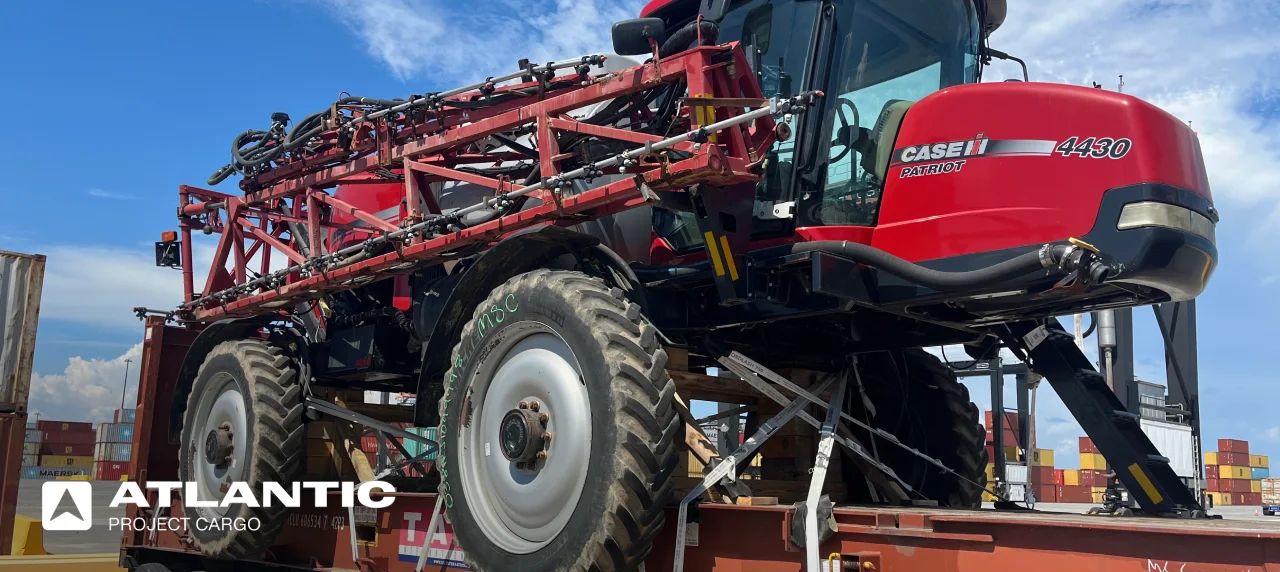
Farm equipment shipping Australia-bound covers tractors, combines, cotton pickers, sprayers, seeders, planters, and harvesters — and carries the highest biosecurity exposure of any category.
Agricultural machinery works in soil and crop residue by design. Headers and augers trap seed, and undercarriages hold dirt a surface wash will not shift, so budget for dismantled cleaning before you commit to a tractor at auction — our agricultural equipment shipping team plans it against our farm machinery guide.
Shipping Construction Equipment from the USA to Australia
Construction equipment shipping Australia-bound covers excavators, bulldozers, wheel loaders, backhoes, cranes, and motor graders, most of which exceed container dimensions.
Weight, width, height, and boom length push these onto flat rack or breakbulk, which carries the seasonal treatment consequence above. Our construction equipment shipping team plans both together, and our walkthrough on how to ship an excavator covers the dimensional side.
Shipping Mining Equipment from the USA to Australia
Mining equipment shipping covers haul trucks, loaders, drilling rigs, crushers, conveyors, and oversized project cargo, almost always by breakbulk or heavy lift.
Size, value, and remote delivery points make this project cargo rather than freight. A haul truck bound for the Pilbara may be dismantled for the voyage, cleaned component by component, and reassembled on site, which is why mining equipment shipping Australia-bound is planned through our mining and industrial equipment shipping team months ahead of the sailing.
Shipping Equipment Purchased at US Auctions
Auction machinery is usually the dirtiest, sold as-is from open yards, which makes cleaning longer and the deadline tighter.
Key takeaway: Check shipping and cleaning requirements before bidding, especially for used agricultural and construction equipment.
Example Shipping Scenarios
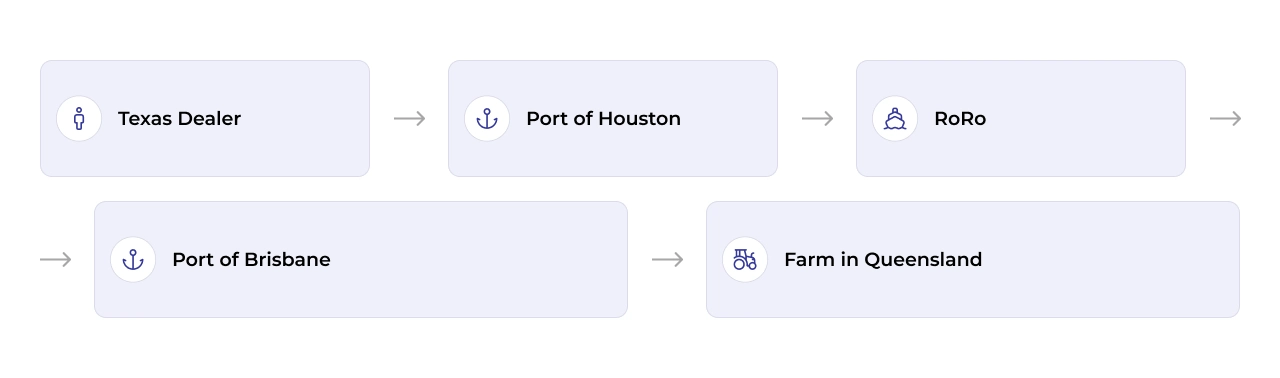
Example 1 — John Deere tractor, Texas dealer to a Queensland farm
A Queensland grower buys a used row-crop tractor. It has worked cotton ground, so the undercarriage, wheel wells, and cab floor all hold soil and plant residue. The machine is dismantled far enough to reach the trapped areas, pressure-washed, and re-inspected before loading — not surface-washed at the dealer. Because it runs, it goes RoRo from Houston.
Why: RoRo avoids crane fees, and Brisbane is the closest gateway to the destination. The cleaning spend was the real decision: a machine sent for re-cleaning at an approved site on arrival costs far more than doing it properly in Texas.
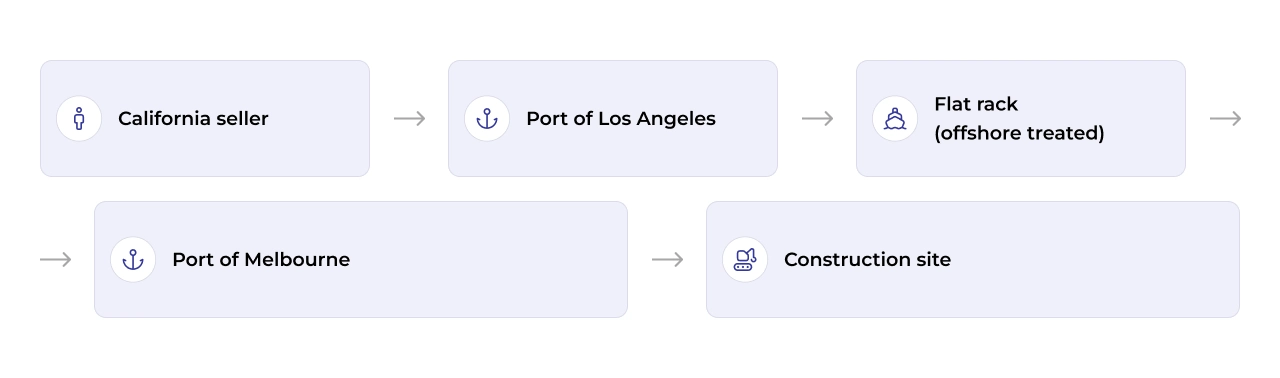
Example 2 — CAT excavator, California seller to a Melbourne construction site
A 30-ton excavator is bought in California in October — mid stink bug season. That timing changes the plan. The machine is too large for a container, so it ships flat rack, and flat rack cargo cannot be treated onshore in Australia. Offshore treatment by a DAFF-approved provider is booked before the vessel loads, with the treatment certificate linked to the bill of lading, and the tracks and boom pins are cleaned out separately.
Why: Los Angeles gives the shortest transit. The critical step was treating offshore: untreated flat rack cargo arriving in season can be refused discharge and directed straight back out.
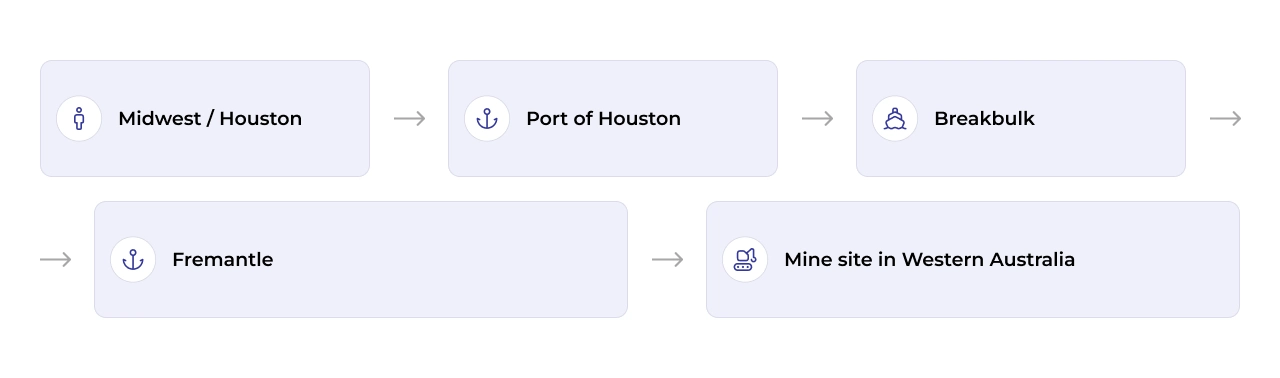
Example 3 — Mining haul truck, Midwest to a Western Australian mine site
A haul truck is bought for a Pilbara operation. It is too large to ship assembled, so it is broken into major components — body, cab, wheels, driveline — which solves two problems at once. Each component is cleaned individually, giving inspectors access to cavities that would be unreachable on a complete machine, and the dismantled sections fit a breakbulk lift plan. Reassembly happens on site.
Why: Dismantling was driven by dimensions but paid off twice, because machinery presented clean and accessible can be released after inspection rather than sent for further cleaning. Fremantle is the natural gateway for Western Australian mining cargo.
Illustrative only. Actual routing depends on equipment specifications, carrier schedules, port availability, and biosecurity preparation.
Common Mistakes When Shipping Equipment to Australia
- Buying before checking shipping and cleaning costs — cleaning can run into the thousands of dollars and, on heavily contaminated equipment, approach the freight cost itself
- Failing to clean properly, particularly undercarriages and attachments
- Underestimating inspection, which is mandatory for used machinery
- Providing incorrect dimensions
- Choosing the wrong shipping method for the season and the machine
- Ignoring inland delivery distance, which is substantial in Australia
- Missing auction pickup deadlines
- Shipping without marine cargo insurance
Summary: For Australia-bound shipments, cleaning and biosecurity preparation can be as important as the freight booking itself.
How Atlantic Project Cargo Handles Heavy Equipment Shipping to Australia
| Atlantic Project Cargo Service | Benefit |
|---|---|
| Equipment pickup | Coordinates collection from seller or auction |
| Inland transport | Moves equipment to export port |
| Shipping method selection | Matches cargo with the right method |
| Export documentation | Reduces paperwork delays |
| Biosecurity preparation guidance | Helps reduce quarantine risk |
| Cargo insurance | Protects high-value machinery |
| Final delivery planning | Supports port-to-door or door-to-door shipping |
What Information Is Needed for a Shipping Quote?
| Information Needed | Example |
|---|---|
| Equipment type | Tractor, excavator, bulldozer |
| Make and model | John Deere, CAT, Case IH, Komatsu |
| Dimensions | Length, width, height |
| Weight | Operating or shipping weight |
| Pickup location | Dealer, auction, farm, job site |
| Destination | Port or final address in Australia |
| Condition | Running / non-running |
| Attachments | Bucket, blade, header, boom |
| Cleaning status | Washed / not washed / unknown |
| Preferred method | RoRo, flat rack, container, breakbulk |
Cleaning status is the row people skip and the one that moves the quote most.
Frequently Asked Questions
Cost depends on dimensions, weight, method, ports, and cleaning requirements. We quote per machine, because biosecurity preparation varies too much to generalise.
Roughly four to eight weeks port to port depending on the route; West Coast departures tend to run shorter on average, though it varies by service. Inspection and clearance add time after arrival.
Yes, routinely — but it must arrive free of biosecurity risk material and is subject to mandatory on-arrival inspection.
Yes. Used machinery receives mandatory inspection, with breakbulk assessed at a wharf precinct and containerised cargo at an approved arrangement site.
Free of soil, seeds, plant and animal material in every cavity. DAFF states effective cleaning may require partial or full dismantling, so a surface wash is rarely sufficient on used machinery.
Tractor shipping Australia-bound usually goes RoRo when the machine is fully operable, or flat rack when it is oversized or non-running.
Yes, and excavator shipping Australia-bound commonly uses flat rack. Note that flat rack cargo must be treated offshore during stink bug season.
Yes, nationwide — release authorization, cleaning coordination, and export prep inside the removal deadline.
Commercial invoice, bill of lading, packing list, import declaration, biosecurity documentation, and where applicable a certificate of origin and ownership documents.
Yes — pickup, cleaning coordination, ocean freight, customs and biosecurity coordination, and inland delivery to your site.
Request a Heavy Equipment Shipping Quote to Australia
Shipping machinery from USA sellers to Australian buyers rewards preparation more than any lane we run. The freight is predictable; biosecurity decides whether your machine clears in days or sits in quarantine.
Atlantic Project Cargo handles pickup anywhere in the USA, auction logistics, RoRo, flat rack, container and breakbulk booking, export documentation, biosecurity preparation guidance, cargo insurance, customs coordination, and delivery planning.
Get Your Free Quote Today!
Note: Australian import conditions are set by DAFF and vary by machine, origin, and inspection findings. Seasonal measures change annually. Confirm current requirements in BICON and with a licensed customs broker before purchase.
Read More
Nick Yadryshnikov
Maryana Serafinas
Victoria Moseicuka