Landed cost is the total cost of a product once it arrives at the buyer’s location. It adds the purchase price, freight, insurance, duties, taxes, port charges and inland delivery. For imported equipment, it is the real price the buyer pays for the machine.
Also known as: total landed cost, delivered cost.
How Landed Cost Works
The calculation starts with the price on the commercial invoice. Every cost between the seller’s site and the buyer’s yard is then added, including packing, export clearance, ocean freight and insurance. At destination, the buyer adds duties, import taxes, port charges, customs brokerage and the final truck move.
The Incoterms rule in the contract decides which of these costs the seller already includes. Under EXW the buyer pays almost everything after the seller’s gate. Under DDP the seller covers delivery, import duties and taxes, so the quoted price is close to the landed cost.
For example, a buyer in Brazil comparing two used combines must look beyond the purchase price. A cheaper machine at an inland US auction can cost more once loading, drayage to Savannah and the ocean leg to Santos are added. Destination costs can also differ widely between ports, even in the same country.
Why Landed Cost Matters for Heavy Equipment Shipping
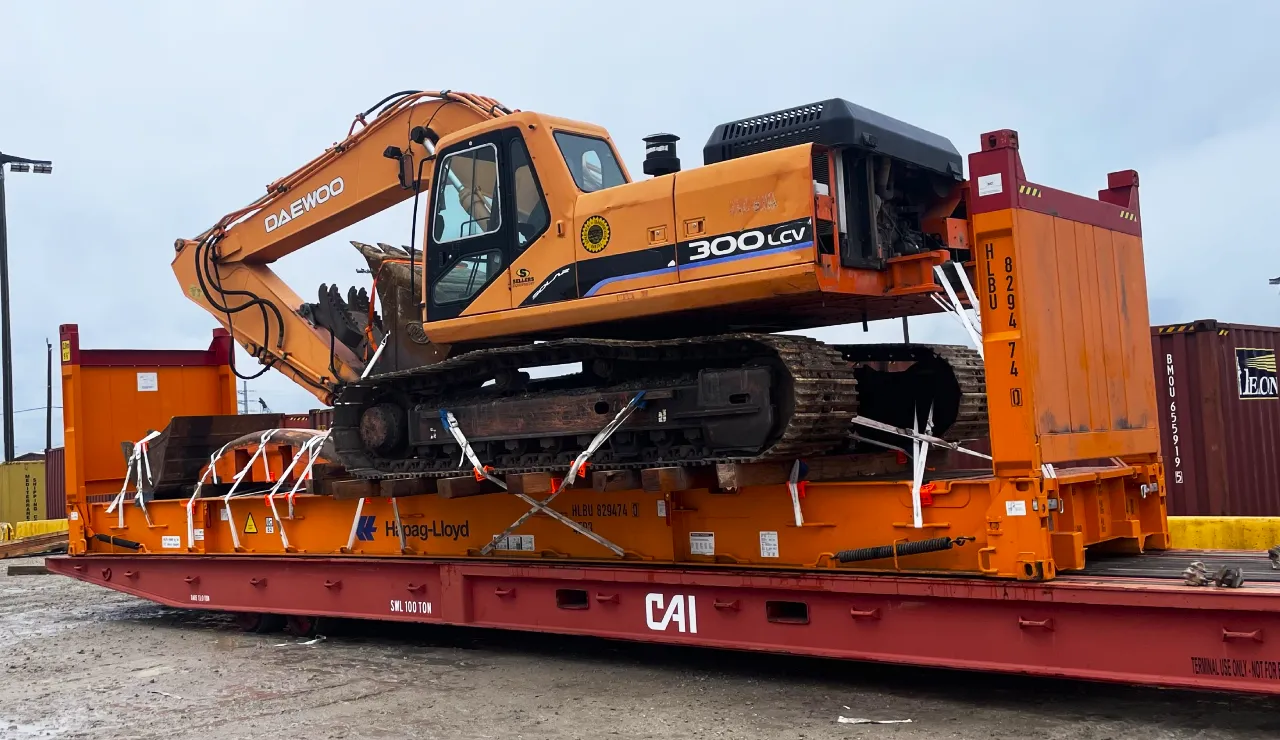
Freight and import charges for a large machine can be a big share of its price. Oversize road moves, disassembly, crating and cleaning add costs that a simple container quote does not show. Duties also vary by tariff code and origin, so two similar machines can have different landed costs.
Exchange rates and payment timing also change the final figure. A buyer paying in another currency should fix the rate or plan for changes before the machine ships.
Atlantic Project Cargo helps buyers estimate these costs through its equipment sourcing and procurement service and customs brokerage at destination.
| Cost group | Typical items |
|---|---|
| Purchase | Machine price, inspection and any dealer fees. |
| Origin | Loading, disassembly, crating, drayage and export filing. |
| Transport | Ocean freight, surcharges and cargo insurance. |
| Destination port | Terminal handling, storage and port charges. |
| Import | Duties, import taxes, customs brokerage and agency fees. |
| Final delivery | Inland trucking, permits and unloading at the site. |
Common Mistakes
- Comparing machines by purchase price alone, without freight and import costs.
- Using a container rate for a machine that needs a Flat Rack or RoRo.
- Forgetting cleaning, fumigation or inspection costs for used equipment.
- Ignoring storage and demurrage if clearance or pickup is delayed.
- Assuming a duty rate without checking the tariff code with a customs broker.
FAQ
Comparing machines in different countries? Get a quote to see the shipping and import costs before you buy.