
Hours of operations:
9AM - 5PM / UTC -5 (EST)

Top 10 Ports in Australia: Best Shipping Hubs for International Cargo & Heavy Equipment

August 28, 2026
Shipping Quote
Customs Duties
Drayage Rate
Do you already own this equipment?

You Can Request a New Quote Every 15 Minutes

Please wait or contact us at [email protected]

Thank you for Choosing Us!

Looking to buy or sell heavy equipment?
With JumboBee, you can trade online with financing options and worldwide shipping.

Check Inventory
Calculate Import Duties
Get a free, no-obligation estimate of your import duties!
Calculate Import Duties
Get a Drayage Estimate
Get a free drayage estimate tailored to your exact needs!
Check a Drayage Rate
Home Insights Top 10 Ports in Australia: Best Shipping Hubs for International Cargo & Heavy Equipment
Reviewed by
Victoria Moseicuka Chief Operating Officer

Key Takeaways


  • Selecting the correct Australian port depends primarily on cargo type, dimensions, and final destination rather than geographic proximity alone.
  • Port of Melbourne dominates container volume and vehicle imports, while regional hubs like Newcastle, Gladstone, and Darwin specialize in mining and heavy-lift project cargo.
  • Port Kembla serves as the exclusive RoRo entry point for New South Wales, absorbing 100% of the state’s vehicle import trade.
  • Australia enforces exceptionally strict biosecurity and DAFF regulations, requiring machinery to be thoroughly cleaned of all soil and organic matter prior to arrival.
  • Seasonal Brown Marmorated Stink Bug (BMSB) rules mandate offshore treatment for high-risk breakbulk and flat-rack shipments originating from the United States.
  • Transit times from major U.S. ports to Australia typically range from 18 to 42 days, depending on whether cargo originates from the West Coast, Gulf, or East Coast.

The best Australian port for international cargo depends on the shipment type and final destination. Melbourne is Australia’s largest container port, while Brisbane and Fremantle are strong gateways for heavy equipment. Port Kembla specializes in vehicle and RoRo cargo, and Newcastle, Gladstone, Darwin, and Townsville serve mining and project cargo.

Australia’s major ports are highly specialized, so the closest port is not always the most efficient choice. Importers should compare container, RoRo, breakbulk, inland transport, and biosecurity requirements before selecting a gateway.

For anyone shipping equipment in, that split, plus the country’s strict biosecurity regime, shapes every decision. Choose well and the shipment clears customs and reaches site efficiently; choose badly and you inherit cross-country haulage costs and possible biosecurity delays. This guide takes the biggest ports in Australia and lays out what each one does, so you can match your cargo to the right gateway. Knowing the major ports in Australia, and which handles what, is the first step to shipping efficiently.

Quick Facts About Australia's Port Network

Here’s the national picture, at a glance.

Metric Information
Commercial ports Over 70 nationally, with about 10 handling most trade
Largest port (by container) Port of Melbourne — 3.4 million TEU
Largest bulk port Port Hedland — 563.8 million tonnes (iron ore)
Five major container ports Melbourne, Botany, Brisbane, Fremantle, Adelaide
Combined container throughput ~9.1 million TEU across the five, 2024–25
Main exports Iron ore, coal, gas, agriculture, livestock
Main imports Machinery, vehicles, electronics, consumer goods
Largest trading partners China, Japan, USA, South Korea, EU
Ports commonly used for heavy equipment Melbourne, Brisbane, Fremantle, Adelaide, Kembla

The headline figure belongs to Melbourne. In 2024 it handled 3.396 million TEU, the highest annual container volume it has ever recorded and more than 9% up on the year before, cementing its place as Australia’s busiest container gateway.

Australian Port Infrastructure Overview

Australia runs one of the world’s more geographically stretched port systems, and its shape follows the economy that built it. Australia’s major cargo ports form two broad networks: container gateways serving population centers and bulk ports supporting the mining, energy, and agricultural sectors.

The container ports Australia depends on handle the manufactured trade and cluster where the people are: Melbourne, Port Botany in Sydney, Brisbane, Fremantle serving Perth, and Adelaide. No single port Australia operates does everything, which is why matching cargo to port matters. Between them these five move around 9.1 million TEU a year and handle the overwhelming majority of the country’s boxed cargo. Bulk ports handle the resource exports that make Australia a mining superpower (Port Hedland and Dampier for iron ore, Newcastle and Gladstone for coal and gas), and operate on a tonnage scale that dwarfs the container trade.

Breakbulk and heavy-lift terminals exist at the multipurpose ports, where oversized cargo and project cargo Australia shippers move is craned rather than boxed. RoRo Australia facilities handle the vehicle trade, concentrated at the major container ports that receive the country’s car imports, while breakbulk Australia terminals handle the oversized pieces that can’t be boxed.

Connectivity ties it together unevenly. Intermodal rail links the major ports to inland freight hubs, and Port Botany is mid-way through an expansion lifting its on-dock rail capacity from 1 million to 3 million TEU. Rail matters most in the resource sector, where dedicated heavy-haul lines feed the bulk ports. The highway network carries the rest, and because the distances between cities are vast, the inland leg of any shipment can be long and costly.

The takeaway is simple: in a country this size, landing cargo near its destination is worth real money, so geography drives freight routing as much as port capability does.

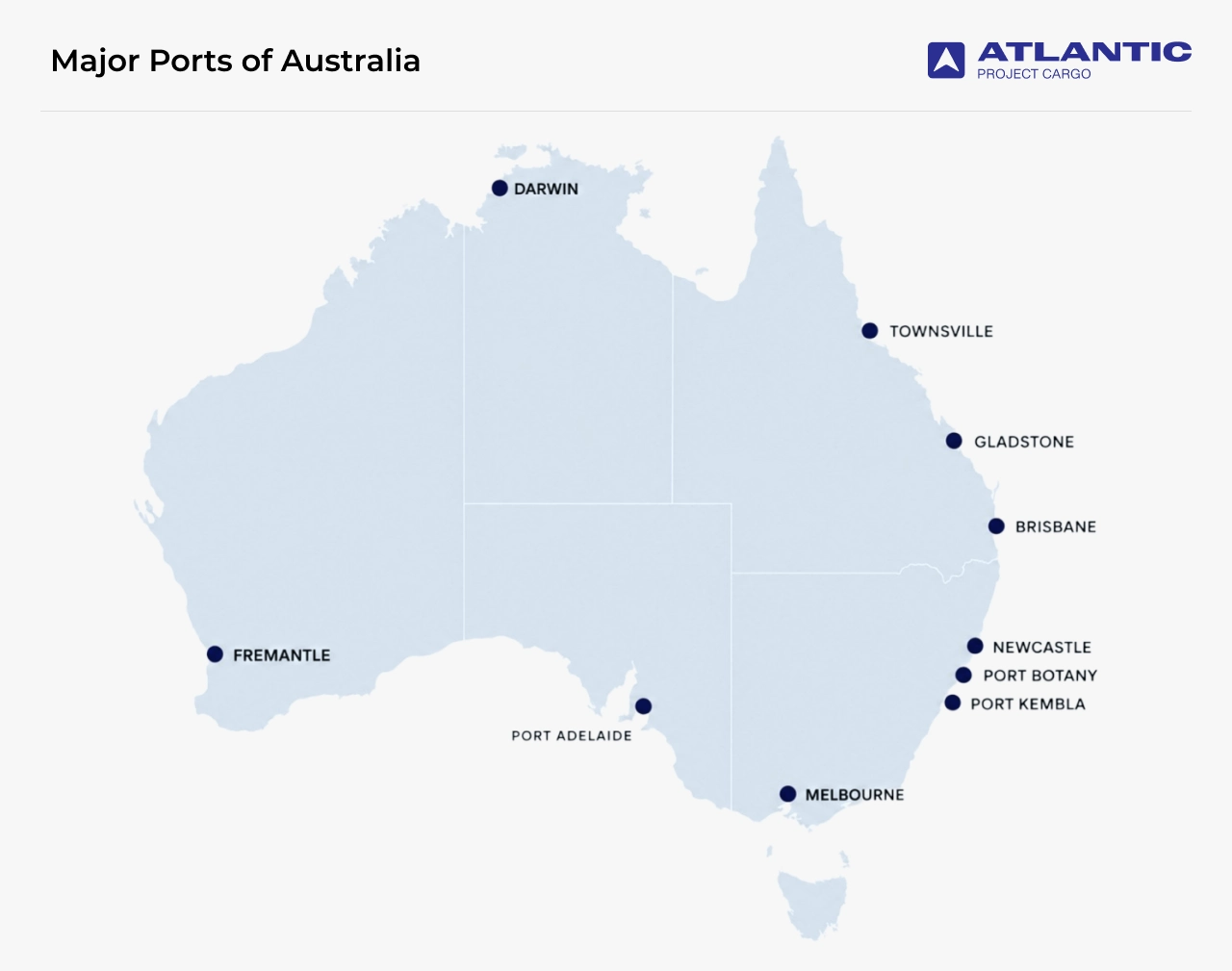
Map of Australia's Major Ports

The map makes the country’s freight geography obvious. The container ports ring the populous southeast and southwest — Melbourne, Botany, Brisbane, Adelaide, Fremantle — while the bulk and resource ports spread across the north and west. Darwin sits closest to Asia and serves as the northern gateway; the Queensland ports handle the eastern resource and agricultural trade; and the southern ports anchor the container economy.

Quick Comparison Table

Take a look at each featured port measured against the capabilities that decide cargo routing.

Port State Containers RoRo Breakbulk Heavy Equipment Best For
Port of Melbourne VIC Excellent Yes Strong Strong Containers, vehicles, southeast Australia
Port Botany NSW Excellent No Moderate Moderate Containers, NSW market
Port Kembla NSW None Excellent Strong Strong Vehicles, RoRo, grain, coal, NSW
Port of Brisbane QLD Strong Yes Strong Strong Containers, agriculture, Queensland
Port of Fremantle WA Strong Yes Strong Strong Western Australia, livestock, machinery
Port Adelaide SA Moderate Yes Moderate Moderate South Australia, agriculture
Port of Newcastle NSW Limited Limited Strong Strong Coal, bulk, project cargo
Port of Darwin NT Limited Limited Strong Strong Northern gateway, mining, defense
Port of Gladstone QLD Limited Limited Strong Strong Coal, LNG, alumina, project cargo
Port of Townsville QLD Moderate Yes Strong Strong Northern Queensland, mining, agriculture

Ratings reflect each port’s general positioning. Confirm crane capacities and current service availability with your forwarder before booking oversized cargo.

Top 10 Ports in Australia

Ten profiles, each built the same way — overview, location, throughput, cargo, infrastructure, heavy-equipment fit, RoRo, breakbulk, and best use — so comparison is straightforward.

1. Port of Melbourne

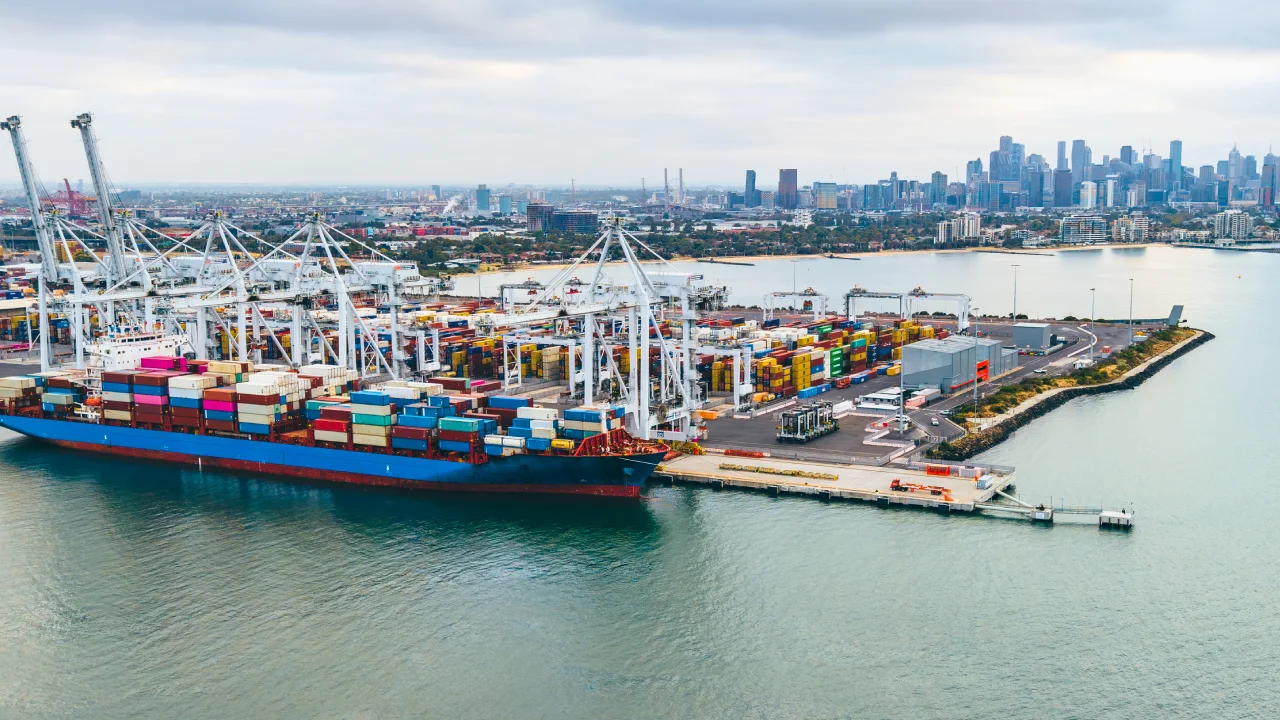
Overview. Melbourne is the country’s container capital and the default gateway to the southeast, handling more boxes than any other Australian port and a huge share of its vehicle imports.

Location. Victoria, at the head of Port Phillip Bay, adjacent to Melbourne’s CBD.

Annual throughput. 3.396 million TEU in 2024, a record, plus roughly 1,100 new motor vehicles a day on average, making it the largest container and general-cargo port in Australasia.

Main cargo types. Containers, motor vehicles, general cargo, and breakbulk, spanning consumer goods, machinery, and agricultural exports.

Infrastructure. The busiest container terminal Australia operates sits here, alongside an on-dock rail system undergoing expansion, extensive warehousing, and dense road and rail links into Victoria and beyond.

Heavy equipment capabilities. Strong. Melbourne’s scale, vehicle-handling experience, and breakbulk capacity make it well suited to tractors, machinery, and oversized cargo bound for the southeast.

RoRo availability. Yes. Melbourne is one of Australia’s primary vehicle and RoRo ports.

Breakbulk capabilities. Strong, supported by general-cargo and project-cargo handling.

Best for. Containers, vehicles, agricultural and construction machinery, and any cargo destined for Melbourne, Victoria, and southeastern Australia.

2. Port Botany

Overview. Port Botany is Sydney’s container gateway and the second-busiest box port in the country, the primary maritime entry point for the New South Wales market.

Location. New South Wales, on Botany Bay in southern Sydney.

Annual throughput. Around 2.8 million TEU a year across 17 berths, with roughly 6,000 vessel arrivals.

Main cargo types. Containers, automotive imports, high-value consumer goods, and bulk liquids including petroleum and gas.

Infrastructure. Deepwater container terminals, an on-dock rail expansion lifting capacity from 1 million to 3 million TEU, and strong road links, though rail mode share is still climbing.

Heavy equipment capabilities. Moderate. Botany is container-first; it handles containerized machinery and vehicles well, but the eastern ports with stronger breakbulk are often a better fit for oversized pieces.

RoRo availability. No. Port Botany does not currently handle international RoRo/vehicle services — Port Kembla handles 100% of NSW’s motor vehicle imports and is the state’s designated RoRo gateway.

Breakbulk capabilities. Moderate, with the emphasis on containerized trade.

Best for. Containers and consumer cargo bound for Sydney and New South Wales. (For vehicles and RoRo cargo to NSW, see Port Kembla.)

3. Port Kembla

Overview. Port Kembla is New South Wales’ dedicated vehicle-import and bulk gateway — a genuine complement to Port Botany’s container-first role, handling 100% of the state’s motor vehicle imports alongside major grain, coal, and breakbulk trade.

Location. New South Wales, on the coast roughly 90 km south of Port Botany, serving Wollongong and the Illawarra region.

Annual throughput. Over the past decade, Port Kembla has handled 2.4 million motor vehicles (roughly 240,000 a year, nearly 100% of NSW’s motor vehicle imports) and 21 million tonnes of wheat exports (roughly 2.1 million tonnes a year), across more than 800 vessel calls annually.

Main cargo types. Motor vehicles, grain, coal, bulk liquids (refined fuels, chemicals, ethanol, sulphuric acid), and breakbulk/dry bulk including copper concentrate, fertilizer, clinker, wood pulp, logs, and steel products.

Infrastructure. Eight berths across the Inner and Outer Harbour precincts, dedicated RoRo berths handling vessels up to 270 m, Capesize coal vessels up to 300 m served by gantry ship loaders, a deep-water channel requiring minimal maintenance dredging, and direct road and rail links to Greater Sydney, the Illawarra, and regional NSW.

Heavy equipment capabilities. Strong. Port Kembla’s bulk terminals and berths handle genuinely outsized cargo — the port recently received a 1,490-tonne bucketwheel reclaimer shipped in a single piece, along with replacement coal stackers, demonstrating real heavy-lift capacity for mining and industrial equipment.

RoRo availability. Yes — NSW’s primary RoRo gateway. Port Kembla handles 100% of the state’s motor vehicle imports.

Breakbulk capabilities. Strong, spanning copper concentrate, fertilizer, clinker, pulp, logs, steel products, and project cargo.

Best for. Motor vehicles and RoRo cargo, grain, coal, and heavy mining/industrial equipment bound for NSW and the Illawarra.

4. Port of Brisbane

Overview. Brisbane is Queensland’s largest port and the country’s third container gateway, well positioned on the east coast for Asian and transpacific lanes. (Darwin is Australia’s closest port to Asia overall; Fremantle is the closest of the country’s five principal container ports.)

Location. Queensland, at the mouth of the Brisbane River on Fisherman Islands, beside Moreton Bay.

Annual throughput. 1.62 million TEU in FY2025 (July 2024–June 2025), a record year, across nine container berths, and one of the fastest-growing box ports in Australia.

Main cargo types. Containers, agricultural products, coal, manufactured goods, breakbulk, and project cargo.

Infrastructure. Semi-automated container terminals run by DP World, Patrick, and Hutchison, with post-Panamax cranes, automated stacking, deep-water access, and direct road and rail links.

Heavy equipment capabilities. Strong. Brisbane’s breakbulk and project-cargo handling, combined with its terminals’ modern equipment, suit machinery, oversized cargo, and agricultural equipment bound for Queensland.

RoRo availability. Yes. Brisbane handles vehicle and RoRo traffic.

Breakbulk capabilities. Strong, with dedicated breakbulk and project-cargo capacity.

Best for. Containers, agricultural and construction equipment, and cargo bound for Queensland, plus shippers wanting the shortest Asian transit.

5. Port of Fremantle

Overview. Fremantle is Western Australia’s principal cargo port and the sole container gateway for the entire west, handling the state’s box trade, a large livestock export business, and a broad mix of machinery and bulk.

Location. Western Australia, at the mouth of the Swan River, serving Perth.

Annual throughput. Around 810,000 TEU a year alongside some 30 million-plus tonnes of total cargo, with two container terminals run by DP World and Patrick.

Main cargo types. Containers, livestock, vehicles, machinery, liquid and dry bulk, and general cargo. Metals, furniture, and agricultural and industrial machinery are among its top container commodities.

Infrastructure. Inner Harbour container terminals plus outer-harbour bulk facilities, with road and rail links into Perth and the WA interior.

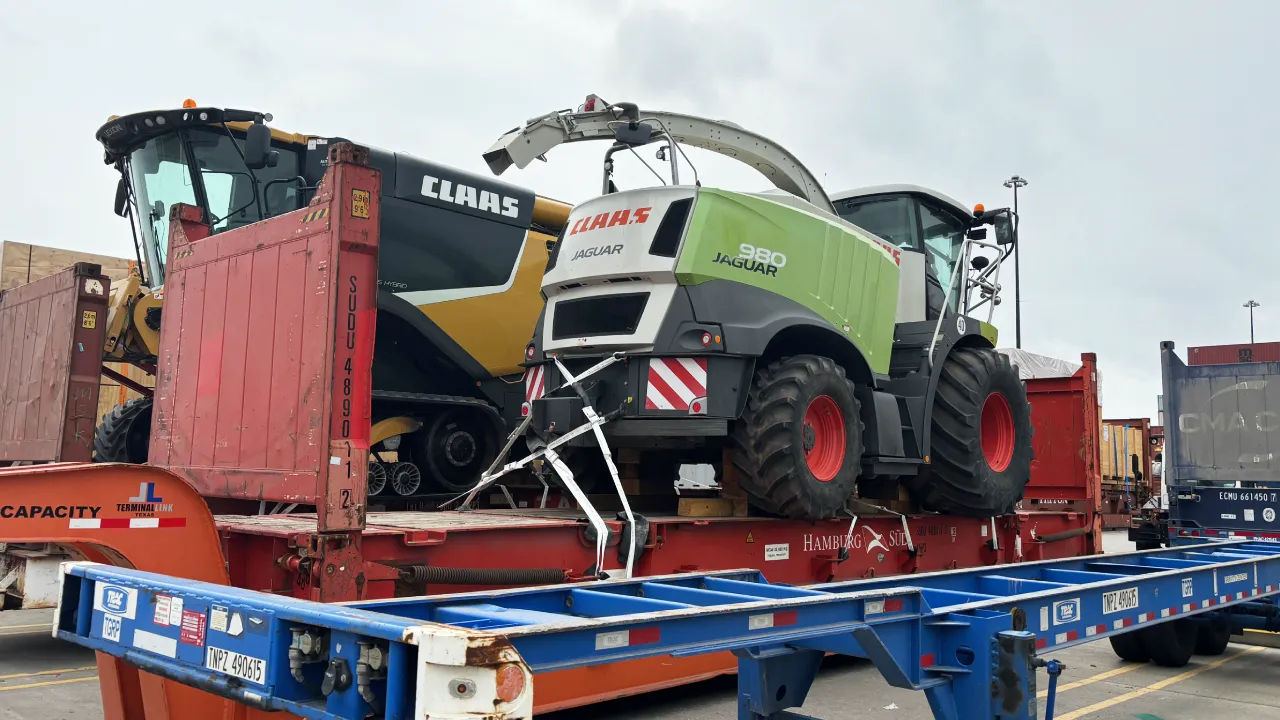
Heavy equipment capabilities. Strong. As the west’s main gateway, Fremantle handles a significant flow of machinery and oversized cargo, with breakbulk capacity for pieces that can’t be containerized.

RoRo availability. Yes. Fremantle handles vehicle and RoRo cargo for Western Australia.

Breakbulk capabilities. Strong, serving the state’s mining, construction, and agricultural sectors.

Best for. Any cargo bound for Western Australia: containers, machinery, livestock, and oversized equipment.

6. Port Adelaide

Overview. The Port of Adelaide (Port Adelaide) is South Australia’s primary gateway, a mid-sized container and general-cargo port that also serves as a useful alternative when the eastern ports are congested.

Location. South Australia, at Outer Harbor northwest of Adelaide’s CBD.

Annual throughput. One of Australia’s five major container ports, handling South Australia’s containerized trade alongside bulk, vehicles, and grain.

Main cargo types. Containers, grain and agricultural exports, vehicles, bulk, and general cargo.

Infrastructure. Container and general-cargo terminals at Outer Harbor, with road and rail links into South Australia’s agricultural regions.

Heavy equipment capabilities. Moderate. Adelaide handles containerized and general machinery and agricultural equipment, though the larger eastern and western ports have stronger heavy-lift.

RoRo availability. Yes. Adelaide handles vehicle and RoRo cargo.

Breakbulk capabilities. Moderate, tied to its general and agricultural cargo role.

Best for. Agricultural equipment, containers, and general cargo bound for South Australia.

7. Port of Newcastle

Overview. Newcastle is the world’s largest coal export port and a bulk powerhouse, but it also brings genuine heavy-lift and breakbulk capability that suits project and oversized cargo.

Location. New South Wales, at the mouth of the Hunter River north of Sydney.

Annual throughput. Around 160 million tonnes a year, dominated by coal, making it the largest coal export port globally.

Main cargo types. Coal, bulk commodities, breakbulk, project cargo, and general cargo, with diversification underway beyond coal.

Infrastructure. Specialized coal terminals with advanced bulk-handling gear, deep-water berths, and heavy-haul rail links to the Hunter Valley mines, plus multipurpose facilities.

Heavy equipment capabilities. Strong. Newcastle’s deep water, heavy-lift capacity, and laydown space suit mining equipment, oversized machinery, and project cargo.

RoRo availability. Limited, with the port focused on bulk and project cargo.

Breakbulk capabilities. Strong, well suited to oversized and heavy project cargo.

Best for. Coal and bulk, plus mining equipment, project cargo, and oversized machinery for the NSW resource sector.

8. Port of Darwin

Overview. Darwin is Australia’s northern gateway, the closest major port to Asia and a strategic hub for mining, energy, defense, and cargo moving between northern Australia and Southeast Asia.

Location. Northern Territory, on the Timor Sea in Australia’s Top End.

Annual throughput. A smaller multipurpose port by container volume, but strategically vital, handling bulk minerals, livestock, general cargo, and project cargo for the north.

Main cargo types. Mining and energy cargo, livestock, containers, general cargo, and project cargo.

Infrastructure. Multipurpose facilities including the East Arm wharf, with bulk, container, and project-cargo handling, plus the rail link to Adelaide via the Ghan freight line.

Heavy equipment capabilities. Strong. Darwin’s project-cargo capability and northern position suit mining and energy equipment and oversized machinery bound for the Territory and beyond.

RoRo availability. Limited, though the port handles vehicles and rolling cargo.

Breakbulk capabilities. Strong, geared to mining, energy, and project cargo.

Best for. Mining and energy equipment, project cargo, and shipments serving northern Australia or moving to and from Southeast Asia.

9. Port of Gladstone

Overview. Gladstone is Queensland’s largest multi-commodity port and one of the world’s major coal and LNG export terminals, with the deep water and heavy-lift capacity that oversized cargo needs.

Location. Queensland, on a natural harbor on the central Queensland coast.

Annual throughput. Around 118 million tonnes a year across 24 berths, spanning coal, LNG, and alumina.

Main cargo types. Coal, liquefied natural gas, alumina and aluminum, bulk commodities, and project cargo.

Infrastructure. Extensive bulk and energy terminals on a deep natural harbor, with heavy-haul rail and multipurpose facilities for project and breakbulk cargo.

Heavy equipment capabilities. Strong. Gladstone’s deep water and heavy-lift capacity suit industrial and mining equipment and large project pieces bound for central Queensland’s resource and processing sector.

RoRo availability. Limited, with the focus on bulk and project cargo.

Breakbulk capabilities. Strong, well suited to oversized industrial and project cargo.

Best for. Coal, LNG, and alumina, plus industrial and mining equipment and project cargo for central Queensland.

10. Port of Townsville

Overview. Townsville is northern Queensland’s largest general port, a multipurpose hub serving the region’s mining, agricultural, and general trade with useful breakbulk and RoRo capability.

Location. Queensland, on Cleveland Bay in tropical north Queensland.

Annual throughput. Northern Queensland’s largest general cargo port, handling containers, bulk minerals, vehicles, livestock, and general cargo.

Main cargo types. Mining and mineral cargo, containers, vehicles, livestock, agricultural products, and general cargo.

Infrastructure. Multipurpose terminals handling container, bulk, breakbulk, and vehicle cargo, with road and rail links into the northern Queensland mining and agricultural regions.

Heavy equipment capabilities. Strong. Townsville’s breakbulk and general-cargo capability suit mining equipment, machinery, and oversized cargo bound for northern Queensland.

RoRo availability. Yes. Townsville handles vehicle and RoRo cargo.

Breakbulk capabilities. Strong, serving the northern mining and agricultural sectors.

Best for. Mining equipment, machinery, agricultural cargo, and containers for northern Queensland.

Best Australian Ports by Cargo Type

Start from the cargo, not the coastline. Match the machine to the port built for it and the shortlist writes itself.

Cargo Type Recommended Port Why
Tractors Melbourne, Brisbane, or Fremantle Strong RoRo and vehicle handling near the main farming regions
Combines Brisbane or Adelaide Agricultural focus and breakbulk for oversized headers
Excavators Melbourne, Brisbane, or Fremantle Breakbulk and flat-rack capacity for out-of-gauge machines
Mining equipment Newcastle, Gladstone, Darwin, or Townsville Heavy-lift and project-cargo capacity near the resource regions
Construction equipment Melbourne, Brisbane, or Fremantle Container, RoRo, and breakbulk options near the cities
Industrial machinery Melbourne or Brisbane Scale, modern terminals, and strong intermodal links
Containers Melbourne or Port Botany The two largest container ports in the country
Oversized cargo Newcastle, Gladstone, or Fremantle Deep water and heavy-lift built for project pieces

The pattern: containers and city-bound machinery go to the eastern and southern container ports, while mining and oversized project cargo point to the resource ports with heavy-lift. For a full walk-through of the methods and costs, our heavy equipment shipping guide covers the end-to-end process.

Best Shipping Methods for Heavy Equipment to Australia

Five shipping methods cover almost every machine, and the right one comes down to size, weight, and whether the unit rolls.

  • RoRo suits self-propelled and wheeled equipment that can drive aboard, the most economical route when the machine qualifies.
  • Flat rack carries oversized units that a crane lowers onto an open platform, ideal for machines too wide or tall for a standard box but within crane limits.
  • Open top containers take tall equipment loaded from above through the roof.
  • Breakbulk handles the largest and heaviest pieces, lifted directly onto the vessel: the route for mining trucks, crushers, and outsized plant.
  • Standard containers work for compact machinery, attachments, and disassembled units.

Picking between them is a decision in itself, and our guide to flat rack shipping explains where that option fits. For the box dimensions that decide whether a machine goes inside a container or on top of a rack, see shipping container types and sizes.

Major Shipping Routes to Australia

Australia sits at the end of some of the world’s longest trade lanes, and transit times reflect it. Cargo from the United States generally sails from the West Coast across the Pacific to the eastern Australian ports, taking roughly 18 to 30 days depending on the service and whether it transships through Asia or New Zealand. European shipments route via the Suez Canal and the Indian Ocean, or around Africa, typically five to seven weeks.

China and East Asia are Australia’s largest trade lanes and the shortest, usually around two to three weeks. Japan and South Korea run similar northern-Asia routes, generally two to three weeks. Because Australia is so far from North America and Europe, those lanes are long, and current global routing conditions can extend them, so confirming live schedules at booking is worth the effort.

Transit Times from Major U.S. Ports

Approximate ocean transit ranges from key US ports to Australia’s main gateways.

US Port Melbourne Brisbane Fremantle Adelaide
Los Angeles / Long Beach ~20–28 days ~18–26 days ~24–32 days ~22–30 days
Oakland ~20–28 days ~18–26 days ~24–32 days ~22–30 days
Houston ~28–38 days ~26–36 days ~30–40 days ~28–38 days
Savannah ~28–38 days ~26–36 days ~32–42 days ~30–40 days

Indicative planning ranges, not guaranteed schedules. West Coast lanes to eastern Australia are shortest; Fremantle in the west generally runs longest from US East and Gulf Coast origins. Confirm current carrier schedules before booking.

Import Requirements for Heavy Equipment

Australia runs one of the strictest biosecurity regimes on earth, and for heavy equipment that regime, not customs paperwork, is usually the deciding factor. Australian Customs (through the Australian Border Force) handles the standard import documentation: commercial invoice, bill of lading, packing list, and an import declaration. Biosecurity, run by the Department of Agriculture, Fisheries and Forestry (DAFF), is where equipment shipments live or die: any machine that has touched soil or vegetation must arrive clean.

Cleaning requirements are strict and strictly enforced. Used machinery has to be steam-cleaned or pressure-washed to bare metal, free of all soil, plant material, and residue, before it ships. A contaminated machine can be held, ordered re-cleaned at the wharf, or re-exported. A phytosanitary or cleanliness certificate documenting this is standard for equipment that has contacted the ground.

BMSB regulations add a seasonal layer that US shippers must plan around. The brown marmorated stink bug season runs 1 September to 30 April each year (2026–27 season: 1 September 2026 – 30 April 2027), and the United States is a target-risk country. Machinery classified as a target high-risk good and shipped from the US in that window is subject to mandatory offshore treatment.

Critically for oversized cargo, breakbulk, flat-rack, and open-top shipments must be treated offshore before arrival. They cannot be treated on the wharf in Australia, and untreated high-risk breakbulk is directed straight back out for export. That same DAFF advice for the 2025–26 season approved ethyl formate as a new offshore treatment option. Because so much heavy equipment ships breakbulk or on flat racks, the offshore-treatment rule is the single most important thing to get right on a US-to-Australia machinery shipment.

For the full detail on documentation, costs, and timing, see our Australia shipping guide.

Why Atlantic Project Cargo Uses These Ports

Selecting an Australian port is a matter of matching the shipment to the facility that moves it best, and that judgment rests on a few factors we weigh on every booking. Cargo dimensions come first, because they set the crane and handling requirement that only certain ports meet. The final destination comes next, since landing cargo near where it’s needed cuts the long inland haul that Australian distances impose. The transport method (RoRo, breakbulk, flat rack) has to match a port equipped for it. The inland logistics from wharf to site, including any oversized permits, shape the plan. And each customer’s own requirements on timeline, budget, and destination decide the rest.

In practice, that usually means Melbourne, Botany, or Brisbane for containers and city-bound machinery, Port Kembla for vehicle imports to NSW, Fremantle for anything headed to Western Australia, and the resource ports (Newcastle, Gladstone, Darwin, Townsville) for mining equipment and project cargo. The aim is never loyalty to one port; it’s putting each shipment where it clears biosecurity and reaches site most efficiently.

Frequently Asked Questions

It depends on the measure. By container volume, Melbourne is the largest, at 3.4 million TEU a year. By sheer tonnage, Port Hedland in Western Australia is far larger, moving over 563 million tonnes of iron ore annually, but as a dedicated bulk port, not a general cargo gateway.

Port of Melbourne, at 3.396 million TEU in 2024, a record, and comfortably the busiest container port in the country. Port Botany in Sydney is second, at around 2.8 million TEU.

There isn’t a single answer, because it depends on destination. Melbourne, Brisbane, and Fremantle are the strongest all-round gateways for machinery bound for the cities, while the resource ports (Newcastle, Gladstone, Darwin, and Townsville) have the heavy-lift capacity for mining and oversized project cargo.

Melbourne, Brisbane, Fremantle, and Adelaide all handle RoRo cargo, with Townsville also taking rolling stock. Port Kembla is New South Wales’ dedicated RoRo and vehicle-import gateway, handling 100% of the state’s motor vehicle imports — not Port Botany, which is container-focused. Melbourne is Australia’s leading vehicle port overall.

Cargo from the US West Coast typically lands at the eastern container ports (Melbourne, Botany, and Brisbane), with Fremantle and Adelaide also served. The choice depends on the cargo’s final destination within Australia.

Brisbane and Adelaide are strong choices given their agricultural focus and breakbulk capacity, while Melbourne and Fremantle handle agricultural machinery well for their regions. The right one depends on where the equipment is headed.

Roughly 18 to 30 days from the US West Coast to the eastern Australian ports, and longer, often 28 to 42 days, from the US East and Gulf Coasts or to Fremantle in the west. Confirm current schedules at booking, since routing conditions shift.

A commercial invoice, bill of lading, packing list, and import declaration at minimum, plus biosecurity documentation — a cleanliness or phytosanitary certificate for any machine that has contacted soil, and a BMSB treatment certificate for equipment shipped from the US during the 1 September–30 April season.

Request a Customized Shipping Quote

Every Australian shipment comes back to the same three questions: what are the cargo’s dimensions, where in the country is it headed, and what does biosecurity require of it? Answer those and the right port and shipping method follow. The most useful next step is a quote built on your actual machine and destination rather than a generic rate.

Atlantic Project Cargo handles the ocean freight Australia shippers rely on: RoRo and breakbulk shipping, flat-rack and heavy-equipment logistics, customs clearance, and door-to-door delivery, all as one coordinated service.

Request a Shipping Quote | Talk To a Shipping Expert

Get Your Free Quote Today!

Read More

August 24, 2026
Heavy Equipment Shipping from the USA to Australia: Costs, Transit Time & Import Guide
Heavy equipment can be shipped from the USA to Australia by RoRo, flat rack, container, or breakbulk shipping depending on the machine's dimensions, weight, condition,...
Reviewed by
Nick Yadryshnikov
August 20, 2026
Top 10 Ports in Brazil: Major Shipping Hubs for International Cargo
The top ports in Brazil include Santos, Paranaguá, Rio Grande, Suape, Itajaí, Navegantes, Rio de Janeiro, Vitória, Itaguaí, and Itaqui. These ports support Brazil's international...
Reviewed by
Nick Yadryshnikov
August 19, 2026
What Is Drayage in Freight Shipping? Types, Costs, Ports, and Heavy Equipment Logistics
Logistics professionals know that moving cargo across oceans is only half the battle. Getting that cargo out of a congested port and onto its next...
Reviewed by
Maryana Serafinas
Share via