
Hours of operations:
9AM - 5PM / UTC -5 (EST)
November 16, 2026 16 min

Top 10 Ports in Chile: Best Shipping Hubs for International Cargo & Heavy Equipment

Explore Chile's top 10 ports for international shipping. Compare container terminals, breakbulk and RoRo capabilities, mining cargo infrastructure, and find the best port for heavy equipment imports.
Worldwide Shipping
Americas · Europe · Asia Pacific · Africa
100,000+
Shipments Worldwide
20+ Years
In Heavy Cargo Logistics
4.9 Rating
on Google · 50+ reviews
Licensed Freight Forwarding Company
Home Insights Top 10 Ports in Chile: Best Shipping Hubs for International Cargo & Heavy Equipment

Chile’s largest commercial ports, led by San Antonio and Valparaíso on the central coast and the Antofagasta and Mejillones Bay terminals in the mining north, handle most of the country’s container, mining, and breakbulk cargo. The right port for heavy equipment depends on the cargo’s dimensions, shipping method, and final destination.

Chile is the world’s largest copper producer, according to the USGS, and that mining economy shapes how cargo moves through Chile’s ports. The country stretches more than 4,000 kilometers north to south but averages under 180 kilometers wide, so a port is never far from the sea but often a long climb from the mine or city it serves.

This guide covers the biggest ports in Chile, what each handles well, and how to match cargo and destination to the right gateway.

Quick Facts About Chile’s Port Network

MetricInformation
Commercial portsTen state port companies plus private terminals
Largest container portSan Antonio: 2,060,244 TEUs in 2025
Largest mining/copper gatewayNorthern cluster: Antofagasta and the Mejillones Bay terminals
National container throughputAbout 5 million TEUs a year, according to Camport
Main exportsCopper, lithium, fresh fruit, salmon, forestry products, wine
Main importsMachinery, vehicles, industrial equipment, consumer goods
Largest trading partnersChina, United States, EU, Japan, South Korea
Ports with mobile harbor cranes and documented project-cargo handlingPuerto Angamos, Antofagasta, Iquique, Arica

In 2025, San Antonio became the first Chilean port to handle more than 2 million TEUs in a single year, according to Empresa Portuaria San Antonio.

Why Choosing the Right Port Matters

Port selection sets the cost and speed of your whole shipment, and in Chile the stakes are higher than usual because of the distances involved. When choosing the right port in Chile, remember that the port is rarely the destination; it’s the start of an inland journey that can be long and mountainous.

  • Inland cost is the big one: a machine landed at San Antonio but bound for a mine near Calama faces more than 1,500 kilometers of heavy haul, against roughly 200 to 250 kilometers from Antofagasta or Puerto Angamos.
  • Transit time shifts with carrier call frequency and transshipment.
  • For heavy equipment shipping to Chile, and mining equipment shipments to Chile in particular, cargo handling sets the shortlist. Without a shore crane rated for the lift, the move may need the vessel’s own heavy-lift gear or a mobile crane, which adds cost and planning.
  • RoRo and breakbulk availability varies widely, deciding whether your method is even possible.

Chile’s Port Infrastructure Overview

Chile’s port system is shaped by two economic realities: containerized trade through the central coast near Santiago, and mineral exports through the north.

  • Chile’s container ports cluster in the center, led by San Antonio and Valparaíso.
  • Mining terminals dominate the north: Antofagasta and the Mejillones Bay terminals, including Puerto Angamos.
  • Breakbulk facilities in Chile sit at the larger multipurpose ports, including Puerto Angamos, Antofagasta, Iquique, and Arica.
  • RoRo is concentrated at San Antonio and San Vicente, with Iquique also handling RoRo ships.

Rail serves the mining north through the FCAB network, which has more than 700 kilometers of track in northern Chile and connects to the Bolivian and Argentine rail networks, according to FCAB. Most cargo moves by road on Route 5, the Pan-American Highway.

Chile’s Main Trade & Logistics Corridors

Where your cargo is headed is the starting point for choosing a port.

RegionPort(s) to ConsiderTypical Cargo
SantiagoSan Antonio, ValparaísoContainers, machinery
AntofagastaAntofagasta, Puerto AngamosMining equipment
AtacamaHuasco (Puerto Las Losas), CalderaHeavy equipment, bulk, fruit
TarapacáIquiqueVehicles, equipment
BiobíoSan Vicente, Talcahuano, CoronelIndustrial cargo

Puerto Las Losas at Huasco, outside this top ten, handles heavy and oversized equipment on ships up to 60,000 DWT, according to the terminal, and sits closer to Atacama’s mines than Mejillones.

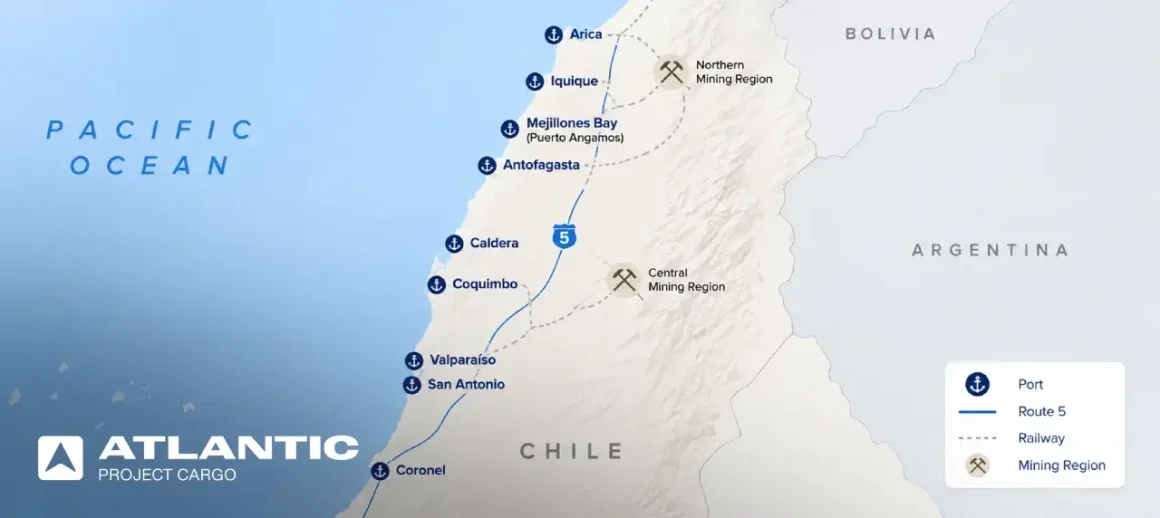
Map of Chile’s Major Ports

Each port serves the slice of the country behind it: the north for the copper mines, the center for the Santiago region, which produces about 38% of national GDP, according to the Central Bank of Chile, and the south for Biobío’s industrial and forestry economy.

Quick Comparison Table

Based on what each port and terminal operator publishes.

PortContainersRoRoProject CargoPublished Crane DataBest For
San AntonioLargest in ChileYesYesNot publishedContainers, vehicles, central Chile
ValparaísoSecond largestConfirmBreakbulkNot publishedContainers, central Chile
AntofagastaSmallConfirmYes4 mobile cranes, ratings not publishedMining equipment, copper
Mejillones BayVia Puerto AngamosNot listedVia Puerto AngamosSee Puerto AngamosBulk minerals, energy, chemicals
Iquique424,000+ TEUsYesYes2 mobile cranes, one rated 154 tVehicles, equipment, Bolivia transit
AricaYesConfirmYes6 mobile cranes, 100-104 tBolivia/Peru transit cargo
Talcahuano / San VicenteYesYes (San Vicente)YesNot publishedIndustrial, forestry cargo
CoronelYesNot listedGeneral cargoNot publishedForestry, southern Chile
CoquimboSmallSome vehiclesYesNot publishedRegional bulk, agricultural cargo
Puerto AngamosYesNot listedYes10 mobile cranes, newest 104 tMining equipment, project cargo

Confirm specific crane capacities and current service availability with your forwarder before booking an oversized shipment.

Top 10 Ports in Chile

Each profile covers location, throughput, infrastructure, heavy equipment handling, and best use, so you can compare like with like.

1. Port of San Antonio

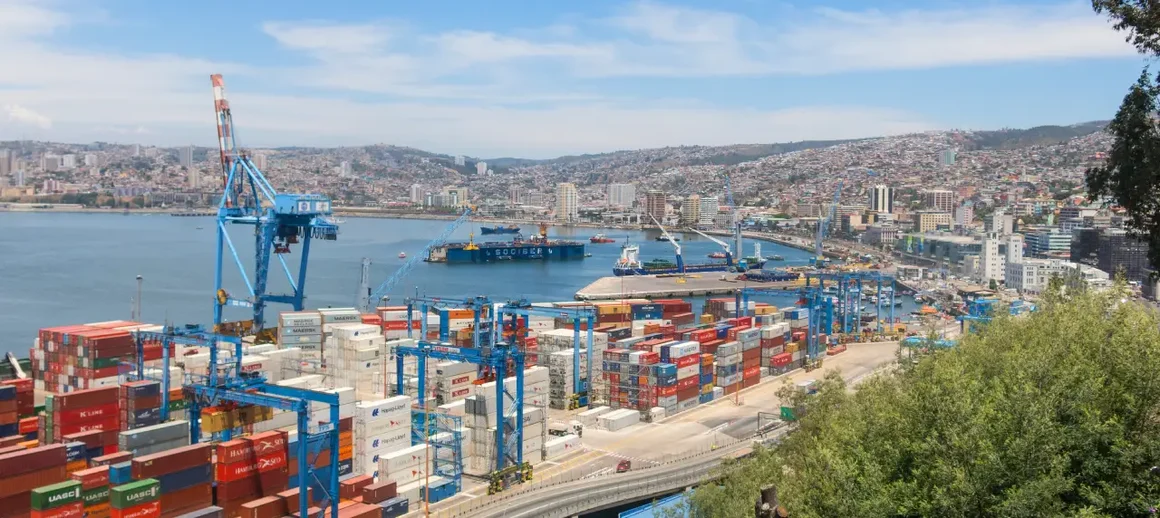
Overview. San Antonio is Chile’s largest container port and the main gateway for Santiago, about 100 to 110 kilometers away by road.

Annual throughput. 2,060,244 TEUs and 23.9 million tonnes in 2025, including 544,522 tonnes of breakbulk and 265,774 vehicles, according to Empresa Portuaria San Antonio.

Infrastructure. Two container operators: San Antonio Terminal Internacional (STI), with three berths and a 15-meter maximum draft, according to STI, and DP World San Antonio, which runs the RoRo facilities.

Heavy equipment, RoRo & breakbulk. DP World discharged a record 6,338 vehicles from one ship in December 2025, according to DP World. Neither terminal publishes heavy-lift crane ratings.

Advantages & limitations. Chile’s highest capacity and the shortest trucking leg to the capital, but a long inland haul for northern mining cargo. The Puerto Exterior expansion is still at the tender stage, according to the port.

Best for. Containers, vehicles, agricultural and industrial equipment, and cargo bound for central Chile.

2. Port of Valparaíso

Overview. Valparaíso is Chile’s historic principal port and still a major container and cruise hub, about 120 kilometers by road from Santiago.

Annual throughput. 926,860 TEUs in 2025, up 21.3%, according to Empresa Portuaria Valparaíso.

Infrastructure. TPS runs Terminal 1, with a 1,006-meter quay and a 14.1-meter maximum draft, according to TPS; TPV runs Terminal 2, which handles mainly breakbulk such as steel.

Heavy equipment, RoRo & breakbulk. Breakbulk moves through Terminal 2. Heavy-lift and RoRo capacity aren’t published, so confirm both for oversized or wheeled units.

Advantages & limitations. An alternative to San Antonio for central Chile, with less than half its container volume.

Best for. Containers and general cargo bound for central Chile.

3. Port of Antofagasta

Overview. Antofagasta is the historic heart of Chile’s mining north, about 1,350 to 1,400 kilometers by road from Santiago.

Annual throughput. 2.87 million tonnes across 230 vessel calls in 2025, according to Empresa Portuaria Antofagasta, mostly copper and Bolivian and Argentine mineral cargo. Containers are a small share.

Infrastructure. Six berths: a 600-meter multi-user front with a 9.14-meter draft run by the port authority, according to the port, and berths run by Antofagasta Terminal Internacional (ATI), with rail and road access to the ship’s side.

Heavy equipment, RoRo & breakbulk. ATI handled more than 600 battery storage units of 39 to 46 tonnes each in 2025 with four mobile harbor cranes whose ratings aren’t published, according to ATI. RoRo ships are authorized, but there’s no regular RoRo service data.

Advantages & limitations. Proximity to the copper mines and established mining-equipment supply chains, including Komatsu and Finning sites, but swell closes the port for roughly 40 to 50 days a year, according to Empresa Portuaria Antofagasta.

Best for. Mining equipment, copper and mineral cargo, and project cargo bound for the northern mining districts.

4. Port of Mejillones (Mejillones Bay Terminals)

Overview. “Port of Mejillones” isn’t a single port but the group of terminals on Mejillones Bay, about 65 kilometers north of Antofagasta, each with its own operator and cargo. Puerto Angamos, the bay’s multipurpose terminal, has its own entry at number 10 because it’s the bay’s only multipurpose terminal for machinery and project cargo.

Annual throughput. Reported by terminal: in 2025, Puerto Angamos handled 3.7 million tonnes and Terminal Graneles del Norte (TGN) 3.1 million, according to their annual report.

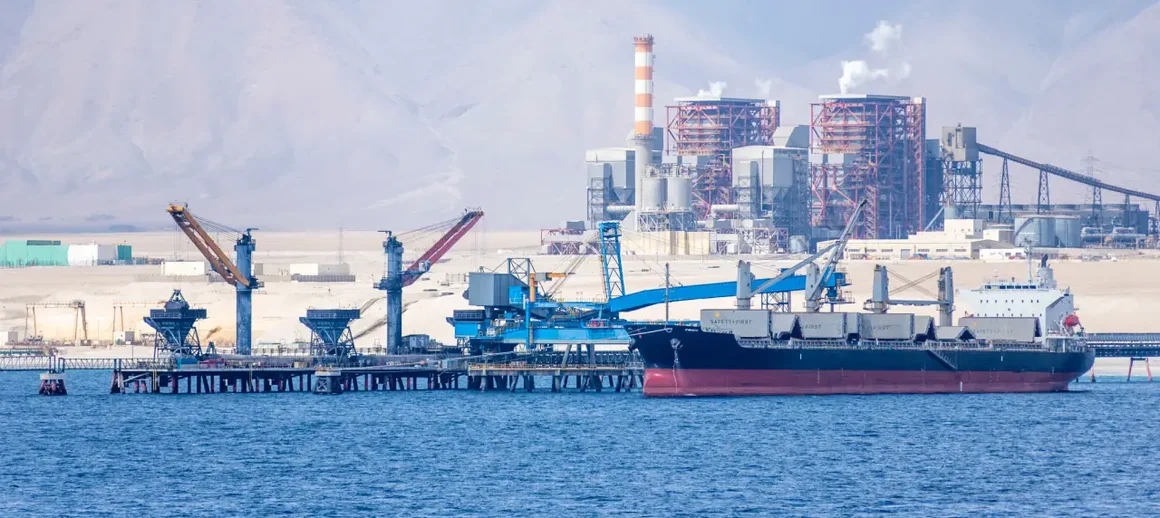
Infrastructure. Codelco subsidiary Complejo Portuario Mejillones (CPM) owns the complex and grants the concessions for Puerto Angamos and TGN; TGN has two bulk berths for coal and copper concentrate. The other terminals are private and specialized: Interacid for sulfuric acid, GNL Mejillones for LNG, and the Puerto Andino coal pier.

Heavy equipment, RoRo & breakbulk. Machinery and project cargo go through Puerto Angamos; the other terminals handle their owners’ bulk, chemical, and energy cargo.

Advantages & limitations. A sheltered bay with weather downtime below 1% a year, according to Puerto Angamos, but most terminals are single-cargo facilities.

Best for. Bulk minerals, energy, and chemical cargo.

5. Port of Iquique

Overview. Iquique is northern Chile’s main container gateway and a key transit port for Bolivian cargo, about 5 kilometers from the ZOFRI free trade zone.

Annual throughput. Iquique Terminal Internacional (ITI) reported more than 424,000 TEUs in 2025, above the 370,000-TEU capacity cited by its owner, Hapag-Lloyd. Across the whole port, Bolivian cargo made up about 27% of tonnage in January to August 2026, according to Empresa Portuaria Iquique.

Infrastructure. The ITI multipurpose terminal with a 624-meter berth, 13.5 hectares of yard, and two mobile harbor cranes, including a Liebherr LHM 600 rated at 154 tonnes, according to Hellenic Shipping News.

Heavy equipment, RoRo & breakbulk. ITI’s service rules cover RoRo ships, according to its service manual, and the port handled 18,510 vehicles in January to August 2026.

Advantages & limitations. The ZOFRI free trade zone and an established role as Bolivia’s Pacific gateway, but 2025 volumes already exceeded the terminal’s stated capacity.

Best for. Vehicles, heavy equipment, and project cargo for northern Chile and Bolivian transit trade.

6. Port of Arica

Overview. Arica is Chile’s northernmost port and the primary maritime gateway for landlocked Bolivia, near the Peruvian border.

Annual throughput. 3.2 million tonnes in 2025, about 72% of it Bolivian transit cargo, according to Terminal Puerto Arica.

Infrastructure. Terminal Puerto Arica (TPA) operates a 1,234-meter quay with five berths and a 12.4-meter maximum depth, according to TPA.

Heavy equipment, RoRo & breakbulk. Six mobile harbor cranes rated at about 100 tonnes, the newest at 104 tonnes, with vehicles, breakbulk, and project cargo handled. Confirm RoRo for the specific sailing.

Advantages & limitations. The shortest maritime route for Bolivian trade and strong cross-border road links, but smaller scale than the central container ports.

Best for. Bolivia and Peru transit cargo, minerals, and general freight in the far north.

7. Port of Talcahuano

Overview. Talcahuano and neighboring San Vicente, both under Empresa Portuaria Talcahuano San Vicente, anchor the southern industrial region, about 505 kilometers south of Santiago.

Annual throughput. San Vicente Terminal Internacional (SVTI) handled 5.5 million tonnes and 303,180 containers in 2025; Talcahuano is a smaller general-cargo and bulk terminal.

Infrastructure. Talcahuano Terminal Portuario (TTP) has run the port since 2012, after the 2010 tsunami, handling general cargo, bulk, and project cargo, according to TTP.

Heavy equipment, RoRo & breakbulk. RoRo moves mainly through SVTI, whose service manual covers RoRo ships, according to SVTI. Heavy-lift ratings aren’t published.

Advantages & limitations. The natural gateway to the southern industrial region, but far from the northern copper districts.

Best for. Industrial and forestry cargo, general freight, and RoRo shipments bound for southern Chile.

8. Port of Coronel

Overview. Coronel is a multipurpose terminal south of Concepción run by Puerto Coronel S.A., focused on containers, forestry products, and general cargo.

Annual throughput. Not published on its website; management forecast about 5 million tonnes for 2025 after losing roughly 40% of volume, according to Mundo Marítimo.

Infrastructure. Nine berths up to 15 meters deep, five gantry cranes, and 52 hectares of yard, according to Puerto Coronel.

Heavy equipment, RoRo & breakbulk. Handles containerized and general machinery; RoRo isn’t listed among its services.

Advantages & limitations. Strong forestry links and capacity alongside Talcahuano, but no listed RoRo service.

Best for. Forestry, industrial, and container cargo bound for southern Chile.

9. Port of Coquimbo

Overview. Coquimbo is a smaller regional port on the north-central coast, roughly 460 km north of Santiago.

Annual throughput. 582,365 tonnes in 2025, about 62% of it copper concentrate, according to Empresa Portuaria Coquimbo.

Infrastructure. Three berths run by Terminal Puerto Coquimbo (TPC), the newest a 14-meter-deep pier opened in December 2023.

Heavy equipment, RoRo & breakbulk. Project cargo appears in its statistics, but heavy-lift ratings aren’t published.

Advantages & limitations. A useful regional gateway with a sheltered bay, but small scale.

Best for. Regional agricultural, mineral, and bulk cargo in north-central Chile.

10. Puerto Angamos

Overview. Puerto Angamos is Mejillones Bay’s multipurpose terminal for containers, general cargo, project cargo, and bulk, about 1,400 kilometers from Santiago. It’s listed apart from the Port of Mejillones because the bay’s other terminals serve specific bulk, chemical, and energy cargo.

Annual throughput. 366 ships and about 3.7 million tonnes in 2025, including 712,490 tonnes delivered by rail.

Infrastructure. Four berths with up to 13.7 meters of draft for vessels up to 366 meters, according to Puerto Angamos, operated by Compañía Portuaria Mejillones S.A. under a concession from CPM, with paved roads to the Jama, Sico, and Peine border crossings.

Heavy equipment, RoRo & breakbulk. Ten mobile harbor cranes, the two newest rated at 104 tonnes, and a record that includes about 250 wind turbines by 2023, according to Puerto Angamos. RoRo isn’t listed among its services.

Advantages & limitations. Rail links toward mining operations in Argentina and Bolivia and low weather downtime, but no listed RoRo service.

Best for. Mining equipment, project cargo, and heavy industrial equipment bound for the northern mining districts and cross-border to Bolivia and Argentina.

Which Chilean Port Should You Choose?

Cargo TypePort(s) to ConsiderWhy
Mining equipmentPuerto Angamos or Antofagasta for the Antofagasta Region; Iquique for Tarapacá; Huasco for AtacamaDocumented project-cargo handling closest to each mining district
Agricultural machinerySan AntonioRoRo and breakbulk handling near central farming regions
Construction equipmentSan Antonio or IquiqueRoRo handling for self-propelled units, close to major project centers
Industrial machinerySan Antonio or San VicenteCentral-coast scale, or the southern industrial gateway
ContainersSan AntonioChile’s largest container port
Project cargoPuerto Angamos, Antofagasta, or IquiqueDocumented project-cargo handling
Oversized cargoPuerto Angamos, Iquique, or AricaPublished crane ratings of 100 to 154 tonnes

For the full picture on methods and costs, our USA-to-Chile heavy equipment guide covers the door-to-door process.

Choosing a Port Based on Your Final Destination

Final DestinationPort(s) to Consider
SantiagoSan Antonio, Valparaíso
AntofagastaAntofagasta, Puerto Angamos
CalamaAntofagasta or Puerto Angamos; compare berth availability, crane capacity, and the road route for the load
Atacama RegionHuasco (Puerto Las Losas) or Caldera, depending on the cargo
Northern Mining SitesAntofagasta / Puerto Angamos

When cargo type and destination point at different ports, cargo capability usually decides it: a port that can’t lift or receive the cargo isn’t an option, so you plan the inland haul around one that can.

Inland Transportation and Shipping Challenges in Chile

Landing the cargo is only half the job; moving it from port to final site is the other half.

  • Truck transport carries the majority of inland freight on Route 5.
  • Rail freight serves the mining north from Puerto Angamos and Antofagasta, though rail is the exception nationally.
  • Heavy haul moves oversized machinery on multi-axle trailers with escorts, route surveys, and permits, so build permit lead time into the schedule.
  • Mine deliveries often climb thousands of meters into the Andes, with delivery windows set around continuous operations.

A machine that clears the port but can’t legally or safely reach a high-altitude mine hasn’t arrived.

Shipping Heavy Equipment to Chile

Heavy equipment reaches Chile five main ways. RoRo suits self-propelled machines that drive aboard. Flat rack containers carry oversized units craned onto an open platform. Open top containers take tall equipment loaded from above. Breakbulk handles the largest and heaviest pieces, such as mining trucks and crushers. And standard containers work for compact machinery, attachments, and parts.

Choosing between them is its own decision, broken down in our RoRo vs. Flat Rack vs. Open Top method guide.

The box dimensions that decide whether a machine fits inside a container are covered in types and sizes of shipping containers.

Major Shipping Routes to Chile

From the US Gulf and East Coasts, cargo routes through the Panama Canal and down the Pacific coast; West Coast sailings run directly south. Allow roughly 15 to 30 days depending on service and US port. Europe runs three to five weeks. China and East Asia take around 30 to 40 days.

Transit Times from Major U.S. Ports

US PortSan AntonioValparaísoAntofagasta
Houston~18–26 days~18–26 days~16–24 days
Miami / Port Everglades~16–24 days~16–24 days~15–23 days
Los Angeles / Long Beach~20–30 days~20–30 days~18–28 days
New York / New Jersey~20–28 days~20–28 days~18–26 days

These are indicative planning ranges, not guaranteed schedules, so confirm current schedules before booking.

Import Requirements for Heavy Equipment

  • Chilean Customs requires the bill of lading, the commercial invoice, and the importer’s sworn price declaration, plus a packing list for containerized cargo and a certificate of origin when claiming trade-agreement treatment, according to Aduanas.
  • Imports pay a 6% ad valorem duty on the CIF value and 19% VAT, according to Aduanas.
  • Goods that qualify as US-origin have entered Chile duty-free since 2015 under the US–Chile Free Trade Agreement, according to USTR.
  • Used agricultural, forestry, and earth-moving machinery must arrive free of soil, plant residue, and regulated pests, or SAG can order re-shipment at the importer’s cost, under SAG Resolution 3103/2016.

Port Selection Checklist

  • Cargo dimensions and weight, against the cranes at the receiving terminal
  • Final destination and the inland route from each candidate port
  • Shipping method, and whether the terminal offers RoRo or breakbulk
  • Customs documents, and SAG cleaning for used machinery
  • Delivery timeline, including permit lead time for oversized moves

Why Atlantic Project Cargo Uses These Ports

We choose the Chilean port after checking the machine’s dimensions and weight, the cranes and services at each candidate terminal, and the inland route to the site, so the port decision and the inland plan are made together.

Frequently Asked Questions

San Antonio, in the Valparaíso Region, with 2,060,244 TEUs in 2025.
San Antonio, followed by Valparaíso at 926,860 TEUs in 2025.
Puerto Angamos and Antofagasta are the usual options for the north, both with project-cargo handling and rail access toward the mines.
San Antonio has the largest RoRo operation, and San Vicente and Iquique also handle RoRo ships. Puerto Angamos and Coronel don’t list RoRo services.
Puerto Angamos, Antofagasta, Iquique, and Arica all document project-cargo handling with mobile harbor cranes. Confirm the crane rating for your heaviest piece.
San Antonio, thanks to its RoRo and breakbulk capability and its proximity to central Chile’s farming regions.
Roughly 15 to 30 days by ocean, depending on the US port and service. Gulf and East Coast sailings route through the Panama Canal.
The bill of lading, commercial invoice, and the importer’s sworn price declaration, plus a packing list for containerized cargo and a certificate of origin when claiming FTA treatment. Used machinery must arrive clean for SAG inspection.

Request a Customized Shipping Quote

Every Chilean shipment turns on the same few questions: what’s the cargo, where’s it ultimately headed, and does it need mining-grade heavy-lift? Answer those and the right port and shipping method follow. The most useful next step is a quote built on your actual cargo and destination rather than a generic rate.

Atlantic Project Cargo handles ocean freight, RoRo and breakbulk shipping, heavy equipment and mining equipment transport, project cargo, customs clearance, and door-to-door delivery across Chile as one coordinated service.

Speak With a Shipping Specialist

Shipping Insights & Guides

Largest Farm Equipment Manufacturers in the USA
November 15, 2023

Largest Farm Equipment Manufacturers in the USA

The agricultural sector stands as a cornerstone of the United States economy, vital for both domestic needs and global food supply. In this era of large-scale agriculture, farmers increasingly depend...

Reviewed by Nick Yadryshnikov Nick Yadryshnikov
Read
Top 10 Tractor Companies in the World
May 20, 2026

Top 10 Tractor Companies in the World

The global farm tractor market is a crucial segment of the agricultural industry, with an expected total value of around $66.1 billion by 2027. While specific rankings can vary slightly...

Reviewed by Nick Yadryshnikov Nick Yadryshnikov
Read
Top 10 Construction Equipment Manufacturers
June 26, 2026

Top 10 Construction Equipment Manufacturers

The global construction equipment industry has entered a new era. Driven by surging infrastructure investment, rapid urbanization, and a technology wave spanning electrification, autonomy, and AI-powered fleet management, the market...

Reviewed by Victoria Moseicuka Victoria Moseicuka
Read
John Deere’s Most Powerful Tractors Yet: the New 2025 9RX Series
April 23, 2024

John Deere’s Most Powerful Tractors Yet: the New 2025 9RX Series

John Deere has released its most powerful tractor to date, the 2025 9RX series. This ground-up redesign has increased horsepower and efficiency, allowing farmers to cover more ground and reduce...

Reviewed by Nick Yadryshnikov Nick Yadryshnikov
Read
Top 10 RV Manufacturers in 2026: Who’s Building America’s Best Rigs?
June 18, 2026

Top 10 RV Manufacturers in 2026: Who’s Building America’s Best Rigs?

The American love affair with recreational vehicles isn’t slowing down. Whether it’s remote workers trading cubicles for campgrounds or retirees finally hitting the open road, RV culture is firmly embedded...

Reviewed by Victoria Moseicuka Victoria Moseicuka
Read
Top 15 Combine Harvester Producers
February 13, 2024

Top 15 Combine Harvester Producers

In the previous article we discussed the Top 10 Tractor Companies, today we will focus on harvesters. From the huge plains of the US to the rice paddies of Asia,...

Reviewed by Nick Yadryshnikov Nick Yadryshnikov
Read
Top 10 Biggest Farms in the US
June 12, 2025

Top 10 Biggest Farms in the US

The agricultural landscape of the United States is huge and varied, but certain farms stand out not just for their heritage or production, but for their sheer scale. These operations...

Reviewed by Nick Yadryshnikov Nick Yadryshnikov
Read
Guide how to Import a Car to the United States
September 27, 2024

Guide how to Import a Car to the United States

Car import into the U.S. can be challenging with potential pitfalls: laws, requirements, and paperwork. However, with the right guidance and understanding of the process, it can be a straightforward...

Reviewed by Maryana Serafinas Maryana Serafinas
Read
Top 10 World Bulldozer Manufacturers
February 20, 2024

Top 10 World Bulldozer Manufacturers

In our previous article we had a look at the Top 15 harvester producers, today we will focus on bulldozers. Bulldozers are a crucial part of construction and agriculture. Their...

Reviewed by Victoria Moseicuka Victoria Moseicuka
Read
What Are the Top 10 Biggest and Busiest Ports in the US?
April 8, 2024

What Are the Top 10 Biggest and Busiest Ports in the US?

Today we are starting a series of articles related to the world’s biggest ports, and we will start with the United States. The United States has a wide network of...

Reviewed by
Read