Crating is the packing of goods in a custom wooden or steel frame for shipping. A crate protects the cargo from impact, moisture and handling damage, and gives it lifting and lashing points. In heavy equipment shipping, crates are common for attachments, spare parts and disassembled components.
Also known as: export crating, industrial crating.
How Crating Works
The crate is built around the item’s dimensions, weight and center of gravity. A heavy-duty skid base carries the load, while the walls, braces and top protect it on all sides. Fork pockets or lifting points let the crate be moved safely.
Inside, the item is bolted or blocked to the base and wrapped against moisture. Desiccant bags or vapor barrier film are often added for long ocean voyages. The outside is marked with the weight, lifting points, center of gravity and handling symbols.
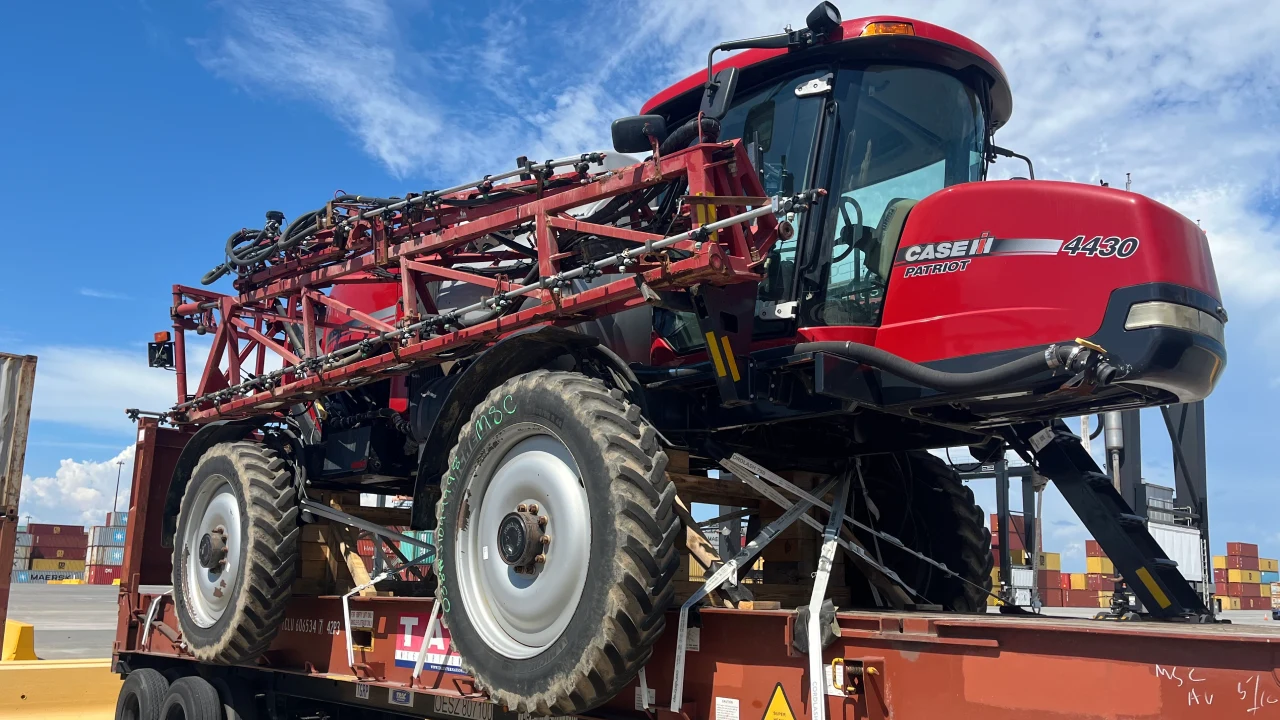
For example, the header and spare parts of a combine shipped from Savannah to Santos might travel in crates. The combine itself rides RoRo, while the crates go in a container or on a Flat Rack. Each crate gets a number that matches a line on the packing list.
Why Crating Matters for Heavy Equipment Shipping
Disassembled machines leave many loose parts, such as buckets, counterweights, hoses and electronics. Crating keeps them together, protected and simple to count against the packing list. Wood used for crates in international trade usually has to meet ISPM 15 treatment and marking rules.
Crates also speed up customs checks, because officers can open one numbered crate instead of searching loose parts. A clear packing list for each crate helps both export and import clearance.
Atlantic Project Cargo builds export crates through its export rigging and crating service and prepares machines with equipment disassembly and loading.
| Crate type | Typical use |
|---|---|
| Open frame crate | Heavy parts that need support but little weather protection. |
| Closed crate | Engines, electronics and parts that need full protection. |
| Steel frame | Very heavy components that need a stronger or reusable frame. |
| Skid with top cover | Large machined parts that need a firm base and a light cover. |
| Moisture-protected crate | Long voyages, with a vapor barrier and desiccant inside. |
Common Mistakes
- Using untreated or unmarked wood on an international shipment.
- Not marking the center of gravity and lifting points on heavy crates.
- Packing parts without a matching list, which slows customs checks.
- Skipping moisture protection for electronics and machined surfaces.
- Building crates larger than needed, which raises freight costs.
FAQ
Need parts or a disassembled machine crated for export? Get a quote with the item list and dimensions.