Lashing and securing is the work of fixing cargo so it cannot move during transport. Lashing uses chains, wire rope or straps to tie the cargo to the container, trailer or deck. Securing also includes the blocking, chocks and dunnage that hold it in position.
Also known as: cargo securing, lashing.
How Lashing and Securing Works
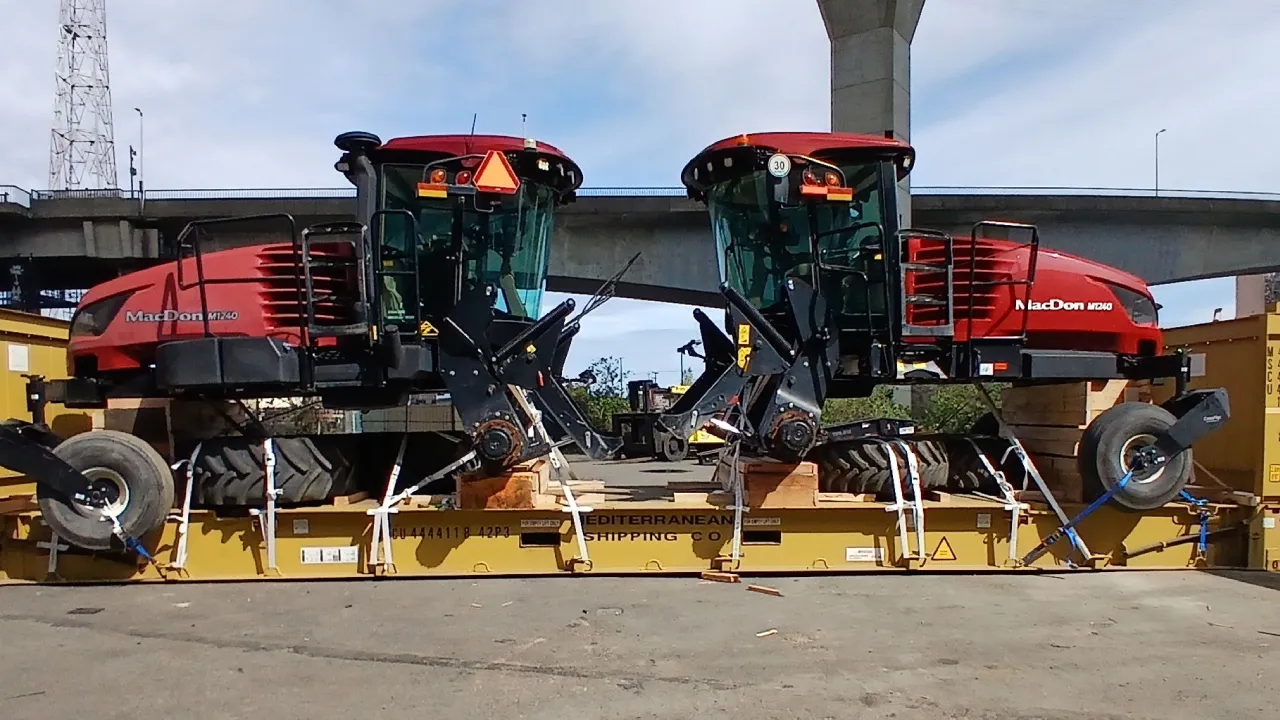
Securing starts with a plan based on the cargo’s weight, dimensions and center of gravity. The plan sets how many lashings are needed, their angles and the strength of each piece of gear. Heavy units are first placed on dunnage and blocked, then lashed in several directions.
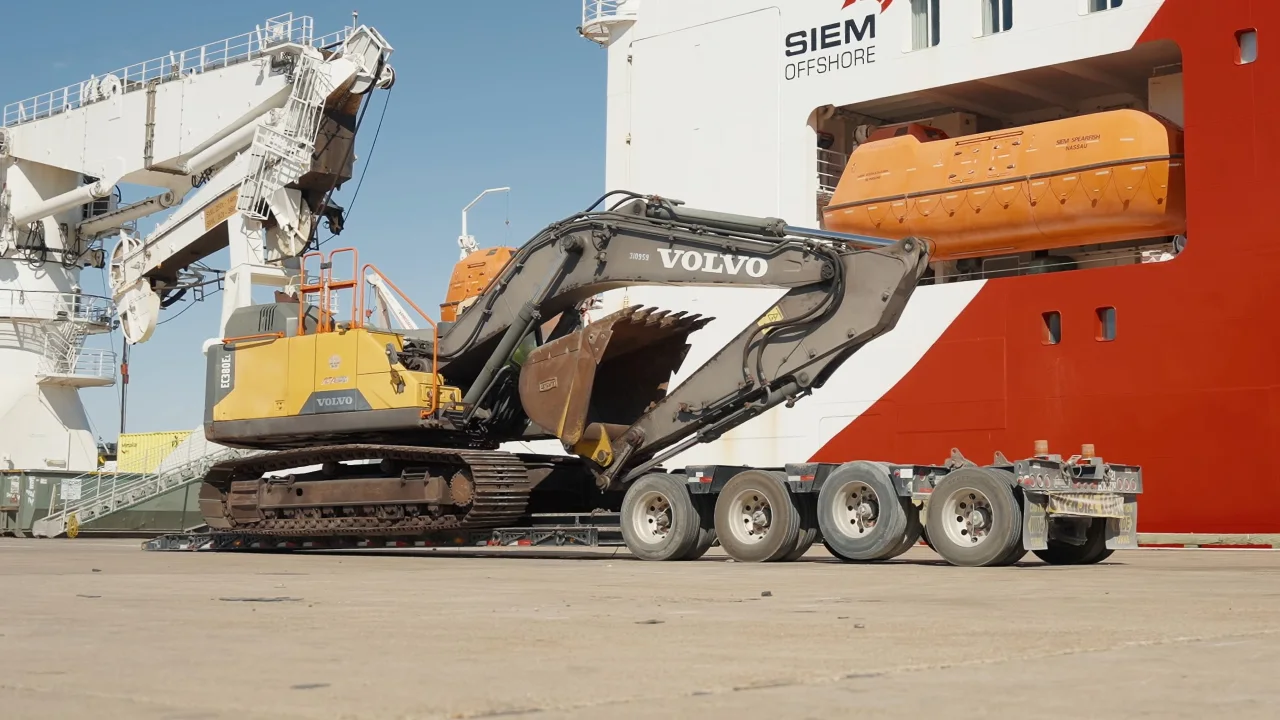
Lashings run from the machine’s approved tie-down points to lashing rings on the Flat Rack, trailer or vessel deck. Chains with binders are common for heavy machines, while straps suit lighter or delicate items. Each lashing is tensioned and checked again before departure.
For example, a motor grader shipped on a Flat Rack from Savannah to Mombasa is chained at the front and rear in opposite directions. Its blade and ripper are lowered to the deck before lashing. The rack’s lashing rings and the chain grades are checked against the machine’s weight.
Why Lashing and Securing Matter for Heavy Equipment Shipping
At sea, a vessel’s rolling and pitching create large forces on every lashing point. A machine that shifts can damage itself, the container and nearby cargo. Carriers inspect the securing of out-of-gauge cargo and can refuse a unit that does not meet their standards.
Securing also matters on the road leg to the port, where braking and turns put loads on the lashings. Road rules set their own securing standards for trucks and trailers.
Atlantic Project Cargo secures machines through its export rigging and crating service, together with equipment disassembly and loading when parts must come off.
| Gear | Typical use |
|---|---|
| Chains with binders | Heavy machines on Flat Racks, trailers and vessel decks. |
| Wire rope | Large units and breakbulk cargo, often with turnbuckles. |
| Polyester straps | Lighter items, crates and delicate surfaces. |
| Shackles and turnbuckles | Connecting and tensioning chains or wire rope. |
| Chocks and timber | Stopping wheels and tracks from rolling or sliding. |
Common Mistakes
- Lashing to parts that are not approved tie-down points, such as hydraulic lines.
- Running all lashings in one direction, so the cargo can still move the other way.
- Using gear without a known working load limit.
- Not re-tensioning lashings after the machine settles on its dunnage.
- Leaving booms, buckets or blades raised during the voyage.
FAQ
Need a machine secured for an ocean voyage? Get a quote with its weight, dimensions and tie-down points.