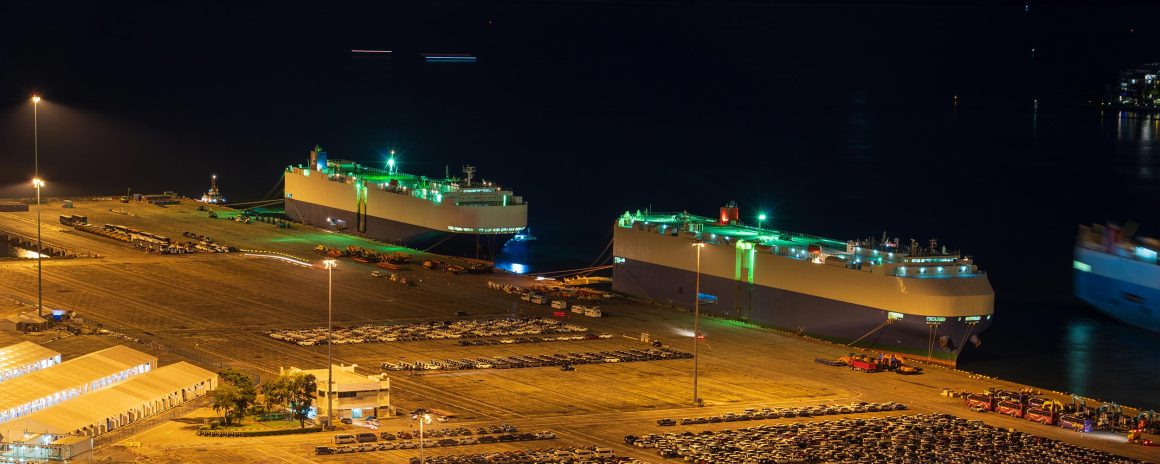
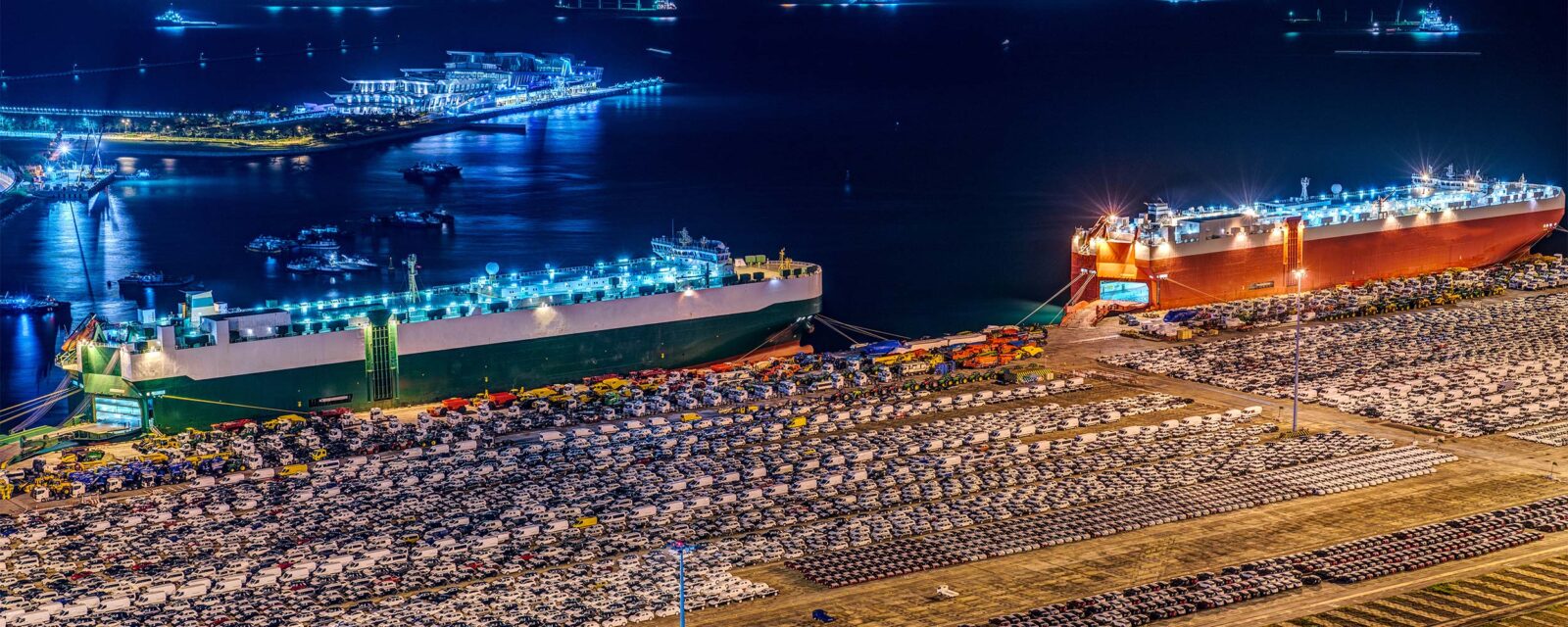
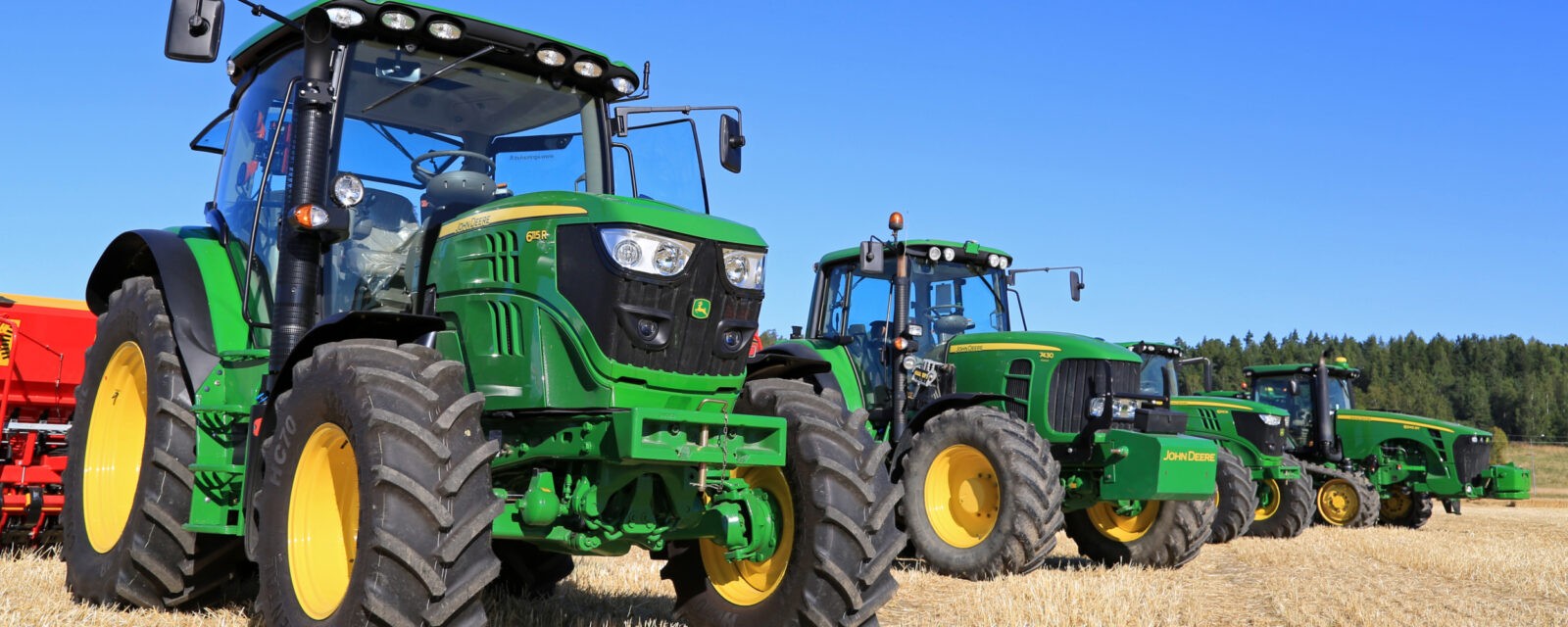
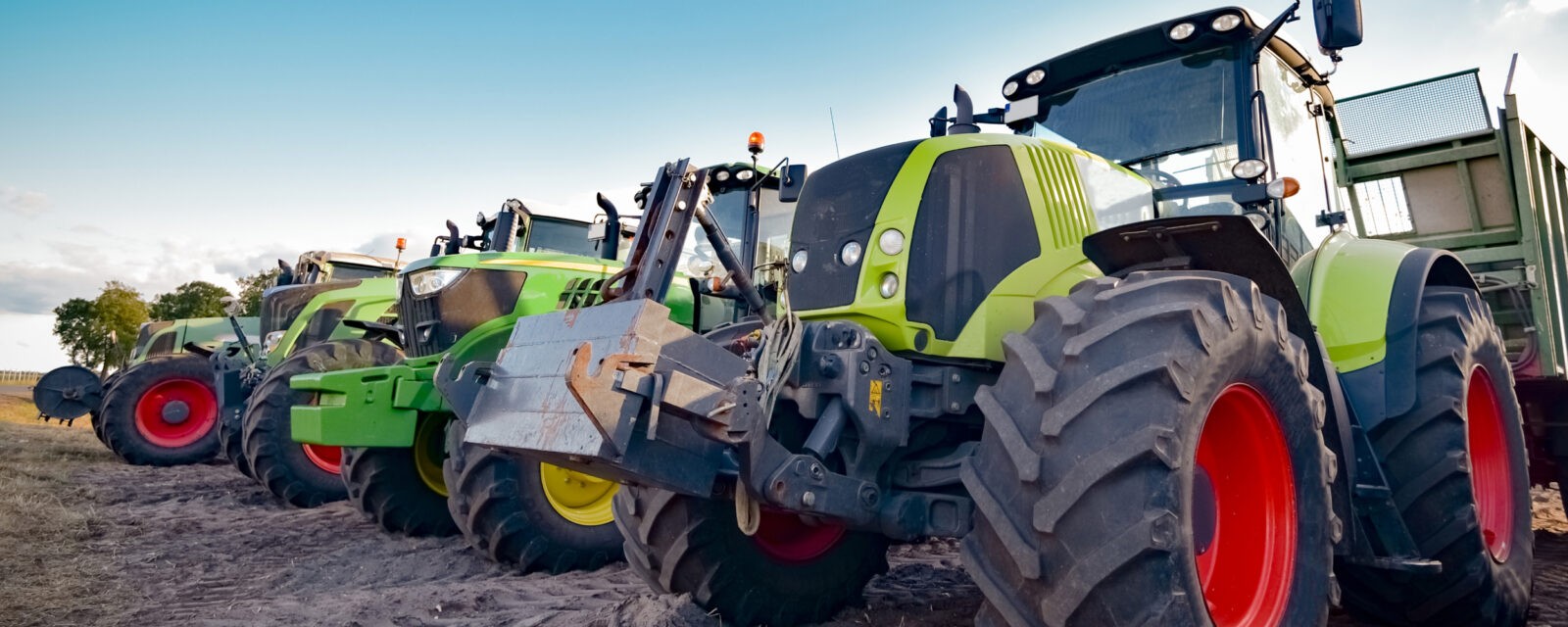
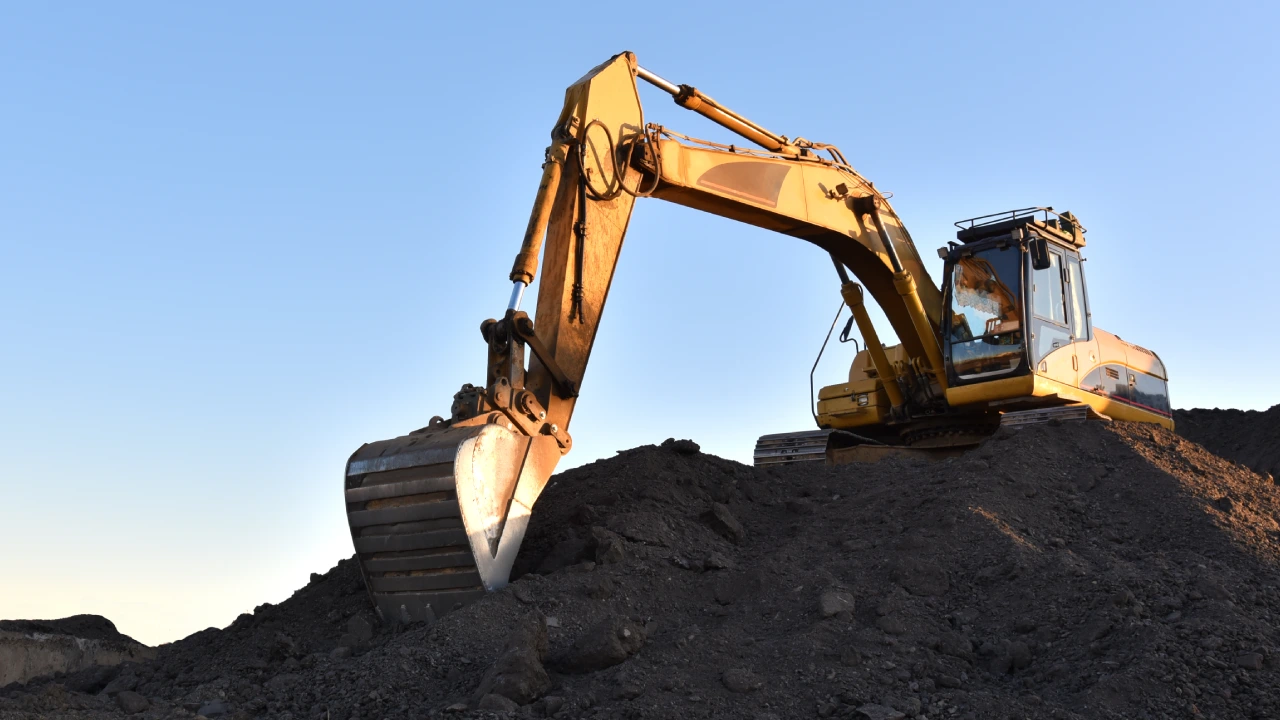
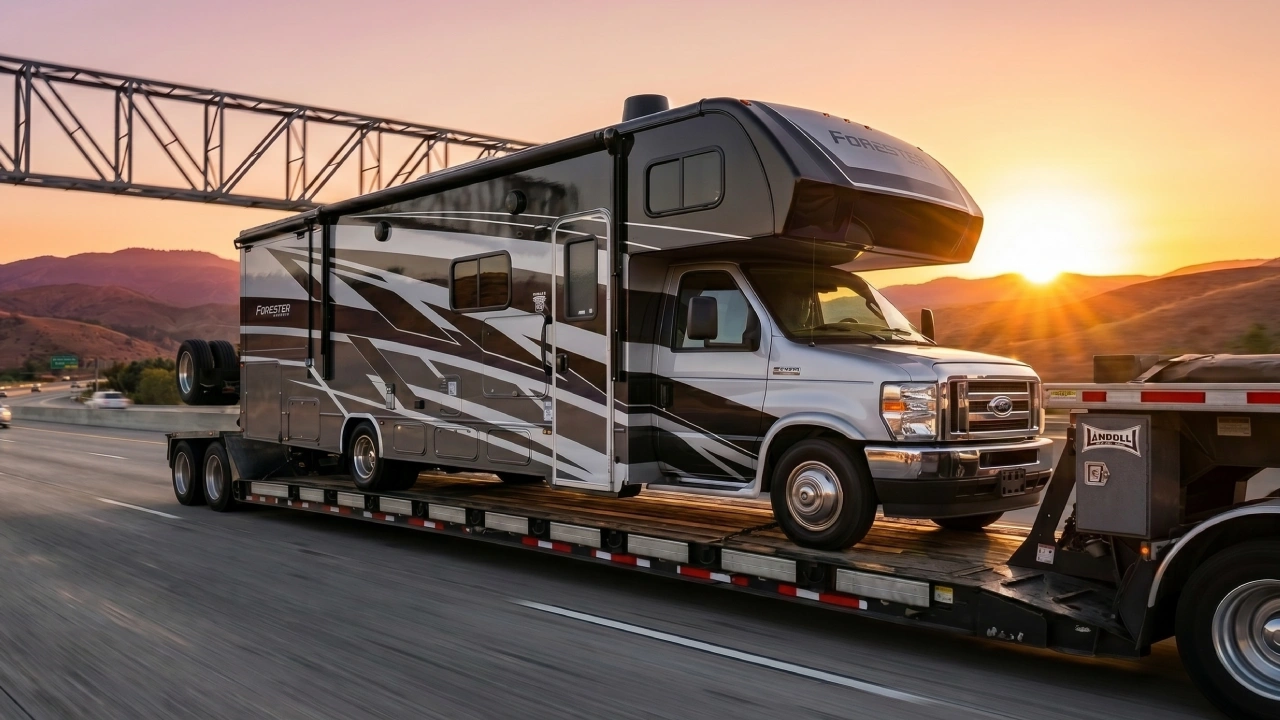
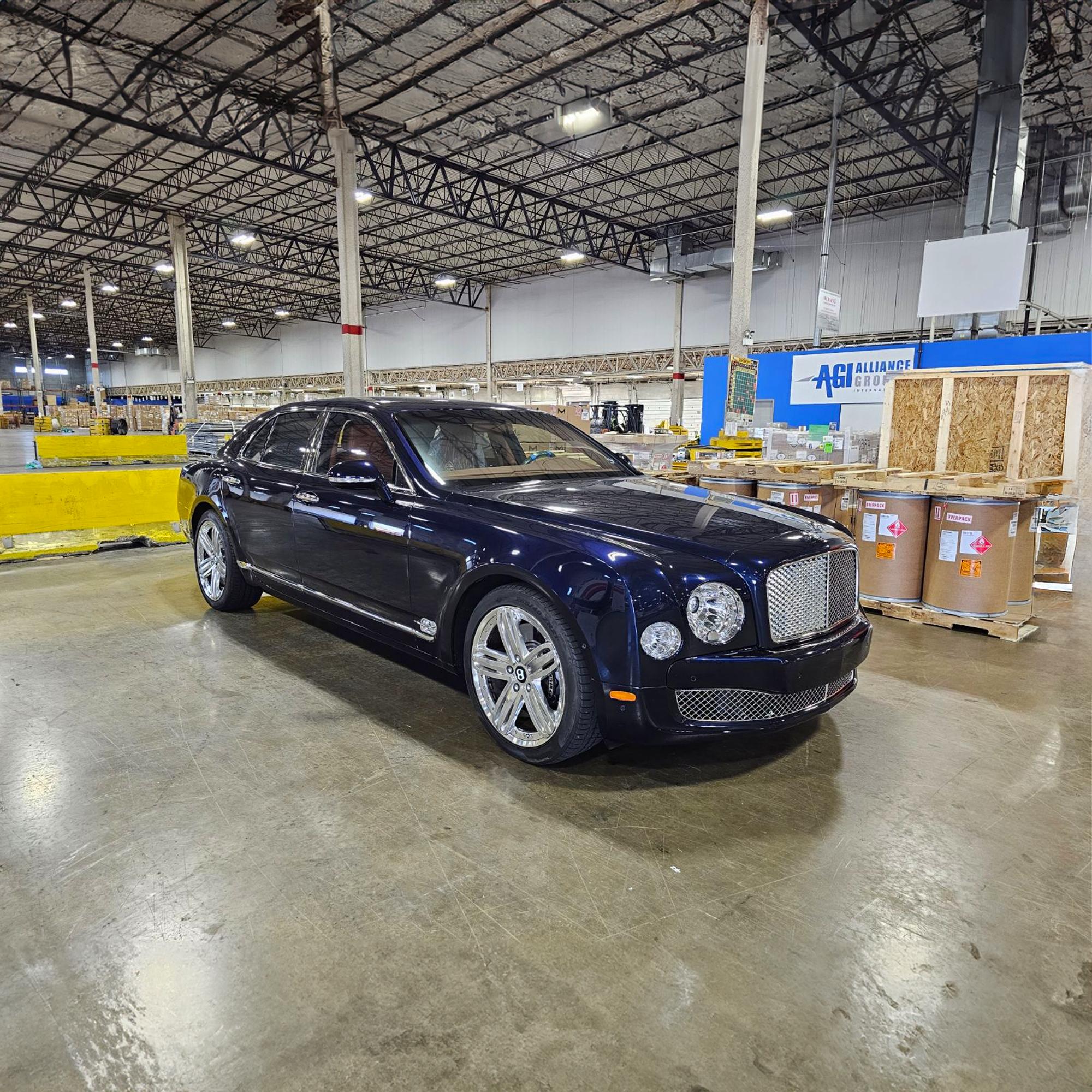
Roll-on/roll-off (RoRo) is a shipping method in which wheeled or tracked cargo is driven onto a vessel and driven off at destination. The ship has ramps and internal decks like a floating car park. It is widely used for cars, trucks, tractors and self-propelled construction machines.
Also known as: RoRo, Ro-Ro, roll on roll off.
How RoRo Shipping Works
The machine is delivered to the port terminal, where it is checked, measured and parked in a staging area. On loading day, a driver takes it up the stern ramp to its assigned deck, where the crew lashes it in place. At destination, it is driven off and released after customs clearance.
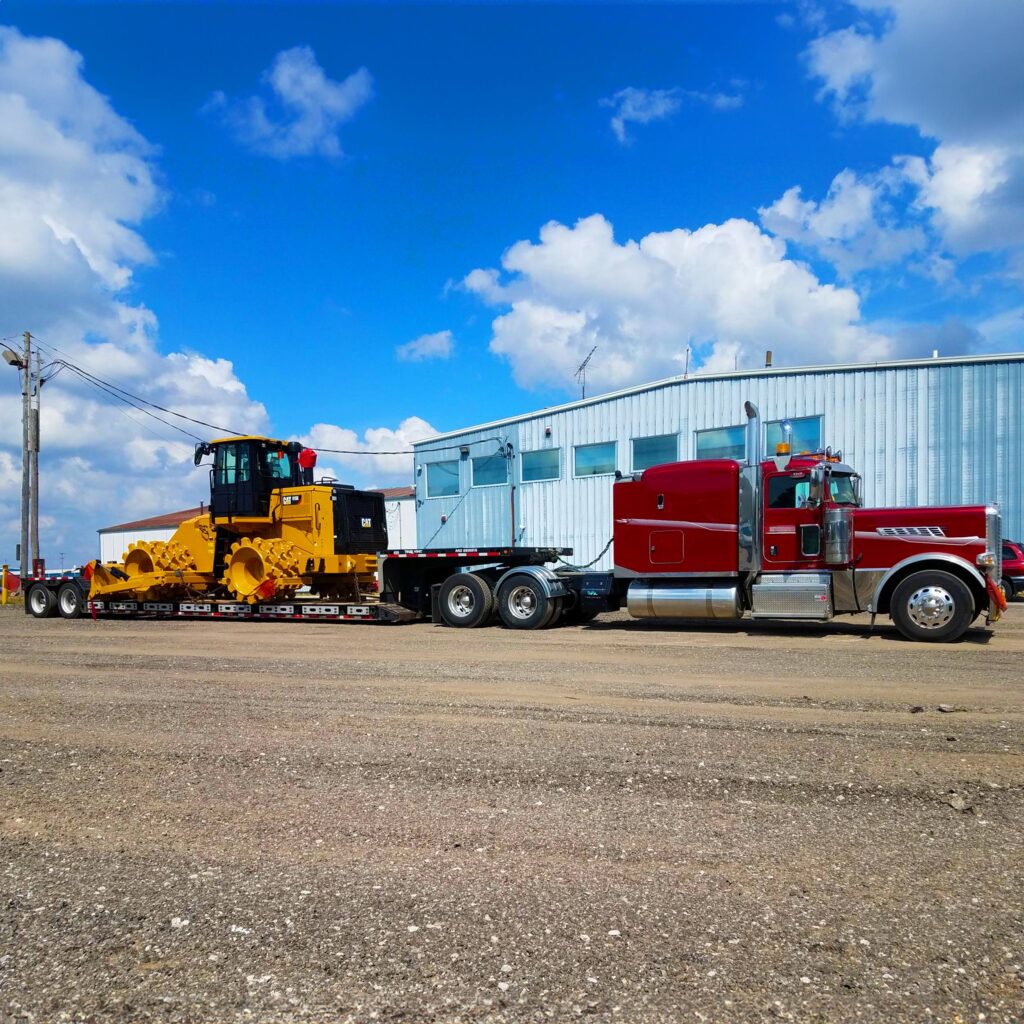
Machines that cannot drive, such as a combine header or a broken loader, can still travel RoRo on a roll trailer, often called a Mafi. The trailer is towed aboard with the cargo secured on top. Carriers usually charge more for this static cargo.
For example, a wheel loader shipped from Baltimore to Antwerp can drive aboard a RoRo vessel without disassembly. A combine might travel the same way, with its header on a separate roll trailer.
Why RoRo Matters for Heavy Equipment Shipping
RoRo avoids crane lifts at both ports, which lowers the risk of handling damage. Cargo rides on vessel decks, so it is better protected than on an open Flat Rack. RoRo rates are often based on the machine’s volume, so its measured dimensions matter.
Atlantic Project Cargo books RoRo shipping for self-propelled machines and compares it with out-of-gauge container options on routes without RoRo service.
| Factor | RoRo |
|---|---|
| Cargo | Self-propelled machines, or static units on roll trailers. |
| Loading | Driven aboard over a ramp, with no crane needed. |
| Protection | Carried on vessel decks, out of most weather. |
| Routes | Main vehicle trade lanes and ports with RoRo terminals. |
| Condition | Clean, with no loose items in the cab or on the machine. |
RoRo vs Flat Rack
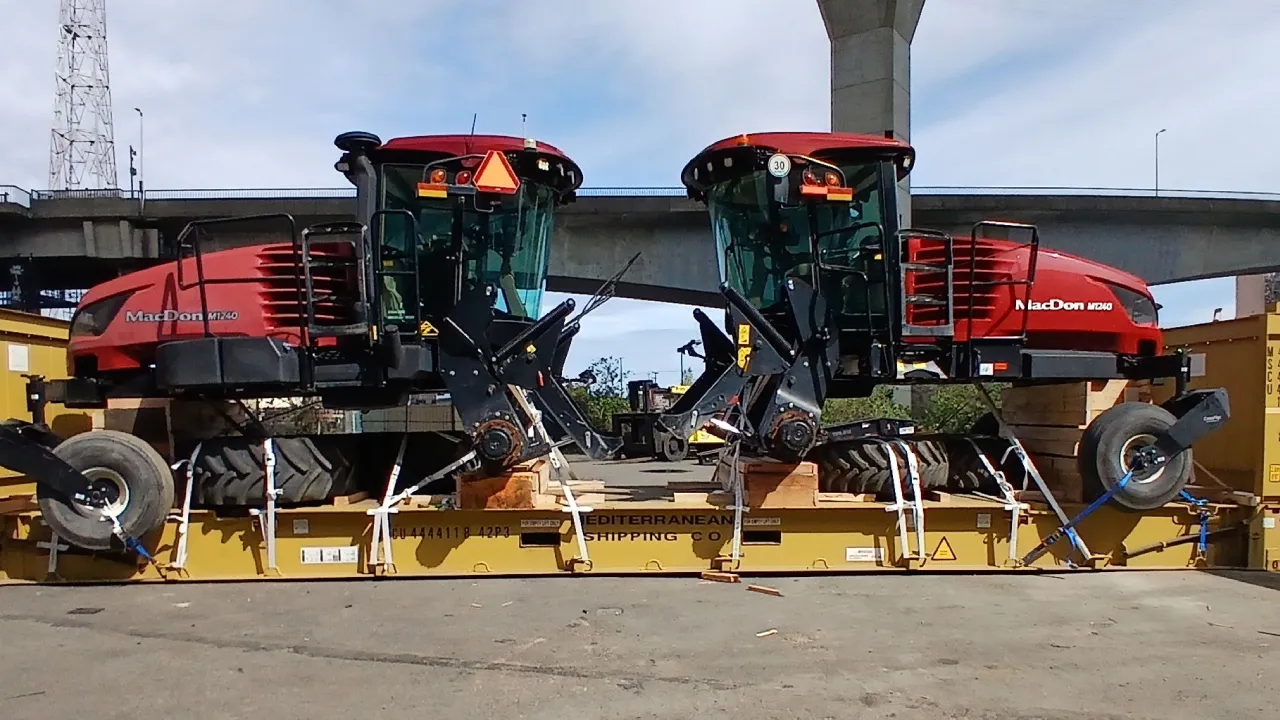
RoRo suits machines that can drive or be towed on a trailer, and it needs ports with RoRo service. A Flat Rack is a container platform loaded by crane, so it moves on regular container ships and reaches more ports.
Very tall or very heavy units may exceed RoRo deck limits and go on a Flat Rack or as breakbulk instead. For many tractors and wheel loaders on main routes, RoRo is the simpler option.
Common Mistakes
- Booking a machine as running when it cannot start, which can lead to refusal or extra charges.
- Leaving tools, spare parts or personal items loose in the cab.
- Delivering a dirty machine, which may fail inspection at destination.
- Not checking that the machine’s height fits the RoRo deck.
- Leaving more fuel in the tank than the carrier allows.
FAQ
Shipping a self-propelled machine? Get a RoRo quote with its make, model and dimensions.