Hours of operations:
9AM - 5PM / UTC -5 (EST)
October 21, 2026 18 min

Heavy Equipment Shipping from the USA to Colombia: Complete Guide to Costs, Ports & Import Requirements

Worldwide Shipping
Americas · Europe · Asia Pacific · Africa
100,000+
Shipments Worldwide
20+ Years
In Heavy Cargo Logistics
4.9 Rating
on Google · 50+ reviews
Licensed Freight Forwarding Company
Home Insights Heavy Equipment Shipping from the USA to Colombia: Complete Guide to Costs, Ports & Import Requirements

Heavy equipment is shipped from the USA to Colombia by RoRo, Flat Rack, Breakbulk, or container shipping. The machine is trucked to a US export port, shipped to a Caribbean port such as Cartagena or Barranquilla, or to Buenaventura on the Pacific, cleared through Colombian customs, and hauled inland. The right plan depends on the machine’s dimensions and weight, its location in the USA, the shipping method, the Colombian port, and the final destination.

This heavy equipment shipping to Colombia guide explains how to ship heavy equipment to Colombia step by step, from the seller’s yard to a site in Bogotá, Medellín, or Cali.

How Heavy Equipment Shipping from the USA to Colombia Works

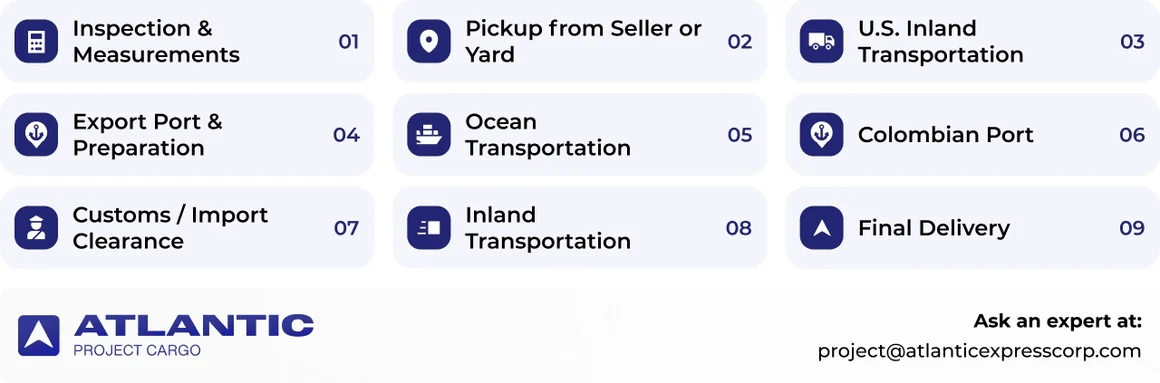
Shipping heavy equipment from USA to Colombia runs through nine stages, and each affects the next.

  1. Inspection and measurements: actual dimensions, weight, condition, and serial number.
  2. Pickup: from the seller, auction, or yard.
  3. US inland transportation: trucking to the export port, with permits if oversized.
  4. Export port and cargo preparation: receiving, export filing, and lashing or crating.
  5. Ocean transportation: direct or through a transshipment hub.
  6. Colombian port: discharge and handling.
  7. Customs and import clearance: declaration, licences, duties, taxes, and inspection.
  8. Inland transportation: heavy haul into the interior, often across the Andes.
  9. Final delivery: job site, farm, mine, or plant.

What Heavy Equipment Can Be Shipped to Colombia?

Almost any heavy machinery can be shipped to Colombia:

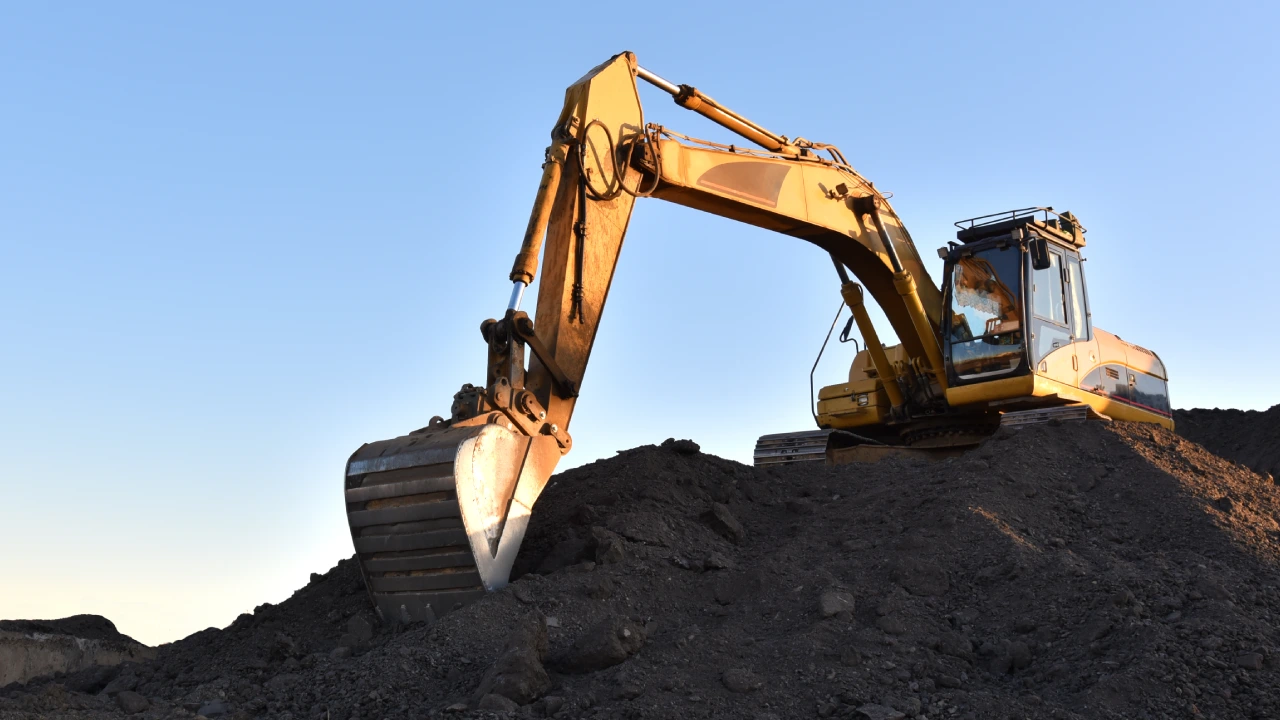
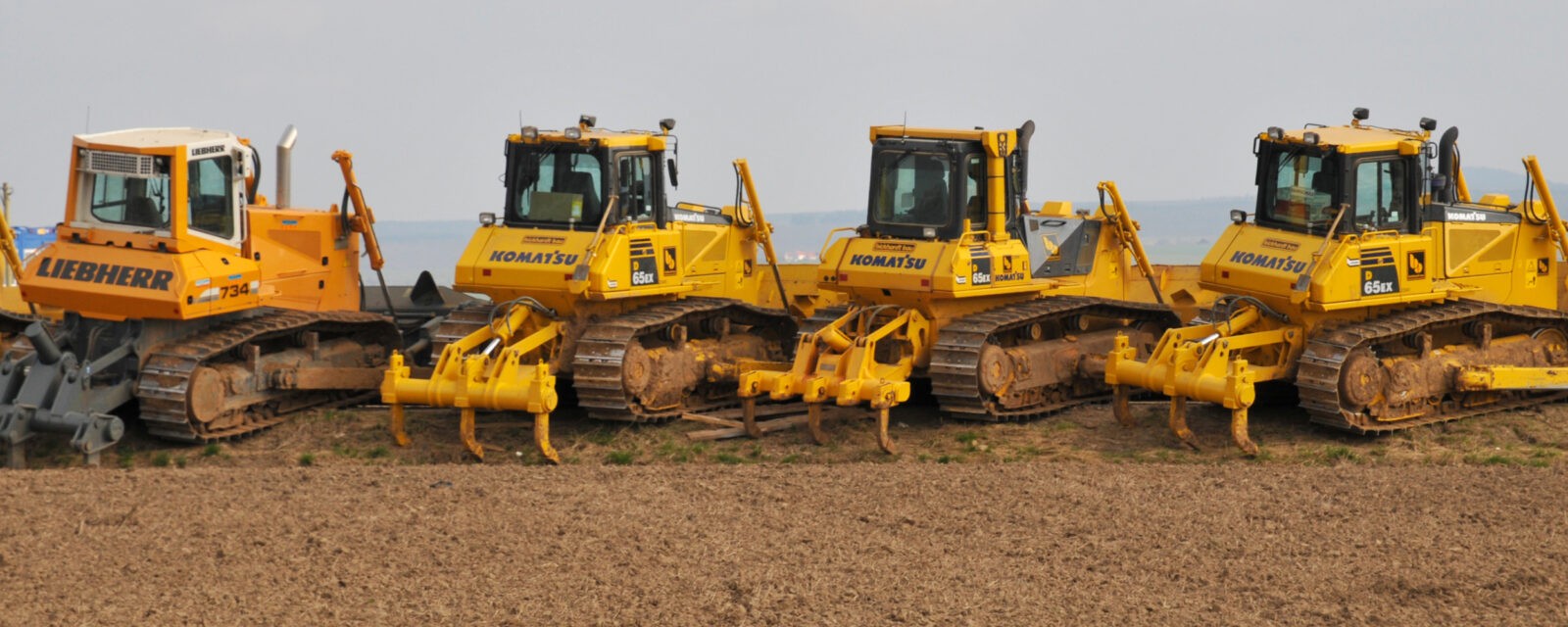
  • Construction equipment: excavators, bulldozers, wheel loaders, backhoes, cranes, and compactors, the machines most often shipped to Colombia.
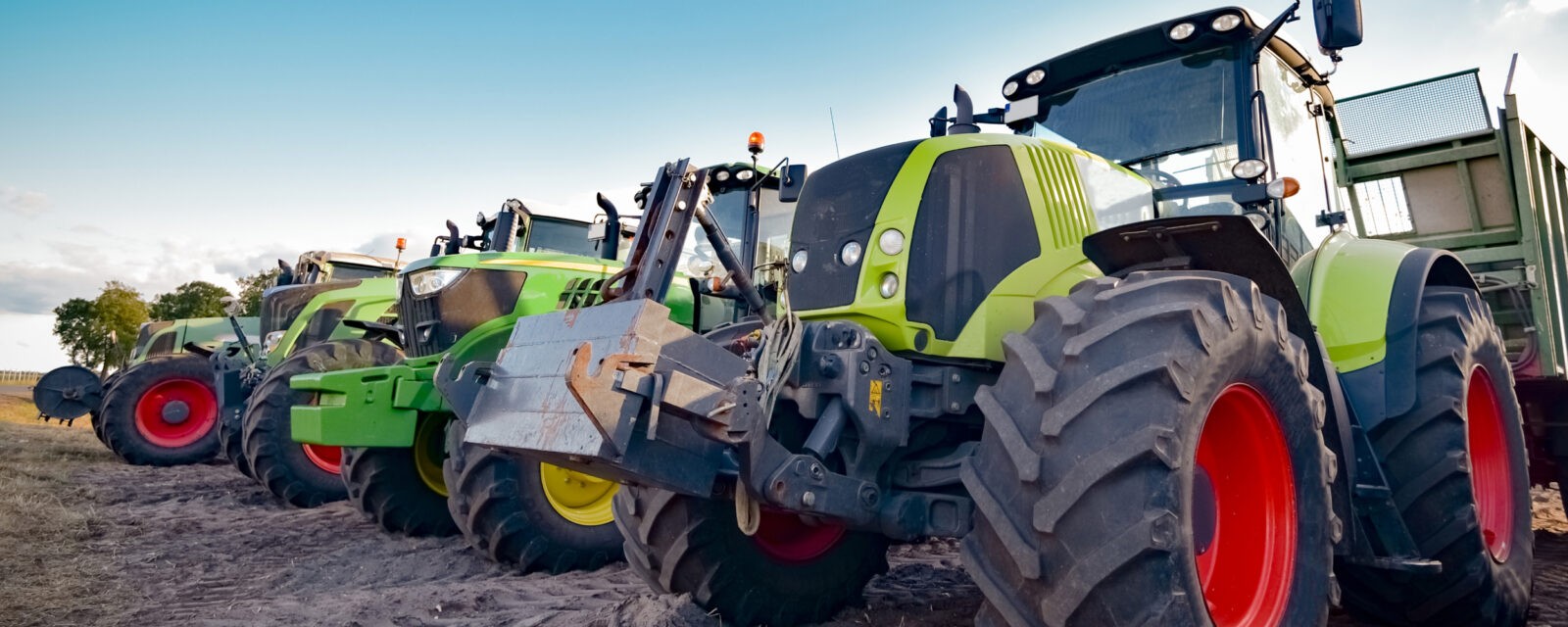
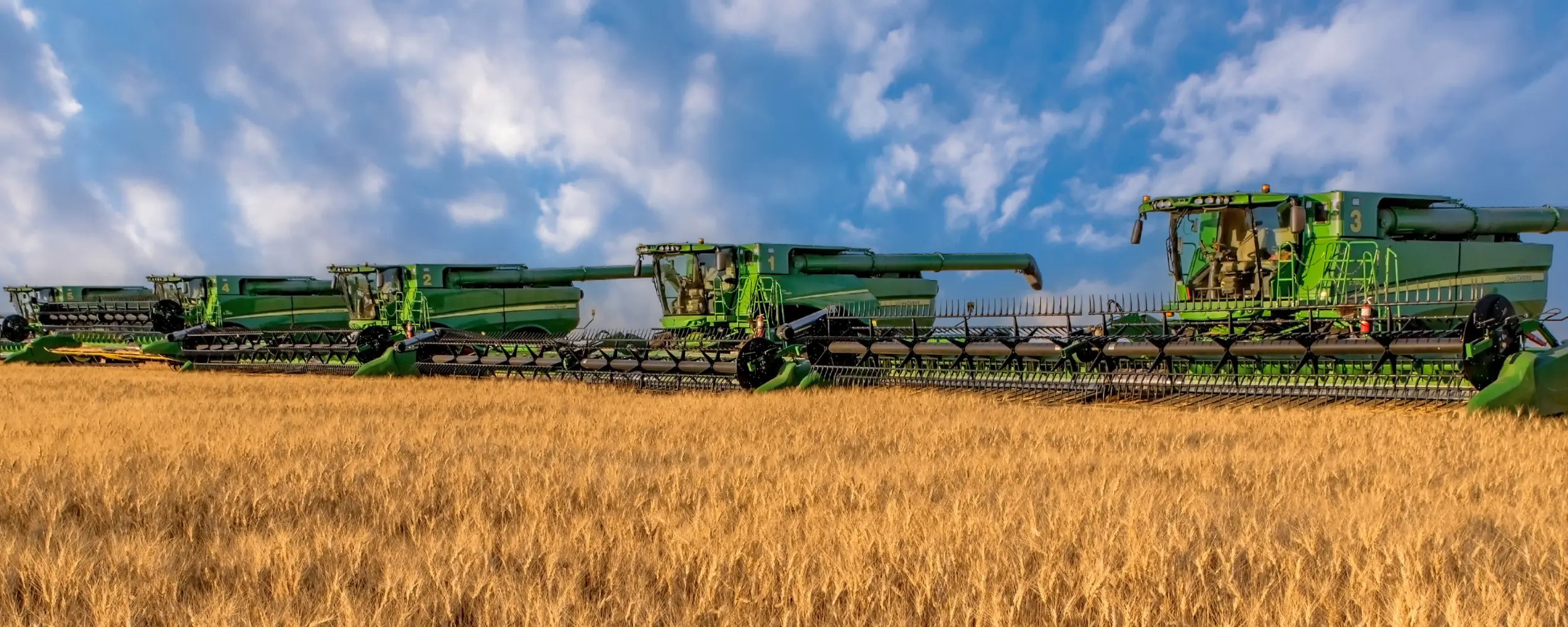
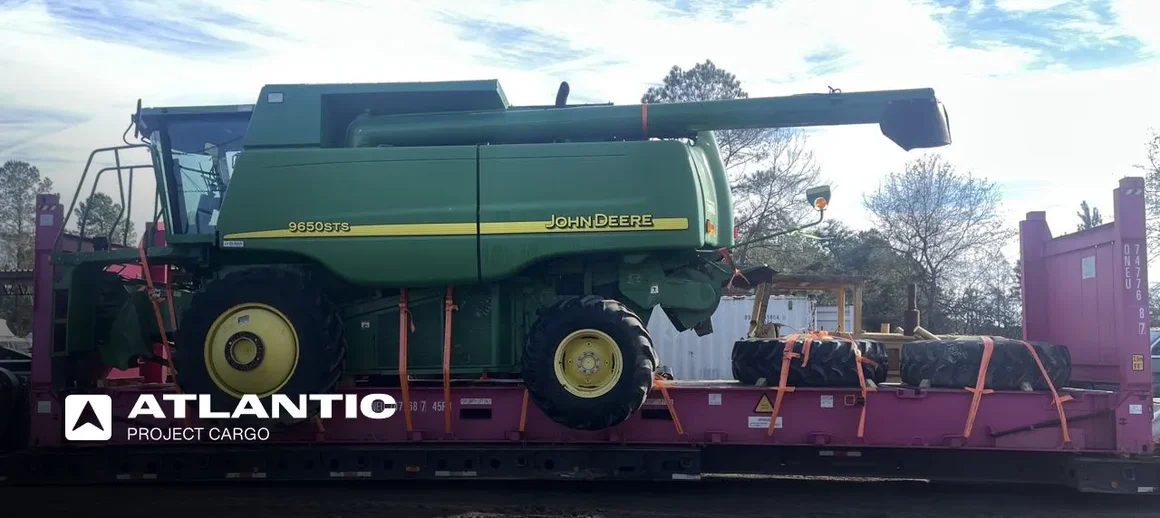
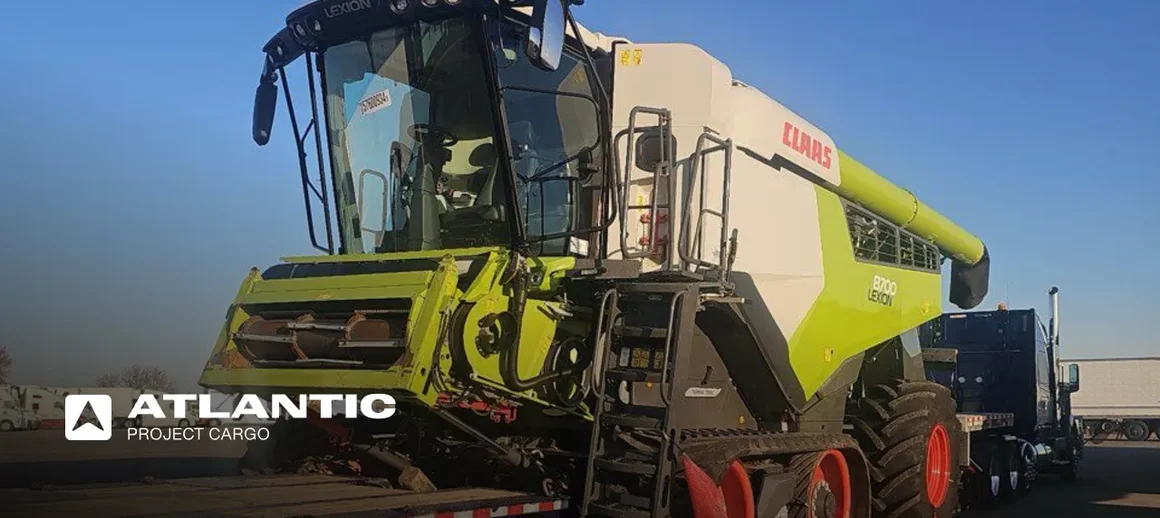
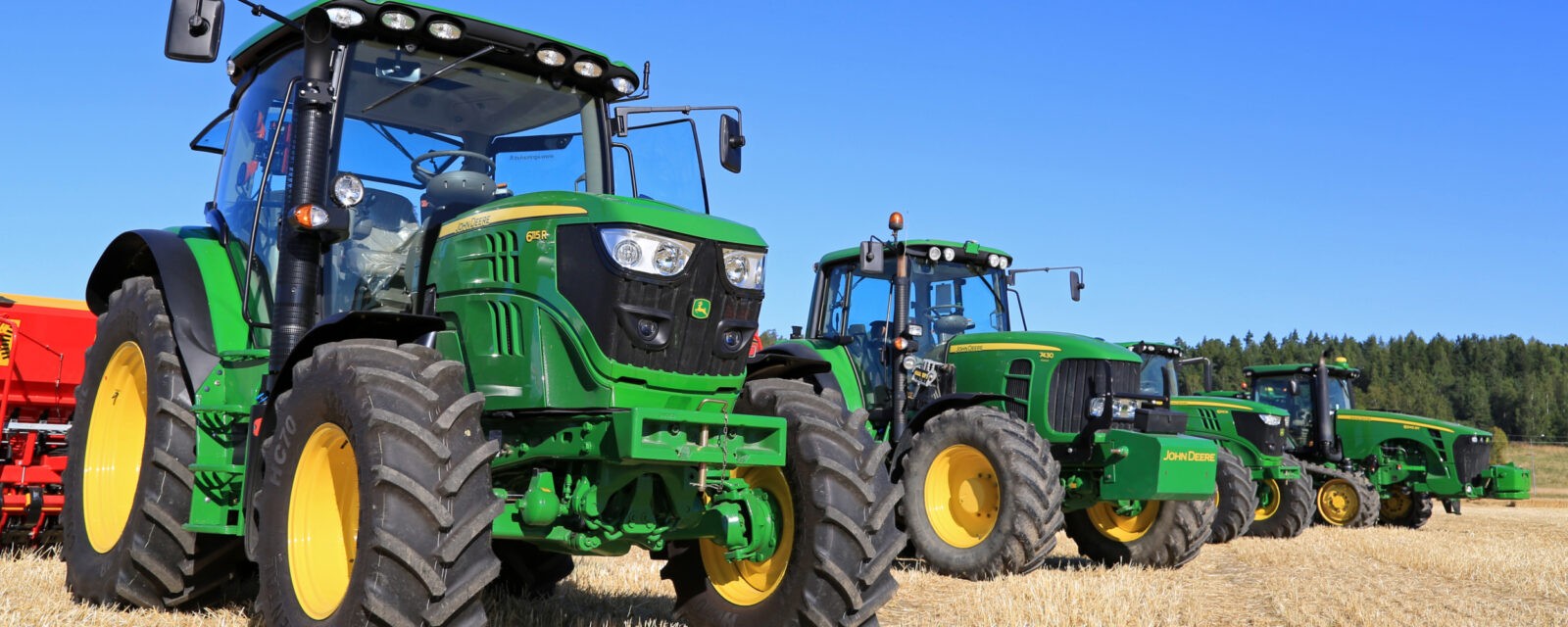
  • Agricultural equipment: tractors, combines, sprayers, harvesters, and attachments.
  • Mining equipment: excavators, loaders, drilling rigs, crushers, generators, and processing equipment. Mining machines are often oversized.
  • Industrial equipment: generators, manufacturing machinery, compressors, and large components.

The method depends on dimensions, weight, configuration, running condition, and route availability more than on the category.

Best Shipping Methods for Heavy Equipment to Colombia

There are four main ways to ship machinery to Colombia.

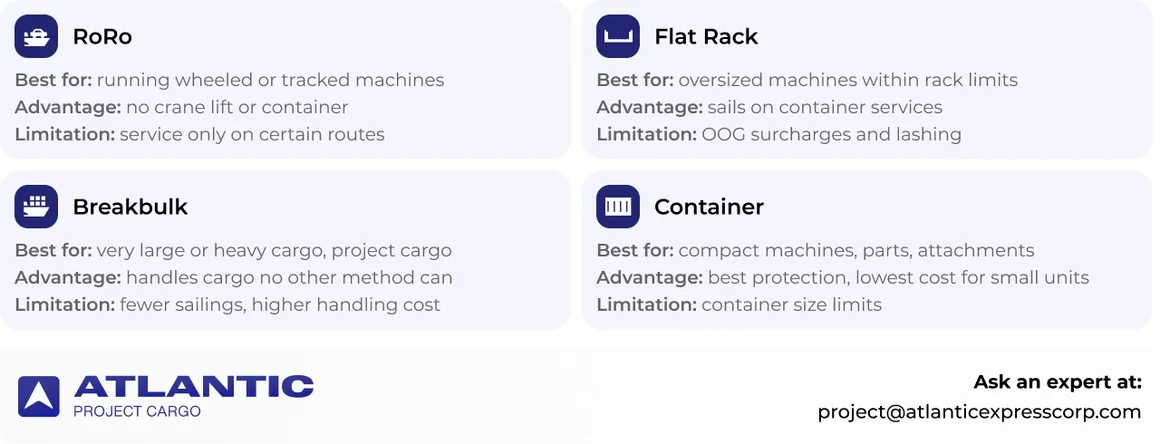
MethodBest ForMain AdvantageMain Limitation
RoRoRunning wheeled or tracked machinesNo crane lift or containerAvailable only on certain routes
Flat RackOversized machines within rack limitsSails on container servicesOut-of-gauge surcharges and lashing
BreakbulkVery large or heavy cargoHandles cargo no other method canFewer sailings, higher handling cost
ContainerCompact machines, parts, attachmentsBest protection for small unitsContainer size limits

RoRo Shipping to Colombia

RoRo shipping to Colombia suits machines that can be driven or towed aboard. RoRo means roll-on/roll-off: the machine rolls up a ramp into the vessel.

  • Suitable equipment: running tractors, wheel loaders, backhoes, mobile cranes, combines, and some excavators.
  • Operational condition: carriers usually require machines to run and brake; non-running units need a roll trailer and carrier approval.

Service runs mainly from the US East Coast to the Caribbean coast. As of October 2026, NYK RORO’s USGX schedule lists roughly monthly sailings from Jacksonville, Baltimore, and Newark to Cartagena, with a 5.20-meter height limit. Höegh Autoliners also sails from Jacksonville to Santa Marta and Cartagena. We found no direct US RoRo service to Buenaventura. RoRo schedules change often, so confirm the current sailing and height limit before booking.

Flat Rack Shipping to Colombia

Flat Rack shipping to Colombia suits machines too wide or tall for a closed container. A flat rack is a container base with end walls but no roof or sides; cargo that extends beyond container dimensions is called out-of-gauge (OOG).

  • Typical equipment: excavators, dozers, and tracked machines within rack limits.
  • Loading and securing: a crane lifts the machine onto the rack, where it is chained, blocked, and lashed.
  • Trade-off: more sailings than RoRo or breakbulk, but crane, lashing, and surcharge costs.

Our guide to RoRo vs Flat Rack vs Open Top containers compares the options.

Breakbulk Shipping to Colombia

Breakbulk shipping to Colombia is for machinery too large or heavy for a container or flat rack. Each piece is lifted aboard individually.

  • Typical cargo: large mining machines, crushers, transformers, and project cargo.
  • Lifting: each piece needs a confirmed weight, marked lifting points, and port cranes rated for the load.
  • Trade-off: few size limits, since the vessel’s gear and the port cranes set the ceiling, but fewer sailings and higher handling costs.

Our breakbulk shipping guide explains the process.

For project cargo, our breakbulk shipping service books the vessel and plans the lifts.

Container Shipping to Colombia

Container shipping to Colombia suits smaller machines, attachments, components, and partly disassembled equipment.

Typical equipment: mini excavators, skid steers, compact tractors, generators, and spare parts.

Fit: a High Cube container is about a foot taller than a standard one, but the door opening (roughly 2.58 m high on a 40′ High Cube) usually decides whether a machine fits. Check the carrier’s exact specs.

Trade-off: the best protection and the most sailings, but strict size limits.

Our guide to container types and sizes shows what fits.

Which Shipping Method Should You Choose?

Start with the machine, then check the route and carrier availability.

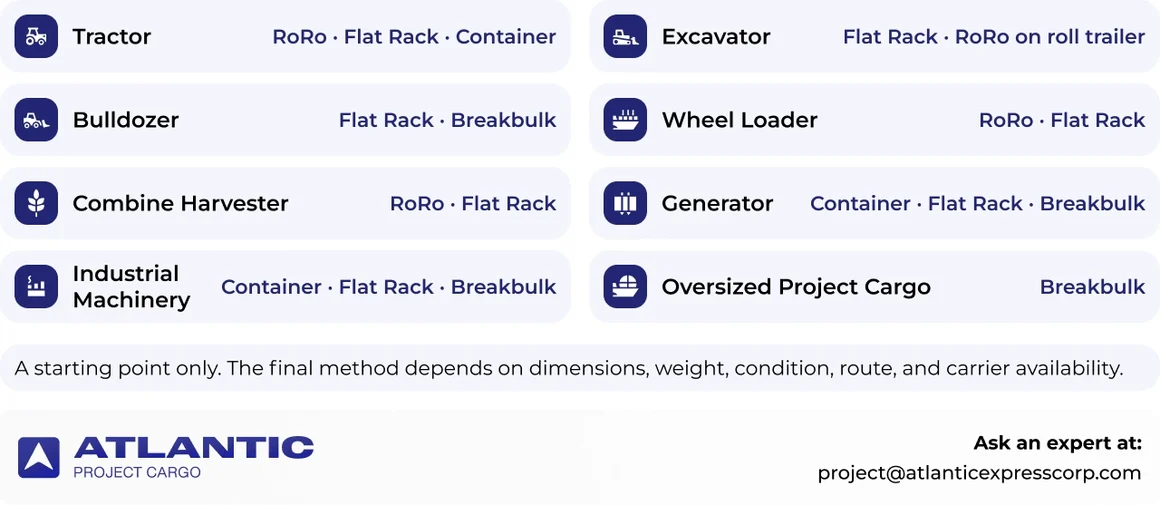
Equipment / SituationMethod(s) to EvaluateMain Decision Factor
TractorRoRo, Flat Rack, containerRunning condition, width with dual wheels
ExcavatorFlat Rack, RoRo on a roll trailerTracks, boom height, bucket removal
BulldozerFlat Rack, BreakbulkBlade width and weight
Wheel LoaderRoRo, Flat RackRunning condition, bucket width
Combine HarvesterRoRo, Flat RackHeader removal and cleaning
GeneratorContainer, Flat Rack, BreakbulkWeight and lifting points
Industrial MachineryContainer, Flat Rack, BreakbulkCrating and disassembly
Oversized Project CargoBreakbulkLift capacity at both ports

How Much Does It Cost to Ship Heavy Equipment from the USA to Colombia?

There is no single heavy equipment shipping cost to Colombia. A complete quote can include pickup, US trucking, loading, disassembly, export port handling, lashing, ocean freight, destination charges, customs services, inland transport in Colombia, and heavy-haul permits.

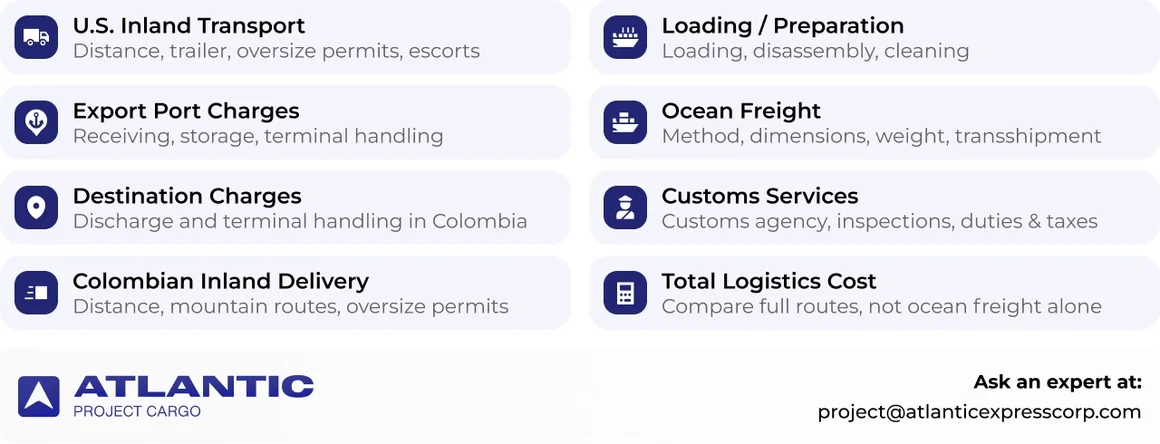
Cost ComponentMain Pricing Factors
U.S. Inland TransportDistance, trailer type, oversize permits, escorts
Loading / PreparationLoading, disassembly, cleaning, lashing
Export Port ChargesReceiving, storage, terminal handling
Ocean FreightMethod, dimensions, weight, route, transshipment
Destination ChargesDischarge and terminal handling in Colombia
Customs ServicesCustoms agency, licences, inspections, duties and taxes
Colombian Inland DeliveryDistance, mountain routes, oversize permits, escorts

Our guide to heavy equipment freight charges explains each charge.

For cost ranges by machine type, see how much it costs to ship heavy equipment internationally.

Example: What Goes Into a USA-to-Colombia Equipment Shipping Quote?

Take a Caterpillar excavator picked up in Texas, exported through a US Gulf Coast port, and delivered to Bogotá. We evaluate each link:

Pickup in Texas → Equipment dimensions → Export port → Shipping method → Ocean freight → Colombian port → Customs → Inland heavy haul → Bogotá

If the excavator exceeds container limits, it goes on a flat rack from Houston. RoRo on a roll trailer is possible only if it is trucked to an East Coast RoRo port such as Jacksonville. Through Cartagena, the road to Bogotá is a long mountain route; through Buenaventura, the road is shorter but the sea leg needs transshipment.

So two identical excavators bound for Bogotá can cost very different amounts. One picked up near Houston needs little US trucking, while one from Kansas adds a long haul across several states, oversize permits, and extra days before it reaches the port.

What Information Is Needed for an Accurate Shipping Quote?

  • Make, model, and year
  • Length, width, height, and weight
  • Pickup ZIP code or location
  • Final destination in Colombia
  • Operational or non-operational condition
  • Photos and attachments
  • Whether components can be removed

Dimensions matter most for OOG, Flat Rack, Breakbulk, and inland heavy-haul pricing. In Colombia, a load wider than 3 meters or taller than 4.4 meters needs a special road permit, so a few centimeters change the inland plan as well as the ocean freight.

How Long Does Shipping Heavy Equipment from the USA to Colombia Take?

Total time adds up from pickup, export handling, the vessel schedule, ocean transit, destination handling, customs, and inland delivery. Shipping from the USA to Colombia is often quick at sea; sailings and customs usually take longer.

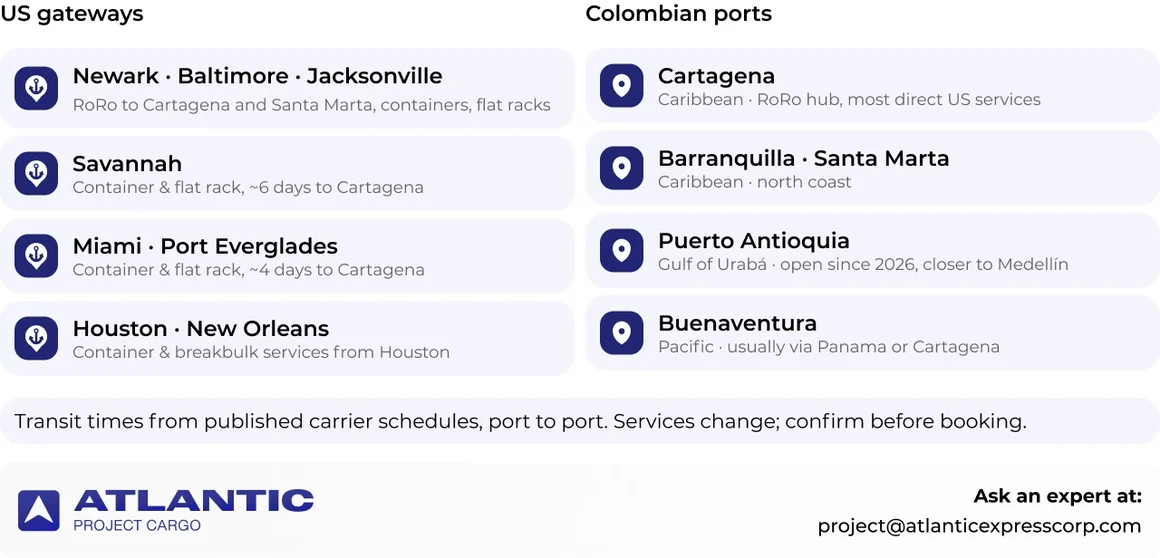
Published schedules show the ocean leg. As of October 2026, Maersk lists Port Everglades to Cartagena in about 4 days and Savannah to Cartagena in about 6. NYK RORO’s USGX sailings take about 7 days from Newark and 13 from Jacksonville to Cartagena, because the vessel loads at several US ports first.

  • Transshipment: ocean freight to Colombia’s Pacific port usually transships in Panama or Cartagena, which adds waiting time.
  • Port schedules: RoRo and breakbulk sailings run less often than container services.
  • Customs: a missing license holds the machine at the port until it is issued.
  • Inland delivery: mountain routes and daylight-only travel for oversized loads add days.

Major Shipping Routes and Ports from the USA to Colombia

Most heavy equipment sails from the US East Coast, South Florida, or the Gulf Coast to Colombia’s Caribbean ports, and the machine’s US location often decides the gateway.

  • East Coast (Newark, Baltimore, Jacksonville, Savannah): RoRo to Cartagena and Santa Marta, plus container and flat rack services.
  • South Florida (Miami, Port Everglades): frequent container and flat rack services with short transits.
  • Gulf Coast (Houston, New Orleans): container services to Cartagena, and breakbulk sailings from Houston to Santa Marta, Barranquilla, and Cartagena.
  • West Coast: no direct service to Buenaventura found; cargo transships.

Colombian gateways:

  • Cartagena: the largest port zone, with the Contecar terminal serving as a RoRo hub and handling oversized machinery.
  • Barranquilla: a river port on the Magdalena.
  • Buenaventura: the main Pacific port, closest by road to Cali.
  • Santa Marta: a Caribbean port with vehicle yards and heavy-lift cranes.
  • Puerto Antioquia: is not currently among the ports authorized for HS 8429 yellow machinery, so excavators, dozers and loaders still enter through Cartagena or another listed port. Confirm before booking.

Caribbean vs Pacific Routing to Colombia

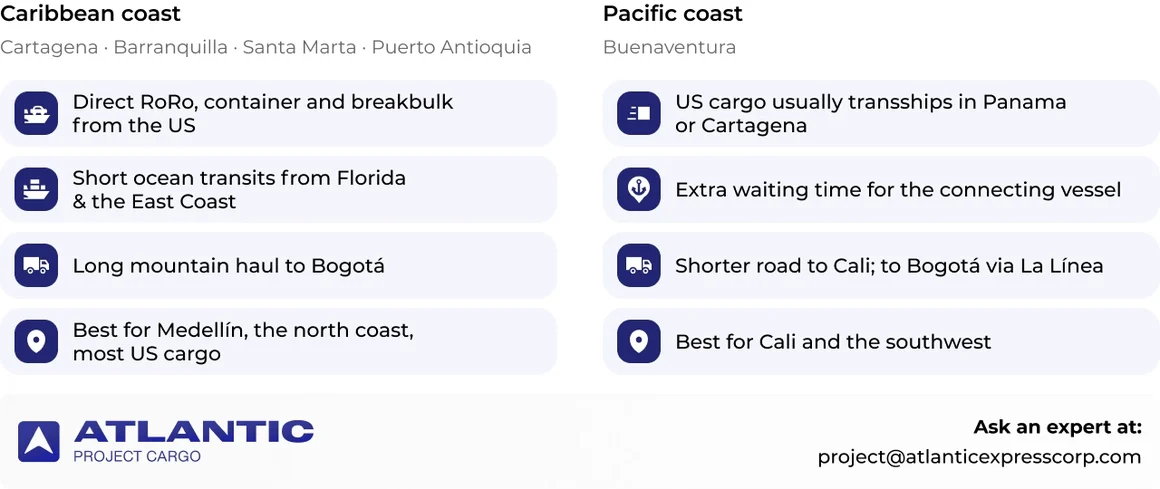
Colombia has ports on both coasts, and the right one depends on where the machine is going, not only on the ocean rate.

  • US origin: East Coast, Florida, and Gulf cargo reaches the Caribbean directly; the Pacific requires Panama transit or transshipment.
  • Vessel service and method: direct RoRo and container services concentrate on the Caribbean coast.
  • Final destination: Cali and the southwest are much closer to Buenaventura.
  • Inland transportation: Bogotá and Medellín sit in the Andes, so both coasts involve a mountain haul.
  • Cargo dimensions: very wide or heavy loads need a feasible road from the port.

See our complete guide to the major ports in Colombia.

Cartagena, Buenaventura or Barranquilla: Which Port Should You Use?

For most US heavy equipment, the Port of Cartagena is the default, the Port of Buenaventura makes sense for Cali and the southwest, and the Port of Barranquilla suits the north coast.

FactorCartagenaBuenaventuraBarranquilla
CoastCaribbeanPacificCaribbean
U.S. routingDirect RoRo, container, breakbulkUsually via Panama or CartagenaContainer and breakbulk
Equipment handlingRoRo hub at Contecar, oversized cargoMultipurpose cranes, general cargoRiver port; check channel depth
Inland destinationsMedellín, Bogotá, the north coastCali, the southwestThe north coast
Best suited forMost US equipment shipmentsCargo for Cali and the Pacific regionCargo for the Barranquilla area

Note: Santa Marta also handles RoRo and heavy-lift cargo for the north coast. Puerto Antioquia serves Medellín and Urabá but cannot currently receive HS 8429 machinery such as excavators, dozers, and loaders.

Import Requirements for Heavy Equipment in Colombia

To import heavy equipment to Colombia, you need a tax registration, an import declaration, and, for used machinery, a prior import licence. Colombia equipment import requirements then depend on the HS code, origin, and condition. These rules come from Colombia’s customs decree (Decreto 1165 of 2019), the tax authority DIAN, and the Ministry of Commerce.

What Colombian rules require:

  • Importer registration: registration in the RUT, Colombia’s tax registry.
  • Customs declaration: the Declaración de Importación. Importers may file directly, and many use a customs agency (agencia de aduanas).
  • Yellow machinery rules: for excavators, bulldozers, wheel loaders, and similar machines (HS 8429.11, .19, .51, .52, .59), Decreto 723 of 2014 and DIAN’s implementing rules (Resolution 46 of 2019) make an advance import declaration mandatory and allow entry only through Cartagena, Barranquilla, Buenaventura, Santa Marta, or Puerto Bolívar. The same rules cover buckets and blades (HS 8431.41 and 8431.42) shipped separately. The advance declaration must be filed at least five business days before arrival, or one day before on short routes. Late filing can lead to heavy fines or seizure.
  • Inspection: after payment, shipments get automatic release or documentary or physical inspection.
  • Duty: depends on the HS code. DIAN’s tariff lists 5% for common excavator, bulldozer, wheel loader, and combine subheadings and 0% for agricultural tractors; check each machine. A machine that qualifies as US-originating under the TPA, with a certification of origin, can enter duty-free. Many machines sold in the US are built in Japan, Europe, or Brazil and pay the general rate.
  • VAT (IVA): 19% on customs value plus duties. Agricultural tractors and combines are among the machines excluded from IVA.
  • Valuation: shipments above US$5,000 FOB need an Andean Value Declaration.

No single duty or tax rate covers all heavy equipment. The US–Colombia Trade Promotion Agreement, in force since May 15, 2012, applies only to goods that qualify as US or Colombian originating, so a US-bought machine made elsewhere does not automatically qualify.

What we recommend:

  • Yellow machinery checklist (HS 8429):
  • Enter only through an authorized port.
  • File the advance import declaration at least five business days before arrival.
  • Obtain the import license through VUCE (required for used machines).
  • Get the CEPD emissions certificate from ANLA.
  • Install GPS and register the machine in RUNT before operating it.

Documents Required to Ship Heavy Equipment from the USA to Colombia

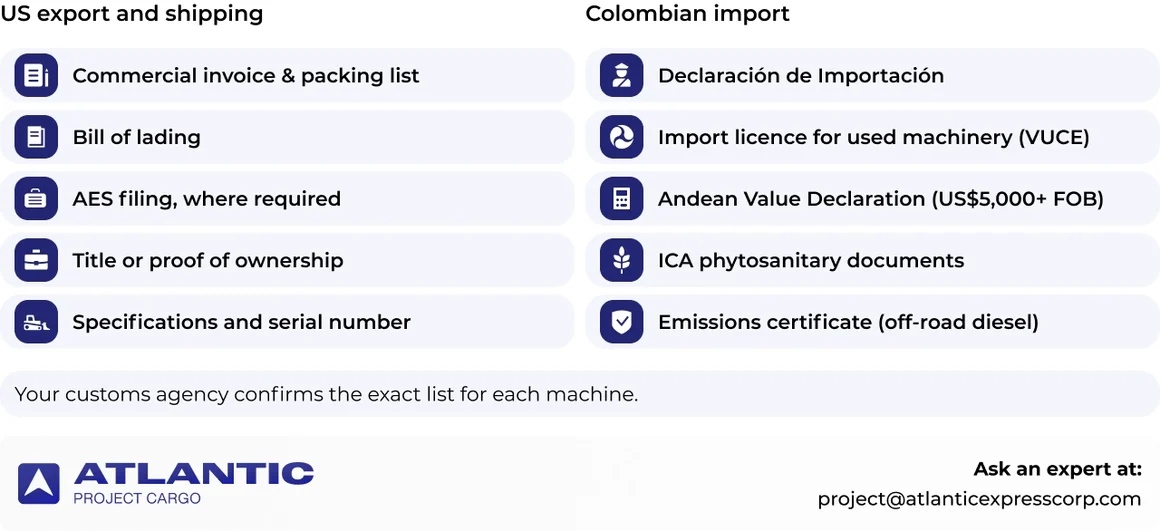
U.S. export and shipping documents:

  • Commercial invoice and packing list
  • Bill of lading
  • AES Electronic Export Information filing, where required
  • Title or proof of ownership, where applicable
  • Specifications and serial number

Colombian import documents:

  • Declaración de Importación
  • Import license (licencia previa) for used machinery, through VUCE
  • Andean Value Declaration, for shipments above US$5,000 FOB
  • Certification of origin, if claiming TPA treatment
  • ICA phytosanitary documents for used machinery
  • CEPD emissions certificate and Montreal Protocol approval (Visto Bueno) from ANLA for off-road diesel machinery, where they apply

Importing Used Heavy Equipment to Colombia

Used heavy equipment can be imported into Colombia, but it needs extra approvals, and the rules differ by machine type. Check them before buying.

  • Import licence: under Decreto 925 of 2013, used, refurbished, and remanufactured goods need a prior licence through VUCE, stating the year and condition. Licences can be refused where equivalent machinery is produced locally.
  • Road vehicles vs machinery: Colombia does not allow initial registration of used road vehicles, but that rule covers public-road vehicles, not construction, agricultural, or mining machinery. Road-going crane trucks need a separate check.
  • Emissions: under MinAmbiente Resolution 762 of 2022, off-road diesel machinery, new or used, needs a CEPD emissions certificate (Certificado de Emisiones por Prueba Dinámica) from ANLA, plus Montreal Protocol approval for air-conditioning systems. Test procedures follow US EPA or EU standards. Machines used only for agricultural work are exempt, but only while they stay in agriculture. Non-diesel engines and engines under 19 kW or over 560 kW are exempt only if they have no air-conditioning or refrigeration that uses controlled substances.
  • Cleaning and ICA inspection: ICA, the agricultural health agency, requires used machinery to arrive clean inside and out, free of soil, organic matter, and seeds, with a cleaning certificate and inspection on arrival.
  • Registration and GPS: self-propelled agricultural, industrial, and construction machinery must be registered in RUNT, the national transport registry; HS 8429 machines need GPS before registration.

Our USDA equipment washing and inspection service prepares machines for cleaning checks.

For export inspection and certification steps, see our export inspections guide.

How to Prepare Heavy Equipment for Shipping to Colombia

  1. Clean the equipment, especially tracks, undercarriage, and radiators.
  2. Record its condition.
  3. Measure exact dimensions with attachments in shipping position.
  4. Confirm the weight.
  5. Remove loose items.
  6. Secure booms, doors, and moving parts.
  7. Lower or remove attachments.
  8. Identify lifting and tie-down points.
  9. Follow carrier rules for fuel, fluids, and batteries.
  10. Photograph the machine before pickup.

Strategic disassembly can reduce OOG dimensions and keep a load under Colombia’s road permit thresholds. Our loading and disassembly team handles this before export.

Inland Transportation from Colombian Ports

Inland transportation is where Colombia differs most. Bogotá, Medellín, and Cali all sit in or beyond the Andes, so nearly every delivery includes a mountain haul, and for oversized machines the road can decide whether a port works at all.

  • Lowboy and heavy haul: lowboys keep tall machines under clearance limits; multi-axle trailers carry heavy loads.
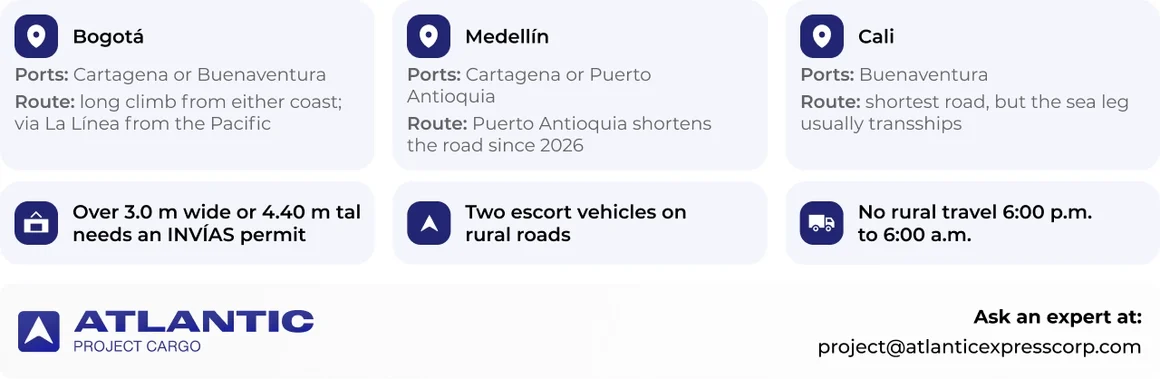
  • Oversized loads: standard limits are 2.60 meters wide and 4.40 meters tall. Loads 3.0 to 3.6 meters wide and up to 4.4 meters tall use a simplified electronic INVÍAS permit. Anything wider than 3.6 meters or taller than 4.4 meters needs a full permit with route review.
  • Escorts and schedules: Escorts and schedules: oversized loads need escort vehicles (the number depends on dimensions) and cannot travel between 6:00 p.m. and 6:00 a.m.
  • Route surveys and final-mile access: bridges, tunnels, clearances, and grades are checked, and remote project sites need access planning.
  • City permits: deliveries inside Bogotá need a separate municipal oversize permit in addition to the national one.
  • River barge: for very heavy project cargo, barges on the Magdalena River from Barranquilla can be an alternative to road haul on some routes.

Major destinations:

  • Shipping equipment to Bogotá: a long climb from either coast. The Buenaventura corridor crosses the Andes at La Línea, where over-height or over-width loads may have to use the old mountain road instead of the tunnel. The Caribbean route adds distance but has more direct sailings.
  • Shipping equipment to Medellín: usually through Cartagena. Since 2026, Puerto Antioquia shortens the road for many machines, but excavators, dozers, and loaders (HS 8429) must still enter through an authorized port such as Cartagena.
  • Shipping equipment to Cali: closest to Buenaventura, which makes the Pacific route attractive despite transshipment.

The cheapest destination port is not necessarily the cheapest complete route. For oversized machinery, inland transport can decide both feasibility and total cost.

Buying Heavy Equipment in the USA and Shipping It to Colombia

Logistics planning should start before you buy, because the machine’s location, size, and condition decide the export port, method, and whether it can be licensed in Colombia.

  • Location: a machine near a Gulf or Florida port costs less to export than one in the Midwest.
  • Specifications and condition: confirm dimensions and engine tier; the licence and emissions certificate depend on them.
  • Pickup and documents: auctions set removal deadlines, and serial numbers must match the paperwork.

If you have not bought the machine yet, our equipment sourcing and procurement services can find it with the shipment in mind.

Common Mistakes When Shipping Heavy Equipment to Colombia

  • Inaccurate dimensions: re-quotes and wrong permits.
  • Choosing a port on ocean freight alone: a cheaper sea rate can mean a longer mountain haul.
  • Assuming RoRo runs on every route: it depends on the carrier and port pair.
  • Not checking import rules before buying: a used machine can fail the licence or emissions rules.
  • Incomplete documentation: a missing licence stops clearance.
  • Ignoring inland transport: the leg to Bogotá or Medellín can be a large part of the cost.
  • Poor preparation: dirty machines cause ICA inspection problems.
  • Not planning oversized loads: permits and escorts take time.
  • Underestimating storage charges: terminals allow only a few free days, then bill storage daily, so clearance delays add up fast.
  • Missing the advance declaration deadline: for yellow machinery, a late filing can mean heavy fines or seizure.

FAQ

We’ve handled thousands of shipments — here are the most common questions about drayage, pricing, and logistics.
By RoRo, Flat Rack, Breakbulk, or container to a Colombian port such as Cartagena, Barranquilla, Santa Marta, or Buenaventura, then customs clearance and inland heavy haul.
There is no fixed rate; it depends on the machine, method, ports, customs, and inland route.
Roughly 4 to 13 days at sea to the Caribbean coast, depending on the US port and carrier, plus waiting for a sailing, customs, and inland delivery.
Usually Cartagena, which has the most direct US services; Buenaventura suits Cali and the southwest.
Yes, with a prior import license. Diesel off-road machines also need a CEPD emissions certificate unless they are used only for agriculture.
Yes, and tractors are among the most common machines we ship to Colombia. They must arrive clean for ICA inspection. Machines used only for agriculture are exempt from the emissions certificate.
Sometimes. Excavator shipping to Colombia can use RoRo on a roll trailer if the carrier accepts it, but many excavators ship on flat racks.
The commercial invoice, packing list, bill of lading, and Declaración de Importación, plus an import license for used machinery and a CEPD emissions certificate for off-road diesel machines.
Cartagena for most US cargo; Buenaventura when the destination is Cali or the Pacific region.
Yes, with inland heavy haul, INVÍAS permits for oversized loads, and route planning.
Flat Rack is usually cheaper within rack limits; Breakbulk is for anything larger or heavier.

Get a Heavy Equipment Shipping Quote to Colombia

Send us the make and model, dimensions, weight, pickup location, final destination, photos, and condition. We then evaluate the complete route: pickup, US export port, shipping method, ocean freight, Colombian port, customs, and inland delivery.

For a direct quote from our team, see our heavy equipment shipping to Colombia service.

We coordinate ocean freight for agricultural, construction, mining, and industrial machinery.

We also arrange marine cargo insurance for the machine’s full value.

Shipping Insights & Guides

Largest Farm Equipment Manufacturers in the USA
November 15, 2023

Largest Farm Equipment Manufacturers in the USA

The agricultural sector stands as a cornerstone of the United States economy, vital for both domestic needs and global food supply. In this era of large-scale agriculture, farmers increasingly depend...

Reviewed by Nick Yadryshnikov Nick Yadryshnikov
Read
Top 10 Tractor Companies in the World
May 20, 2026

Top 10 Tractor Companies in the World

The global farm tractor market is a crucial segment of the agricultural industry, with an expected total value of around $66.1 billion by 2027. While specific rankings can vary slightly...

Reviewed by Nick Yadryshnikov Nick Yadryshnikov
Read
Top 10 Construction Equipment Manufacturers
June 26, 2026

Top 10 Construction Equipment Manufacturers

The global construction equipment industry has entered a new era. Driven by surging infrastructure investment, rapid urbanization, and a technology wave spanning electrification, autonomy, and AI-powered fleet management, the market...

Reviewed by Victoria Moseicuka Victoria Moseicuka
Read
John Deere’s Most Powerful Tractors Yet: the New 2025 9RX Series
April 23, 2024

John Deere’s Most Powerful Tractors Yet: the New 2025 9RX Series

John Deere has released its most powerful tractor to date, the 2025 9RX series. This ground-up redesign has increased horsepower and efficiency, allowing farmers to cover more ground and reduce...

Reviewed by Nick Yadryshnikov Nick Yadryshnikov
Read
Top 10 RV Manufacturers in 2026: Who’s Building America’s Best Rigs?
June 18, 2026

Top 10 RV Manufacturers in 2026: Who’s Building America’s Best Rigs?

The American love affair with recreational vehicles isn’t slowing down. Whether it’s remote workers trading cubicles for campgrounds or retirees finally hitting the open road, RV culture is firmly embedded...

Reviewed by Victoria Moseicuka Victoria Moseicuka
Read
Top 15 Combine Harvester Producers
February 13, 2024

Top 15 Combine Harvester Producers

In the previous article we discussed the Top 10 Tractor Companies, today we will focus on harvesters. From the huge plains of the US to the rice paddies of Asia,...

Reviewed by Nick Yadryshnikov Nick Yadryshnikov
Read
Top 10 Biggest Farms in the US
June 12, 2025

Top 10 Biggest Farms in the US

The agricultural landscape of the United States is huge and varied, but certain farms stand out not just for their heritage or production, but for their sheer scale. These operations...

Reviewed by Nick Yadryshnikov Nick Yadryshnikov
Read
Guide how to Import a Car to the United States
September 27, 2024

Guide how to Import a Car to the United States

Car import into the U.S. can be challenging with potential pitfalls: laws, requirements, and paperwork. However, with the right guidance and understanding of the process, it can be a straightforward...

Reviewed by Maryana Serafinas Maryana Serafinas
Read
Top 10 World Bulldozer Manufacturers
February 20, 2024

Top 10 World Bulldozer Manufacturers

In our previous article we had a look at the Top 15 harvester producers, today we will focus on bulldozers. Bulldozers are a crucial part of construction and agriculture. Their...

Reviewed by Victoria Moseicuka Victoria Moseicuka
Read
What Are the Top 10 Biggest and Busiest Ports in the US?
April 8, 2024

What Are the Top 10 Biggest and Busiest Ports in the US?

Today we are starting a series of articles related to the world’s biggest ports, and we will start with the United States. The United States has a wide network of...

Reviewed by
Read